
Germany Enterprise Networking Market (2025-2030)

The Germany Enterprise Networking Market was valued at $5505.1 Million in 2025 and projected to reach to $8148.8 Million by 2030, representing a compound annual growth rate of 7.9%. Germany's enterprise networking market is poised for sustained growth through 2030, driven by the country's position as Europe's largest economy and its commitment to digital infrastructure modernization.


| Market Size in | USD 26.32 MN |
| Market Forecast in | |
| CAGR | |
| Forecast Period | |
| Units Considered | Value (USD MN) |
Germany Enterprise Networking Market Trends and Insights
- Germany, as Europe's largest economy, is experiencing robust demand for advanced networking infrastructure driven by digital transformation initiatives across manufacturing, finance, and public sectors.
- The market expansion in Germany reflects increasing investments in cloud connectivity, cybersecurity integration, and edge computing solutions. The enterprise networking sector in Germany is characterized by strong adoption of software-defined networking (SDN) and network function virtualization (NFV) technologies.
- Germany's manufacturing base and Industry 4.0 initiatives are accelerating the need for reliable, scalable network architectures.
- Between 2025 and 2030, Germany is expected to see significant growth in hybrid and multi-cloud networking solutions, driven by regulatory compliance requirements and the need for enhanced network resilience.
- The market dynamics in Germany reflect both domestic demand and the country's role as a technology hub within the European Union..
Key Market Statistics
- CAGR (2025-2030) 7.9% CAGR
- Market Size, 2025 ~USD 5505.1 Million
- Forecast, 2030 ~USD 8148.8 Million
- Country Germany
Germany Enterprise Networking Market Overview
Market Size & Growth :
Germany's enterprise networking market is valued at USD 5,505.1 million in 2025 and is projected to reach USD 8,148.8 million by 2030, with a CAGR of 7.9%, outpacing many European counterparts.
Digital Transformation Driver :
Manufacturing, finance, and public sectors in Germany are accelerating digital transformation initiatives, creating substantial demand for advanced networking infrastructure and cloud-connected solutions.
Industrial 4.0 Adoption :
Germany's strong manufacturing base and Industry 4.0 initiatives are driving investments in enterprise networking to support IoT connectivity, real-time data processing, and smart factory operations.
Regulatory & Security Focus :
Stringent German and EU data protection regulations (GDPR, NIS2) are compelling enterprises to upgrade networking infrastructure with enhanced security and compliance capabilities.
Germany Enterprise Networking Market Dynamics
- The manufacturing sector's embrace of Industry 4.0 technologies, combined with increasing cloud adoption and remote work infrastructure needs, will fuel demand for sophisticated networking solutions.
- Financial institutions and government agencies are also investing heavily in network upgrades to meet regulatory requirements and enhance cybersecurity posture.
- The 7.9% CAGR reflects steady expansion as enterprises balance digital innovation with compliance obligations and operational efficiency gains..
Market Ecosystem
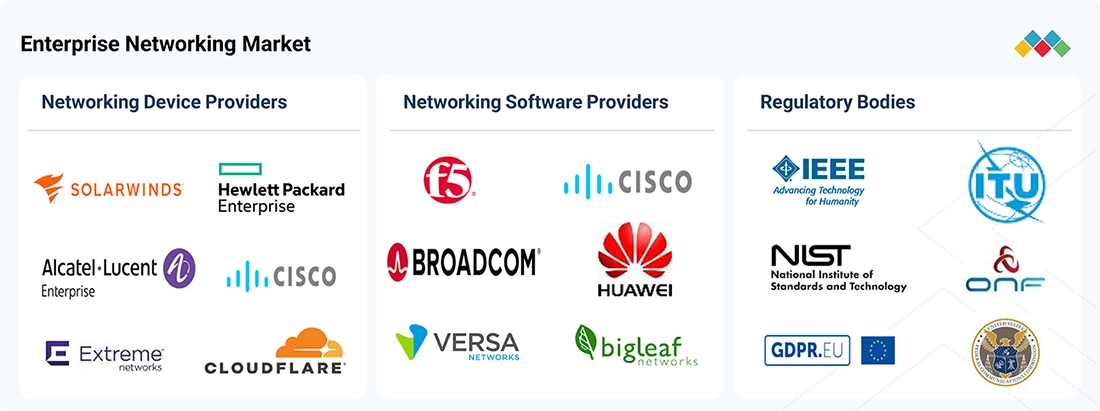
ENTERPRISE NETWORKING MARKET: COMMERCIAL USE CASES ACROSS INDUSTRIES
| COMPANY | USE CASE DESCRIPTION | BENEFITS |
|---|---|---|
 |
Cisco provides enterprise networking solutions through its Catalyst switching, wireless networking, Catalyst Center, SD-Access, SD-WAN, and Meraki cloud-managed networking portfolios. Organizations use these solutions to connect employees, branch offices, campuses, cloud applications, and IoT devices. Network automation, analytics, and integrated security help IT teams manage connectivity, monitor performance, and enforce consistent access policies across distributed enterprise environments. | Improved campus and branch connectivity | Centralized network management and automation | Enhanced network visibility and performance monitoring | Secure access for employees and IoT devices | Reliable connectivity across cloud and distributed locations |
 |
HPE delivers enterprise networking through HPE Aruba Networking, including access points, switches, gateways, Aruba Networking Central, and ClearPass. Organizations use these solutions to manage wired and wireless campus networks, branch connectivity, and SD-WAN environments. AI-powered network management, dynamic segmentation, and identity-based access controls help enterprises automate network operations, support IoT and BYOD devices, and apply consistent security policies across users and locations. | AI-driven network monitoring and troubleshooting | Simplified wired and wireless network operations | Improved network security through identity-based access controls | Better connectivity for IoT and BYOD devices | Scalable campus and branch infrastructure |
 |
Fortinet provides secure enterprise networking through FortiGate next-generation firewalls, FortiSwitch, FortiAP, FortiManager, and Secure SD-WAN. Enterprises use these solutions to connect branch offices, campuses, remote users, and multi-cloud environments while integrating network connectivity with security enforcement. Centralized management, application-aware traffic routing, AI-powered security services, and network segmentation help organizations protect network traffic, optimize application performance, and simplify distributed network operations. | Integrated networking and security management | Improved threat detection and protection | Optimized application performance and WAN connectivity | Consistent security policies across branches and cloud environments | Reduced network complexity and operating costs |
Logos and trademarks shown above are the property of their respective owners. Their use here is for informational and illustrative purposes only.
Related Ecosystem
Data Centre And Networking
- Software-Defined Networking (SDN)
- Mid-Sized Data Centers
- Small Data Centers
- Remote Monitoring
- Smart Healthcare
- Cisco Systems, Inc.
- HUAWEI TECHNOLOGIES CO LTD
- Hewlett Packard Enterprise Company
- MITSUBISHI ELECTRIC INFORMATION NETWORK CORPORATION
- MITSUBISHI ELECTRIC INFORMATION SYSTEMS CORPORATION
Key Takeaways
- Germany's enterprise networking market will grow from USD 5.5B in 2025 to USD 8.1B by 2030 at a 7.9% CAGR.
- Germany's manufacturing sector and Industry 4.0 initiatives are primary drivers of enterprise networking investment.
- Cloud connectivity and cybersecurity-integrated networking solutions are accelerating adoption across Germany.
- Germany's regulatory environment and data sovereignty requirements shape enterprise networking architecture decisions.
Enterprise Networking Market Report Scope
| Report Metric | Details |
|---|---|
| Base Year | 2025 |
| Fastest Growing Segment | SMES (Organization Size) |
| Forecast Period | 2025-2030 |
| Growth Rate | CAGR of 8.6% from 2025 to 2030 |
| Largest Segment | SERVICE PROVIDERS (End User) |
| Market Size Base Year (Billions) | ~USD 125.95 (2025) |
| Revenue Forecast (Billions) | ~USD 190.27 (2030) |
| Segments Covered | Offering, Type, Speed, Network, Deployment Mode, Connection Type, End User, Service Provider, Enterprise, Networking Device, Switch Type, Fixed Switch Type, Switch Speed, Networking Software, Service, Professional Service, Organization Size, Vertical, Sdn Type, Application |
Germany Enterprise Networking Market Report Segmentation
20 segment dimensions are covered across the global market.
By Offering
- Networking Devices
- Networking Software
- Sdn Infrastructure
- Services
- Software
- Solutions
By Type
- Access Points
- Appliances
- Consulting
- Deployment & Integration
- Firewalls
- Fixed Switches
- Gateways
- Implementation
- Managed Services
- Managed Switches
- Modular Switches
- Network Automation
- Network Management & Monitoring
- Network Security
- Network Virtualization
- Other Networking Devices
- Other Networking Software
- Power Over Ethernet (Poe) Switches
- Professional Services
- Routers
- Software
- Support & Maintenance
- Switches
- Training And Support
- Unmanaged Switches
By Speed
- 400 Gbps And Above
- > 40 Gbps To <=100 Gbps
- >1 Gbps To <=10 Gbps
- >10 Gbps To <=40 Gbps
- >100 Gbps To <=400 Gbps
By Network
- Branch Network
- Campus Network
- Campus Networks
- Data Center Network
- Remote Network
By Deployment Mode
- Cloud
- Do-It-Yourself (Diy)
- Managed Sd-Wan (Telco Or Msp)
- On-Premises
- Sd-Wan As A Service (Cloud-Based)
By Connection Type
- Wired
- Wireless
By End User
- Cloud Service Providers
- Enterprises
- Service Providers
- Telecommunication Service Providers
- Vertical
By Service Provider
- Cloud Service Providers
- Telecom Service Providers
By Enterprise
- Bfsi
- Education
- Government
- Healthcare & Life Sciences
- It & Ites
- Manufacturing
- Media & Entertainment
- Other Enterprises
- Retail & E-Commerce
- Transportation & Logistics
By Networking Device
- Access Points
- Firewalls
- Gateways
- Other Networking Devices
- Routers
- Switches
By Switch Type
- Fixed Switches
- Modular Switches
By Fixed Switch Type
- Managed Switches
- Power Over Ethernet (Poe) Switches
- Unmanaged Switches
By Switch Speed
- 400 Gbps And Above
- > 40 Gbps To <=100 Gbps
- >1 Gbps To <=10 Gbps
- >10 Gbps To <=40 Gbps
- >100 Gbps To <=400 Gbps
By Networking Software
- Network Automation
- Network Management And Monitoring
- Network Security
- Network Virtualization
- Other Networking Software
By Service
- Managed Services
- Professional Services
By Professional Service
- Consulting
- Deployment & Integration
- Support & Maintenance
By Organization Size
- Large Enterprises
- Smes
By Vertical
- Bfsi
- Education
- Energy And Utilities
- Government
- Government & Defense
- Healthcare
- Ites
- Manufacturing
- Other Verticals
- Retail
- Retail & E-Commerce
- Telecom
- Transportation And Logistics
By Sdn Type
- Hybrid Sdn
- Open Sdn
- Sdn Via Api
- Sdn Via Overlay
By Application
- Other Applications
- Sd-Lan
- Sd-Wan
- Security Applications
Target Audience
- Networking Equipment Vendors : Manufacturers and distributors of switches, routers, and network infrastructure need Germany-specific market data to assess demand, plan product launches, and optimize sales strategies in Europe's largest economy.
- IT Service Providers & Integrators : System integrators and managed service providers require detailed German market insights to identify growth opportunities, understand customer requirements, and develop localized service offerings.
- Enterprise IT Decision-Makers : CIOs, IT directors, and network managers in German enterprises need market benchmarks and trend analysis to justify investments, evaluate vendor solutions, and align networking strategies with business goals.
- Investment & Strategy Consultants : Management consultants and investment firms analyzing the German ICT sector require comprehensive market data to support client recommendations, M&A due diligence, and strategic planning initiatives.
- Government & Policy Analysts : Public sector agencies and policy makers need market intelligence on Germany's networking infrastructure development to inform digital strategy, funding decisions, and regulatory frameworks.
Reasons to Buy this Report
- Market-Specific Sizing & Forecasts : Access precise valuation data for Germany's enterprise networking market with detailed 2025-2030 projections, enabling accurate budget allocation and investment planning for German operations.
- Sector-Specific Insights : Understand growth drivers across Germany's key verticals—manufacturing, finance, and public sector—with tailored analysis of networking demands unique to each industry segment.
- Competitive Landscape Intelligence : Identify leading vendors and emerging players in the German market, understand their positioning, and benchmark your offerings against local and international competitors.
- Regulatory & Compliance Context : Gain insights into how GDPR, NIS2, and German data sovereignty requirements are shaping enterprise networking investments and creating opportunities for compliant solutions.
- Strategic Market Entry & Expansion : Leverage Germany-specific market intelligence to develop go-to-market strategies, identify partnership opportunities, and prioritize resource allocation for European expansion.
Frequently asked questions
What is the current size of Germany's enterprise networking market?
Germany's enterprise networking market is valued at USD 5,505.1 million in 2025.
What is the projected market size for Germany by 2030?
Germany's enterprise networking market is projected to reach USD 8,148.8 million by 2030.
What is the CAGR for Germany's enterprise networking market?
Germany's enterprise networking market is expected to grow at a compound annual growth rate (CAGR) of 7.9% from 2025 to 2030.
What are the main drivers of growth in Germany's enterprise networking market?
Key growth drivers in Germany include digital transformation initiatives, Industry 4.0 adoption, cloud connectivity demands, cybersecurity integration, and regulatory compliance requirements.
Which sectors are leading enterprise networking adoption in Germany?
Manufacturing, finance, and public sectors are leading enterprise networking adoption in Germany, driven by Industry 4.0 initiatives and digital transformation needs.
RESEARCH METHODOLOGY
The research study involved four major activities in estimating the enterprise networking market size. Exhaustive secondary research has been done to collect important information about the market and peer markets. The next step was to validate these findings and assumptions and size them with the help of primary research with industry experts across the value chain. Both top-down and bottom-up approaches have been used to estimate the market size. After which, data triangulation was adopted to estimate the market sizes of segments and sub-segments.
Secondary Research
The market size of companies offering enterprise networking devices, software, and services for various subscribers is arrived at based on the secondary data available through paid and unpaid sources and by analyzing the different offerings (devices, software, and services) of major companies in the ecosystem and rating them based on their performance and quality. In the secondary research process, various sources were referred to for identifying and collecting information for this study. The secondary sources included annual reports, press releases and investor presentations of companies, white papers, journals, and certified publications and articles from recognized authors, directories, and databases.
Secondary research was mainly used to obtain key information about the industry’s supply chain, the total pool of key players, market classification, and segmentation according to the industry trends to the bottommost level, regional markets, and key developments from both market- and technology-oriented perspectives, all of which were further validated by primary sources.
Primary Research
In the primary research process, various primary sources from both the supply and demand sides were interviewed to obtain qualitative and quantitative information for the report. The primary sources from the supply side include industry experts, such as chief executive officers (CEOs), vice presidents (VPs), marketing directors, technology and innovation directors, and related key executives from various key companies and organizations providing enterprise networking solutions. The primary sources from the demand side include end users, such as chief information officers (CIOs), consultants, service professionals, technicians and technologists, and managers at public and investor-owned utilities.
In the market engineering process, top-down and bottom-up approaches have been extensively used, along with several data triangulation methods, to perform market estimation and market forecasting for the overall market segments and subsegments listed in the report. Extensive qualitative and quantitative analyses have been performed on the complete market engineering process to list key information/insights throughout the report.
After the complete market engineering (including calculations for market statistics, market breakup, market size estimations, market forecasting, and data triangulation), extensive primary research has been conducted to gather information. Primary research has been conducted to identify the segmentation, industry trends, key players, competitive landscape, and key market dynamics, such as drivers, restraints, opportunities, challenges, industry trends, and key strategies.
Breakdown of Primaries
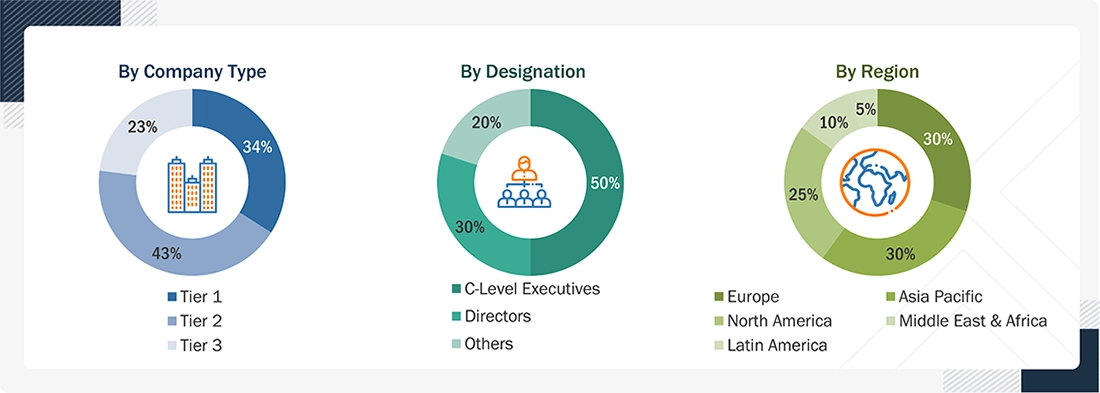
Note 1: Tier 1 companies have revenues of more than USD 10 billion; tier 2 companies’ revenue ranges from USD 1 billion to USD 10 billion; and tier 3 companies’ revenue ranges from USD 500 million to USD 1 billion.
Source: Secondary Literature, Expert Interviews, and MarketsandMarkets Analysis.
To know about the assumptions considered for the study, download the pdf brochure
Market Size Estimation
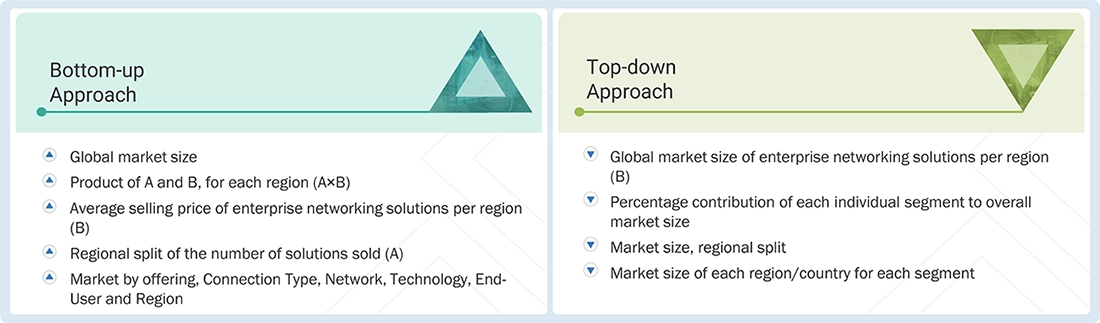
The total size of the enterprise imaging IT market was determined after data triangulation using the two approaches outlined below. After each approach was completed, the results were combined into a weighted average based on the level of assumptions used in each approach.
Enterprise Networking Market: Top-Down and Bottom-Up Approach
Data Triangulation
The size of the enterprise imaging IT market was estimated through segmental extrapolation using the bottom-up approach. The methodology is outlined below.
- Revenue of individual companies was gathered from public sources and databases.
- Shares of leading players in the enterprise imaging IT market were obtained from secondary sources to the extent available. In certain cases, shares of enterprise imaging IT businesses have been ascertained after a detailed analysis of various parameters, including product portfolios, market positioning, selling price, and geographic reach and strength.
- Individual share or revenue estimates were validated through interviews with experts.
- The total revenue in the enterprise imaging IT market was determined by extrapolating the market share data of major companies.
Market Definition
The enterprise imaging IT market comprises software and IT infrastructure solutions that enable seamless management, integration, and sharing of medical images across departments and care settings. It supports unified imaging workflows, enhances clinical collaboration, and improves diagnostic efficiency. This market serves hospitals, diagnostic centers, and integrated delivery networks, with the goal of optimizing image-driven decision-making.
Key Stakeholders
- Vendor neutral archive (VNA) & PACS vendors
- Government bodies
- Healthcare service providers
- Clinical/Physician centers
- Healthcare professionals
- Health IT service providers
- Healthcare associations/institutes
- Ambulatory care centers
- Venture capitalists
- Distributors and resellers
- Maintenance and support service providers
- Integration service providers
- Advocacy groups
- Data security and privacy experts
- Investors and financial institutions
- Industry associations and trade groups
Report Objectives
- To define, describe, and forecast the enterprise imaging IT market by function, modality, application, offering, deployment mode, therapeutic area, end user, and region.
- To provide detailed information regarding the major drivers, restraints, opportunities, and challenges influencing market growth
- To strategically analyze micromarkets1 with respect to individual growth trends, prospects, and contributions to the overall enterprise imaging IT solutions market
- To analyze market opportunities for stakeholders and provide details of the competitive landscape for key players.
- To forecast the size of the enterprise imaging IT solutions market in five main regions (and their respective countries): North America, Europe, Asia Pacific, the Middle East & Africa, and Latin America
- To provide key industry insights, such as supply chain, regulatory, patent, and the Impact of the 2025 US tariff.
- To profile the key players in the market and comprehensively analyze their core competencies2
- To analyze competitive developments, such as solution launches, enhancements, & upgrades, collaborations, partnerships, acquisitions, agreements, and expansions of the leading players in the market
- To benchmark players within the market using the company evaluation matrix, which analyzes market players on various parameters within the broad categories of business strategy, market share, and product offerings.
Available customizations:
With the given market data, MarketsandMarkets offers customizations as per your company’s specific needs. The following customization options are available for the report:
- Company information
- Detailed analysis and profiling of additional market players (up to 5)
Geographic Analysis
- Further breakdown of the Rest of Asia Pacific enterprise imaging IT market into Taiwan, New Zealand, Thailand, Singapore, Malaysia, and other countries
- Further breakdown of the Rest of Europe enterprise imaging IT market into Russia, Austria, Finland, Sweden, Turkey, Norway, Poland, Portugal, Romania, Denmark, and other countries
Get the Full Enterprise Networking Market Report
Full forecast, segment splits, and company analysis for all Enterprise Networking Market.
- US Enterprise Networking Market
- UK Enterprise Networking Market
- China Enterprise Networking Market
- Brazil Enterprise Networking Market
- France Enterprise Networking Market
- Italy Enterprise Networking Market
- Nordics Enterprise Networking Market
- Rest Of Europe Enterprise Networking Market
- Spain Enterprise Networking Market
- India Enterprise Networking Market
- Japan Enterprise Networking Market
- Rest Of Asia Pacific Enterprise Networking Market
- South East Asia Enterprise Networking Market
- South Korea Enterprise Networking Market
- Mexico Enterprise Networking Market
- Rest Of Latin America Enterprise Networking Market
- Bahrain Enterprise Networking Market
- Ksa Enterprise Networking Market
- Kuwait Enterprise Networking Market
- Rest Of Middle East Enterprise Networking Market
- UAE Enterprise Networking Market
- Canada Enterprise Networking Market
Need a Tailored Report?
Customize this report to your needs
Get 10% FREE Customization
Customize This Report