
South Korea Flexible Plastic Packaging Market (2026-2031)

The South Korea Flexible Plastic Packaging Market was valued at $4190.5 Million in 2026 and projected to reach to $4869.3 Million by 2031, representing a compound annual growth rate of 3.05%. South Korea's flexible plastic packaging market demonstrates steady growth momentum, supported by the country's mature manufacturing sector and rising consumption patterns in food, beverage, and e-commerce segments.


| Market Size in | USD 26.32 MN |
| Market Forecast in | |
| CAGR | |
| Forecast Period | |
| Units Considered | Value (USD MN) |
South Korea Flexible Plastic Packaging Market Trends and Insights
- This steady expansion reflects South Korea's robust manufacturing base and increasing demand from food, beverage, and consumer goods sectors that rely heavily on flexible packaging solutions.
- South Korea's advanced logistics infrastructure and export-oriented economy continue to drive adoption of lightweight, cost-effective packaging materials across multiple industries. The South Korea flexible plastic packaging market benefits from strong domestic consumption patterns and the country's position as a regional manufacturing hub.
- South Korea's emphasis on sustainability and innovation is reshaping packaging preferences, with manufacturers increasingly investing in recyclable and eco-friendly flexible plastic solutions.
- Between 2026 and 2031, South Korea is expected to see moderate but consistent growth driven by e-commerce expansion, rising consumer awareness, and regulatory pressures favoring sustainable packaging alternatives..
Key Market Statistics
- CAGR (2026-2031) 3.05% CAGR
- Market Size, 2026 ~USD 4190.5 Million
- Forecast, 2031 ~USD 4869.3 Million
- Country South Korea
South Korea Flexible Plastic Packaging Market Overview
Market Size & Growth :
South Korea's flexible plastic packaging market is valued at USD 4,190.5 million in 2026, growing to USD 4,869.3 million by 2031 at a CAGR of 3.05%, driven by strong domestic manufacturing and consumer demand.
Key End-Use Sectors :
Food and beverage industries dominate South Korea's flexible packaging demand, supported by growing e-commerce, ready-to-eat meal consumption, and premium consumer goods packaging requirements across the nation.
Manufacturing Excellence :
South Korea's advanced manufacturing infrastructure and technological capabilities position it as a regional hub for flexible plastic packaging production, serving both domestic and export markets across Asia.
Sustainability Initiatives :
Increasing regulatory focus on plastic waste reduction and circular economy principles in South Korea is driving innovation in recyclable and biodegradable flexible packaging solutions among local manufacturers.
South Korea Flexible Plastic Packaging Market Dynamics
- The 3.05% CAGR reflects stable demand from established industries while new opportunities emerge in sustainable packaging solutions.
- Government regulations promoting environmental responsibility are reshaping product development strategies among South Korean manufacturers, encouraging investment in eco-friendly materials and recycling technologies.
- The market's growth trajectory is underpinned by strong purchasing power, advanced logistics infrastructure, and increasing adoption of convenient packaging formats among consumers..
Market Ecosystem
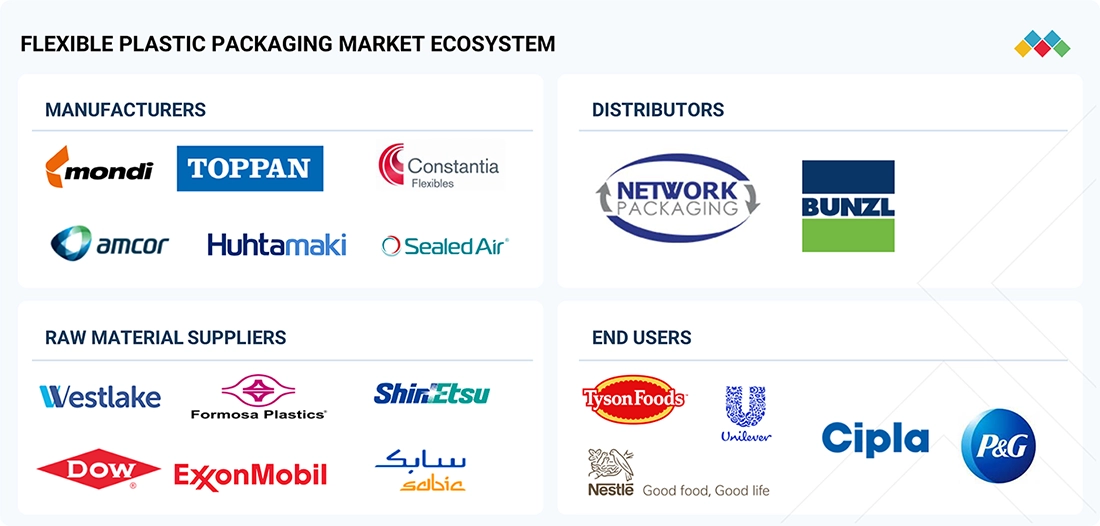
FLEXIBLE PLASTIC PACKAGING MARKET: COMMERCIAL USE CASES ACROSS INDUSTRIES
| COMPANY | USE CASE DESCRIPTION | BENEFITS |
|---|---|---|
 |
Amcor’s AmPrima recycle-ready flexible packaging solution was adopted for cheese packaging applications to replace difficult-to-recycle multi-material structures. The polyethylene-based packaging provides high barrier protection, lightweight design, and compatibility with high-speed filling and sealing operations while supporting recyclability goals. | Improves recyclability compared to conventional multi-material packaging, reduces material usage and carbon footprint, maintains product freshness and shelf-life performance, and enhances operational efficiency and sustainability positioning for cheese manufacturers and food packaging companies |
 |
Mondi introduced its WalletPack polypropylene (PP)-based mono-material packaging solution for Scan Sverige’s food products, including salami and plant-based products, to replace non-recyclable multi-material laminates. The packaging was designed to improve recyclability while maintaining high oxygen barrier protection, shelf-life performance, and consumer convenience through an easy-peel feature. | Supports sustainability goals by replacing unrecyclable packaging with a recyclable mono-material solution, helps reduce environmental impact, maintains food protection and freshness, and supports Scan Sverige’s target of achieving fully recyclable packaging while enhancing consumer convenience and operational efficiency |
Logos and trademarks shown above are the property of their respective owners. Their use here is for informational and illustrative purposes only.
Related Ecosystem
Resins And Polymers
- Polycarbonate
- Acrylonitrile Butadiene Styrene (ABS)
- Epoxy Resin
- Light Commercial Vehicles (LCVs)
- Polypropylene (PP)
- Basf se
- DOW CHEMICAL COMPANY
- Solvay sa
- Saudi arabia basic industries corporation (sabic)
- DuPont de Nemours, Inc.
Packaging
- Ampoules
- Gravure Process
- Rigid Packaging
- Aerosols
- Aseptic Filling and Sealing Equipment
- Amcor plc
- Essentra plc
- Berry Global Group, Inc.
- Mondi plc
- SEALED AIR CORPORATION
Key Takeaways
- South Korea's flexible plastic packaging market is valued at USD 4,190.5 million in 2026 and will reach USD 4,869.3 million by 2031 at a 3.05% CAGR.
- South Korea's e-commerce boom and food delivery sector expansion are primary growth catalysts for flexible packaging demand.
- South Korea is increasingly adopting sustainable and recyclable flexible plastic packaging to meet regulatory and consumer expectations.
- South Korea's position as a regional manufacturing and export hub strengthens demand for cost-effective, lightweight packaging solutions.
Flexible Plastic Packaging Market Report Scope
| Report Metric | Details |
|---|---|
| Base Year | 2026 |
| Fastest Growing Segment | DIGITAL PRINTING (Printing Technology) |
| Forecast Period | 2026-2031 |
| Growth Rate | CAGR of 4.4% from 2026 to 2031 |
| Largest Segment | FOOD (Application) |
| Market Size Base Year (Billions) | ~USD 226.73 (2026) |
| Revenue Forecast (Billions) | ~USD 281.2 (2031) |
| Segments Covered | Material, Plastic Material, Packaging Type, Printing Technology, Application |
South Korea Flexible Plastic Packaging Market Report Segmentation
5 segment dimensions are covered across the global market.
By Material
- Aluminum Foil
- Other Materials
- Plastic
By Plastic Material
- Bioplastics
- Ethylene Vinyl Acetate
- Poly Vinyl Chloride
- Polyamide
- Polyethylene
- Polyethylene Terephthalate
- Polypropylene
- Polystyrene
By Packaging Type
- Bags
- Films & Wraps
- Other Packaging Types
- Pouches
- Rollstock
By Printing Technology
- Digital Printing
- Flexography
- Other Printing Technologies
- Rotogravure
By Application
- Beverages
- Food
- Other Applications
- Personal Care & Cosmetics
- Pharmaceuticals & Healthcare
Target Audience
- Packaging Manufacturers : South Korean and international flexible packaging producers need market data to assess growth potential, identify capacity expansion opportunities, and understand competitive dynamics within their domestic market.
- Food & Beverage Companies : F&B manufacturers and brands operating in South Korea require packaging market insights to optimize supplier selection, forecast packaging costs, and align sourcing strategies with market trends.
- Investment & Private Equity Firms : Investors evaluating opportunities in South Korea's packaging sector need reliable market sizing, growth projections, and industry analysis to support M&A decisions and portfolio company valuations.
- Supply Chain & Procurement Teams : Corporate procurement professionals sourcing flexible packaging in South Korea benefit from market intelligence to negotiate supplier contracts, identify alternative vendors, and manage supply chain risks.
- Market Research & Consulting Professionals : Analysts and consultants advising clients on South Korea's packaging industry require comprehensive market data, forecasts, and segment analysis to support strategic recommendations and client deliverables.
Reasons to Buy this Report
- Accurate Market Sizing : Obtain precise valuation data for South Korea's flexible plastic packaging market with verified 2026 baseline (USD 4,190.5M) and 2031 forecast (USD 4,869.3M), enabling confident investment and expansion decisions.
- Sector-Specific Insights : Understand demand drivers across South Korea's food, beverage, and consumer goods sectors with detailed analysis of how each industry segment utilizes flexible packaging solutions and growth opportunities.
- Competitive Landscape Analysis : Identify key manufacturers, market consolidation trends, and competitive positioning within South Korea's flexible packaging industry to benchmark performance and identify partnership or acquisition targets.
- Regulatory & Sustainability Trends : Stay informed on South Korea's evolving plastic waste regulations, circular economy mandates, and sustainability requirements shaping product development and market opportunities for compliant manufacturers.
- Strategic Market Entry : Leverage comprehensive South Korea market data to develop localized go-to-market strategies, identify distribution channels, and assess feasibility for new product launches or regional expansion initiatives.
Frequently asked questions
What is the current market size of flexible plastic packaging in South Korea?
South Korea's flexible plastic packaging market is estimated at USD 4,190.5 million in 2026.
What is the projected market size for South Korea's flexible plastic packaging by 2031?
South Korea's flexible plastic packaging market is forecast to reach USD 4,869.3 million by 2031.
What is the CAGR for South Korea's flexible plastic packaging market?
South Korea's flexible plastic packaging market is expected to grow at a CAGR of 3.05% from 2026 to 2031.
What are the main drivers of growth in South Korea's flexible plastic packaging market?
Key drivers include e-commerce expansion, food delivery sector growth, sustainability initiatives, and South Korea's role as a regional manufacturing hub.
How is sustainability impacting South Korea's flexible plastic packaging market?
South Korea is increasingly shifting toward recyclable and eco-friendly flexible plastic solutions due to regulatory pressures and rising consumer environmental awareness.
RESEARCH METHODOLOGY
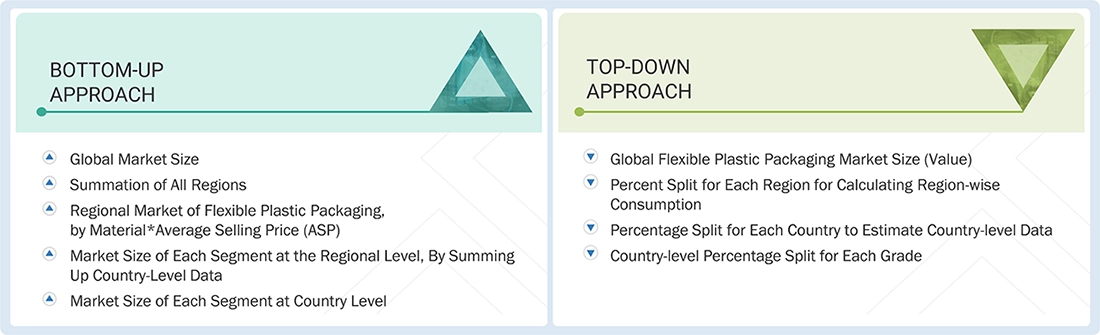
The study involved four major activities to estimate the current size of the global flexible plastic packaging market. Exhaustive secondary research was conducted to gather information on the market, the peer product market, and the parent product group market. The next step was to validate these findings, assumptions, and sizes with industry experts across the flexible plastic packaging value chain through primary research. The top-down and bottom-up approaches were employed to estimate the overall size of the flexible plastic packaging market. After that, market breakdown and data triangulation procedures were used to determine the sizes of different market segments.
Secondary Research
The market for companies offering flexible plastic packaging is estimated using secondary data from paid and unpaid sources, analyzing the product portfolios of major companies in the ecosystem, and rating them by performance and quality. For this study, various secondary sources, such as Business Standard, Bloomberg, the World Bank, and Factiva, were referred to identify and collect information on the flexible plastic packaging market. In the secondary research process, various secondary sources were referred to identify and collect information related to the study. Secondary sources included annual reports, press releases, and investor presentations of flexible plastic packaging vendors, forums, certified publications, and whitepapers. Secondary research was used to obtain critical information on the industry’s value chain, the total pool of key players, and market classification and segmentation from market- and technology-oriented perspectives.
Primary Research
In the primary research process, various primary sources from the supply and demand sides were interviewed to obtain qualitative and quantitative information for this report. The primary sources from the supply side included industry experts, such as chief executive officers (CEOs), vice presidents (VPs), marketing directors, technology and innovation directors, and related key executives from several key companies and organizations operating in the flexible plastic packaging market. After the complete market engineering (calculations for market statistics, market breakdown, market size estimations, market forecasting, and data triangulation), extensive primary research was conducted to gather information and verify and validate the critical numbers arrived at.
Primary research was also conducted to identify segmentation types, industry trends, the competitive landscape of flexible plastic packaging across market players, and key market dynamics, including drivers, restraints, opportunities, challenges, trends, and key player strategies. In the complete market engineering process, the top-down and bottom-up approaches and several data triangulation methods were extensively used to perform the market estimation and market forecasting for the overall market segments and subsegments listed in this report. Extensive qualitative and quantitative analyses were performed on the complete market engineering process to identify key information/insights throughout the report.
The following is the breakdown of primary respondents:
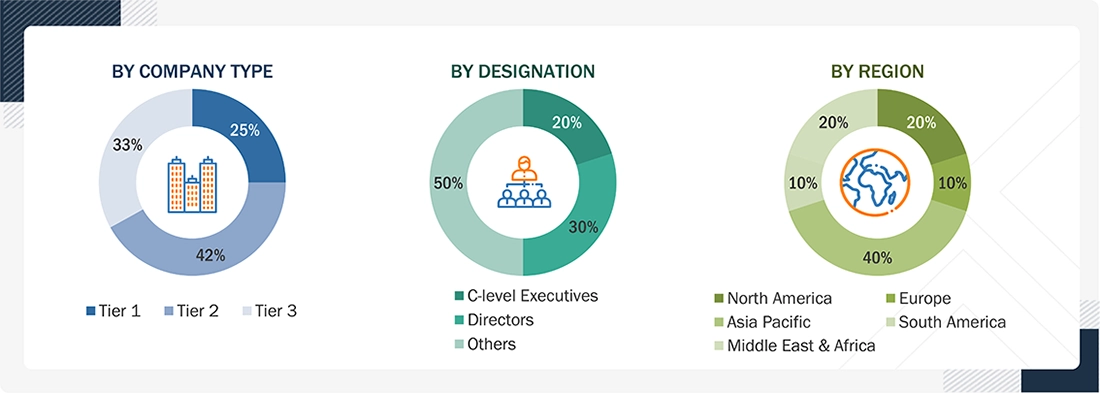
Notes: Other designations include sales, marketing, and product managers.
Tier 1: >USD 1 Billion; Tier 2: USD 500 million–1 Billion; and Tier 3: <USD 500 million
To know about the assumptions considered for the study, download the pdf brochure
Market Size Estimation
The top-down and bottom-up approaches were used to estimate and validate the size of the global flexible plastic packaging market. These approaches were also used extensively to estimate the size of various dependent market segments. The research methodology used to estimate the market size included the following:
Data Triangulation
After arriving at the overall market size using the market size estimation processes, the market was split into several segments and subsegments. The data triangulation and market breakdown procedures were employed, wherever applicable, to complete the overall market engineering process and arrive at the exact statistics of each market segment and subsegment. The data was triangulated by studying various factors and trends from the demand and supply sides.
Market Definition
Flexible plastic packaging refers to any packaging type or component of packaging made of thin, flexible plastic films or sheets. These materials can be easily molded into various shapes, such as pouches, bags, wrappers, shrink films, liners, and others, offering versatility to accommodate different types of products. Its flexibility allows for efficient, space-saving designs and the ability to adapt to various sizes and forms, making it a popular choice for functional and aesthetic packaging solutions across many industries. Flexible packaging, a dynamic and versatile approach to product packaging, uses non-rigid materials to offer economical, customizable solutions.
Flexible plastic packaging is renowned for its versatility, lightweight nature, and durability. This innovative packaging solution provides exceptional barrier properties, effectively shielding products from moisture, oxygen, light, and other environmental factors that can compromise quality and reduce shelf life. Widely adopted across industries such as food, beverage, pharmaceutical, and personal care, flexible plastic packaging plays a crucial role in safeguarding and preserving products, minimizing waste, and enhancing consumer convenience and portability.
Key Stakeholders
- Manufacturers of flexible plastic packaging
- Raw material suppliers
- Regulatory bodies and government agencies
- Flexible packaging traders, distributors, and suppliers
- Flexible packaging end-use industries
- Associations and industrial bodies
- Market research and consulting firms
Report Objectives
- To define, describe, and forecast the size of the global flexible plastic packaging market, by material, packaging type, printing technology, and application, in terms of value and volume
- To forecast the market size of segments for North America, Europe, Asia Pacific, South America, and the Middle East & Africa, along with their respective countries
- To provide detailed information on the significant drivers, restraints, opportunities, and challenges influencing the market
- To strategically analyze micromarkets concerning individual growth trends, prospects, and their contribution to the market
- To assess the growth opportunities in the market for stakeholders and provide details on the competitive landscape for market leaders
- To strategically profile key players and comprehensively analyze their market shares and core competencies
- To analyze competitive developments, such as product launches, mergers, expansions, acquisitions, and agreements in the flexible plastic packaging market
- To provide the impact of AI/Gen AI on the market
- To provide the macroeconomic outlook for each region covered under the study, and the impact of the 2025 US tariff on the market
Available customizations:
With the given market data, MarketsandMarkets offers customizations according to client-specific needs.
The following customization options are available for the flexible plastic packaging report:
Product Analysis
- A product matrix that gives a detailed comparison of the product portfolio of each company
Regional Analysis
- A further breakdown of the flexible plastic packaging market for additional countries
Company Information
- Detailed analysis and profiling of additional market players (up to five)
Get the Full Flexible Plastic Packaging Market Report
Full forecast, segment splits, and company analysis for all Flexible Plastic Packaging Market.
- China Flexible Plastic Packaging Market
- Japan Flexible Plastic Packaging Market
- India Flexible Plastic Packaging Market
- US Flexible Plastic Packaging Market
- Canada Flexible Plastic Packaging Market
- Mexico Flexible Plastic Packaging Market
- Germany Flexible Plastic Packaging Market
- UK Flexible Plastic Packaging Market
- France Flexible Plastic Packaging Market
- Italy Flexible Plastic Packaging Market
- Spain Flexible Plastic Packaging Market
- Russia Flexible Plastic Packaging Market
- Brazil Flexible Plastic Packaging Market
- Argentina Flexible Plastic Packaging Market
- South Africa Flexible Plastic Packaging Market
- Rest Of Europe Flexible Plastic Packaging Market
- Rest Of Asia Pacific Flexible Plastic Packaging Market
- GCC Countries Flexible Plastic Packaging Market
- -Rest Of GCC Countries Flexible Plastic Packaging Market
- Rest Of South America Flexible Plastic Packaging Market
Need a Tailored Report?
Customize this report to your needs
Get 10% FREE Customization
Customize This Report
