
Australia Fluorescent Pigment Market (2023-2028)

The Australia Fluorescent Pigment Market was valued at $1052.3 Million in 2023 and projected to reach to $1276.4 Million by 2028, representing a compound annual growth rate of CAGR 3.9%. Australia's fluorescent pigment market is poised for steady expansion, supported by increasing regulatory emphasis on workplace safety and high-visibility requirements across industrial sectors.


| Market Size in | USD 26.32 MN |
| Market Forecast in | |
| CAGR | |
| Forecast Period | |
| Units Considered | Value (USD MN) |
Australia Fluorescent Pigment Market Trends and Insights
- Australia's market growth is driven by increasing demand from the printing, textiles, and coatings industries, where fluorescent pigments are essential for high-visibility applications and specialty products.
- The Australian market benefits from strong manufacturing capabilities and a growing emphasis on safety-critical applications in construction and automotive sectors. During the forecast period from 2023 to 2028, Australia is expected to experience steady market expansion supported by rising consumer awareness of fluorescent pigment applications and regulatory compliance requirements.
- Australia's position within the Asia Pacific region positions it as a key market for premium fluorescent pigment products, with growing investments in sustainable and eco-friendly formulations.
- The market in Australia reflects broader regional trends while maintaining distinct characteristics driven by local industrial demand and export opportunities..
Key Market Statistics
- CAGR (2023-2028) CAGR 3.9%
- Market Size, 2023 ~USD 1052.3 Million
- Forecast, 2028 ~USD 1276.4 Million
- Country Australia
Australia Fluorescent Pigment Market Overview
Market Valuation :
Australia's fluorescent pigment market reached USD 1,052.3 million in 2023, with steady growth trajectory positioning it as a significant regional market within the Asia-Pacific chemicals sector.
Growth Trajectory :
Expanding at a CAGR of 3.9% through 2028, Australia's market growth outpaces several developed economies, driven by robust demand from domestic manufacturing and export-oriented industries.
Key Application Sectors :
Printing, textiles, and coatings industries are primary demand drivers in Australia, with fluorescent pigments essential for high-visibility safety applications, specialty products, and premium packaging solutions.
Forecast Growth :
The market is projected to reach USD 1,276.4 million by 2028, representing approximately USD 224.1 million in incremental value creation over the five-year forecast period.
Australia Fluorescent Pigment Market Dynamics
- The printing and textiles industries continue to drive demand for vibrant, durable fluorescent pigments used in safety apparel, signage, and specialty packaging.
- Growing consumer preference for sustainable and eco-friendly products is prompting manufacturers to innovate formulations that meet both performance and environmental standards. The market's 3.9% CAGR reflects Australia's mature but stable demand profile, with opportunities emerging from infrastructure development, automotive safety applications, and export-oriented manufacturing.
- Strategic investments in R&D for advanced pigment technologies and expanding distribution networks will be critical for market participants seeking to capture growth in this competitive landscape..
Market Ecosystem
Related Ecosystem
Speciality Chemicals
- Corrosion Inhibitors
- Polyetheretherketone (PEEK)
- Acrylonitrile Butadiene Styrene (ABS)
- Epoxy Resin
- Polycarbonate
- Basf se
- DOW CHEMICAL COMPANY
- Evonik industries ag
- Clariant ag.
- Solvay sa
Paints And Coatings
- Polyurethane Resin
- Alkyd Resins
- Epoxy Resin
- Polyester Resin
- Acrylics
- Basf se
- JOTUN
- PPG Industries, Inc.
- DOW CHEMICAL COMPANY
- Akzonobel n.v.
Automotive Materials
- Light Commercial Vehicles (LCVs)
- Battery Electric Vehicle (BEV)
- Hybrid Electric Vehicle (HEV)
- Fuel Cell Electric Vehicle (FCEV)
- Agricultural Tractors
- AISIN CORPORATION
- GORKOVSKY AVTOMOBILNY ZAVOD
- Continental ag
- Basf se
- BOSCH LIMITED
Key Takeaways
- Australia's fluorescent pigment market reached USD 1,052.3 million in 2023 with a projected value of USD 1,276.4 million by 2028.
- Australia is experiencing a 3.9% CAGR, reflecting steady but moderate growth compared to global expansion rates.
- Australia's market is driven by demand from printing, textiles, coatings, and high-visibility safety applications.
- Australia's position in Asia Pacific makes it a strategic hub for premium and sustainable fluorescent pigment products.
Fluorescent Pigment Market Report Scope
| Report Metric | Details |
|---|---|
| Base Year | 2023 |
| Fastest Growing Segment | SECURITY & CURRENCY (End-Use Industry) |
| Forecast Period | 2023-2028 |
| Growth Rate | CAGR of 5.7% from 2023 to 2028 |
| Largest Segment | ORGANIC (Formulation) |
| Market Size Base Year (Billions) | ~USD 0.38 (2023) |
| Revenue Forecast (Billions) | ~USD 0.5 (2028) |
| Segments Covered | Formulation, Characteristic Type, Type, Intensity, Application, End-Use Industry |
Australia Fluorescent Pigment Market Report Segmentation
6 segment dimensions are covered across the global market.
By Formulation
- Inorganic
- Organic
By Characteristic Type
- Thermoplastic
- Thermoset
By Type
- Daylight Fluorescent
- Other Types
- Phosphorescent
By Intensity
- High
- Low
- Medium
By Application
- Other Applications
- Paints & Coatings
- Plastics
- Printing Inks/Graphic Arts
By End-Use Industry
- Automotive & Transportation
- Building & Construction
- Cosmetics
- Other End-Use Industries
- Packaging
- Security & Currency
- Textile
- Textiles
Target Audience
- Pigment Manufacturers : Need Australia-specific demand forecasts, application trends, and competitive dynamics to optimize production capacity, develop localized product portfolios, and identify distribution partnerships.
- Chemical Distributors & Suppliers : Require detailed market sizing and growth projections for Australia to plan inventory levels, negotiate supplier contracts, and identify emerging customer segments in printing, textiles, and coatings.
- End-User Industries : Printing, textile, and coating manufacturers in Australia need market intelligence to forecast raw material costs, evaluate supplier reliability, and plan production strategies aligned with regional demand.
- Investment & Private Equity Firms : Seek Australia-focused market data to evaluate acquisition targets, assess growth potential of regional pigment companies, and identify investment opportunities in the chemicals sector.
- Market Researchers & Consultants : Require granular Australia market data to support client advisory services, competitive analysis, feasibility studies, and strategic recommendations for chemical and materials industry clients.
Reasons to Buy this Report
- Localized Market Intelligence : Gain Australia-specific insights into market dynamics, competitive landscape, and regional demand patterns that differ from global trends, enabling targeted business strategy development.
- Accurate Sizing & Forecasting : Access precise market valuation data (USD 1,052.3M in 2023) and five-year projections with 3.9% CAGR, providing reliable foundation for investment decisions and capacity planning in Australia.
- Industry Segment Analysis : Understand application-specific demand drivers across printing, textiles, and coatings sectors in Australia, identifying high-growth niches and customer concentration opportunities.
- Competitive Positioning : Benchmark your Australian operations against regional market growth rates and identify competitive advantages in a market growing slower than global average (3.9% vs 5.7%).
- Strategic Planning Support : Leverage Australia-focused market data to support market entry strategies, expansion planning, partnership development, and resource allocation decisions for the region.
Frequently asked questions
What is the current size of Australia's fluorescent pigment market?
Australia's fluorescent pigment market was valued at USD 1,052.3 million in 2023 and is expected to reach USD 1,276.4 million by 2028.
What is the growth rate of Australia's fluorescent pigment market?
Australia's fluorescent pigment market is growing at a CAGR of 3.9% from 2023 to 2028.
Which industries drive demand for fluorescent pigments in Australia?
Australia's fluorescent pigment demand is primarily driven by printing, textiles, coatings, construction, and automotive industries requiring high-visibility and safety-critical applications.
What factors are contributing to market growth in Australia?
Australia's market growth is supported by increasing regulatory compliance requirements, rising consumer awareness, growing investments in sustainable formulations, and expanding safety-critical applications.
How does Australia's market compare to the global fluorescent pigment market?
Australia's CAGR of 3.9% is lower than the global CAGR of 5.7%, indicating more moderate growth but reflecting Australia's mature and stable market position within Asia Pacific.
RESEARCH METHODOLOGY
The study involved four major activities in estimating the market size of the fluorescent pigment market. Exhaustive secondary research was done to collect information on the market, the peer market, and the grandparent market. The next step was to validate these findings, assumptions, and sizing with industry experts across the value chain through primary research. Both top-down and bottom-up approaches were employed to estimate the complete market size. Thereafter, the market breakdown and data triangulation procedures were used to estimate the market size of the segments and subsegments.
Secondary Research
In the secondary research process, various secondary sources have been referred to for identifying and collecting information for this study. These secondary sources include annual reports, press releases, investor presentations of companies, white papers, certified publications, trade directories, articles from recognized authors, gold standard and silver standard websites, and databases. Secondary research has been used to obtain key information about the value chain of the industry, monetary chain of the market, the total pool of key players, market classification and segmentation according to industry trends to the bottom-most level, and regional markets. It was also used to obtain information about the key developments from a market-oriented perspective.
Primary Research
The fluorescent pigment market comprises several stakeholders in the value chain, which include manufacturers, and end users. Various primary sources from the supply and demand sides of the fluorescent pigment market have been interviewed to obtain qualitative and quantitative information. The primary interviewees from the demand side include key opinion leaders in promotional and security sector. The primary sources from the supply side include manufacturers, associations, and institutions involved in the fluorescent pigment industry. Primary interviews were conducted to gather insights such as market statistics, data of revenue collected from the products and services, market breakdowns, market size estimations, market forecasting, and data triangulation. Primary research also helped in understanding the various trends related to formulation, characteristic type, type, intensity, application, end-use industry, and region. Stakeholders from the demand side, such as CIOs, CTOs, and CSOs were interviewed to understand the buyer’s perspective on the suppliers, products, component providers, and their current usage of fluorescent pigment and outlook of their business, which will affect the overall market.
The breakdown of profiles of the primary interviewees is illustrated in the figure below:
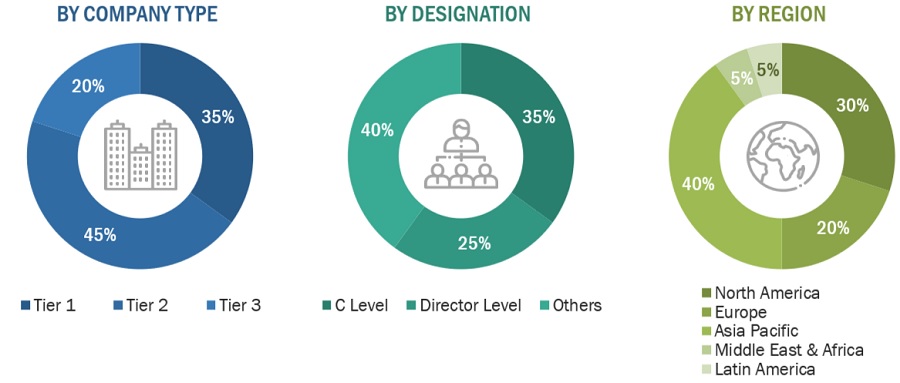
Note: Tier 1, Tier 2, and Tier 3 companies are classified based on their market revenue in 2022 available in the public domain, product portfolios, and geographical presence.
Other designations include consultants and sales, marketing, and procurement managers.
To know about the assumptions considered for the study, download the pdf brochure
Market Size Estimation
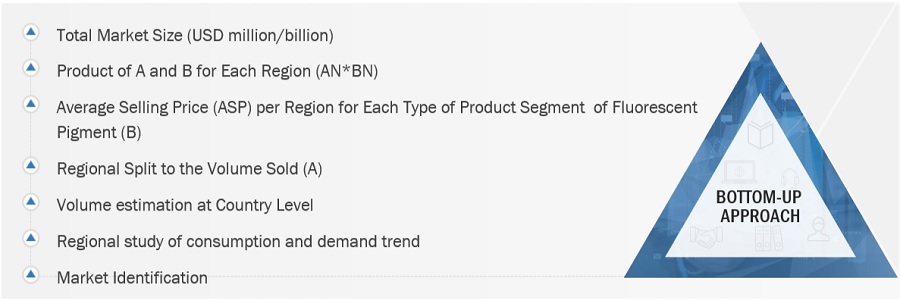
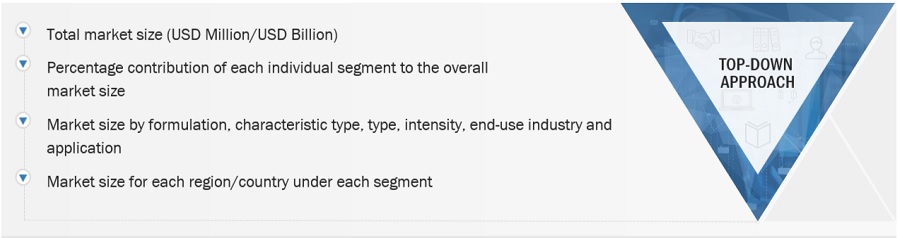
The top-down and bottom-up approaches have been used to estimate and validate the size of the fluorescent pigment market.
- The key players in the industry have been identified through extensive secondary research.
- The supply chain of the industry has been determined through primary and secondary research.
- All percentage shares, splits, and breakdowns have been determined using secondary sources and verified through primary sources.
- All possible parameters that affect the markets covered in this research study have been accounted for, viewed in extensive detail, verified through primary research, and analyzed to obtain the final quantitative and qualitative data.
- The research includes the study of reports, reviews, and newsletters of the key market players, along with extensive interviews for opinions with leaders such as directors and marketing executives.
Top - Down Approach-
To know about the assumptions considered for the study, Request for Free Sample Report
Bottom - Up Approach-
Data Triangulation
After arriving at the total market size from the estimation process, the overall market has been split into several segments and sub-segments. To complete the overall market engineering process and arrive at the exact statistics for all the segments and sub-segments, the data triangulation and market breakdown procedures have been employed, wherever applicable. The data has been triangulated by studying various factors and trends from both the demand and supply sides. Along with this, the market size has been validated by using both the top-down and bottom-up approaches and primary interviews. Hence, for every data segment, there have been three sources—top-down approach, bottom-up approach, and expert interviews. The data was assumed correct when the values arrived from the three sources matched.
Market Definition
Fluorescent pigments are colorants that can be stimulated by light to give brighter and more brilliant colors than conventional pigments. They are luminescent materials that reflect colored light and give off fluorescent light without requiring artificially generated energy. Fluorescent pigments often produce colors that are more intense and vivid compared to conventional pigments. This makes them popular for applications where bright and eye-catching colors are desired. Fluorescent pigments are used in various industries, including textiles, printing inks, plastics, coatings, paints, and cosmetics.
Key Stakeholders
- Senior Management
- End User
- Finance/Procurement Department
- R&D Department
- Manufacturers
- Raw Material Suppliers
Report Objectives
- To define, describe, and forecast the size of the fluorescent pigment market, in terms of value and volume.
- To provide detailed information regarding the major factors (drivers, opportunities, restraints, and challenges) influencing the growth of the market
- To estimate and forecast the market size based on formulation, characteristic type, intensity, type, end-use industry, application, and region.
- To forecast the size of the market with respect to major regions, namely, Europe, North America, Asia Pacific, Middle East & Africa, and South America, along with their key countries
- To strategically analyze micromarkets with respect to individual growth trends, prospects, and their contribution to the overall market
- To analyze opportunities in the market for stakeholders and provide a competitive landscape of market leaders.
- To track and analyze recent developments such as expansions, new product launches, partnerships & agreements, and acquisitions in the market.
- To strategically profile key market players and comprehensively analyze their core competencies.
Available Customizations
Along with the given market data, MarketsandMarkets offers customizations according to the company’s specific needs. The following customization options are available for the report:
Regional Analysis
- Further breakdown of a region with respect to a particular country or additional application
Company Information
- Detailed analysis and profiles of additional market players
Tariff & Regulations
- Regulations and Impact on fluorescent pigment market
Get the Full Fluorescent Pigment Market Report
Full forecast, segment splits, and company analysis for all Fluorescent Pigment Market.
- US Fluorescent Pigment Market
- Canada Fluorescent Pigment Market
- Mexico Fluorescent Pigment Market
- Germany Fluorescent Pigment Market
- France Fluorescent Pigment Market
- UK Fluorescent Pigment Market
- Italy Fluorescent Pigment Market
- Spain Fluorescent Pigment Market
- China Fluorescent Pigment Market
- India Fluorescent Pigment Market
- Japan Fluorescent Pigment Market
- South Korea Fluorescent Pigment Market
- South Africa Fluorescent Pigment Market
- Brazil Fluorescent Pigment Market
- Argentina Fluorescent Pigment Market
- Rest Of Europe Fluorescent Pigment Market
- Rest Of Asia Pacific Fluorescent Pigment Market
- GCC Countries Fluorescent Pigment Market
- -Other GCC Countries Fluorescent Pigment Market
- Rest Of South America Fluorescent Pigment Market
Need a Tailored Report?
Customize this report to your needs
Get 10% FREE Customization
Customize This Report
