
Asia Pacific Human Microbiome Market (2025-2030)

The Asia Pacific Human Microbiome Market was valued at $1.5 Million in 2025 and projected to reach to $6.2 Million by 2030, representing a compound annual growth rate of 26.5%. The Asia Pacific human microbiome market is positioned for substantial growth over the forecast period, supported by increasing healthcare expenditures, rising prevalence of chronic diseases, and growing recognition of microbiome's role in disease prevention and treatment.


| Market Size in | USD 26.32 MN |
| Market Forecast in | |
| CAGR | |
| Forecast Period | |
| Units Considered | Value (USD MN) |
Asia Pacific Human Microbiome Market Trends and Insights
- Rest Of GCC Countries is capitalizing on rising healthcare investments and increasing awareness of microbiome-based therapeutics and diagnostics across the region.
- The 26.5% compound annual growth rate reflects strong demand for personalized medicine and preventive healthcare solutions tailored to the unique demographic and health profiles of Rest Of GCC Countries. Rest Of GCC Countries' microbiome market is driven by growing adoption of probiotic and prebiotic products, expanding clinical research initiatives, and enhanced regulatory frameworks supporting innovation.
- Rest Of GCC Countries is witnessing increased collaboration between local healthcare providers and international microbiome research institutions, accelerating product development and market penetration.
- The forecast period through 2030 positions Rest Of GCC Countries as an emerging hub for microbiome-based solutions within the broader GCC region..
Key Market Statistics
- CAGR (2025-2030) 26.5% CAGR
- Market Size, 2025 ~USD 1.5 Million
- Forecast, 2030 ~USD 6.2 Million
- Geography Asia Pacific
Asia Pacific Human Microbiome Market Overview
Rapid Market Expansion :
Asia Pacific's human microbiome market is projected to grow from $1.5 million in 2025 to $6.2 million by 2030, representing a robust 26.5% CAGR driven by increasing healthcare investments and growing adoption of microbiome-based therapeutics across the region.
Rising Healthcare Awareness :
Growing consumer and healthcare provider awareness of microbiome science in Asia Pacific is accelerating demand for diagnostic tools and personalized medicine solutions, positioning the region as a key growth market for microbiome innovations.
Strategic Healthcare Investments :
Asia Pacific countries are significantly increasing investments in biotechnology and precision medicine infrastructure, creating favorable conditions for microbiome research, clinical applications, and commercial market development.
Emerging Therapeutic Applications :
Expanding clinical research and development of microbiome-based therapeutics for gastrointestinal, metabolic, and immune disorders in Asia Pacific is driving market growth and attracting pharmaceutical and biotech company investments.
Asia Pacific Human Microbiome Market Dynamics
- Key markets within the region are investing heavily in research infrastructure and regulatory frameworks to support microbiome innovation. The 26.5% CAGR reflects strong momentum driven by expanding diagnostic adoption, emerging therapeutic applications, and strategic partnerships between regional healthcare providers and global microbiome companies.
- As awareness increases and clinical evidence strengthens, Asia Pacific is expected to become a significant contributor to the global microbiome market, with opportunities spanning diagnostics, therapeutics, and personalized medicine solutions..
Market Ecosystem
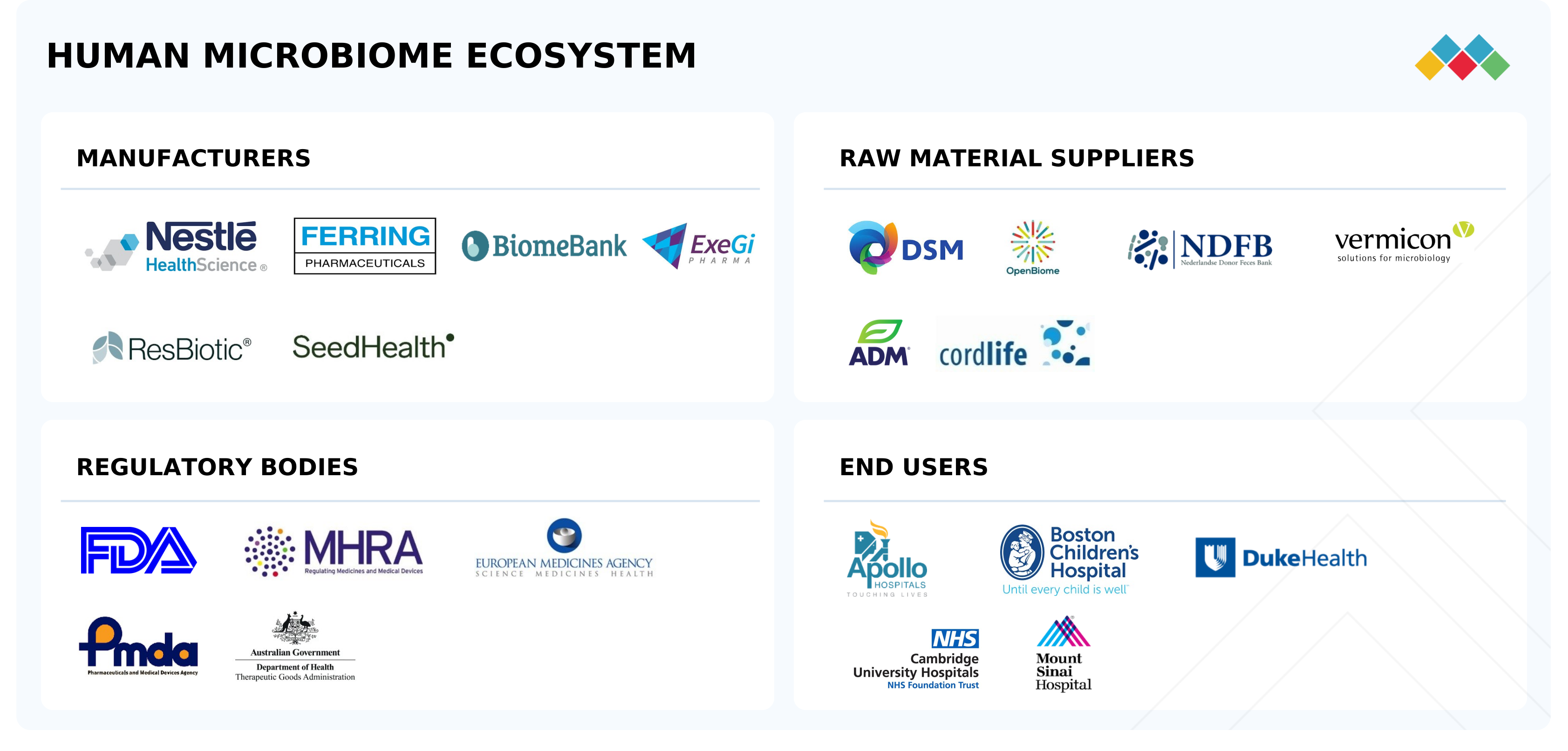
Human Microbiome Market: COMMERCIAL USE CASES ACROSS INDUSTRIES
| COMPANY | USE CASE DESCRIPTION | BENEFITS |
|---|---|---|
 |
Ostia Sciences announced a collaboration with Expert’Biome (a CDMO by Lallemand) to support process development and clinical-grade production for an oral care probiotic program. | Demonstrates incremental build-out of capacity via CDMO partnerships instead of investing in new facilities | Accelerates time to clinic by leveraging an established GMP partner | Reduces upfront capital burden for smaller biotech players |
Logos and trademarks shown above are the property of their respective owners. Their use here is for informational and illustrative purposes only.
Related Ecosystem
Advanced Genetic Sequencing
- Polymerase Chain Reaction (PCR)
- Reagents
- Assay Kits
- Bioinformatics
- Flow Cytometry
- Thermo Fisher Scientific Inc.
- Illumina, Inc.
- Qiagen N.V.
- Agilent Technologies, Inc.
- Danaher Corporation
Biotechnology
- Reagents
- Polymerase Chain Reaction (PCR)
- Stem Cells
- Assay Kits
- Flow Cytometers
- Thermo Fisher Scientific Inc.
- Merck KGaA
- Danaher Corporation
- Agilent Technologies, Inc.
- Bio-Rad Laboratories, Inc.
Key Takeaways
- Rest Of GCC Countries' human microbiome market is valued at $1.5 million in 2025 and is forecast to reach $6.2 million by 2030, representing a 26.5% CAGR.
- Rest Of GCC Countries is experiencing accelerated adoption of probiotic and prebiotic therapeutics driven by rising healthcare awareness and preventive medicine initiatives.
- Rest Of GCC Countries benefits from strategic partnerships between regional healthcare providers and international microbiome research institutions, enhancing innovation capacity.
- Rest Of GCC Countries' regulatory environment is increasingly supportive of microbiome-based product development, creating favorable conditions for market expansion through 2030.
Human Microbiome Market Report Scope
| Report Metric | Details |
|---|---|
| Base Year | 2025 |
| Fastest Growing Segment | DRUGS (Product) |
| Forecast Period | 2025–2030 |
| Growth Rate | CAGR of 31% from 2025 to 2030 |
| Largest Segment | ORAL ROUTE OF ADMINISTRATION (Route Of Administration) |
| Market Size Base Year (Billions) | ~USD 1.4 (2025) |
| Revenue Forecast (Billions) | ~USD 5.41 (2030) |
| Segments Covered | Product, Type, Disease, Route Of Administration, Service, End User |
Asia Pacific Human Microbiome Market Report Segmentation
6 segment dimensions are covered across the global market.
By Product
- Diagnostics
- Drugs
- Supplements
By Type
- Bacterial Consortia Transplantation (Bct)/ Fecal Microbiota Transplantation (Fmt)
- Bacterial Consortia Transplantation (Bct)/Fecal Microbiota Transplantation (Fmt)
- Live Bacteria Products
- Live Bacteria Products (Lbps)
- Other Microbiome Types
- Prebiotics
- Probiotics
- Synbiotics
By Disease
- Endocrine & Metabolic Disorders
- Gastrointestinal Diseases
- Infectious Diseases
- Other Diseases
By Route Of Administration
- Oral Route Of Administration
- Rectal Route Of Administration
By Service
- Fermentation & Downstream Processing
- Formulation & Fill/Finish
- Other Services
- Strain Development & Optimization
By End User
- Hospitals & Clinics
- Long-Term Care Facilities
- Other End Users
Target Audience
- Pharmaceutical & Biotech Companies : Evaluate Asia Pacific market opportunities for microbiome-based therapeutics and diagnostics, assess regional demand, and develop localized commercialization strategies for product launches.
- Healthcare Investors & PE Firms : Identify high-growth investment opportunities in Asia Pacific's microbiome sector with detailed market sizing, growth projections, and competitive analysis to support investment thesis development.
- Diagnostic & Medical Device Manufacturers : Understand Asia Pacific demand for microbiome diagnostic tools, market adoption rates, and regulatory pathways to guide product development and market expansion strategies.
- Healthcare Providers & Institutions : Assess microbiome testing and therapeutic adoption trends across Asia Pacific to inform clinical program development, patient care strategies, and technology investment decisions.
- Market Research & Consulting Firms : Access comprehensive Asia Pacific microbiome market data and insights to support client advisory services, competitive benchmarking, and strategic planning engagements.
Key Companies in the Asia Pacific Human Microbiome Market
| Company | HQ | Ownership | Strongest segments |
|---|---|---|---|
| MERCK KGAA | United States | Public Company | Drugs (enabling inputs, not finished products),Probiotics (research, QC, and manufacturing support),Prebiotics (analytical and formulation support), |
| BIOGEN | United States | Public Company | Drugs (microbiome-linked mechanisms),Diagnostics (biomarker and microbiome-informed tools),CDMO / Strain Engineering & Formulation Services, |
| PFIZER | United States | Public Company | Drugs,Probiotics,Prebiotics, |
| INTERNATIONAL FLAVORS & FRAGRANCES INC. | United States | Public Company | Probiotics,Prebiotics,Synbiotics, |
| SERES THERAPEUTICS | United States | Public Company | Drugs (Live Biotherapeutic Products),Probiotics / Prebiotics / Synbiotics,Diagnostics, |
| OPTIBIOTIX HEALTH PLC | United Kingdom | Public Company | Prebiotics,Synbiotics,Probiotics, |
| BIOGAIA | Sweden | Public Company | Probiotics,Prebiotics,Synbiotics, |
| MAAT PHARMA | France | Public Company | Drugs (MaaT013, MaaT033, MaaT03X, MaaT034 clinical-stage),BCT/FMT-based products,Live bacteria / LBPs (platform and development services), |
MERCK KGAA
Merck KGaA is a publicly traded pharmaceutical and chemical company founded in 1668 with 59,077 employees operating in the United States. The company operates across multiple business segments including pharmaceuticals, life sciences, and performance materials.
BIOGEN
Biogen is a publicly traded biotechnology company founded in 1978 with 7,500 employees based in the United States. The company focuses on discovering, developing, and delivering therapies for neurological and neurodegenerative diseases.
PFIZER
Pfizer is a publicly traded pharmaceutical company founded in 1950 with 1,244 employees in the United States. The company develops and manufactures prescription medications, vaccines, and consumer healthcare products.
INTERNATIONAL FLAVORS & FRAGRANCES INC.
International Flavors & Fragrances Inc. is a publicly traded company founded in 1909 with 21,500 employees in the United States. The company creates and supplies flavors, fragrances, and specialty ingredients for the food, beverage, and personal care industries.
SERES THERAPEUTICS
Seres Therapeutics is a publicly traded biotechnology company founded in 2010 with 66 employees in the United States. The company focuses on developing microbiome therapeutics to treat human diseases.
OPTIBIOTIX HEALTH PLC
OptiBiotix Health PLC is a publicly traded biotechnology company founded in 2006 with 9 employees based in the United Kingdom. The company develops microbiome modulation products for health and nutrition applications.
BIOGAIA
BioGaia is a publicly traded biotechnology company founded in 1990 with 243 employees based in Sweden. The company develops and markets probiotic products for human health and nutrition.
MAAT PHARMA
Maat Pharma is a publicly traded biopharmaceutical company founded in 2014 with 56 employees based in France. The company develops microbiome-based therapeutics for gastrointestinal and immune-related diseases.
Countries within Asia Pacific - compare and drill down
| Country | 2025 size (native) |
|---|---|
| China | USD Million |
| Japan | USD Million |
| India | USD Million |
| South Korea | USD Million |
| Australia | USD 64.9 Million |
Country market size visualization
Reasons to Buy this Report
- Regional Market Sizing & Forecasts : Obtain precise market size data for Asia Pacific ($1.5M in 2025, $6.2M by 2030) with detailed 26.5% CAGR analysis to support strategic planning and investment decisions in this high-growth region.
- Competitive Landscape Intelligence : Understand key players, market share dynamics, and competitive positioning specific to Asia Pacific's microbiome sector to identify partnership and acquisition opportunities.
- Growth Driver Analysis : Gain insights into region-specific factors driving microbiome market expansion, including healthcare investments, regulatory developments, and emerging therapeutic applications unique to Asia Pacific.
- Country-Level Breakdown : Access granular market data across major Asia Pacific countries including China, Japan, India, South Korea, and Australia to identify high-potential markets and localize go-to-market strategies.
- Strategic Market Entry Guidance : Leverage comprehensive Asia Pacific market analysis to develop informed market entry strategies, identify distribution channels, and prioritize investment in the region's fastest-growing microbiome segments.
Frequently asked questions
What is the current market size of the human microbiome market in Rest Of GCC Countries?
Rest Of GCC Countries' human microbiome market is estimated at $1.5 million in 2025.
What is the projected market size for Rest Of GCC Countries by 2030?
Rest Of GCC Countries' human microbiome market is forecast to reach $6.2 million by 2030.
What is the CAGR for the human microbiome market in Rest Of GCC Countries?
Rest Of GCC Countries' human microbiome market is expected to grow at a compound annual growth rate of 26.5% from 2025 to 2030.
What are the primary drivers of growth in Rest Of GCC Countries' microbiome market?
Rest Of GCC Countries' market growth is driven by increased healthcare investments, rising awareness of microbiome therapeutics, expanding clinical research, and supportive regulatory frameworks.
How does Rest Of GCC Countries' microbiome market compare to the global market?
Rest Of GCC Countries' microbiome market is growing at 26.5% CAGR, slightly below the global CAGR of 31%, reflecting strong regional momentum within the GCC healthcare landscape.
RESEARCH METHODOLOGY
This research study extensively used secondary sources, directories, and databases to identify and collect valuable information to analyze the global human microbiome market. In-depth interviews were conducted with various primary respondents, including key industry participants, subject-matter experts (SMEs), C-level executives of key market players, and industry consultants, to obtain and verify critical qualitative & quantitative information and assess the growth prospects of the market. The global market size estimated through secondary research was then triangulated with inputs from primary research to arrive at the final market size.
Secondary Research
Secondary research was used primarily to identify & collect information for the extensive, technical, market-oriented, and commercial study. The secondary sources used for this study include World Health Organization (WHO), Human Microbiome Project (HMP), Organisation for Economic Co-operation and Development (OECD), National Institutes of Health (NIH), Food and Drug Administration (FDA), ClinicalTrials.gov, Annual Reports, SEC Filings, Investor Presentations, Research Journals, Press Releases, and financial statements. These sources also obtained key information about major players, market classification, and segmentation according to industry trends, regional/country-level markets, market developments, and technology perspectives.
Primary Research
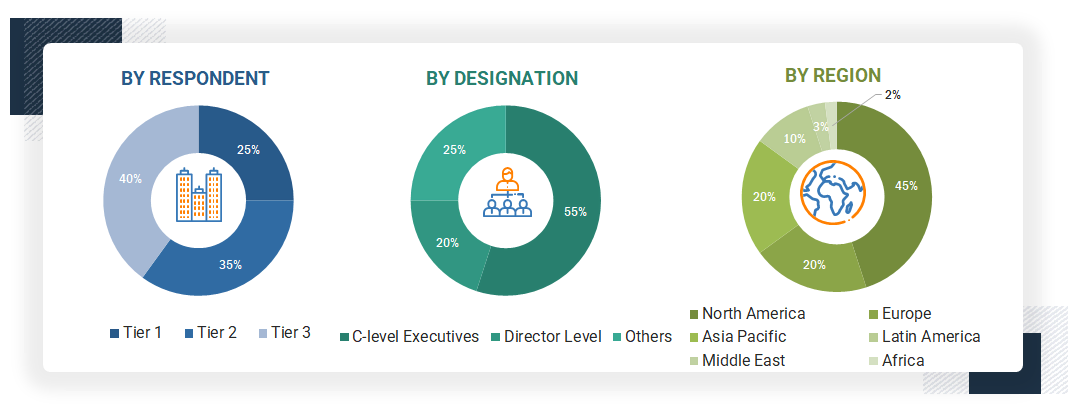
In-depth interviews were conducted with various primary respondents, including key industry participants, subject-matter experts (SMEs), C-level executives of key market players, and industry consultants, to obtain and verify the critical qualitative & quantitative information and assess the prospects of the market. Various primary sources from both the supply & demand sides of the market were interviewed to obtain qualitative and quantitative information. The following is a breakdown of the primary respondents:
The following is a breakdown of the primary respondents:
To know about the assumptions considered for the study, download the pdf brochure
Market Size Estimation
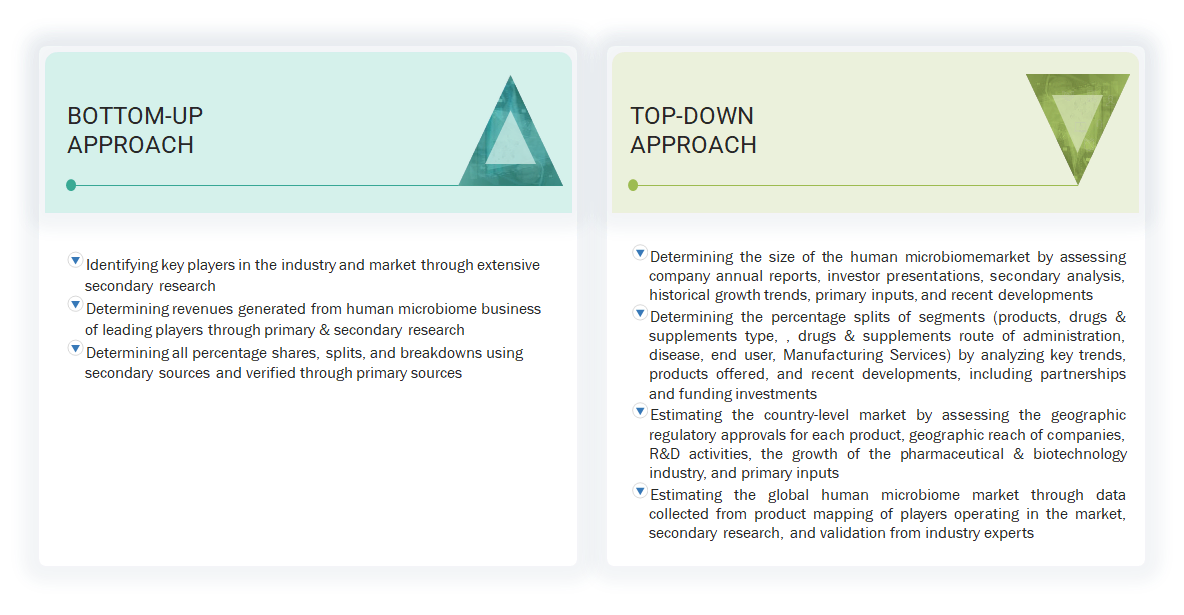
Both top-down and bottom-up approaches were used to estimate & validate the total size of the human microbiome market. These methods were also used extensively to estimate the size of various subsegments in the market. The research methodology used to estimate the market size includes the following:
Data Triangulation
The total market was split into several segments and subsegments after arriving at the overall market size from the estimation process. Where applicable, data triangulation and market breakdown procedures were employed to complete the overall market engineering process and arrive at the exact statistics for all segments and subsegments. The data was triangulated by studying various factors and trends from both the demand and supply sides.
Market Definition
The human microbiome encompasses the collective genetic material of diverse microorganisms residing within the human body, known as the metagenome. This includes bacteria, fungi, protozoans, non-living viruses, and various single-celled organisms. These microorganisms play a crucial role in human physiology, influencing metabolic and immune functions. Found within human tissues, the microbiome is a focal point of research for medical advancements and analytical techniques. It is applied in probiotics, prebiotics, pharmaceuticals, and therapeutic systems to address conditions such as diabetes, obesity, and cancer, as well as a range of metabolic, gastrointestinal, neurological, central nervous system, and autoimmune disorders.
The study provides an in-depth analysis of the Human Microbiome market based on contemporary market trends and developments, and its potential growth from 2025 to 2031. It includes detailed market trends, the competitive landscape, market size, forecasts, and the analysis of the key Human Microbiome service providers.
Stakeholders
- Manufacturers and Distributors of Human Microbiome Products
- Pharmaceutical and Biotechnology Companies
- Market Research and Consulting Firms
- R&D Centers
- Researchers and Scientists
- Academic & Research Institutes
- Hospitals & Clinics
- Long-term Care Centers
- Specialty Care Centers
- Outpatient Care Centers
Report Objectives
- To define, describe, and forecast the human microbiome market based on products, disease, drugs & supplements type, drugs & supplements route of administration, end user, manufacturing services and region
- To provide detailed information regarding the major factors influencing the market growth (such as drivers, restraints, opportunities, and challenges)
- To strategically analyze micromarkets with respect to individual growth trends, prospects, and contributions to the overall human microbiome market
- To analyze the opportunities in the market for stakeholders and provide details of the competitive landscape for market leaders
- To forecast the size of the market segments with respect to six main regions, namely, North America, Europe, the Asia Pacific, Latin America, the Middle East, and Africa
- To strategically profile the key players in the human microbiome market and comprehensively analyze their core competencies and market rankings
- To track and analyze competitive developments such as product launches, acquisitions, expansions, agreements, partnerships, and collaborations in the human microbiome market
- To benchmark players within the human microbiome market using the ‘Company Evaluation Matrix' framework, which analyzes market players based on various parameters within the broad categories of business and product strategy
Get the Full Human Microbiome Market Report
Full forecast, segment splits, and company analysis for all Human Microbiome Market.
- US Human Microbiome Market
- Canada Human Microbiome Market
- Germany Human Microbiome Market
- UK Human Microbiome Market
- France Human Microbiome Market
- Italy Human Microbiome Market
- Spain Human Microbiome Market
- China Human Microbiome Market
- Japan Human Microbiome Market
- India Human Microbiome Market
- South Korea Human Microbiome Market
- Australia Human Microbiome Market
- Brazil Human Microbiome Market
- Saudi Arabia Human Microbiome Market
- UAE Human Microbiome Market
- Rest Of Europe Human Microbiome Market
Need a Tailored Report?
Customize this report to your needs
Get 10% FREE Customization
Customize This Report
