
UK Instrument Transformers Market (2023-2028)

The UK Instrument Transformers Market was valued at $311.3 Million in 2023 and projected to reach to $476.7 Million by 2028, representing a compound annual growth rate of 6.3%. The UK instrument transformers market is positioned for robust growth over the forecast period, supported by the government's net-zero commitments and substantial capital expenditure in electrical infrastructure modernization.


| Market Size in | USD 26.32 MN |
| Market Forecast in | |
| CAGR | |
| Forecast Period | |
| Units Considered | Value (USD MN) |
UK Instrument Transformers Market Trends and Insights
- The UK market is driven by modernization of electrical infrastructure, increased renewable energy integration, and regulatory compliance requirements across the power distribution sector.
- The UK's commitment to net-zero emissions and grid decarbonization initiatives are accelerating demand for advanced metering and monitoring solutions that rely on precision instrument transformers. The UK instrument transformers market benefits from substantial investment in smart grid technologies and the replacement of aging electrical assets.
- Between 2023 and 2028, the UK is expected to see heightened adoption of digital-enabled transformers that support real-time monitoring and predictive maintenance.
- The UK's position as a leader in offshore wind and renewable energy expansion further supports market growth, as these applications require specialized instrument transformers for voltage and current measurement in high-capacity transmission systems..
Key Market Statistics
- CAGR (2023-2028) 6.3% CAGR
- Market Size, 2023 ~USD 311.3 Million
- Forecast, 2028 ~USD 476.7 Million
- Country UK
UK Instrument Transformers Market Overview
Market Valuation Growth :
The UK instrument transformers market reached USD 311.3 million in 2023 and is forecast to expand to USD 476.7 million by 2028, driven by substantial infrastructure investments and grid modernization initiatives across the country.
Renewable Energy Integration :
UK's ambitious renewable energy targets are accelerating demand for instrument transformers to support wind, solar, and hydroelectric installations, requiring advanced measurement and protection equipment for grid stability.
Regulatory Compliance Drivers :
Stringent UK and EU-aligned regulations mandate upgraded metering infrastructure and power quality monitoring, compelling utilities and distribution operators to invest in modern instrument transformer solutions.
Smart Grid Modernization :
The UK's transition toward smart grid technology and digital substations is creating significant demand for precision instrument transformers that enable real-time monitoring and automated control systems.
UK Instrument Transformers Market Dynamics
- Utilities are increasingly adopting advanced transformer technologies to enhance grid reliability, accommodate distributed renewable generation, and meet evolving regulatory standards.
- The market will benefit from ongoing substation upgrades, smart metering rollouts, and the integration of distributed energy resources across the UK's power distribution network.
- Strategic investments in grid resilience and decarbonization initiatives will sustain demand through 2028..
Market Ecosystem
Related Ecosystem
High Voltage Products And Systems
- Analytics Software
- Connected Healthcare
- Connected Logistics
- Geographical Information System (GIS)
- Network Bandwidth Management
- ABB India Limited
- Siemens ag
- SCHNEIDER ELECTRIC SE
- Eaton Corporation plc
- Fuji Electric Co., Ltd.
Power Infrastructure
- Geographical Information System (GIS)
- Cogeneration
- Battery Electric Vehicle (BEV)
- Cellular Network
- Fuel Cell
- ABB India Limited
- Siemens ag
- SCHNEIDER ELECTRIC SE
- General Electric Company
- Eaton Corporation plc
Key Takeaways
- The UK instrument transformers market is valued at USD 311.3 million in 2023 and will reach USD 476.7 million by 2028, growing at 6.3% CAGR.
- The UK's renewable energy transition and net-zero commitments are primary drivers of instrument transformer demand in the forecast period.
- Smart grid modernization and digital transformation initiatives across the UK power sector are accelerating adoption of advanced metering solutions.
- The UK's aging electrical infrastructure replacement cycle presents significant growth opportunities for instrument transformer manufacturers through 2028.
Instrument Transformers Market Report Scope
| Report Metric | Details |
|---|---|
| Base Year | 2023 |
| Fastest Growing Segment | UHV TRANSMISSION (Voltage) |
| Forecast Period | 2023-2028 |
| Growth Rate | CAGR of 5.8% from 2023 to 2028 |
| Largest Segment | OUTDOOR (Enclosure Type) |
| Market Size Base Year (Billions) | ~USD 7.14 (2023) |
| Revenue Forecast (Billions) | ~USD 9.47 (2028) |
| Segments Covered | Type, Enclosure Type, Dielectric Medium, Voltage, Application, End User, Utility Type, Industry |
UK Instrument Transformers Market Report Segmentation
8 segment dimensions are covered across the global market.
By Type
- Combined
- Combined R
- Combined S
- Current
- Potential
By Enclosure Type
- Indoor
- Outdoor
By Dielectric Medium
- Liquid
- Sf6 Gas
- Solid
By Voltage
- Distribution
- Ehv Transmission
- Hv Transmission
- Sub-Transmission
- Uhv Transmission
By Application
- Metering & Protection
- Primary Metering Units
- Relaying
- Switchgear Assemblies
- Transformer & Circuit Breaker Bushing
By End User
- Industries & Oems
- Power Generation Plants
- Power Utilities
- Railways & Metros
By Utility Type
- Distribution
- Transmission
By Industry
- Automotive
- Cement
- Chemicals
- Industrial Machinery
- Iron And Steel
- Oil & Gas
UK: INSTRUMENT TRANSFORMER MARKET, BY APPLICATION, 2023–2030
| Segment | 2023 | 2024 | 2025 | 2026 | 2027 | 2028 | 2029 | 2030 | CAGR (%) |
|---|---|---|---|---|---|---|---|---|---|
| METERING & PROTECTION | 43.1 | 44.9 | 47.1 | 49.7 | 52.7 | 56.2 | 60.2 | 64.8 | 6 |
| PRIMARY METERING UNITS | 23.5 | 24.4 | 25.5 | 26.8 | 28.3 | 30 | 32 | 34.3 | 5.6 |
| RELAYING | 24.8 | 25.6 | 26.6 | 27.9 | 29.4 | 31.1 | 33 | 35.3 | 5.2 |
| SWITCHGEAR ASSEMBLIES | 69.4 | 72.7 | 76.7 | 81.4 | 86.9 | 93.1 | 100.4 | 108.7 | 6.6 |
| TRANSFORMER & CIRCUIT BREAKER BUSHING | 150.6 | 157.5 | 165.9 | 175.9 | 187.4 | 200.6 | 216 | 233.6 | 6.5 |
| TOTAL | 311.3 | 325.1 | 341.8 | 361.8 | 384.7 | 411 | 441.6 | 476.7 | 6.3 |
Target Audience
- UK Utility Companies : Distribution and transmission operators need market intelligence to plan infrastructure upgrades, evaluate transformer procurement strategies, and align investments with regulatory requirements and net-zero targets.
- Equipment Manufacturers & Suppliers : Transformer manufacturers and component suppliers require UK-specific demand forecasts and market dynamics to optimize production capacity, develop localized products, and identify growth opportunities.
- Energy Consultants & Engineers : Engineering firms and energy consultants advising on grid modernization projects need detailed UK market data to inform technical recommendations, feasibility studies, and cost-benefit analyses.
- Investment & Financial Analysts : Investors, private equity firms, and financial analysts evaluating UK energy sector opportunities require comprehensive market sizing and growth projections to assess investment viability and returns.
- Government & Policy Bodies : UK regulatory agencies and policy makers need market intelligence to develop informed energy policies, infrastructure standards, and incentive programs supporting grid modernization and renewable integration.
Reasons to Buy this Report
- UK-Specific Market Sizing : Access precise valuation data for the UK market segment with detailed historical performance (2023) and forward projections (2028), enabling accurate budget allocation and investment planning for UK operations.
- Regulatory & Compliance Insights : Understand UK-specific regulatory requirements, grid standards, and compliance mandates that directly influence purchasing decisions and technology adoption across the British power sector.
- Competitive Landscape Analysis : Identify key market players, competitive positioning, and market share dynamics specific to the UK, supporting strategic partnerships and competitive differentiation strategies.
- Growth Driver Identification : Gain actionable intelligence on UK-specific growth catalysts including renewable energy targets, smart grid initiatives, and infrastructure investment programs shaping market demand.
- Investment Decision Support : Leverage comprehensive UK market data to validate business cases, support capital allocation decisions, and identify high-potential customer segments within the British energy sector.
Frequently asked questions
What is the current size of the UK instrument transformers market?
The UK instrument transformers market was valued at USD 311.3 million in 2023 and is expected to grow to USD 476.7 million by 2028.
What is the growth rate of the UK instrument transformers market?
The UK instrument transformers market is projected to grow at a compound annual growth rate (CAGR) of 6.3% from 2023 to 2028.
What are the main drivers of growth in the UK instrument transformers market?
Key drivers include the UK's net-zero emissions commitments, renewable energy expansion, smart grid modernization, aging infrastructure replacement, and increased demand for real-time monitoring solutions.
How does the UK instrument transformers market compare to Europe?
The UK represents a significant segment within the European instrument transformers market, with its own distinct growth trajectory driven by local regulatory frameworks and energy transition policies.
Which applications are driving demand in the UK instrument transformers market?
Primary applications include smart metering, renewable energy integration (particularly offshore wind), grid modernization, voltage and current measurement in transmission systems, and predictive maintenance solutions.
RESEARCH METHODOLOGY
This study involved substantial efforts to determine the current size of the instrument transformers market. It began with a rigorous secondary research procedure to acquire information on the market, analogous markets, and the overall industry. These results, assumptions, and market size projections were then carefully evaluated by contacting industry experts from throughout the whole value chain using primary research methods. The entire market size was determined by completing a country-specific analysis. Following that, the market was dissected further, with data cross-referenced to estimate the size of various market segments and sub-segments.
Secondary Research
Several secondary sources were used during the secondary research process to discover and collect material for this study. Secondary sources include company annual reports, press announcements, investor presentations, white papers, certified publications, articles by recognized writers, manufacturers' organizations, directories, and databases.
Secondary research was primarily conducted to obtain key information about the industry's supply chain, the total pool of key players, market classification and segmentation based on industry trends to the lowest level, regional markets, and key developments from both market and technology perspectives.
Primary Research
During the main research process, several primary sources were interviewed to gather qualitative and quantitative data for this study. Primary supply-side sources include industry professionals such as CEOs, vice presidents, marketing directors, technology and innovation directors, and other important executives from various top firms and organizations in the worldwide instrument transformers market.
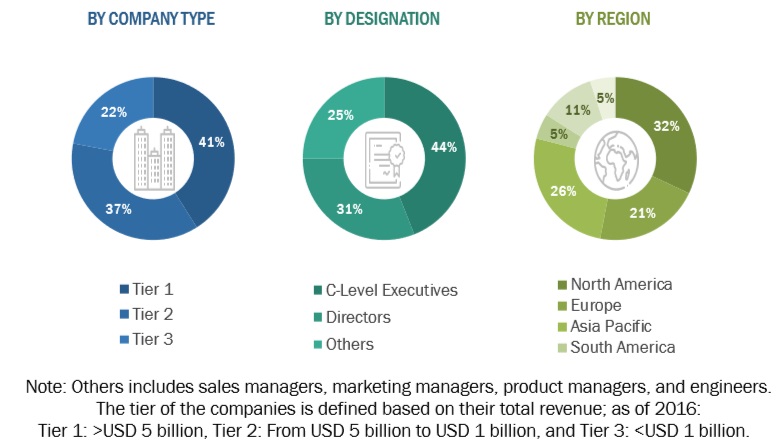
To know about the assumptions considered for the study, download the pdf brochure
Market Size Estimation
The size of the market and its related submarkets was estimated and validated using both top-down and bottom-up techniques. The research method used to estimate market size includes secondary research to identify key firms, as well as primary and secondary research to assess their market shares in relevant areas. This procedure comprises analyzing the annual and financial reports of key market businesses, as well as conducting in-depth interviews with industry specialists such as CEOs, VPs, directors, and marketing executives to gain valuable insights. All percentage shares, splits, and breakdowns were derived using secondary sources and confirmed with original sources. To get at the final quantitative and qualitative data, all conceivable parameters affecting the markets included in this research study were accounted for, examined in great depth, validated by primary research, and assessed.
Global Instrument Transformers Market Size: Bottom-Up Approach
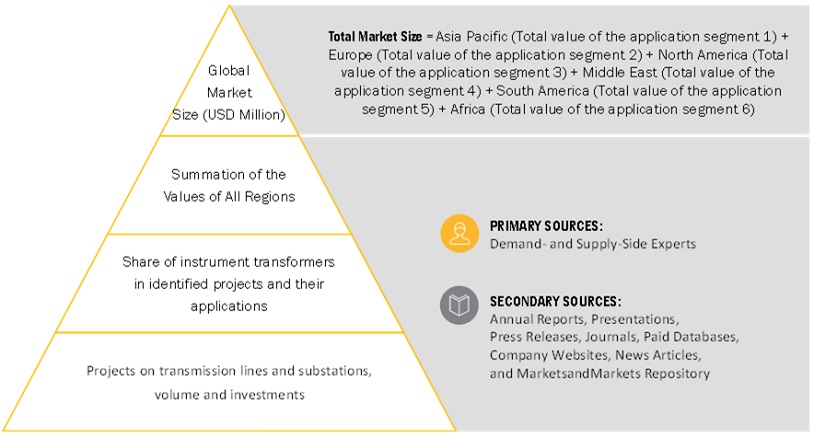
To know about the assumptions considered for the study, Request for Free Sample Report
Data Triangulation
After calculating the overall market size using the process indicated above, the whole market was divided into several categories and sub-segments. Data triangulation including market breakdown procedures were used, when appropriate, to complete the whole market engineering process and provide correct statistics for all segments and sub-segments. The data has been triangulated by examining numerous aspects and trends on both the demand and supply sides. In addition, the market has been verified using top-down and bottom-up approaches.
Market Definition
The electricity used by residential, commercial, and industrial users comes from centralized power facilities located far from the consumption locations. These power plants are linked to end customers via a complicated transmission and distribution infrastructure. This network extends beyond individual electric companies and, in some cases, across entire countries, such as Europe. To manage energy flow, numerous measurements are taken across the grid to determine its electrical status. Real-time voltage and current measurements at several sites offer information about the system's state. Measurements are taken at power plant outputs, as well as at the input and output of lines that meet at transmission or distribution substations. These metrics are used for invoicing reasons, allowing firms to track their power output and consumer use. Vigilant monitoring avoids overloading, diagnoses defects, and optimizes generation and distribution for efficient grid management.
Instrument transformers are specialized electrical devices that safely and precisely monitor high voltage and current in power networks. They serve as an important connection between high-voltage power lines and low-voltage measuring devices, allowing for safe and reliable monitoring of vital electrical parameters. Instrument transformers essentially convert high voltage or current values into safer and more controllable levels that may be measured by equipment like as meters, relays, and safety devices.
This transformation is accomplished by electromagnetic induction, which occurs when a change in current or voltage in the transformer's main winding causes a proportionate change in the secondary winding.
The scope of this study covers, but is not limited to, all accuracy classes for instrument transformers described by IEEE, CSA, IEC, and ANSI standards..
Key Stakeholders
- Banks, venture capitalists, financial institutions, and other investors
- Companies related to electric power generation, transmission, and distribution
- Energy associations
- Environment associations
- Energy efficiency consultants
- Government and industry associations
- Government and research organizations
- Manufacturing industry
- Public & private power generation, transmission & distribution companies (utilities)
- Smart grid project developers
- State and national regulatory authorities
- Sub-station equipment manufacturing companies
- Venture capital firms
Objectives of the Study
- The instruments transformers market will be defined, described, segmented, and forecasted based on installation, insulation, voltage, current, and end-user.
- To forecast market size for five key regions: North America, South America, Europe, Asia Pacific, and the Middle East and Africa, as well as the key countries within each region.
- To provide comprehensive information about market growth drivers, restraints, opportunities, and industry-specific challenges.
- To strategically analyze the subsegments in terms of individual growth trends, prospects, and contributions to overall market size.
- To examine market opportunities for stakeholders and the competitive landscape for market leaders.
- To profile the key players strategically and thoroughly analyze their market shares and core competencies.
- To monitor and analyze competitive developments in the instruments transformers market, such as agreements, sales contracts, partnerships, new product launches, acquisitions, joint ventures, contracts, expansions, and investments.
- This report examines the value of the instruments transformers market.
Available Customizations
With the given market data, MarketsandMarkets offers customizations according to your specific needs. The following customization options are available for a report:
Product Analysis
- Product Matrix, which provides a detailed comparison of the product portfolio of each company
Company Information
- Detailed analyses and profiling of additional market players
Get the Full Instrument Transformers Market Report
Full forecast, segment splits, and company analysis for all Instrument Transformers Market.
- China Instrument Transformers Market
- India Instrument Transformers Market
- Japan Instrument Transformers Market
- South Korea Instrument Transformers Market
- Australia Instrument Transformers Market
- Germany Instrument Transformers Market
- France Instrument Transformers Market
- Spain Instrument Transformers Market
- Sweden Instrument Transformers Market
- Norway Instrument Transformers Market
- Russia Instrument Transformers Market
- Canada Instrument Transformers Market
- Mexico Instrument Transformers Market
- US Instrument Transformers Market
- Saudi Arabia Instrument Transformers Market
- UAE Instrument Transformers Market
- Qatar Instrument Transformers Market
- South Africa Instrument Transformers Market
- Brazil Instrument Transformers Market
- Argentina Instrument Transformers Market
- Chile Instrument Transformers Market
- Rest Of Europe Instrument Transformers Market
- Rest Of Asia Pacific Instrument Transformers Market
- Rest Of GCC Countries Instrument Transformers Market
- Rest Of Mea Instrument Transformers Market
- Rest Of South America Instrument Transformers Market
Need a Tailored Report?
Customize this report to your needs
Get 10% FREE Customization
Customize This Report
