
India Learning Management System Market (2025-2030)

The India Learning Management System Market was valued at $1111 Million in 2025 and projected to reach to $1928.6 Million by 2030, representing a compound annual growth rate of CAGR 20.5%. India's Learning Management System market is poised for exceptional growth, expanding from USD 1,111.0 million in 2025 to USD 1,928.6 million by 2030.


| Market Size in | USD 26.32 MN |
| Market Forecast in | |
| CAGR | |
| Forecast Period | |
| Units Considered | Value (USD MN) |
India Learning Management System Market Trends and Insights
- This accelerated expansion in India reflects the country's increasing digital transformation in education and corporate training sectors, driven by rising internet penetration and smartphone adoption across urban and semi-urban regions.
- India's LMS market growth significantly outpaces global trends, positioning the nation as a key growth engine within the Asia Pacific region. The surge in India's learning management system adoption is fueled by the proliferation of online education platforms, government initiatives promoting digital literacy, and enterprises investing in employee upskilling programs.
- India's young demographic and expanding middle class are driving demand for accessible, cost-effective learning solutions across K-12, higher education, and corporate segments.
- By 2030, India is expected to consolidate its position as a major LMS market, with cloud-based and AI-integrated solutions gaining significant traction among educational institutions and organizations seeking scalable training infrastructure..
Key Market Statistics
- CAGR (2025-2030) CAGR 20.5%
- Market Size, 2025 ~USD 1111 Million
- Forecast, 2030 ~USD 1928.6 Million
- Country India
India Learning Management System Market Overview
Rapid Market Expansion :
India's LMS market is growing at 20.5% CAGR, significantly outpacing the global rate of 18.4%, driven by massive digital adoption in educational institutions and enterprises across the country.
Digital Transformation in Education :
Rising internet penetration and government initiatives like National Education Policy 2020 are accelerating LMS adoption in schools, colleges, and universities, creating substantial market opportunities.
Corporate Training Boom :
Indian enterprises are increasingly investing in digital learning platforms for employee upskilling and compliance training, particularly in IT, BFSI, and manufacturing sectors.
Affordable Technology Solutions :
Growing demand for cost-effective, cloud-based LMS solutions tailored to Indian market needs is driving innovation and attracting both domestic and international vendors.
India Learning Management System Market Dynamics
- This trajectory reflects India's commitment to digital education transformation, supported by government policies, increasing smartphone penetration, and the shift toward hybrid and remote learning models across educational and corporate sectors. The market will be fueled by rising demand from K-12 institutions, higher education providers, and enterprises seeking scalable training solutions.
- Emerging technologies like AI-powered personalization, mobile-first platforms, and localized content in regional languages will further accelerate adoption.
- Strategic investments by both Indian startups and global players will intensify competition, driving innovation and affordability in the Indian LMS ecosystem..
Market Ecosystem
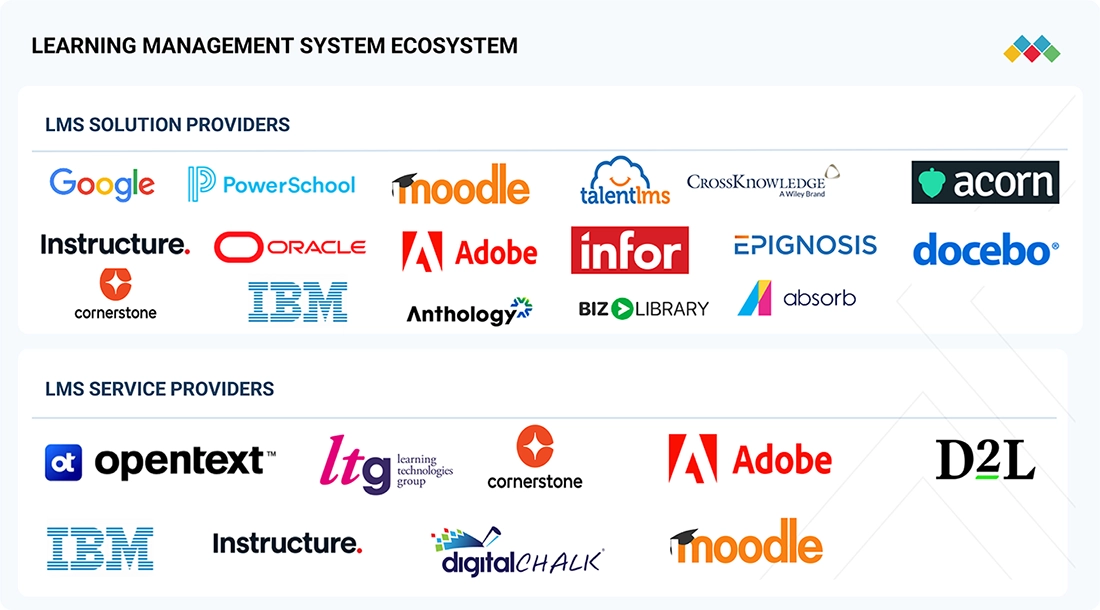
LEARNING MANAGEMENT SYSTEM MARKET: COMMERCIAL USE CASES ACROSS INDUSTRIES
| COMPANY | USE CASE DESCRIPTION | BENEFITS |
|---|---|---|
 |
Global workforce training and compliance management using Cornerstone Galaxy Learning Management System | Reduce onboarding time | Improve compliance tracking | Enable consistent global training |
 |
Digital learning modernization using Blackboard, digital badging, and learning insights tools | Enable high student engagement | Improve course design | Improve employability outcomes |
 |
Large-scale, multi-lingual training delivery using Moodle Workplace Learning Management System | Enhance training access | Strengthen progress tracking | Improve learning efficiency worldwide |
Logos and trademarks shown above are the property of their respective owners. Their use here is for informational and illustrative purposes only.
Related Ecosystem
Cloud Computing
- Software as A Service (SaaS)
- Natural Language Processing (NLP)
- Platform as A Service (PaaS)
- Machine Learning
- Supply Chain Management
- International Business Machines Corporation
- MICROSOFT CORPORATION
- Oracle Corporation
- Amazon.com, Inc.
Software And Services
Information System And Analytics
Key Takeaways
- India's LMS market is valued at USD 1,111.0 million in 2025 and is forecast to reach USD 1,928.6 million by 2030, growing at a 20.5% CAGR.
- India's LMS market growth rate of 20.5% significantly exceeds the global CAGR of 18.4%, establishing India as a high-growth priority market.
- Digital transformation initiatives, government support for online education, and corporate training investments are primary growth catalysts driving India's LMS expansion.
- India's young population, increasing smartphone penetration, and demand for affordable learning solutions position the country as a critical growth hub in Asia Pacific.
Learning Management System Market Report Scope
| Report Metric | Details |
|---|---|
| Base Year | 2025 |
| Fastest Growing Segment | RETAIL (Corporate User) |
| Forecast Period | 2025–2030 |
| Growth Rate | CAGR of 18.4% from 2025 to 2030 |
| Largest Segment | CLOUD (Deployment Mode) |
| Market Size Base Year (Billions) | ~USD 30.87 (2025) |
| Revenue Forecast (Billions) | ~USD 71.83 (2030) |
| Segments Covered | Offering, Service, Delivery Mode, Distance Learning, Instructor-Led Training, Blended Learning, Organization Size, Deployment Mode, Cloud, Application Area, User Type, Academic User, Corporate User, Instructor-Led Learning |
India Learning Management System Market Report Segmentation
14 segment dimensions are covered across the global market.
By Offering
- Services
- Solutions
By Service
- Consulting
- Implementation
- Support Services
By Delivery Mode
- Blended Learning
- Distance Learning
- Instructor-Led Training
By Distance Learning
- Mobile Learning
- Online Self-Paced Learning
- Virtual Classrooms
By Instructor-Led Training
- Instructor-Led E-Learning Modules
- Synchronous Online Learning
- Traditional Classroom Instruction
- Virtual Classroom Sessions
- Webinars
- Workshops And Training Sessions
By Blended Learning
- Flex Model
- Flipped Classroom
- Online Driver
- Station Rotation
By Organization Size
- Large Enterprises
- Smes
By Deployment Mode
- Cloud
- On-Premises
By Cloud
- Hybrid Cloud
- Private Cloud
- Public Cloud
By Application Area
- Content Management
- Corporate Training & Development
- Course Management
- Onboarding & Orientation
- Other Application Areas
- Professional Certification & Compliance
- User Management
By User Type
- Academic Users
- Corporate Users
- Government & Non-Profit Organizations
- Government& Non-Profit Organizations
By Academic User
- Higher Education
- K-12
By Corporate User
- Bfsi
- Healthcare
- It & Ites
- Manufacturing
- Other Corporate Users
- Retail
- Telecom
By Instructor-Led Learning
- Instructor-Led E-Learning Modules
- Synchronous Online Learning
- Traditional Classroom Instruction
- Virtual Classroom Sessions
- Webinars
- Workshops And Training Sessions
INDIA: LEARNING MANAGEMENT SYSTEM MARKET, BY APPLICATION AREA, 2026–2032
| Segment | 2026 | 2027 | 2028 | 2029 | 2030 | 2031 | 2032 | CAGR (%) |
|---|---|---|---|---|---|---|---|---|
| CONTENT MANAGEMENT | 92.9 | 111.8 | 134.3 | 161.2 | 193.2 | 231 | 275.8 | 19.9 |
| CORPORATE TRAINING & DEVELOPMENT | 110.5 | 135.1 | 164.8 | 200.7 | 244.1 | 296.3 | 359.1 | 21.7 |
| COURSE MANAGEMENT | 112.3 | 135.4 | 163.1 | 196.1 | 235.4 | 282.1 | 337.5 | 20.1 |
| ONBOARDING & ORIENTATION | 64.5 | 77.6 | 93.3 | 111.8 | 133.9 | 160.1 | 191 | 19.8 |
| OTHER APPLICATION AREAS | 96.5 | 116.5 | 140.5 | 169.1 | 203.3 | 244 | 292.4 | 20.3 |
| PROFESSIONAL CERTIFICATION & COMPLIANCE | 79.1 | 96.5 | 117.6 | 143 | 173.7 | 210.5 | 254.7 | 21.5 |
| USER MANAGEMENT | 75.1 | 90 | 107.8 | 128.9 | 153.9 | 183.3 | 218.1 | 19.4 |
| TOTAL | 630.9 | 763 | 921.4 | 1111 | 1337.4 | 1607.4 | 1928.6 | 20.5 |
Target Audience
- EdTech Entrepreneurs & Startups : Need India-specific market data to validate business models, secure funding, and develop localized LMS solutions that address the unique needs of Indian educational institutions and learners.
- Global LMS Vendors : Require detailed India market insights to evaluate market entry opportunities, localization strategies, pricing models, and competitive positioning in this high-growth emerging market.
- Educational Institutions : Need market intelligence to understand technology trends, vendor options, and best practices for implementing LMS solutions that enhance learning outcomes and operational efficiency.
- Corporate L&D Leaders : Seek India market data to benchmark training technology investments, identify emerging platforms, and make informed decisions about LMS adoption for employee development programs.
- Investment & Strategy Consultants : Require comprehensive India LMS market analysis to advise clients on market opportunities, growth potential, competitive dynamics, and strategic positioning in the digital learning sector.
Key Companies in the India Learning Management System Market
| Company | HQ | Ownership | Strongest segments |
|---|---|---|---|
| CANON INC | Japan | Public Company | Distance Learning Enablement (document and video workflows),Instructor-led Learning Infrastructure,Blended Learning and Course Management Workflows, |
| EXL | United States | Public Company | Corporate Training & Development (LMS-adjacent analytics and operations),Professional Certification & Compliance,Course Management & Content Operations, |
| WNS GLOBAL SERVICES | India | Private Company | Distance Learning Enablement & Operations,Blended Learning & Instructor Support Services,Course Management & Compliance Administration, |
CANON INC
Canon Inc. is a Japanese public company founded in 1933 with 165,547 employees. The company is a global leader in imaging and optical products, including cameras, printers, and office equipment.
EXL
EXL is a United States-based public company founded in 1999 with 65,000 employees. The company provides business process management and analytics services to clients across various industries.
WNS GLOBAL SERVICES
WNS Global Services is an India-based private company founded in 1998 with 66,085 employees. The company offers business process management, customer care, and analytics services to global clients.
Reasons to Buy this Report
- Market Size & Growth Validation : Obtain precise market valuation for India (USD 1,111M in 2025) and verified CAGR of 20.5% to support investment decisions, business planning, and competitive positioning in this high-growth market.
- India-Specific Trend Analysis : Access detailed insights into India's unique digital transformation drivers, government policy impacts, and sector-specific adoption patterns that differ from global market dynamics.
- Competitive Landscape Intelligence : Understand the competitive positioning of domestic and international LMS vendors in India, identify market gaps, and benchmark your offerings against regional and global players.
- Segment & Vertical Opportunities : Identify high-potential segments within India's education and corporate training sectors, including K-12, higher education, BFSI, IT, and manufacturing for targeted market entry strategies.
- Strategic Growth Planning : Leverage India-focused forecasts through 2030 to develop long-term expansion strategies, resource allocation plans, and product development roadmaps aligned with market trajectory.
Frequently asked questions
What is the current size of India's Learning Management System market?
India's LMS market is valued at USD 1,111.0 million in 2025, with strong growth momentum expected through the forecast period.
What is the projected market size for India's LMS market by 2030?
India's LMS market is projected to reach USD 1,928.6 million by 2030, representing significant expansion from the 2025 baseline.
What is the CAGR for India's Learning Management System market?
India's LMS market is expected to grow at a compound annual growth rate of 20.5% between 2025 and 2030.
How does India's LMS market growth compare to global trends?
India's LMS market CAGR of 20.5% outpaces the global CAGR of 18.4%, reflecting India's accelerated digital adoption and education sector transformation.
What factors are driving growth in India's Learning Management System market?
Key drivers include digital transformation in education, government digital literacy initiatives, corporate employee training investments, rising internet penetration, and India's young demographic seeking accessible learning solutions.
RESEARCH METHODOLOGY
Secondary research was conducted to collect information useful for this technical, market-oriented, and commercial study of the learning management system market. The next step involved validating these findings, assumptions, and sizing with industry experts across the value chain using primary research. Different approaches, including top-down and bottom-up methods, were employed to estimate the total market size. After that, the market breakup and data triangulation procedures were used to estimate the market size of the segments and subsegments of the learning management system market.
Secondary Research
During the secondary research process, various secondary sources were consulted to identify and collect information relevant to the study. The secondary sources included annual reports, press releases, investor presentations of learning management system vendors, forums, certified publications, and whitepapers. The secondary research was mainly used to obtain key information about the industry’s supply chain, the total pool of key players, market classification and segmentation according to industry trends to the bottom-most level, regional markets, and key developments from both market- and technology-oriented perspectives, all of which were further validated by primary sources.
Primary Research
In the primary research process, various primary sources from the supply and demand sides were interviewed to obtain qualitative and quantitative information for this report. Primary sources from the supply side included various industry experts, including chief executive officers (CEOs), vice presidents (VPs), marketing directors, technology and innovation directors, and related key executives from various key companies and organizations operating in the learning management system market.
In the market engineering process, top-down and bottom-up approaches were extensively used, along with several data triangulation methods, to perform market estimation and forecasting for the overall market segments and subsegments listed in this report. Extensive qualitative and quantitative analysis was performed on the complete market engineering process to list key information/insights throughout the report.
After the complete market engineering process (including calculations for market statistics, market breakups, market size estimations, market forecasts, and data triangulation), extensive primary research was conducted to gather information and verify & validate the critical numbers arrived at. The primary research was also conducted to identify the segmentation types; industry trends; competitive landscape of learning management system players; and key market dynamics, such as drivers, restraints, opportunities, challenges; industry trends; and key strategies.
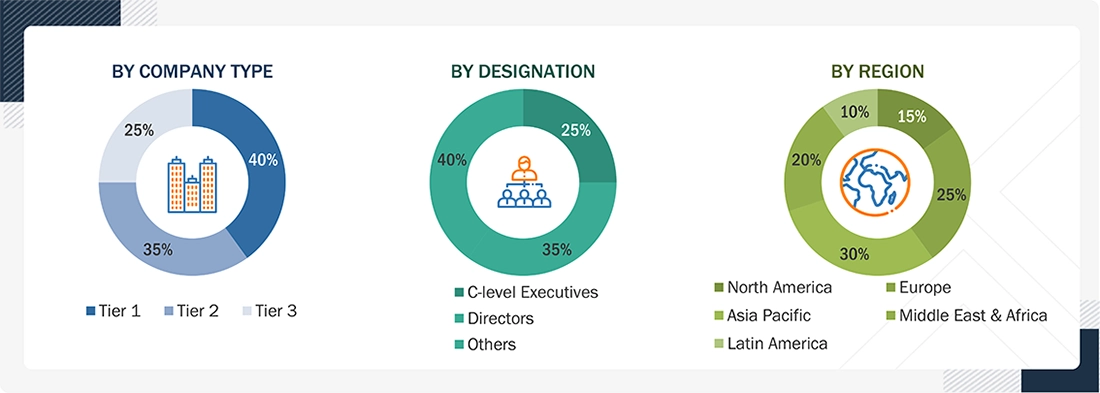
Tier 1 Companies receive revenue higher than USD 10 billion.
Tier 2 Companies’ revenue ranges from USD 1 to 10 billion.
Tier 3 Companies’ revenue ranges from USD 500 million to USD 1 billion.
Other Designations include Sales, Marketing, and Product Managers.
To know about the assumptions considered for the study, download the pdf brochure
Market Size Estimation
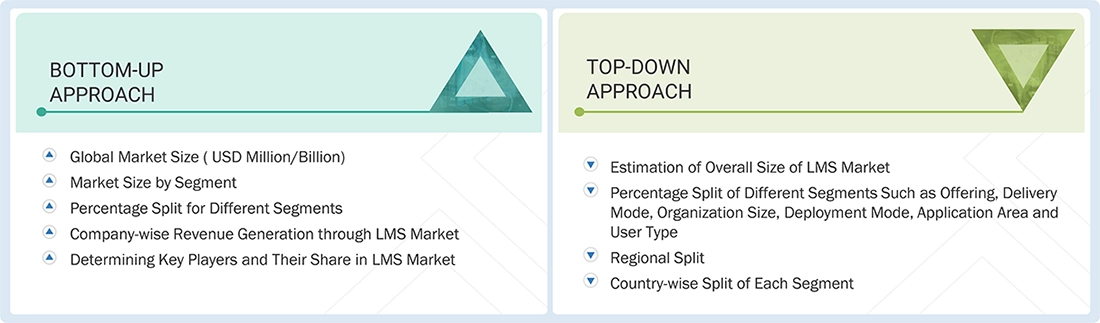
Top-down and bottom-up approaches were employed to estimate and validate the size of the learning management system, as well as the size of various dependent sub-segments within the overall learning management system. The research methodology used to estimate the market size includes the following details: critical players in the market were identified through secondary research, and their market shares in the respective regions were determined through primary and secondary research. This entire procedure involved studying the annual and financial reports of the top market players, and extensive interviews were conducted with key industry leaders, including CEOs, VPs, directors, and marketing executives, to gather valuable insights.
All percentage splits and breakdowns were determined using secondary sources and verified through primary sources. All possible parameters that affect the market covered in this research study were accounted for, viewed in extensive detail, verified through primary research, and analyzed to get the final quantitative and qualitative data. This data was consolidated and added to detailed inputs and analysis from MarketsandMarkets.
Learning Management System Market : Top-Down and Bottom-Up Approach
Data Triangulation
The market was split into several segments and subsegments after arriving at the overall market size using the market size estimation processes explained above. The data triangulation and market breakup procedures were employed, wherever applicable, to complete the overall market engineering process and arrive at the exact statistics of each market segment and subsegment. The data was triangulated by studying various factors and trends from both the demand and supply sides.
Market Definition
A Learning Management System (LMS) is a software application or web-based platform designed to facilitate the administration, documentation, tracking, and delivery of educational courses or training programs. It is commonly used in educational institutions, corporations, and organizations to manage and organize learning materials and activities. With these solutions, companies and institutions can provide specialized training to their employees and students in the most interactive way.
According to SAP, “An LMS is a software application used for planning, delivering, and tracking training and educational programs. Organizations use LMS software to make learning more engaging and accessible to employees, helping improve employee skills, compliance, retention, and productivity.”
According to Docebo, “A Learning Management System (LMS) is a software platform designed to create, deliver, and manage educational or training programs. It is widely used in schools. universities, businesses, healthcare settings, and government organizations to streamline learning processes.”
Key Stakeholders
- LMS Vendors
- Software Providers
- System Integrators & Consultants
- Content & Learning Service Providers
- E-learning Course Providers
- System Administrators
- Internet Service Providers (ISPS)
- Corporate Trainers
- Regulators & Compliance Authorities
- Cloud Service Providers
- Government Authorities
- HR and Departments
- IT & Security Departments
- Instructors/Educators
Report Objectives
- To describe and forecast the learning management system market by offering, delivery mode, organization size, deployment type, application area, user type, and region from 2026 to 2032, and analyze the various macroeconomic and microeconomic factors that affect growth
- To forecast the market size of five major regions: North America, Europe, Asia Pacific, Middle East & Africa, and Latin America
- To analyze the subsegments of the market concerning individual growth trends, prospects, and contributions to the overall market
- To provide detailed information related to the primary factors (drivers, restraints, opportunities, and challenges) influencing the growth of learning management system
- To analyze opportunities in the market for stakeholders by identifying high-growth segments of the learning management system
- To profile the key players of the learning management system and comprehensively analyze their market size and core competencies
- Track and analyze competitive developments, such as product launches, mergers and acquisitions, partnerships, agreements, and collaborations in the global learning management system market.
Customization Options:
With the given market data, MarketsandMarkets offers customizations based on company-specific needs. The following customization options are available for the report:
Geographic Analysis
With the given market data, MarketsandMarkets offers customizations according to company-specific scientific needs.
- Further breakdown of the Rest of the Europe probiotics market, by key country
- Further breakdown of the Rest of the Asia Pacific probiotics market, by key country
- Further breakdown of the Rest of South America probiotics market, by key country
Company Information
- Detailed analysis and profiling of additional market players (up to 5)
Get the Full Learning Management System Market Report
Full forecast, segment splits, and company analysis for all Learning Management System Market.
- Canada Learning Management System Market
- US Learning Management System Market
- UK Learning Management System Market
- Germany Learning Management System Market
- France Learning Management System Market
- Italy Learning Management System Market
- Spain Learning Management System Market
- China Learning Management System Market
- Japan Learning Management System Market
- South Korea Learning Management System Market
- Singapore Learning Management System Market
- UAE Learning Management System Market
- South Africa Learning Management System Market
- Brazil Learning Management System Market
- Mexico Learning Management System Market
- Rest Of Europe Learning Management System Market
- Anz Learning Management System Market
- Rest Of Apac Learning Management System Market
- Rest Of Latam Learning Management System Market
- GCC Learning Management System Market
- Rest Of Mea Learning Management System Market
- Ksa Learning Management System Market
- Rest Of GCC Countries Learning Management System Market
Need a Tailored Report?
Customize this report to your needs
Get 10% FREE Customization
Customize This Report
