
Asia Pacific Medical Device Engineering Market (2024-2029)

The Asia Pacific Medical Device Engineering Market was valued at $1828 Million in 2024 and projected to reach to $3123.1 Million by 2029, representing a compound annual growth rate of 11.3%. The Asia Pacific medical device engineering market is poised for exceptional growth, driven by demographic shifts, rising healthcare expenditures, and technological advancement across the region.


| Market Size in | USD 26.32 MN |
| Market Forecast in | |
| CAGR | |
| Forecast Period | |
| Units Considered | Value (USD MN) |
Asia Pacific Medical Device Engineering Market Trends and Insights
- Asia Pacific's 11.3% compound annual growth rate outpaces global trends, driven by rising healthcare investments, aging populations, and increasing demand for advanced diagnostic and therapeutic devices across the region.
- Key markets within Asia Pacific, including China, Japan, India, and South Korea, are accelerating innovation in medical device design, manufacturing, and regulatory compliance. Asia Pacific's growth trajectory reflects strong government support for healthcare infrastructure and the emergence of specialized engineering hubs.
- The region's competitive advantage in cost-effective manufacturing, combined with growing R&D capabilities, positions Asia Pacific as a critical hub for medical device engineering services.
- Between 2024 and 2029, Asia Pacific is expected to capture significant market share as companies expand operations to meet regional demand and leverage the region's engineering talent pool. Investment in digital health technologies, minimally invasive devices, and personalized medicine solutions continues to accelerate across Asia Pacific.
- The region's expanding middle class and improving healthcare access create sustained demand for innovative medical device engineering solutions through the forecast period..
Key Market Statistics
- CAGR (2024-2029) 11.3% CAGR
- Market Size, 2024 ~USD 1828 Million
- Forecast, 2029 ~USD 3123.1 Million
- Geography Asia Pacific
Asia Pacific Medical Device Engineering Market Overview
Fastest Growing Regional Market :
Asia Pacific's 11.3% CAGR significantly outpaces the global growth rate of 10.8%, positioning it as the most dynamic medical device engineering market worldwide through 2029.
Substantial Market Expansion :
The region's market value is projected to grow from $1,828.0 million in 2024 to $3,123.1 million by 2029, representing a 71% increase in market size over five years.
Aging Population Driving Demand :
Rapidly aging demographics across Asia Pacific, particularly in Japan, China, and South Korea, are accelerating demand for advanced diagnostic and therapeutic medical devices.
Healthcare Investment Surge :
Increased government and private sector healthcare investments across Asia Pacific nations are fueling infrastructure development and adoption of cutting-edge medical device engineering solutions.
Asia Pacific Medical Device Engineering Market Dynamics
- Countries like China and India are emerging as manufacturing hubs, while Japan and South Korea lead in innovation.
- Healthcare modernization initiatives and expanding middle-class populations are creating substantial demand for advanced diagnostic equipment, surgical devices, and therapeutic solutions. Regulatory harmonization efforts and increased foreign direct investment are accelerating market penetration.
- The region's competitive labor costs combined with growing engineering expertise position Asia Pacific as a critical hub for medical device development and manufacturing.
- Strategic partnerships between local and international players are expected to intensify, further propelling market growth through 2029..
Market Ecosystem
Related Ecosystem
Medical Devices
- Polymerase Chain Reaction (PCR)
- Magnetic Resonance Imaging (MRI)
- Disposable Autoinjectors
- Pulse Oximeters
- Blood Pressure Monitors
- Medtronic plc
- Abbott Laboratories
- Stryker Corporation
- Becton, Dickinson and Company
- CONMED Corporation
Key Takeaways
- Asia Pacific's medical device engineering market will grow from $1,828.0M (2024) to $3,123.1M (2029) at an 11.3% CAGR, outpacing global growth rates.
- Asia Pacific is emerging as a global engineering hub due to cost-effective manufacturing, expanding R&D capabilities, and access to specialized talent.
- Rising healthcare investments, aging demographics, and government support across Asia Pacific are driving sustained demand for advanced medical device solutions.
- Digital health, minimally invasive technologies, and personalized medicine represent key growth opportunities for engineering services in Asia Pacific through 2029.
Medical Device Engineering Market Report Scope
| Report Metric | Details |
|---|---|
| Base Year | 2024 |
| Fastest Growing Segment | CONNECTIVITY & MOBILITY SERVICES (Service Type) |
| Forecast Period | 2024-2029 |
| Growth Rate | CAGR of 10.8% from 2024 to 2029 |
| Largest Segment | ENGINEERING SERVICE PROVIDERS (ESPS) (Facility Type) |
| Market Size Base Year (Billions) | ~USD 12.04 (2024) |
| Revenue Forecast (Billions) | ~USD 20.1 (2029) |
| Segments Covered | Service Type, Facility Type, Device Type |
Asia Pacific Medical Device Engineering Market Report Segmentation
3 segment dimensions are covered across the global market.
By Service Type
- Connectivity & Mobility Services
- Cybersecurity Services
- Electronic Engineering Services
- Product Innovation & Design/Industrial Design Services
- Product Support & Maintenance Services
- Product Testing Services
- Prototyping Services
- Regulatory Consulting Services
- Software Development & Testing Services
- Software Development And Testing Services
By Facility Type
- Engineering Service Providers (Esps)
- Global Capability Centers (Gccs)
- In-House Services
By Device Type
- Diagnostic Imaging Equipment
- Ivd Devices
- Medical Lasers
- Other Medical Devices
- Patient Monitoring Devices & Life Support Devices
- Surgical Equipment
Target Audience
- Medical Device Manufacturers : Identify expansion opportunities and manufacturing hubs in Asia Pacific, understand regional demand patterns, and develop market-entry strategies for high-growth countries.
- Healthcare Investors & PE Firms : Evaluate investment opportunities in Asia Pacific medical device engineering with detailed market sizing, growth projections, and regional risk assessments through 2029.
- Engineering & Technology Companies : Understand Asia Pacific's engineering talent landscape, innovation ecosystems, and partnership opportunities to establish R&D centers and development operations in the region.
- Healthcare Providers & Hospital Networks : Plan capital equipment investments and procurement strategies by understanding regional device availability, pricing trends, and technological advancements across Asia Pacific markets.
- Government & Regulatory Bodies : Develop healthcare policies and regulatory frameworks informed by market trends, investment flows, and competitive dynamics shaping the Asia Pacific medical device sector.
Countries within Asia Pacific - compare and drill down
| Country | 2025 size (native) |
|---|---|
| China | USD 247.3 Million |
| Japan | USD 165.6 Million |
| India | USD 80.5 Million |
| Australia | USD 33.3 Million |
| South Korea | USD 23.7 Million |
| Rest Of Asia Pacific | USD 92.1 Million |
Country market size visualization
Reasons to Buy this Report
- Regional Growth Intelligence : Gain comprehensive insights into Asia Pacific's 11.3% CAGR and understand market dynamics specific to the fastest-growing medical device engineering region globally.
- Country-Level Market Data : Access detailed market sizing for key Asia Pacific nations including China ($247.3M), Japan ($165.6M), and India ($80.5M) to identify high-potential markets.
- Strategic Investment Guidance : Make informed decisions on market entry, expansion, and partnership opportunities by understanding demographic trends, healthcare investments, and regulatory landscapes across Asia Pacific.
- Competitive Positioning : Benchmark your organization against regional competitors and identify emerging opportunities in manufacturing, innovation hubs, and technology adoption across Asia Pacific markets.
- Five-Year Forecast Planning : Leverage detailed projections through 2029 to develop long-term business strategies, resource allocation plans, and market expansion roadmaps for Asia Pacific operations.
Frequently asked questions
What is the current size of the Asia Pacific medical device engineering market?
The Asia Pacific medical device engineering market was valued at $1,828.0 million in 2024 and is projected to reach $3,123.1 million by 2029.
What is the growth rate for Asia Pacific's medical device engineering market?
Asia Pacific's medical device engineering market is expected to grow at a compound annual growth rate (CAGR) of 11.3% from 2024 to 2029.
Which countries are driving growth in Asia Pacific's medical device engineering market?
Key markets including China, Japan, India, and South Korea are leading growth in Asia Pacific through increased healthcare investments, R&D expansion, and manufacturing capabilities.
What are the main drivers of growth in Asia Pacific's medical device engineering sector?
Primary drivers include rising healthcare infrastructure investments, aging populations, government support for innovation, cost-effective manufacturing, and growing demand for digital health and minimally invasive technologies.
Why is Asia Pacific becoming a global medical device engineering hub?
Asia Pacific offers competitive advantages including cost-effective manufacturing, expanding R&D capabilities, access to specialized engineering talent, and strong government backing for healthcare innovation.
RESEARCH METHODOLOGY
This research study involved the extensive use of both primary and secondary sources. It involved the study of various factors affecting the industry to identify the segmentation types, industry trends, key players, the competitive landscape of market players, and key market dynamics such as drivers, opportunities, challenges, restraints, and key player strategies.
Secondary Research
This research study involved the wide use of secondary sources, directories, databases such as Dun & Bradstreet, Bloomberg Businessweek, and Factiva, white papers, and companies’ house documents. Secondary research was undertaken to identify and collect information for this extensive, technical, market-oriented, and commercial study of the medical device engineering market. It was also used to obtain important information about the top players, market classification, and segmentation according to industry trends to the bottom-most level, geographic markets, and key developments related to the market. A database of the key industry leaders was also prepared using secondary research.
Primary Research
In the primary research process, various supply side and demand side sources were interviewed to obtain qualitative and quantitative information for this report. Primary sources from the supply side included industry experts such as CEOs, vice presidents, marketing and sales directors, technology & innovation directors, engineers, and related key executives from various companies and organizations operating in the medical device engineering market. Primary sources from the demand side included hospitals, clinics, researchers, lab technicians, purchase managers etc, and stakeholders in corporate & government bodies.
Breakdown of Primary Interviews
A breakdown of the primary respondents for medical device engineering market (supply side) market is provided below:
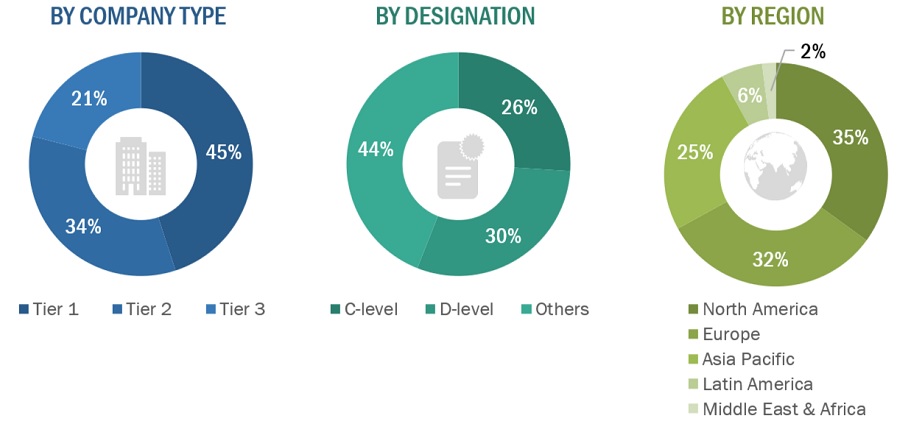
Note 1: Companies are classified into tiers based on their total revenue. As of 2023: Tier 1 = >USD 1 billion, Tier 2 = USD 500 million to USD 1 billion, and Tier 3 = <USD 500 million.
Note 2: C-level executives include CEOs, COOs, CTOs, and VPs.
Note 3: Other primaries include sales managers, marketing managers, and product managers.
To know about the assumptions considered for the study, download the pdf brochure
Market Size Estimation
The market size for medical device engineering market was calculated using data from three different sources, as will be discussed below. Each technique concluded and a weighted average of the four ways was calculated based on the number of assumptions each approach made. The market size for medical device engineering market was calculated using data from three distinct sources, as will be discussed below:
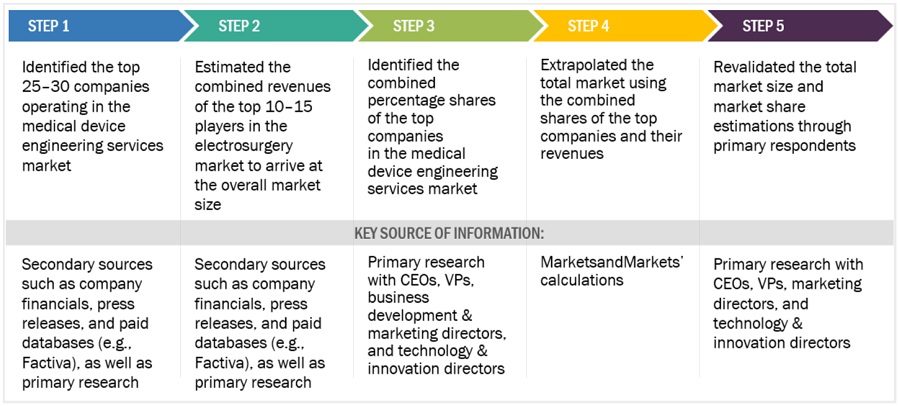
Approach 1: Supply-Side Analysis - Revenue Share Analysis
Medical device engineering Market: Revenue Share Analysis
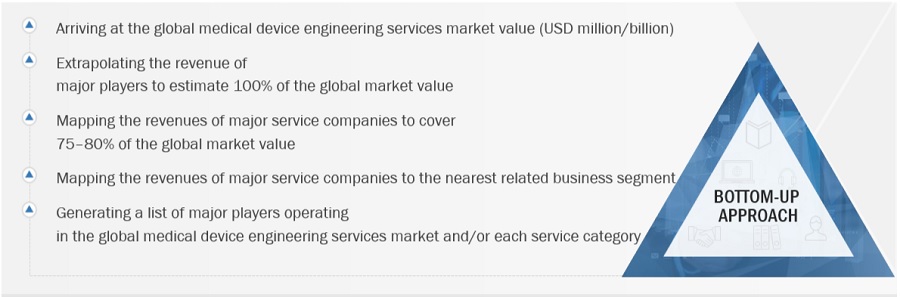
Approach 2: Medical device engineering Market: Bottom-up Approach
To know about the assumptions considered for the study, Request for Free Sample Report
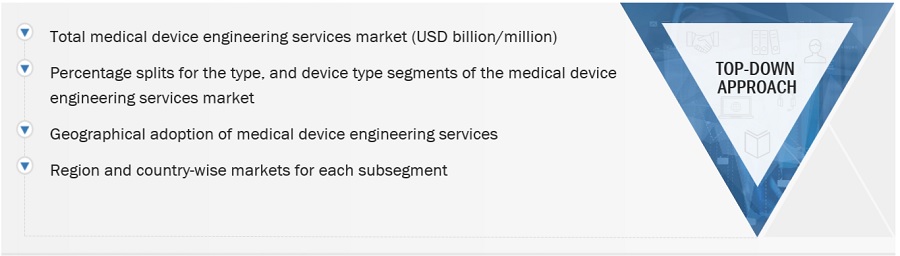
Approach 3: Medical device engineering Market: Top-Down Approach
Data Triangulation
The entire market was split up into two segments when the market size was determined. Data triangulation and market breakdown processes were used where necessary to complete the entire market engineering process and arrive at the precise statistics for all segments.
Approach to derive the market size and estimate market growth.
Using secondary data from both paid and unpaid sources, the market rankings for the major players were determined following a thorough analysis of their sales of medical device engineering. Due to data restrictions, the revenue share in certain cases was determined after a thorough analysis of the product portfolio of big corporations and their individual sales performance. This information was verified at each stage by in-depth interviews with professionals in the field.
Market Definition
Medical device engineering include a package of technical and consulting solutions concerning product innovation & design/industrial design services, prototyping services, electronics engineering services, software development & testing services, connectivity and mobility services, cybersecurity services, product testing services, regulatory consulting services and product support & maintenance services. Such services shall ensure the safety and effectiveness of the medical device for its desired purposes and in compliance with international regulatory requirements.
Key Stakeholders
- Original equipment manufacturers (OEMs)
- Independent service providers (ISPs)
- Independent service organizations (ISOs)
- Product distributors & channel partners
- Hospitals & surgical centers
- Dental hospitals, laboratories, and clinics
- Dental academic & research institutes
- Ambulatory surgical centers (ASCs) and physician-operated laboratories (POLs)
- Contract manufacturers and third-party suppliers
- Research laboratories & academic institutes
- Clinical research organizations (CROs)
- Contract manufacturing organizations (CMOs)
- Government and non-governmental regulatory authorities
- Venture capitalists and investors
- Trade associations and industry bodies
- Insurance companies
- Market research and consulting firms
Objectives of the Study
- To define, describe, and forecast the medical device engineering market based on by service type, device type, and region
- To provide detailed information about the major factors influencing the market growth (such as drivers, restraints, challenges, and opportunities)
- To strategically analyze micromarkets1 with respect to individual growth trends, prospects, and contributions to the overall medical device engineering market
- To analyze market opportunities for stakeholders and provide details of the competitive landscape for key players
- To forecast the size of the medical device engineering market in North America, Europe, the Asia Pacific, Latin America, and the Middle East & Africa
- To profile the key players and comprehensively analyze their market shares and core competencies in the medical device engineering market
- To track and analyze competitive developments such as partnerships, expansions, acquisitions, collaborations, service launches, agreements, and other developments in the medical device engineering market
- To benchmark players within the medical device engineering market using the Company Evaluation Quadrant framework, which analyzes market players on various parameters within the broad categories of business strategy, market share, and service offerings
Available Customizations:
With the given market data, MarketsandMarkets offers customizations as per your company’s specific needs. The following customization options are available for the report:
Company Information
- Detailed analysis and profiling of additional market players (up to 5)
Geographic Analysis
- Further breakdown of the Rest of Europe Medical device engineering Market into Denmark, Norway, and others
- Further breakdown of the Rest of Asia Pacific Medical device engineering Market into Vietnam, New Zealand, and others
Get the Full Medical Device Engineering Market Report
Full forecast, segment splits, and company analysis for all Medical Device Engineering Market.
- US Medical Device Engineering Market
- Canada Medical Device Engineering Market
- Germany Medical Device Engineering Market
- UK Medical Device Engineering Market
- France Medical Device Engineering Market
- Italy Medical Device Engineering Market
- Spain Medical Device Engineering Market
- Japan Medical Device Engineering Market
- China Medical Device Engineering Market
- India Medical Device Engineering Market
- Australia Medical Device Engineering Market
- South Korea Medical Device Engineering Market
- Brazil Medical Device Engineering Market
- Mexico Medical Device Engineering Market
- Rest Of Europe Medical Device Engineering Market
- Rest Of Asia Pacific Medical Device Engineering Market
- Rest Of Latin America Medical Device Engineering Market
- GCC Countries Medical Device Engineering Market
Need a Tailored Report?
Customize this report to your needs
Get 10% FREE Customization
Customize This Report
