
Rest Of Asia Pacific Milking Robots Market (2024-2029)

The Rest Of Asia Pacific Milking Robots Market was valued at $74.7 Million in 2024 and projected to reach to $125.6 Million by 2029, representing a compound annual growth rate of 10.9%. Rest Of Asia Pacific's milking robots market is poised for accelerated growth as dairy producers increasingly recognize automation's competitive advantages.


| Market Size in | USD 26.32 MN |
| Market Forecast in | |
| CAGR | |
| Forecast Period | |
| Units Considered | Value (USD MN) |
Rest Of Asia Pacific Milking Robots Market Trends and Insights
- Rest Of Asia Pacific represents a critical growth region for automated dairy farming solutions, driven by increasing labor costs, rising dairy production demands, and technological adoption across emerging economies.
- Rest Of Asia Pacific's market expansion reflects growing investment in precision agriculture and modernization of dairy operations throughout the region. Rest Of Asia Pacific is witnessing accelerating adoption of milking automation as dairy farmers seek efficiency gains and improved herd management capabilities.
- The region's 10.9% compound annual growth rate through 2029 underscores strong market momentum, supported by government agricultural initiatives and rising consumer demand for dairy products.
- Rest Of Asia Pacific's competitive landscape is intensifying as both established manufacturers and regional players introduce cost-effective robotic solutions tailored to local farming practices and economic conditions..
Key Market Statistics
- CAGR (2024-2029) 10.9% CAGR
- Market Size, 2024 ~USD 74.7 Million
- Forecast, 2029 ~USD 125.6 Million
- Country Rest Of Asia Pacific
Rest Of Asia Pacific Milking Robots Market Overview
Market Valuation & Growth Trajectory :
Rest Of Asia Pacific's milking robots market is valued at $74.7 million in 2024, with a projected CAGR of 10.9% through 2029, reaching $125.6 million. This growth rate slightly exceeds the global average of 10.8%, positioning the region as a high-potential market for automated dairy solutions.
Labor Cost Pressures Driving Adoption :
Rising labor costs across emerging Asia Pacific economies are compelling dairy farmers to invest in automation. Milking robots offer significant operational efficiency gains, reducing dependency on manual labor while improving milk quality and herd health management in the region.
Emerging Market Dairy Expansion :
Increasing dairy production demands across Rest Of Asia Pacific countries are accelerating technology adoption. Growing middle-class consumption, urbanization, and government support for agricultural modernization are creating favorable conditions for milking robot deployment.
Technology Adoption in Developing Economies :
Rest Of Asia Pacific represents a critical frontier for advanced dairy farming technologies. Improving infrastructure, rising farm profitability, and technology awareness among progressive farmers are enabling faster penetration of automated milking solutions compared to traditional regions.
Rest Of Asia Pacific Milking Robots Market Dynamics
- The region's expanding agricultural sector, coupled with labor scarcity and rising operational costs, creates strong incentives for technology adoption.
- Progressive farmers are investing in milking robots to enhance productivity, improve animal welfare, and achieve sustainable growth. By 2029, the market is expected to nearly double from current levels, driven by improving farm economics, government agricultural modernization initiatives, and technology accessibility.
- Key growth will concentrate in countries with established dairy industries and rising income levels.
- As awareness spreads and financing options improve, adoption will extend to mid-sized and emerging dairy operations, solidifying Rest Of Asia Pacific as a critical growth engine for the global milking robots market..
Market Ecosystem
Related Ecosystem
Sensors And Control
- Sensors
- Temperature Sensors
- Image Sensors
- Pressure Sensors
- Flow Sensors
- BAUMER ELECTRIC AG
- HONEYWELL INTERNATIONAL INC.
- Stmicroelectronics
- Lenovo
- Texas Instruments Incorporated
Fandb Ingredients
- Dairy Products
- Bakery Products
- Microorganism
- Polydextrose
- Carbohydrates
- AZELIS HOLDINGS SA
- Archer-Daniels-Midland Company
- Kerry Group plc
- Amway
- DSM FIRMMENICH
Industrial Automation
- Sensors
- Image Sensors
- Manufacturing Execution System (MES)
- Actuators
- Flow Sensors
- Siemens ag
- ABB India Limited
- Emerson Electric Co.
- HONEYWELL INTERNATIONAL INC.
- SCHNEIDER ELECTRIC SE
Key Takeaways
- Rest Of Asia Pacific milking robots market valued at $74.7 million in 2024, expanding to $125.6 million by 2029
- Rest Of Asia Pacific demonstrates 10.9% CAGR, outpacing global average growth in automated dairy solutions
- Rest Of Asia Pacific adoption driven by labor shortages, rising dairy demand, and agricultural modernization initiatives
- Rest Of Asia Pacific competitive intensity increasing with localized solutions from regional and international manufacturers
Milking Robots Market Report Scope
| Report Metric | Details |
|---|---|
| Base Year | 2024 |
| Fastest Growing Segment | SERVICES (Offering) |
| Forecast Period | 2024-2029 |
| Growth Rate | CAGR of 10.8% from 2024 to 2029 |
| Largest Segment | DAIRY CATTLE (Species) |
| Market Size Base Year (Billions) | ~USD 3.17 (2024) |
| Revenue Forecast (Billions) | ~USD 5.3 (2029) |
| Segments Covered | Offering, Type, Herd Size, System Type, Species, Service Type |
Rest Of Asia Pacific Milking Robots Market Report Segmentation
6 segment dimensions are covered across the global market.
By Offering
- Hardware
- Services
- Software
By Type
- Assisted Professional Services
- Automation And Control
- Camera Systems
- Cleaning And Detection Systems
- Cloud-Based
- Connectivity Services
- Control And Display Units
- Maintenance And Support Services
- Managed Services
- Milk Analyzers
- Milk Meters
- On-Premises
- Other Types Of Automation And Control Devices
- Other Types Of Sensing And Monitoring Devices
- Rfid Tags And Readers
- Robotic Arm Devices
- Sensing And Monitoring
- Sensors
- System Integration And Consulting Services
By Herd Size
- Above 1,000
- Below 100
- Between 100 And 1,000
By System Type
- Automated Milking Rotary
- Automatic Milking Rotaries
- Automatic Milking Rotary
- Multi-Stall Unit
- Multi-Stall Units
- Single-Stall Unit
- Single-Stall Units
By Species
- Dairy Cattle
- Goats
- Sheep
By Service Type
- Above 1,000
- Below 100
- Between 100 And 1,000
Target Audience
- Dairy Equipment Manufacturers : Manufacturers need Rest Of Asia Pacific-specific market intelligence to develop localized product strategies, identify distribution channels, and establish competitive positioning in this rapidly expanding region with unique farmer requirements and price sensitivities.
- Agricultural Technology Investors : Investors require detailed market forecasts, growth drivers, and competitive dynamics for Rest Of Asia Pacific to evaluate investment opportunities, assess portfolio companies' regional expansion potential, and identify emerging technology leaders in dairy automation.
- Dairy Farm Operators & Cooperatives : Farm operators need market insights to justify automation investments, understand technology options, benchmark against regional peers, and make informed decisions about milking robot adoption timing and vendor selection in Rest Of Asia Pacific markets.
- Agricultural Consultants & Advisors : Consultants require region-specific market data to advise clients on dairy modernization strategies, technology ROI, and competitive positioning. Understanding Rest Of Asia Pacific dynamics enables better recommendations for farm automation investments.
- Government & Policy Organizations : Agricultural policy makers and development agencies need market intelligence to design effective agricultural modernization programs, incentive structures, and technology adoption initiatives that support dairy industry growth in Rest Of Asia Pacific.
Reasons to Buy this Report
- Regional Market Sizing & Forecasts : Obtain precise market valuation data specific to Rest Of Asia Pacific ($74.7M in 2024, $125.6M by 2029) with detailed CAGR analysis. Make informed investment and expansion decisions based on region-specific growth trajectories and market dynamics.
- Competitive Landscape Intelligence : Understand key players, market share distribution, and competitive strategies within Rest Of Asia Pacific. Identify partnership opportunities, acquisition targets, and competitive positioning to maximize market penetration in this high-growth region.
- Country-Level Opportunity Assessment : Evaluate individual country markets within Rest Of Asia Pacific to identify highest-potential markets for milking robot deployment. Prioritize market entry strategies based on dairy industry maturity, labor costs, and technology adoption readiness.
- Demand Drivers & Market Catalysts : Analyze region-specific growth drivers including labor cost inflation, dairy production expansion, and technology adoption trends. Understand regulatory environments and government support mechanisms that accelerate milking robot adoption across Rest Of Asia Pacific.
- Strategic Planning & Risk Mitigation : Develop data-driven market entry and expansion strategies tailored to Rest Of Asia Pacific's unique characteristics. Identify market risks, barriers to adoption, and mitigation strategies to optimize investment returns and operational success.
Frequently asked questions
What is the current market size of milking robots in Rest Of Asia Pacific?
Rest Of Asia Pacific milking robots market was valued at $74.7 million in 2024 and is expected to grow significantly through 2029.
What is the projected market size for Rest Of Asia Pacific by 2029?
Rest Of Asia Pacific milking robots market is forecasted to reach $125.6 million by 2029, representing substantial regional expansion.
What growth rate is Rest Of Asia Pacific experiencing in the milking robots market?
Rest Of Asia Pacific is growing at a compound annual growth rate of 10.9% from 2024 to 2029.
What factors are driving milking robot adoption in Rest Of Asia Pacific?
Rest Of Asia Pacific adoption is driven by labor cost pressures, increasing dairy production demands, government agricultural modernization programs, and rising consumer dairy consumption.
How competitive is the milking robots market in Rest Of Asia Pacific?
Rest Of Asia Pacific market competition is intensifying with both global manufacturers and regional players offering localized, cost-effective robotic solutions tailored to regional farming practices.
RESEARCH METHODOLOGY
The study involved four major activities in estimating the market size of milking robots. Exhaustive secondary research has been carried out to collect information on the market, the peer markets, and the parent market. Both top-down and bottom-up approaches have been employed to estimate the total market size. Market breakdown and data triangulation methods have also been used to estimate the market for segments and subsegments.
Secondary research
In the secondary research process, various secondary sources have been referred to for identifying and collecting information relevant to this study on the commercial touch displays market. The secondary sources included the International Federation of Robotics (IFR), FAOstat, International Livestock Research Institute (ILRI), annual reports, press releases, and investor presentations of companies; white papers, certified publications, and articles by recognized authors; directories; and databases.
The global size of the milking robots market has been obtained from the secondary data available through paid and unpaid sources. It has also been determined by analyzing the product portfolios of the leading companies and rating them based on the quality of their offerings.
Secondary research has been used to gather key information about the industry's supply chain, the market’s monetary chain, the total number of key players, and market segmentation according to the industry trends to the bottom-most level, geographic markets, and key developments from both the market- and technology-oriented perspectives. It has also been conducted to identify and analyze the industry trends and key developments undertaken from both the market- and technology perspectives.
Primary Research
In the primary research process, various primary sources have been interviewed to obtain qualitative and quantitative information about the market across four main regions—Asia Pacific, North America, Europe, and the Rest of the World (the Middle East & Africa, and South America). Primary sources from the supply side include industry experts such as CEOs, vice presidents, marketing directors, technology directors, and other related key executives from major companies and organizations operating in the milking robots market or related markets.
After completing market engineering, primary research was conducted to gather information and verify and validate critical numbers from other sources. Primary research has also been conducted to identify various market segments; industry trends; key players; competitive landscape; and key market dynamics, such as drivers, restraints, opportunities, and challenges, along with key strategies adopted by market players. Most primary interviews have been conducted with the market's supply side. This primary data has been collected through questionnaires, emails, and telephonic interviews.
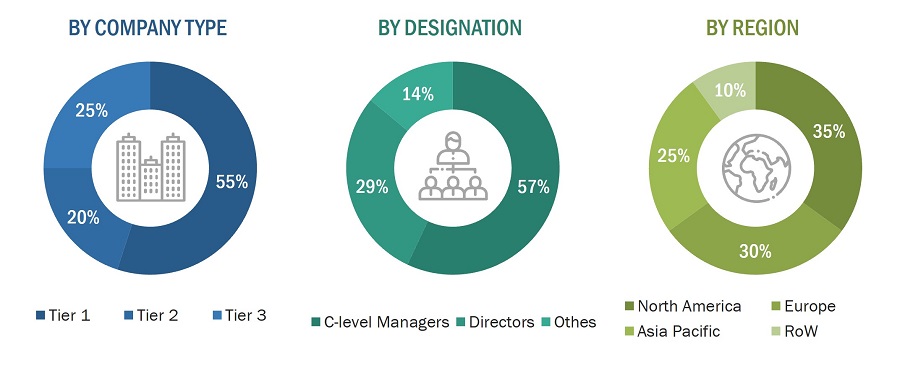
To know about the assumptions considered for the study, download the pdf brochure
Market Size Estimation
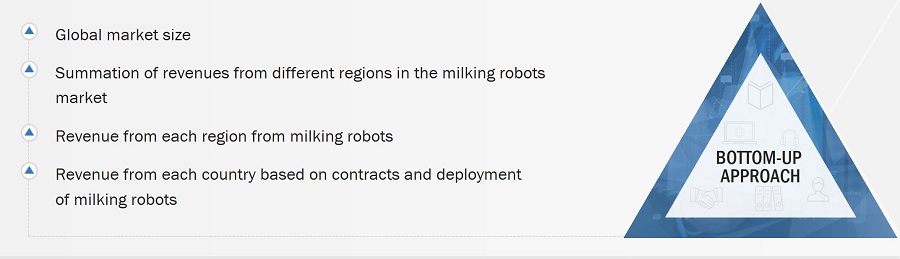
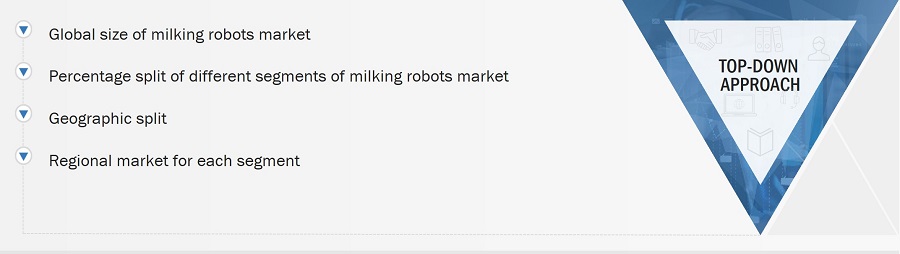
In the complete engineering process, both top-down and bottom-up approaches and several data triangulation methods have been used to estimate and validate the size of the overall commercial touch displays market and other dependent submarkets. Key players in the market have been identified through secondary research, and their market positions in the respective geographies have been determined through both primary and secondary research. This entire procedure includes studying top market players' annual and financial reports and extensive interviews with industry leaders such as CEOs, VPs, directors, and marketing executives for key insights (qualitative and quantitative).
All percentage shares and breakdowns have been determined using secondary sources and verified through primary sources. All the possible parameters that affect the markets covered in this research study have been accounted for, viewed in detail, verified through primary research, and analyzed to obtain the final quantitative and qualitative data. This data has been consolidated and supplemented with detailed inputs and analysis from MarketsandMarkets and presented in this report.
Global Milking Robots Market Size: Bottom-Up Approach
Global Milking Robots Market Size: Top-Down Approach
Data Triangulation
After arriving at the overall market size from the market size estimation process explained above, the total market has been split into several segments and subsegments. Data triangulation has been employed to complete the market engineering process and arrive at the exact statistics for all segments and subsegments. The data has been triangulated by studying various factors and trends from the demand and supply sides. Along with this, the market has been validated using both the top-down and bottom-up approaches.
Market Definition
Milking robots are automatic milking systems deployed on dairy farms for reducing labor costs and enhancing milk quality and yield. Milking robots comprise a milking machine, a teat position sensor, a robotic arm for automatic teat cup application, and a gate system for controlling cow traffic. Milking robots are designed to make dairy farms more efficient and profitable without the help of manual labor. The milking robots market encompasses the industry involved in designing, producing, and implementing automated systems used for milking dairy animals, primarily cows. These robots are equipped with sensors, mechanical arms, and software to facilitate the autonomous milking process. They operate by identifying and attaching to the udders, milking the cows, and often incorporating features such as cleaning and monitoring cow health. The market includes various technological advancements, such as integration with data analytics and AI for optimizing milking efficiency and herd management. It caters to dairy farms seeking automation solutions to enhance productivity, animal welfare, and operational efficiency in milk production.
Key Stakeholders
- Technical universities
- Research institutes and organizations
- Market research and consulting firms
- Intellectual property vendors
- Dairy farm owners
- IT service providers
- System integrators
- Consulting service providers
- Network service providers
- Software service providers
- Data center vendors
- Internet service providers (ISPs)
- Milking robots/automated milking systems research labs
- Associations related to milking robots/automated milking robots
Report Objectives
- Define, analyze, and forecast the milking robots market, in terms of value, segmented based on offering, system type, herd size, and region
- Define, analyze, and forecast the market, in terms of volume
- Forecast the market size for various segments with respect to 4 main regions: North America, Europe, Asia Pacific, and Rest of the World
- Provide detailed information regarding the major factors (drivers, restraints, opportunities, and challenges) influencing the growth of the milking robots market
- Study the complete value chain and related industry segments and perform a value chain analysis of the market
- Strategically analyze the micromarkets1 with respect to individual growth trends, prospects, and contributions to the total market
- To analyze industry trends, pricing data, patents and innovations, and trade data (export and import data), regulatory environment, Porter’s five forces analysis and the ecosystem related to the milking robots market
- Analyze opportunities in the market for various stakeholders by identifying the high-growth segments of the milking robots market
- Strategically profile the key players and comprehensively analyze their market position in terms of ranking and core competencies2, along with detailing the competitive landscape for the market leaders
- To analyze competitive developments such as product launches/developments, expansions, acquisitions, and research and development (R&D) activities carried out by players in the milking robots market
Available customizations:
With the given market data, MarketsandMarkets offers customizations according to the specific requirements of companies. The following customization options are available for the report:
- Detailed analysis and profiling of additional market players (up to 5 players) based on various blocks of the supply chain
Get the Full Milking Robots Market Report
Full forecast, segment splits, and company analysis for all Milking Robots Market.
- US Milking Robots Market
- Canada Milking Robots Market
- Mexico Milking Robots Market
- Germany Milking Robots Market
- France Milking Robots Market
- Netherlands Milking Robots Market
- Denmark Milking Robots Market
- UK Milking Robots Market
- Rest Of Europe Milking Robots Market
- China Milking Robots Market
- Japan Milking Robots Market
- India Milking Robots Market
- South Korea Milking Robots Market
- South America Milking Robots Market
Need a Tailored Report?
Customize this report to your needs
Get 10% FREE Customization
Customize This Report
