
South Korea Modified Cassava Starch Market (2025-2030)

The South Korea Modified Cassava Starch Market was valued at $44.9 Million in 2025 and projected to reach to $57.2 Million by 2030, representing a compound annual growth rate of 5.0%. South Korea's modified cassava starch market is poised for sustained growth through 2030, driven by the nation's sophisticated food and beverage manufacturing base and consumer preference for premium, functionally-enhanced products.


| Market Size in | USD 26.32 MN |
| Market Forecast in | |
| CAGR | |
| Forecast Period | |
| Units Considered | Value (USD MN) |
South Korea Modified Cassava Starch Market Trends and Insights
- South Korea's food and beverage sector is increasingly adopting modified cassava starch as a functional ingredient due to its versatility in texture enhancement, thickening applications, and clean-label formulations.
- The market in South Korea is driven by rising demand from processed food manufacturers, bakery producers, and convenience food segments seeking cost-effective and sustainable starch alternatives. South Korea's modified cassava starch adoption reflects broader regional trends toward plant-based and functional food ingredients.
- South Korea's manufacturers are leveraging modified cassava starch in sauces, dressings, instant noodles, and confectionery products to meet consumer preferences for improved texture and shelf stability.
- Between 2025 and 2030, South Korea's market growth will be supported by technological innovations in starch modification, expanding distribution networks, and increasing export opportunities within the Asia Pacific region..
Key Market Statistics
- CAGR (2025-2030) 5.0% CAGR
- Market Size, 2025 ~USD 44.9 Million
- Forecast, 2030 ~USD 57.2 Million
- Country South Korea
South Korea Modified Cassava Starch Market Overview
Market Valuation :
South Korea's modified cassava starch market is valued at USD 44.9 million in 2025, with steady growth driven by the country's advanced food processing sector and increasing demand for functional ingredients.
Growth Trajectory :
The market is projected to reach USD 57.2 million by 2030, representing a 5.0% CAGR, outpacing global growth trends as South Korean manufacturers prioritize clean-label and texture-enhancing solutions.
Clean-Label Adoption :
South Korean food manufacturers are increasingly incorporating modified cassava starch in clean-label formulations, responding to consumer demand for transparent ingredient sourcing and natural-origin additives.
Application Diversity :
The ingredient is gaining traction across South Korea's confectionery, dairy, bakery, and sauce segments, where its thickening and stabilizing properties enhance product quality and shelf stability.
South Korea Modified Cassava Starch Market Dynamics
- The country's stringent food safety regulations and innovation-focused industry are accelerating adoption of modified cassava starch as manufacturers seek clean-label alternatives to synthetic thickeners and stabilizers. Key growth catalysts include expanding applications in premium snacking, plant-based food development, and export-oriented product formulations.
- South Korean companies' emphasis on R&D and product differentiation will continue to drive demand for specialized starch solutions, positioning the market for consistent expansion at a 5.0% CAGR through the forecast period..
Market Ecosystem
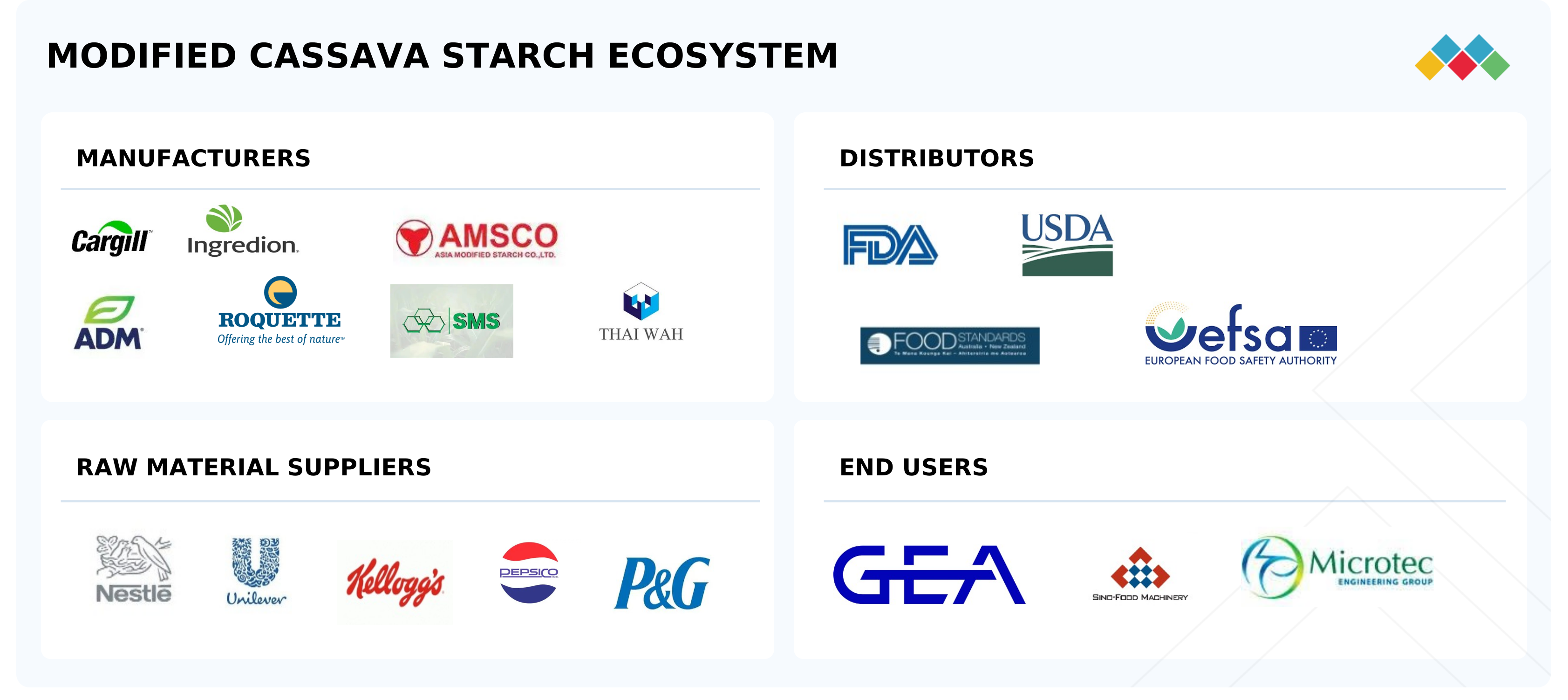
modified cassava starch market: COMMERCIAL USE CASES ACROSS INDUSTRIES
| COMPANY | USE CASE DESCRIPTION | BENEFITS |
|---|---|---|
 |
Focus on clean-label and specialty starches derived from cassava for dairy, bakery, and beverages | Innovation in functional ingredients, ability to meet rising demand for healthier food formulations |
 |
Development of modified cassava starches for food applications (thickeners, stabilizers, texturizers) | Wide product portfolio, strong presence in food & beverage sector, global distribution network |
 |
Food-grade and nutrition-focused cassava starch derivatives | Provides unique technical and texture properties suited to sauces that require stability under challenging conditions |
 |
Modified tapioca blends for bakery and confectionery applications | Enhances texture, moisture retention, and shelf life in baked goods, providing a soft crumb and improved freshness in bread, cakes, and pastries |
Logos and trademarks shown above are the property of their respective owners. Their use here is for informational and illustrative purposes only.
Related Ecosystem
Fandb Additives
- Dairy Products
- Bakery Products
- Polyglycerol Esters
- Microorganism
- Carbohydrates
- AZELIS HOLDINGS SA
- Archer-Daniels-Midland Company
- Amway
- UNILEVER PLC
- DuPont de Nemours, Inc.
Fandb Ingredients
- Dairy Products
- Bakery Products
- Microorganism
- Polydextrose
- Carbohydrates
- AZELIS HOLDINGS SA
- Archer-Daniels-Midland Company
- Kerry Group plc
- Amway
- DSM FIRMMENICH
Key Takeaways
- South Korea's modified cassava starch market is valued at USD 44.9 million in 2025 and will reach USD 57.2 million by 2030.
- South Korea is experiencing a 5.0% CAGR driven by demand from processed food, bakery, and convenience food manufacturers.
- South Korea's market growth is supported by clean-label trends and consumer preference for functional food ingredients.
- South Korea's manufacturers are expanding modified cassava starch applications in sauces, noodles, and confectionery products.
Modified Cassava Starch Market Report Scope
| Report Metric | Details |
|---|---|
| Base Year | 2025 |
| Fastest Growing Segment | FERMENTED CASSAVA STARCH (Product Type) |
| Forecast Period | 2025–2030 |
| Growth Rate | CAGR of 6% from 2025 to 2030 |
| Largest Segment | DRY (Form) |
| Market Size Base Year (Billions) | ~USD 2.52 (2025) |
| Revenue Forecast (Billions) | ~USD 3.37 (2030) |
| Segments Covered | Application, Form, Product Type, Type Of Modification, Food & Beverage, Feed, Industrial |
South Korea Modified Cassava Starch Market Report Segmentation
7 segment dimensions are covered across the global market.
By Application
- Bakery
- Beverages
- Confectionery
- Cosmetics
- Feed
- Food & Beverages
- Industrial
- Instant Soups
- Medicines & Pharmaceuticals
- Other Applications
- Other Feed Applications
- Other Food & Beverage Applications
- Other Industrial Applications
- Paper Making
- Poultry Feed
- Ruminant Feed
- Sauces
- Snacks
- Swine Feed
- Weaving & Textiles
By Form
- Dry
- Liquid
By Product Type
- Dextrinized Starches
- Extruded Cassava Starch
- Fermented Cassava Starch
- Maltodextrins
- Other Modified Products
- Pre-Gelatinized Starches
By Type Of Modification
- Chemical Modification
- Enzymatic Modification
- Physical Modification
By Food & Beverage
- Bakery
- Beverages
- Confectionery
- Other Food & Beverage Applications
- Snacks
By Feed
- Other Feed Applications
- Poultry Feed
- Ruminant Feed
- Swine Feed
By Industrial
- Cosmetics
- Medicines & Pharmaceuticals
- Other Industrial Applications
- Paper Making
- Weaving & Textiles
Target Audience
- Food & Beverage Manufacturers : South Korean F&B producers need market data to optimize ingredient sourcing, formulate competitive clean-label products, and identify cassava starch applications aligned with local consumer preferences.
- Starch & Ingredient Suppliers : Suppliers targeting South Korea require market sizing, growth forecasts, and application insights to develop localized product portfolios and establish distribution partnerships with regional manufacturers.
- Investment & Private Equity Firms : Investors evaluating South Korean food ingredient companies need market valuation data, growth projections, and competitive positioning to assess acquisition targets and portfolio expansion opportunities.
- Food Industry Consultants : Consultants advising South Korean clients require country-specific market intelligence, trend analysis, and forecasts to develop strategic recommendations for product innovation and market expansion.
- Export-Focused Ingredient Traders : Traders and distributors need South Korea market data to identify domestic demand trends, supplier relationships, and export opportunities for modified cassava starch products.
Key Companies in the South Korea Modified Cassava Starch Market
| Company | HQ | Ownership | Strongest segments |
|---|---|---|---|
| ADM | United States | Public Company | Ag Services and Oilseeds,Carbohydrate Solutions,Nutrition, |
| CARGILL, INCORPORATED | United States | Private Company | Grains & Oilseeds Origination, Trading, and Processing,Animal Nutrition & Feed (including Aquaculture),Meat & Poultry Products, |
| INGREDION | United States | Public Company | Bulk sweeteners (HFCS, glucose, dextrose, high maltose),Specialty starches and texture systems,Nutrition ingredients and biomaterials, |
| THAI WAH | Thailand | Public Company | Tapioca flour and native starch,Modified starch and glucose syrup,Vermicelli, rice noodles, and instant products, |
| AGRANA | Austria | Public Company | Food & Beverage Solutions,ACS-Starch,ACS-Sugar (incl. Wiener Zucker), |
ADM
ADM is a United States-based public company founded in 1902 with 41,147 employees. The company operates as a global leader in agricultural processing and ingredient solutions.
CARGILL, INCORPORATED
Cargill, Incorporated is a private United States company established in 1865 with 155,000 employees. It is one of the world's largest privately held corporations operating in agriculture, food, and related industries.
INGREDION
Ingredion is a United States-based public company founded in 1906 with 11,200 employees. The company produces specialty ingredients and solutions derived from corn, tapioca, and other raw materials.
THAI WAH
Thai Wah is a Thailand-based public company founded in 1947 with 1,375 employees. The company operates in the starch and tapioca processing industry.
AGRANA
Agrana is an Austria-based public company founded in 1988 with 8,353 employees. The company produces fruit preparations, starch, and sugar products for the food industry.
Reasons to Buy this Report
- Market-Specific Sizing Data : Access precise valuation figures for South Korea's modified cassava starch market (USD 44.9M in 2025) with country-specific forecasts through 2030, enabling accurate budget allocation and investment planning.
- Competitive Landscape Intelligence : Understand South Korea's unique competitive dynamics, local manufacturer strategies, and market consolidation trends specific to the region's food processing ecosystem.
- Regulatory & Consumer Insights : Gain insights into South Korea's clean-label regulations, consumer preferences for natural additives, and compliance requirements shaping product development strategies in the market.
- Application-Specific Demand Analysis : Identify high-growth application segments within South Korea's confectionery, dairy, bakery, and sauce industries with quantified demand drivers and growth opportunities.
- Strategic Market Entry Planning : Develop targeted go-to-market strategies for South Korea with localized insights on distribution channels, key customer segments, and growth acceleration opportunities through 2030.
Frequently asked questions
What is the current market size of modified cassava starch in South Korea?
South Korea's modified cassava starch market is valued at USD 44.9 million in 2025.
What is the projected market size for modified cassava starch in South Korea by 2030?
South Korea's modified cassava starch market is projected to reach USD 57.2 million by 2030.
What is the growth rate of the modified cassava starch market in South Korea?
South Korea's modified cassava starch market is growing at a compound annual growth rate of 5.0% from 2025 to 2030.
Which industries in South Korea are driving demand for modified cassava starch?
South Korea's processed food, bakery, convenience food, and confectionery manufacturers are the primary drivers of modified cassava starch demand.
What applications of modified cassava starch are most common in South Korea?
South Korea's manufacturers primarily use modified cassava starch in sauces, dressings, instant noodles, and confectionery products for texture enhancement and thickening.
RESEARCH METHODOLOGY
The study involved two major approaches in estimating the current size of the modified cassava starch market. Exhaustive secondary research was carried out to collect information on the market, peer, and parent markets. The next step was to validate these findings, assumptions, and sizing with industry experts across the value chain through primary research. Both top-down and bottom-up approaches were employed to estimate the complete market size. After that, market breakdown and data triangulation were used to estimate the market size of segments and subsegments.
Secondary Research
This research study involved the extensive use of secondary sources—directories and databases such as Bloomberg Businessweek and Factiva—to identify and collect information useful for a technical, market-oriented, and commercial study of the market.
In the secondary research process, various sources such as annual reports, press releases & investor presentations of companies, white papers, food journals, certified publications, articles from recognized authors, directories, and databases were referred to to identify and collect information.
Secondary research was mainly used to obtain key information about the industry’s supply chain, the total pool of key players, and market classification and segmentation as per the industry trends to the bottom-most level, regional markets, and key developments from both market- and technology-oriented perspectives.
Primary Research
Extensive primary research was conducted after obtaining information regarding the modified cassava starch market scenario through secondary research. Several primary interviews were conducted with market experts from both the demand and supply sides across major countries of North America, Europe, Asia Pacific, South America, and the Rest of the World. Primary data was collected through questionnaires, emails, and telephonic interviews. The primary sources from the supply side included various industry experts, such as Chief X Officers (CXOs), Vice Presidents (VPs), Directors from business development, marketing, research, and development teams, and related key executives from distributors and key opinion leaders. Primary interviews were conducted to gather insights such as market statistics, data on revenue collected from the products and services, market breakdowns, market size estimations, market forecasting, and data triangulation. Primary research also helped in understanding the various trends related to modified cassava starch forms, types of modification, functions, applications, and regions. Stakeholders from the demand side, such as food and beverage manufacturers, pharmaceutical and nutraceutical companies, and industrial and textile processors, were interviewed to understand the buyers’ perspective on the suppliers, products, and their current usage of modified cassava starch and the outlook of their business, which will affect the overall market.
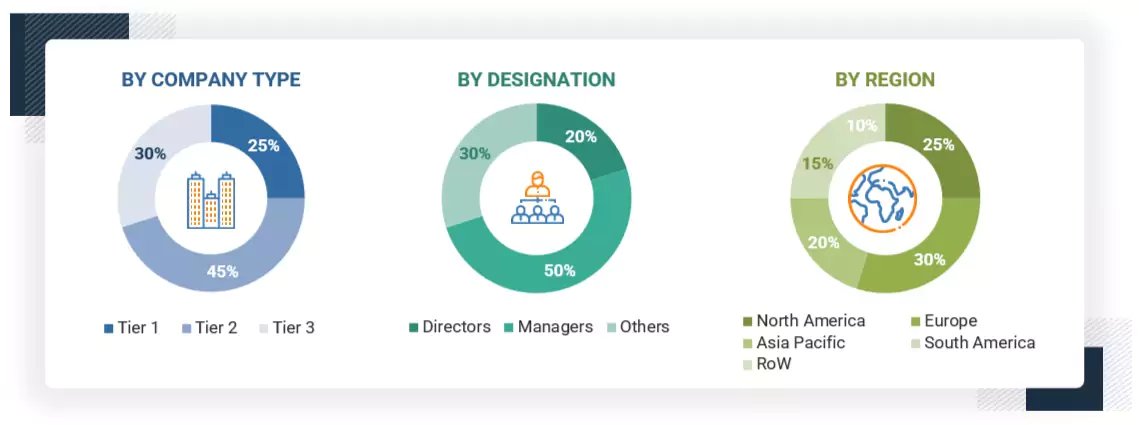
Note: The three tiers of the companies are defined based on their total revenues in 2023 or 2024, as per
the availability of financial data: Tier 1: Revenue >USD 1 billion; Tier 2: USD 100
million = Revenue = USD 1 billion; Tier 3: Revenue
To know about the assumptions considered for the study, download the pdf brochure
|
COMPANY |
DESIGNATION |
|
Archer Daniels Midland Company (US) |
General Manager |
|
Ingredion (US) |
Sales Manager |
|
Cargill (US) |
Manager |
|
Roquette (France) |
Head of Processing Department |
|
SPAC Starch Products Private Limited (India) |
Marketing Manager |
|
Thai Wah (Thailand) |
Sales Executive |
Market Size Estimation
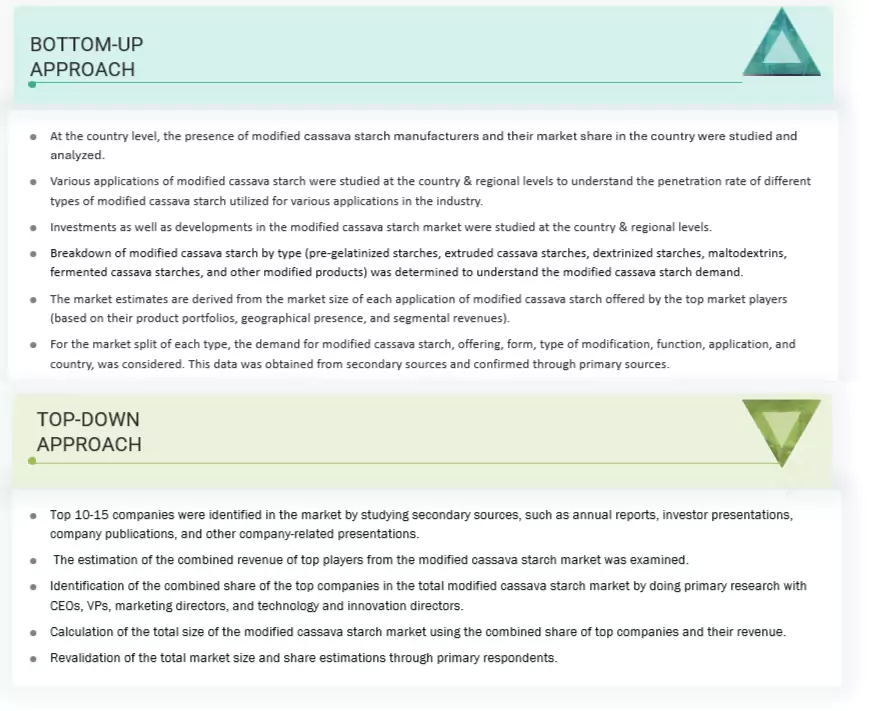
Both the top-down and bottom-up approaches were used to estimate and validate the total size of the modified cassava starch market. These approaches were also used extensively to determine the size of various subsegments in the market. The research methodology used to estimate the market size includes the following details:
- The key players in the industry and the overall markets were identified through extensive secondary research.
- All shares, splits, and breakdowns were determined using secondary sources and verified through primary sources.
- All possible parameters that affect the market covered in this research study were accounted for, viewed in extensive detail, verified through primary research, and analyzed to obtain final quantitative and qualitative data.
- The research included the study of reports, reviews, and newsletters of top market players, along with extensive interviews for opinions from leaders, such as CEOs, directors, and marketing executives.
Modified Cassava Starch Market : Top-Down and Bottom-Up Approach
Data Triangulation
After arriving at the overall market size from the estimation process explained above, the total market was split into several segments and subsegments. The data triangulation and market breakdown procedures were employed, wherever applicable, to estimate the overall modified cassava starch market and arrive at the exact statistics for all segments and subsegments. The data was triangulated by studying various factors and trends from the demand and supply sides. The market size was also validated using both the top-down and bottom-up approaches.
Market Definition
Modified cassava starch is a derivative of native cassava starch, which is extracted from the root of the cassava plant. The native starch is altered to enhance its properties for specific applications through various physical, chemical, or enzymatic processes. These modifications improve the starch’s stability, texture, water retention, heat resistance, and shelf life, making it more suitable for demanding industrial and food processing conditions. The ability to tailor its properties through different modification techniques enables its use in a diverse range of applications, meeting the growing demand for functional and diet-specific ingredients in the global market.
Stakeholders
- Manufacturers, dealers, and suppliers of modified cassava starch
- Food and beverage manufacturers
- Paper and packaging manufacturers
- Textile and laundry product manufacturers
- Raw cassava and starch suppliers
- Pharmaceutical formulation companies
- Machinery and technology providers for starch modification
- Adhesive and construction material manufacturers
- Chemical suppliers for starch processing
-
Regulatory bodies and institutions:
- Food and Agriculture Organization (FAO)
- United States Department of Agriculture (USDA)
- Central Food Technological Research Institute (CFTRI)
- European Food Safety Authority (EFSA)
- National Agency for Food and Drug Administration and Control (NAFDAC)
- ASEAN Food and Beverage Alliance (AFBA)
- Logistics providers & transporters
- Technology consultants and agri-business strategy firms
- Export-import traders and global starch distributors
-
Research institutes and organizations
- Consulting companies/consultants in the agricultural technology sector
Report Objectives
- To determine and project the size of the modified cassava starch market based on product type, form, type of modification, function, application, and region in terms of value over five years, ranging from 2025 to 2030.
- To identify the attractive opportunities in the market by determining the largest and fastest-growing segments across regions
- To provide detailed information about the key factors influencing market growth (drivers, restraints, opportunities, and challenges)
- To analyze the opportunities in the market for stakeholders and provide details of the competitive landscape for market leaders.
- To analyze the micro-markets with respect to individual growth trends, prospects, and their contribution to the total market.
- To identify and profile the key players in the modified cassava starch market.
- To understand the competitive landscape and identify the major growth strategies adopted by players across the key regions.
Available Customizations
With the given market data, MarketsandMarkets offers customizations according to company-specific scientific needs.
cProduct Analysis
- Product Matrix, which gives a detailed comparison of the product portfolio of each company.
Geographic Analysis as per Feasibility
With the given market data, MarketsandMarkets offers customizations according to company-specific scientific needs.
- Further breakdown of the Rest of Europe modified cassava starch market into key countries.
- Further breakdown of the Rest of Asia Pacific modified cassava starch market into key countries.
- Further breakdown of the Rest of South America modified cassava starch market into key countries.
Company Information
- Detailed analyses and profiling of additional market players (up to five)
Get the Full Modified Cassava Starch Market Report
Full forecast, segment splits, and company analysis for all Modified Cassava Starch Market.
- US Modified Cassava Starch Market
- Canada Modified Cassava Starch Market
- Mexico Modified Cassava Starch Market
- Germany Modified Cassava Starch Market
- France Modified Cassava Starch Market
- UK Modified Cassava Starch Market
- Italy Modified Cassava Starch Market
- Spain Modified Cassava Starch Market
- China Modified Cassava Starch Market
- Japan Modified Cassava Starch Market
- India Modified Cassava Starch Market
- Thailand Modified Cassava Starch Market
- Vietnam Modified Cassava Starch Market
- Indonesia Modified Cassava Starch Market
- Brazil Modified Cassava Starch Market
- Argentina Modified Cassava Starch Market
- South Africa Modified Cassava Starch Market
- Rest Of Europe Modified Cassava Starch Market
- Rest Of Asia Pacific Modified Cassava Starch Market
Need a Tailored Report?
Customize this report to your needs
Get 10% FREE Customization
Customize This Report
