
Rest Of Asia Pacific Modular Construction Market (2025-2030)

The Rest Of Asia Pacific Modular Construction Market was valued at $5246.8 Million in 2025 and projected to reach to $7638.2 Million by 2030, representing a compound annual growth rate of 7.8%. Rest Of Asia Pacific's modular construction market is positioned for sustained expansion through 2030, fueled by rapid industrialization, urbanization, and infrastructure investment across developing nations.


| Market Size in | USD 26.32 MN |
| Market Forecast in | |
| CAGR | |
| Forecast Period | |
| Units Considered | Value (USD MN) |
Rest Of Asia Pacific Modular Construction Market Trends and Insights
- This 7.8% compound annual growth rate significantly outpaces global trends, reflecting accelerating adoption of prefabrication and off-site construction methodologies across the region.
- Rest Of Asia Pacific is capitalizing on rapid urbanization, labor cost pressures, and infrastructure modernization initiatives that favor modular building solutions. The Rest Of Asia Pacific modular construction sector is driven by increasing demand from packaging, construction, mining, and gases industries seeking cost-efficient and time-optimized delivery models.
- Rest Of Asia Pacific's emerging economies are investing heavily in smart cities and industrial facilities, creating substantial opportunities for modular construction providers.
- Between 2025 and 2030, Rest Of Asia Pacific is expected to attract significant capital investment as manufacturers and developers recognize the competitive advantages of modular approaches in reducing project timelines and operational expenses..
Key Market Statistics
- CAGR (2025-2030) 7.8% CAGR
- Market Size, 2025 ~USD 5246.8 Million
- Forecast, 2030 ~USD 7638.2 Million
- Country Rest Of Asia Pacific
Rest Of Asia Pacific Modular Construction Market Overview
Outpacing Global Growth :
Rest Of Asia Pacific's modular construction market grows at 7.8% CAGR, significantly exceeding the global rate of 5.4%, driven by rapid urbanization and infrastructure development across emerging economies in the region.
Substantial Market Valuation :
The market is valued at USD 5,246.8 million in 2025 and is projected to expand to USD 7,638.2 million by 2030, representing a USD 2,391.4 million increase over the five-year forecast period.
Prefabrication Adoption Surge :
Rest Of Asia Pacific is experiencing accelerating adoption of prefabrication and off-site construction methodologies, driven by labor shortages, cost pressures, and government initiatives promoting sustainable building practices.
Multi-Sector Expansion :
Growth spans packaging, construction, mining, and gases industries, with modular solutions addressing diverse operational needs across manufacturing, infrastructure, and resource extraction sectors throughout the region.
Rest Of Asia Pacific Modular Construction Market Dynamics
- The region's adoption of modular methodologies is accelerating as stakeholders recognize cost efficiencies, reduced construction timelines, and improved quality control.
- Government support for sustainable construction practices and increasing labor costs are compelling manufacturers and developers to embrace prefabrication solutions. The forecast period will witness intensified competition and technological innovation as regional players expand capacity and capabilities.
- Investment in modular manufacturing facilities, coupled with growing awareness of environmental benefits, will drive market penetration across construction, packaging, and industrial sectors.
- Rest Of Asia Pacific's favorable demographics, rising disposable incomes, and infrastructure modernization initiatives create a compelling growth trajectory, positioning the region as a critical growth engine for the global modular construction market..
Market Ecosystem
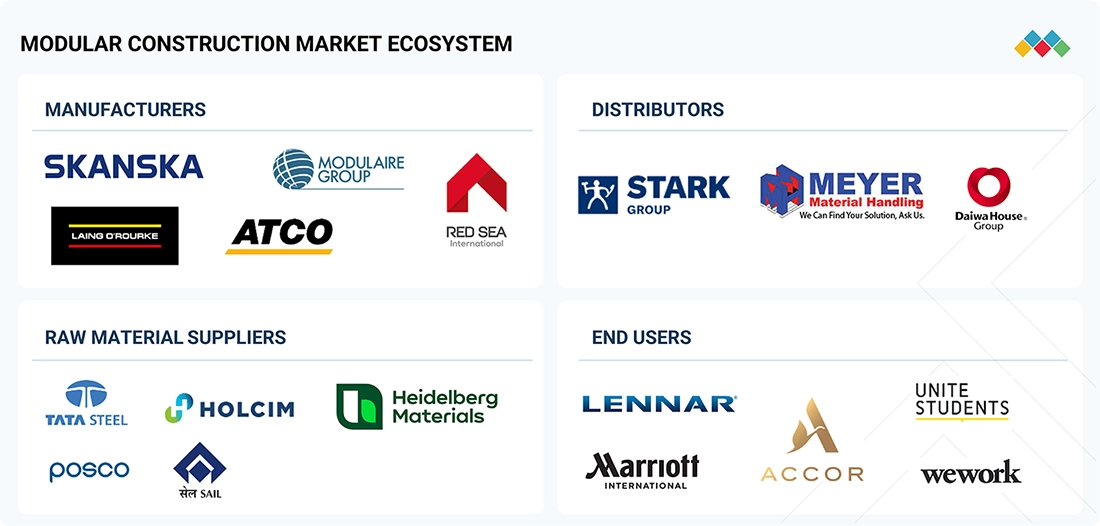
MODULAR CONSTRUCTION MARKET: COMMERCIAL USE CASES ACROSS INDUSTRIES
| COMPANY | USE CASE DESCRIPTION | BENEFITS |
|---|---|---|
 |
Created the modular classroom complex for 1,200 students, including temperature-controlled corridors, special rooms such as Home Economics, Biology, Chemistry, and Criminal Justice, and optimal site planning around the oval drive. | Facilitated fast construction, personalized learning environments, and optimal use of the land; disruption to ongoing renovations was minimal. |
 |
Delivered 71 approved modular classrooms for LAUSD after the 2025 Palisades Fire disaster. This includes 33 classrooms, 1 admin building, 3 restrooms, and ADA ramps. These projects were executed under tight deadlines and with challenging site conditions. | Schools with safe, code-compliant learning environments were quickly reopened, and modular construction demonstrated a notable level of disaster response efficiency. |
 |
Delivered a 4,920 sq ft modular wing with four classrooms for Glastonbury Public School, connected by a climate-controlled hallway that included green space, a chair lift, sprinkler fire protection, and information technology infrastructure. | Provided quick and economical expansion for the school, ensured comfort, safety, and aesthetic harmony, and ensured faster completion of the project within budget. |
Logos and trademarks shown above are the property of their respective owners. Their use here is for informational and illustrative purposes only.
Related Ecosystem
Infrastructure Material
- Alumina Ceramics
- Ceramic Coatings
- Monolithic Ceramics
- Polyphenylene Sulfide (PPS)
- Titanate Ceramics
- Saint-gobain
- Simpson Manufacturing Co., Inc.
- DOW CHEMICAL COMPANY
- Basf se
- Sika ag
Building And Construction
- HVAC System
- Acoustic Insulation
- Alkyd Resins
- Fiberglass
- Thermal Insulation
- Snc-lavalin group inc.
- Saint-gobain
- LHOIST S.A
- USG CORPORATION
- Basf se
Key Takeaways
- Rest Of Asia Pacific's modular construction market will grow from USD 5,246.8M (2025) to USD 7,638.2M (2030) at a 7.8% CAGR, outpacing global growth rates.
- Rest Of Asia Pacific is experiencing accelerated adoption of prefabrication and off-site construction driven by urbanization and labor cost optimization.
- Rest Of Asia Pacific's packaging, construction, mining, and gases sectors are primary demand drivers for modular solutions through 2030.
- Rest Of Asia Pacific's emerging economies are investing in smart cities and industrial infrastructure, creating substantial modular construction opportunities.
Modular Construction Market Report Scope
| Report Metric | Details |
|---|---|
| Base Year | 2025 |
| Fastest Growing Segment | RELOCATABLE (Type) |
| Forecast Period | 2025–2030 |
| Growth Rate | CAGR of 5.4% from 2025 to 2030 |
| Largest Segment | PERMANENT (Type) |
| Market Size Base Year (Billions) | ~USD 109.83 (2025) |
| Revenue Forecast (Billions) | ~USD 142.87 (2030) |
| Segments Covered | Type, Material, End-Use Industry |
Rest Of Asia Pacific Modular Construction Market Report Segmentation
3 segment dimensions are covered across the global market.
By Type
- Permanent
- Relocatable
By Material
- Concrete
- Steel
- Wood
By End-Use Industry
- Education
- Healthcare
- Hospitality
- Office
- Other End-Use Industries
- Residential
- Retail & Commercial
Target Audience
- Construction & Real Estate Developers : Need regional market data to evaluate modular construction adoption rates, competitive positioning, and investment opportunities in Rest Of Asia Pacific's rapidly expanding construction sector.
- Modular Construction Manufacturers : Require detailed market intelligence on Rest Of Asia Pacific demand, growth rates, and sector-specific applications to guide capacity planning, facility location decisions, and product development strategies.
- Private Equity & Investment Firms : Seek comprehensive market analysis of Rest Of Asia Pacific to identify acquisition targets, assess portfolio company growth potential, and evaluate regional expansion opportunities in modular construction.
- Government & Policy Makers : Need market insights to inform infrastructure policies, sustainability initiatives, and regulatory frameworks supporting modular construction adoption across Rest Of Asia Pacific economies.
- Supply Chain & Logistics Providers : Require market forecasts and regional growth data to optimize distribution networks, plan infrastructure investments, and position services for the expanding modular construction market in Rest Of Asia Pacific.
Key Companies in the Rest Of Asia Pacific Modular Construction Market
| Company | HQ | Ownership | Strongest segments |
|---|---|---|---|
| CRH PLC | Ireland | Public Company | Aggregates, crushed stone, sand and gravel,Cementitious materials and related binders,Ready mixed concrete, mortars, and asphalt, |
| TENSAR | United States | Private Company | Polymer geogrids for roadway and rail stabilization,Retaining walls, reinforced slopes, and foundation improvement systems,Erosion and sediment control mats (permanent and bio-degradable), |
| SAMSUNG | South Korea | Public Company | Smartphones, tablets, and wearables,Consumer electronics (TVs, audio, appliances),Semiconductors (memory, foundry, system LSI), |
| SNC-LAVALIN GROUP INC. | Canada | Public Company | Consultancy, Strategy, and Advisory,Engineering, Design, and Project/Program Management,Operations, Maintenance, and Asset Management, |
| OBAYASHI | Japan | Public Company | Building Construction (offices, condos, commercial, hospitals, schools),Civil Engineering (tunnels, bridges, dams, rail, expressways, urban civil),Engineering for Semiconductor/Pharma Facilities and ICT for Buildings, |
| SKANSKA | Sweden | Public Company | Construction,Residential Development,Commercial Property Development, |
| LAING O’ROURKE | United Kingdom | Private Company | Building construction and program management,Civil engineering and infrastructure,Manufacturing and construction products, |
| ATCO LTD. | Canada | Public Company | Electricity and Natural Gas Transmission & Distribution,Energy Infrastructure, Storage, and Clean Fuels,Modular Shelter, Workforce Housing, and Site Services, |
| RED SEA INTERNATIONAL | Saudi Arabia | Public Company | Nonconcrete Residential and Commercial Buildings (Modular),Facility Management and Rental of Investment Properties,General Construction and Civil/Electrical Works, |
| VINCI | France | Public Company | Concessions (motorways, airports, rail, stadiums),Energy Solutions and Services,Construction and Civil Engineering, |
| FLUOR CORPORATION | United States | Public Company | Energy Solutions (oil, gas, chemicals, LNG, power, energy transition),Urban Solutions (advanced tech, manufacturing, life sciences, mining, infrastructure, staffing, maintenance),Mission Solutions (government, nuclear remediation, security, logistics, O&M), |
| LENDLEASE CORPORATION | Australia | Public Company | Construction,Development,Investments, |
| KWIKSPACE | South Africa | Private Company | Construction and Mining Camps (accommodation, offices, ablutions, laundries, kitchens, recreation, gyms),Education Infrastructure (modular schools and early childhood facilities),Healthcare and Clinics (clinics, hospital wards, dispensaries, laboratories, consulting rooms), |
CRH PLC
CRH PLC is an Irish public company founded in 1936 that employs 83,032 people. The company operates as a major building materials and construction products manufacturer and distributor.
TENSAR
TENSAR is a United States-based private company founded in 1983 with 715 employees. The company specializes in geotechnical and civil engineering solutions.
SAMSUNG
SAMSUNG is a South Korean public company founded in 1969 with 128,735 employees. The company operates across multiple sectors including electronics, semiconductors, and consumer appliances.
SNC-LAVALIN GROUP INC.
SNC-LAVALIN GROUP INC. is a Canadian public company founded in 1911 that employs 40,246 people. The company provides engineering, procurement, and construction services globally.
OBAYASHI
OBAYASHI is a Japanese public company founded in 1892 that employs 18,031 people. The company operates as a major construction and engineering firm.
SKANSKA
SKANSKA is a Swedish public company founded in 1887 with 26,363 employees. The company provides construction, project development, and civil engineering services.
LAING O’ROURKE
LAING O'ROURKE is a United Kingdom-based private company founded in 1978 with 10,003 employees. The company operates as a major construction and engineering contractor.
ATCO LTD.
ATCO LTD. is a Canadian public company founded in 1947 that employs 20,369 people. The company operates in energy, utilities, and logistics sectors.
RED SEA INTERNATIONAL
RED SEA INTERNATIONAL is a Saudi Arabian public company founded in 1967. The company operates in the construction and development sectors.
VINCI
VINCI is a French public company founded in 1899 that employs 292,101 people. The company is a global leader in construction, concessions, and related services.
FLUOR CORPORATION
FLUOR CORPORATION is a United States-based public company founded in 1912 with 22,995 employees. The company provides engineering, procurement, construction, and maintenance services.
LENDLEASE CORPORATION
LENDLEASE CORPORATION is an Australian public company founded in 1958 with 12,000 employees. The company operates in construction, real estate development, and asset management.
KWIKSPACE
KWIKSPACE is a South African private company founded in 1972. The company manufactures modular and portable buildings.
Reasons to Buy this Report
- Regional Growth Differentiation : Identify Rest Of Asia Pacific as a high-growth market segment outperforming global averages, enabling strategic resource allocation and market entry prioritization for construction and industrial companies.
- Competitive Intelligence : Gain detailed insights into regional market dynamics, emerging competitors, and localized adoption patterns specific to Rest Of Asia Pacific's modular construction landscape.
- Investment Decision Support : Leverage precise market sizing (USD 5,246.8M to USD 7,638.2M) and CAGR projections to justify capital investments, facility expansions, and partnership strategies in Rest Of Asia Pacific.
- Sector-Specific Opportunities : Understand modular construction applications across packaging, construction, mining, and gases sectors within Rest Of Asia Pacific, identifying niche growth opportunities and vertical expansion potential.
- Strategic Planning Horizon : Access five-year forecasts enabling long-term strategic planning, supply chain optimization, and market positioning decisions tailored to Rest Of Asia Pacific's unique growth trajectory and regional characteristics.
Frequently asked questions
What is the market size of modular construction in Rest Of Asia Pacific?
Rest Of Asia Pacific's modular construction market is valued at USD 5,246.8 million in 2025 and is forecast to reach USD 7,638.2 million by 2030.
What is the growth rate for modular construction in Rest Of Asia Pacific?
Rest Of Asia Pacific's modular construction market is projected to grow at a compound annual growth rate (CAGR) of 7.8% from 2025 to 2030.
Which industries drive modular construction demand in Rest Of Asia Pacific?
Rest Of Asia Pacific's modular construction demand is primarily driven by the packaging, construction, mining, and gases industries seeking cost-efficient and time-optimized solutions.
Why is Rest Of Asia Pacific's modular construction market growing faster than global averages?
Rest Of Asia Pacific's 7.8% CAGR exceeds the global 5.4% rate due to rapid urbanization, labor cost pressures, infrastructure modernization, and smart city investments across emerging economies.
What are the key opportunities for modular construction providers in Rest Of Asia Pacific?
Rest Of Asia Pacific offers significant opportunities through smart city development, industrial facility expansion, and increased adoption of prefabrication methodologies by packaging, construction, mining, and gases sectors.
RESEARCH METHODOLOGY
The study involved four major activities for estimating the current global size of the modular construction market. Exhaustive secondary research was conducted to gather information on the market, the peer market, and the parent market. The next step was to validate these findings, assumptions, and sizes with the industry experts across the value chain of modular construction through primary research. Both the top-down and bottom-up approaches were employed to estimate the overall size of the modular construction market. After that, market breakdown and data triangulation procedures were used to determine the size of different segments and sub-segments of the market.
Secondary Research
In the secondary research process, various secondary sources such as Hoovers, Factiva, Bloomberg BusinessWeek, and Dun & Bradstreet were referred to, to identify and collect information for this study on the modular construction market. These secondary sources included annual reports, press releases & investor presentations of companies, white papers, certified publications, articles by recognized authors, regulatory bodies, trade directories, and databases.
Primary Research
Various primary sources from both the supply and demand sides of the modular construction market were interviewed to obtain qualitative and quantitative information. The primary sources from the supply-side included industry experts, such as Chief Executive Officers (CEOs), vice presidents, marketing directors, sales professionals, and related key executives from various leading companies and organizations operating in the modular construction industry. The breakdown of the profiles of primary respondents is as follows:
BREAKDOWN OF PRIMARY INTERVIEWS
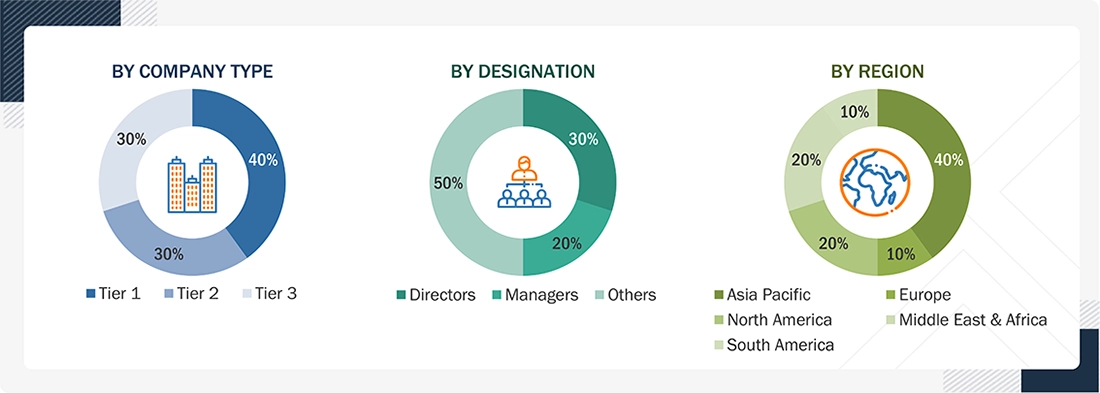
Notes: Companies are classified based on their revenue–Tier 1 = >USD 7 billion, Tier 2 = USD 500 million to USD 7 billion, and Tier 3 =
Others include sales, marketing, and product managers.
To know about the assumptions considered for the study, download the pdf brochure
Market Size Estimation
Both the top-down and bottom-up approaches were used to estimate and validate the global size of the modular construction market. These approaches were also used extensively to estimate the size of various dependent segments of the market. The research methodology used to estimate the market size included the following details:
- The key players were identified through extensive secondary research.
- The industry’s supply chain and market size, in terms of value, were determined through primary and secondary research processes.
- All percentage shares, split, and breakdowns were determined using secondary sources and verified through primary sources.
- All possible parameters that affect the markets covered in this research study were accounted for, viewed in extensive detail, verified through primary research, and analysed to obtain the final quantitative and qualitative data.
- The research includes the study of reports, reviews, and newsletters of key industry players, along with extensive interviews with key officials, such as directors and marketing executives.
Data Triangulation
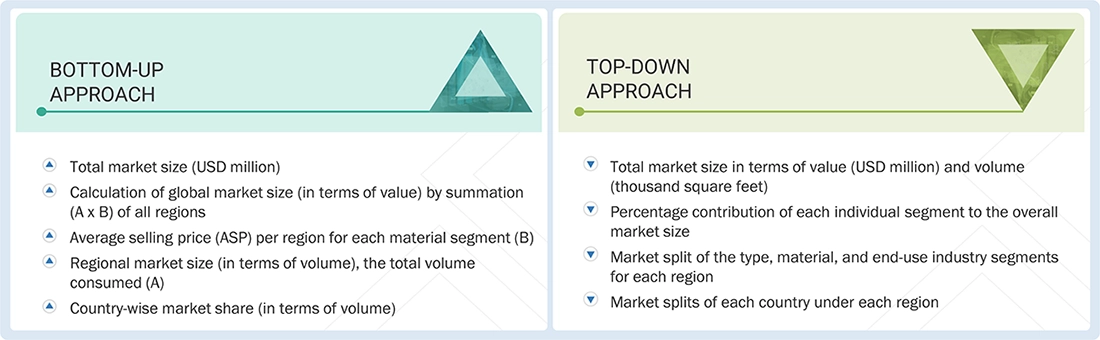
After arriving at the overall market size from the estimation process explained above, the total market was split into several segments and sub-segments. The data triangulation and market breakdown procedures were employed, wherever applicable, to complete the overall market engineering process and arrive at the exact statistics for all segments and sub-segments of the modular construction market. The data was triangulated by studying various factors and trends from both the demand- and supply-side. In addition, the market size was validated by using both the top-down and bottom-up approaches. Then, it was verified through primary interviews. Hence, for every data segment, there are three sources—top-down approach, bottom-up approach, and expert interviews. The data were assumed to be correct when the values arrived at from the three sources matched.
Market Definition
The modular construction market refers to the industry sector encompassing the design, fabrication, and assembly of building components in controlled factory environments for subsequent installation at construction sites. This approach to construction involves the prefabrication of standardized modules or components, which are then transported and assembled on-site to create structures ranging from residential homes and commercial buildings to industrial facilities and infrastructure projects.
Key Stakeholders
- Raw material suppliers
- Modular construction manufacturers
- Government & regulatory bodies
- Research organizations
- Associations and industry bodies
- Contractors, architects, and engineers
- End users
- Traders and distributors
Report Objectives
- To estimate and forecast the modular construction market, in terms of value and volume.
- To provide detailed information about the major factors (drivers, restraints, opportunities, and challenges) influencing the market growth.
- To define, describe, and forecast the market size, based on type, material, end-use industry, and region.
- To forecast the market size along with segments and submarkets, in key regions: North America, Europe, Asia Pacific (APAC), Middle East & Africa (MEA), and South America along with their key countries.
- To strategically analyze micromarkets, with respect to individual growth trends, prospects, and their contribution to the total market.
- To analyze growth opportunities in the market for stakeholders and provide details on the competitive landscape for market leaders.
- To strategically profile key players and comprehensively analyze their market shares and core competencies.
- To analyze competitive developments, such as merger & acquisition, expansion & investment, agreement, and new product development in the modular construction market.
Available Customizations
With the given market data, MarketsandMarkets offers customizations according to client-specific needs.
The following customization options are available for the modular construction report:
Product Analysis
- Product matrix, which offers a detailed comparison of the product portfolio of companies
Regional Analysis
- Further analysis of the modular construction market for additional countries
Company Information
- Detailed analysis and profiling of additional market players (up to five)
Get the Full Modular Construction Market Report
Full forecast, segment splits, and company analysis for all Modular Construction Market.
- China Modular Construction Market
- India Modular Construction Market
- Japan Modular Construction Market
- South Korea Modular Construction Market
- Germany Modular Construction Market
- UK Modular Construction Market
- France Modular Construction Market
- Russia Modular Construction Market
- Spain Modular Construction Market
- Italy Modular Construction Market
- Austria Modular Construction Market
- Poland Modular Construction Market
- Canada Modular Construction Market
- Mexico Modular Construction Market
- US Modular Construction Market
- South Africa Modular Construction Market
- Brazil Modular Construction Market
- Argentina Modular Construction Market
- Rest Of Europe Modular Construction Market
Need a Tailored Report?
Customize this report to your needs
Get 10% FREE Customization
Customize This Report
