
Latin America Oilfield Communications Market (2025-2030)

The Latin America Oilfield Communications Market was valued at $368.9 Million in 2025 and projected to reach to $503.8 Million by 2030, representing a compound annual growth rate of 6.4%. Latin America's oilfield communications market is poised for steady expansion as major oil-producing nations invest in modernizing their energy infrastructure.


| Market Size in | USD 26.32 MN |
| Market Forecast in | |
| CAGR | |
| Forecast Period | |
| Units Considered | Value (USD MN) |
Latin America Oilfield Communications Market Trends and Insights
- This growth trajectory reflects Latin America's strategic importance in global energy infrastructure and the region's increasing investment in digital transformation within upstream and downstream operations.
- Latin America's market expansion is driven by modernization initiatives across major oil-producing nations and the critical need for reliable, secure communication systems in remote and offshore drilling environments. The oilfield communications sector in Latin America is experiencing heightened demand for integrated solutions that enhance operational efficiency, safety, and real-time data transmission.
- Latin America's diverse geography—spanning Amazon basins, coastal offshore zones, and challenging terrain—necessitates robust communication infrastructure tailored to regional conditions.
- By 2030, Latin America is expected to see accelerated adoption of IoT-enabled platforms, cloud-based monitoring systems, and 5G-integrated solutions that address the unique connectivity challenges faced by the region's energy sector..
Key Market Statistics
- CAGR (2025-2030) 6.4% CAGR
- Market Size, 2025 ~USD 368.9 Million
- Forecast, 2030 ~USD 503.8 Million
- Geography Latin America
Latin America Oilfield Communications Market Overview
Regional Market Valuation :
Latin America's oilfield communications market is valued at USD 368.9 million in 2025, with strong growth potential driven by increased upstream and downstream digitalization initiatives across the region.
Projected Growth Trajectory :
The market is forecasted to reach USD 503.8 million by 2030, representing a 6.4% CAGR, demonstrating sustained investment in communication infrastructure for oil and gas operations.
Brazil's Market Leadership :
Brazil dominates the Latin American oilfield communications sector with a market size of USD 220.7 million, leveraging its position as the region's largest oil producer and deepwater exploration hub.
Digital Transformation Momentum :
Latin American oil operators are accelerating digital transformation initiatives, including IoT deployment, real-time monitoring systems, and integrated communication networks to enhance operational efficiency and safety.
Latin America Oilfield Communications Market Dynamics
- Brazil's deepwater operations and Mexico's upstream development projects are primary growth catalysts, driving demand for advanced communication systems that enable real-time data transmission and remote operations management.
- The region's focus on operational efficiency and safety compliance is accelerating adoption of integrated communication platforms. Looking ahead to 2030, Latin America will benefit from increased capital expenditure in digital technologies, cloud-based solutions, and 5G connectivity for remote oilfield operations.
- Regulatory pressures for environmental monitoring and safety reporting will further propel market growth.
- Strategic partnerships between local operators and global technology providers will enhance market penetration, positioning Latin America as a key growth region within the global oilfield communications landscape..
Market Ecosystem
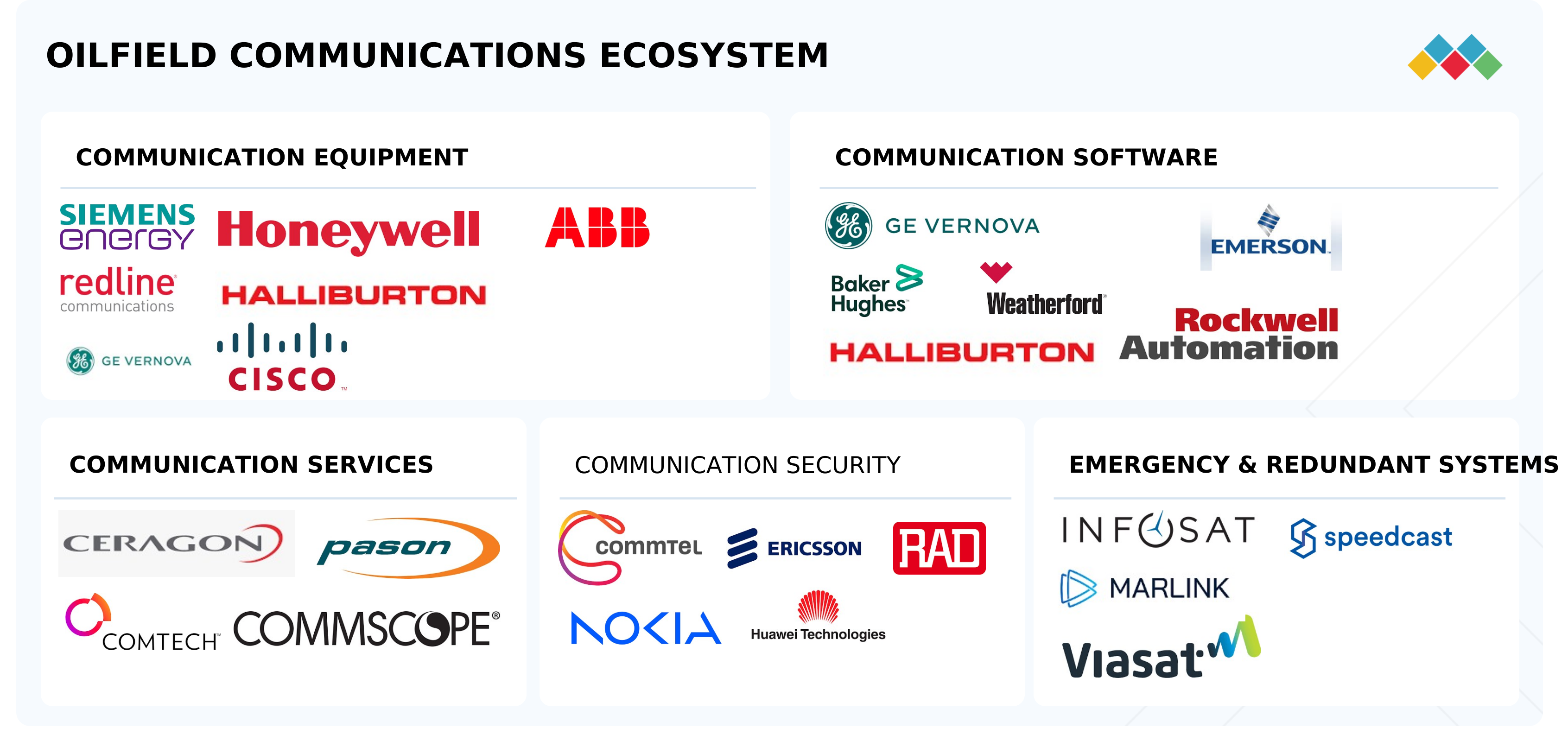
Oilfield communications market: COMMERCIAL USE CASES ACROSS INDUSTRIES
| COMPANY | USE CASE DESCRIPTION | BENEFITS |
|---|---|---|
 |
Oil companies face pressure to maximize rig operations and improve efficiency across networks. | Enabled tank level monitoring, reduced pilferage, and ensured daily pricing updates, improving transparency and customer satisfaction. |
 |
Petroleum Development Oman needed reliable monitoring and control of remote wellheads in harsh desert conditions. | Provided robust SCADA-enabled solutions for wellhead monitoring, legacy system integration, and real-time alarms. |
 |
TASNEE sought to strengthen its asset performance management by addressing gaps in inspection, expertise, and system integration. | Completed critical asset analysis, identified key operating risks, and improved asset reliability across 42,000 assets. |
|
|
PDO required a high-speed wireless IP network to enable digital oilfields and real-time monitoring across 6,000 sites. | PDO enhanced efficiency with remote monitoring, reduced drilling time by 35%, and supported data, voice, and video applications. |
 |
YPF needed improved connectivity for remote operations, integrating diverse field controllers and data systems. | YPF installed 300 licenses at 75 sites, enabling reliable data collection, operational insights, and timely reporting. |
Logos and trademarks shown above are the property of their respective owners. Their use here is for informational and illustrative purposes only.
Related Ecosystem
Mobility And Telecom
Key Takeaways
- Latin America's oilfield communications market will grow from USD 368.9M (2025) to USD 503.8M (2030) at a 6.4% CAGR.
- Latin America's remote and offshore operations drive demand for specialized, resilient communication infrastructure.
- Digital transformation and IoT adoption in Latin America's energy sector are accelerating market expansion.
- Latin America's geographic diversity requires region-specific communication solutions for optimal operational performance.
Oilfield Communications Market Report Scope
| Report Metric | Details |
|---|---|
| Base Year | 2025 |
| Fastest Growing Segment | COMMUNICATION SOFTWARE (Offering) |
| Forecast Period | 2025–2030 |
| Growth Rate | CAGR of 8.3% from 2025 to 2030 |
| Largest Segment | COMMUNICATION EQUIPMENT (Offering) |
| Market Size Base Year (Billions) | ~USD 5.77 (2025) |
| Revenue Forecast (Billions) | ~USD 8.6 (2030) |
| Segments Covered | Offering, Communication Technology |
Latin America Oilfield Communications Market Report Segmentation
2 segment dimensions are covered across the global market.
By Offering
- Communication Equipment
- Communication Security
- Communication Services
- Communication Software
- Emergency & Redundant Systems
By Communication Technology
- Cellular Communication
- Fiber Optic Communication
- Microwave Communication
- Radio Communication
- Satellite Communication
Target Audience
- Oil & Gas Operators : Latin American upstream and downstream operators require market data to evaluate communication technology investments, benchmark regional spending, and plan digital transformation roadmaps.
- Technology Solution Providers : Communications equipment manufacturers and software vendors need regional market insights to develop localized solutions, identify customer segments, and prioritize Latin American market expansion.
- Investment & Private Equity Firms : Investors evaluating opportunities in Latin American energy infrastructure require detailed market sizing and growth forecasts to assess portfolio companies and identify acquisition targets.
- Consulting & Systems Integrators : Systems integrators and consultants serving oil and gas clients need regional market intelligence to advise on communication infrastructure modernization and technology selection strategies.
- Regulatory & Government Bodies : Energy regulators and government agencies in Latin America require market data to inform policy decisions, infrastructure planning, and safety/compliance framework development for oilfield operations.
Key Companies in the Latin America Oilfield Communications Market
| Company | HQ | Ownership | Strongest segments |
|---|---|---|---|
| ZENSAR TECHNOLOGIES LTD | India | Public Company | Digital and Application Services,Cloud Infrastructure Services,Data Engineering and Analytics, |
| SPEEDCAST | Australia | Private Company | Managed VSAT and Multi-Bearer Connectivity (VSAT, MSS, L-band, 4G/LTE),Network Management Platforms and Software (Sigma, intelligent orchestration),Media, Broadcast, and Content Distribution, |
| CERAGON NETWORKS | Israel | Public Company | IP-20/50 all-outdoor (IP-20C-HP, IP-50E, IP-50EX/EXP/EXA, IP-50C, IP-50CX),IP-20/50 split-mount/all-indoor (IP-20N/IP-20A, IP-20F, IP-20G),IP-50 disaggregated solutions (IP-50FX and related), |
| RAD | United States | Public Company | Imaging Centers (multi-modality outpatient imaging services),Digital Health and Informatics (PACS, image management, health informatics),AI Suites and DeepHealth OS, |
| COMMTEL NETWORKS | India | Private Company | Turnkey iTSS projects (design-build-implement),Engineering and consulting services,Intelligent lifecycle management and digital O&M, |
| KONGSBERG GRUPPEN | Norway | Public Company | Air and naval defense systems (including missiles and combat systems),Remote weapon stations, C2, and tactical communications,Subsea, positioning, and uncrewed platforms, |
| PASON | Canada | Public Company | Rig instrumentation hardware (EDR, sensors, analyzers, alarms, actuators),Drilling automation software (AutoDriller, DAS, Toolface Control),Data platforms and connectivity (DataHub, Pason Live, DataLink, Communications), |
| PELOTON | United States | Public Company | Connected Fitness Hardware (Bike, Bike+, Tread, Tread+, Row),All-Access Memberships (hardware-linked),Peloton App & Digital-Only Memberships, |
ZENSAR TECHNOLOGIES LTD
Zensar Technologies Ltd is an Indian IT services and consulting company founded in 1963, operating as a publicly traded enterprise with 10,066 employees.
SPEEDCAST
Speedcast is an Australian private company founded in 1999, operating in the communications and connectivity sector.
CERAGON NETWORKS
Ceragon Networks is an Israeli public company founded in 1996 with 1,091 employees, specializing in wireless backhaul solutions.
RAD
RAD is a United States-based public company established in 1981, employing 9,060 staff members.
COMMTEL NETWORKS
Commtel Networks is an Indian private company established in 1998 with 358 employees.
KONGSBERG GRUPPEN
Kongsberg Gruppen is a Norwegian public company with a history dating back to 1814, currently employing 7,586 staff members.
PASON
Pason is a Canadian public company founded in 1978 with 650 employees.
PELOTON
Peloton is a United States-based public company founded in 2012, currently employing 2,631 staff members.
Countries within Latin America - compare and drill down
| Country | 2025 size (native) |
|---|---|
| Brazil | USD 220.7 Million |
| Mexico | USD 129.5 Million |
Country market size visualization
Reasons to Buy this Report
- Brazil-Centric Market Intelligence : Gain detailed insights into Brazil's USD 220.7 million market, the region's largest oilfield communications sector, with specific data on deepwater communication requirements and operator preferences.
- Growth Opportunity Identification : Identify high-potential segments within Latin America's 6.4% CAGR growth trajectory, including emerging opportunities in Mexico's upstream sector and secondary producing nations.
- Competitive Landscape Analysis : Understand regional competitive dynamics, local technology providers, and market entry strategies specific to Latin American oil and gas operators and their communication infrastructure needs.
- Investment Decision Support : Make informed investment and expansion decisions with comprehensive market sizing, forecast data, and regional trend analysis through 2030 for Latin American oilfield communications.
- Strategic Partnership Insights : Identify partnership and collaboration opportunities with regional operators, technology integrators, and service providers operating within Latin America's growing digital oilfield ecosystem.
Frequently asked questions
What is the current size of the oilfield communications market in Latin America?
Latin America's oilfield communications market is valued at USD 368.9 million in 2025.
What is the projected market size for Latin America by 2030?
Latin America's oilfield communications market is forecast to reach USD 503.8 million by 2030.
What is the growth rate for Latin America's oilfield communications market?
Latin America's oilfield communications market is expected to grow at a compound annual growth rate of 6.4% from 2025 to 2030.
What factors are driving growth in Latin America's oilfield communications sector?
Latin America's market growth is driven by digital transformation initiatives, modernization of energy infrastructure, increased offshore operations, and demand for IoT and cloud-based monitoring solutions.
Why is Latin America important for the global oilfield communications market?
Latin America is a major oil-producing region with complex geographic challenges, significant offshore operations, and substantial investment in communication infrastructure modernization, making it a key growth market globally.
RESEARCH METHODOLOGY
The research study for the oilfield communications market involved extensive secondary sources, directories, journals, and paid databases. Primary sources mainly included industry experts from the core and related industries, preferred oilfield communication providers, third-party service providers, consulting service providers, end users, and other commercial enterprises. In-depth interviews with primary respondents, including key industry participants and subject matter experts, were conducted to obtain and verify critical qualitative and quantitative information and assess the market’s prospects.
Secondary Research
During the secondary research process, various sources were consulted to identify and collect information for the study. These included annual reports, press releases, investor presentations of companies, white papers, industry journals, certified publications, and articles from recognized authors, directories, and databases. Additional data was gathered from oil and gas industry reports, energy magazines, and technology publications covering communication networks and digital oilfield solutions. Information on oilfield communications spending by different countries and regions was extracted from respective government and industry sources.
Secondary research was further used to obtain key insights about the supply chain, helping to identify leading players by offering, communication technology, deployment type, operation stage, and end user. It also supported market classification and segmentation based on industry trends, such as digital transformation, automation, and remote connectivity, while capturing key developments from market-driven and technology-oriented perspectives.
Primary Research
In the primary research process, various primary sources from the supply and demand sides were interviewed to obtain qualitative and quantitative insights into the oilfield communications market. On the supply side, participants included industry experts such as Chief Experience Officers (CXOs), Vice Presidents (VPs), and directors from business development, operations, and oilfield communication technology divisions, along with key executives from communication solution providers, system integrators, managed service providers, and industry associations, as well as subject matter experts.
Primary interviews were conducted to gather information on market statistics, revenue distribution across solutions and services, market segmentation, size estimations, forecasts, and to validate data through triangulation. On the demand side, stakeholders such as Chief Information Officers (CIOs), Chief Technology Officers (CTOs), Chief Operations Officers (COOs), and communication managers from oil and gas companies were interviewed to capture the buyer’s perspective on suppliers, technologies, and their current use of communication solutions in upstream, midstream, and downstream operations. These insights helped assess technology adoption trends, deployment preferences, operational challenges, and end-user expectations, which directly influence the growth and development of the oilfield communications market.
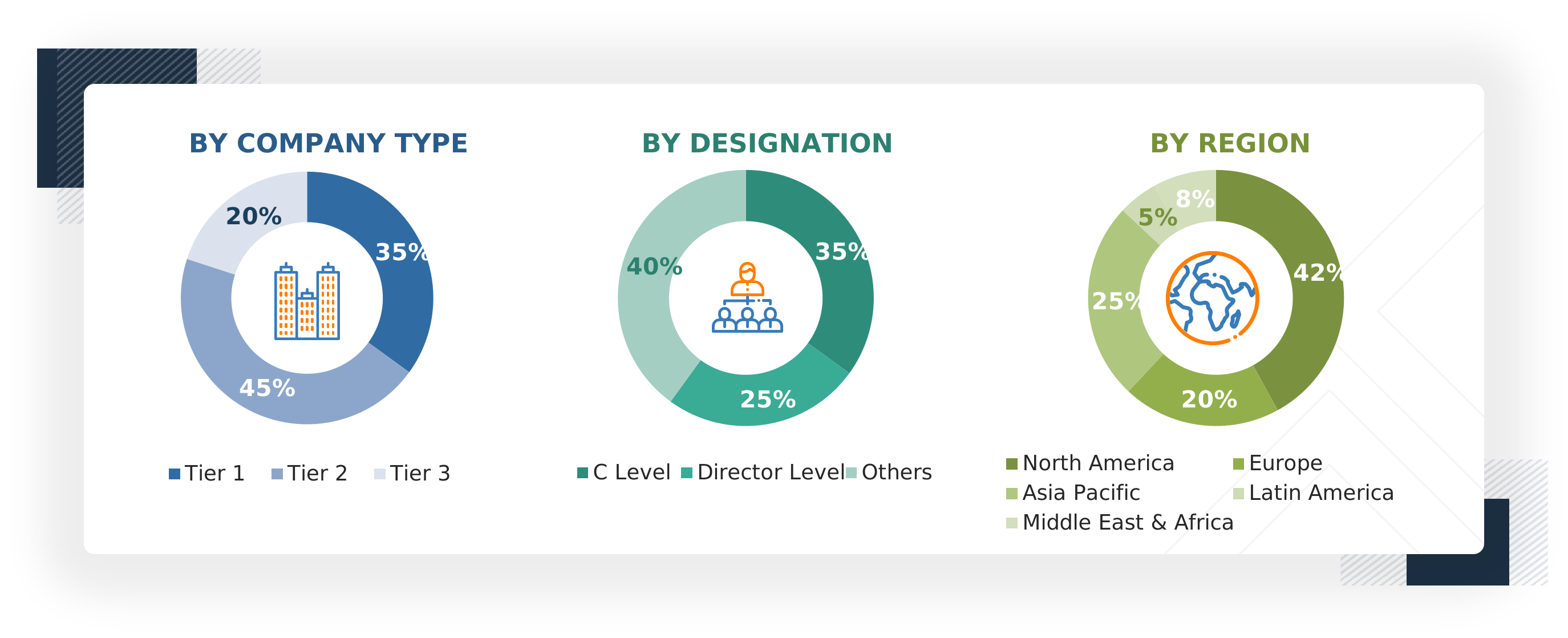
Note: Tier 1 companies account for annual revenue of >USD 10 billion; tier 2 companies’
revenue ranges between USD 1 and 10 billion; and tier 3 companies’ revenue ranges between USD 500 million–USD 1 billion
Other designations include vice presidents, product managers, and other positions.
Source: MarketsandMarkets Analysis
To know about the assumptions considered for the study, download the pdf brochure
Market Size Estimation
Multiple approaches were adopted to estimate and forecast the oilfield communications market. The first approach involves estimating the market size by summing up the companies’ revenue generated by selling solutions.
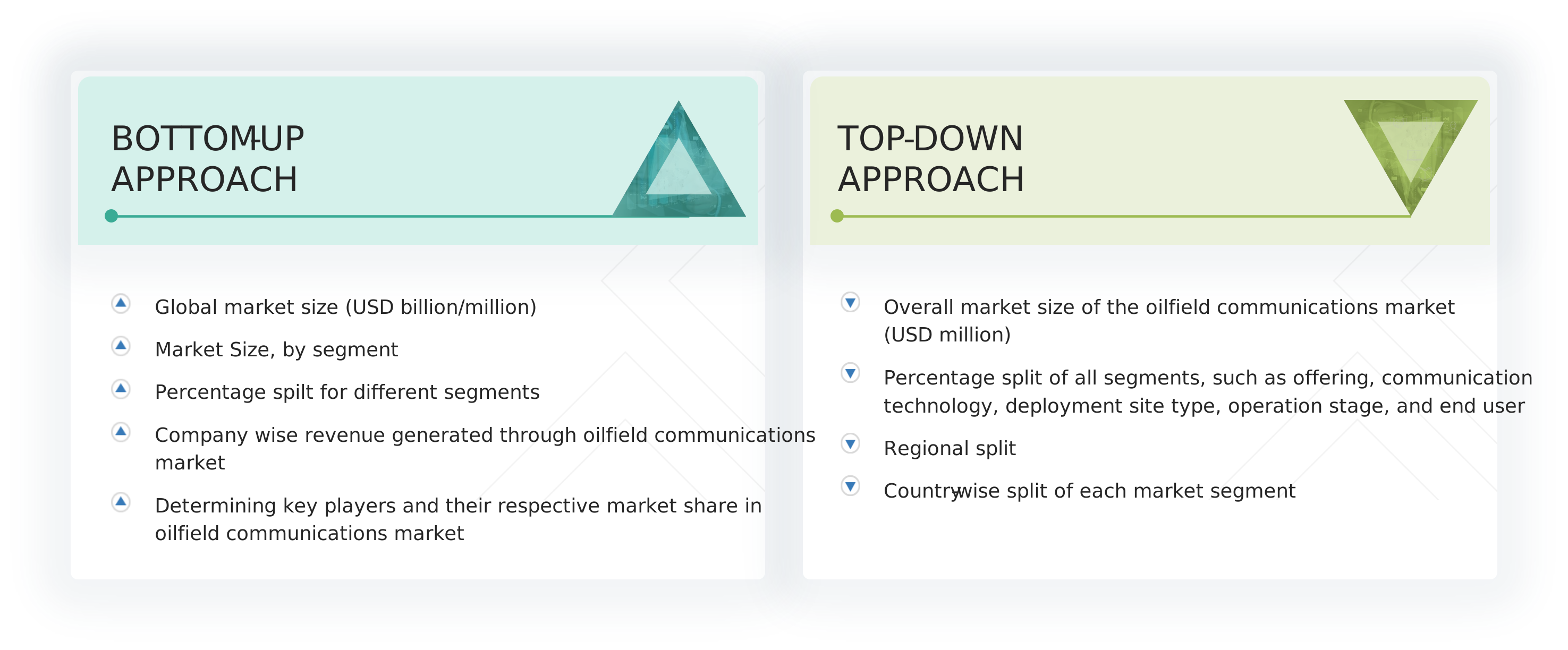
Market Size Estimation Methodology- Top-down approach
In the top-down approach, an exhaustive list of all the vendors offering solutions in the oilfield communications market was prepared. The revenue contribution of the market vendors was estimated through press releases, funding, investor presentations, paid databases, and primary interviews. Each vendor's offerings were evaluated based on the breadth of solutions, including offering, communication technology, deployment site type, operational stage, and end users.
The aggregate of all the companies' revenues was extrapolated to determine the overall market size. Each subsegment was studied and analyzed for its global market size and regional penetration. The markets were triangulated through primary and secondary research. The primary procedure involved extensive interviews with key industry leaders, including CIOs, CEOs, VPs, directors, and marketing executives, to gather valuable insights. The market numbers were further triangulated with the existing MarketsandMarkets repository for validation.
Market Size Estimation Methodology-Bottom-up approach
In the bottom-up approach, the adoption rate of oilfield communications solutions among different end users in key countries with respect to their regions contributing the most to the market share was identified. For cross-validation, the adoption of oilfield communications solutions across various industries, along with different use cases by region, was identified and extrapolated. Use cases identified in different regions were given weightage for the market size calculation.
Based on the market numbers, the regional split was determined by primary and secondary sources. The procedure included analyzing the regional penetration of the oilfield communications market. Based on secondary research, the regional spending on Information and Communications Technology (ICT), socio-economic analysis of each country, strategic vendor analysis of major Oilfield Communications providers, and organic and inorganic business development activities of regional and global players were estimated. With the data triangulation procedure and data validation through primary interviews, the exact values of the overall market size and the segments’ size were determined and confirmed using the study.
Oilfield Communications Market : Top-Down and Bottom-Up Approach
Data Triangulation
The market was segmented into several segments and subsegments after determining the overall market size using the market size estimation processes outlined above. To complete the overall market engineering process and determine the exact statistics for each market segment and subsegment, data triangulation and market segmentation procedures were employed, wherever applicable. The overall market size was then used in the top-down approach to estimate the size of other individual markets by applying percentage splits to the market segmentation.
Market Definition
ABB defines oilfield communications as a set of systems, products, and services that provide reliable, integrated telecom infrastructure to connect the various parts of oilfield operations (field sites, plants, remote wellheads, pipelines, and transportation). These systems support both internal and external communications and are designed for use in harsh environments and to meet safety/security constraints. Their purpose is to facilitate operations, automation, monitoring, remote operation, and collaboration while keeping costs, risks, and operational failures to a minimum.
Stakeholders
- Oil & gas operators
- Telecommunications & satellite service providers
- Industrial networking & equipment manufacturers
- System integrators (SIs) and OT/IT integration specialists
- Managed service providers (MSPs)
- Cloud & edge infrastructure providers
- Cybersecurity vendors (OT/ICS security)
- Engineering, procurement & construction (EPC) contractors
- Independent software vendors (ISVs)
- Distributors and value-added resellers (VARs)
- Maintenance and field service providers
- Government and energy regulatory agencies
- Market research and consulting firms
Report Objectives
- To define, describe, and forecast the oilfield communications market by Offering, Communication Technology, Deployment Site Type, Operation Stage, and End User
- To provide detailed information related to major factors (drivers, restraints, opportunities, and industry-specific challenges) influencing market growth
- To analyze the micro markets with respect to individual growth trends, prospects, and their contribution to the total market
- To assess the opportunities in the market for stakeholders by identifying the high-growth segments of the oilfield communications market
- To analyze opportunities in the market and provide details of the competitive landscape for stakeholders and market leaders
- To forecast the market size of segments for five main regions: North America, Europe, Asia Pacific, the Middle East & Africa, and Latin America
- To profile the key players and comprehensively evaluate their market ranking and core competencies
- To analyze competitive developments, such as partnerships, product launches, and mergers & acquisitions, in the oilfield communications market
Available Customizations
With the given market data, MarketsandMarkets offers customizations as per your company’s specific needs. The following customization options are available for the report.
Portfolio Assessment
- Product matrix, which gives a detailed comparison of the product portfolios of the top three companies.
Geographic Analysis as per Feasibility
- Further breakup of additional European country-level splits by offering, communication technology, deployment site type, operation stage, and end user in the oilfield communications market
- Further breakup of additional Asia Pacific country-level splits by offering, communication technology, deployment site type, operation stage, and end user in the oilfield communications market
- Further breakup of additional Middle East & Africa country-level splits by offering, communication technology, deployment site type, operation stage, and end user in the oilfield communications market
- Further breakup of additional Latin America country-level splits by offering, communication technology, deployment site type, operation stage, and end user in the oilfield communications market
Company Information
- Detailed analysis and profiling of additional market players (up to five)
Get the Full Oilfield Communications Market Report
Full forecast, segment splits, and company analysis for all Oilfield Communications Market.
- Canada Oilfield Communications Market
- US Oilfield Communications Market
- UK Oilfield Communications Market
- Germany Oilfield Communications Market
- France Oilfield Communications Market
- Norway Oilfield Communications Market
- China Oilfield Communications Market
- Japan Oilfield Communications Market
- India Oilfield Communications Market
- Saudi Arabia Oilfield Communications Market
- UAE Oilfield Communications Market
- Nigeria Oilfield Communications Market
- South Africa Oilfield Communications Market
- Brazil Oilfield Communications Market
- Mexico Oilfield Communications Market
- Rest Of Europe Oilfield Communications Market
Need a Tailored Report?
Customize this report to your needs
Get 10% FREE Customization
Customize This Report
