
Japan Oral Proteins & Peptides Market (2025-2030)

The Japan Oral Proteins & Peptides Market was valued at $129.9 Million in 2025 and projected to reach to $300.7 Million by 2030, representing a compound annual growth rate of 18.3%. Japan's oral proteins and peptides market is poised for substantial growth driven by demographic shifts and healthcare innovation priorities.


| Market Size in | USD 26.32 MN |
| Market Forecast in | |
| CAGR | |
| Forecast Period | |
| Units Considered | Value (USD MN) |
Japan Oral Proteins & Peptides Market Trends and Insights
- Japan's aging population and rising prevalence of chronic diseases are driving demand for innovative oral delivery solutions that improve patient compliance and therapeutic efficacy.
- The market in Japan benefits from advanced pharmaceutical infrastructure, strong regulatory frameworks, and significant investment in biotechnology innovation. The 18.3% compound annual growth rate reflects Japan's leadership in precision medicine and oral formulation technologies.
- Japan's healthcare system prioritizes preventive care and personalized treatment, creating favorable conditions for oral protein and peptide therapeutics.
- Between 2025 and 2030, Japan is expected to capture increasing market share within the Asia Pacific region, supported by collaborations between domestic pharmaceutical companies and international biotech firms developing next-generation oral delivery platforms..
Key Market Statistics
- CAGR (2025-2030) 18.3% CAGR
- Market Size, 2025 ~USD 129.9 Million
- Forecast, 2030 ~USD 300.7 Million
- Country Japan
Japan Oral Proteins & Peptides Market Overview
Rapid Market Expansion :
Japan's oral proteins and peptides market is projected to grow from USD 129.9 million in 2025 to USD 300.7 million by 2030, representing a robust 18.3% CAGR, outpacing many developed markets in adoption of advanced oral delivery technologies.
Aging Population Dynamics :
Japan's rapidly aging demographic, with over 28% of the population aged 65+, is driving significant demand for oral protein and peptide therapeutics that enhance patient compliance and reduce administration burden for elderly patients with chronic conditions.
Advanced Pharmaceutical Infrastructure :
Japan's sophisticated pharmaceutical manufacturing capabilities and stringent regulatory standards position it as a leader in developing innovative oral delivery systems, attracting major pharmaceutical investments in bioavailability enhancement technologies.
Chronic Disease Prevalence :
Rising incidence of diabetes, cardiovascular diseases, and metabolic disorders in Japan is accelerating adoption of oral protein therapeutics as preferred treatment modalities, supported by strong healthcare reimbursement policies and patient preference for non-invasive delivery.
Japan Oral Proteins & Peptides Market Dynamics
- The nation's aging population combined with increasing prevalence of chronic diseases creates sustained demand for advanced oral delivery solutions that improve therapeutic outcomes and patient quality of life.
- Japan's commitment to pharmaceutical innovation and robust healthcare infrastructure supports rapid commercialization of novel oral protein formulations. The market will benefit from Japan's leadership in precision medicine and biopharmaceutical research, with significant investments in overcoming bioavailability challenges.
- Regulatory support from the PMDA and strong reimbursement mechanisms will accelerate market penetration.
- Strategic partnerships between domestic pharmaceutical companies and international biotech firms will drive product development, positioning Japan as a key growth engine within the Asia-Pacific oral proteins and peptides sector through 2030..
Market Ecosystem
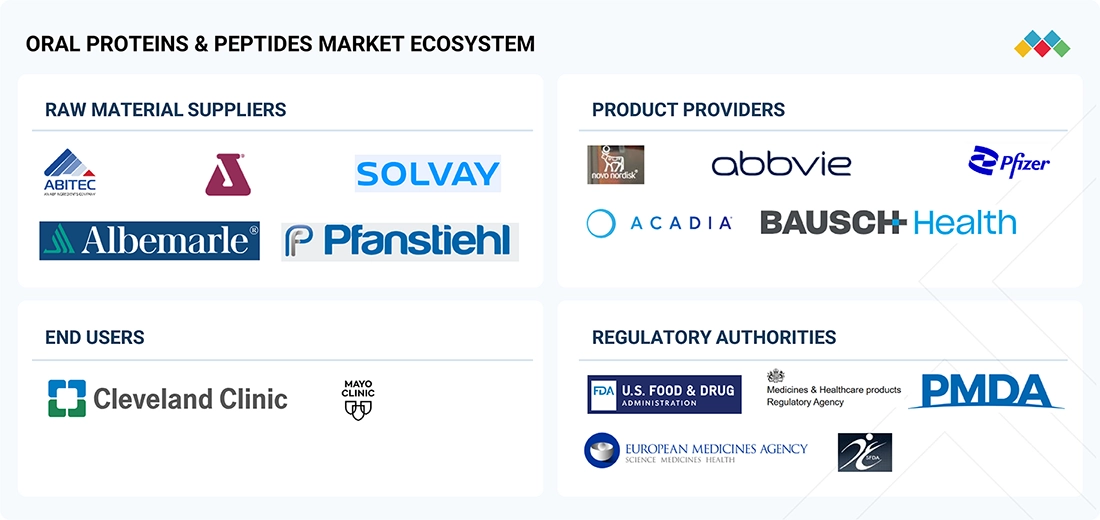
Related Ecosystem
Pharmaceuticals
- Bioreactors
- Analytical Testing
- Bioanalytical Testing Services
- Cell Counters
- Data Management Services
- Thermo Fisher Scientific Inc.
- Merck KGaA
- SANOFI
- Pfizer Inc.
- NOVARTIS
Key Takeaways
- Japan's oral proteins & peptides market is valued at USD 129.9 million in 2025 and will grow to USD 300.7 million by 2030, representing a 18.3% CAGR.
- Japan's aging demographic and high prevalence of chronic diseases create strong demand for oral protein and peptide therapeutics with improved bioavailability.
- Japan's advanced regulatory environment and biotechnology infrastructure position the country as a key innovation hub for oral delivery technologies in Asia Pacific.
- Strategic partnerships between Japanese pharmaceutical companies and international biotech firms are accelerating the development and commercialization of oral protein therapeutics in Japan.
Oral Proteins & Peptides Market Report Scope
| Report Metric | Details |
|---|---|
| Base Year | 2025 |
| Fastest Growing Segment | OBESITY & OVERWEIGHT (Therapeutic Area) |
| Forecast Period | 2025–2030 |
| Growth Rate | CAGR of 22.1% from 2025 to 2030 |
| Largest Segment | TABLETS (Formulation) |
| Market Size Base Year (Billions) | ~USD 8.84 (2025) |
| Revenue Forecast (Billions) | ~USD 24 (2030) |
| Segments Covered | Molecule, Drug Class, Formulation, Therapeutic Area, End User |
Japan Oral Proteins & Peptides Market Report Segmentation
5 segment dimensions are covered across the global market.
By Molecule
- Calcitonin
- Linaclotide
- Other Molecules
- Plecanatide
- Semaglutide
- Trofinetide
- Voclosporin
By Drug Class
- Cgrp Receptor Antagonists
- Cnis
- Gc-C Agonists
- Glp-1 Receptor Agonists
- Gpe
- Other Drug Classes
By Formulation
- Capsules
- Oral Solutions
- Tablets
By Therapeutic Area
- Cns Disorders
- Diabetes
- Gastroenterology
- Genetic Disorders
- Nephrology
- Obesity & Overweight
- Other Therapeutic Areas
By End User
- Home Care Settings
- Hospitals & Specialty Clinics
- Long-Term Care Facilities
JAPAN: ORAL PROTEINS & PEPTIDES MARKET, BY END USER, 2023–2030
| Segment | 2023 | 2024 | 2025 | 2026 | 2027 | 2028 | 2029 | 2030 | CAGR (%) |
|---|---|---|---|---|---|---|---|---|---|
| HOME CARE SETTINGS | 46.4 | 68.7 | 82.6 | 98.6 | 124.7 | 146.9 | 173.3 | 204.7 | 19.9 |
| HOSPITALS & SPECIALTY CLINICS | 12 | 17.5 | 20.6 | 24.2 | 30.1 | 34.8 | 40.4 | 46.8 | 17.8 |
| LONG-TERM CARE FACILITIES | 19.1 | 28 | 33.5 | 39.8 | 49.9 | 58.5 | 68.6 | 80.5 | 19.2 |
| TOTAL | 77.4 | 114.2 | 136.7 | 162.6 | 204.7 | 240.2 | 282.2 | 332 | 19.4 |
Target Audience
- Pharmaceutical Manufacturers : Japanese and international pharma companies need Japan-specific market data to guide product development pipelines, manufacturing investments, and commercialization strategies for oral protein and peptide therapeutics tailored to local patient populations.
- Biotech & Life Sciences Companies : Biotech firms require detailed Japan market insights to identify licensing opportunities, partnership prospects, and investment priorities in oral delivery technologies, supported by validated market size and growth projections.
- Healthcare Investors & Private Equity : Investment firms need Japan market analysis to evaluate portfolio opportunities, assess risk-adjusted returns, and identify acquisition targets within the high-growth oral proteins and peptides sector with demographic tailwinds.
- Medical Device & Delivery System Providers : Companies developing oral delivery platforms and formulation technologies require Japan-specific demand forecasts and regulatory insights to prioritize R&D investments and commercialization efforts in this expanding market.
- Healthcare Policy & Regulatory Bodies : Japanese regulatory agencies and healthcare policymakers need market intelligence to inform reimbursement policies, clinical trial frameworks, and innovation incentives that support the growth of oral protein therapeutics in Japan.
Key Companies in the Japan Oral Proteins & Peptides Market
| Company | HQ | Ownership | Strongest segments |
|---|---|---|---|
| NOVO NORDISK A/S | Denmark | Public Company | Obesity and Diabetes Care – GLP-1 injectables (including Wegovy),Obesity and Diabetes Care – oral GLP-1 and other diabetes therapies,Rare Disease – rare blood and endocrine disorders, |
| ABBVIE INC. | United States | Public Company | Immunology (Skyrizi, Rinvoq and related autoimmune/inflammatory),Oncology/Hematology (Imbruvica, Venclexta, Elahere, Epkinly, Emrelis),Neuroscience & CNS (Vraylar, Duodopa, Vyalev and related), |
| PFIZER INC. | India | Public Company | Internal medicine (CV, respiratory, gastro, multivitamins, neuroscience, women’s health),Vaccines,Injectables and anti-infectives, |
| BAUSCH HEALTH COMPANIES INC. | Canada | Public Company | Bausch + Lomb (eye health),Salix (gastroenterology and hepatology),Solta Medical (aesthetic medical devices), |
| ACADIA PHARMACEUTICALS INC. | United States | Public Company | NUPLAZID (Parkinson’s disease psychosis),DAYBUE / trofinetide (Rett syndrome),Pipeline and other revenues, |
| AURINIA PHARMACEUTICALS INC. | Canada | Public Company | LUPKYNIS (voclosporin) for lupus nephritis,Other pipeline and collaboration revenue (including aritinercept-related), |
| MERCK & CO., INC. | United States | Public Company | Oncology (Keytruda, Keytruda Qlex, Welireg, ADC collaborations, Lynparza co-commercialization),Vaccines (Gardasil, ProQuad, M-M-R II, Varivax, Vaxneuvance, Capvaxive, RotaTeq, Pneumovax 23),Hospital & Specialty (Bridion, Prevymis, Dificid, Zerbaxa, Winrevair, Adempas/Verquvo, Ohtuvayre), |
| SWK HOLDINGS | United States | Private Investment Firm | Healthcare venture debt (biopharma, medtech, diagnostics, life science tools),Healthcare services and HIT lending,Technology and SaaS venture debt (non-healthcare), |
| ENTERA BIO LTD. | Israel | Public Company | EB613 – oral teriparatide (osteoporosis, stress fractures),EB612 – hypoparathyroidism peptide replacement,EB618 – GLP-1/glucagon dual agonist (obesity, metabolic, fibrotic), |
| ASTRAZENECA PLC | United Kingdom | Public Company | Oncology (Tagrisso, Imfinzi, Lynparza, Calquence, Enhertu, Orpathys, Truqap, Imjudo, others),Cardiovascular, Renal & Metabolism (Farxiga/Forxiga, Brilinta/Brilique, Crestor, diabetes combinations),Respiratory & Immunology (Symbicort, Fasenra, Tezspire, Breztri, Airsupra, others), |
NOVO NORDISK A/S
Novo Nordisk A/S is a Danish pharmaceutical company founded in 1923 with 67,900 employees. Operating as a public company, it is a major player in the global pharmaceutical industry.
ABBVIE INC.
AbbVie Inc. is a United States-based public pharmaceutical company established in 2012 with 57,000 employees. The company operates in the pharmaceutical sector with significant global operations.
PFIZER INC.
Pfizer Inc. operates as a public company in India with 1,244 employees, having been established in 1950. The company is engaged in pharmaceutical operations in the Indian market.
BAUSCH HEALTH COMPANIES INC.
Bausch Health Companies Inc. is a Canadian public company with 20,300 employees operating in the pharmaceutical and healthcare sectors.
ACADIA PHARMACEUTICALS INC.
Acadia Pharmaceuticals Inc. is a United States-based public pharmaceutical company founded in 1993 with 797 employees. The company focuses on pharmaceutical development and commercialization.
AURINIA PHARMACEUTICALS INC.
Aurinia Pharmaceuticals Inc. is a Canadian public company established in 1993 with 128 employees. The company operates in the pharmaceutical sector.
MERCK & CO., INC.
Merck & Co., Inc. is a United States-based public pharmaceutical company founded in 1891 with 74,000 employees. It is one of the world's largest pharmaceutical manufacturers.
SWK HOLDINGS
SWK Holdings is a United States-based private investment firm founded in 1996 with 9 employees.
ENTERA BIO LTD.
Entera Bio Ltd. is an Israeli public company founded in 2009 with 21 employees operating in the pharmaceutical sector.
ASTRAZENECA PLC
AstraZeneca PLC is a United Kingdom-based public pharmaceutical company founded in 1992 with 96,100 employees. It is a major global pharmaceutical manufacturer.
Reasons to Buy this Report
- Market Size & Growth Validation : Obtain precise market valuation for Japan (USD 129.9M in 2025) with verified 18.3% CAGR through 2030, enabling accurate financial forecasting and investment decision-making specific to the Japanese oral proteins and peptides sector.
- Demographic-Driven Opportunity Analysis : Understand how Japan's aging population and chronic disease prevalence create unique market dynamics and demand drivers distinct from global trends, informing targeted product development and market entry strategies.
- Competitive Landscape Intelligence : Gain insights into Japan's advanced pharmaceutical infrastructure, regulatory environment, and reimbursement mechanisms to identify competitive advantages and partnership opportunities with local stakeholders and manufacturers.
- Strategic Market Positioning : Leverage Japan-specific data to benchmark performance against regional competitors, identify market gaps, and develop localized commercialization strategies that align with Japanese healthcare priorities and patient preferences.
- Investment & Expansion Planning : Access comprehensive market intelligence to support capital allocation decisions, R&D investments, and market expansion timelines for Japan, with confidence in data accuracy and regional relevance through 2030.
Frequently asked questions
What is the current market size of oral proteins and peptides in Japan?
Japan's oral proteins and peptides market was valued at USD 129.9 million in 2025 and is projected to reach USD 300.7 million by 2030.
What is the expected growth rate for Japan's oral proteins and peptides market?
Japan's oral proteins and peptides market is expected to grow at a compound annual growth rate (CAGR) of 18.3% from 2025 to 2030.
What factors are driving growth in Japan's oral proteins and peptides market?
Key drivers include Japan's aging population, rising prevalence of chronic diseases, advanced pharmaceutical infrastructure, strong regulatory frameworks, and significant biotechnology investment.
How does Japan's market compare to the global oral proteins and peptides market?
Japan's 18.3% CAGR is lower than the global 22.1% CAGR, but Japan represents a significant regional market within Asia Pacific with strong innovation capabilities and healthcare spending.
What role do partnerships play in Japan's oral proteins and peptides market development?
Strategic collaborations between Japanese pharmaceutical companies and international biotech firms are accelerating innovation and commercialization of oral protein therapeutics in Japan.
RESEARCH METHODOLOGY
This research study involved the extensive use of secondary sources, directories, and databases to identify and collect valuable information for the analysis of the global oral proteins and peptides market. In-depth interviews were conducted with various primary respondents, including key industry participants, subject-matter experts (SMEs), C-level executives of key market players, and industry consultants, to obtain and verify critical qualitative and quantitative information and assess the growth prospects of the market. The global market size estimated through secondary research was then triangulated with inputs from primary research to arrive at the final market size.
Secondary Research
Secondary research was used mainly to identify and collect information for the extensive, technical, market-oriented, and commercial study of the oral proteins and peptides market. The secondary sources used for this study include the World Health Organization (WHO), National Institutes of Health (NIH), United States Food and Drug Administration (US FDA), European Medicines Agency (EMA), National Center for Biotechnology Information (NCBI), BioPharm International, International Diabetes Federation, ScienceDirect, ClinicalTrials.gov, PubMed, European Federation of Pharmaceutical Industries and Associations (EFPIA), European Lead Factory (ELF), India Brand Equity Foundation (IBEF), UK Research Partnership Investment Fund (UKRPIF), Pharmaceutical Research and Manufacturers of America (PhRMA), Eurostat, and Factiva; research journals; corporate filings such as annual reports, SEC filings, investor presentations, and financial statements; press releases; and trade, business, professional associations. These sources were also used to obtain key information about major players, market classification, and segmentation according to industry trends, regional/country-level markets, market developments, and technology perspectives.
Primary Research
Extensive primary research was conducted after acquiring basic knowledge about the global oral proteins and peptides market scenario through secondary research. Several primary interviews were conducted with market experts from the demand side, such as pharmaceutical and biotechnology companies, CROs, CMOs, and academic & research institutes, and experts from the supply side, such as C-level and D-level executives, product managers, marketing & sales managers of key manufacturers, distributors, and channel partners. These interviews were conducted across six major regions, including the Asia Pacific, North America, Europe, Latin America, the Middle East, and Africa. Approximately 70% and 30% of the primary interviews were conducted with supply-side and demand-side participants, respectively. This primary data was collected through questionnaires, e-mails, online surveys, personal interviews, and telephonic interviews.
The following is a breakdown of the primary respondents:
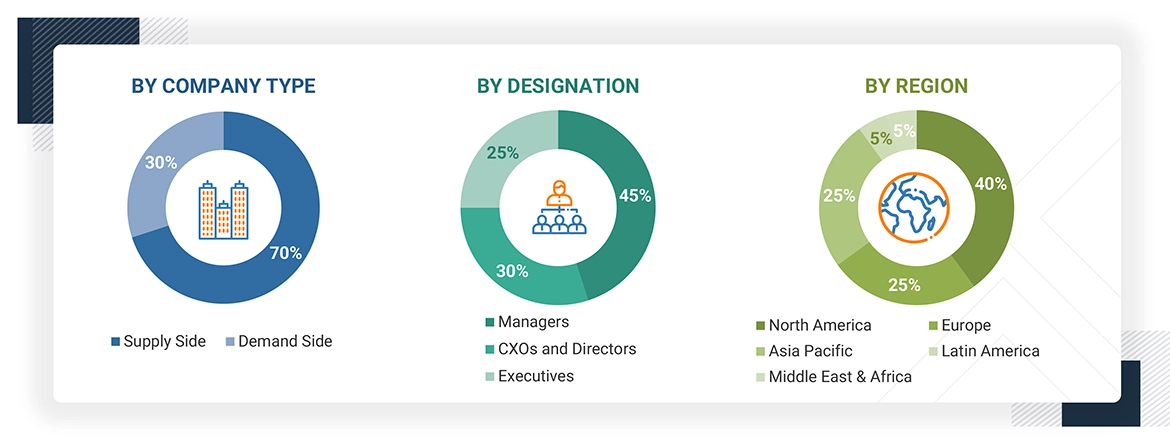
To know about the assumptions considered for the study, download the pdf brochure
Market Size Estimation
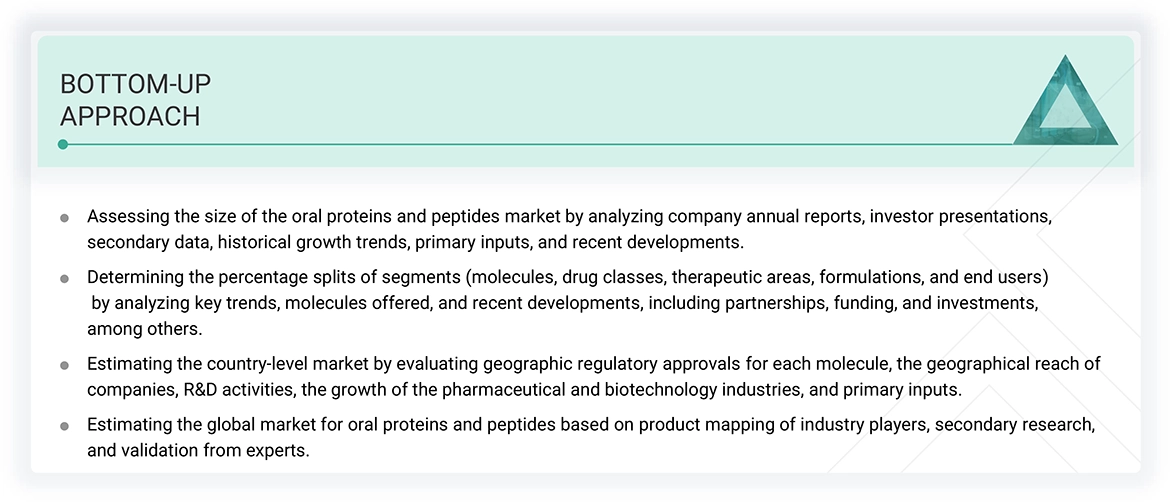
The bottom-up approach was used to estimate and validate the total size of the oral proteins and peptides market. These methods were also extensively utilized to estimate the size of various subsegments within the market. The research methodology used to estimate the market size includes the following:
- The list of approved oral proteins and peptides was identified through extensive secondary and primary research.
- The oral protein and peptide products in the pipeline were identified from clinical trial registries and from secondary and primary research related to peptide and protein therapeutics.
- The revenues generated from these oral proteins and peptides were determined through annual reports and secondary sources (including paid databases).
- The products were categorized according to market segments. Percentage shares and splits were calculated based on revenue contributions for each segment. This information was validated using secondary sources and insights from industry experts.
- All assumptions, approaches, and individual shares/revenue estimates were validated through expert interviews.
Global Oral Proteins and Peptides Market Size: Bottom-up Approach
Data Triangulation
After arriving at the market size from the market size estimation process explained above, the total market was divided into several segments and subsegments. To complete the overall market engineering process and arrive at the exact statistics for all segments and subsegments, data triangulation and market breakdown procedures were employed, wherever applicable. The data was triangulated by studying various factors and trends from both the demand and supply sides.
Market Definition
Oral proteins and peptides are therapeutic drugs made from proteins or peptides (short chains of amino acids) that are meant to be taken by mouth. These biologically active molecules are designed to treat a variety of medical conditions, including chronic diseases such as diabetes, hormonal disorders, and autoimmune disorders.
Stakeholders
- Pharmaceutical & biotechnology companies
- Hospitals
- Specialty clinics
- Long-term care facilities
- Patient advocacy organizations
- Academic researchers and government research organizations
- Private research institutes
- Contract manufacturing organizations (CMOs)
- Contract research organizations (CROs)
- Venture capitalists
Report Objectives
- To define, describe, and forecast the oral proteins and peptides market based on molecule, drug class, therapeutic area, formulation, end user, and region
- To provide detailed information regarding the major factors influencing market growth (such as drivers, restraints, opportunities, and challenges)
- To strategically analyze micromarkets with respect to individual growth trends, prospects, and contributions to the overall oral proteins and peptides market
- To analyze opportunities in the market for stakeholders and provide details of the competitive landscape for market leaders
- To forecast the size of the market segments with respect to six main regions: North America, Europe, the Asia Pacific, Latin America, the Middle East, and Africa
- To profile the key players in the oral proteins and peptides market and comprehensively analyze their product portfolios, market positions, and core competencies
- To track and analyze competitive developments in the oral proteins and peptides market, such as acquisitions, product launches/approvals, expansions, agreements, partnerships, and collaborations
- To benchmark players within the oral proteins and peptides market using the ‘Company Evaluation Matrix' framework, which analyzes market players based on various parameters within the broad categories of business strategy and product strategy
Get the Full Oral Proteins & Peptides Market Report
Full forecast, segment splits, and company analysis for all Oral Proteins & Peptides Market.
- Canada Oral Proteins & Peptides Market
- US Oral Proteins & Peptides Market
- Germany Oral Proteins & Peptides Market
- UK Oral Proteins & Peptides Market
- France Oral Proteins & Peptides Market
- Italy Oral Proteins & Peptides Market
- Spain Oral Proteins & Peptides Market
- Netherlands Oral Proteins & Peptides Market
- China Oral Proteins & Peptides Market
- India Oral Proteins & Peptides Market
- Australia Oral Proteins & Peptides Market
- South Korea Oral Proteins & Peptides Market
- Brazil Oral Proteins & Peptides Market
- Mexico Oral Proteins & Peptides Market
- Saudi Arabia Oral Proteins & Peptides Market
- UAE Oral Proteins & Peptides Market
- Rest Of Europe Oral Proteins & Peptides Market
- Rest Of Asia Pacific Oral Proteins & Peptides Market
- Rest Of Latin America Oral Proteins & Peptides Market
- Rest Of GCC Countries Oral Proteins & Peptides Market
Need a Tailored Report?
Customize this report to your needs
Get 10% FREE Customization
Customize This Report
