
Turkey Pharmaceutical-Grade Sodium Chloride Market (2025-2030)

The Turkey Pharmaceutical-Grade Sodium Chloride Market was valued at $16.5 Million in 2025 and projected to reach to $21.1 Million by 2030, representing a compound annual growth rate of 5.0%. Turkey's pharmaceutical-grade sodium chloride market is poised for steady growth driven by the country's expanding pharmaceutical manufacturing sector and increasing healthcare infrastructure investments.


| Market Size in | USD 26.32 MN |
| Market Forecast in | |
| CAGR | |
| Forecast Period | |
| Units Considered | Value (USD MN) |
Turkey Pharmaceutical-Grade Sodium Chloride Market Trends and Insights
- Turkey's position as a regional pharmaceutical hub and growing demand for high-purity intravenous solutions and injectable formulations are driving market expansion.
- The country's pharmaceutical manufacturing sector relies heavily on pharmaceutical-grade sodium chloride for saline solutions, dialysis applications, and sterile preparations, supporting steady market growth through the forecast period. Turkey's market growth is underpinned by increasing healthcare expenditure, rising prevalence of chronic diseases requiring IV therapy, and strengthening regulatory compliance standards for pharmaceutical ingredients.
- Turkey's strategic location between Europe and Asia, combined with its established chemical and pharmaceutical infrastructure, positions the country as a key supplier within the region.
- By 2030, Turkey is expected to capture greater market share as domestic manufacturers invest in capacity expansion and quality certifications to meet both domestic and export demand..
Key Market Statistics
- CAGR (2025-2030) 5.0% CAGR
- Market Size, 2025 ~USD 16.5 Million
- Forecast, 2030 ~USD 21.1 Million
- Country Turkey
Turkey Pharmaceutical-Grade Sodium Chloride Market Overview
Market Valuation :
Turkey's pharmaceutical-grade sodium chloride market is valued at USD 16.5 million in 2025, with projected growth to USD 21.1 million by 2030, representing a steady 5.0% CAGR.
Regional Hub Status :
Turkey's strategic position as a regional pharmaceutical hub in Eastern Europe and Western Asia drives significant demand for high-purity pharmaceutical ingredients and injectable formulations.
Injectable Solutions Demand :
Growing demand for high-purity intravenous solutions and injectable drug formulations in Turkish hospitals and pharmaceutical manufacturing facilities is a key market driver.
Growth Trajectory :
With a 5.0% CAGR through 2030, Turkey's market growth slightly lags the global average of 5.6%, indicating steady but measured expansion in pharmaceutical-grade sodium chloride consumption.
Turkey Pharmaceutical-Grade Sodium Chloride Market Dynamics
- The rising prevalence of chronic diseases requiring injectable therapies and Turkey's role as a regional pharmaceutical supplier to neighboring markets will support continued demand for high-purity sodium chloride products.
- Regulatory compliance with international pharmaceutical standards and growing domestic pharmaceutical production capacity are expected to sustain market expansion through 2030. The market will benefit from Turkey's strategic geographic position facilitating exports to Europe, the Middle East, and Central Asia.
- Investments in pharmaceutical manufacturing facilities and the government's focus on pharmaceutical self-sufficiency will create additional opportunities for sodium chloride suppliers.
- However, competition from established regional suppliers and price pressures may moderate growth rates, requiring suppliers to emphasize quality certifications and supply chain reliability..
Market Ecosystem
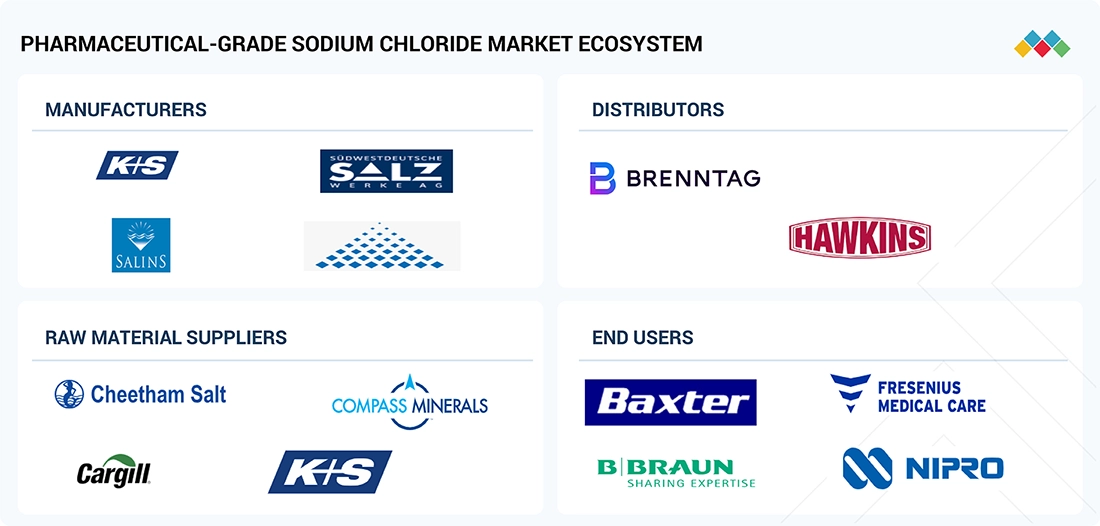
Pharmaceutical-Grade Sodium Chloride Market: COMMERCIAL USE CASES ACROSS INDUSTRIES
| COMPANY | USE CASE DESCRIPTION | BENEFITS |
|---|---|---|
 |
ENASEL implemented a Mechanical Vapor Recompression (MVR) purification system to convert low-grade rock salt with high impurities into high-purity pharmaceutical-grade sodium chloride. The process involved cold leaching to remove magnesium, chemical precipitation to eliminate remaining impurities, controlled evaporation and crystallization to separate NaCl and CaSO4, and final centrifuge washing to achieve a purity of ~99.95%. The purge stream was further processed using the Schweizerhalle brine treatment system, allowing for on-demand switching between food-grade and pharmaceutical-grade salt production. | • Achieved pharmaceutical-grade purity (~99.95%) from low-quality rock salt feedstock • Enabled flexible, continuous production runs of 10,000–40,000 kg/h based on demand • Eliminated need for separate production facilities, reducing CAPEX and operating costs • Improved resource utilization and ensured consistent supply reliability for pharma applications |
Logos and trademarks shown above are the property of their respective owners. Their use here is for informational and illustrative purposes only.
Related Ecosystem
Bulk Chemicals And Inorganics
- Corrosion Inhibitors
- Glycol Ethers
- Acetic Acid
- Acetone
- Ammonium Nitrate
- Basf se
- DOW CHEMICAL COMPANY
- Exxon Mobil Corporation
- AZELIS HOLDINGS SA
- Sinopec limited
Key Takeaways
- Turkey's pharmaceutical-grade sodium chloride market is valued at USD 16.5 million in 2025 and will reach USD 21.1 million by 2030.
- Turkey's market is growing at a 5.0% CAGR, driven by increased demand for injectable pharmaceuticals and IV solutions.
- Turkey's pharmaceutical manufacturing sector benefits from regional positioning and established regulatory frameworks supporting market expansion.
- Turkey's market growth is supported by rising healthcare spending and chronic disease prevalence requiring high-purity pharmaceutical ingredients.
Pharmaceutical-Grade Sodium Chloride Market Report Scope
| Report Metric | Details |
|---|---|
| Base Year | 2025 |
| Fastest Growing Segment | LIQUID (Product Form) |
| Forecast Period | 2025–2030 |
| Growth Rate | CAGR of 5.6% from 2025 to 2030 |
| Largest Segment | SOLID (Product Form) |
| Market Size Base Year (Billions) | ~USD 0.59 (2025) |
| Revenue Forecast (Billions) | ~USD 0.77 (2030) |
| Segments Covered | Grade, Product Form, Application |
Turkey Pharmaceutical-Grade Sodium Chloride Market Report Segmentation
3 segment dimensions are covered across the global market.
By Grade
- Api-Nacl
- Hd-Nacl
By Product Form
- Liquid
- Solid
By Application
- Dialysis
- Hemofiltration Solutions
- Injectables
- Mechanical Cleaning Solutions
- Oral Rehydration Salts
- Other Applications
TURKEY: PHARMACEUTICAL-GRADE SODIUM CHLORIDE MARKET, BY APPLICATION, 2023–2030
| Segment | 2023 | 2024 | 2025 | 2026 | 2027 | 2028 | 2029 | 2030 | CAGR (%) |
|---|---|---|---|---|---|---|---|---|---|
| DIALYSIS | 10.41 | 10.89 | 11.51 | 12.16 | 12.84 | 13.56 | 14.32 | 15.12 | 5.6 |
| HEMOFILTRATION SOLUTIONS | 0.57 | 0.59 | 0.61 | 0.63 | 0.65 | 0.68 | 0.7 | 0.72 | 3.5 |
| INJECTABLES | 3.11 | 3.19 | 3.31 | 3.43 | 3.56 | 3.69 | 3.83 | 3.98 | 3.7 |
| MECHANICAL CLEANING SOLUTIONS | 0.07 | 0.07 | 0.08 | 0.08 | 0.08 | 0.08 | 0.09 | 0.09 | 2.8 |
| ORAL REHYDRATION SALTS | 0.64 | 0.66 | 0.68 | 0.7 | 0.72 | 0.75 | 0.78 | 0.8 | 3.4 |
| OTHER APPLICATIONS | 0.3 | 0.3 | 0.32 | 0.32 | 0.33 | 0.34 | 0.35 | 0.36 | 3 |
| TOTAL | 15.1 | 15.71 | 16.5 | 17.32 | 18.19 | 19.11 | 20.07 | 21.07 | 5 |
Target Audience
- Pharmaceutical Manufacturers : Turkish and regional pharmaceutical companies need market data to assess demand for high-purity sodium chloride in injectable formulations and optimize production planning and sourcing strategies.
- Chemical Suppliers & Distributors : Sodium chloride producers and distributors require Turkey-specific market intelligence to identify growth opportunities, evaluate market entry feasibility, and develop targeted sales strategies for pharmaceutical customers.
- Healthcare & Hospital Administrators : Hospital procurement teams and healthcare facility managers need market insights to understand supply trends, pricing dynamics, and availability of pharmaceutical-grade sodium chloride for intravenous solutions.
- Investment & Private Equity Firms : Investors evaluating pharmaceutical sector opportunities in Turkey require detailed market analysis to assess growth potential, competitive positioning, and return on investment in chemical manufacturing assets.
- Government & Trade Organizations : Turkish government agencies and trade bodies need market data to support pharmaceutical industry development initiatives, export promotion strategies, and policy decisions affecting chemical manufacturing sectors.
Key Companies in the Turkey Pharmaceutical-Grade Sodium Chloride Market
| Company | HQ | Ownership | Strongest segments |
|---|---|---|---|
| RIO TINTO | United Kingdom | Public Company | Iron Ore, Salt, and Gypsum,Aluminium and Lithium (Bauxite, Alumina, Smelting, Recycling),Copper, Gold, Silver, Molybdenum and By-products, |
| K+S AKTIENGESELLSCHAFT | Germany | Public Company | Standard potash fertilizers (e.g., potassium chloride),Specialty and water-soluble fertilizers,Industrial and de-icing salts, |
| SüDWESTDEUTSCHE SALZWERKE AG | Germany | Public Company | De-icing salt and winter road services,Industrial and electrolysis salt,Food-grade and consumer salt (Aquasale, SALTA, JOSAL, SALIT), |
| MERCK KGAA | United States | Public Company | Life Science (reagents, consumables, bioprocessing, CDMO/testing services),Healthcare (prescription drugs and biopharmaceuticals),Electronics (semiconductor and display materials, specialty gases, equipment), |
| US SALT | United States | Private Company | Industrial and Water Conditioning (Resingard, Superior TX-10, Superior TNA-5, Rust Free),Agriculture and Animal Nutrition (Superior Block and related attributes),Food Processing and Household (Round Cans, Superior Crystal, compressed and packaged salt), |
RIO TINTO
Rio Tinto is a major public mining and metals company headquartered in the United Kingdom with 56,890 employees. Established in 1873, it is one of the world's largest mining corporations.
K+S AKTIENGESELLSCHAFT
K+S Aktiengesellschaft is a German public company founded in 1889 with 11,261 employees. The company operates in the mining and chemical sectors, particularly in potash and salt production.
SüDWESTDEUTSCHE SALZWERKE AG
Südwestdeutsche Salzwerke AG is a German public salt production company founded in 1971 with 1,200 employees. The company specializes in mining and processing salt for industrial and commercial applications.
MERCK KGAA
Merck KGaA is a global public pharmaceutical and chemical company founded in 1668 with 59,077 employees. Headquartered in the United States, it is one of the world's oldest and largest pharmaceutical manufacturers.
US SALT
US Salt is a private American salt company founded in 1893 with 139 employees. The company operates in salt production and distribution.
Reasons to Buy this Report
- Turkey-Specific Market Sizing : Obtain precise market valuation data for Turkey's pharmaceutical-grade sodium chloride sector with accurate 2025 baseline (USD 16.5M) and 2030 forecasts (USD 21.1M) to inform investment and expansion decisions.
- Regional Hub Opportunity Assessment : Understand Turkey's unique position as a regional pharmaceutical hub and identify export opportunities to neighboring European, Middle Eastern, and Central Asian markets through detailed market analysis.
- Competitive Landscape Intelligence : Gain insights into Turkey-specific competitive dynamics, supplier positioning, and market consolidation trends to develop effective market entry or expansion strategies in this growing pharmaceutical sector.
- Regulatory & Compliance Framework : Access Turkey-specific pharmaceutical regulations, quality standards, and compliance requirements for sodium chloride products to ensure market-ready formulations and avoid costly regulatory delays.
- Growth Driver Analysis : Identify key demand drivers specific to Turkey including healthcare infrastructure development, injectable therapy adoption, and pharmaceutical manufacturing capacity expansion to capitalize on emerging opportunities.
Frequently asked questions
What is the current market size of pharmaceutical-grade sodium chloride in Turkey?
Turkey's pharmaceutical-grade sodium chloride market is valued at USD 16.5 million in 2025.
What is the projected market size for pharmaceutical-grade sodium chloride in Turkey by 2030?
Turkey's pharmaceutical-grade sodium chloride market is projected to reach USD 21.1 million by 2030.
What is the CAGR for Turkey's pharmaceutical-grade sodium chloride market?
Turkey's pharmaceutical-grade sodium chloride market is expected to grow at a CAGR of 5.0% from 2025 to 2030.
What are the primary applications of pharmaceutical-grade sodium chloride in Turkey?
In Turkey, pharmaceutical-grade sodium chloride is primarily used in intravenous saline solutions, dialysis preparations, injectable formulations, and sterile pharmaceutical applications.
What factors are driving growth in Turkey's pharmaceutical-grade sodium chloride market?
Turkey's market growth is driven by increasing healthcare expenditure, rising chronic disease prevalence, strengthening regulatory standards, and expansion of domestic pharmaceutical manufacturing capacity.
RESEARCH METHODOLOGY
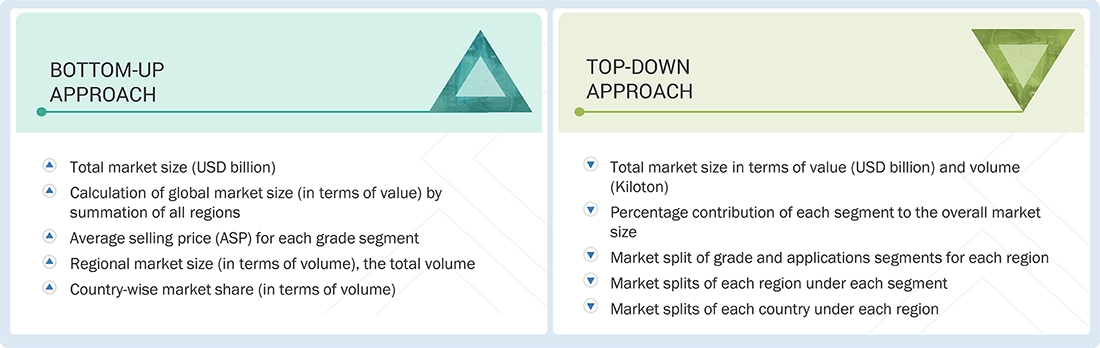
The study involved four major activities to estimate the current size of the global pharmaceutical-grade sodium chloride market. Exhaustive secondary research was carried out to collect information on the market, the peer product market, and the parent product group market. The next step was to validate these findings, assumptions, and sizes with the industry experts across the value chain of pharmaceutical-grade sodium chloride through primary research. The top-down and bottom-up approaches were employed to estimate the overall size of the pharmaceutical grade sodium chloride market. After that, market breakdown and data triangulation procedures were used to determine the size of different segments of the market.
Secondary Research
The market for companies offering pharmaceutical-grade sodium chloride was determined by analyzing secondary data from paid and unpaid sources, examining the product portfolios of major companies in the ecosystem, and evaluating companies based on their performance and quality. For this study, various secondary sources, such as Business Standard, Bloomberg, the World Bank, and Factiva, were referred to identify and collect information on the pharmaceutical-grade sodium chloride market. In the secondary research process, various secondary sources were referred to for identifying and collecting information related to the study. Secondary sources included annual reports, press releases, and investor presentations of pharmaceutical-grade sodium chloride vendors, forums, certified publications, and whitepapers. The secondary research was used to obtain critical information on the industry’s value chain, the total pool of key players, market classification, and segmentation from the market and technology-oriented perspectives.
Primary Research
During the primary research process, various primary sources from both the supply and demand sides were interviewed to gather qualitative and quantitative information for this report. The primary sources from the supply side included industry experts, such as chief executive officers (CEOs), vice presidents (VPs), marketing directors, technology and innovation directors, and related key executives from several key companies and organizations operating in the pharmaceutical-grade sodium chloride market. After the complete market engineering (calculations for market statistics, market breakdown, market size estimations, market forecasting, and data triangulation), extensive primary research was conducted to gather information and verify and validate the critical numbers arrived at. Primary research was also conducted to identify the segmentation types, industry trends, competitive landscape of pharmaceutical-grade sodium chloride offered by various market players, and key market dynamics, such as drivers, restraints, opportunities, challenges, trends, and key player strategies. In the complete market engineering process, the top-down and bottom-up approaches and several data triangulation methods were extensively used to perform the market estimation and market forecasting for the overall market segments and subsegments listed in this report. Extensive qualitative and quantitative analysis was performed on the complete market engineering process to list the key information/insights throughout the report.
The following is the breakdown of primary respondents:
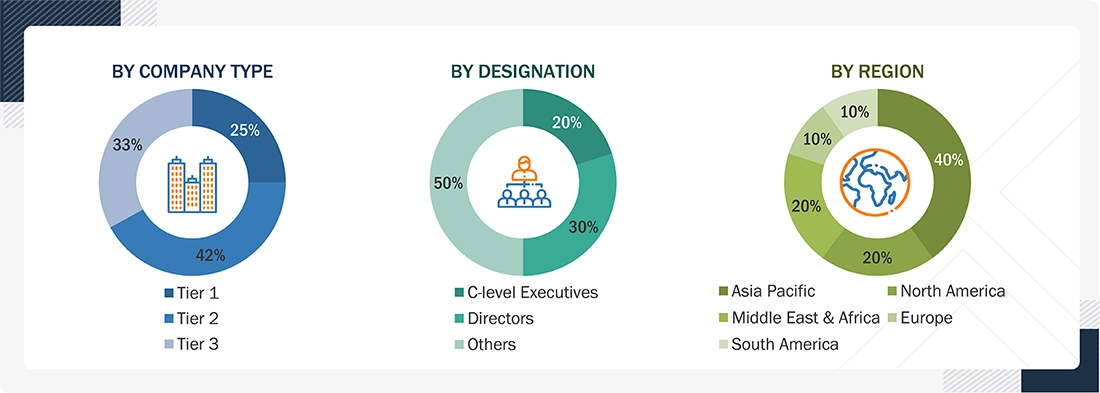
Notes: Other designations include sales, marketing, and product managers.
Tier 1: >USD 1 Billion; Tier 2: USD 500 million–1 Billion; and Tier 3: < USD 500 million
To know about the assumptions considered for the study, download the pdf brochure
Market Size Estimation
The top-down and bottom-up approaches were used to estimate and validate the size of the global pharmaceutical-grade sodium chloride market. These approaches were also used extensively to estimate the size of various dependent market segments. The research methodology used to estimate the market size included the following:
Data Triangulation
After arriving at the overall market size using the market size estimation processes, the market was split into several segments and subsegments. The data triangulation and market breakdown procedures were employed, wherever applicable, to complete the overall market engineering process and arrive at the exact statistics of each market segment and subsegment. The data was triangulated by studying various factors and trends from the demand and supply sides.
Market Definition
Pharmaceutical-grade sodium chloride refers to a highly purified form of NaCl (sodium chloride) manufactured under strict GMP conditions and compliant with major pharmacopoeia standards such as BP (British Pharmacopoeia), EP (European Pharmacopoeia), and USP (United States Pharmacopeia). Unlike common salt, this grade is designed for direct medical use in products that enter the body, including injectable and intravenous solutions, dialysis fluids, oral rehydration formulas, hemofiltration solutions, and various cleansing or therapeutic preparations. The market for pharmaceutical sodium chloride is segmented by product form (solid and liquid), grade (such as API-NaCl and HD-NaCl), and application sectors across various regions, including North America, Europe, Asia Pacific, South America, and the Middle East & Africa.
Chemically, pharmaceutical-grade sodium chloride consists of sodium and chloride ions arranged in a cubic lattice, delivering consistent density, dissolution behavior, and stability essential for medical formulations. Its assay typically exceeds 99.5%, with extremely low levels of impurities and insoluble matter, making it safe for long-term therapeutic use. This level of quality is ensured through rigorous testing, batch certification, and controlled production environments that prevent cross-contamination. The substance’s reliable performance, predictable solubility, and high purity make it indispensable for hospitals, pharmaceutical manufacturers, dialysis centers, and biotech facilities worldwide.
Stakeholders
- Raw Material & Salt Producers
- Pharmaceutical-grade Sodium Chloride Manufacturers
- Pharmaceutical & Biopharmaceutical Companies
- Healthcare Providers & Institutions
- Regulatory & Quality Authorities
- Distribution & Supply Chain Partners
- Packaging & Material Suppliers
- Technology & Equipment Providers
- Research & Development Organizations
- Investors & Financial Institutions
- End-Users
Report Objectives
- To define, describe, and forecast the size of the global pharmaceutical-grade sodium chloride market, by grade and application, in terms of value and volume
- To provide detailed information on the significant drivers, restraints, opportunities, and challenges influencing the market
- To forecast the market size of segments for North America, Europe, Asia Pacific, South America, and the Middle East & Africa, along with their respective countries
- To strategically analyze micromarkets concerning individual growth trends, prospects, and their contribution to the market
- To assess the growth opportunities in the market for stakeholders and provide details on the competitive landscape for market leaders
- To strategically profile key players and comprehensively analyze their market shares and core competencies
- To analyze competitive developments, such as expansions, acquisitions, and partnerships in the pharmaceutical-grade sodium chloride market
- To provide the impact of AI/Gen AI on the market
- To provide the macroeconomic outlook for each region covered under the study, and the impact of the 2025 US tariff on the market
Get the Full Pharmaceutical-Grade Sodium Chloride Market Report
Full forecast, segment splits, and company analysis for all Pharmaceutical-Grade Sodium Chloride Market.
- China Pharmaceutical-Grade Sodium Chloride Market
- Japan Pharmaceutical-Grade Sodium Chloride Market
- India Pharmaceutical-Grade Sodium Chloride Market
- South Korea Pharmaceutical-Grade Sodium Chloride Market
- Germany Pharmaceutical-Grade Sodium Chloride Market
- France Pharmaceutical-Grade Sodium Chloride Market
- UK Pharmaceutical-Grade Sodium Chloride Market
- Italy Pharmaceutical-Grade Sodium Chloride Market
- Spain Pharmaceutical-Grade Sodium Chloride Market
- Netherlands Pharmaceutical-Grade Sodium Chloride Market
- Ireland Pharmaceutical-Grade Sodium Chloride Market
- Russia Pharmaceutical-Grade Sodium Chloride Market
- Canada Pharmaceutical-Grade Sodium Chloride Market
- US Pharmaceutical-Grade Sodium Chloride Market
- Mexico Pharmaceutical-Grade Sodium Chloride Market
- Brazil Pharmaceutical-Grade Sodium Chloride Market
- Argentina Pharmaceutical-Grade Sodium Chloride Market
- South Africa Pharmaceutical-Grade Sodium Chloride Market
- Rest Of Europe Pharmaceutical-Grade Sodium Chloride Market
- Rest Of Asia Pacific Pharmaceutical-Grade Sodium Chloride Market
- GCC Countries Pharmaceutical-Grade Sodium Chloride Market
- –Rest Of GCC Countries Pharmaceutical-Grade Sodium Chloride Market
- Rest Of South America Pharmaceutical-Grade Sodium Chloride Market
Need a Tailored Report?
Customize this report to your needs
Get 10% FREE Customization
Customize This Report
