
Asia Pacific Nuclear Medicine Market (2025-2030)

The Asia Pacific Nuclear Medicine Market was valued at $1361.1 Million in 2025 and projected to reach to $2850 Million by 2030, representing a compound annual growth rate of 15.9%. The Asia Pacific nuclear medicine market is positioned for sustained growth driven by expanding healthcare infrastructure, increasing disease prevalence, and rising adoption of diagnostic imaging technologies.


| Market Size in | USD 26.32 MN |
| Market Forecast in | |
| CAGR | |
| Forecast Period | |
| Units Considered | Value (USD MN) |
Asia Pacific Nuclear Medicine Market Trends and Insights
- Asia Pacific's growth trajectory reflects increasing healthcare infrastructure investment, rising prevalence of chronic diseases, and expanding diagnostic imaging adoption across the region.
- The market's 15.9% compound annual growth rate significantly outpaces global trends, driven by aging populations and enhanced access to advanced medical technologies in key Asia Pacific economies. Asia Pacific's nuclear medicine sector benefits from government healthcare initiatives and private sector expansion in diagnostic and therapeutic applications.
- Between 2025 and 2030, Asia Pacific is expected to capture growing market share as countries modernize their healthcare systems and invest in nuclear medicine facilities.
- The region's competitive advantages include lower operational costs, increasing clinical adoption, and rising patient awareness of nuclear medicine's diagnostic and therapeutic benefits..
Key Market Statistics
- CAGR (2025-2030) 15.9% CAGR
- Market Size, 2025 ~USD 1361.1 Million
- Forecast, 2030 ~USD 2850 Million
- Geography Asia Pacific
Asia Pacific Nuclear Medicine Market Overview
Rapid Market Expansion :
Asia Pacific nuclear medicine market is projected to grow from USD 1,361.1 million in 2025 to USD 2,850.0 million by 2030, representing a 15.9% CAGR that outpaces the global average of 15.1%.
Healthcare Infrastructure Investment :
Increasing government and private sector investments in diagnostic imaging facilities across Asia Pacific countries are driving adoption of nuclear medicine technologies and expanding service availability.
Rising Chronic Disease Burden :
Growing prevalence of cancer, cardiovascular diseases, and neurological disorders in Asia Pacific populations is escalating demand for advanced diagnostic imaging and nuclear medicine procedures.
Emerging Market Opportunities :
Developing economies in Asia Pacific are experiencing rapid urbanization and healthcare modernization, creating significant growth opportunities for nuclear medicine equipment and radiopharmaceutical suppliers.
Asia Pacific Nuclear Medicine Market Dynamics
- Key markets including Japan, China, and India are investing heavily in nuclear medicine capabilities, supported by government healthcare initiatives and growing medical tourism.
- The region's younger demographic profile and rising healthcare expenditure create favorable conditions for market expansion.
- Technological advancements in imaging equipment and radiopharmaceuticals, combined with improving regulatory frameworks, are expected to accelerate market penetration across both developed and emerging Asia Pacific economies through 2030..
Market Ecosystem
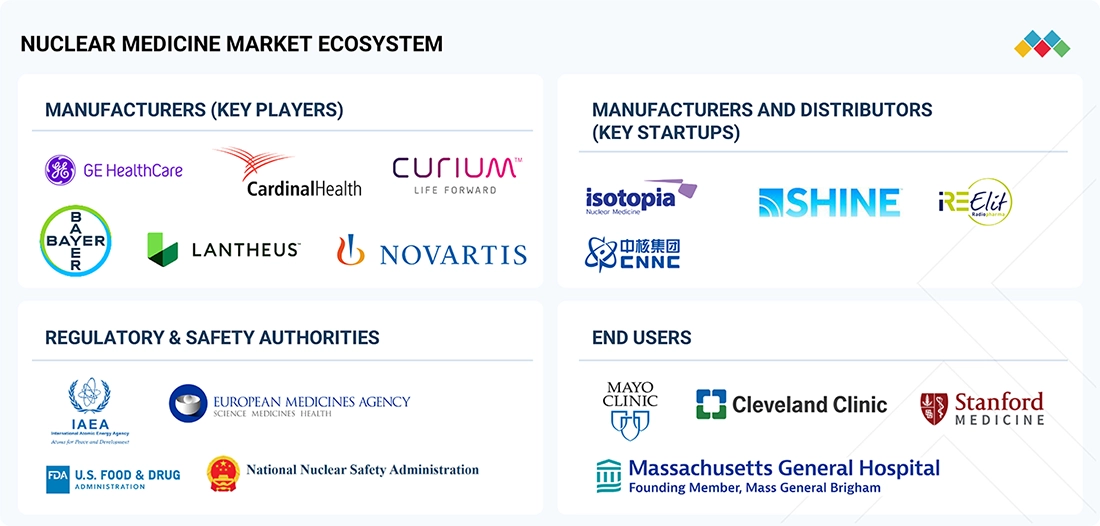
NUCLEAR MEDICINE MARKET: GROWTH, SIZE, SHARE, AND TRENDS: COMMERCIAL USE CASES ACROSS INDUSTRIES
| COMPANY | USE CASE DESCRIPTION | BENEFITS |
|---|---|---|
 |
Production and supply of PET and SPECT radioisotopes and radiopharmaceuticals used in oncology, cardiology, and neurology diagnostics | Reliable access to critical isotopes | High imaging accuracy | Improved diagnostic confidence |
 |
Nuclear pharmacy services and distribution of short-half-life radiopharmaceuticals to hospitals and imaging centers | Timely delivery of radiotracers | Reduced operational complexity | Consistent imaging workflows |
 |
Manufacturing of diagnostic and therapeutic radiopharmaceuticals, including SPECT and PET radioisotopes for cancer and neurological imaging | Stable isotope supply | High product quality | Expanded availability of nuclear medicine procedures |
 |
Development of therapeutic radiopharmaceuticals and targeted radioisotope-based treatments, particularly in oncology | Precise tumor targeting | Improved treatment outcomes | Reduced impact on healthy tissue |
 |
Production of diagnostic radiopharmaceuticals and radioisotope imaging agents for cardiac and PET imaging applications | Accurate disease detection | Quick diagnosis | Improved clinical decision-making |
Logos and trademarks shown above are the property of their respective owners. Their use here is for informational and illustrative purposes only.
Related Ecosystem
Pharmaceuticals
- Bioreactors
- Analytical Testing
- Bioanalytical Testing Services
- Cell Counters
- Data Management Services
- Merck KGaA
- Thermo Fisher Scientific Inc.
- SANOFI
- NOVARTIS
- Pfizer Inc.
Key Takeaways
- Asia Pacific nuclear medicine market valued at $1,361.1M in 2025, expanding to $2,850M by 2030 at 15.9% CAGR
- Asia Pacific's growth rate outpaces global average, driven by aging demographics and healthcare infrastructure modernization
- Asia Pacific benefits from increasing chronic disease prevalence and rising adoption of diagnostic imaging technologies
- Asia Pacific represents a high-growth opportunity with expanding private sector investment and government healthcare initiatives
Nuclear Medicine Market Report Scope
| Report Metric | Details |
|---|---|
| Base Year | 2025 |
| Fastest Growing Segment | THERAPEUTIC NUCLEAR MEDICINE (Type) |
| Forecast Period | 2025–2030 |
| Growth Rate | CAGR of 15.1% from 2025 to 2030 |
| Largest Segment | DIAGNOSTIC NUCLEAR MEDICINE (Type) |
| Market Size Base Year (Billions) | ~USD 10.4 (2025) |
| Revenue Forecast (Billions) | ~USD 21.01 (2030) |
| Segments Covered | Type |
Asia Pacific Nuclear Medicine Market Report Segmentation
1 segment dimensions are covered across the global market.
By Type
- Alpha Emitters
- Beta Emitters
- Brachytherapy Isotopes
- Diagnostic Nuclear Medicine
- F-18
- Ga-67
- I-123
- I-131
- Lu-177
- Other Beta Emitters
- Other Pet Radiopharmaceuticals
- Other Spect Radiopharmaceuticals
- Pet Radiopharmaceuticals
- Ra-223
- Rb-82
- Sm-153
- Spect Radiopharmaceuticals
- Tc-99M
- Therapeutic Nuclear Medicine
- Tl-201
- Y-90
Target Audience
- Medical Device Manufacturers : Nuclear medicine equipment and imaging system manufacturers need Asia Pacific market intelligence to identify growth opportunities, plan product launches, and optimize regional distribution strategies.
- Radiopharmaceutical Companies : Pharmaceutical and radiopharmaceutical producers require detailed market data to assess demand for diagnostic and therapeutic radiopharmaceuticals across Asia Pacific healthcare systems.
- Healthcare Facility Operators : Hospital networks and diagnostic imaging centers need market insights to justify capital investments in nuclear medicine departments and understand competitive positioning in their regions.
- Investment & Private Equity Firms : Investors evaluating healthcare sector opportunities in Asia Pacific require comprehensive market analysis to assess growth potential and identify attractive acquisition or partnership targets.
- Healthcare Consultants & Analysts : Management consulting firms and market research organizations need detailed Asia Pacific nuclear medicine data to support client strategy development and competitive benchmarking.
Countries within Asia Pacific - compare and drill down
| Country | 2025 size (native) |
|---|---|
| Japan | USD 1484.4 Million |
| China | USD 1339.4 Million |
| India | USD 643.4 Million |
| South Korea | USD 352.5 Million |
| Australia | USD 301.4 Million |
Country market size visualization
Reasons to Buy this Report
- Regional Market Sizing & Forecasts : Obtain precise market valuations for Asia Pacific nuclear medicine at USD 1,361.1M (2025) and USD 2,850.0M (2030), with country-level breakdowns enabling targeted investment and expansion strategies.
- Competitive Landscape Analysis : Understand market dynamics, key players, and competitive positioning specific to Asia Pacific, identifying partnership and acquisition opportunities in high-growth segments.
- Country-Specific Growth Drivers : Access detailed insights into healthcare infrastructure investments, regulatory environments, and disease prevalence patterns across major Asia Pacific markets including Japan, China, and India.
- Strategic Market Entry Planning : Leverage comprehensive data on market trends, customer preferences, and distribution channels to develop effective market entry and localization strategies for Asia Pacific regions.
- Investment Decision Support : Make informed capital allocation decisions with validated market forecasts, growth trajectory analysis, and risk assessments specific to Asia Pacific nuclear medicine opportunities.
Frequently asked questions
What is the current size of the Asia Pacific nuclear medicine market?
The Asia Pacific nuclear medicine market is valued at USD 1,361.1 million in 2025 and is projected to grow to USD 2,850.0 million by 2030.
What is the expected growth rate for Asia Pacific nuclear medicine?
Asia Pacific nuclear medicine is expected to grow at a compound annual growth rate (CAGR) of 15.9% from 2025 to 2030.
What factors are driving growth in the Asia Pacific nuclear medicine market?
Key drivers include aging populations, increasing chronic disease prevalence, healthcare infrastructure modernization, rising diagnostic imaging adoption, and government healthcare initiatives across Asia Pacific.
How does Asia Pacific nuclear medicine growth compare to global trends?
Asia Pacific's 15.9% CAGR outpaces the global nuclear medicine market CAGR of 15.1%, indicating stronger regional growth momentum.
Which countries in Asia Pacific are leading nuclear medicine market expansion?
Major Asia Pacific economies with significant healthcare investments and aging populations are driving market expansion, though specific country-level data requires detailed regional analysis.
RESEARCH METHODOLOGY
This study involved four major activities in estimating the size of the nuclear medicine market. Exhaustive secondary research was done to collect information on the market, peer market, and parent market. The next step was to validate these findings, assumptions, and sizing with industry experts across value chains through primary research. The bottom-up approach was employed to estimate the overall market size. After that, market breakdown and data triangulation were used to estimate the market size of segments and sub-segments.
Secondary Research
The secondary research process involved the widespread use of secondary sources, directories, databases (such as Bloomberg Businessweek, Factiva, and D&B Hoovers), white papers, annual reports, company house documents, investor presentations, and SEC filings of companies. Some non-exclusive secondary sources include the Organisation for Economic Co-operation and Development (OECD), European Association of Nuclear Medicine (EANM), National Institutes of Health (NIH), World Nuclear Association (WNA), International Atomic Energy Agency (IAEA), Nuclear Regulatory Commission (NRC), Society of Nuclear Medicine and Molecular Imaging (SNMMI), Nuclear Energy Agency (NEA), Australian Nuclear Science and Technology Organisation (ANSTO), Annual Reports, SEC Filings, Investor Presentations, Journals, Publications from Government Sources and Professional Associations, Expert Interviews, and MarketsandMarkets Analysis.
Secondary research was used to identify and collect information useful for the extensive, technical, market-oriented, and commercial study of the clinical decision support system market. It was also used to obtain important information about the key players and market classification and segmentation according to industry trends to the bottom-most level, and key developments related to market and technology perspectives. A database of the key industry leaders was also prepared using secondary research.
Primary Research
In the primary research process, various sources from both the supply and demand sides were interviewed to obtain qualitative and quantitative information for this report. The primary sources from the supply side include industry experts such as CEOs, vice presidents, marketing and sales directors, technology & innovation directors, and related key executives from various key companies and organizations operating in the clinical decision support system market. The primary sources from the demand side included industry experts, consultants, healthcare providers, hospital administration, and government bodies. Primary research was conducted to validate the market segmentation, identify key players in the market, and gather insights on key industry trends and key market dynamics.
Breakdown of Primary Interviews
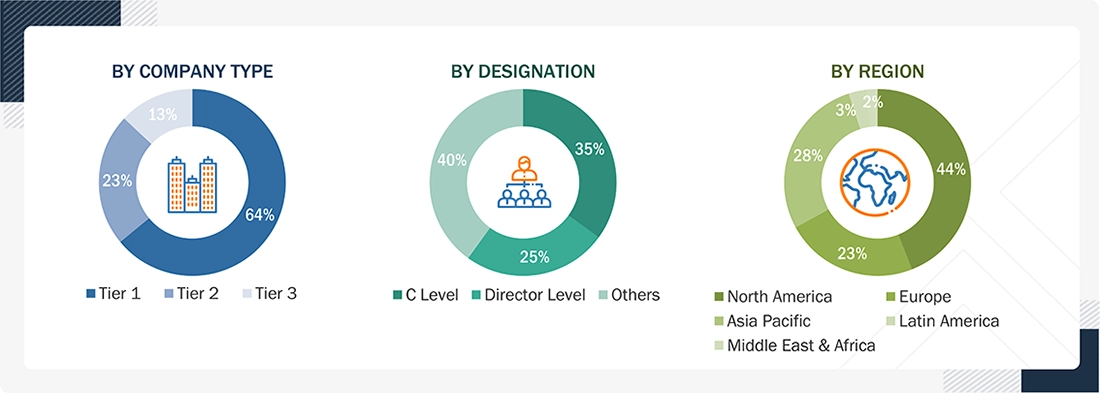
Note 1: Others include sales managers, marketing managers, business development managers, product managers, distributors, and suppliers.
Note 2: Tiers of companies are defined on the basis of their total revenue in 2022; Tier 1: >USD 1 billion, Tier 2: USD 500 million to USD 1 billion, and Tier 3: <USD 500 million.
To know about the assumptions considered for the study, download the pdf brochure
|
Report Metric |
Details |
|
Siemens Healthineers |
Sr.Sales Manager |
|
Curium |
General Manager |
|
Cardinal Health |
Product Sales Specialist |
Market Size Estimation
Both top-down and bottom-up approaches were used to estimate and validate the total size of the nuclear medicine market. These methods were also used extensively to estimate the size of various subsegments in the market. The research methodology used to estimate the market size includes the following:
- The key players in the industry and markets have been identified through extensive secondary research
- The industry’s supply chain and market size, in terms of value, have been determined through primary and secondary research processes
- All percentage shares, splits, and breakdowns have been determined using secondary sources and verified through primary sources
Data Triangulation
After arriving at the overall market size—using the market size estimation processes as explained above—the market was split into several segments and sub-segments. To complete the overall market engineering process and arrive at the exact statistics of each market segment and subsegment, the data triangulation, and market breakdown procedures were employed, wherever applicable. The data was triangulated by studying various factors and trends from both the demand and supply sides, in the provider, payer, and other industries.
Market Definition
Radiopharmaceuticals are drugs that contain radionuclide-emitting ionizing radiation and are used in nuclear imaging to diagnose and treat diseases. The nuclear medicine market is bifurcated into diagnostic and therapeutic segments. Radiopharmaceuticals in the diagnostics market are categorized as SPECT and PET, while radiopharmaceuticals in the therapeutics market are categorized as beta emitters, alpha emitters, and brachytherapy isotopes.
Key Stakeholders
- Senior Management
- Finance/Procurement Department
- R&D Department
Report Objectives
- To define, describe, and forecast the nuclear medicine market on the basis of type, application, procedure volume,end user, and region
- To provide detailed information regarding the major factors influencing the market growth (such as drivers, restraints, opportunities, and challenges)
- To strategically analyze micromarkets with respect to individual growth trends, prospects, and contributions to the overall market
- To analyze the opportunities in the market for stakeholders and provide details of the competitive landscape for market leaders
- To forecast the size of the market segments with respect to four main regions—North America, Europe, the Asia Pacific, and the Rest of the World (RoW)
- To profile the key players and comprehensively analyze their market shares and core competencies
- To track and analyze competitive developments such as partnerships, collaborations, agreements, product approval & enhancements, expansions, and acquisitions in the nuclear medicine market
Available Customizations
MarketsandMarkets offers the following customizations for this market report:
- Additional country-level analysis of the nuclear medicine market.
- Profiling of additional market players (up to 3)
Get the Full Nuclear Medicine Market Report
Full forecast, segment splits, and company analysis for all Nuclear Medicine Market.
- US Nuclear Medicine Market
- Canada Nuclear Medicine Market
- Germany Nuclear Medicine Market
- France Nuclear Medicine Market
- UK Nuclear Medicine Market
- Italy Nuclear Medicine Market
- Spain Nuclear Medicine Market
- Japan Nuclear Medicine Market
- China Nuclear Medicine Market
- India Nuclear Medicine Market
- South Korea Nuclear Medicine Market
- Australia Nuclear Medicine Market
- Brazil Nuclear Medicine Market
- Mexico Nuclear Medicine Market
- Rest Of Europe Nuclear Medicine Market
Need a Tailored Report?
Customize this report to your needs
Get 10% FREE Customization
Customize This Report
