
South Korea Refurbished Medical Equipment Market (2024-2029)

The South Korea Refurbished Medical Equipment Market was valued at $64.91 Million in 2024 and projected to reach to $97.61 Million by 2029, representing a compound annual growth rate of 8.5%. South Korea's refurbished medical equipment market is poised for substantial expansion, growing from $64.91 million in 2024 to $97.61 million by 2029.


| Market Size in | USD 26.32 MN |
| Market Forecast in | |
| CAGR | |
| Forecast Period | |
| Units Considered | Value (USD MN) |
South Korea Refurbished Medical Equipment Market Trends and Insights
- This 8.5% compound annual growth rate reflects South Korea's increasing adoption of cost-effective healthcare solutions and strong regulatory frameworks supporting equipment refurbishment.
- South Korea's advanced healthcare infrastructure and aging population are driving demand for affordable diagnostic and therapeutic equipment alternatives. The South Korea market benefits from the country's technological expertise and stringent quality standards that ensure refurbished equipment meets international compliance requirements.
- South Korea's healthcare providers are increasingly recognizing refurbished medical equipment as a viable option to optimize capital expenditure while maintaining clinical performance.
- Between 2024 and 2029, South Korea is expected to see accelerated market penetration across hospitals, diagnostic centers, and specialty clinics seeking sustainable procurement strategies..
Key Market Statistics
- CAGR (2024-2029) 8.5% CAGR
- Market Size, 2024 ~USD 64.91 Million
- Forecast, 2029 ~USD 97.61 Million
- Country South Korea
South Korea Refurbished Medical Equipment Market Overview
Strong Market Valuation :
South Korea's refurbished medical equipment market reached $64.91 million in 2024, demonstrating significant demand for cost-effective healthcare solutions across hospitals and clinics nationwide.
Accelerated Growth Trajectory :
With an 8.5% CAGR through 2029, South Korea's market growth outpaces the global average of 7.6%, driven by healthcare cost pressures and government initiatives promoting sustainable medical practices.
Regulatory Support Framework :
South Korea's robust regulatory environment and certification standards for refurbished equipment provide healthcare providers with confidence in quality and safety, accelerating market adoption.
Advanced Healthcare Infrastructure :
South Korea's technologically advanced healthcare system and high penetration of modern medical facilities create ideal conditions for refurbished equipment integration and circular economy adoption.
South Korea Refurbished Medical Equipment Market Dynamics
- This growth trajectory reflects the country's strategic shift toward sustainable healthcare procurement and cost optimization amid rising medical expenses.
- South Korean hospitals and diagnostic centers increasingly recognize refurbished equipment as a viable alternative to new purchases without compromising quality standards. The market's momentum is supported by South Korea's stringent regulatory frameworks, advanced certification processes, and strong emphasis on healthcare accessibility.
- Government policies promoting circular economy principles and environmental sustainability further bolster market expansion.
- As healthcare providers seek to balance budget constraints with technological advancement, refurbished medical equipment adoption will continue accelerating across diagnostic imaging, surgical instruments, and patient monitoring systems throughout the region..
Market Ecosystem
Related Ecosystem
Medical Devices
- Polymerase Chain Reaction (PCR)
- Magnetic Resonance Imaging (MRI)
- Disposable Autoinjectors
- Pulse Oximeters
- Blood Pressure Monitors
- Medtronic plc
- Abbott Laboratories
- Stryker Corporation
- Becton, Dickinson and Company
- JOHNSON & JOHNSON
Key Takeaways
- South Korea's refurbished medical equipment market is valued at $64.91 million in 2024 and will reach $97.61 million by 2029, representing 50.3% growth over five years.
- South Korea maintains an 8.5% CAGR, outpacing the global average of 7.6%, driven by healthcare cost pressures and regulatory support.
- South Korea's advanced quality standards and technological infrastructure position the country as a leader in certified refurbished equipment adoption.
- South Korea's aging demographic and expanding healthcare demand create sustained opportunities for refurbished equipment across diagnostic and therapeutic segments.
Refurbished Medical Equipment Market Report Scope
| Report Metric | Details |
|---|---|
| Base Year | 2024 |
| Fastest Growing Segment | PET/SPECT SYSTEMS (Type) |
| Forecast Period | 2024–2029 |
| Growth Rate | CAGR of 7.6% from 2024 to 2029 |
| Largest Segment | MEDICAL IMAGING EQUIPMENT (Product) |
| Market Size Base Year (Billions) | ~USD 16.92 (2024) |
| Revenue Forecast (Billions) | ~USD 24.41 (2029) |
| Segments Covered | Product, Type, End User |
South Korea Refurbished Medical Equipment Market Report Segmentation
3 segment dimensions are covered across the global market.
By Product
- Cardiology Equipment
- Endoscopy Equipment
- Intensive Care Equipment
- Intravenous Therapy Systems
- Medical Imaging Equipment
- Neurology Equipment
- Operating Room & Surgical Equipment
- Other Medical Equipment
- Patient Monitors
- Urology Equipment
By Type
- Anesthesia Machines
- Cardiac Monitors
- Ct Scanners
- Defibrillators
- Dialysis Machines
- Eeg Machines
- Electrocardiography Devices
- Electrosurgical Units
- Emg Machines
- Fetal Monitors
- Heart-Lung Machines
- Lithotripsy Devices
- Mammography Systems
- Mri Machines
- Multiparameter Monitors
- Non-Invasive Blood Pressure Monitors
- Nuclear Imaging Systems
- Operating Room Tables & Lights
- Other Cardiology Equipment
- Other Operating Room & Surgical Equipment
- Other Patient Monitors
- Pet/Spect Systems
- Pulse Oximeter
- Surgical Displays
- Ultrasound Systems
- X-Ray Machines
By End User
- Academic & Government Organizations
- Ambulatory Care Centers
- Diagnostic Imaging Centers
- Hospitals
- Other End Users
Target Audience
- Medical Equipment Manufacturers : Manufacturers need South Korea market data to develop refurbishment programs, establish certified resale channels, and capitalize on the country's growing demand for cost-effective equipment solutions.
- Healthcare Facility Administrators : Hospital and clinic decision-makers require market insights to justify refurbished equipment procurement, understand cost savings potential, and align purchasing strategies with regulatory compliance standards.
- Medical Equipment Distributors : Distributors and resellers need South Korea-specific market intelligence to identify growth opportunities, assess competitive positioning, and develop targeted sales strategies for refurbished medical devices.
- Investment & Private Equity Firms : Investors evaluating healthcare sector opportunities in South Korea need comprehensive market data to assess growth potential, identify acquisition targets, and make informed capital allocation decisions.
- Healthcare Policy & Government Bodies : Government agencies and healthcare policymakers require market analysis to develop sustainable procurement policies, evaluate circular economy initiatives, and support healthcare cost containment strategies.
Key Companies in the South Korea Refurbished Medical Equipment Market
| Company | HQ | Ownership | Strongest segments |
|---|---|---|---|
| GE HEALTHCARE | United States | Public Company | Imaging,Advanced Visualization Solutions (AVS),Patient Care Solutions (PCS), |
| SIEMENS HEALTHINEERS AG | Germany | Public Company | Imaging,Diagnostics,Varian (Oncology), |
| STRYKER | United States | Public Company | MedSurg and Neurotechnology,Orthopaedics Implants and Trauma/Extremities,Orthobiologics and Biosurgery, |
| SHENZHEN MINDRAY BIO-MEDICAL ELECTRONICS CO., LTD. | China | Public Company | Patient Monitoring & Life Support (incl. ventilators, defibrillation, anesthesia),Ultrasound & Medical Imaging (incl. radiology, emergency ultrasound),In-Vitro Diagnostics (CLIA, chemistry, hematology), |
| DRÄGERWERK AG & CO. KGAA | Germany | Public Company | Acute care and perioperative equipment,Patient monitoring and informatics,Neonatal care and perinatal systems, |
| NIHON KOHDEN CORPORATION | Japan | Public Company | Patient monitors & clinical information systems,Physiological measuring equipment (EEG, ECG, EMG, polygraphs),Defibrillators, AEDs, ventilators, anesthesia, implants, |
| OLYMPUS CORPORATION | Japan | Public Company | Gastrointestinal Solutions (endoscopes, devices, services),Surgical Endoscopy Systems and Integrated OR Solutions,Advanced Energy Devices, |
GE HEALTHCARE
GE Healthcare is a publicly traded U.S. company founded in 2022 with 54,000 employees, operating in the healthcare industry.
SIEMENS HEALTHINEERS AG
Siemens Healthineers AG is a German public company founded in 1896 with 72,369 employees, specializing in medical technology and diagnostics.
STRYKER
Stryker is a publicly traded U.S. medical device and healthcare company founded in 1941 with 56,000 employees.
SHENZHEN MINDRAY BIO-MEDICAL ELECTRONICS CO., LTD.
Shenzhen Mindray Bio-Medical Electronics Co., Ltd. is a Chinese public company founded in 1991 with 21,288 employees, operating in the biomedical and medical device industry.
DRÄGERWERK AG & CO. KGAA
Drägerwerk AG & Co. KGaA is a German public company established in 1889 with 16,033 employees, operating in medical and safety technology.
NIHON KOHDEN CORPORATION
Nihon Kohden Corporation is a Japanese public company founded in 1951 with 6,116 employees, specializing in medical electronic equipment and devices.
OLYMPUS CORPORATION
Olympus Corporation is a Japanese public company founded in 1919 with 28,138 employees, operating in precision optics and medical technology.
Reasons to Buy this Report
- Market Size & Growth Data : Access precise valuation metrics for South Korea's refurbished medical equipment market with verified 2024 baseline ($64.91M) and 2029 forecast ($97.61M), enabling accurate investment planning and revenue projections.
- Competitive Landscape Intelligence : Understand South Korea-specific market dynamics, regulatory advantages, and competitive positioning to identify opportunities for market entry, partnerships, and expansion strategies in this high-growth segment.
- Regulatory & Compliance Insights : Gain detailed knowledge of South Korea's certification standards, quality frameworks, and government policies supporting refurbished equipment adoption, ensuring compliant business operations and market credibility.
- Healthcare Provider Demand Analysis : Identify key customer segments including hospitals, diagnostic centers, and clinics driving demand for refurbished equipment in South Korea, with insights into procurement preferences and budget allocation patterns.
- Strategic Growth Opportunities : Leverage South Korea's 8.5% CAGR and sustainability-focused healthcare policies to identify high-potential product categories, geographic hotspots, and partnership opportunities for market expansion and revenue growth.
Frequently asked questions
What is the current size of South Korea's refurbished medical equipment market?
South Korea's refurbished medical equipment market was valued at $64.91 million in 2024 and is expected to grow to $97.61 million by 2029.
What is the projected growth rate for South Korea's refurbished medical equipment market?
South Korea's refurbished medical equipment market is projected to grow at a compound annual growth rate (CAGR) of 8.5% from 2024 to 2029.
Why is South Korea's refurbished medical equipment market growing faster than the global average?
South Korea's 8.5% CAGR exceeds the global 7.6% average due to strong regulatory frameworks, advanced quality standards, healthcare cost optimization pressures, and an aging population driving demand for affordable equipment solutions.
Which healthcare facilities in South Korea are driving refurbished equipment adoption?
South Korea's hospitals, diagnostic imaging centers, specialty clinics, and outpatient facilities are primary adopters, seeking to balance capital expenditure constraints with clinical performance requirements.
What regulatory factors support South Korea's refurbished medical equipment market?
South Korea's stringent quality certification standards, equipment traceability requirements, and healthcare procurement policies create a favorable environment for certified refurbished equipment adoption across the healthcare system.
RESEARCH METHODOLOGY
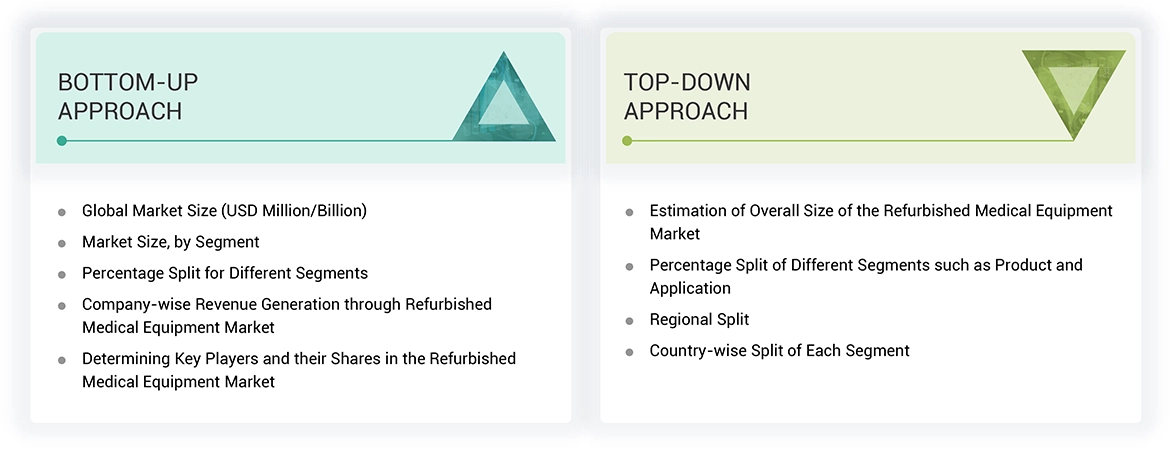
Major activities have been focused to estimate the market size of the Refurbished medical equipment sector at present. Extensive secondary research has been conducted to collate information regarding the refurbished medical equipment industry. Many different methodologies were used for estimating the overall market size, involving the top-down and bottom-up approaches. The next step involved primary research with industry experts along the value chain to validate these findings, assumptions, and market sizing. To do so, we employed market segmentation and data triangulation techniques to get an accurate market size across different market segments and subsegments of the Refurbished medical equipment market.
Secondary Research
Secondary research sources of this study include directories and databases, such as D&B Hoovers and Factiva; white papers; Bloomberg Businessweek; annual reports; SEC filings; business filings; and investor presentations. The above sources have given information on leading companies and market segmentation that reflects the industry trend and technological perspectives of the Refurbished medical equipment market.
Primary Research
Major research activities entailed interviewing the supply side and the demand side, using both a quantitative and qualitative approach to data collection. Supply side information was obtained from key informants like CEOs, area sales managers, territory sales managers, regional sales managers, and other high-level officials from leading companies, while on the demand side, it mainly comprised physicians, researchers, department heads, and staff from diagnostic imaging centers, hospitals, and research institutions. This study was conducted for the purpose of ensuring that assumptions were validated through interaction with relevant stakeholders.
A breakdown of the primary respondents is provided below:
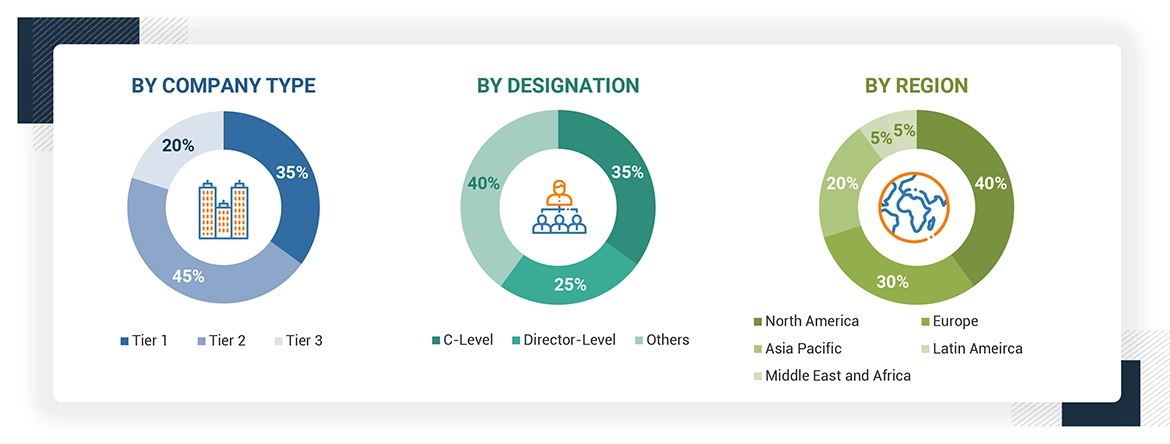
*Others include sales managers, marketing managers, business development managers, product managers, distributors, and suppliers.
Note: Companies are classified into tiers based on their total revenue. As of 2023, Tier 1 = >USD 1 billion, Tier 2 = < USD 500 million, and Tier 3 = < USD 100 million.
To know about the assumptions considered for the study, download the pdf brochure
Market Size Estimation
This research involves revenue sharing review of the leading players in the Refurbished medical equipment market. Primary and secondary research methods were adopted to determine the key players in the industry and to gain some level of understanding of their financial performance and market share. The primary research was more detailed interviews taken from the directors, CEOs and senior marketing executives, whereas the secondary research primarily relied upon the annual and financial reports issued by the major players in the industry. the revenue details of the leading solution providers were further used to differentiate between sources and services and a segment-based strategy was followed to determine the market value across the globe.
Procedures Covered:
Identify the companies around the world who are leading Refurbished medical equipment industry and note down their respective annual revenues or specific product category/business division.
The revenue mapping of the key competitors, based on 2024, is in fact a major share of the market for this analysis, thus extrapolated to total global value for the Refurbished medical equipment market.
Data Triangulation
The Refurbished medical equipment market is segmented into various segments and subsegments based on the methodology adopted in this report. Data triangulation and the segmentation process are next undertaken to ensure the accuracy of data for all segments. Drivers and trends have been identified from both the supply and demand sides. The results obtained from both the top-down and bottom-up approaches have been utilized for deriving the results of the Refurbished medical equipment market analysis.
Market Definition
Refurbished medical equipment is used medical devices restored to their original operational condition and safety standards by the original manufacturer or a certified third-party provider. This typically includes cleaning, repairing, re-testing, and replacement of any worn-out components so that they meet regulatory and industry standards and are then deemed safe and effective. Refurbished equipment can add life to the original device, enabling the hospital and clinic facilities to save costs while using devices of worthy price and performance. Most of the time, warranties will show that there will be reliability of the equipment after restoration.
Stakeholders
- Manufacturers and distributors of Refurbished medical equipment devices
- Healthcare institutions (hospitals)
- Diagnostic imaging centers
- Research institutions.
- Healthcare institutions (Rehabilitation centers, OPDs)
- Research and consulting firms.
- Contract research organizations (CROs) and contract manufacturing organizations (CMOs)
- Academic medical centers and universities
- Market research and consulting firms
- Clinical research organizations
- Ambulatory Care Centers
- Group Purchasing Organizations (GPOs)
- Medical Research Laboratories
- Academic Medical Centers and Universities
- Accountable Care Organizations (ACOs)
Report Objectives
- To define, describe, and forecast the global Refurbished medical equipment market based on product, application, end user, and region.
- To provide detailed information regarding the major factors influencing the market growth (such as drivers, restraints, opportunities, and challenges)
- To strategically analyze micromarkets1 with respect to individual growth trends, prospects, and contributions to the total market
- To analyze the opportunities in the market for stakeholders and provide details of the competitive landscape for market leaders
- To profile the key market players and comprehensively analyze their market shares and core competencies2
- To forecast the revenue of the market segments in five main regions: North America (the US and Canada), Europe (Germany, France, the UK, Italy, Spain, and Rest of Europe), the Asia Pacific (China, Japan, India, South Korea, Australia, and Rest of Asia Pacific), Latin America (Brazil, Mexico, and Rest of Latin America), and the Middle East & Africa (GCC Countries and the Rest of Middle East & Africa)
- To track and analyze competitive developments such as product launches and approvals, agreements, partnerships, expansions, acquisitions, and collaborations in the Refurbished medical equipment market.
Get the Full Refurbished Medical Equipment Market Report
Full forecast, segment splits, and company analysis for all Refurbished Medical Equipment Market.
- US Refurbished Medical Equipment Market
- Canada Refurbished Medical Equipment Market
- Germany Refurbished Medical Equipment Market
- France Refurbished Medical Equipment Market
- UK Refurbished Medical Equipment Market
- Italy Refurbished Medical Equipment Market
- Spain Refurbished Medical Equipment Market
- China Refurbished Medical Equipment Market
- Japan Refurbished Medical Equipment Market
- India Refurbished Medical Equipment Market
- Australia Refurbished Medical Equipment Market
- Brazil Refurbished Medical Equipment Market
- Mexico Refurbished Medical Equipment Market
Need a Tailored Report?
Customize this report to your needs
Get 10% FREE Customization
Customize This Report
