
Asia Pacific Residential Energy Storage Market (2024-2029)

The Asia Pacific Residential Energy Storage Market was valued at $359.98 Million in 2024 and projected to reach to $695.25 Million by 2029, representing a compound annual growth rate of 20.7%. The Asia Pacific residential energy storage market is poised for substantial growth through 2029, driven by the region's commitment to renewable energy transition and energy security.


| Market Size in | USD 26.32 MN |
| Market Forecast in | |
| CAGR | |
| Forecast Period | |
| Units Considered | Value (USD MN) |
Asia Pacific Residential Energy Storage Market Trends and Insights
- Asia Pacific is emerging as a critical growth hub, driven by increasing solar adoption, government incentives, and rising electricity costs across the region.
- The market in Asia Pacific is outpacing global growth rates, with a compound annual growth rate of 20.7%, significantly higher than the global average of 9.3%. Asia Pacific's residential energy storage sector is being propelled by favorable regulatory frameworks, declining battery costs, and growing consumer awareness of energy independence.
- Countries within Asia Pacific are investing heavily in renewable energy infrastructure, creating substantial demand for home battery systems.
- The forecast period from 2024 to 2029 represents a transformative phase for Asia Pacific, as residential consumers increasingly adopt storage solutions to optimize energy consumption and reduce grid dependency. Asia Pacific's market dynamics reflect strong urbanization trends and technological advancement in lithium-ion battery systems.
- The region's competitive landscape is intensifying as both established energy companies and emerging startups establish operations in Asia Pacific, positioning the market for sustained double-digit growth through 2029..
Key Market Statistics
- CAGR (2024-2029) 20.7% CAGR
- Market Size, 2024 ~USD 359.98 Million
- Forecast, 2029 ~USD 695.25 Million
- Geography Asia Pacific
Asia Pacific Residential Energy Storage Market Overview
Exceptional Regional Growth :
Asia Pacific's residential energy storage market is expanding at 20.7% CAGR, significantly outpacing the global growth rate of 9.3%, positioning the region as the fastest-growing market for energy storage solutions.
Solar Integration Catalyst :
Increasing solar adoption across Asia Pacific is driving residential energy storage demand, as homeowners seek to maximize renewable energy utilization and achieve energy independence through battery storage systems.
Government Support & Incentives :
Favorable government policies, subsidies, and renewable energy targets across Asia Pacific countries are accelerating market penetration and making residential energy storage systems more affordable for consumers.
Rising Electricity Costs :
Escalating electricity prices across the Asia Pacific region are compelling residential consumers to invest in energy storage solutions to reduce grid dependency and lower long-term energy expenses.
Asia Pacific Residential Energy Storage Market Dynamics
- With market size expected to nearly double from USD 359.98 million in 2024 to USD 695.25 million by 2029, Asia Pacific is establishing itself as a critical growth engine for the global energy storage industry. Key growth drivers include rapid urbanization, increasing environmental awareness, and technological advancements making battery systems more cost-effective.
- Countries like China, Japan, Australia, and India are leading adoption, supported by favorable regulatory frameworks and declining battery costs.
- The convergence of solar proliferation, grid modernization initiatives, and consumer demand for energy resilience will sustain the region's exceptional 20.7% CAGR trajectory..
Market Ecosystem
Related Ecosystem
Decarbonization
- Battery Electric Vehicle (BEV)
- Energy Management Systems
- Fuel Cell
- Fuel Cell Electric Vehicle (FCEV)
- Geographical Information System (GIS)
- TotalEnergies SE
- Siemens ag
- Mitsui & Co., Ltd.
- General Electric Company
- Thyssenkrupp ag
Key Takeaways
- Asia Pacific's residential energy storage market will nearly double from USD 359.98 million in 2024 to USD 695.25 million by 2029, driven by 20.7% CAGR.
- Asia Pacific significantly outpaces global growth, with regional CAGR of 20.7% versus global CAGR of 9.3%, reflecting strong regional demand dynamics.
- Government incentives, declining battery costs, and renewable energy integration are primary catalysts accelerating adoption across Asia Pacific.
- Asia Pacific's competitive landscape is rapidly evolving with both multinational corporations and regional players establishing strong market presence through 2029.
Residential Energy Storage Market Report Scope
| Report Metric | Details |
|---|---|
| Base Year | 2024 |
| Fastest Growing Segment | OFF-GRID (Connectivity Type) |
| Forecast Period | 2024-2029 |
| Growth Rate | CAGR of 9.3% from 2024 to 2029 |
| Largest Segment | LITHIUM-ION (Technology) |
| Market Size Base Year (Billions) | ~USD 2.69 (2024) |
| Revenue Forecast (Billions) | ~USD 4.19 (2029) |
| Segments Covered | Technology, Power Rating, Ownership Type, Operation Type, Connectivity Type |
Asia Pacific Residential Energy Storage Market Report Segmentation
5 segment dimensions are covered across the global market.
By Technology
- Lead-Acid
- Lithium-Ion
By Power Rating
- 10 To 20 Kw
- 3 To <6 Kw
- 6 To <10 Kw
By Ownership Type
- Customer-Owned
- Third-Party-Owned
- Utility-Owned
By Operation Type
- Solar And Storage Systems
- Standalone Systems
By Connectivity Type
- Off-Grid
- On-Grid
Target Audience
- Energy Storage Manufacturers : Battery and energy storage system manufacturers need Asia Pacific market data to identify growth markets, optimize production capacity, and develop region-specific product offerings for residential applications.
- Solar & Renewable Companies : Solar installers and renewable energy providers require market insights to bundle residential storage solutions with solar systems, capitalize on integration trends, and expand service offerings across Asia Pacific.
- Investors & Private Equity : Investment firms and venture capital need comprehensive market analysis to identify high-growth opportunities, evaluate portfolio companies, and make informed funding decisions in Asia Pacific energy storage.
- Utility & Grid Operators : Utilities and grid operators need residential storage market data to understand distributed energy resource trends, plan grid modernization, and develop demand-side management strategies in Asia Pacific.
- Government & Policy Makers : Government agencies and policy makers require market intelligence to design effective renewable energy incentives, set realistic adoption targets, and evaluate the impact of residential storage on energy security.
Countries within Asia Pacific - compare and drill down
| Country | 2025 size (native) |
|---|---|
| China | USD 186.35 Million |
| India | USD 202 Million |
| Japan | USD 530 Million |
| South Korea | USD 200 Million |
| Australia | USD 742 Million |
| Rest Of Asia Pacific | USD 85 Million |
Country market size visualization
Reasons to Buy this Report
- Regional Growth Opportunity : Capture insights into Asia Pacific's 20.7% CAGR market expansion, identifying high-potential segments and investment opportunities ahead of competitors in the fastest-growing energy storage region.
- Country-Level Market Intelligence : Access detailed market sizing and forecasts for key Asia Pacific markets including China, Japan, Australia, India, and South Korea to inform localized business strategies and market entry decisions.
- Policy & Incentive Analysis : Understand government support mechanisms, subsidies, and renewable energy targets driving residential storage adoption across Asia Pacific, enabling strategic positioning around regulatory tailwinds.
- Competitive Landscape Mapping : Identify leading players, emerging competitors, and market consolidation trends specific to Asia Pacific residential energy storage to benchmark performance and identify partnership opportunities.
- Technology & Consumer Trends : Analyze solar integration patterns, battery technology preferences, and consumer behavior in Asia Pacific to develop products and marketing strategies aligned with regional demand dynamics.
Frequently asked questions
What is the current market size of residential energy storage in Asia Pacific?
The Asia Pacific residential energy storage market was valued at USD 359.98 million in 2024 and is expected to grow to USD 695.25 million by 2029.
What is the growth rate for residential energy storage in Asia Pacific?
Asia Pacific's residential energy storage market is growing at a compound annual growth rate of 20.7% from 2024 to 2029, significantly outpacing the global average of 9.3%.
What factors are driving growth in Asia Pacific's residential energy storage market?
Key drivers include increasing solar adoption, government incentives, rising electricity costs, declining battery prices, and growing consumer demand for energy independence across Asia Pacific.
Which countries in Asia Pacific are leading the residential energy storage market?
Major markets within Asia Pacific include Australia, China, India, Japan, and South Korea, each contributing significantly to the region's overall market growth and innovation.
What technology dominates the Asia Pacific residential energy storage market?
Lithium-ion battery systems are the dominant technology in Asia Pacific's residential energy storage market, offering superior performance, declining costs, and improved energy density compared to alternative solutions.
RESEARCH METHODOLOGY
The study involved major activities in estimating the current size of the residential energy storage market. Exhaustive secondary research was done to collect information on the peer and parent markets. The next step was to validate these findings, assumptions, and sizing with industry experts across the value chain through primary research. Both top-down and bottom-up approaches were employed to estimate the total market size. Thereafter, market breakdown and data triangulation were used to estimate the market size of the segments and subsegments.
Secondary Research
Secondary sources referred to for this research study include annual reports, press releases, and investor presentations of companies; white papers; certified publications; articles by recognized authors; and databases of various companies and associations. Secondary research was mainly used to obtain key information about the industry’s supply chain, the total pool of key players, market classification, and segmentation according to industry trends to the bottom-most level, regional markets, and key developments from both, market- and technology-oriented perspectives.
Primary Research
In the primary research process, various primary sources from the supply and demand sides were interviewed to obtain qualitative and quantitative information for this report. Primary sources from the supply side include industry experts such as chief executive officers (CEOs), vice presidents (VPs), marketing directors, and related key executives from various companies and organizations operating in the residential energy storage market.
In the complete market engineering process, the top-down and bottom-up approaches, along with several data triangulation methods, were extensively used to perform the market size estimations and forecasts for all segments and subsegments listed in this report. Extensive qualitative and quantitative analyses were conducted to complete the market engineering process and list key information/insights throughout the report. Following is the breakdown of primary respondents:
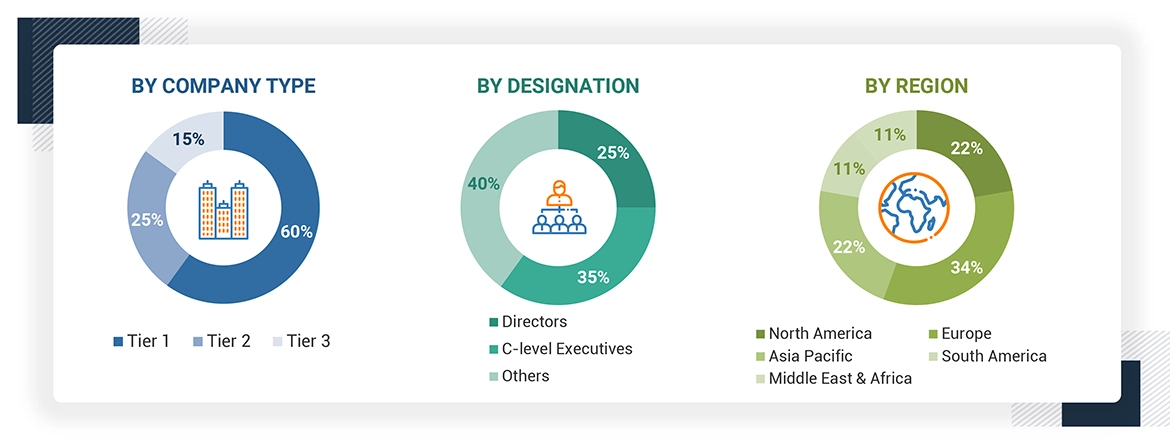
Note: Other designations include sales managers, engineers, and regional managers.
The tier of the companies is defined based on their total revenue; as of 2023: Tier 1 = > USD 1 billion, Tier
2 = From USD 500 million to USD 1 billion, and Tier 3 = < USD 500 million.
To know about the assumptions considered for the study, download the pdf brochure
Market Size Estimation
Multiple approaches were adopted for estimating and forecasting the web content management market. The first approach involves estimating the market size by companies’ revenue generated through the sale of WCM products.
Market Size Estimation Methodology- Top-down approach
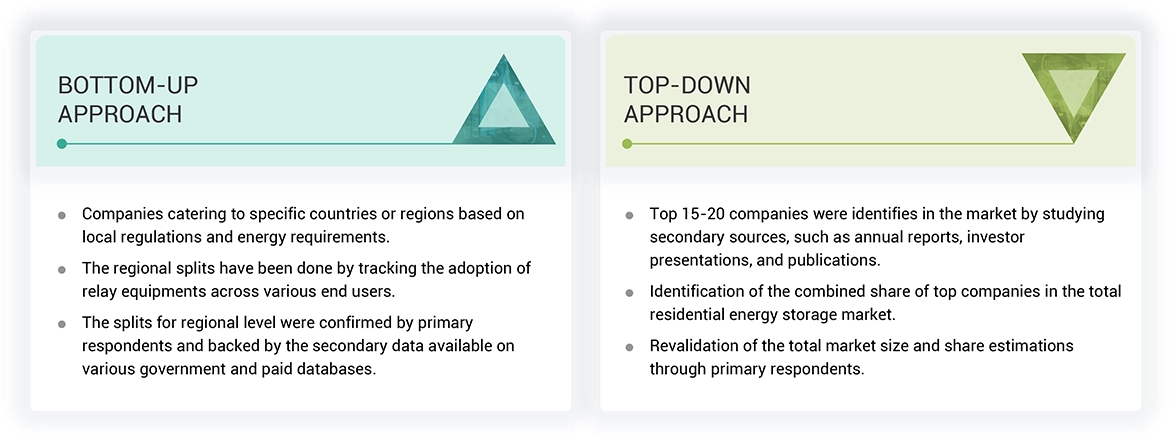
Both top-down and bottom-up approaches were used to estimate and validate the size of the residential energy storage market. These methods were also used extensively to estimate the size of various subsegments in the market. The research methodology used to estimate the market size includes the following:
Residential Energy Storage Market : Top-Down and Bottom-Up Approach
Data Triangulation
After arriving at the overall market size from the estimation process explained below, the total market was split into several segments and subsegments. The data triangulation and market breakdown procedures were employed, wherever applicable, to complete the overall market engineering process and arrive at the exact statistics for all segments and subsegments. The data was triangulated by studying various factors and trends from both the demand and supply sides. The market size was validated using the top-down and bottom-up approaches.
Market Definition
A residential energy storage system typically consists of an inverter, a battery, and various other components meant to provide uninterrupted power to homes. Such systems provide benefits, including improved energy security, greater independence from the grid, lesser environmental impact, and reduced electricity costs. Among these types, lithium-ion battery systems are the most popular because of their energy storage capacity in very compact spaces. In addition to residential applications, the above-mentioned batteries are used extensively in electric vehicles, power tools, and mobile devices.
Stakeholders
- Assembly, testing, and packaging vendors
- Companies in the energy storage industry
- Consulting companies in the energy and power sector
- Electrical distribution utilities
- EV players
- Government and research organizations
- Inverter and battery manufacturing companies
- Investment banks
- Low- and medium-voltage distribution substations
- Medium-voltage solar equipment manufacturing companies
- Organizations, forums, alliances, and associations
- Residential energy consumers
- Solar panel manufacturers, dealers, installers, and suppliers
- State and national regulatory authorities
- Venture capital firms
Report Objectives
- To describe, segment, and forecast the residential energy storage market, in terms of value, based on power rating, connectivity type, technology, ownership type, operation type, and region
- To describe and forecast the market for five key regions, namely, North America, Europe, Asia Pacific, South America, and the Middle East & Africa (MEA), along with their country-level market sizes, in terms of value and volume
- To provide detailed information regarding the key drivers, restraints, opportunities, and challenges influencing the growth of the market
- To provide the supply chain analysis, trends/disruptions impacting customers’ businesses, market map, pricing analysis, and regulatory analysis of the residential energy storage market
- To analyze opportunities for stakeholders in the residential energy storage market and draw a competitive landscape of the market
- To strategically analyze the ecosystem, tariffs and regulations, patent landscape, trade landscape, Porter's five forces, and case studies pertaining to the market under study
- To benchmark market players using the company evaluation matrix, which analyzes market players on broad categories of business and product strategies adopted by them
- To compare key market players with respect to their product specifications and applications
- To profile key players and comprehensively analyze their market ranking and core competencies
- To analyze competitive developments, such as sales contracts, agreements, investments, expansions, product launches, alliances, mergers, partnerships, joint ventures, collaborations, and acquisitions, in the residential energy storage market
- To study the impact of AI/Gen AI on the market under study, along with the global macroeconomic outlook
Available Customizations
With the given market data, MarketsandMarkets offers customizations according to the specific requirements of companies. The following customization options are available for the report:
Product Analysis
- Product Matrix, which provides a detailed comparison of the product portfolio of each company
Company Information
- Detailed analyses and profiling of additional market players
Get the Full Residential Energy Storage Market Report
Full forecast, segment splits, and company analysis for all Residential Energy Storage Market.
- India Residential Energy Storage Market
- Japan Residential Energy Storage Market
- South Korea Residential Energy Storage Market
- Australia Residential Energy Storage Market
- Saudi Arabia Residential Energy Storage Market
- UAE Residential Energy Storage Market
- South Africa Residential Energy Storage Market
- Brazil Residential Energy Storage Market
- Chile Residential Energy Storage Market
- Bulgaria Residential Energy Storage Market
- Rest Of Asia Pacific Residential Energy Storage Market
- Rest Of South America Residential Energy Storage Market
- US Residential Energy Storage Market
- Canada Residential Energy Storage Market
- Mexico Residential Energy Storage Market
- Germany Residential Energy Storage Market
- UK Residential Energy Storage Market
- France Residential Energy Storage Market
- Italy Residential Energy Storage Market
- Spain Residential Energy Storage Market
- Austria Residential Energy Storage Market
- Netherlands Residential Energy Storage Market
- Switzerland Residential Energy Storage Market
- Belgium Residential Energy Storage Market
- Poland Residential Energy Storage Market
- Czech Republic Residential Energy Storage Market
- Hungary Residential Energy Storage Market
- Romania Residential Energy Storage Market
- China Residential Energy Storage Market
Need a Tailored Report?
Customize this report to your needs
Get 10% FREE Customization
Customize This Report
