
Rest Of Middle East Sensor Patch Market (2025-2030)

The Rest Of Middle East Sensor Patch Market was valued at $45.5 Million in 2025 and projected to reach to $131 Million by 2030, representing a compound annual growth rate of 23.6%. The Rest Of Middle East sensor patch market is positioned for substantial growth through 2030, driven by accelerating healthcare digitalization and increasing prevalence of chronic diseases requiring continuous monitoring.


| Market Size in | USD 26.32 MN |
| Market Forecast in | |
| CAGR | |
| Forecast Period | |
| Units Considered | Value (USD MN) |
Rest Of Middle East Sensor Patch Market Trends and Insights
- This represents a compound annual growth rate (CAGR) of 23.6%, significantly driven by increasing healthcare digitalization and wearable technology adoption across the region.
- Rest Of Middle East is witnessing rising demand for remote patient monitoring solutions, particularly in emerging healthcare infrastructure segments. Rest Of Middle East's sensor patch market growth is fueled by expanding pharmaceutical and medical device sectors, coupled with growing investment in smart healthcare technologies.
- The region's young demographic profile and rising chronic disease prevalence are accelerating adoption of continuous monitoring devices.
- Rest Of Middle East is positioning itself as an emerging hub for sensor patch innovation, with local manufacturers and international players establishing regional operations to capture this high-growth opportunity..
Key Market Statistics
- CAGR (2025-2030) 23.6% CAGR
- Market Size, 2025 ~USD 45.5 Million
- Forecast, 2030 ~USD 131 Million
- Country Rest Of Middle East
Rest Of Middle East Sensor Patch Market Overview
Rapid Market Expansion :
Rest Of Middle East sensor patch market is projected to grow from $45.5 million in 2025 to $131.0 million by 2030, representing a robust 23.6% CAGR, outpacing many regional markets in the semiconductor sector.
Healthcare Digitalization Driver :
Increasing adoption of digital health solutions and remote patient monitoring across Rest Of Middle East is accelerating sensor patch deployment in hospitals, clinics, and home healthcare settings.
Wearable Technology Adoption :
Growing consumer demand for wearable health devices and IoT-enabled medical patches in Rest Of Middle East is creating significant opportunities for manufacturers and healthcare providers.
Regional Investment Growth :
Government healthcare initiatives and private sector investments in Rest Of Middle East are fostering innovation in sensor patch technology and expanding market accessibility across the region.
Rest Of Middle East Sensor Patch Market Dynamics
- Regional governments are prioritizing healthcare modernization, creating favorable conditions for wearable medical technology adoption.
- The market's 23.6% CAGR reflects strong demand from both public and private healthcare institutions seeking cost-effective patient monitoring solutions. Key growth catalysts include rising smartphone penetration, improving healthcare infrastructure, and growing awareness of preventive healthcare among Rest Of Middle East populations.
- Partnerships between international sensor manufacturers and local healthcare providers are expanding market reach.
- Additionally, regulatory frameworks supporting medical device innovation are encouraging local startups and multinational companies to establish operations in the region, further accelerating market penetration and technological advancement..
Market Ecosystem
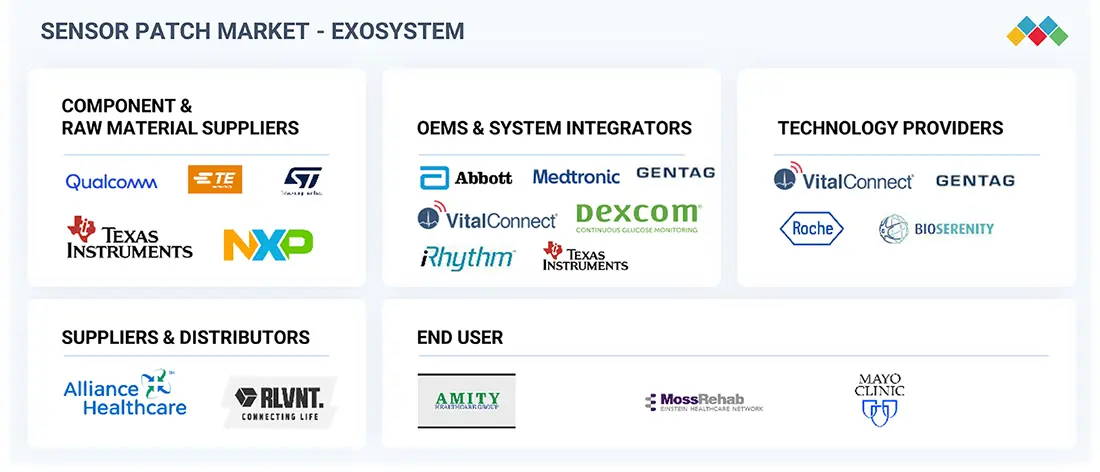
Sensor Patch Marke: COMMERCIAL USE CASES ACROSS INDUSTRIES
| COMPANY | USE CASE DESCRIPTION | BENEFITS |
|---|---|---|
 |
Glucose monitoring, cardiac markers, infectious diseases | Lingo’s coaching program helps people see the connections between their food choices and glucose data and create healthier habits over time. |
 |
Clinical diagnostics, glucose monitoring, temperature monitoring | The CGM system measures glucose levels and sends data wirelessly to a display device through a transmitter. |
 |
Heart rate monitoring, glucose monitoring, temperature monitoring | Early indicators of patient decline, tubeless, wearable and fully disposable insulin delivery device. |
 |
Temperature monitoring and ECG sensor | These ECG sensors are ideal for medical, health and fitness, and industrial sectors, where instantaneous measurements are required and a battery is not feasible or desired. |
 |
Heart rate and ECG monitoring | This product is perfect for continuously monitoring ECG remotely for up to 14 days. |
Logos and trademarks shown above are the property of their respective owners. Their use here is for informational and illustrative purposes only.
Related Ecosystem
Sensors And Control
- Sensors
- Image Sensors
- Temperature Sensors
- Pressure Sensors
- Flow Sensors
- BAUMER ELECTRIC AG
- HONEYWELL INTERNATIONAL INC.
- Lenovo
- Stmicroelectronics
- Texas Instruments Incorporated
Key Takeaways
- Rest Of Middle East sensor patch market valued at $45.5M in 2025, expanding to $131.0M by 2030 at 23.6% CAGR
- Rest Of Middle East's healthcare digitalization initiatives are primary drivers of sensor patch adoption and market penetration
- Rest Of Middle East demonstrates strong potential for remote patient monitoring and chronic disease management applications
- Rest Of Middle East is attracting regional and international sensor patch manufacturers seeking high-growth emerging markets
Sensor Patch Market Report Scope
| Report Metric | Details |
|---|---|
| Base Year | 2025 |
| Fastest Growing Segment | NECKWEAR (Wearable Type) |
| Forecast Period | 2025-2030 |
| Growth Rate | CAGR of 30.5% from 2025 to 2030 |
| Largest Segment | HEALTHCARE (End-Use Industry) |
| Market Size Base Year (Billions) | ~USD 6.32 (2025) |
| Revenue Forecast (Billions) | ~USD 23.91 (2030) |
| Segments Covered | Wearable Type, Product Type, Application, End-Use Industry, End User |
Rest Of Middle East Sensor Patch Market Report Segmentation
5 segment dimensions are covered across the global market.
By Wearable Type
- Bodywear
- Footwear
- Neckwear
- Wristwear
By Product Type
- Blood Glucose Sensor Patches
- Blood Oxygen Sensor Patches
- Blood Pressure/Flow Sensor Patches
- Ecg Sensor Patch
- Ecg Sensor Patches
- Heart Rate Sensor Patches
- Temperature Sensor Patches
By Application
- Diagnostics
- Medical Therapeutics
- Monitoring
By End-Use Industry
- Fitness & Sports
- Healthcare
By End User
- Diagnostic Laboratories
- Home Care
- Hospitals & Clinics
Target Audience
- Medical Device Manufacturers : Sensor patch and wearable medical device companies need Rest Of Middle East market data to identify expansion opportunities, assess market potential, and develop region-specific product strategies.
- Healthcare Providers & Institutions : Hospitals, clinics, and healthcare networks in Rest Of Middle East require market insights to evaluate sensor patch adoption trends, procurement strategies, and technology investment decisions.
- Investment & Private Equity Firms : Investors targeting Rest Of Middle East healthcare technology need comprehensive market analysis to evaluate portfolio opportunities, assess growth potential, and make informed funding decisions.
- Government & Healthcare Policymakers : Regional health ministries and regulatory bodies need market intelligence to inform healthcare digitalization policies, technology adoption initiatives, and healthcare infrastructure development plans.
- Technology & Semiconductor Companies : Electronics manufacturers and semiconductor firms require Rest Of Middle East market data to identify component demand, develop regional partnerships, and plan production capacity expansion.
Reasons to Buy this Report
- Market Size & Growth Validation : Obtain precise market valuation for Rest Of Middle East ($45.5M in 2025) with verified 23.6% CAGR projections through 2030, enabling accurate financial forecasting and investment decision-making specific to this region.
- Regional Opportunity Identification : Identify high-potential segments and customer bases within Rest Of Middle East's sensor patch ecosystem, including healthcare providers, government agencies, and consumer segments driving market expansion.
- Competitive Landscape Intelligence : Understand regional market dynamics, key players, and competitive positioning specific to Rest Of Middle East, enabling strategic market entry or expansion planning with localized insights.
- Growth Driver Analysis : Access detailed analysis of healthcare digitalization trends, wearable adoption rates, and regulatory developments unique to Rest Of Middle East that are fueling market growth.
- Strategic Planning & Risk Mitigation : Leverage region-specific forecasts and market intelligence to develop targeted go-to-market strategies, minimize investment risks, and capitalize on emerging opportunities in Rest Of Middle East.
Frequently asked questions
What is the current market size of sensor patches in Rest Of Middle East?
Rest Of Middle East's sensor patch market is estimated at $45.5 million in 2025 and is projected to reach $131.0 million by 2030.
What is the expected growth rate for Rest Of Middle East sensor patch market?
Rest Of Middle East sensor patch market is expected to grow at a CAGR of 23.6% from 2025 to 2030.
What are the primary drivers of sensor patch adoption in Rest Of Middle East?
Rest Of Middle East's sensor patch market growth is driven by healthcare digitalization, rising chronic disease prevalence, increasing wearable technology adoption, and expanding pharmaceutical sectors.
Which applications are most prominent in Rest Of Middle East sensor patch market?
Rest Of Middle East shows strong demand for remote patient monitoring, continuous health tracking, and chronic disease management applications using sensor patches.
Who are the key market participants in Rest Of Middle East?
Rest Of Middle East sensor patch market includes both international medical device manufacturers and emerging regional players establishing operations to serve the growing demand.
RESEARCH METHODOLOGY
The study involved major activities in estimating the sensor patch market size. Exhaustive secondary research was done to collect information on sensor patches. The next step was to validate these findings, assumptions, and sizing with industry experts across the value chain using primary research. Different approaches, such as top-down and bottom-up, were employed to estimate the total market size. After that, the market breakup and data triangulation procedures were used to estimate the market size of the segments and subsegments of the sensor patch.
Secondary Research
In the secondary research process, various secondary sources were referred to identify and collect information relevant to this study. Secondary sources included annual reports, press releases, and investor presentations of companies; white papers, certified publications, and articles from recognized authors; directories; and databases. Secondary research was mainly carried out to obtain critical information about the industry’s supply chain, value chain, the total pool of key players, and market classification and segmentation according to industry trends, geographic markets, and key developments from both market- and technology-oriented perspectives. Secondary sources included corporate filings (such as annual reports, investor presentations, and financial statements); trade, business, and professional associations; white papers; IoT technologies journals and certified publications; articles by recognized authors; gold- and silver-standard websites; directories; and databases. Data was also collected from secondary sources, such as the Semiconductor Industry Association, Global Semiconductor Alliance, and Taiwan Semiconductor Industry Association.
Secondary research was mainly used to obtain critical information about the industry's supply chain and value chain, the total pool of key players, market classification and segmentation according to industry trends to the bottom-most level, geographic markets, and key developments from both the market and technology-oriented perspectives. Secondary data was gathered and analyzed to determine the overall market size, which was validated by primary research.
Primary Research
Extensive primary research was conducted after understanding and analyzing the current scenario of the sensor patch market through secondary research. A number of primary interviews were held with demand and supply side key opinion leaders in four key regions: North America, Europe, Asia Pacific, and Rest of the World. Nearly 25% of the primary interviews were held with the demand side and 75% with the supply side. The primary data was gathered primarily through telephonic interviews, which were 80% of the total primary interviews. Surveys and e-mails were also utilized to collect data.
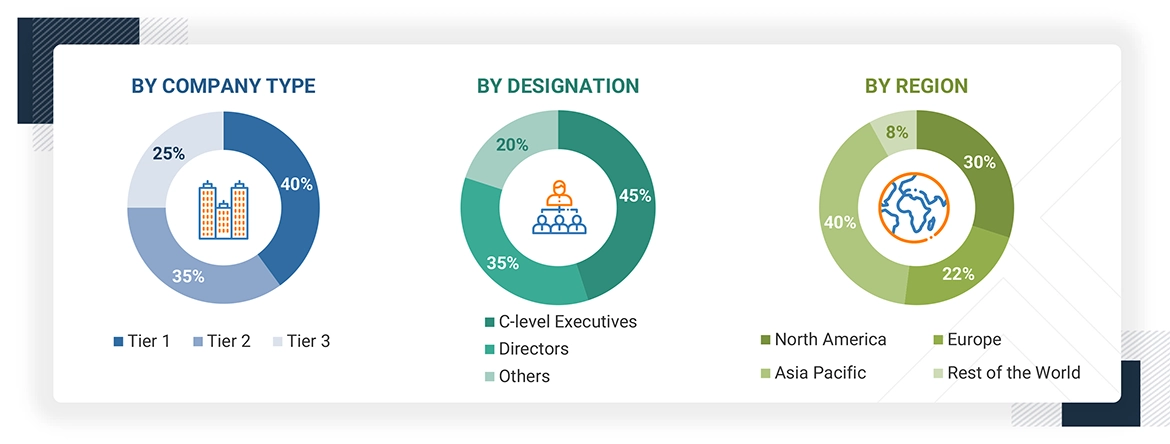
Note: Three tiers of companies are defined based on their total revenue as of 2024; tier 1: revenue more than or equal to USD 500 million, tier 2: revenue between USD 100 million and USD 500 million, and tier 3: revenue less than or equal to USD 100 million. Other designations include sales and marketing executives and researchers, as well as members of various sensor patch organizations.
To know about the assumptions considered for the study, download the pdf brochure
Market Size Estimation
This report implements top-down and bottom-up approaches to estimate and validate the size of the sensor patch market and various other dependent submarkets. Secondary research identifies key players in this market, and their market shares in the respective regions are determined through primary and secondary research.
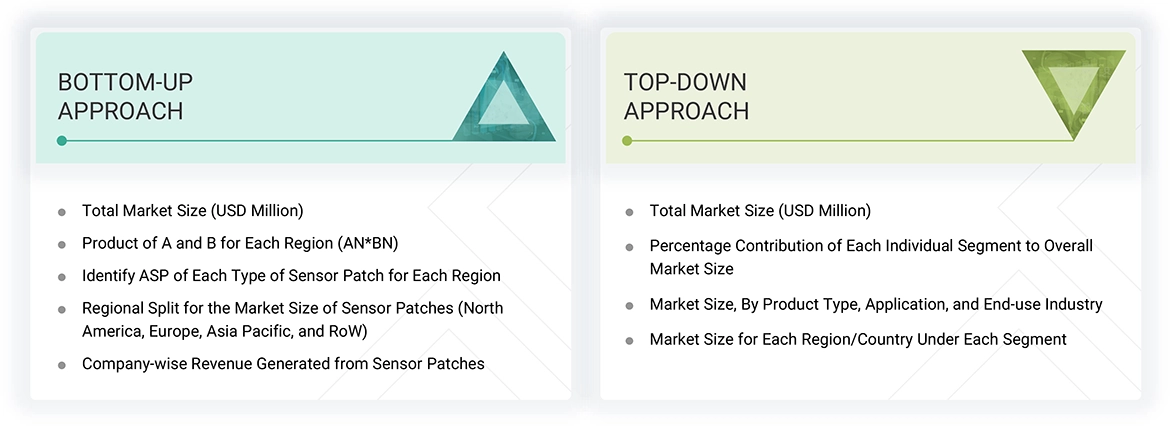
This entire research methodology included the study of annual and financial reports of top companies, as well as interviews with experts (such as CEOs, VPs, directors, and marketing executives) for key insights (both quantitative and qualitative). All percentage shares, splits, and breakdowns were determined using secondary sources and verified through primary sources. All the possible parameters that affect the market covered in this research study were accounted for, viewed in detail, verified through primary research, and analyzed to obtain the final quantitative and qualitative data. This data was consolidated and supplemented with detailed inputs and analysis from MarketsandMarkets and presented in this report. The figures below show the overall market size estimation process employed for this study.
Bottom-Up Approach
- Identifying the entities in the semiconductor value chain influencing the entire sensor patch industry, along with the related software and service providers
- Analyzing each type of entity along with related companies and system integrators, and identifying service providers for the implementation of products and services
- Understanding the demand generated by the sensor patch-related companies
- Tracking ongoing and upcoming implementations of sensor patch developments by various companies and forecasting the market based on these developments and other critical parameters
- Carrying out multiple discussions with key opinion leaders to understand the type of contracts, services, products and services, and software deployed by these sensor patch industry players that would help in analyzing the break-up of the scope of work carried out by each major sensor patch company
- Estimating the market size by analyzing sensor patch companies based on their different countries, and then combining the data to get the market estimate by region
- Verifying and cross-checking the estimates at every level through discussions with key opinion leaders, including CXOs, directors, operations managers, and MarketsandMarkets’ domain experts
- Studying various paid and unpaid sources of information, such as annual reports, press releases, and white papers
Top-Down Approach
- Focusing initially on the top-line investments and expenditures being made in the ecosystem of the sensor patch market
- Building and developing the information related to the revenue generated by selling various sensor patch products, services, and software
- Conducting multiple on-field discussions with key opinion leaders across major companies involved in the manufacture of products, services, and software
- Estimating geographic splits using secondary sources, based on factors such as the number of players in a specific country and region, operational types, level of services offered, and types of software implemented
Sensor Patch Market : Top-Down and Bottom-Up Approach
Data Triangulation
After arriving at the overall size of the sensor patch market from the estimation process explained above, the market was split into several segments and subsegments. The data triangulation and market breakdown procedures were employed (wherever applicable) to complete the overall market engineering process and arrive at the exact statistics for all segments and subsegments. The data was triangulated by studying various factors and trends from both the demand and supply sides. The size of the sensor patch market was validated using both top-down and bottom-up approaches.
Market Definition
A wearable sensor patch uses various sensing and transducing principles to monitor and diagnose physiological parameters that can be tracked and analyzed remotely. Sensor patches are attached to the human body to monitor vital signs and provide specific treatments when required. Sensor patches are categorized under wearable devices with embedded intelligence, connectivity, and extensive usability. These patches offer a unique and modern solution for condition/activity monitoring, feedback, and drug delivery services, such as drug delivery or stimulation, localization, identification, personal/contextual notifications, information display, and virtual assistance.
Key Stakeholders
- Raw material suppliers
- Manufacturers and distributors of sensor patches and wearable patches
- Original equipment manufacturers (OEMs)
- Device suppliers and distributors
- Software application providers
- Manufacturers of medical and health monitoring devices
- System integrators
- Middleware providers
- Assembly, testing, and packaging vendors
- Research institutes and organizations
- Technology standards organizations, forums, alliances, and associations
- Governments, financial institutions, and regulatory bodies
Report Objectives
- To define, describe, and forecast the sensor patch market, by product type, wearable type, application, end-use industry, and region, in terms of value
- To define, describe, and forecast the global sensor patch market, by product type, in terms of volume
-
To forecast the sizes of various segments with respect to four major regions—
North America, Europe, Asia Pacific, and Rest of the World (RoW) - To provide a detailed analysis of the sensor patch supply chain
- To strategically analyze the micromarkets with respect to individual growth trends and prospects, and their contributions to the total market
- To analyze competitive developments, such as expansions, agreements, partnerships, acquisitions, product developments, and research & development (R&D), in the sensor patch market
- To analyze the opportunities for market players and provide details of the competitive landscape of the market.
- To benchmark the market players using the proprietary company evaluation matrix framework, which analyzes the market players on various parameters within the broad categories of business strategy excellence and strength of product portfolios
- To strategically profile the key players and comprehensively analyze their market positions in terms of ranking and core competencies, along with a detailed competitive landscape of the market
- To analyze the supply chain, market/ecosystem map, trend/disruptions impacting customer business, technology analysis, Porter’s five force analysis, trade analysis, patent analysis, key conferences & events, and regulations related to the sensor patch market
Available Customizations
With the market data given, MarketsandMarkets offers customizations according to the company’s specific needs. The following customization options are available for the report:
Company Information:
- Detailed analysis and profiling of additional market players (up to 7)
Get the Full Sensor Patch Market Report
Full forecast, segment splits, and company analysis for all Sensor Patch Market.
- US Sensor Patch Market
- Canada Sensor Patch Market
- Mexico Sensor Patch Market
- Germany Sensor Patch Market
- France Sensor Patch Market
- UK Sensor Patch Market
- Italy Sensor Patch Market
- China Sensor Patch Market
- Japan Sensor Patch Market
- South Korea Sensor Patch Market
- India Sensor Patch Market
- Rest Of Europe Sensor Patch Market
- Rest Of Asia Pacific Sensor Patch Market
- GCC Sensor Patch Market
- Rest Of GCC Sensor Patch Market
- Saudi Arabia Sensor Patch Market
- UAE Sensor Patch Market
Need a Tailored Report?
Customize this report to your needs
Get 10% FREE Customization
Customize This Report
