
Spain Silanes Market (2024-2029)

The Spain Silanes Market was valued at $39.4 Million in 2024 and projected to reach to $48 Million by 2029, representing a compound annual growth rate of 4.0%. Spain's silanes market is positioned for moderate but consistent growth, driven by recovery in the automotive and construction sectors.


| Market Size in | USD 26.32 MN |
| Market Forecast in | |
| CAGR | |
| Forecast Period | |
| Units Considered | Value (USD MN) |
Spain Silanes Market Trends and Insights
- This moderate but steady expansion reflects Spain's strategic position within Europe's chemical manufacturing sector, driven by demand from construction, automotive, and industrial applications.
- Spain's silanes market benefits from the country's established chemical infrastructure and integration within European supply chains. The forecast period through 2029 indicates sustained growth momentum for Spain's silanes sector, supported by increasing adoption in adhesives, sealants, and coupling agent applications.
- Spain's market growth trajectory, while more conservative than global averages, reflects regional economic conditions and mature market dynamics.
- Industry participants in Spain are focusing on product innovation and sustainability to capture incremental market share during this five-year outlook period..
Key Market Statistics
- CAGR (2024-2029) 4.0% CAGR
- Market Size, 2024 ~USD 39.4 Million
- Forecast, 2029 ~USD 48 Million
- Country Spain
Spain Silanes Market Overview
Market Size & Growth :
Spain's silanes market is valued at USD 39.4 million in 2024, with a projected CAGR of 4.0% through 2029, reaching USD 48.0 million. This steady growth outpaces broader European averages in certain segments.
Key End-Use Industries :
Construction, automotive, and industrial manufacturing drive Spain's silanes demand. The country's robust automotive sector and ongoing infrastructure development create sustained demand for adhesives, sealants, and coatings applications.
Strategic European Position :
Spain serves as a critical hub for chemical manufacturing within Southern Europe, benefiting from proximity to major EU markets and established supply chain networks for silane-based products.
Growth Drivers :
Increasing adoption of silanes in green building materials, automotive lightweighting, and industrial coatings, combined with Spain's manufacturing recovery post-pandemic, supports market expansion through 2029.
Spain Silanes Market Dynamics
- The country's emphasis on sustainable manufacturing practices and EU compliance standards is accelerating adoption of advanced silane formulations in adhesives, sealants, and protective coatings.
- Regional demand from Spain's established automotive clusters and growing renewable energy infrastructure projects will sustain market momentum.
- However, competition from imported products and raw material cost volatility may temper growth rates compared to global benchmarks.
- Strategic investments in specialty silanes for high-performance applications present significant opportunities for market participants through 2029..
Market Ecosystem
Related Ecosystem
Bulk Chemicals And Inorganics
- Corrosion Inhibitors
- Glycol Ethers
- Acetic Acid
- Acetone
- Ammonium Nitrate
- Basf se
- DOW CHEMICAL COMPANY
- Exxon Mobil Corporation
- AZELIS HOLDINGS SA
- Sinopec limited
Speciality Chemicals
- Corrosion Inhibitors
- Polyetheretherketone (PEEK)
- Acrylonitrile Butadiene Styrene (ABS)
- Epoxy Resin
- Polycarbonate
- Basf se
- DOW CHEMICAL COMPANY
- Evonik industries ag
- Clariant ag.
- Solvay sa
Resins And Polymers
- Polycarbonate
- Acrylonitrile Butadiene Styrene (ABS)
- Epoxy Resin
- Light Commercial Vehicles (LCVs)
- Polypropylene (PP)
- Basf se
- DOW CHEMICAL COMPANY
- Solvay sa
- Saudi arabia basic industries corporation (sabic)
- DuPont de Nemours, Inc.
Key Takeaways
- Spain's silanes market valued at USD 39.4 million in 2024 is expected to reach USD 48.0 million by 2029 at a 4.0% CAGR.
- Spain's market growth is driven by demand from construction, automotive, and industrial adhesive applications across the country.
- Spain's silanes sector benefits from established chemical infrastructure and strong integration within European supply chains.
- Spain's market participants are prioritizing product innovation and sustainability initiatives to maintain competitive positioning through 2029.
Silanes Market Report Scope
| Report Metric | Details |
|---|---|
| Base Year | 2024 |
| Fastest Growing Segment | SULFUR SILANES (Functional Silanes Type) |
| Forecast Period | 2024-2029 |
| Growth Rate | CAGR of 7.5% from 2024 to 2029 |
| Largest Segment | SOLVENTBORNE COATINGS (Technology) |
| Market Size Base Year (Billions) | ~USD 3.62 (2024) |
| Revenue Forecast (Billions) | ~USD 5.2 (2029) |
| Segments Covered | Application, End-Use Industry, Type, Functional Silanes Type, Technology, Resin Type |
Spain Silanes Market Report Segmentation
6 segment dimensions are covered across the global market.
By Application
- Adhesives & Sealants
- Fiber Treatment
- Other Applications
- Paints & Coatings
- Rubber & Plastics
- Semiconductors
By End-Use Industry
- Architectural
- Automotive
- Building & Construction
- Building & Constructions
- Electrical & Electronics
- Industrial
- Other End-Use Industries
By Type
- Alkyl Silanes
- Amino Silanes
- Cmp Slurries
- Conductive Polymers
- Epoxy Silanes
- Functional Silanes
- Low K Dielectrics
- Methacryloxy Silanes
- Mono/Chloro Silanes
- Other Functional Silane Types
- Other Functional Silanes Types
- Pcb Laminates
- Photoresist & Photoresist Ancillaries
- Silicon Wafers
- Specialty Gases
- Sulfur Silanes
- Vinyl Silanes
- Wet Chemicals
By Functional Silanes Type
- Alkyl Silanes
- Amino Silanes
- Epoxy Silanes
- Methacryloxy Silanes
- Other Functional Silane Types
- Sulfur Silanes
- Vinyl Silanes
By Technology
- Other Technologies
- Powder Coatings
- Solventborne Coatings
- Waterborne Coatings
By Resin Type
- Acrylic
- Alkyd
- Epoxy
- Fluoropolymer
- Other Resin Types
- Polyester
- Polyurethane
- Vinyl
SPAIN: SILANES MARKET, BY END-USE INDUSTRY, 2023–2029
| Segment | 2023 | 2024 | 2025 | 2026 | 2027 | 2028 | 2029 | CAGR (%) |
|---|---|---|---|---|---|---|---|---|
| AUTOMOTIVE | 8.9 | 9.4 | 9.8 | 10.3 | 10.8 | 11.3 | 11.9 | 4.8 |
| BUILDING & CONSTRUCTIONS | 20.4 | 21 | 21.7 | 22.3 | 23 | 23.7 | 24.4 | 3 |
| ELECTRICAL & ELECTRONICS | 6.4 | 6.8 | 7.2 | 7.6 | 8 | 8.5 | 9 | 5.8 |
| OTHER END-USE INDUSTRIES | 2.2 | 2.3 | 2.3 | 2.4 | 2.5 | 2.7 | 2.8 | 4.2 |
| TOTAL | 37.9 | 39.4 | 41 | 42.6 | 44.3 | 46.1 | 48 | 4 |
Target Audience
- Chemical Manufacturers & Suppliers : Silane producers and distributors need Spain-specific demand forecasts, competitive positioning data, and customer segmentation to optimize production capacity and sales strategies in this key European market.
- Automotive & Tier-1 Suppliers : Spanish automotive manufacturers and component suppliers require insights on silane availability, pricing trends, and technical specifications to secure supply chains and improve product performance in adhesives and coatings.
- Construction & Building Materials Companies : Construction material producers need market data on silane-based sealants and adhesives demand in Spain to align product development with regional building standards and sustainability requirements.
- Private Equity & Investment Firms : Investors evaluating M&A opportunities or portfolio companies in Spain's chemical sector require detailed market sizing, growth drivers, and competitive dynamics to assess investment returns and strategic fit.
- Market Research & Consulting Professionals : Analysts and consultants supporting clients with Spain operations need granular market data, forecasts, and regional insights to develop credible business cases and strategic recommendations.
Reasons to Buy this Report
- Localized Market Intelligence : Gain Spain-specific insights on market size, growth trajectories, and regional dynamics unavailable in global reports. Understand local regulatory frameworks and compliance requirements affecting silanes procurement.
- Competitive Landscape Analysis : Identify key Spanish and European competitors, their market positioning, and strategic initiatives. Benchmark your operations against regional players and understand market consolidation trends.
- End-Use Sector Breakdown : Access detailed demand analysis across Spain's automotive, construction, and industrial sectors. Understand application-specific growth rates and emerging opportunities in specialty silanes.
- Strategic Market Entry Planning : Develop informed go-to-market strategies for Spain with data on distribution channels, customer preferences, and regional supply chain dynamics. Identify partnership and acquisition opportunities.
- Investment & Expansion Decisions : Support capital allocation and expansion planning with reliable forecasts through 2029. Evaluate market attractiveness relative to other European regions and identify high-growth application segments.
Frequently asked questions
What is the current size of Spain's silanes market?
Spain's silanes market is estimated at USD 39.4 million in 2024 according to verified market data.
What is the projected market size for Spain's silanes industry by 2029?
Spain's silanes market is forecasted to reach USD 48.0 million by 2029, growing at a 4.0% CAGR from 2024.
What are the primary end-use applications driving Spain's silanes market?
Spain's silanes market is primarily driven by construction, automotive, adhesives, sealants, and industrial coupling agent applications.
How does Spain's silanes market growth compare to global trends?
Spain's silanes market CAGR of 4.0% is more conservative than the global CAGR of 7.5%, reflecting mature regional market dynamics.
What factors support growth in Spain's silanes market through 2029?
Spain's market growth is supported by established chemical infrastructure, European supply chain integration, and increasing demand for advanced adhesive and sealant solutions.
RESEARCH METHODOLOGY
The study involved four major activities for estimating the current global size of the silanes market. Exhaustive secondary research was conducted to gather information on the market, the peer market, and the parent market. The next step was to validate these findings, assumptions, and sizes with the industry experts across the value chain of silanes through primary research. Both the top-down and bottom-up approaches were employed to estimate the overall size of the silanes market. After that, market breakdown and data triangulation procedures were used to determine the size of different segments and sub-segments of the market.
Secondary Research
In the secondary research process, various secondary sources such as Business Standard, Bloomberg, World Bank, and Factiva were referred to, to identify and collect information for this study on the silanes market. These secondary sources included annual reports, press releases & investor presentations of companies, white papers, certified publications, articles by recognized authors, regulatory bodies, trade directories, and databases.
Primary Research
Various primary sources from both the supply and demand sides of the silanes market were interviewed to obtain qualitative and quantitative information. The primary sources from the supply side included industry experts, such as Chief Executive Officers (CEOs), vice presidents, marketing directors, sales professionals, and related key executives from various leading companies and organizations operating in the silanes industry. The breakdown of the profiles of primary respondents is as follows:
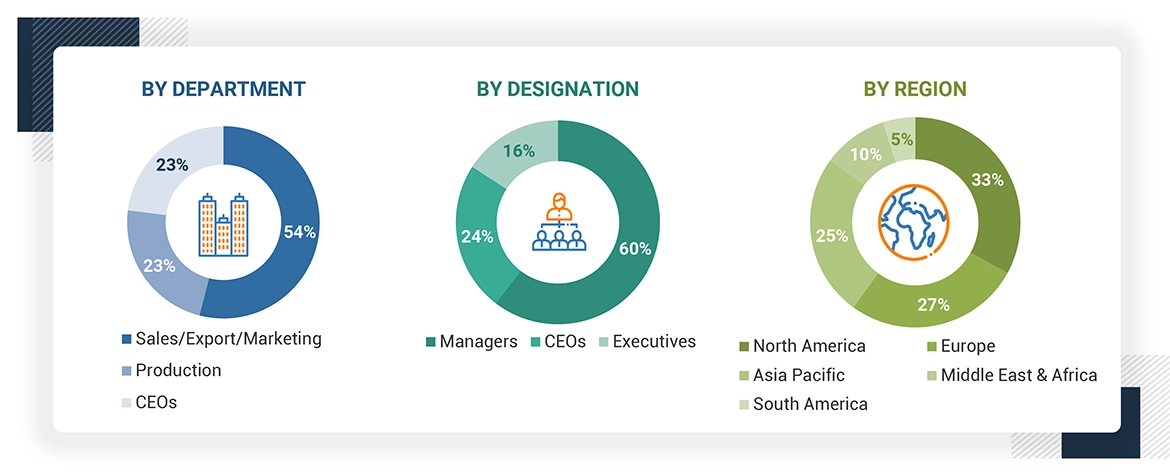
Notes: Companies are classified based on their revenue–Tier 1 = >USD 7 billion, Tier 2 = USD 500 million to USD 7 billion, and Tier 3 = < USD 500 million.
Others include sales, marketing, and product managers.
To know about the assumptions considered for the study, download the pdf brochure
Market Size Estimation
Both the top-down and bottom-up approaches were used to estimate and validate the global size of the silanes market. These approaches were also used extensively to estimate the size of various dependent segments of the market. The research methodology used to estimate the market size included the following details:
- The key players were identified through extensive secondary research.
- The industry’s supply chain and market size, in terms of value, were determined through primary and secondary research processes.
- All percentage shares, splits, and breakdowns were determined using secondary sources and verified through primary sources.
- All possible parameters that affect the markets covered in this research study were accounted for, viewed in extensive detail, verified through primary research, and analyzed to obtain the final quantitative and qualitative data.
- The research includes the study of reports, reviews, and newsletters of key industry players, along with extensive interviews with key officials, such as directors and marketing executives.
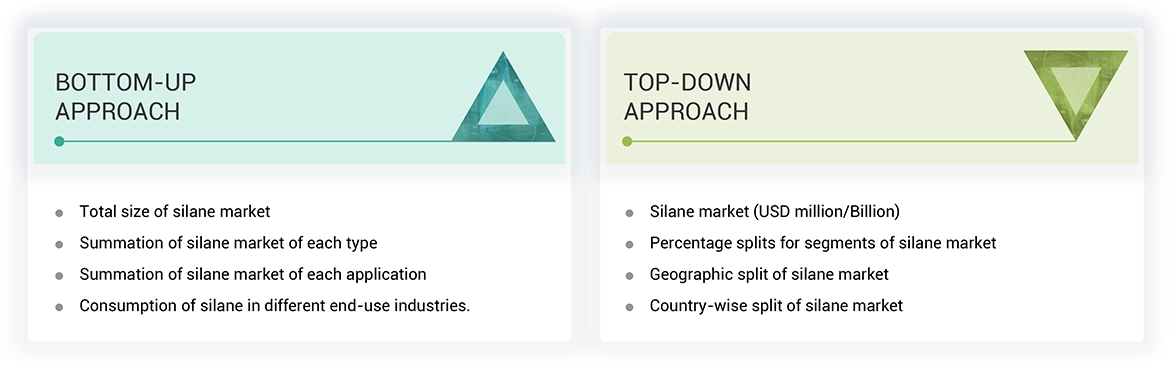
Data Triangulation
After arriving at the overall market size from the estimation process explained above, the total market was split into several segments and sub-segments. The data triangulation and market breakdown procedures were employed, wherever applicable, to complete the overall market engineering process and arrive at the exact statistics for all segments and sub-segments of the silanes market. The data was triangulated by studying various factors and trends from both the demand- and supply-side.
In addition, the market size was validated by using both the top-down and bottom-up approaches. Then, it was verified through primary interviews. Hence, for every data segment, there are three sources—top-down approach, bottom-up approach, and expert interviews. The data were assumed to be correct when the values arrived at from the three sources matched.
Market Definition
Silanes, also known as silicon hydrides, are compounds made up of silicon and hydrogen through covalent bonds. They can be produced by reacting magnesium silicide with acids or by reducing silicon chlorides with lithium aluminum hydride. Silanes come in two types: functional and non-functional. Functional silanes are useful when reactions with both inorganic and organic substances are needed, while non-functional silanes are effective with only inorganic materials. They serve various roles such as crosslinking agents, adhesion promoters, surface modifiers, coupling agents, and dispersing agents.
Stakeholders
- Silanes Manufacturers
- Silanes Suppliers
- Raw Material Suppliers
- Research & development entities
- Industry associations and regulatory bodies
- End Users
Report Objectives
- To estimate and forecast the silanes market, in terms of value and volume
- To provide detailed information about the major factors (drivers, restraints, opportunities, and challenges) influencing the market growth
- To define, describe, and forecast the market size, based on type, application, end-use industry, and region
- To forecast the market size along with segments and submarkets, in key regions: North America, Europe, Asia Pacific (APAC), Middle East & Africa (MEA), and South America along with their key countries
- To strategically analyze micro markets, for individual growth trends, prospects, and their contribution to the total market
- To analyze growth opportunities in the market for stakeholders and provide details on the competitive landscape for market leaders
- To strategically profile key players and comprehensively analyze their market shares and core competencies
- To analyze competitive developments, such as merger & acquisition, expansion & investment, and agreements in the silanes market
Get the Full Silanes Market Report
Full forecast, segment splits, and company analysis for all Silanes Market.
- US Silanes Market
- Canada Silanes Market
- Mexico Silanes Market
- Germany Silanes Market
- France Silanes Market
- UK Silanes Market
- Italy Silanes Market
- China Silanes Market
- Japan Silanes Market
- India Silanes Market
- South Korea Silanes Market
- Brazil Silanes Market
- Argentina Silanes Market
- Saudi Arabia Silanes Market
- UAE Silanes Market
- South Africa Silanes Market
- Rest Of Europe Silanes Market
- Rest Of Apac Silanes Market
- Rest Of GCC Silanes Market
- GCC Countries Silanes Market
- Rest Of Mea Silanes Market
- Rest Of South America Silanes Market
Need a Tailored Report?
Customize this report to your needs
Get 10% FREE Customization
Customize This Report
