
North America Silicone Adhesives Market (2025-2030)

The North America Silicone Adhesives Market was valued at $825.4 Million in 2025 and projected to reach to $1006.2 Million by 2030, representing a compound annual growth rate of 4.04%. North America's silicone adhesives market is poised for steady expansion through 2030, driven by increasing demand from mature automotive and electronics industries seeking high-performance bonding solutions.


| Market Size in | USD 26.32 MN |
| Market Forecast in | |
| CAGR | |
| Forecast Period | |
| Units Considered | Value (USD MN) |
North America Silicone Adhesives Market Trends and Insights
- North America's market growth is driven by robust demand across automotive, electronics, construction, and healthcare sectors, where silicone adhesives offer superior thermal stability, flexibility, and durability.
- The region's established manufacturing base and stringent quality standards position North America as a critical hub for silicone adhesive innovation and consumption. In North America, the market benefits from increasing adoption of silicone-based solutions in high-performance applications, particularly in electric vehicle assembly and advanced electronics manufacturing.
- North America's regulatory environment and emphasis on sustainable, low-VOC adhesive formulations further accelerate market penetration.
- The forecast period through 2030 reflects North America's continued investment in R&D and the region's shift toward premium, specialty adhesive products that meet evolving industrial and consumer demands..
Key Market Statistics
- CAGR (2025-2030) 4.04% CAGR
- Market Size, 2025 ~USD 825.4 Million
- Forecast, 2030 ~USD 1006.2 Million
- Geography North America
North America Silicone Adhesives Market Overview
Market Valuation & Growth :
North America's silicone adhesives market is valued at USD 825.4 million in 2025, with a projected expansion to USD 1,006.2 million by 2030, demonstrating a robust CAGR of 4.04% over the forecast period.
Automotive & Electronics Dominance :
The automotive and electronics sectors are primary growth drivers in North America, leveraging silicone adhesives' superior thermal stability and flexibility for advanced manufacturing applications and component assembly.
Construction & Healthcare Expansion :
Construction and healthcare industries in North America are increasingly adopting silicone adhesives for their durability, biocompatibility, and performance in demanding environments, supporting sustained market growth.
Regional Performance vs. Global :
North America's CAGR of 4.04% outpaces the global market growth rate of 3.8%, positioning the region as a key growth engine for silicone adhesives manufacturers and suppliers.
North America Silicone Adhesives Market Dynamics
- The region's strong manufacturing base and technological innovation ecosystem support the adoption of advanced silicone adhesive formulations that offer superior thermal stability, flexibility, and durability.
- Construction and healthcare sectors are emerging as significant growth opportunities, with silicone adhesives gaining traction for specialized applications requiring biocompatibility and environmental resistance. The market's growth trajectory reflects North America's commitment to manufacturing excellence and product innovation.
- Regulatory compliance, sustainability initiatives, and the shift toward lightweight materials in automotive production are expected to further accelerate silicone adhesives adoption.
- Strategic investments by key manufacturers in R&D and capacity expansion will strengthen the region's market position, while partnerships with end-use industries will unlock new application opportunities and drive long-term market expansion..
Market Ecosystem
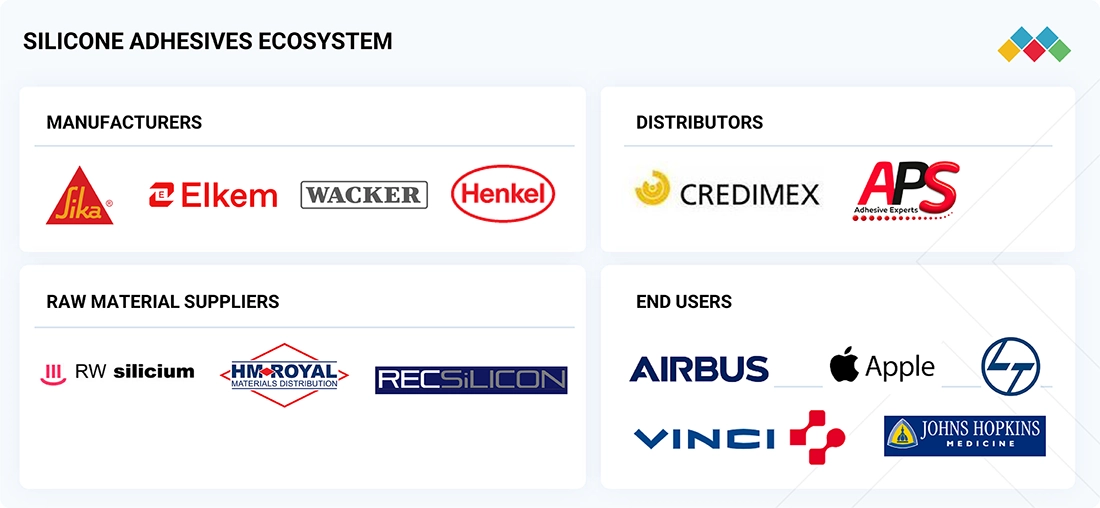
Silicone Adhesives Market: COMMERCIAL USE CASES ACROSS INDUSTRIES
| COMPANY | USE CASE DESCRIPTION | BENEFITS |
|---|---|---|
 |
Development and launch of 3M Hi-Tack Silicone Adhesive Tapes (2480 3M Single Coated Medical Nonwoven Tape) for wearable medical devices, such as continuous glucose monitors and wearable monitors | Longer wear time (up to four days) | Strong adhesion supporting heavier devices, repositionable and gentle removal | Increased tack and shear performance | Minimal skin trauma | Compatibility with sterilization methods |
 |
Use of Sika silicone sealant and adhesives for high-movement structural glazing and weatherproofing in the major London Bridge station refurbishment | Flexible movement accommodation | Long-term weatherproofing | Strong adhesion to glass and steel | Accelerated installation time | Increased structural safety and longevity |
Logos and trademarks shown above are the property of their respective owners. Their use here is for informational and illustrative purposes only.
Related Ecosystem
Resins And Polymers
- Polycarbonate
- Acrylonitrile Butadiene Styrene (ABS)
- Epoxy Resin
- Light Commercial Vehicles (LCVs)
- Polypropylene (PP)
- Basf se
- DOW CHEMICAL COMPANY
- Solvay sa
- Saudi arabia basic industries corporation (sabic)
- DuPont de Nemours, Inc.
Key Takeaways
- North America's silicone adhesives market is valued at USD 825.4 million in 2025 and will reach USD 1,006.2 million by 2030, growing at 4.04% CAGR.
- North America's automotive and electronics sectors are primary growth drivers, with increasing EV production and advanced device assembly fueling demand.
- North America's regulatory focus on low-VOC and sustainable adhesive solutions is reshaping product formulations and market competition.
- North America's established manufacturing infrastructure and R&D capabilities position the region as a leader in specialty silicone adhesive innovation.
Silicone Adhesives Market Report Scope
| Report Metric | Details |
|---|---|
| Base Year | 2025 |
| Fastest Growing Segment | TRANSPORTATION (End-Use Industry) |
| Forecast Period | 2025–2030 |
| Growth Rate | CAGR of 3.8% from 2025 to 2030 |
| Largest Segment | NON-PSA (Technology) |
| Market Size Base Year (Billions) | ~USD 3.39 (2025) |
| Revenue Forecast (Billions) | ~USD 4.09 (2030) |
| Segments Covered | Technology, End-Use Industry, Type |
North America Silicone Adhesives Market Report Segmentation
3 segment dimensions are covered across the global market.
By Technology
- Non-Psa
- Psa
By End-Use Industry
- Building & Construction
- Electrical & Electronics
- Medical
- Other End-Use Industries
- Transportation
By Type
- One-Component
- Two-Component
Target Audience
- Adhesive Manufacturers & Suppliers : Silicone adhesive producers need North America-specific market data to optimize production capacity, refine product portfolios, and develop targeted go-to-market strategies for regional growth.
- Automotive OEMs & Suppliers : Automotive manufacturers require insights into silicone adhesives performance, adoption rates, and supplier landscape in North America to enhance vehicle assembly processes and component reliability.
- Electronics & Semiconductor Companies : Electronics manufacturers need regional market intelligence on silicone adhesives for thermal management, component bonding, and reliability in high-performance applications across North America.
- Construction & Building Materials Firms : Construction industry stakeholders require data on silicone adhesives adoption for sealants, structural bonding, and weatherproofing applications specific to North American building standards and regulations.
- Healthcare & Medical Device Manufacturers : Medical device companies need North America market insights on biocompatible silicone adhesives for device assembly, ensuring compliance with FDA regulations and patient safety requirements.
Key Companies in the North America Silicone Adhesives Market
| Company | HQ | Ownership | Strongest segments |
|---|---|---|---|
| SEKISUI CHEMICAL CO., LTD | Japan | Public Company | Housing and Residential Services,Urban Infrastructure and Environmental Products,High Performance Plastics and Functional Materials, |
| CORNING, INC. | United States | Public Company | Optical Communications (fiber, cable, connectivity, hardware),Display Glass Substrates (LCD, OLED),Specialty Materials (mobile cover glass, semiconductor optics, defense, telecom components), |
| SCAPA GROUP PLC | United Kingdom | Private Company | Healthcare adhesives and components,Industrial tapes for cable, automotive, and power,Building, construction, and specialty technical tapes, |
| SYNTHOMER PLC | United Kingdom | Public Company | Coatings and Construction Binders (incl. PLIOLITE, SYNTHOMER NX, SYNOXOL BEPD),Adhesives and Hygiene (incl. AERAFIN, wet glues, hygiene adhesives),Health and Protection (medical and examination gloves, coated fabrics, non-wovens), |
| HENKEL AG & CO. KGAA | Germany | Public Company | Adhesive Technologies (packaging, mobility, electronics, craftsmen, construction, professional),Laundry & Home Care (detergents, fabric care, dishwashing, surface cleaners),Hair & Body Care (hair styling, colorants, hair care, body care), |
| H.B. FULLER COMPANY | United States | Public Company | Hygiene, Health and Consumable Adhesives,Engineering Adhesives,Building Adhesive Solutions / Construction Adhesives, |
| WACKER CHEMIE AG | Germany | Public Company | Silicones,Polymers,Biosolutions, |
| 3M | United States | Public Company | Safety and Industrial,Transportation and Electronics,Consumer, |
| ELKEM ASA | Norway | Public Company | Silicones,Silicon Products,Carbon Solutions, |
| SHIN-ETSU CHEMICAL CO., LTD. | Japan | Public Company | Living environment basic materials (PVC, caustic soda, methanol, chloromethanes, PVOH),Electronic Materials (semiconductor silicon, photoresists, photomask blanks, synthetic quartz, LED packaging),Functional materials (silicones, cellulose derivatives, rare earth magnets, silicon metal, fluoroelastomers, pheromones), |
| SIKA AG | Switzerland | Public Company | Concrete admixtures and additives,Waterproofing systems (including SikaProof),Roofing systems (Sika Sarnafil and related), |
| DOW | United States | Public Company | Packaging & Specialty Plastics,Industrial Intermediates & Infrastructure,Performance Materials & Coatings, |
| AVERY DENNISON CORPORATION | United States | Public Company | Pressure-sensitive label materials,Graphics and reflective products,Branding solutions (tickets, tags, embellishments, sustainable packaging), |
| ILLINOIS TOOL WORKS INC. | United States | Public Company | Automotive OEM,Food Equipment,Test & Measurement and Electronics, |
SEKISUI CHEMICAL CO., LTD
Sekisui Chemical Co., Ltd. is a Japanese public company founded in 1947 that employs 26,752 people and operates in the chemical manufacturing sector.
CORNING, INC.
Corning, Inc. is a United States public company founded in 1851 with 67,200 employees, operating as a diversified technology and materials manufacturer.
SCAPA GROUP PLC
Scapa Group PLC is a United Kingdom-based private company founded in 1927 with 1,461 employees specializing in adhesive-coated products and tapes.
SYNTHOMER PLC
Synthomer PLC is a United Kingdom-based public company founded in 1863 with 3,800 employees manufacturing specialty chemicals and polymers.
HENKEL AG & CO. KGAA
Henkel AG & Co. KGaA is a German public company founded in 1876 with 42,200 employees operating in adhesives, sealants, and consumer goods.
H.B. FULLER COMPANY
H.B. Fuller Company is a United States-based public company founded in 1887 with 7,100 employees specializing in adhesives, sealants, and coatings.
WACKER CHEMIE AG
Wacker Chemie AG is a German public company founded in 1914 with 16,196 employees manufacturing specialty chemicals and silicones.
3M
3M is a United States-based public company founded in 1902 with 60,500 employees operating as a diversified technology and manufacturing conglomerate.
ELKEM ASA
Elkem ASA is a Norwegian public company founded in 1904 with 7,000 employees manufacturing specialty chemicals and silicones.
SHIN-ETSU CHEMICAL CO., LTD.
Shin-Etsu Chemical Co., Ltd. is a Japanese public company founded in 1926 with 27,342 employees producing specialty chemicals and semiconductor materials.
SIKA AG
Sika AG is a Swiss public company founded in 1910 with 33,856 employees specializing in construction chemicals and industrial adhesives.
DOW
Dow is a United States-based public company founded in 1897 with 34,600 employees operating as a global chemical and materials manufacturer.
AVERY DENNISON CORPORATION
Avery Dennison Corporation is a United States-based public company founded in 1935 with 35,000 employees manufacturing pressure-sensitive materials and labeling solutions.
ILLINOIS TOOL WORKS INC.
Illinois Tool Works Inc. is a United States-based public company founded in 1912 with 43,000 employees operating in diversified manufacturing and specialty products.
Countries within North America - compare and drill down
| Country | 2025 size (native) |
|---|---|
| US | USD 878.5 Million |
| Canada | USD 74 Million |
| Mexico | USD 53.8 Million |
Country market size visualization
Reasons to Buy this Report
- Regional Market Sizing & Forecasts : Obtain precise market valuation data for North America (USD 825.4M in 2025) with detailed 5-year forecasts, enabling accurate budgeting and strategic planning specific to the region's growth trajectory.
- Sector-Specific Insights : Gain deep understanding of silicone adhesives demand across North America's key industries—automotive, electronics, construction, and healthcare—with tailored growth drivers and application trends for each sector.
- Competitive Landscape Analysis : Identify leading manufacturers, market share distribution, and competitive strategies within North America, enabling informed decisions on partnerships, acquisitions, and market positioning.
- Country-Level Breakdown : Access granular market data for the US, Canada, and Mexico, allowing targeted market entry strategies and localized business development initiatives across North American sub-regions.
- Growth Opportunity Identification : Discover emerging applications and untapped market segments in North America where silicone adhesives are gaining adoption, supporting innovation pipelines and revenue diversification strategies.
Frequently asked questions
What is the current market size of silicone adhesives in North America?
In 2025, North America's silicone adhesives market is valued at USD 825.4 million and is expected to grow to USD 1,006.2 million by 2030.
What is the growth rate for silicone adhesives in North America?
North America's silicone adhesives market is projected to grow at a CAGR of 4.04% from 2025 to 2030.
Which industries drive demand for silicone adhesives in North America?
North America's primary demand drivers include automotive (especially electric vehicles), electronics, construction, and healthcare sectors, where silicone adhesives provide thermal stability and durability.
What regulatory trends are shaping North America's silicone adhesives market?
North America's market is increasingly influenced by regulations favoring low-VOC and sustainable adhesive formulations, driving innovation in eco-friendly product development.
How does North America's market compare to global silicone adhesives growth?
North America's CAGR of 4.04% slightly exceeds the global CAGR of 3.8%, reflecting the region's strong industrial demand and advanced manufacturing capabilities.
RESEARCH METHODOLOGY
The study involved four major activities to estimate the current size of the global silicone adhesives market. Exhaustive secondary research was carried out to collect information on the market, the peer product market, and the parent product group market. The next step was to validate these findings, assumptions, and sizes with the industry experts across the value chain of silicone adhesives through primary research. The top-down and bottom-up approaches were employed to estimate the overall size of the silicone adhesives market. After that, market breakdown and data triangulation procedures were used to determine the size of different segments of the market.
Secondary Research
The market for companies offering silicone adhesives is arrived at by secondary data available through paid and unpaid sources, analyzing the product portfolios of the major companies in the ecosystem, and rating the companies by their performance and quality. For this study, various secondary sources, such as Business Standard, Bloomberg, the World Bank, and Factiva, were referred to to identify and collect information on the silicone adhesives market. In the secondary research process, various secondary sources were referred to identify and collect information related to the study. Secondary sources included annual reports, press releases, and investor presentations of silicone adhesives vendors, forums, certified publications, and whitepapers. The secondary research was used to obtain critical information on the industry’s value chain, the total pool of key players, market classification, and segmentation from the market and technology-oriented perspectives.
Primary Research
In the primary research process, various primary sources from the supply and demand sides were interviewed to obtain qualitative and quantitative information for this report. The primary sources from the supply side included industry experts, such as chief executive officers (CEOs), vice presidents (VPs), marketing directors, technology and innovation directors, and related key executives from several key companies and organizations operating in the silicone adhesives market. After the complete market engineering (calculations for market statistics, market breakdown, market size estimations, market forecasting, and data triangulation), extensive primary research was conducted to gather information and verify and validate the critical numbers arrived at.
Primary research was also conducted to identify the segmentation types, industry trends, competitive landscape of silicone adhesives offered by various market players, and key market dynamics, such as drivers, restraints, opportunities, challenges, trends, and key player strategies. In the complete market engineering process, the top-down and bottom-up approaches and several data triangulation methods were extensively used to perform the market estimation and market forecasting for the overall market segments and subsegments listed in this report. Extensive qualitative and quantitative analysis was performed on the complete market engineering process to list the key information/insights throughout the report.
The following is the breakdown of primary respondents:
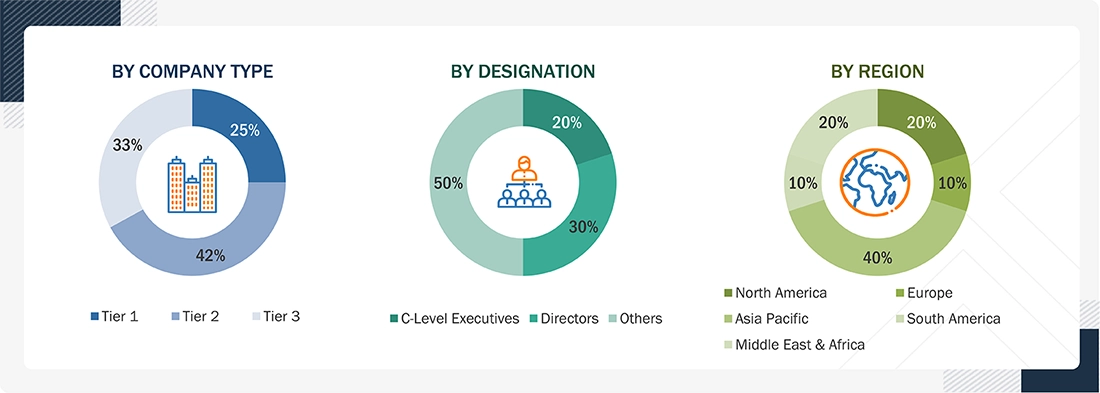
Notes: Other designations include sales, marketing, and product managers.
Tier 1: >USD 1 Billion; Tier 2: USD 500 million–1 Billion; and Tier 3: < USD 500 million
To know about the assumptions considered for the study, download the pdf brochure
Market Size Estimation
The top-down and bottom-up approaches were used to estimate and validate the size of the global silicone adhesives market. These approaches were also used extensively to estimate the size of various dependent market segments. The research methodology used to estimate the market size included the following:
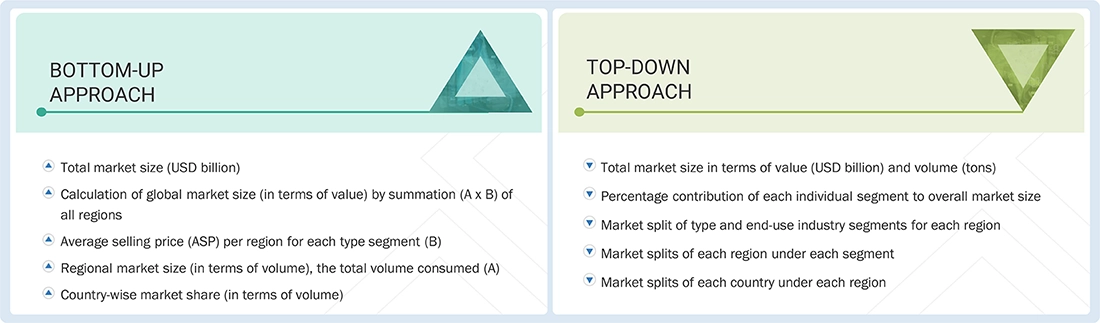
Data Triangulation
After arriving at the overall market size using the market size estimation processes, the market was split into several segments and subsegments. The data triangulation and market breakup procedures were employed, wherever applicable, to complete the overall market engineering process and arrive at the exact statistics of each market segment and subsegment. The data was triangulated by studying various factors and trends from the demand and supply sides.
Market Definition
Silicone adhesives are special glues made from flexible and durable silicone. They are known for sticking well to many surfaces, staying strong in extreme temperatures, and resisting water, chemicals, and weather. Unlike regular adhesives, silicone adhesives remain flexible after curing, which helps absorb movement, vibrations, or expansion of materials. Silicone adhesives are one-component or two-component systems that range in viscosity from self-leveling liquids to non-slumping pastes, which represent a unique combination of organic and inorganic chemistries to give some of the most stable organic-like materials exhibiting excellent chemical structure and inherent properties.
Silicone adhesives have two basic chemistries. The first is condensation cure, which uses moisture in the atmosphere to activate the curing process at room temperature, known as room temperature vulcanizing (RTV). These are supplied as one-component systems, although they can be formulated as two-component systems for faster curing. The second is called an addition cure, which requires heat to trigger the curing process. This chemistry is also known as a two-component system.
Stakeholders
- Raw material suppliers
- Silicone adhesives manufacturers
- Manufacturing technology providers
- Industry associations
- Traders, distributors, and suppliers
- Non-governmental organizations (NGOs), government and regional agencies, and research organizations
Report Objectives
- To define, describe, and forecast the size of the global silicone adhesives market, by type, technology, and end-use industry, in terms of value and volume
- To forecast the market size of segments for North America, Europe, Asia Pacific, South America, and the Middle East & Africa, along with their respective countries, in terms of value and volume
- To provide detailed information on the significant drivers, restraints, opportunities, and challenges influencing the market
- To strategically analyze micromarkets concerning individual growth trends, prospects, and their contribution to the market
- To assess the growth opportunities in the market for stakeholders and provide details on the competitive landscape for market leaders
- To strategically profile key players and comprehensively analyze their market shares and core competencies
- To analyze competitive developments, such as product launches, expansions, and acquisitions, in the silicone adhesives market
- To provide the impact of AI/Gen AI on the market
- To provide the macroeconomic outlook for each region covered under the study, and the impact of the 2025 US tariff on the market
Get the Full Silicone Adhesives Market Report
Full forecast, segment splits, and company analysis for all Silicone Adhesives Market.
- China Silicone Adhesives Market
- India Silicone Adhesives Market
- Japan Silicone Adhesives Market
- South Korea Silicone Adhesives Market
- Taiwan Silicone Adhesives Market
- Indonesia Silicone Adhesives Market
- Vietnam Silicone Adhesives Market
- Canada Silicone Adhesives Market
- Mexico Silicone Adhesives Market
- US Silicone Adhesives Market
- Germany Silicone Adhesives Market
- France Silicone Adhesives Market
- UK Silicone Adhesives Market
- Italy Silicone Adhesives Market
- Russia Silicone Adhesives Market
- Brazil Silicone Adhesives Market
- Argentina Silicone Adhesives Market
- South Africa Silicone Adhesives Market
- Rest Of Asia Pacific Silicone Adhesives Market
Need a Tailored Report?
Customize this report to your needs
Get 10% FREE Customization
Customize This Report
