
South Korea Small-Scale LNG Market (2025-2030)

The South Korea Small-Scale LNG Market was valued at $2005.6 Million in 2025 and projected to reach to $2756.6 Million by 2030, representing a compound annual growth rate of 6.57%. South Korea's small-scale LNG market is experiencing accelerated growth as the nation prioritizes energy security and environmental sustainability.


| Market Size in | USD 26.32 MN |
| Market Forecast in | |
| CAGR | |
| Forecast Period | |
| Units Considered | Value (USD MN) |
South Korea Small-Scale LNG Market Trends and Insights
- The market in South Korea is expected to expand to USD 2,756.6 million by 2030, driven by increasing demand for flexible, distributed energy solutions and industrial applications.
- South Korea's strategic focus on energy security and decarbonization initiatives supports sustained growth in small-scale LNG infrastructure and distribution networks. The South Korea small-scale LNG market demonstrates resilience through a 6.57% compound annual growth rate (CAGR) from 2025 to 2030.
- South Korea's advanced industrial base, coupled with rising adoption of LNG in maritime, power generation, and manufacturing sectors, underpins this expansion.
- South Korea's commitment to hydrogen economy development and clean energy transition further accelerates small-scale LNG market penetration across diverse end-use applications..
Key Market Statistics
- CAGR (2025-2030) 6.57% CAGR
- Market Size, 2025 ~USD 2005.6 Million
- Forecast, 2030 ~USD 2756.6 Million
- Country South Korea
South Korea Small-Scale LNG Market Overview
Market Valuation Growth :
South Korea's small-scale LNG market is valued at USD 2,005.6 million in 2025, with projected growth to USD 2,756.6 million by 2030, representing a robust 6.57% CAGR driven by energy diversification strategies.
Energy Security Focus :
South Korea's strategic emphasis on energy independence and reducing reliance on traditional energy sources is accelerating small-scale LNG adoption across industrial and commercial sectors.
Decarbonization Initiatives :
Government-backed decarbonization policies and carbon neutrality targets are propelling investments in cleaner LNG infrastructure, positioning South Korea as a regional leader in sustainable energy transitions.
Industrial & Distributed Applications :
Growing demand for flexible, distributed energy solutions in manufacturing, logistics, and maritime sectors is expanding small-scale LNG utilization beyond traditional power generation.
South Korea Small-Scale LNG Market Dynamics
- The market's expansion from USD 2,005.6 million in 2025 to USD 2,756.6 million by 2030 reflects increasing adoption of distributed LNG solutions across industrial, commercial, and transportation sectors.
- Government policies supporting decarbonization and energy diversification are creating favorable conditions for market expansion. The 6.57% CAGR demonstrates South Korea's commitment to transitioning toward cleaner energy infrastructure while maintaining economic competitiveness.
- Strategic investments in small-scale LNG terminals, regasification facilities, and supply chain development are expected to strengthen market fundamentals.
- As Asia Pacific's fastest-growing economies demand flexible energy solutions, South Korea's advanced technological capabilities position it as a critical hub for small-scale LNG innovation and deployment..
Market Ecosystem
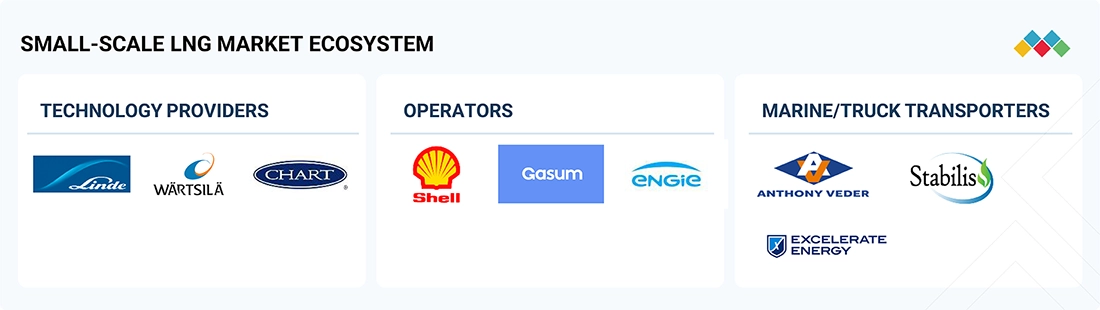
Small-Scale LNG Market: COMMERCIAL USE CASES ACROSS INDUSTRIES
| COMPANY | USE CASE DESCRIPTION | BENEFITS |
|---|---|---|
 |
In response to the growing interest in utilizing Pennsylvania's natural gas reserves for various industrial purposes, such as power generation, backup generation, and marine fueling, developers approached Chart with a requirement for a production plant capable of producing approximately 50,000 gallons per day. Chart specializes in small-scale LNG plants and plays a crucial role in the initial discussions of the project, focusing on configuring the plant design to minimize the overall plot size, which was successfully reduced to 300x300 feet or 92x92 meters. | Chart's Nitrogen Cycle technology successfully offered a user-friendly alternative to the complex mixed refrigerant operating model while maintaining comparable efficiencies to the MR process for the company's pipeline gas feedstock. As a result, the company was able to provide LNG from the plant for the pioneering truck-to-ship bunkering operations on the Great Lakes. This achievement has enabled the company to offer shipping companies a novel fuel choice that aligns with the increasingly stringent marine environmental regulations, thereby enhancing the market position of the company and meeting the industry's evolving needs. |
 |
Dragon LNG needed a flexible BOG handling system to liquefy BOG during zero gas send-out periods. Wärtsilä's BOG reliquefaction package (RP) offers quick response, adapting to different BOG compositions and flow rates, while minimizing standby power use to meet energy goals. It helps Dragon maintain a zero-gas flare policy, ensuring compliance and replacing the old power and steam plant to improve efficiency during gas send-out. Fully operational since early 2017, it includes refrigerant handling, coldbox, and LNG pumps. Wärtsilä’s proven LNG reliquefaction track record benefits Dragon by enabling efficient BOG management and keeping LNG cold. | The benefits of BOG reliquefaction include achieving maximum flexibility and energy efficiency while adhering to stringent environmental regulations. This process eliminates the need for flaring, ensuring compliance with zero-flare policies. By replacing the on-site cogeneration unit with BOG burning, higher yield factors can be achieved during periods of gas send-out to the National Gas Transmission System (NGTS).. |
Logos and trademarks shown above are the property of their respective owners. Their use here is for informational and illustrative purposes only.
Related Ecosystem
Locomotives And Rolling Stock
- Sensors
- Passenger Information System (PIS)
- Cartesian Robots
- Flow Sensors
- Gas Sensors
- Siemens ag
- Alstom s.a.
- Hitachi, Ltd.
- Knorr-bremse ag
- RAILPROS
Bulk Chemicals And Inorganics
- Corrosion Inhibitors
- Glycol Ethers
- Acetic Acid
- Acetone
- Ammonium Nitrate
- Basf se
- DOW CHEMICAL COMPANY
- Exxon Mobil Corporation
- AZELIS HOLDINGS SA
- Sinopec limited
Equipment Machine And Tooling
- Wastewater Treatment
- Air Cooled Heat Exchangers
- Diaphragm Pumps
- Fiberglass
- HVAC System
- Alfa Laval Corporate AB
- Veolia
- Johnson Controls International plc
- Daikin Industries,Ltd.
- Parker-Hannifin Corporation
Key Takeaways
- South Korea's small-scale LNG market is valued at USD 2,005.6 million in 2025 and projected to reach USD 2,756.6 million by 2030.
- South Korea exhibits a 6.57% CAGR, outpacing global average growth and reflecting strong regional demand dynamics.
- South Korea's industrial diversification and energy security priorities drive adoption across maritime, power, and manufacturing sectors.
- South Korea's clean energy transition roadmap positions small-scale LNG as a critical bridge fuel for decarbonization objectives.
Small-Scale LNG Market Report Scope
| Report Metric | Details |
|---|---|
| Base Year | 2025 |
| Fastest Growing Segment | MARINE TRANSPORT (Application) |
| Forecast Period | 2025-2030 |
| Growth Rate | CAGR of 7.5% from 2025 to 2030 |
| Largest Segment | LIQUEFACTION (Type) |
| Market Size Base Year (Billions) | ~USD 22.14 (2025) |
| Revenue Forecast (Billions) | ~USD 31.78 (2030) |
| Segments Covered | Type, Mode Of Supply, Application, Material, End-Use Industry |
South Korea Small-Scale LNG Market Report Segmentation
5 segment dimensions are covered across the global market.
By Type
- Liquefaction
- Non-Self-Supporting Tanks
- Regasification
- Self-Supporting Tanks
By Mode Of Supply
- Other Modes Of Supply
- Trans-Shipment & Bunkering
- Trucks
By Application
- Heavy-Duty Vehicles
- Industrial & Powe
- Industrial & Power
- Marine Transport
- Other Applications
- Others Applications
By Material
- 9% Nickel Steel
- Aluminum Alloy
- Other Materials
- Steel
By End-Use Industry
- Energy & Power
- Industrial
- Transportation & Logistics
Target Audience
- Energy & Utility Companies : South Korea-focused energy providers need market intelligence to develop distributed LNG strategies, optimize infrastructure investments, and capitalize on growing industrial demand for flexible energy solutions.
- Industrial & Manufacturing Enterprises : South Korean manufacturers require detailed market insights to evaluate small-scale LNG adoption for operations, assess cost-benefit analyses, and align energy strategies with decarbonization targets.
- Investment & Private Equity Firms : Investors targeting South Korea's energy transition need comprehensive market data to identify high-potential LNG infrastructure projects, assess growth trajectories, and evaluate portfolio opportunities.
- Government & Policy Makers : South Korean government agencies and policymakers require market analysis to inform energy security policies, decarbonization roadmaps, and infrastructure development priorities aligned with national objectives.
- Technology & Equipment Suppliers : LNG equipment manufacturers and technology providers need South Korea-specific demand forecasts to develop localized solutions, identify partnership opportunities, and plan market expansion strategies.
Reasons to Buy this Report
- Market-Specific Sizing & Forecasts : Access precise valuation data for South Korea's small-scale LNG market with detailed 2025-2030 projections, enabling accurate investment planning and competitive positioning strategies.
- South Korea Policy & Regulatory Insights : Understand government decarbonization initiatives, energy security policies, and regulatory frameworks driving small-scale LNG adoption specifically in South Korea's industrial landscape.
- Sector-Specific Application Analysis : Identify growth opportunities across South Korea's manufacturing, logistics, maritime, and power generation sectors with tailored demand forecasts and application-specific market dynamics.
- Competitive Landscape Assessment : Gain intelligence on South Korea's key market players, infrastructure development projects, and supply chain positioning to inform strategic partnerships and market entry strategies.
- Investment Decision Support : Leverage comprehensive South Korea market data to evaluate capital allocation opportunities, assess risk factors, and identify high-growth segments within the small-scale LNG ecosystem.
Frequently asked questions
What is the current market size of small-scale LNG in South Korea?
South Korea's small-scale LNG market was valued at USD 2,005.6 million in 2025, representing a significant segment within Asia Pacific's energy infrastructure.
What is the projected market size for South Korea's small-scale LNG by 2030?
South Korea's small-scale LNG market is forecasted to reach USD 2,756.6 million by 2030, reflecting a 6.57% CAGR over the forecast period.
What drives growth in South Korea's small-scale LNG market?
South Korea's growth is driven by energy security priorities, industrial demand, maritime sector adoption, and the nation's commitment to clean energy transition and decarbonization.
How does South Korea's small-scale LNG CAGR compare to global trends?
South Korea's 6.57% CAGR slightly underperforms the global 7.5% CAGR, yet remains robust and reflects strong regional market fundamentals and localized demand drivers.
Which sectors in South Korea are driving small-scale LNG adoption?
South Korea's primary sectors include maritime shipping, power generation, industrial manufacturing, and emerging applications in hydrogen economy development and distributed energy systems.
RESEARCH METHODOLOGY
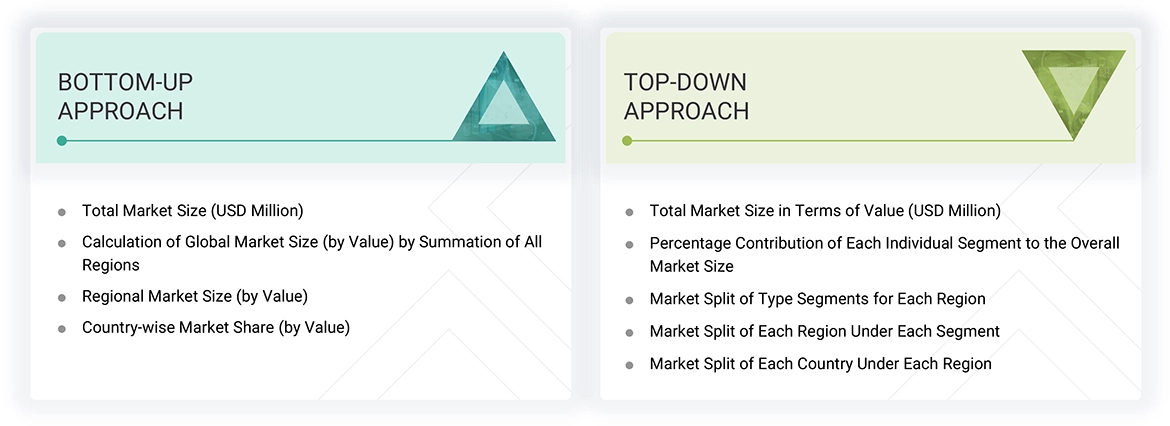
The study involved four major activities to estimate the current size of the global small-scale LNG market. Exhaustive secondary research was carried out to collect information on the market, the peer product market, and the parent product group market. The next step was to validate these findings, assumptions, and sizes with the industry experts across the value chain of small-scale LNG through primary research. The top-down and bottom-up approaches were employed to estimate the overall size of the small-scale LNG market. After that, market breakdown and data triangulation procedures were used to determine the size of different segments and subsegments of the market.
Secondary Research
The market for the companies offering small-scale LNG is arrived at through secondary data available through paid and unpaid sources, analyzing the product portfolios of the major companies in the ecosystem, and rating the companies by their performance and quality. Various secondary sources, such as Business Standard, Bloomberg, World Bank, and Factiva, were referred to identify and collect information for this study on the small-scale LNG market. In the secondary research process, various secondary sources were referred to identify and collect information related to the study. Secondary sources included annual reports, press releases, and investor presentations of small-scale LNG vendors, forums, certified publications, and whitepapers. The secondary research was used to obtain critical information on the industry’s value chain, the total pool of key players, market classification, and segmentation from the market and technology-oriented perspectives.
Primary Research
In the primary research process, various primary sources from both the supply and demand sides were interviewed to obtain qualitative and quantitative information for this report. The primary sources from the supply side included industry experts, such as Chief Executive Officers (CEOs), Vice Presidents (VPs), marketing directors, technology and innovation directors, and related key executives from several key companies and organizations operating in the small-scale LNG market. After the complete market engineering (calculations for market statistics, market breakdown, market size estimations, market forecasting, and data triangulation), extensive primary research was conducted to gather information and verify and validate the critical numbers arrived at. Primary research was also conducted to identify the segmentation types, industry trends, competitive landscape of small-scale LNG offered by various market players, and key market dynamics, such as drivers, restraints, opportunities, challenges, industry trends, and key player strategies. In the complete market engineering process, the top-down and bottom-up approaches and several data triangulation methods were extensively used to perform the market estimation and market forecasting for the overall market segments and subsegments listed in this report. Extensive qualitative and quantitative analysis was performed on the complete market engineering process to list the key information/insights throughout the report.
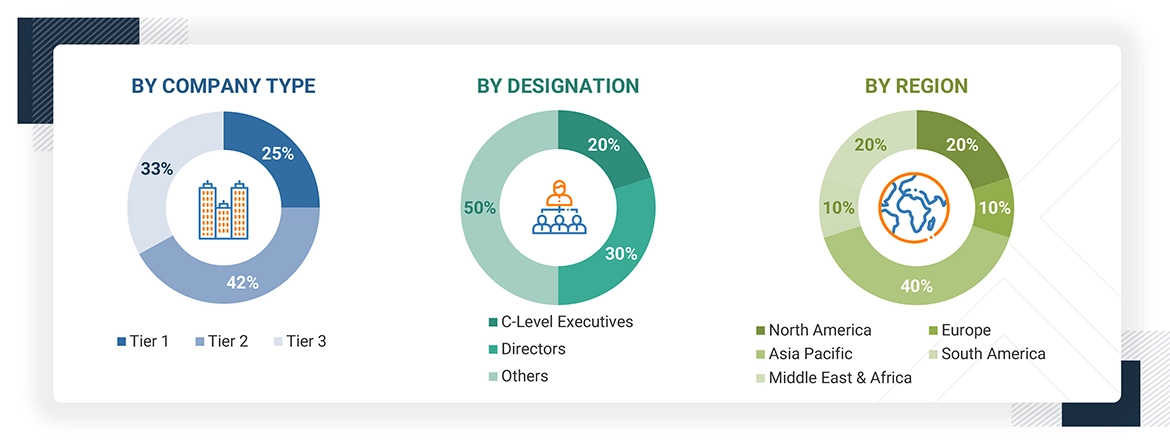
Note: Other designations include sales, marketing, and product managers.
Tier 1: >USD 1 Billion; Tier 2: USD 500 Million–1 Billion; and Tier 3: < USD 500 Million
To know about the assumptions considered for the study, download the pdf brochure
Market Size Estimation
The top-down and bottom-up approaches were used to estimate and validate the size of the global small-scale LNG market. These approaches were also used extensively to estimate the size of various dependent market segments. The research methodology used to estimate the market size included the following:
Data Triangulation
After arriving at the overall market size using the market size estimation processes, the market was split into several segments and subsegments. The data triangulation and market breakup procedures were employed, wherever applicable, to complete the overall market engineering process and arrive at the exact statistics of each market segment and subsegment. The data was triangulated by studying various factors and trends from both the demand and supply sides.
Market Definition
Small-scale LNG is the use of liquefied natural gas (LNG) in small quantities instead of large volumes. It is utilized in locations where large LNG ships or pipelines are neither required nor feasible. Small-scale LNG transportation involves transporting this liquid gas to towns, factories, or islands using smaller trucks, ships, or containers. It is mainly used in situations where constructing a large gas pipeline would be too costly or impractical. It is transported using a variety of supply methods, including micro terminals, trucks, ships, bunkering, and ISO containers. Small-scale LNG is utilized for many purposes, like power generation, industrial use, marine transportation, and fuel for heavy-duty vehicles.
Stakeholders
- Small-scale LNG Manufacturers
- LNG Producers
- Shipping Regulatory Bodies
- Distributors and Traders
- Industry Associations
- Government Bodies
- End Users
Report Objectives
- To define, describe, and forecast the size of the global small-scale LNG market based on type, modes of supply, application, and region in terms of value and volume
- To provide detailed information on the significant drivers, restraints, opportunities, and challenges influencing the market
- To strategically analyze micromarkets concerning individual growth trends, prospects, and their contribution to the market
- To assess the growth opportunities in the market for stakeholders and provide details on the competitive landscape for market leaders
- To forecast the market size of segments and subsegments for North America, Europe, Asia Pacific, South America, and the Middle East & Africa
- To strategically profile key players and comprehensively analyze their market shares and core competencies
- To analyze competitive developments such as product launches, acquisitions, expansions, partnerships, and agreements in the small-scale LNG market
- To provide the impact of AI/Gen AI on the market.
Get the Full Small-Scale LNG Market Report
Full forecast, segment splits, and company analysis for all Small-Scale LNG Market.
- Rest Of South America Small-Scale LNG Market
- China Small-Scale LNG Market
- Japan Small-Scale LNG Market
- India Small-Scale LNG Market
- Australia Small-Scale LNG Market
- Taiwan Small-Scale LNG Market
- Singapore Small-Scale LNG Market
- Indonesia Small-Scale LNG Market
- Canada Small-Scale LNG Market
- Mexico Small-Scale LNG Market
- US Small-Scale LNG Market
- Germany Small-Scale LNG Market
- France Small-Scale LNG Market
- Italy Small-Scale LNG Market
- UK Small-Scale LNG Market
- Russia Small-Scale LNG Market
- Spain Small-Scale LNG Market
- Netherlands Small-Scale LNG Market
- Turkey Small-Scale LNG Market
- Portugal Small-Scale LNG Market
- Brazil Small-Scale LNG Market
- Argentina Small-Scale LNG Market
- Chile Small-Scale LNG Market
- South Africa Small-Scale LNG Market
- Rest Of Europe Small-Scale LNG Market
- Rest Of Asia Pacific Small-Scale LNG Market
- GCC Countries Small-Scale LNG Market
- -Rest Of GCC Countries Small-Scale LNG Market
Need a Tailored Report?
Customize this report to your needs
Get 10% FREE Customization
Customize This Report
