
Europe Stone Flooring Market (2024-2029)

The Europe Stone Flooring Market was valued at $3572.6 Million in 2024 and projected to reach to $4736 Million by 2029, representing a compound annual growth rate of 5.8%. Europe's stone flooring market is positioned for sustained growth through 2029, driven by ongoing residential renovations, commercial construction projects, and the hospitality sector's expansion.


| Market Size in | USD 26.32 MN |
| Market Forecast in | |
| CAGR | |
| Forecast Period | |
| Units Considered | Value (USD MN) |
Europe Stone Flooring Market Trends and Insights
- This growth trajectory reflects Europe's strong demand for premium flooring solutions driven by residential renovation projects, commercial construction, and hospitality sector expansion.
- Europe's mature construction industry and preference for durable, aesthetically appealing natural stone materials continue to support market expansion. The European stone flooring market benefits from robust building standards, sustainability initiatives, and consumer preference for long-lasting flooring materials.
- Europe's diverse architectural heritage and design-conscious consumer base drive adoption of natural stone products across both residential and commercial applications.
- The region's 5.8% compound annual growth rate through 2029 underscores Europe's position as a significant contributor to global stone flooring demand, supported by renovation cycles and new construction activity..
Key Market Statistics
- CAGR (2024-2029) 5.8% CAGR
- Market Size, 2024 ~USD 3572.6 Million
- Forecast, 2029 ~USD 4736 Million
- Geography Europe
Europe Stone Flooring Market Overview
Market Valuation & Growth :
Europe's stone flooring market is valued at USD 3,572.6 million in 2024, with a projected CAGR of 5.8% through 2029, reaching USD 4,736.0 million. This steady expansion reflects robust demand across residential and commercial sectors.
Germany Leads European Market :
Germany dominates Europe's stone flooring market with USD 1,013.8 million in market size, followed by Spain (USD 881.9 million) and Italy (USD 766.4 million), representing the region's strongest construction and renovation activity.
Residential Renovation Drivers :
Europe's mature construction industry and consumer preference for premium flooring solutions are fueling growth. Residential renovation projects and hospitality sector expansion are primary demand catalysts across the region.
Premium Flooring Preference :
European consumers' strong inclination toward high-quality, durable stone flooring materials in both residential and commercial applications continues to support market expansion and premium product adoption.
Europe Stone Flooring Market Dynamics
- The region's mature construction industry and established preference for premium flooring materials create a stable demand environment.
- Key European markets including Germany, Spain, Italy, and France are experiencing increased investment in both new construction and renovation activities, supporting market expansion. The forecast growth to USD 4,736.0 million by 2029 reflects Europe's commitment to quality construction standards and aesthetic preferences.
- Urbanization trends, rising disposable incomes, and the recovery of the tourism and hospitality sectors post-pandemic are expected to sustain demand for stone flooring solutions.
- Market players should focus on sustainability certifications and innovative product offerings to capitalize on Europe's environmentally conscious consumer base..
Market Ecosystem
Related Ecosystem
Building And Construction
- HVAC System
- Acoustic Insulation
- Alkyd Resins
- Fiberglass
- Thermal Insulation
- Snc-lavalin group inc.
- Saint-gobain
- LHOIST S.A
- USG CORPORATION
- Basf se
Key Takeaways
- Europe's stone flooring market is valued at USD 3,572.6 million in 2024 and will reach USD 4,736.0 million by 2029, representing a 5.8% CAGR.
- Europe's mature construction sector and emphasis on sustainable building materials drive consistent demand for natural stone flooring solutions.
- Residential renovation and commercial construction projects across Europe fuel market growth through 2029.
- Europe's design-conscious consumers and stringent building standards support premium stone flooring adoption in both residential and commercial segments.
Stone Flooring Market Report Scope
| Report Metric | Details |
|---|---|
| Base Year | 2024 |
| Fastest Growing Segment | -VINYL (Material) |
| Forecast Period | 2024-2029 |
| Growth Rate | CAGR of 6.3% from 2024 to 2029 |
| Largest Segment | NON-RESILIENT (Material) |
| Market Size Base Year (Billions) | ~USD 14.66 (2024) |
| Revenue Forecast (Billions) | ~USD 19.9 (2029) |
| Segments Covered | Application, Type, Material, End-Use Industry, Resin Type, Technology, End Use |
Europe Stone Flooring Market Report Segmentation
7 segment dimensions are covered across the global market.
By Application
- Carpet Floor
- Laminate Floor
- Non-Residential
- Residential
- Tile & Stone Floor
- Wood Floor
By Type
- Granite
- Limestone
- Marble
- Other Types
By Material
- Carpets & Rugs
- Non-Resilient
- Resilient
- -Ceramic Tiles
- -Laminate
- -Other Non-Resilient Flooring
- -Other Resilient Flooring
- -Stone
- -Vinyl
- -Wood
By End-Use Industry
- Non-Residential
- Residential
By Resin Type
- Acrylic
- Epoxy
- Polyurethane
- Vinyl
By Technology
- Hot-Melt
- Solvent-Based
- Water-Based
By End Use
- Commercial
- Industrial
- Residential
EUROPE: STONE FLOORING MARKET, BY APPLICATION, 2022–2029
| Segment | 2022 | 2023 | 2024 | 2025 | 2026 | 2027 | 2028 | 2029 | CAGR (%) |
|---|---|---|---|---|---|---|---|---|---|
| NON-RESIDENTIAL | 1222.7 | 1281.9 | 1352.9 | 1427.9 | 1507.2 | 1590.8 | 1679.2 | 1772.6 | 5.6 |
| RESIDENTIAL | 1990.1 | 2094.9 | 2219.7 | 2351.9 | 2491.9 | 2640.1 | 2797.1 | 2963.4 | 5.9 |
| TOTAL | 3212.9 | 3376.7 | 3572.6 | 3779.8 | 3999 | 4231 | 4476.4 | 4736 | 5.8 |
Target Audience
- Construction & Real Estate Developers : Developers need European market data to forecast demand for stone flooring in residential and commercial projects, optimize material sourcing, and plan inventory across multiple European markets.
- Stone Flooring Manufacturers & Suppliers : Manufacturers require country-level insights to identify growth opportunities, assess competitive positioning, and develop market-specific strategies for distribution and product development across Europe.
- Flooring Distributors & Retailers : Distributors need regional market forecasts to optimize inventory management, identify emerging demand centers, and plan expansion strategies across European markets through 2029.
- Hospitality & Commercial Operators : Hotel chains and commercial property managers need market intelligence to make informed decisions on flooring upgrades, renovations, and material selection aligned with European market trends.
- Investment & Private Equity Firms : Investors require comprehensive European market analysis to evaluate acquisition targets, assess growth potential, and make strategic investment decisions in the stone flooring sector.
Countries within Europe - compare and drill down
| Country | 2025 size (native) |
|---|---|
| Germany | USD 1013.8 Million |
| France | USD 605.3 Million |
| UK | USD 473.6 Million |
| Italy | USD 766.4 Million |
| Spain | USD 881.9 Million |
| Russia | USD 357.9 Million |
| Rest Of Europe | USD 637.1 Million |
Country market size visualization
Reasons to Buy this Report
- Country-Level Market Insights : Access detailed market sizing for Germany, France, UK, Italy, Spain, Russia, and Rest of Europe. Understand regional variations in demand, pricing, and growth trajectories to optimize market entry and expansion strategies.
- Competitive Landscape Analysis : Identify leading players and market consolidation trends across Europe's stone flooring sector. Benchmark your position against competitors and understand market share distribution across key European markets.
- Sector-Specific Growth Drivers : Analyze demand from residential renovation, commercial construction, and hospitality sectors specific to Europe. Understand which end-use segments are driving growth in each country and tailor your product offerings accordingly.
- Strategic Investment Opportunities : Identify high-growth markets and underserved regions within Europe. Make informed decisions on market entry, partnerships, and capital allocation based on comprehensive regional forecasts through 2029.
- Regulatory & Sustainability Compliance : Navigate Europe's stringent construction standards and environmental regulations. Understand market requirements for sustainable sourcing, certifications, and product compliance across different European jurisdictions.
Frequently asked questions
What is the current size of Europe's stone flooring market?
Europe's stone flooring market was valued at USD 3,572.6 million in 2024 and is expected to grow to USD 4,736.0 million by 2029.
What is the projected growth rate for Europe's stone flooring market?
Europe's stone flooring market is projected to grow at a compound annual growth rate (CAGR) of 5.8% from 2024 to 2029.
What factors are driving growth in Europe's stone flooring market?
Growth in Europe's stone flooring market is driven by residential renovation projects, commercial construction activity, hospitality sector expansion, and consumer preference for durable, sustainable natural stone materials.
Which segments contribute most to Europe's stone flooring market?
Europe's stone flooring market is supported by residential renovation, commercial construction, hospitality applications, and premium interior design projects across the region.
How does Europe's stone flooring market compare to global trends?
Europe's stone flooring market grows at 5.8% CAGR, slightly below the global average of 6.3%, reflecting the region's mature market status and steady, sustainable expansion.
RESEARCH METHODOLOGY
The study involved four major activities for estimating the current global size of the stone flooring market. Exhaustive secondary research was conducted to gather information on the market, the peer market, and the parent market. The next step was to validate these findings, assumptions, and sizes with the industry experts across the value chain of stone flooring through primary research. Both the top-down and bottom-up approaches were employed to estimate the overall size of the stone flooring market. After that, market breakdown and data triangulation procedures were used to determine the size of different segments and sub-segments of the market.
Secondary Research
In the secondary research process, various secondary sources such as Hoovers, Factiva, Bloomberg BusinessWeek, and Dun & Bradstreet were referred to, to identify and collect information for this study on the stone flooring market. These secondary sources included annual reports, press releases & investor presentations of companies, white papers, certified publications, articles by recognized authors, regulatory bodies, trade directories, and databases.
Primary Research
Various primary sources from both the supply and demand sides of the stone flooring market were interviewed to obtain qualitative and quantitative information. The primary sources from the supply-side included industry experts, such as Chief Executive Officers (CEOs), vice presidents, marketing directors, sales professionals, and related key executives from various leading companies and organizations operating in the stone flooring industry. The breakdown of the profiles of primary respondents is as follows:
Breakdown of Primary Interviews
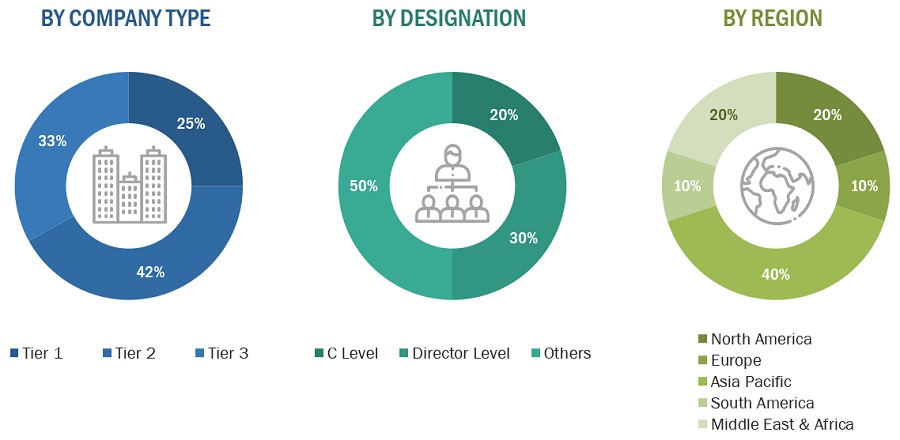
Notes: Companies are classified based on their revenue–Tier 1 = >USD 1 billion, Tier 2 = USD 500 million to USD 1 billion, and Tier 3 = <USD 500 million.
Others include sales, marketing, and product managers.
To know about the assumptions considered for the study, download the pdf brochure
Market Size Estimation
Both the top-down and bottom-up approaches were used to estimate and validate the global size of the stone flooring market. These approaches were also used extensively to estimate the size of various dependent segments of the market. The research methodology used to estimate the market size included the following details:
- The key players were identified through extensive secondary research.
- The industry’s supply chain and market size, in terms of value, were determined through primary and secondary research processes.
- All percentage shares, split, and breakdowns were determined using secondary sources and verified through primary sources.
- All possible parameters that affect the markets covered in this research study were accounted for, viewed in extensive detail, verified through primary research, and analyzed to obtain the final quantitative and qualitative data.
- The research includes the study of reports, reviews, and newsletters of key industry players, along with extensive interviews with key officials, such as directors and marketing executives.
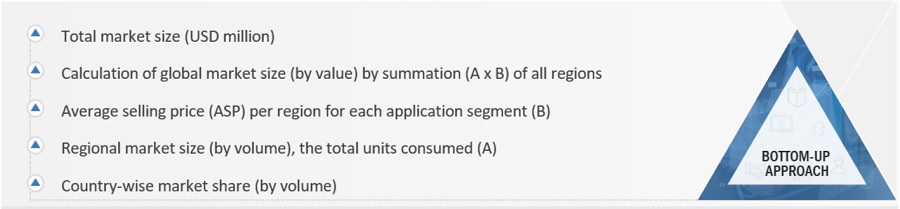
To know about the assumptions considered for the study, Request for Free Sample Report
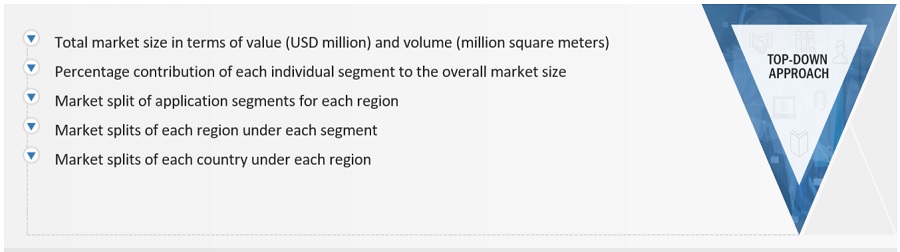
Data Triangulation
After arriving at the overall market size from the estimation process explained above, the total market was split into several segments and sub-segments. The data triangulation and market breakdown procedures were employed, wherever applicable, to complete the overall market engineering process and arrive at the exact statistics for all segments and sub-segments of the stone flooring market. The data was triangulated by studying various factors and trends from both the demand- and supply-side.
In addition, the market size was validated by using both the top-down and bottom-up approaches. Then, it was verified through primary interviews. Hence, for every data segment, there are three sources—top-down approach, bottom-up approach, and expert interviews. The data were assumed to be correct when the values arrived at from the three sources matched.
Market Definition
Stone flooring is a tile or slab that is cut directly from stone blocks. These stone blocks come from various mountain-born minerals such as marble, granite, travertine, limestone, and sandstone. Renowned for its durability, esthetic charm, and adaptability, stone flooring finds applications across the residential, commercial, and industrial sectors.
Key Stakeholders
- Raw material suppliers and producers
- Manufacturers, distributors, and suppliers
- Contractors and installers
- Real estate developers
- End users
- Industry association and regulatory bodies
Research Objectives
- To estimate and forecast the stone flooring market, in terms of value and volume
- To provide detailed information about the major factors (drivers, restraints, opportunities, and challenges) influencing the market growth
- To define, describe, and forecast the market size, based on the type, application, and region
- To forecast the market size along with segments and submarkets, in key regions: North America, Europe, Asia Pacific (APAC), Middle East & Africa (MEA), and South America along with their key countries
- To strategically analyze micro markets, with respect to individual growth trends, prospects, and their contribution to the total market
- To analyze growth opportunities in the market for stakeholders and provide details on the competitive landscape for market leaders
- To strategically profile key players and comprehensively analyze their market shares and core competencies
- To analyze competitive developments, such as merger & acquisition, expansion, and new product development in the stone flooring market
Available Customizations
With the given market data, MarketsandMarkets offers customizations according to client-specific needs.
The following customization options are available for the stone flooring report:
Product Analysis
- Product matrix, which offers a detailed comparison of the product portfolio of companies
Regional Analysis
- Further analysis of the stone flooring market for additional countries
Company Information
- Detailed analysis and profiling of additional market players (up to five)
Get the Full Stone Flooring Market Report
Full forecast, segment splits, and company analysis for all Stone Flooring Market.
- China Stone Flooring Market
- Japan Stone Flooring Market
- India Stone Flooring Market
- South Korea Stone Flooring Market
- Indonesia Stone Flooring Market
- Germany Stone Flooring Market
- France Stone Flooring Market
- UK Stone Flooring Market
- Italy Stone Flooring Market
- Spain Stone Flooring Market
- Russia Stone Flooring Market
- Canada Stone Flooring Market
- Mexico Stone Flooring Market
- US Stone Flooring Market
- South Africa Stone Flooring Market
- Brazil Stone Flooring Market
- Argentina Stone Flooring Market
- Rest Of Europe Stone Flooring Market
- Rest Of Asia Pacific Stone Flooring Market
- GCC Countries Stone Flooring Market
- -Rest Of GCC Countries Stone Flooring Market
- Rest Of South America Stone Flooring Market
Need a Tailored Report?
Customize this report to your needs
Get 10% FREE Customization
Customize This Report
