
UK Structural Health Monitoring Market (2024-2029)

The UK Structural Health Monitoring Market was valued at $190.5 Million in 2024 and projected to reach to $286.4 Million by 2029, representing a compound annual growth rate of 8.5%. The UK Structural Health Monitoring market is poised for sustained expansion, growing from USD 190.5 million in 2024 to USD 286.4 million by 2029, representing an 8.5% CAGR.


| Market Size in | USD 26.32 MN |
| Market Forecast in | |
| CAGR | |
| Forecast Period | |
| Units Considered | Value (USD MN) |
UK Structural Health Monitoring Market Trends and Insights
- The UK market is driven by increasing investment in infrastructure modernization, aging asset management across bridges, buildings, and transportation networks, and regulatory compliance requirements in the semiconductor and electronics sectors.
- The UK's emphasis on smart city initiatives and digital transformation is accelerating adoption of real-time monitoring solutions across both public and private infrastructure projects. The UK market benefits from strong technological capabilities and a mature electronics ecosystem that supports advanced sensor deployment and data analytics.
- Between 2024 and 2029, the UK is expected to see heightened demand from critical infrastructure operators seeking predictive maintenance capabilities to reduce downtime and operational costs.
- The UK's position within Europe and its focus on sustainable infrastructure development position it as a key growth market for structural health monitoring technologies..
Key Market Statistics
- CAGR (2024-2029) 8.5% CAGR
- Market Size, 2024 ~USD 190.5 Million
- Forecast, 2029 ~USD 286.4 Million
- Country UK
UK Structural Health Monitoring Market Overview
UK Market Valuation :
The UK Structural Health Monitoring market is valued at USD 190.5 million in 2024, with strong growth trajectory driven by infrastructure investment and aging asset management across the nation's critical infrastructure.
Infrastructure Modernization Drive :
UK government initiatives focused on modernizing aging bridges, buildings, and transportation networks are accelerating SHM adoption. Post-pandemic infrastructure spending and levelling-up agendas are key growth catalysts for monitoring solutions.
Regulatory Compliance Pressure :
Stringent UK and EU-aligned regulations for structural safety, building standards, and asset management are compelling organizations to implement comprehensive monitoring systems to ensure compliance and reduce liability risks.
Semiconductor & Electronics Integration :
UK's advanced semiconductor and electronics sector is driving innovation in SHM sensor technology and IoT integration, positioning the country as a hub for next-generation monitoring solutions and digital infrastructure management.
UK Structural Health Monitoring Market Dynamics
- This growth is underpinned by critical infrastructure aging, increased public and private sector investment in asset management, and digital transformation initiatives across the built environment.
- The UK's commitment to sustainable infrastructure and smart city development further accelerates SHM adoption. Key drivers include regulatory mandates for structural safety compliance, the integration of IoT and AI technologies in monitoring systems, and growing awareness of predictive maintenance benefits.
- The semiconductor and electronics industry's presence in the UK enhances local innovation capabilities.
- Market players are increasingly focusing on cloud-based solutions, real-time analytics, and cost-effective deployment strategies to capture growing demand from utilities, transportation authorities, and facility management sectors..
Market Ecosystem
Related Ecosystem
Electronics System And Components
- Sensors
- Temperature Sensors
- Pressure Sensors
- Actuators
- Image Sensors
- Lenovo
- Samsung
- Texas Instruments Incorporated
- HONEYWELL INTERNATIONAL INC.
- Teledyne Technologies Incorporated
Sensors And Control
- Sensors
- Temperature Sensors
- Image Sensors
- Pressure Sensors
- Flow Sensors
- BAUMER ELECTRIC AG
- HONEYWELL INTERNATIONAL INC.
- Stmicroelectronics
- Lenovo
- Texas Instruments Incorporated
Key Takeaways
- The UK Structural Health Monitoring market is valued at USD 190.5 million in 2024 and is projected to reach USD 286.4 million by 2029, representing an 8.5% CAGR.
- The UK market is driven by aging infrastructure, smart city initiatives, and regulatory compliance demands across the semiconductor and electronics sectors.
- The UK's mature electronics ecosystem and technological capabilities enable rapid adoption of advanced sensor and analytics solutions.
- Between 2024 and 2029, the UK will see increased investment in predictive maintenance technologies to optimize operational efficiency across critical infrastructure.
Structural Health Monitoring Market Report Scope
| Report Metric | Details |
|---|---|
| Base Year | 2024 |
| Fastest Growing Segment | AEROSPACE & DEFENSE (Vertical) |
| Forecast Period | 2024-2029 |
| Growth Rate | CAGR of 10.4% from 2024 to 2029 |
| Largest Segment | CIVIL INFRASTRUCTURE (Vertical) |
| Market Size Base Year (Billions) | ~USD 2.5 (2024) |
| Revenue Forecast (Billions) | ~USD 4.1 (2029) |
| Segments Covered | Offering, Type, Sensor Type, Technology, Vertical |
UK Structural Health Monitoring Market Report Segmentation
5 segment dimensions are covered across the global market.
By Offering
- Hardware
- Software & Services
By Type
- Data Acquisition Systems
- Other Hardware Types
- Sensors
By Sensor Type
- Accelerometers
- Corrosion Sensors
- Displacement Sensors
- Other Sensor Types
- Strain Gauges
- Temperature Sensors
- Tilt Meters & Inclinometers
By Technology
- Wired
- Wireless
By Vertical
- Aerospace & Defense
- Civil Infrastructure
- Energy
- Mining
- Other Verticals
Target Audience
- Infrastructure & Asset Managers : UK-based facility managers, transportation authorities, and utilities need SHM market intelligence to justify investments in monitoring systems, optimize maintenance budgets, and comply with structural safety regulations.
- Technology & Solution Providers : SHM vendors and IoT solution companies require UK market data to identify growth opportunities, understand competitive landscape, and develop localized offerings for bridges, buildings, and critical infrastructure.
- Government & Policy Bodies : UK government agencies and local authorities need market insights to inform infrastructure investment strategies, regulatory frameworks, and public-private partnership initiatives for aging asset management.
- Investment & Financial Analysts : Investors, private equity firms, and financial advisors need UK SHM market forecasts to evaluate investment opportunities, assess sector growth potential, and identify acquisition targets in the monitoring technology space.
- Semiconductor & Electronics Manufacturers : UK-based semiconductor and electronics companies need market data to understand SHM sensor demand, develop specialized components, and capitalize on the integration of advanced technology in structural monitoring solutions.
Reasons to Buy this Report
- Market Size & Growth Validation : Obtain precise UK market valuation (USD 190.5M in 2024) and verified forecast data (USD 286.4M by 2029) to support investment decisions, business planning, and competitive positioning in the UK SHM sector.
- UK-Specific Growth Drivers : Understand localized factors driving 8.5% CAGR including UK infrastructure modernization programs, regulatory compliance requirements, and aging asset management priorities unique to the British market landscape.
- Competitive Intelligence : Benchmark against global trends (10.4% CAGR) to identify UK market opportunities and competitive advantages. Leverage country-specific insights to develop targeted go-to-market strategies and differentiation approaches.
- Sector-Specific Insights : Access detailed analysis of UK semiconductor and electronics integration in SHM solutions, enabling technology providers to align product development with local industry needs and regulatory standards.
- Strategic Decision Support : Make informed decisions on market entry, expansion, partnerships, and resource allocation in the UK with comprehensive data on infrastructure investment trends, end-user segments, and emerging technology adoption patterns.
Frequently asked questions
What is the current size of the UK Structural Health Monitoring market?
The UK Structural Health Monitoring market was valued at USD 190.5 million in 2024 and is expected to grow to USD 286.4 million by 2029.
What is the growth rate of the UK market?
The UK Structural Health Monitoring market is growing at a compound annual growth rate (CAGR) of 8.5% from 2024 to 2029.
What are the primary drivers of growth in the UK market?
Key drivers include aging infrastructure requiring modernization, smart city initiatives, regulatory compliance in the semiconductor and electronics sectors, and demand for predictive maintenance solutions.
Which sectors are driving demand for SHM solutions in the UK?
The UK market is driven by critical infrastructure operators, transportation networks, building management, and the semiconductor and electronics industries seeking real-time monitoring capabilities.
How does the UK market compare to other European markets?
The UK's mature electronics ecosystem, strong technological capabilities, and focus on digital transformation position it as a significant growth market within Europe for structural health monitoring solutions.
RESEARCH METHODOLOGY
The study involved four major activities in estimating the size of the structural health monitoring market. Exhaustive secondary research has been carried out to collect information on the market, the peer markets, and the parent market. Both top-down and bottom-up approaches have been employed to estimate the total market size. Market breakdown and data triangulation methods have also been used to estimate the market for segments and subsegments.
Secondary Research
Revenues of companies offering structural health monitoring systems have been obtained from the secondary data available through paid and unpaid sources. The revenues have also been derived by analyzing the product portfolio of key companies, and these companies have been rated according to the performance and quality of their products.
In the secondary research process, various sources have been referred to for identifying and collecting information for this study on the structural health monitoring market. Secondary sources considered for this research study include government sources, corporate filings, and trade, business, and professional associations. Secondary data has been collected and analyzed to arrive at the overall market size, which has been further validated through primary research.
Secondary research has been mainly used to obtain key information about the supply chain of Structural health monitoring systems to identify key players based on their products and prevailing industry trends in the Structural health monitoring market by offering, type, panel size, location, vertical, and region. Secondary research also helped obtain market information- and technology-oriented key developments undertaken by market players to expand their presence and increase their market share.
Primary Research
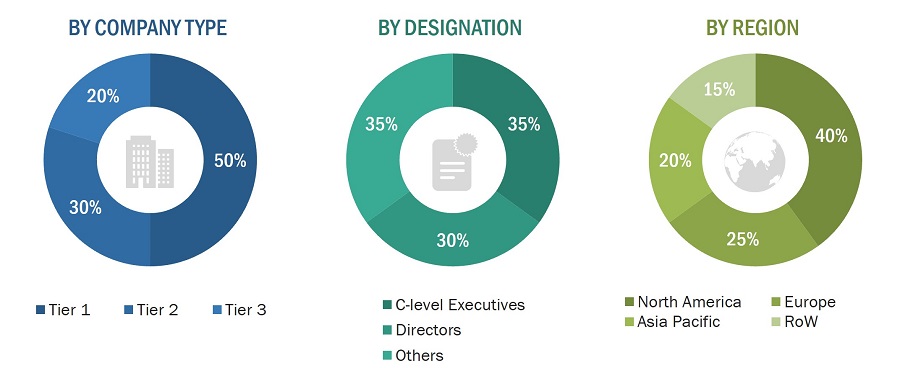
Extensive primary research has been conducted after understanding and analyzing the current scenario of the Structural health monitoring market through secondary research. Several primary interviews have been conducted with the key opinion leaders from the demand and supply sides across four main regions-North America, Europe, Asia Pacific, and the Rest of Europe. Approximately 25% of the primary interviews were conducted with the demand-side respondents, while approximately 75% were conducted with the supply-side respondents. The primary data has been collected through questionnaires, emails, and telephone interviews.
After interacting with industry experts, brief sessions were conducted with highly experienced independent consultants to reinforce the findings from our primary. This, along with the in-house subject matter experts’ opinions, has led us to the findings as described in the remainder of this report. The breakdown of primary respondents is as follows:
To know about the assumptions considered for the study, download the pdf brochure
Market Size Estimation
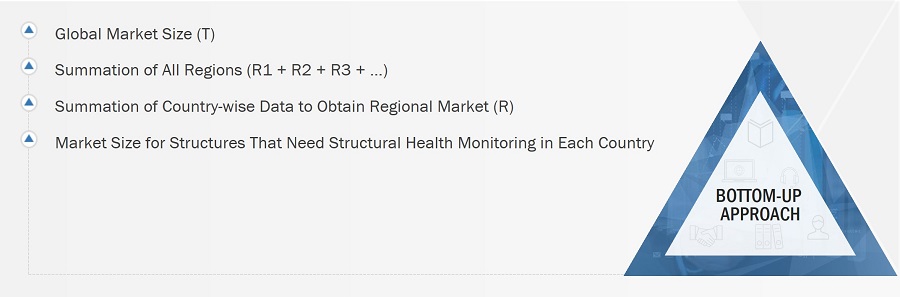
The bottom-up procedure has been employed to arrive at the overall size of the structural health monitoring market.
- Analyzing the size of the structural health monitoring market in each country by identifying segmental revenues of players in this market
- Identifying the total number of structures in the country that require structural health monitoring
- Estimating the prices of hardware and software solutions needed for the project
- Estimating the size of the structural health monitoring market in each country (total number of structures that require monitoring in the country * total cost of hardware, software, and services)
- Estimating the market size in each region by the summation of the country-wise market data
- Identifying the upcoming structural health monitoring projects by various companies in different regions and forecasting the market size based on these development and other important parameters
- Estimating the global market by the summation of region-wise data
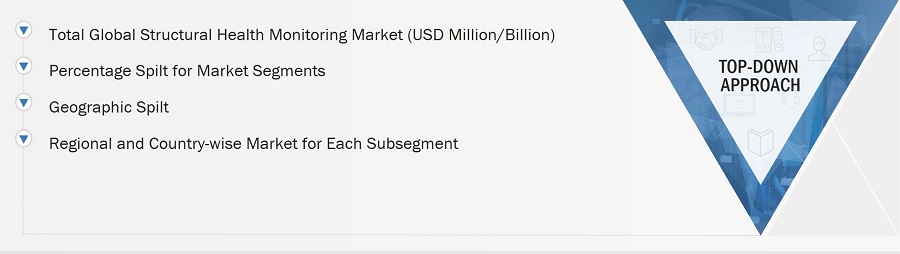
The top-down approach has been used to estimate and validate the total size of the Structural health monitoring market.
- Initially, the focus was on top-line investments and spending in the ecosystems. Further, the segment level splits and major developments in the market have been considered.
- Information related to the market revenue generated by key players in the structural health monitoring market has been obtained.
- Multiple discussions have been conducted with key opinion leaders from major companies that develop structural health monitoring instruments and software and provide monitoring and supply-related services.
- Geographic splits have been estimated using secondary sources based on factors such as the number of players in a specific region, types of services or the instruments manufactured, and various end users related to the market.
Data Triangulation
After arriving at the overall market size-using the market size estimation processes as explained above-the market has been split into several segments and subsegments. To complete the entire market engineering process and arrive at the exact statistics of each market segment and subsegment, data triangulation and market breakdown procedures have been employed, wherever applicable. The data has been triangulated by studying various factors and trends from the demand and supply sides in the structural health monitoring market.
Market Definition
Structural health monitoring is the process of implementing a damage detection strategy for any civil and mechanical engineering structures or components. Its goal is to identify structural changes and damages at the earliest so that corrective actions can be taken to reduce the risk of catastrophic failure, injury, or even loss of life, as well as minimize downtime and operational and maintenance costs. Structural health monitoring is required not only in pre-construction, under-construction, post-construction phases but also in the dilapidation stage. Structural health monitoring systems are crucial for the successful completion of infrastructural projects. Applications of structural health monitoring systems and services vary according to the complexity of the structure.
At present, structural health monitoring systems are adopted globally to monitor civil infrastructures such as dams, tunnels, bridges, buildings and stadiums. They find applications in aerospace & defense, energy, mining, industrial machinery, automotive & transportation, and marine markets. Structural health monitoring combines advanced sensor technologies with intelligent algorithms to infer the health condition of structures, enabling improved reliability and safety and enhanced structural performance.
Key Stakeholders
- Semiconductor and electronic component manufacturers and distributors
- Sensor manufacturers and distributors
- Raw material and manufacturing equipment suppliers
- Original equipment manufacturers (OEMs)
- ODM and OEM technology solution providers
- Technology standards organizations, forums, alliances, and associations
- Government bodies, venture capitalists, and private equity firms
- System integrators
- Construction and infrastructure service providers
- Green-field and brown-field project development companies
- Research organizations
- Technology investors
Report Objectives
- To define, describe, segment, and forecast the structural health monitoring market, by offering, technology, and vertical, in terms of value
- To forecast the market for sensors, which is the subsegment of hardware offerings, in terms of volume
- To describe and forecast the market for various segments, with respect to four main regions, namely, the North America, Europe, Asia Pacific, and the RoW(South America, and MEA), in terms of value
- To provide detailed information regarding drivers, restraints, opportunities, and challenges influencing the growth of the structural health monitoring market
- To define and describe implementation methods and applications of structural health monitoring systems
- To understand and analyze the impact of evolving technologies on the overall value chain of the structural health monitoring market and upcoming trends in the ecosystem
- To forecast and compare the market size of pre-recession with that of the post-recession at the regional level
- To provide a detailed overview of the structural health monitoring market’s value chain, along with the ecosystem, technology trends, use cases, regulatory environment, and Porter’s five forces analysis for the market
- To analyze industry trends, pricing data, patents and innovations, and trade data (export and import data) related to the structural health monitoring systems
- To strategically analyze the micromarkets with respect to individual growth trends, prospects, and contributions to the total market
- To strategically profile the key players and comprehensively analyze their market share and core competencies
- To analyze opportunities for stakeholders and provide a detailed competitive landscape of the market
- To analyze competitive developments such as product launches/developments, contracts, collaborations, partnerships, agreements, acquisitions, expansions, and research and development (R&D) activities carried out by players in the structural health monitoring market
Available customizations:
With the given market data, MarketsandMarkets offers customizations according to the specific requirements of companies. The following customization options are available for the report:
- Detailed analysis and profiling of additional market players based on various blocks of the supply chain
Get the Full Structural Health Monitoring Market Report
Full forecast, segment splits, and company analysis for all Structural Health Monitoring Market.
- US Structural Health Monitoring Market
- Canada Structural Health Monitoring Market
- Mexico Structural Health Monitoring Market
- Germany Structural Health Monitoring Market
- France Structural Health Monitoring Market
- Italy Structural Health Monitoring Market
- Netherlands Structural Health Monitoring Market
- China Structural Health Monitoring Market
- Japan Structural Health Monitoring Market
- South Korea Structural Health Monitoring Market
- India Structural Health Monitoring Market
- Singapore Structural Health Monitoring Market
- Rest Of Europe Structural Health Monitoring Market
- Rest Of Asia Pacific Structural Health Monitoring Market
Need a Tailored Report?
Customize this report to your needs
Get 10% FREE Customization
Customize This Report
