
Rest Of Latin America Tangential Flow Filtration Market (2025-2030)

The Rest Of Latin America Tangential Flow Filtration Market was valued at $22.8 Million in 2025 and projected to reach to $39.8 Million by 2030, representing a compound annual growth rate of 11.8%. Rest Of Latin America's tangential flow filtration market demonstrates exceptional growth potential, driven by expanding biopharmaceutical manufacturing capabilities and increased healthcare investments throughout the region.


| Market Size in | USD 26.32 MN |
| Market Forecast in | |
| CAGR | |
| Forecast Period | |
| Units Considered | Value (USD MN) |
Rest Of Latin America Tangential Flow Filtration Market Trends and Insights
- This growth trajectory reflects increasing adoption of advanced filtration technologies across biopharmaceutical manufacturing and research institutions throughout Rest Of Latin America.
- The region's healthcare sector is progressively investing in modernized production capabilities, driving demand for tangential flow filtration systems that enhance product yield and purity. Rest Of Latin America is witnessing accelerated market penetration as local manufacturers and contract research organizations recognize the operational efficiency benefits of tangential flow filtration.
- Between 2025 and 2030, Rest Of Latin America's market is expected to expand at an 11.8% compound annual growth rate, outpacing broader regional trends.
- This acceleration is supported by rising biopharmaceutical production volumes, regulatory compliance requirements, and growing investment in healthcare infrastructure across Rest Of Latin America's emerging economies..
Key Market Statistics
- CAGR (2025-2030) 11.8% CAGR
- Market Size, 2025 ~USD 22.8 Million
- Forecast, 2030 ~USD 39.8 Million
- Country Rest Of Latin America
Rest Of Latin America Tangential Flow Filtration Market Overview
Market Valuation Growth :
Rest Of Latin America's tangential flow filtration market is valued at $22.8 million in 2025, with projections reaching $39.8 million by 2030, representing a robust 11.8% CAGR that outpaces the global average of 11.4%.
Biopharmaceutical Expansion :
Increasing adoption of advanced filtration technologies across biopharmaceutical manufacturing facilities in Rest Of Latin America is driving market growth, supported by rising investments in drug development and production capabilities.
Healthcare Sector Modernization :
The region's healthcare sector is progressively upgrading infrastructure and laboratory capabilities, creating heightened demand for efficient tangential flow filtration systems in research institutions and clinical facilities.
Regional Technology Integration :
Growing recognition of tangential flow filtration's efficiency in protein purification and vaccine production is accelerating technology adoption among Rest Of Latin America's emerging biotech companies and contract manufacturing organizations.
Rest Of Latin America Tangential Flow Filtration Market Dynamics
- The 11.8% CAGR reflects strong demand from both established pharmaceutical companies and emerging biotech enterprises seeking advanced purification solutions. Looking ahead to 2030, the market will benefit from continued modernization of healthcare infrastructure, rising government support for life sciences development, and growing partnerships with global pharmaceutical firms.
- Enhanced regulatory frameworks and increased R&D spending in Rest Of Latin America will further accelerate adoption of tangential flow filtration technologies across research and production facilities..
Market Ecosystem
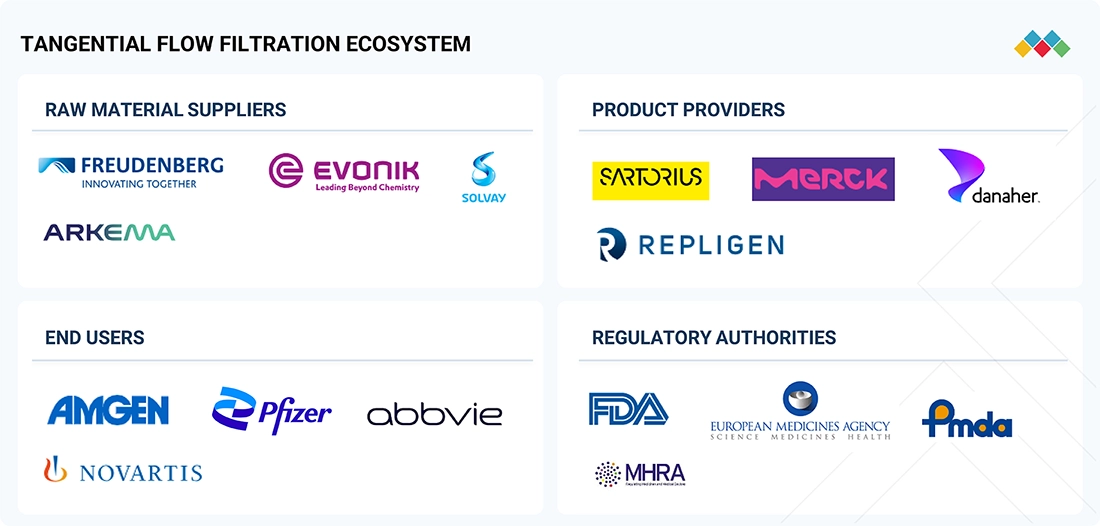
tangential flow filtration market: COMMERCIAL USE CASES ACROSS INDUSTRIES
| COMPANY | USE CASE DESCRIPTION | BENEFITS |
|---|---|---|
 |
Design & implementation of large-scale crossflow systems by Sartorius to support scale-up of Long-Acting Protein (LAPS) carrier production | Scaled production capacity from ~1 tonne/year to ~20 tonnes/year | Installed multiple Sartoflow systems (600, 120, 40) with large membrane area via Sartocube modules to meet ultrafiltration needs | Maintained low shear in protein processing while supporting high cleaning flow rates | Achieved a small factory footprint by using stacked cassette holders |
 |
Single-Pass TFF (SPTFF) with Pellicon cassettes from Merck implemented to address increased bioreactor titers and tank capacity limitations in downstream processing | Overcame ~14% tank volume constraint caused by higher culture titers | Enabled high-concentration formulation without additional tanks | Increased product recovery with reduced hold-up volumes | Lowered buffer consumption and simplified system design | Scalable to large-scale production using serial membrane configuration |
 |
Use of Cytiva T-series Delta 100 kDa RC (regenerated cellulose) TFF cassettes to process mRNA, saRNA, and LNP-encapsulated RNA (RNA-LNPs) | ~1.8–1.9× higher limiting flux vs. competing cassettes, enabling faster processing | High step yields (≈80–94%) with minimal RNA degradation | Low fouling with stable permeability during UF/DF | Higher throughput allowing smaller membrane area or faster batch turnaround |
Logos and trademarks shown above are the property of their respective owners. Their use here is for informational and illustrative purposes only.
Related Ecosystem
Biotechnology
- Reagents
- Polymerase Chain Reaction (PCR)
- Stem Cells
- Assay Kits
- Flow Cytometers
- Thermo Fisher Scientific Inc.
- Merck KGaA
- Danaher Corporation
- Agilent Technologies, Inc.
- Bio-Rad Laboratories, Inc.
Key Takeaways
- Rest Of Latin America's tangential flow filtration market is valued at $22.8 million in 2025 and will grow to $39.8 million by 2030, representing 11.8% CAGR.
- Rest Of Latin America's biopharmaceutical sector is driving adoption of tangential flow filtration for improved manufacturing efficiency and product quality.
- Rest Of Latin America's market growth is supported by increased healthcare infrastructure investment and regulatory compliance initiatives across the region.
- Rest Of Latin America represents a high-growth opportunity within Latin America, with expanding demand from contract research organizations and local manufacturers.
Tangential Flow Filtration Market Report Scope
| Report Metric | Details |
|---|---|
| Base Year | 2025 |
| Fastest Growing Segment | PES (Membrane Material) |
| Forecast Period | 2025–2030 |
| Growth Rate | CAGR of 11.4% from 2025 to 2030 |
| Largest Segment | PHARMACEUTICAL & BIOTECHNOLOGY COMPANIES (End User) |
| Market Size Base Year (Billions) | ~USD 1.87 (2025) |
| Revenue Forecast (Billions) | ~USD 3.2 (2030) |
| Segments Covered | Product, Type, Membrane Material, Technique, Application, Scale Of Operation, End User |
Rest Of Latin America Tangential Flow Filtration Market Report Segmentation
7 segment dimensions are covered across the global market.
By Product
- Membrane Filter Devices
- Other Products
- Systems
By Type
- Api Filtration
- Bioburden Testing
- Capsules & Cartridges
- Cassettes
- Formulation & Filling Solutions
- Media & Buffer Filtration
- Prefiltration
- Protein Purification
- Reusable Systems
- Single-Use Systems
- Vaccine & Antibody Processing
- Viral Clearance
By Membrane Material
- Mce & Ca
- Nylon
- Other Membrane Materials
- Pcte
- Pes
- Ptfe
- Pvdf
- Regenerated Cellulose
By Technique
- Microfiltration
- Nanofiltration
- Other Techniques
- Ultrafiltration
By Application
- Cell Separation
- Final Product Processing
- Raw Material Filtration
- Water Purification
By Scale Of Operation
- Manufacturing Scale Operations
- Pilot Scale Operations
- R&D Scale Operations
By End User
- Academic & Research Institutes
- Cros
- Pharmaceutical & Biotechnology Companies
Target Audience
- Biopharmaceutical Manufacturers : Companies operating or planning manufacturing facilities in Rest Of Latin America need market data to assess demand for filtration equipment, optimize production capabilities, and make capital investment decisions.
- Equipment & Technology Suppliers : Filtration system vendors and equipment manufacturers require Rest Of Latin America-specific insights to identify market opportunities, develop regional sales strategies, and forecast revenue potential in this growing segment.
- Contract Research Organizations (CROs) : CROs and contract manufacturing organizations in Rest Of Latin America need market intelligence to justify technology investments, enhance service offerings, and compete effectively in the expanding biopharmaceutical landscape.
- Healthcare Investment Firms : Private equity and venture capital investors focused on Latin American healthcare require detailed market analysis to evaluate investment opportunities, assess portfolio company growth potential, and identify acquisition targets.
- Government & Policy Makers : Healthcare regulators and government agencies in Rest Of Latin America benefit from market data to inform policy decisions, support life sciences development initiatives, and allocate resources for healthcare infrastructure modernization.
Key Companies in the Rest Of Latin America Tangential Flow Filtration Market
| Company | HQ | Ownership | Strongest segments |
|---|---|---|---|
| FLUOR CORPORATION | United States | Public Company | Energy Solutions (traditional oil, gas, chemicals, LNG, power),Energy Transition (nuclear, low-carbon, decarbonization, CCUS, hydrogen, renewables),Urban Solutions (advanced tech, life sciences, mining, infrastructure, staffing, maintenance), |
| REPLIGEN CORPORATION | United States | Public Company | Filtration, TFF, and flow paths (XCell ATF, KrosFlo, TangenX, ProConnex, TFDF),Chromatography systems, OPUS pre-packed columns, and resins/ligands,Process analytics and PAT (PATsmart suite, SoloVPE/FlowVPE, ZipChip, REBEL), |
| PARKER-HANNIFIN CORPORATION | United States | Public Company | Hydraulic and electromechanical motion systems,Filtration, fluid conveyance, and thermal management,Sealing, adhesives, and EMI shielding, |
| ANDRITZ | Austria | Public Company | Pulp & Paper,Hydropower,Metals, |
| DONALDSON COMPANY | United States | Public Company | Mobile Solutions (off-highway, transportation, emissions and monitoring),Industrial Solutions (dust, mist, gas, compressed air, power-gen, A&D),Life Sciences (bioprocess, food & beverage, micro-environment and advanced filtration), |
FLUOR CORPORATION
Fluor Corporation is a publicly traded engineering and construction company founded in 1912 with approximately 23,000 employees. The company provides design, engineering, procurement, and construction services across multiple industries.
REPLIGEN CORPORATION
Repligen Corporation is a publicly traded United States company founded in 1981 with approximately 2,000 employees, specializing in bioprocess technologies and solutions.
PARKER-HANNIFIN CORPORATION
Parker-Hannifin Corporation is a publicly traded United States company founded in 1917 with approximately 57,950 employees, manufacturing motion and control technologies and systems.
ANDRITZ
ANDRITZ is an Austrian public company founded in 1852 with approximately 30,487 employees, providing plants, equipment, and services for various industrial sectors including pulp, paper, and environmental technologies.
DONALDSON COMPANY
Donaldson Company is a publicly traded United States company founded in 1915 with approximately 15,000 employees, manufacturing filtration systems and replacement parts.
Reasons to Buy this Report
- Regional Market Sizing : Obtain precise market valuation data specific to Rest Of Latin America, including 2025 baseline ($22.8M) and 2030 forecasts ($39.8M), enabling accurate budget allocation and investment planning for regional expansion.
- Competitive Positioning : Understand Rest Of Latin America's market dynamics and growth drivers to identify competitive advantages, benchmark against regional players, and develop targeted strategies for market penetration and share capture.
- Growth Opportunity Assessment : Leverage the 11.8% CAGR insight to evaluate investment potential in Rest Of Latin America's biopharmaceutical sector, identify high-growth subsegments, and prioritize resource allocation across the region.
- Stakeholder Decision Support : Provide board members, investors, and executives with credible, region-specific market intelligence to support strategic decisions regarding facility expansion, partnership development, and product launches in Rest Of Latin America.
- Regulatory & Infrastructure Insights : Gain understanding of Rest Of Latin America's healthcare modernization trends and technology adoption patterns to anticipate regulatory changes and infrastructure investments affecting tangential flow filtration demand.
Frequently asked questions
What is the market size of tangential flow filtration in Rest Of Latin America?
Rest Of Latin America's tangential flow filtration market was valued at $22.8 million in 2025 and is projected to reach $39.8 million by 2030.
What is the CAGR for tangential flow filtration in Rest Of Latin America?
Rest Of Latin America's tangential flow filtration market is expected to grow at a compound annual growth rate of 11.8% from 2025 to 2030.
What factors are driving growth in Rest Of Latin America's tangential flow filtration market?
Rest Of Latin America's market growth is driven by increased biopharmaceutical production, regulatory compliance requirements, healthcare infrastructure investment, and adoption by contract research organizations.
Which industries in Rest Of Latin America use tangential flow filtration?
Rest Of Latin America's primary users include biopharmaceutical manufacturers, contract research organizations, academic research institutions, and healthcare facilities requiring advanced filtration solutions.
How does Rest Of Latin America's market compare to other Latin American regions?
Rest Of Latin America's 11.8% CAGR demonstrates strong market momentum, reflecting the region's emerging biopharmaceutical capabilities and increasing healthcare sector modernization efforts.
RESEARCH METHODOLOGY
This research study extensively used secondary sources, directories, and databases to identify and collect valuable information to analyze the global tangential flow filtration market. In-depth interviews were conducted with various primary respondents, including key industry participants, subject-matter experts (SMEs), C-level executives of key market players, and industry consultants, to obtain and verify critical qualitative and quantitative information and assess the growth prospects of the market. The global market size estimated through secondary research was then triangulated with inputs from primary research to arrive at the final market size.
Secondary Research
Secondary research was used mainly to identify and collect information for the extensive, technical, market-oriented, and commercial study of the tangential flow filtration market. The secondary sources used for this study include World Health Organization (WHO), Food and Drug Administration, American Membrane Technology Associations (AMTA), American Association of Pharmaceutical Scientists (AAPS), National Institutes of Health (NIH), Pharmaceutical Research and Manufacturers of America (PhRMA), International Federation of Pharmaceutical Manufacturers & Associations (IFPMA), European Federation of Pharmaceutical Industries and Associations (EFPIA), International Society for Pharmaceutical Engineering (ISPE), BioProcess International Magazine, BioPharm International, Journal of Bioprocessing and Biotechniques, BioPlan Associates, ScienceDirect; corporate filings such as annual reports, SEC filings, investor presentations, and financial statements; press releases; trade, business, professional associations and among others. These sources also obtained key information about major players, market classification, and segmentation according to industry trends, regional/country-level markets, market developments, and technology perspectives.
Primary Research
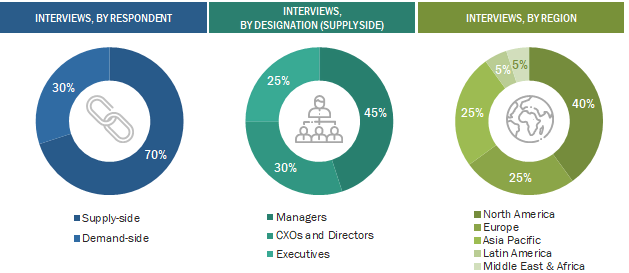
After acquiring foundational knowledge about the global tangential flow filtration market through secondary research, extensive primary research was conducted. Multiple interviews were held with market experts from the demand side, including representatives from pharmaceutical and biotechnology companies, CMOs & CROs, and academic & research institutes. Additionally, experts from the supply side were interviewed, including C-level and D-level executives, product managers, and marketing and sales managers from key manufacturers, distributors, and channel partners. These interviews spanned five major regions: North America, Europe, Asia Pacific, Latin America, and the Middle East & Africa. Approximately 70% of the primary interviews were conducted with supply-side participants, while the remaining 30% were with demand-side participants. The primary data was collected through various methods, including questionnaires, emails, online surveys, personal interviews, and telephone interviews.
The following is a breakdown of the primary respondents:
To know about the assumptions considered for the study, download the pdf brochure
Market Size Estimation
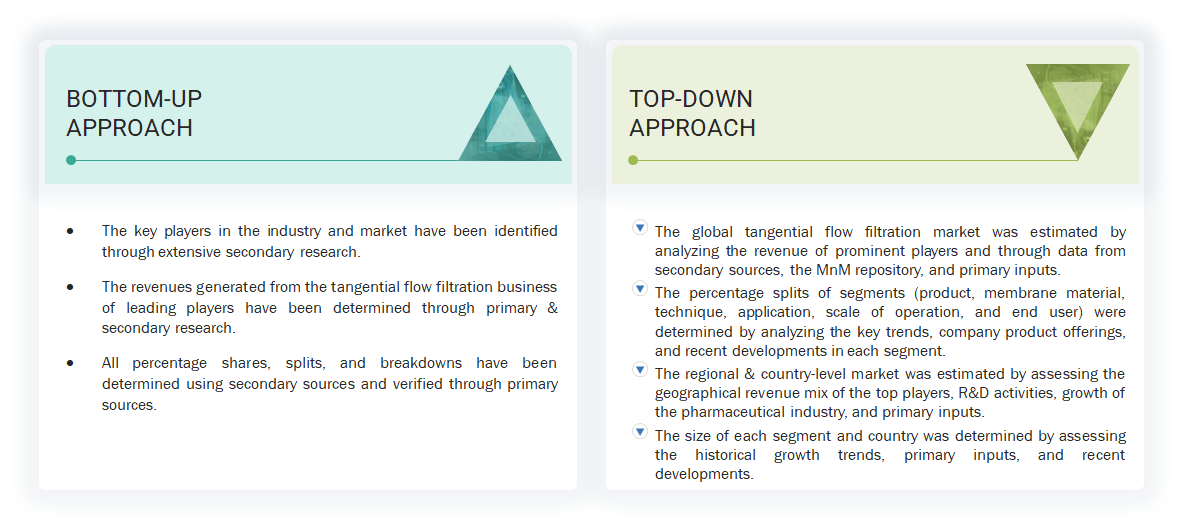
Both top-down and bottom-up approaches were used to estimate and validate the total size of the tangential flow filtration market. These methods were also used extensively to estimate the size of various subsegments in the market. The research methodology used to estimate the market size includes the following:
Bottom-up Approach and Top-down Approach
The total market was split into several segments and subsegments after arriving at the overall market size from the estimation process.
Data Triangulation
After arriving at the market size from the estimation process explained above, the total market was divided into several segments and subsegments. To complete the overall market engineering process and arrive at the exact statistics for all segments and subsegments, data triangulation and market breakdown procedures were employed, wherever applicable. The data was triangulated by studying various factors and trends from both the demand and supply sides.
Market Definition
Tangential flow filtration (TFF), also known as crossflow filtration, is a pressure-driven filtration technique in which a starting solution passes tangentially along the surface of a filter and a pressure difference across the filter drives components that are smaller than the pores to pass through the filter. TFF is widely used by pharmaceutical and biotechnology companies to continuously separate and purify various products. It is also used for fractionating large and small biomolecules, purification of biomolecules, harvest of cell suspensions, clarification of fermentation broths and cell lysates, and preparation of water for injection.
Stakeholders
- Filtration Product Manufacturers & Distributors
- Academic & Research Institutes
- Pharmaceutical & Biotechnology Companies
- Life Science Companies
- Venture Capitalists & Investors
- Government Organizations
- Private Research Firms
- Contract Research Organizations (CROs)
- Contract Manufacturing Organizations (CMOs)
Report Objectives
- To define, describe, and forecast the global tangential flow filtration market based on the product, membrane material, technique, application, scale of operation, end user, and region
- To provide detailed information regarding the major factors influencing the growth of the market (such as drivers, restraints, opportunities, and challenges)
- To strategically analyze micro-markets concerning individual growth trends, prospects, and contributions to the overall tangential flow filtration market
- To analyze opportunities in the market for stakeholders and provide details of the competitive landscape for market leaders
- To forecast the size of the market segments concerning six regions: North America, Europe, the Asia Pacific, Latin America, the Middle East, and Africa
- To strategically profile the key players and comprehensively analyze their product portfolios, market positions, and core competencies
- To track and analyze competitive developments such as acquisitions, product launches, expansions, and R&D activities in the tangential flow filtration market
- To benchmark players within the tangential flow filtration market using the ‘Company Evaluation Matrix’ framework, which analyzes market players based on various parameters within the broad categories of business & product strategy
Get the Full Tangential Flow Filtration Market Report
Full forecast, segment splits, and company analysis for all Tangential Flow Filtration Market.
- US Tangential Flow Filtration Market
- Canada Tangential Flow Filtration Market
- Germany Tangential Flow Filtration Market
- UK Tangential Flow Filtration Market
- France Tangential Flow Filtration Market
- Italy Tangential Flow Filtration Market
- Spain Tangential Flow Filtration Market
- China Tangential Flow Filtration Market
- Japan Tangential Flow Filtration Market
- India Tangential Flow Filtration Market
- South Korea Tangential Flow Filtration Market
- Australia Tangential Flow Filtration Market
- Brazil Tangential Flow Filtration Market
- Mexico Tangential Flow Filtration Market
- Rest Of Europe Tangential Flow Filtration Market
- Rest Of Asia Pacific Tangential Flow Filtration Market
- Kingdom Of Saudi Arabia (Ksa) Tangential Flow Filtration Market
- Other GCC Countries Tangential Flow Filtration Market
- United Arab Emirates (UAE) Tangential Flow Filtration Market
Need a Tailored Report?
Customize this report to your needs
Get 10% FREE Customization
Customize This Report
