
Japan Topical Drug Delivery Market (2025-2030)

The Japan Topical Drug Delivery Market was valued at $14440 Million in 2025 and projected to reach to $22260 Million by 2030, representing a compound annual growth rate of 9.1%. Japan's topical drug delivery market is positioned for sustained growth, expanding from USD 14,440 million in 2025 to USD 22,260 million by 2030 at a 9.1% CAGR.


| Market Size in | USD 26.32 MN |
| Market Forecast in | |
| CAGR | |
| Forecast Period | |
| Units Considered | Value (USD MN) |
Japan Topical Drug Delivery Market Trends and Insights
- Japan's aging population and rising prevalence of dermatological and chronic skin conditions are driving demand for innovative topical formulations, including creams, gels, patches, and sprays.
- The market in Japan benefits from advanced healthcare infrastructure, high consumer awareness, and strong regulatory frameworks that support product innovation and market entry. Japan's topical drug delivery sector is characterized by significant investment in research and development, particularly in transdermal patch technology and targeted delivery systems.
- Japan's pharmaceutical companies are increasingly focusing on combination therapies and personalized medicine approaches to enhance therapeutic efficacy.
- The forecast period through 2030 reflects Japan's commitment to addressing unmet medical needs in pain management, wound care, and dermatological treatments, positioning the country as a key growth market within the Asia Pacific region..
Key Market Statistics
- CAGR (2025-2030) 9.1% CAGR
- Market Size, 2025 ~USD 14440 Million
- Forecast, 2030 ~USD 22260 Million
- Country Japan
Japan Topical Drug Delivery Market Overview
Aging Population Driving Growth :
Japan's rapidly aging demographic, with over 29% of the population aged 65+, is significantly increasing demand for topical treatments for age-related skin conditions, wound care, and chronic dermatological disorders.
Advanced Formulation Innovation :
Japanese pharmaceutical companies are leading development of cutting-edge topical delivery systems including transdermal patches, nano-formulations, and combination therapies that enhance bioavailability and patient compliance.
Strong Healthcare Infrastructure :
Japan's robust healthcare system, high insurance coverage rates, and stringent regulatory standards create a premium market environment with strong adoption of innovative topical drug delivery solutions.
Rising Dermatological Conditions :
Increasing prevalence of atopic dermatitis, psoriasis, and other chronic skin conditions among Japanese patients is fueling demand for specialized topical formulations and personalized treatment options.
Japan Topical Drug Delivery Market Dynamics
- The market is driven by Japan's aging population, rising healthcare expenditure, and strong demand for innovative dermatological treatments.
- Pharmaceutical manufacturers are investing heavily in advanced delivery technologies and combination therapies to address unmet clinical needs. The Japanese market benefits from high healthcare awareness, strong regulatory support for novel formulations, and significant R&D capabilities.
- Key growth areas include transdermal patches, topical biologics, and personalized medicine approaches.
- Strategic partnerships between domestic and international companies, coupled with increasing patient preference for non-invasive treatments, will continue to propel market expansion through 2030..
Market Ecosystem
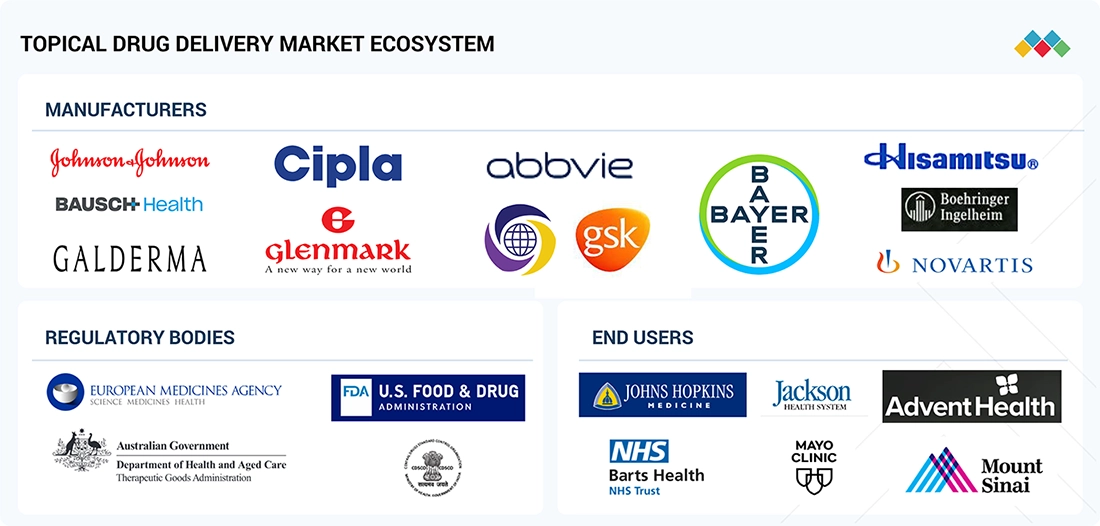
TOPICAL DRUG DELIVERY MARKET: COMMERCIAL USE CASES ACROSS INDUSTRIES
| COMPANY | USE CASE DESCRIPTION | BENEFITS |
|---|---|---|
 |
FDA sNDA approved SPRAVATO (Esketamine CIII Nasal Spray), as first monotherapy for MDD after ≥2 failed antidepressants. | Offers a rapid-acting, non-oral antidepressant option, Patient convenience via nasal spray delivery; avoids systemic first-pass metabolism. |
 |
EPSOLAY (benzoyl peroxide cream 5%) is first and only microencapsulated benzoyl peroxide (E-BPO) topical treatment proven to relieve the bumps and blemishes of rosacea | Better tolerability & reduced irritation versus conventional benzoyl peroxide products due to controlled release/microcapsules. |
 |
Acquisition of Kedalion Therapeutics and its AcuStream technology: a topical ocular delivery device to deliver front-of-eye medications more precisely. | More precise dosing for eye-medications, improved patient comfort; possibly better adherence and efficacy. |
 |
Bayer Consumer Health entry into menopause-related topical/gels: CanesMeno Hydration & Comfort Gel (UK) for vaginal atrophy symptoms (dryness, itching etc). | Address unmet needs in women’s health via non-systemic topical formats, which may reduce risks and improve comfort. |
 |
Cost-effective generics in dermatology and topical formulations | Affordable access in emerging markets, broad therapeutic portfolio, strong generics play, expanding footprint in dermatology |
Logos and trademarks shown above are the property of their respective owners. Their use here is for informational and illustrative purposes only.
Related Ecosystem
Drug Delivery Devices
- Disposable Autoinjectors
- Reusable Autoinjectors
- Insulin Pumps
- Pen Injectors
- Transdermal Patches
- Becton, Dickinson and Company
- Novo nordisk a/s
- Terumo Corporation
- Medtronic plc
- Nipro Corporation
Pharmaceuticals
- Bioreactors
- Analytical Testing
- Bioanalytical Testing Services
- Cell Counters
- Data Management Services
- Thermo Fisher Scientific Inc.
- Merck KGaA
- SANOFI
- Pfizer Inc.
- NOVARTIS
Key Takeaways
- Japan's topical drug delivery market is expected to grow from USD 14,440 million in 2025 to USD 22,260 million by 2030 at a 9.1% CAGR.
- Japan's aging demographic and high prevalence of skin disorders are primary drivers of market expansion through 2030.
- Japan leads in transdermal patch innovation and advanced delivery technologies within the Asia Pacific region.
- Japan's robust regulatory environment and healthcare infrastructure support sustained market growth and product development.
Topical Drug Delivery Market Report Scope
| Report Metric | Details |
|---|---|
| Base Year | 2025 |
| Fastest Growing Segment | GELS (Type) |
| Forecast Period | 2025-2030 |
| Growth Rate | CAGR of 8.8% from 2025 to 2030 |
| Largest Segment | SEMI-SOLID FORMULATIONS (Product) |
| Market Size Base Year (Billions) | ~USD 268.27 (2025) |
| Revenue Forecast (Billions) | ~USD 409 (2030) |
| Segments Covered | Product, Type, Site Of Application, End User |
Japan Topical Drug Delivery Market Report Segmentation
4 segment dimensions are covered across the global market.
By Product
- Liquid Formulations
- Other Products
- Semi-Solid Formulations
- Solid Formulations
- Transdermal Products
By Type
- Cream
- Creams
- Drug-In-Adhesive Patches
- Emulsion
- Emulsions
- Film
- Gels
- Iontophoresis Patches
- Lotion
- Lotions
- Matrix Patches
- Microneedle Patches
- Ointments
- Pastes
- Powders
- Reservoir Membrane Patches
- Solutions
- Suppositories
- Suspensions
- Transdermal Gels
- Transdermal Patches
- Transdermal Sprays
- Vapor Patches
By Site Of Application
- Dermal Drug Delivery
- Nasal Drug Delivery
- Ophthalmic Drug Delivery
- Rectal Drug Delivery
- Vaginal Drug Delivery
By End User
- Ambulatory Surgery Centers
- Burn Care Centers
- Home Care Settings
- Hospitals & Clinics
- Other End Users
Target Audience
- Pharmaceutical Manufacturers : Need Japan-specific market data to guide R&D investments, product development priorities, and commercialization strategies for topical formulations targeting the high-growth Japanese dermatological market.
- Healthcare Investment Firms : Require detailed market sizing, growth projections, and competitive analysis for Japan to evaluate investment opportunities in topical drug delivery companies and healthcare technology providers serving the Japanese market.
- Medical Device & Delivery Technology Companies : Need Japan market insights to assess demand for innovative delivery systems (patches, sprays, gels) and identify partnership or acquisition opportunities with established Japanese pharmaceutical players.
- Healthcare Consultants & Strategy Advisors : Utilize Japan-specific market data to advise clients on market positioning, competitive strategies, regulatory navigation, and growth opportunities within Japan's topical drug delivery sector.
- Government & Healthcare Policy Makers : Require market intelligence on Japan's topical drug delivery landscape to inform healthcare policy, reimbursement decisions, and regulatory frameworks supporting innovation in dermatological treatments.
Reasons to Buy this Report
- Market Size & Growth Validation : Obtain precise market valuation data for Japan (USD 14,440M in 2025) with verified 9.1% CAGR projections through 2030, enabling accurate financial forecasting and investment decision-making specific to the Japanese market.
- Competitive Landscape Intelligence : Understand Japan-specific competitive dynamics, key players, market share distribution, and strategic positioning of domestic and international pharmaceutical companies operating in the topical delivery segment.
- Regulatory & Compliance Insights : Access Japan-specific regulatory requirements, approval pathways, and compliance standards for topical drug delivery products, ensuring market entry strategies align with local pharmaceutical regulations and PMDA guidelines.
- Demographic & Clinical Opportunity Analysis : Leverage detailed insights into Japan's aging population demographics, prevalence of dermatological conditions, and patient treatment preferences to identify high-potential market segments and unmet clinical needs.
- Strategic Market Entry & Expansion : Develop informed go-to-market strategies for Japan with localized data on distribution channels, healthcare provider preferences, reimbursement patterns, and partnership opportunities specific to the Japanese topical drug delivery ecosystem.
Frequently asked questions
What is the current market size of topical drug delivery in Japan?
Japan's topical drug delivery market is valued at USD 14,440 million in 2025.
What is the projected market size for topical drug delivery in Japan by 2030?
Japan's topical drug delivery market is projected to reach USD 22,260 million by 2030.
What is the CAGR for Japan's topical drug delivery market?
Japan's topical drug delivery market is expected to grow at a compound annual growth rate (CAGR) of 9.1% from 2025 to 2030.
What factors are driving growth in Japan's topical drug delivery market?
Key growth drivers in Japan include an aging population, rising prevalence of dermatological conditions, advanced healthcare infrastructure, and significant investment in transdermal patch technology and targeted delivery systems.
What types of topical formulations are most prevalent in Japan?
Japan's market includes creams, gels, patches, sprays, and other innovative formulations, with particular emphasis on transdermal patches and combination therapies for pain management and wound care.
RESEARCH METHODOLOGY
This study involved the extensive use of both primary and secondary sources. The research process involved the study of various factors affecting the industry to identify the segmentation types, industry trends, key players, competitive landscape, fundamental market dynamics, and key player strategies.
Secondary Research
This research study used widespread secondary sources; directories, databases such as Dun & Bradstreet, Bloomberg BusinessWeek, and Factiva; white papers; annual reports; and companies’ house documents. Secondary research was used to identify and collect information for this extensive, technical, market-oriented, and commercial study of the global pulse oximeters market. It was also used to obtain important information about the top players, market classification, and segmentation according to industry trends, to the bottom-most level, geographic markets, and key developments related to the market and technology perspectives. A database of the key industry leaders was also prepared using secondary research.
Primary Research
In the primary research process, various supply and demand sources were interviewed to obtain qualitative and quantitative information for this report. The primary sources from the supply side include industry experts such as CEOs, vice presidents, marketing and sales directors, technology and innovation directors, and related key executives from various key companies and organizations operating in the pulse oximeters market. The primary sources from the demand side include key executives from hospitals, physicians, clinicians, and research institutes.
A breakdown of the primary respondents is provided below:
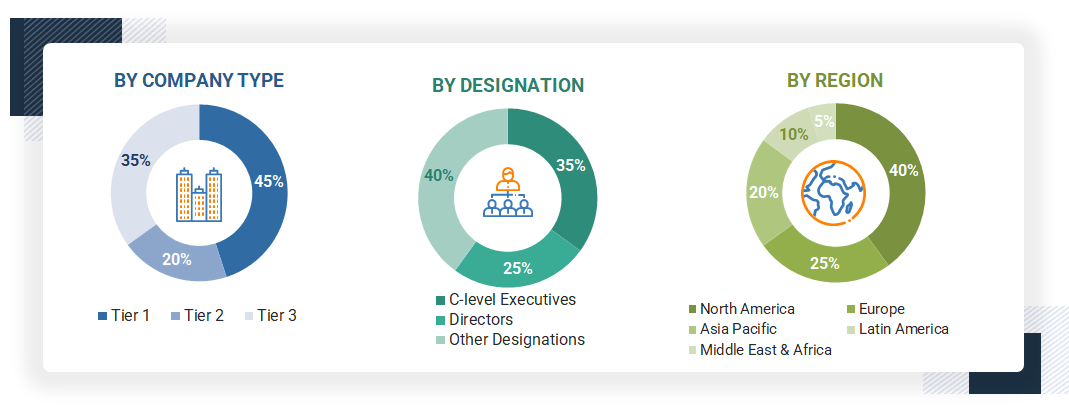
Note 1: C-level primaries include CEOs, COOs, CTOs, and VPs.
Note 2: Others include sales, marketing, and product managers.
Note 3: Tiers are defined based on a company’s total revenue. As of 2024: Tier 1 = >USD 1 billion, Tier 2 = USD 500 million to USD 1 billion, and Tier 3 = < USD 500 million.
To know about the assumptions considered for the study, download the pdf brochure
Market Size Estimation
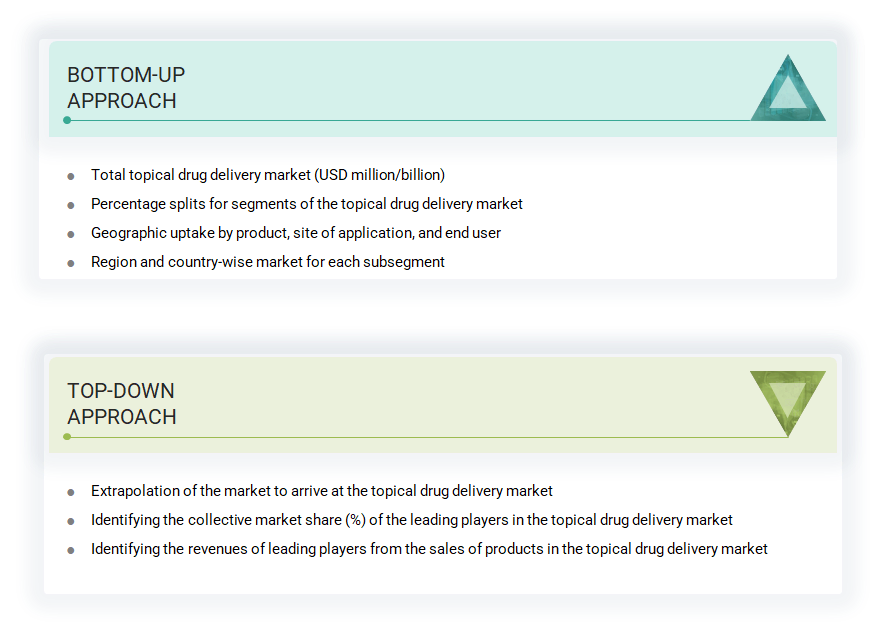
All major product manufacturers offering various products were identified at the global/regional level. Revenue mapping was done for the major players and was extrapolated to arrive at the global market value of each type of segment. The topical drug delivery market value was also split into various segments and subsegments at the regional and country levels based on:
- Product mapping of various manufacturers of the topical drug delivery market at the regional and country-level
- Relative adoption pattern of each topical drug delivery market among key end-user segments at the regional and/or country-level
- Detailed primary research to gather qualitative and quantitative information related to segments and subsegments at the regional and/or country level.
- Detailed secondary research to gauge the prevailing market trends at the regional and/or country-level
Global Topical Drug Delivery Market Size: Top-Down & Bottom-Up Approach
Data Triangulation
After arriving at the market size, the total market was divided into several segments and subsegments. Data triangulation and market breakdown procedures were employed to complete the overall market engineering process and arrive at the exact statistics for all segments & subsegments, wherever applicable.
Market Definition
Topical drug delivery products are pharmaceutical formulations designed to be applied directly to the skin or mucous membranes to deliver medication at the site of action or for systemic absorption. These products include creams, gels, ointments, lotions, transdermal patches, sprays, and foams. They are used for treating local conditions, such as skin infections, pain, and inflammation, or for controlled systemic drug release (e.g., hormone therapy).
Stakeholders
- Topical drug delivery product manufacturers & distributors
- Suppliers & distributors of topical drug delivery products
- Hospitals & clinics
- Ambulatory surgery centers
- Home healthcare agencies
- Research & consulting firms
- Contract manufacturing organizations
- Venture capitalists
Report Objectives
- To define, describe, and forecast the topical drug delivery market based on product, site of application, end user, and region
- To provide detailed information regarding the major factors influencing the market growth (drivers, restraints, opportunities, and challenges)
- To strategically analyze micromarkets with respect to individual growth trends, prospects, and contributions to the overall topical drug delivery market
- To analyze market opportunities for stakeholders and provide details of the competitive landscape for market players
- To forecast the size of the topical drug delivery market in regions and their country-wise segments: North America, Europe, the Asia Pacific, Latin America, and the Middle East & Africa
- To profile the key players operating in the topical drug delivery market and comprehensively analyze their revenue shares and core competencies
- To track and analyze competitive developments such as product launches & approvals, partnerships, agreements, collaborations, expansions, and acquisitions in the topical drug delivery market
- To benchmark players in the market using the “Competitive Leadership Matrix” framework, which analyzes market players on various parameters within the broad categories of business and product strategy within the topical drug delivery market
Get the Full Topical Drug Delivery Market Report
Full forecast, segment splits, and company analysis for all Topical Drug Delivery Market.
- France Topical Drug Delivery Market
- Italy Topical Drug Delivery Market
- Spain Topical Drug Delivery Market
- Netherlands Topical Drug Delivery Market
- China Topical Drug Delivery Market
- India Topical Drug Delivery Market
- Australia Topical Drug Delivery Market
- South Korea Topical Drug Delivery Market
- Thailand Topical Drug Delivery Market
- Brazil Topical Drug Delivery Market
- Mexico Topical Drug Delivery Market
- Rest Of Europe Topical Drug Delivery Market
- Rest Of Asia Pacific Topical Drug Delivery Market
- Vietnam Topical Drug Delivery Market
- Rest Of Latin America Topical Drug Delivery Market
- Kingdom Of Saudi Arabia (Ksa) Topical Drug Delivery Market
- Other GCC Countries Topical Drug Delivery Market
- United Arab Emirates (UAE) Topical Drug Delivery Market
- Canada Topical Drug Delivery Market
- US Topical Drug Delivery Market
- Germany Topical Drug Delivery Market
- UK Topical Drug Delivery Market
Need a Tailored Report?
Customize this report to your needs
Get 10% FREE Customization
Customize This Report
