
Spain HLA Typing for Transplant Market (2025-2030)

The Spain HLA Typing for Transplant Market was valued at $9.26 Million in 2025 and projected to reach to $11.8 Million by 2030, representing a compound annual growth rate of 5.0%. Spain's HLA typing for transplant market is positioned for steady growth through 2030, driven by enhanced transplantation protocols and increased investment in immunogenetic testing infrastructure.


| Market Size in | USD 26.32 MN |
| Market Forecast in | |
| CAGR | |
| Forecast Period | |
| Units Considered | Value (USD MN) |
Spain HLA Typing for Transplant Market Trends and Insights
- This steady expansion reflects Spain's commitment to advancing transplantation infrastructure and improving organ compatibility testing across its healthcare system.
- Spain's market growth is driven by increasing transplant volumes, enhanced diagnostic capabilities, and rising adoption of molecular HLA typing technologies that improve transplant outcomes and reduce rejection rates. The Spanish healthcare sector continues to invest in modernizing HLA typing laboratories and expanding access to advanced immunogenetic testing.
- Spain's position as a leading transplant nation in Europe supports sustained demand for reliable HLA typing services.
- Between 2025 and 2030, Spain's market will benefit from regulatory support, improved reimbursement frameworks, and growing awareness among transplant centers regarding the clinical and economic value of comprehensive HLA profiling..
Key Market Statistics
- CAGR (2025-2030) 5.0% CAGR
- Market Size, 2025 ~USD 9.26 Million
- Forecast, 2030 ~USD 11.8 Million
- Country Spain
Spain HLA Typing for Transplant Market Overview
Market Valuation :
Spain's HLA typing for transplant market is valued at $9.26 million in 2025, with projected growth to $11.8 million by 2030, demonstrating steady market expansion in organ compatibility testing.
Growth Trajectory :
The Spanish market exhibits a 5% CAGR from 2025 to 2030, slightly below the global average of 6%, reflecting a mature but stable healthcare infrastructure focused on transplantation excellence.
Healthcare Infrastructure :
Spain's commitment to advancing transplantation infrastructure and improving organ compatibility testing across its national healthcare system drives consistent demand for HLA typing services and technologies.
Transplant Volume Growth :
Increasing transplant procedures and rising awareness of HLA typing importance in Spain's healthcare sector support market expansion and adoption of advanced immunogenetic testing methodologies.
Spain HLA Typing for Transplant Market Dynamics
- The Spanish healthcare system's emphasis on improving organ compatibility outcomes and reducing transplant rejection rates continues to fuel demand for advanced HLA typing solutions. The market will benefit from technological advancements in molecular typing methods, growing collaboration between Spanish transplant centers, and integration of HLA testing into standardized transplant protocols.
- Healthcare providers and diagnostic laboratories in Spain are increasingly recognizing HLA typing as critical for improving patient outcomes and optimizing organ allocation efficiency..
Market Ecosystem
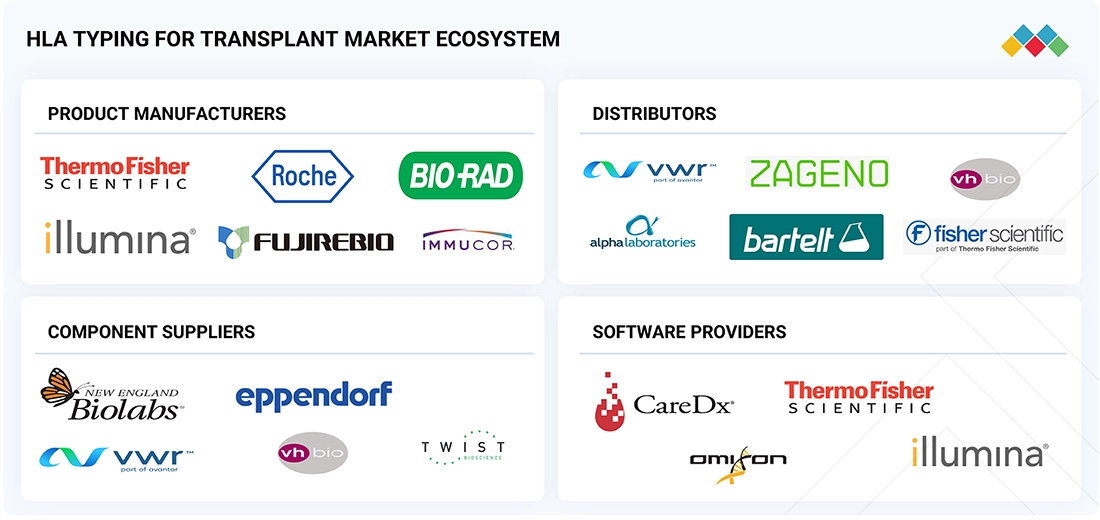
transplant diagnostics market: COMMERCIAL USE CASES ACROSS INDUSTRIES
| COMPANY | USE CASE DESCRIPTION | BENEFITS |
|---|---|---|
 |
Deployed as a turnkey NGS HLA typing kit + Ion Torrent workflow for high-resolution typing across class I & II loci, replacing SSO/SSP in several academic centers. | It enabled faster matching and reduced downstream confirmatory testing in Hospital histocompatibility labs, transplant labs. Higher allele resolution, consolidated workflow (single-run typing), reduced ambiguous calls vs Sanger were achived. |
 |
Roche deployed LightMix Kit HLA-B27 which is compatible with Roche LightCycler. The assay is designed for the detection of the HLA-B27 allele from human genomic DNA extracts. | The end results come with enhanced diagnostic accuracy while detecting the HLA-B27 allele. |
 |
Illumina’s TruSight HLA / MiSeq system workflow delivers high-throughput, high-resolution HLA typing for donor registries and large hospital networks. | Increased throughput and automation; enabled registry scale typing and reduced per-sample cost at high volumes; improved match rates for unrelated donor searches. |
 |
Bio-Rad's HLA SSP Typing Kits are designed for the determination of HLA Class I alleles using sequence-specific primers in a real-time PCR format. | The kits, when integrated with Bio-Rad CFX96 Touch Real-Time PCR System, gave an increase in High-Throughput Capability and increased accuracy. |
 |
Development of AlloSeq Tx17 NGS HLA typing kit for pre-transplant matching. | High-resolution typing improves donor–recipient compatibility, reduces graft rejection risk. Facilitates precision-matched organ allocation in clinical transplantation workflows. |
Logos and trademarks shown above are the property of their respective owners. Their use here is for informational and illustrative purposes only.
Related Ecosystem
In Vitro Diagnostics
- Polymerase Chain Reaction (PCR)
- Enzyme-Linked Immunosorbent Assay (ELISA)
- Dna Microarrays
- Assay Kits
- Microarrays
- ROCHE HOLDINGS AG
- Thermo Fisher Scientific Inc.
- Danaher Corporation
- Abbott Laboratories
- Biomerieux s.a.
Key Takeaways
- Spain's HLA typing market is valued at $9.26 million in 2025 and will reach $11.8 million by 2030 at a 5.0% CAGR.
- Spain's strong transplant infrastructure and high organ donation rates drive consistent demand for HLA typing services.
- Molecular HLA typing adoption in Spain is accelerating, improving transplant compatibility and reducing rejection outcomes.
- Spain's healthcare investment in immunogenetic testing and regulatory support will sustain market growth through 2030.
HLA Typing for Transplant Market Report Scope
| Report Metric | Details |
|---|---|
| Base Year | 2025 |
| Fastest Growing Segment | INDEPENDENT REFERENCE LABORATORIES (End User) |
| Forecast Period | 2025–2030 |
| Growth Rate | CAGR of 6% from 2025 to 2030 |
| Largest Segment | DIAGNOSTIC APPLICATIONS (Application) |
| Market Size Base Year (Billions) | ~USD 1.05 (2025) |
| Revenue Forecast (Billions) | ~USD 1.4 (2030) |
| Segments Covered | Product & Service, Technology, Type, Application, Transplant Type, End User |
Spain HLA Typing for Transplant Market Report Segmentation
6 segment dimensions are covered across the global market.
By Product & Service
- Instruments
- Reagents & Consumables
- Software & Services
By Technology
- Molecular Assays
- Non-Molecular Assays
By Type
- Antibody Screening
- Chimerism Monitoring
- Next-Generation Sequencing
- Other Diagnostic Applications
- Other Pcr-Based Molecular Assays
- Other Sequencing-Based Molecular Assays
- Pcr-Based Molecular Assays
- Real-Time Pcr
- Sanger Sequencing
- Sequence-Specific Oligonucleotide-Pcr
- Sequence-Specific Primer-Pcr
- Sequencing-Based Molecular Assays
By Application
- Diagnostic Applications
- Research Applications
By Transplant Type
- Soft-Tissue Transplants
- Solid Organ Transplants
- Stem Cell Transplants
By End User
- Hospitals & Transplant Centers
- Independent Reference Laboratories
- Research Laboratories & Academic Institutes
Target Audience
- Diagnostic Laboratory Operators : Spanish diagnostic labs need market data to assess HLA typing service demand, plan capacity expansion, and evaluate investment in advanced molecular typing technologies for transplant centers.
- Medical Device Manufacturers : Device companies targeting Spain require market sizing and growth forecasts to develop go-to-market strategies, identify key transplant centers, and prioritize product launches in the Spanish market.
- Healthcare System Administrators : Spanish hospital networks and transplant program directors need insights into market trends to optimize HLA testing protocols, allocate resources efficiently, and improve organ compatibility outcomes.
- In Vitro Diagnostics Suppliers : IVD suppliers operating in Spain require country-specific market intelligence to forecast demand for HLA typing reagents, kits, and consumables across Spanish transplant and immunogenetics laboratories.
- Healthcare Investors & Consultants : Investment firms and management consultants analyzing Spain's healthcare sector need validated market data to evaluate acquisition targets, assess growth potential, and guide strategic recommendations for transplant diagnostics.
Key Companies in the Spain HLA Typing for Transplant Market
| Company | HQ | Ownership | Strongest segments |
|---|---|---|---|
| KINDRED HEALTHCARE INC. | United States | Private Company | Instruments,Reagents,Software, |
| QUIDEL CORPORATION | United States | Public Company | Instruments (Transfusion & Molecular Platforms used in HLA/compatibility workflows),Reagents & Consumables (Antibody Screening, Donor Typing, Molecular Assays),Software & Informatics, |
| THERMO FISHER SCIENTIFIC INC. | United States | Public Company | PCR-based HLA typing (SSO, SSP, Real-time),NGS-based HLA typing,Sanger-based HLA typing, |
| ILLUMINA, INC. | United States | Public Company | NGS instruments,NGS reagents and consumables,Software and DRAGEN-based analysis, |
| QIAGEN | Netherlands | Public Company | Reagents & Assays (PCR, NGS, Sanger HLA, immune response),Instruments (PCR, NGS, sample prep, QC),Software & Bioinformatics (HLA typing, chimerism, data analysis), |
| BIO-RAD LABORATORIES, INC. | United States | Public Company | Instruments (PCR, real-time, supporting platforms),Reagents & consumables for HLA typing and chimerism,Software & informatics for transplant workflows, |
| CAREDX, INC. | United States | Public Company | PCR-based HLA typing (SSO, SSP, Real-time),NGS-based HLA typing (AlloSeq Tx and related),Sanger-based HLA typing, |
| DIASORIN S.P.A. | Italy | Public Company | Reagents and assays (HLA-related and transplant-adjacent),Instruments and platforms (LIAISON, Simplexa, xMAP-based systems),Software and informatics for transplant workflows, |
| BECTON, DICKINSON AND COMPANY | United States | ||
| EUROBIO SCIENTIFIC | France | Public Company | Reagents (PCR, NGS, Sanger),Software (HLA typing, data analysis),Instruments and related hardware, |
KINDRED HEALTHCARE INC.
Kindred Healthcare Inc. is a large private healthcare services company founded in 1985 in the United States, employing 64,200 people. The company operates across multiple healthcare service segments.
QUIDEL CORPORATION
Quidel Corporation is a publicly traded diagnostic company founded in 1979 in the United States with 6,500 employees. The company develops and manufactures rapid diagnostic testing solutions.
THERMO FISHER SCIENTIFIC INC.
Thermo Fisher Scientific Inc. is a large publicly traded life sciences company founded in 1956 in the United States with 125,000 employees. The company provides laboratory equipment, reagents, and analytical instruments globally.
ILLUMINA, INC.
Illumina, Inc. is a publicly traded genomics company founded in 1998 in the United States with 8,625 employees. The company develops and manufactures DNA sequencing and genetic analysis systems.
QIAGEN
QIAGEN is a publicly traded molecular diagnostics company founded in 1984 in the Netherlands with 5,500 employees. The company provides sample and assay technologies for molecular testing.
BIO-RAD LABORATORIES, INC.
Bio-Rad Laboratories, Inc. is a publicly traded life sciences company founded in 1952 in the United States with 7,450 employees. The company manufactures and distributes clinical diagnostic products and laboratory reagents.
CAREDX, INC.
CareDx, Inc. is a publicly traded molecular diagnostics company founded in 1998 in the United States with 763 employees. The company specializes in transplant diagnostics and precision medicine solutions.
DIASORIN S.P.A.
DiaSorin S.p.A. is a publicly traded Italian diagnostics company founded in 1968 with 3,242 employees. The company specializes in immunodiagnostic and molecular diagnostic products.
BECTON, DICKINSON AND COMPANY
Insufficient data provided for company description.
EUROBIO SCIENTIFIC
Eurobio Scientific is a publicly traded French diagnostics company founded in 1997 with 343 employees. The company develops and distributes in vitro diagnostic products.
Reasons to Buy this Report
- Market-Specific Sizing : Access precise valuation data for Spain's HLA typing market with verified 2025 baseline ($9.26M) and 2030 forecasts ($11.8M), enabling accurate budget allocation and investment planning for Spanish healthcare operations.
- Regional Growth Insights : Understand Spain's 5% CAGR trajectory and how it compares to global benchmarks, identifying growth opportunities within the Spanish transplant diagnostics sector and competitive positioning strategies.
- Healthcare System Context : Gain insights into Spain's transplantation infrastructure development, national healthcare priorities, and regulatory environment specific to HLA testing adoption across Spanish medical centers and laboratories.
- Strategic Decision Support : Make informed decisions about market entry, expansion, or partnership opportunities in Spain's transplant diagnostics market with country-specific demand drivers and growth catalysts clearly identified.
- Competitive Intelligence : Benchmark your organization against Spain's market dynamics, understand local transplant center requirements, and identify gaps in HLA typing service delivery within the Spanish healthcare ecosystem.
Frequently asked questions
What is the current market size of HLA typing for transplants in Spain?
Spain's HLA typing for transplant market is valued at $9.26 million in 2025 and is expected to grow to $11.8 million by 2030.
What is the projected growth rate for Spain's HLA typing market?
Spain's HLA typing market is projected to grow at a compound annual growth rate (CAGR) of 5.0% from 2025 to 2030.
What factors are driving growth in Spain's HLA typing market?
Spain's market growth is driven by increasing transplant volumes, adoption of advanced molecular HLA typing technologies, improved diagnostic capabilities, and strong healthcare investment in immunogenetic testing infrastructure.
How does Spain's transplant infrastructure support HLA typing demand?
Spain is a leading transplant nation in Europe with high organ donation rates and well-established transplant centers, creating sustained demand for reliable and advanced HLA typing services.
What role does molecular HLA typing play in Spain's market?
Molecular HLA typing is increasingly adopted across Spain's transplant centers to improve organ compatibility assessment, reduce rejection rates, and enhance overall transplant outcomes.
RESEARCH METHODOLOGY
This study analyzed market variables related to small and medium-sized businesses and major corporations to balance primary and secondary research for the human leukocyte antigen (HLA) typing for transplant market. The next phase involved conducting primary research with industry experts along the value chain to validate the findings, assumptions, and market sizing. Several methodologies were employed to estimate the overall market size, including both top-down and bottom-up approaches. This study focuses on key market segments, emerging trends, regulatory frameworks, and competitive environments. It also examines leading market players and their strategies within this sector. In conclusion, the total market size was determined using top-down and bottom-up approaches and data triangulation to arrive at the final figure. Ongoing primary research was conducted throughout the study to validate and test each hypothesis.
Secondary Research
During the study, secondary research utilized a variety of sources, including directories and databases such as Bloomberg Businessweek, D&B Hoovers, and Factiva. Additional materials included white papers, annual reports, SEC filings, and investor presentations. This research approach collects and generates data that offers comprehensive, technical, and market-focused insights into the HLA typing for transplant market. The data provides information on key players and market segmentation based on recent industry trends and significant market developments. Additionally, a database of leading industry figures was created through this secondary research.
Primary Research
In the primary research process, various sources from both the supply and demand sides were interviewed to obtain qualitative and quantitative information for this report. The primary sources from the supply side include industry experts such as CEOs, vice presidents, marketing and sales directors, technology & innovation directors, and related key executives from various key companies and organizations in the HLA typing for transplant market. The primary sources from the demand side include medical OEMs, CDMOs, and service providers. Primary research was conducted to validate the market segmentation, identify key players, and gather insights on key industry trends & key market dynamics.
A breakdown of the primary respondents is provided below:
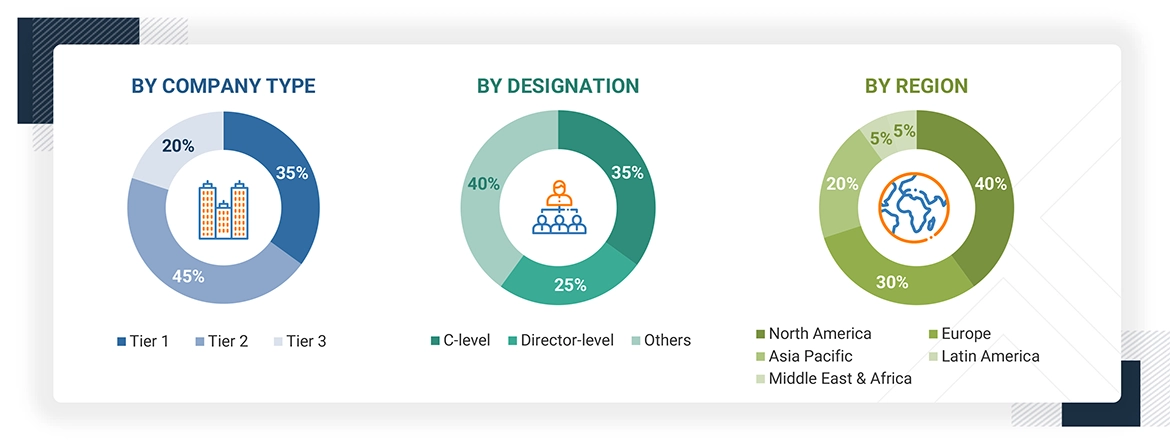
*Others include distributors, suppliers, product managers, business development managers, marketing managers, and sales managers.
Note: Companies are categorized into tiers based on their total revenue. As of 2024, Tier 1 = >USD 1,000 million, Tier 2 = USD 500–1,000 million, and Tier 3 = < USD 500 million.
To know about the assumptions considered for the study, download the pdf brochure
Market Size Estimation
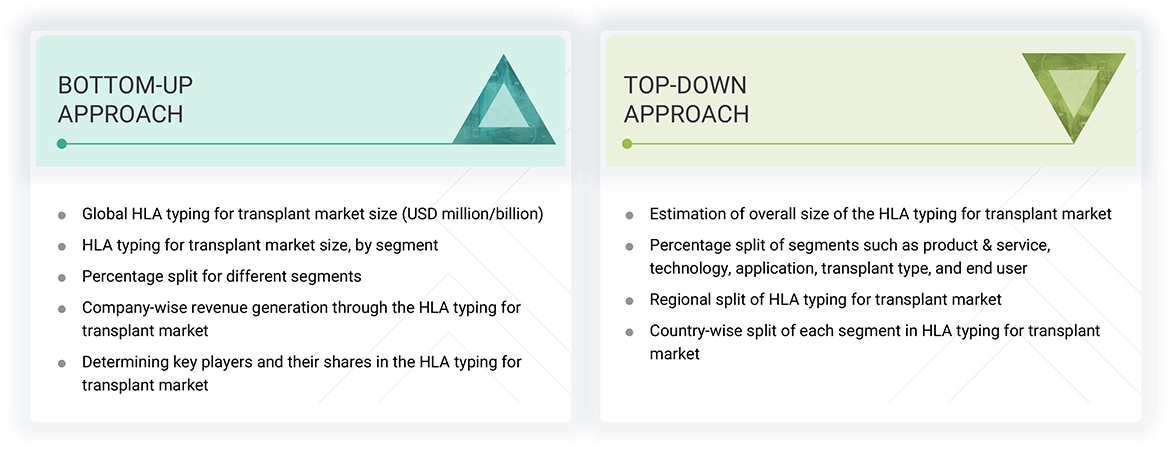
In this report, the global HLA typing for transplant market size was arrived at by using the revenue share analysis of leading players. For this purpose, key players in the market were identified, and their revenues from the HLA typing for transplants business were determined through various insights gathered during the primary and secondary research phases. Secondary research included the study of the annual and financial reports of the top market players. In contrast, primary research included extensive interviews with key opinion leaders, such as CEOs, directors, and marketing executives.
Segmental revenues were calculated based on the revenue mapping of major solution/service providers to calculate the global market value. This process involved the following steps:
- Generating a list of major global players/OEMs operating in the HLA typing for transplant market
- Mapping the annual revenue generated by major global players from the HLA typing segment (or the nearest reported business unit/product category)
- Revenue mapping of top players to cover at least ~75% of the global market share as of 2024
- Extrapolation of the revenue mapping of major players to derive the global value of the market
- Extrapolating the global value of the HLA typing for transplant market.
- Summation of market value for all segments and subsegments to achieve the actual value of the global HLA typing for transplant market
Data Triangulation
After arriving at the overall market size from the market size estimation process explained above, the global HLA typing for transplant market was split into segments and subsegments. Data triangulation and market breakdown procedures were employed to complete the overall market engineering process and arrive at the exact statistics for all segments and subsegments. The data was triangulated by studying various factors and trends from both the demand and supply sides. Additionally, top-down and bottom-up approaches validated the HLA typing for transplant market.
Market Definition
HLA typing assays are critical in transplant immunology, as they facilitate the identification of HLA antigens essential for assessing donor-recipient compatibility and mitigating the risk of alloimmune rejection. These assays are pivotal in donor-recipient cross-matching, subject profiling, genotyping, and various diagnostic applications. Recent advancements in HLA typing technology, which enable high-resolution typing, afford precise delineation of HLA allele variations. This increased accuracy significantly enhances the predictive capability for transplant outcomes, thereby minimizing rejection and graft-versus-host disease incidence. As a result, these innovations are instrumental in making transplantation a more feasible and successful therapeutic option for patients.
Stakeholders
- Manufacturers of HLA typing products for transplant
- Distributors & suppliers of HLA typing products for transplant
- Hospitals, Transplant Centers, reference laboratories, Cord Blood Banks
- Research Laboratories and Academic Institutes
- Organ Procurement Organizations (OPOs)
- Non-government organizations
- Government regulatory authorities
- Contract manufacturers and third-party suppliers
- Clinical research organizations (CROs)
- Government and non-governmental regulatory authorities
- Market research and consulting firms
Report Objectives
- To define, describe, and forecast the HLA typing for transplant market based on product & service, technology, application, transplant type, end user, and region
- To provide detailed information regarding the major factors influencing the growth potential of the global HLA typing for transplant market (drivers, restraints, opportunities, challenges, and trends)
- To analyze the micro markets with respect to individual growth trends, prospects, and contributions to the global HLA typing for transplant market
- To provide an average selling price trend for the target product categories in HLA typing for transplant market
- To analyze key growth opportunities in the global HLA typing for transplant market for key stakeholders and provide details of the competitive landscape for market leaders
- To forecast the size of market segments and/or subsegments with respect to five major regions, namely, North America (US and Canada), Europe (Germany, France, UK, Italy, Spain, and Rest of Europe), the Asia Pacific (Japan, China, India, Australia, South Korea, and the Rest of Asia Pacific), Latin America (Brazil, Mexico, and Rest of Latin America), and the Middle East & Africa
- To profile the key players in the global HLA typing for transplant market and comprehensively analyze their market shares and core competencies
- To track and analyze the competitive developments undertaken in the global HLA typing for transplant market, such as product launches, agreements, expansions, and acquisitions
Get the Full HLA Typing for Transplant Market Report
Full forecast, segment splits, and company analysis for all HLA Typing for Transplant Market.
- US HLA Typing for Transplant Market
- Canada HLA Typing for Transplant Market
- Germany HLA Typing for Transplant Market
- UK HLA Typing for Transplant Market
- France HLA Typing for Transplant Market
- Italy HLA Typing for Transplant Market
- China HLA Typing for Transplant Market
- India HLA Typing for Transplant Market
- Japan HLA Typing for Transplant Market
- Australia HLA Typing for Transplant Market
- South Korea HLA Typing for Transplant Market
- Brazil HLA Typing for Transplant Market
- Mexico HLA Typing for Transplant Market
- Rest Of Europe HLA Typing for Transplant Market
- Rest Of Asia Pacific HLA Typing for Transplant Market
- Rest Of Latin America HLA Typing for Transplant Market
Need a Tailored Report?
Customize this report to your needs
Get 10% FREE Customization
Customize This Report
