
Rest Of Asia Pacific Vector Database Market (2025-2030)

The Rest Of Asia Pacific Vector Database Market was valued at $210.8 Million in 2025 and projected to reach to $733.1 Million by 2030, representing a compound annual growth rate of 28.3%. Rest Of Asia Pacific is positioned as a critical growth engine for the global vector database market, driven by rapid AI adoption across enterprises, governments, and startups.


| Market Size in | USD 26.32 MN |
| Market Forecast in | |
| CAGR | |
| Forecast Period | |
| Units Considered | Value (USD MN) |
Rest Of Asia Pacific Vector Database Market Trends and Insights
- Rest Of Asia Pacific is emerging as a critical growth region, driven by accelerating AI adoption, cloud infrastructure investments, and the region's expanding digital economy.
- Rest Of Asia Pacific's 28.3% compound annual growth rate significantly outpaces global trends, reflecting strong demand from enterprises modernizing their data architectures to support generative AI and machine learning applications. Rest Of Asia Pacific's vector database adoption is fueled by increasing investments in artificial intelligence capabilities across financial services, e-commerce, and technology sectors.
- Rest Of Asia Pacific organizations are prioritizing vector databases to enable semantic search, recommendation engines, and AI-powered analytics at scale.
- The forecast period through 2030 positions Rest Of Asia Pacific as a high-growth market, with enterprises recognizing vector databases as essential infrastructure for competitive advantage in AI-driven markets..
Key Market Statistics
- CAGR (2025-2030) 28.3% CAGR
- Market Size, 2025 ~USD 210.8 Million
- Forecast, 2030 ~USD 733.1 Million
- Country Rest Of Asia Pacific
Rest Of Asia Pacific Vector Database Market Overview
Explosive Growth Trajectory :
Rest Of Asia Pacific's vector database market is expanding at 28.3% CAGR, outpacing the global average of 27.5%, reflecting the region's accelerated digital transformation and AI infrastructure investments.
Market Valuation Surge :
The market is projected to grow from $210.8 million in 2025 to $733.1 million by 2030, representing a 248% increase over five years, driven by enterprise AI adoption across emerging economies.
AI and Cloud Infrastructure Boom :
Rest Of Asia Pacific is witnessing unprecedented cloud infrastructure investments and AI adoption rates, positioning vector databases as critical infrastructure for next-generation applications and machine learning workloads.
Digital Economy Expansion :
The region's expanding digital economy, coupled with increasing venture capital funding and tech talent concentration, is creating substantial demand for advanced data management solutions in emerging markets.
Rest Of Asia Pacific Vector Database Market Dynamics
- The region's expanding digital economy, combined with significant cloud infrastructure investments and increasing data volumes, creates substantial demand for vector database solutions.
- Countries within Rest Of Asia Pacific are prioritizing AI capabilities and digital transformation initiatives, accelerating the deployment of vector databases across e-commerce, fintech, healthcare, and manufacturing sectors. The 28.3% CAGR reflects strong momentum as organizations in Rest Of Asia Pacific recognize vector databases' critical role in enabling semantic search, recommendation systems, and generative AI applications.
- With growing technical expertise, competitive pricing, and increasing venture capital activity, the region is attracting both international vendors and local innovators.
- By 2030, Rest Of Asia Pacific's vector database market will represent a significant portion of global demand, establishing the region as a key market for solution providers and technology investors..
Market Ecosystem
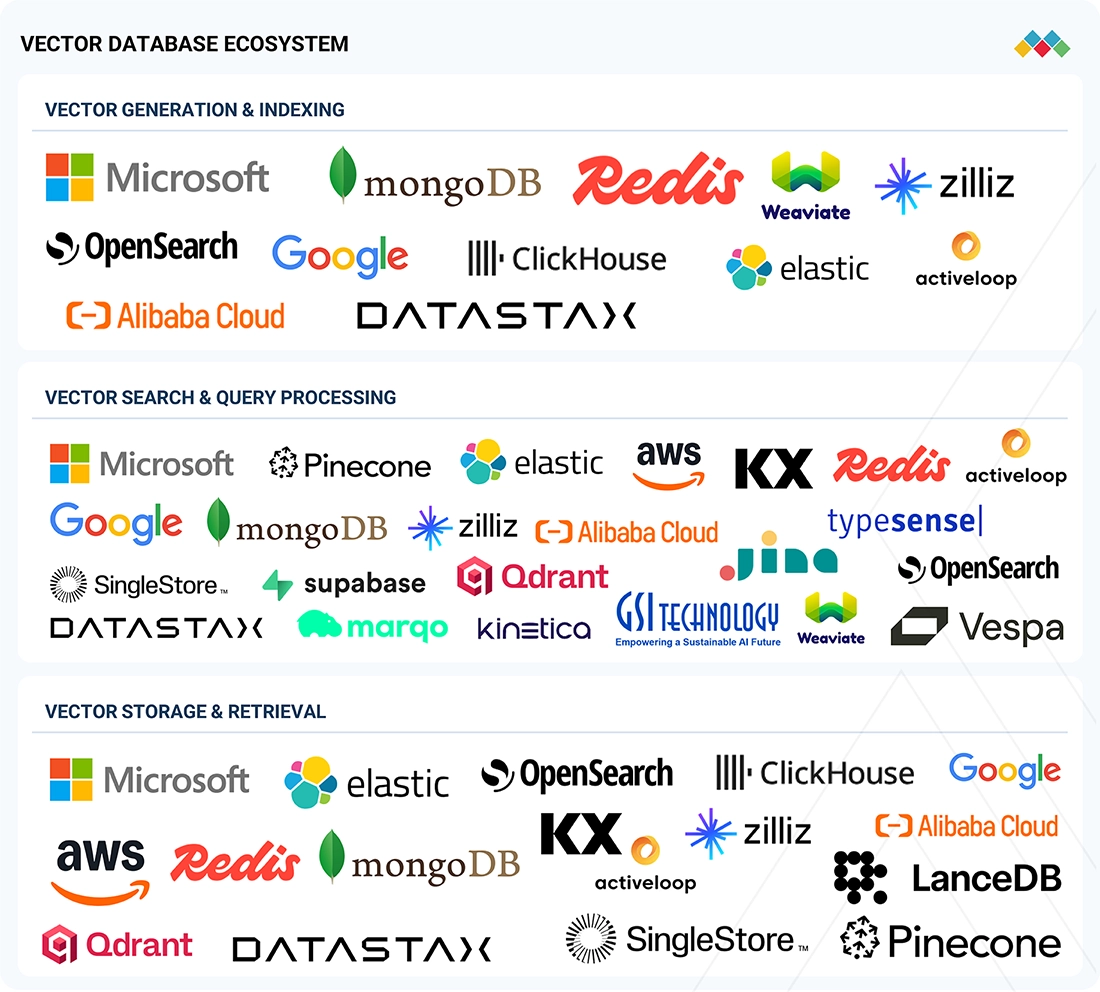
Vector Database Market: COMMERCIAL USE CASES ACROSS INDUSTRIES
| COMPANY | USE CASE DESCRIPTION | BENEFITS |
|---|---|---|
 |
Vanguard improved its customer support experience by deploying Pinecone as the vector backbone for its AI-driven Agent Assist platform. The solution enabled hybrid search, real-time updates, and precise metadata filtering, allowing agents to instantly retrieve accurate financial information. This upgrade reduced call times, enhanced response quality, supported compliance requirements, and delivered a more efficient and scalable support workflow. |
Key benefits include:
|
 |
L’Oréal boosted the speed and responsiveness of its internal AI-driven application by migrating from a traditional NoSQL system to MongoDB Atlas. The switch enabled faster calculations, simplified backend workflows, and eliminated heavy scripting. With auto-indexing, aggregation pipelines, and seamless scalability, the platform delivered millisecond-level latency, strengthening performance for high-velocity Beauty Tech applications and accelerating iterative development. |
Key benefits include:
|
Logos and trademarks shown above are the property of their respective owners. Their use here is for informational and illustrative purposes only.
Related Ecosystem
Software And Services
- Natural Language Processing (NLP)
- Machine Learning
- Supply Chain Management
- Predictive Analytics
- Image Sensors
- International Business Machines Corporation
- MICROSOFT CORPORATION
- Oracle Corporation
- SAP SE
- Amazon.com, Inc.
Key Takeaways
- Rest Of Asia Pacific's vector database market will grow from $210.8M (2025) to $733.1M (2030), representing a 28.3% CAGR.
- Rest Of Asia Pacific's growth rate exceeds global averages, driven by rapid AI adoption and digital transformation initiatives across the region.
- Rest Of Asia Pacific enterprises are investing heavily in vector databases to support generative AI, semantic search, and advanced analytics capabilities.
- Rest Of Asia Pacific's expanding cloud infrastructure and fintech ecosystem position the region as a key growth driver for vector database vendors through 2030.
Vector Database Market Report Scope
| Report Metric | Details |
|---|---|
| Base Year | 2025 |
| Fastest Growing Segment | MULTIMODAL VECTOR DBS (Type) |
| Forecast Period | 2025–2030 |
| Growth Rate | CAGR of 27.5% from 2025 to 2030 |
| Largest Segment | CLOUD (Deployment Type) |
| Market Size Base Year (Billions) | ~USD 2.66 (2025) |
| Revenue Forecast (Billions) | ~USD 8.95 (2030) |
| Segments Covered | Type, Offering, Vector Database Solution, Professional Service, Technology/Ai Application, Deployment Type, Data Type, Vertical, Solution, Service, Deployment Mode |
Rest Of Asia Pacific Vector Database Market Report Segmentation
11 segment dimensions are covered across the global market.
By Type
- Multimodal Vector Dbs
- Native Vector Dbs
By Offering
- Services
- Vector Database Solutions
By Vector Database Solution
- Vector Generation & Indexing
- Vector Search & Query Processing
- Vector Storage & Retrieval
By Professional Service
- Implementation & Integration
- Support & Maintenance
- Training & Consulting
By Technology/Ai Application
- Computer Vision
- Natural Language Processing (Nlp)
- Recommendation System
By Deployment Type
- Cloud
- On-Premises
By Data Type
- Advanced Data (Video, Sensor, Geospatial, 3D)
- Hybrid & Multimodal Data
- Simple Text Data
By Vertical
- Bfsi
- Government & Defense
- Healthcare & Life Sciences
- It & Ites
- Manufacturing & Iiot
- Media & Entertainment
- Other Verticals
- Retail & E-Commerce
- Transportation & Automotive
By Solution
- Vector Generation & Indexing
- Vector Search & Query Processing
- Vector Storage & Retrieval
By Service
- Managed Services
- Professional Services
By Deployment Mode
- Cloud
- On-Premises
Target Audience
- Technology Vendors & Solution Providers : Vector database vendors and AI platform providers need Rest Of Asia Pacific-specific market data to prioritize regional expansion, localize offerings, and compete effectively in this high-growth market.
- Enterprise IT Decision Makers : CIOs and IT leaders in Rest Of Asia Pacific require market insights to evaluate vector database solutions, benchmark regional adoption trends, and justify technology investments to stakeholders.
- Investment & Private Equity Firms : Investors targeting Rest Of Asia Pacific's tech sector need detailed market forecasts and growth drivers to identify acquisition targets, fund emerging startups, and optimize portfolio allocation.
- Management Consulting Firms : Consultants advising clients on digital transformation and AI strategy in Rest Of Asia Pacific require regional market data to develop credible recommendations and competitive positioning strategies.
- Market Research & Analytics Teams : Research professionals and business intelligence teams need Rest Of Asia Pacific-specific vector database market data to support competitive analysis, trend forecasting, and strategic planning initiatives.
Key Companies in the Rest Of Asia Pacific Vector Database Market
| Company | HQ | Ownership | Strongest segments |
|---|---|---|---|
| MICROSOFT | United States | Public Company | Productivity and Business Processes,Intelligent Cloud,Personal Computing, |
| ELASTIC | Netherlands | Public Company | Elasticsearch Platform & Core Search,Elastic Cloud (Hosted and Serverless),Elastic Observability, |
| MONGODB | United States | Public Company | MongoDB Atlas (DBaaS),Enterprise Advanced (self-managed commercial),Community Server & related services, |
| United States | Public Company | Search & Other Advertising,YouTube Ads & Subscriptions,Google Cloud (incl. AI & Workspace), | |
| KX | Canada | Public Company | Maestro platform subscriptions (planning, orchestration, control tower),Specialized planning and optimization modules (inventory, scheduling, spare parts, transportation),Professional services (implementation, configuration, integration), |
MICROSOFT
Microsoft is a United States-based public company founded in 1975 with 228,000 employees. It is a global technology corporation providing software, cloud services, and hardware solutions.
ELASTIC
Elastic is a Netherlands-based public company founded in 2012 with 4,019 employees. It develops search and analytics engine software for enterprise applications.
MONGODB
MongoDB is a United States-based public company founded in 2007 with 5,636 employees. It provides a leading NoSQL database platform for modern application development.
Google is a United States-based public company founded in 1998 with 194,668 employees. It operates as a multinational technology corporation specializing in search, advertising, cloud services, and software products.
KX
KX is a Canada-based public company founded in 1984 with 1,837 employees. It develops time-series database and analytics software for financial and enterprise markets.
Reasons to Buy this Report
- Regional Market Sizing & Forecasts : Obtain precise market valuations and growth projections specific to Rest Of Asia Pacific, enabling accurate budget allocation and investment decisions for regional expansion strategies.
- Competitive Landscape Intelligence : Understand vendor positioning, market share dynamics, and competitive strategies tailored to Rest Of Asia Pacific's unique market conditions and emerging player opportunities.
- Growth Driver Analysis : Identify key catalysts driving 28.3% CAGR growth in Rest Of Asia Pacific, including AI adoption patterns, cloud infrastructure trends, and digital economy expansion specific to the region.
- Sector & Use Case Insights : Discover which industries and applications are driving vector database adoption across Rest Of Asia Pacific, from fintech and e-commerce to healthcare and manufacturing.
- Strategic Market Entry Planning : Develop data-driven go-to-market strategies for Rest Of Asia Pacific with insights on customer segments, pricing dynamics, and regional investment opportunities through 2030.
Frequently asked questions
What is the current size of the vector database market in Rest Of Asia Pacific?
Rest Of Asia Pacific's vector database market is valued at $210.8 million in 2025 and is expected to grow to $733.1 million by 2030.
What is the projected CAGR for Rest Of Asia Pacific's vector database market?
Rest Of Asia Pacific's vector database market is projected to grow at a compound annual growth rate of 28.3% from 2025 to 2030.
What are the primary drivers of vector database adoption in Rest Of Asia Pacific?
Rest Of Asia Pacific's vector database adoption is driven by accelerating AI investments, cloud infrastructure expansion, generative AI applications, and digital transformation across financial services and e-commerce sectors.
How does Rest Of Asia Pacific's growth compare to the global vector database market?
Rest Of Asia Pacific's 28.3% CAGR outpaces the global market CAGR of 27.5%, positioning the region as a high-growth market for vector database solutions.
Which industries in Rest Of Asia Pacific are driving vector database demand?
Rest Of Asia Pacific's financial services, e-commerce, technology, and AI-focused enterprises are the primary drivers of vector database adoption and investment.
RESEARCH METHODOLOGY
This research study utilized extensive secondary sources, including directories and databases such as D&B Hoovers, Bloomberg Businessweek, and Factiva, to identify and collect information for a technical, market-oriented, and commercial study of the global vector database market. A few other market-related reports and analyses published by various industry associations, such as the National Security Agency (NSA) and SC Magazine, were considered while doing the extensive secondary research. The primary sources were primarily industry experts from core and related industries, as well as preferred suppliers, manufacturers, distributors, service providers, technology developers, and technologists from companies and organizations related to all segments of this industry's value chain.
In-depth interviews were conducted with primary respondents, including key industry participants, subject-matter experts, C-level executives of key market players, and industry consultants to obtain and verify critical qualitative and quantitative information and assess the prospects. The market has been estimated by analyzing various driving factors, such as improving organizational compliance requirements, enhancing operational efficiency, and simplifying workflows to eliminate bottlenecks.
Secondary Research
The market size of companies offering vector database was derived based on secondary data available through paid and unpaid sources, analyzing the product portfolios of major companies in the ecosystem, and rating the companies based on their product capabilities and business strategies.
Various sources were referenced in the secondary research process to identify and collect information for the study. These sources included annual reports, press releases, investor presentations from companies, product data sheets, white papers, peer-reviewed journals, certified publications, and articles from recognized authors, as well as government websites, directories, and databases.
Secondary research was primarily used to obtain key information about the industry's supply chain, the total pool of key players, market classification and segmentation according to industry trends, and regional markets, all of which were further validated by primary sources.
Primary Research
During the primary research process, various sources from both the supply and demand sides were interviewed to gather qualitative and quantitative information for this report. The primary sources from the supply side included industry experts, such as chief executive officers (CEOs), vice presidents (VPs), marketing directors, technology and innovation directors, and related key executives from various key companies and organizations operating in the vector database market.
Primary interviews were conducted to gather insights, such as market statistics, the latest trends disrupting the market, new use cases implemented, data on revenue collected from products and services, market breakups, market size estimations, market forecasts, and data triangulation. Primary research also helped to understand various technology-related trends, segmentation types, industry trends, and regional differences.
Demand-side stakeholders, such as Chief Information Officers (CIOs), Chief Technology Officers (CTOs), Chief Security Officers (CSOs), installation teams of governments and end users who utilize vector database, and digital initiatives project teams, were interviewed to understand the buyers' perspectives on suppliers, products, service providers, and their current use of services, which would influence the overall vector database market.
Primary interviews were conducted to gather insights such as market statistics, data on revenue collected from the products and services, market breakdowns, market size estimations, market forecasting, and data triangulation. Primary research also helped in understanding the various trends related to type, manufacturing process, application, end-use industry, and region.
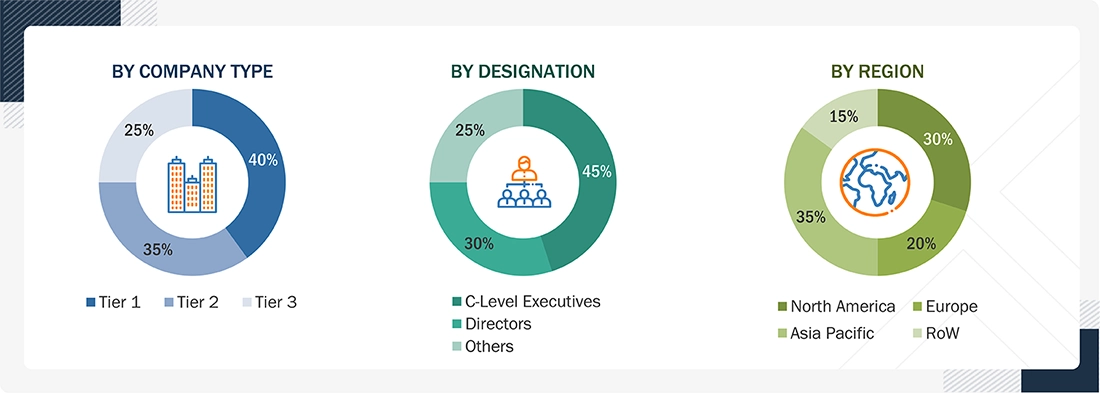
Note 1: Tier 1 companies have revenues greater than USD 10 billion; tier 2 companies' revenues range between USD 1 and 10 billion; and tier 3 companies' revenues range between USD 500 million and 1 billion.
Note 2: Others include sales, marketing, and product managers.
Source: Secondary Literature, Interviews with Experts, and MarketsandMarkets Analysis
To know about the assumptions considered for the study, download the pdf brochure
Market Size Estimation
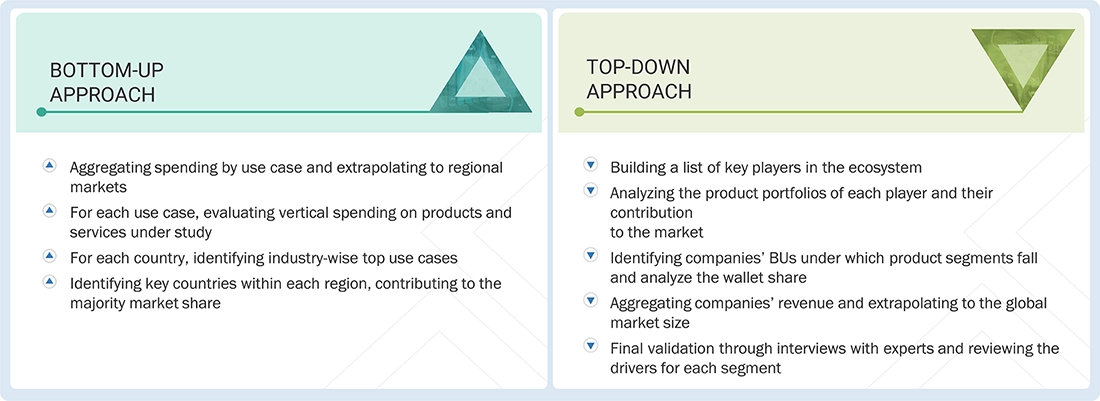
Multiple approaches were adopted to estimate and forecast the vector database market. The first approach involved estimating the market size by summing up the companies' revenue generated through the sale of services.
The research methodology used to estimate the market size included the following:
- Primary and secondary research were conducted to assess the revenue contributions of major market participants in each country, with secondary research identifying these participants.
- Critical insights were obtained through in-depth interviews with industry professionals, including directors, CEOs, VPs, and marketing executives, as well as by reviewing the annual and financial reports of the top firms in the market.
- Primary sources were used to verify all percentage splits and breakups, which we calculated using secondary sources.
Vector Database Market : Top-Down and Bottom-Up Approach
Data Triangulation
Once the overall market size was determined, we divided the market into segments and subsegments using the previously described market size estimation procedures. When required, market breakdown and data triangulation procedures were employed to complete the market engineering process and specify the exact figures for every market segment and subsegment. The data was triangulated by examining several variables and patterns from the government entities' supply and demand sides.
Market Definition
According to MarketsandMarkets, "Vector databases are specialized data management systems designed to store, index, and search high-dimensional vector embeddings generated by AI and machine learning models. It enables similarity search and retrieval based on semantic meaning, rather than exact matches, allowing organizations to efficiently manage and query unstructured data, such as text, images, audio, and video. These databases are essential for powering AI-driven applications like recommendation engines, natural language processing, computer vision, and generative AI, providing faster, more accurate, and context-aware search and analytics capabilities."
According to IBM, "A vector database stores, manages, and indexes high-dimensional vector data. Data points are stored as arrays of numbers called 'vectors,' which are clustered based on similarity. This design enables low-latency queries, making it ideal for AI applications."
According to Pinecone, "A vector database indexes and stores vector embeddings for fast retrieval and similarity search, with capabilities like CRUD operations, metadata filtering, horizontal scaling, and serverless."
Key Stakeholders
- Vector Database Providers
- AI & Machine Learning Platform Vendors
- Cloud Service Providers
- Embedding Model Developers
- System Integrators & Data Infrastructure Providers
- Managed Service Providers (MSPs)
- API & Search Platform Developers
- Consulting & Implementation Firms
- Enterprise End Users across Key Verticals
- Research & Standardization Bodies
Report Objectives
- To define, describe, and forecast the vector database market based on offering, technology/AI application, deployment type, data type, vertical, and region
- To forecast the market size of five major regional segments: North America, Europe, Asia Pacific, the Middle East & Africa, and Latin America
- To strategically analyze the market subsegments with respect to individual growth trends, prospects, and contributions to the total market
- To provide detailed information related to the significant factors influencing the growth of the market (drivers, restraints, opportunities, and challenges)
- To strategically analyze macro and micromarkets with respect to growth trends, prospects, and their contributions to the overall market
- To analyze industry trends, patents, innovations, and pricing data related to the market
- To analyze the opportunities in the market for stakeholders and provide details of the competitive landscape for major players
- To analyze the impact of AI/generative AI on the market
- To profile key players in the market and comprehensively analyze their market share/ranking and core competencies
- To track and analyze competitive developments such as mergers & acquisitions, product launches, and partnerships & collaborations in the market
Available Customizations
MarketsandMarkets provides customizations based on the company's unique requirements using market data. The following customization options are available for the report.
Product Analysis
- The product matrix provides a detailed comparison of each company's portfolio.
Geographic analysis
- Further breakup of the vector database market
Company information
- Detailed analysis and profiling of five additional market players
Get the Full Vector Database Market Report
Full forecast, segment splits, and company analysis for all Vector Database Market.
- US Vector Database Market
- Canada Vector Database Market
- UK Vector Database Market
- Germany Vector Database Market
- France Vector Database Market
- Italy Vector Database Market
- China Vector Database Market
- Japan Vector Database Market
- UAE Vector Database Market
- South Africa Vector Database Market
- Brazil Vector Database Market
- Mexico Vector Database Market
- Rest Of Europe Vector Database Market
Need a Tailored Report?
Customize this report to your needs
Get 10% FREE Customization
Customize This Report
