
UK Veterinary Monitoring Equipment Market (2020-2025)

The UK Veterinary Monitoring Equipment Market was valued at $9.02 Million in 2020 and projected to reach to $16.2 Million by 2025, representing a compound annual growth rate of CAGR 10.3%. The UK veterinary monitoring equipment market is positioned for continued growth through 2025 and beyond, supported by increasing pet ownership, rising disposable incomes, and heightened awareness of animal health management.


| Market Size in | USD 26.32 MN |
| Market Forecast in | |
| CAGR | |
| Forecast Period | |
| Units Considered | Value (USD MN) |
UK Veterinary Monitoring Equipment Market Trends and Insights
- This expansion reflects the UK's increasing investment in advanced animal healthcare infrastructure and rising demand for real-time patient monitoring solutions across veterinary clinics and animal hospitals.
- The UK market's 10.3% compound annual growth rate outpaces global trends, driven by heightened awareness of preventive care and technological adoption among UK veterinary practitioners. The UK's veterinary sector has embraced digital transformation, with monitoring equipment becoming integral to clinical decision-making and animal welfare standards.
- UK veterinarians are increasingly deploying pulse oximeters, capnographs, blood pressure monitors, and multiparameter systems to enhance diagnostic accuracy and surgical outcomes.
- This market trajectory reflects the UK's commitment to elevating veterinary care standards and aligns with broader European healthcare modernization initiatives..
Key Market Statistics
- CAGR (2020-2025) CAGR 10.3%
- Market Size, 2020 ~USD 9.02 Million
- Forecast, 2025 ~USD 16.2 Million
- Country UK
UK Veterinary Monitoring Equipment Market Overview
Strong Market Expansion :
The UK veterinary monitoring equipment market grew from $9.02 million in 2020 to $16.2 million by 2025, representing a robust 10.3% CAGR, outpacing the global average of 9.8%.
Advanced Healthcare Infrastructure :
UK veterinary clinics and animal hospitals are increasingly adopting real-time patient monitoring solutions, driven by rising standards of care and investment in modern diagnostic technologies.
Growing Pet Healthcare Spending :
British pet owners demonstrate strong willingness to invest in advanced veterinary care, supporting demand for sophisticated monitoring equipment across small animal and equine practices.
Regulatory Compliance Drivers :
UK veterinary practices are adopting monitoring equipment to meet evolving animal welfare standards and professional guidelines, creating sustained market demand.
UK Veterinary Monitoring Equipment Market Dynamics
- Veterinary practices across the UK are modernizing their facilities with advanced monitoring technologies to improve diagnostic accuracy and patient outcomes.
- The market benefits from strong regulatory frameworks promoting animal welfare standards and professional veterinary excellence.
- Key growth drivers include the expansion of emergency and critical care services, adoption of telemedicine-enabled monitoring devices, and integration of digital health records in veterinary practices.
- Investment in training and education for veterinary professionals further supports market expansion..
Market Ecosystem
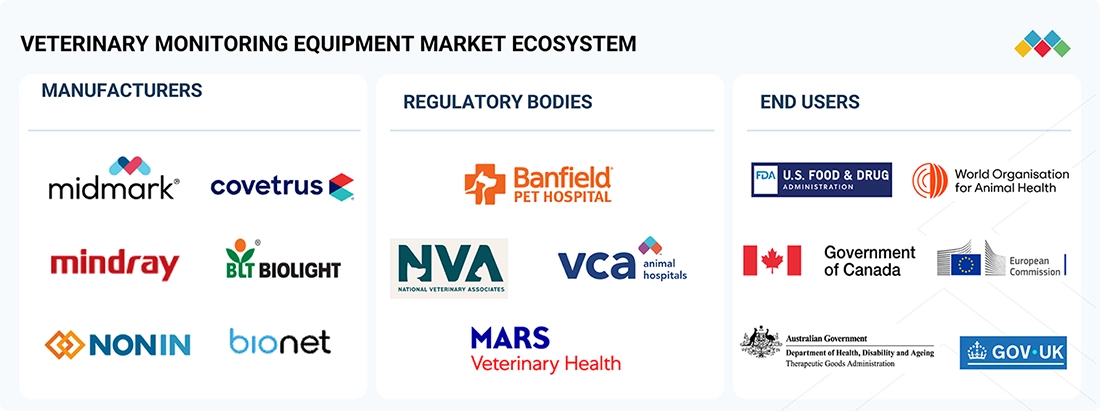
VETERINARY MONITORING EQUIPMENT MARKET: COMMERCIAL USE CASES ACROSS INDUSTRIES
| COMPANY | USE CASE DESCRIPTION | BENEFITS |
|---|---|---|
 |
Designs and produces multiparametric monitors for animals, systems for capnometry and anesthesia monitoring used in ongoing monitoring during surgery and in recovery and in critical conditions | Provides enhanced patient safety through real-time monitoring of ECG, SpO2, NIBP, temperature, respiratory rate, and EtCO2 along with improvements in the clinical process and diagnostics |
 |
Produces advanced systems for monitoring animals' condition, anesthesia, telemetry, and central monitoring of companion and farm animals | Ensures physiologically accurate condition monitoring as well as integrated patient management and process efficiency |
 |
Offers veterinary monitoring equipment and accessories as well as digital management solutions due to integrated distribution | Helps veterinary clinics to gain equipment, increase effectiveness, and provide better operations through a common platform |
 |
Produces equipment for veterinary blood pressure monitoring and vital sign monitoring used for anesthesia of animals and during surgery | Provides more reliable data regarding patients´ blood pressure via devices working based on animal-specific technologies |
 |
Supplies veterinary monitoring equipment and systems as well as equipment for surgeries to veterinary clinics, HBAs, and veterinary hospitals together with support from the technical staff | Provides integrated solutions, such as monitoring solutions, installation support, and capability improvements |
Logos and trademarks shown above are the property of their respective owners. Their use here is for informational and illustrative purposes only.
Related Ecosystem
Key Takeaways
- The UK veterinary monitoring equipment market is valued at $9.02 million in 2020 and is projected to reach $16.2 million by 2025.
- The UK market exhibits a 10.3% CAGR, outperforming the global average and indicating strong regional demand for advanced monitoring solutions.
- UK veterinary practices are increasingly adopting multiparameter monitoring systems to improve surgical outcomes and animal welfare standards.
- Digital transformation and preventive care initiatives are primary growth drivers in the UK veterinary monitoring equipment sector.
Veterinary Monitoring Equipment Market Report Scope
| Report Metric | Details |
|---|---|
| Base Year | 2020 |
| Fastest Growing Segment | VITAL SIGN MONITORS (Type) |
| Forecast Period | 2020-2025 |
| Growth Rate | CAGR of 9.8% from 2020 to 2025 |
| Largest Segment | SMALL COMPANION ANIMALS (Animal Type) |
| Market Size Base Year (Billions) | ~USD 0.36 (2020) |
| Revenue Forecast (Billions) | ~USD 0.57 (2025) |
| Segments Covered | Type, Target Area, Animal Type, End User |
UK Veterinary Monitoring Equipment Market Report Segmentation
4 segment dimensions are covered across the global market.
By Type
- Anesthesia Monitors
- Capnography & Oximetry Systems
- Cats
- Dogs
- Ecg & Ekg Monitors
- Equines
- Mri Systems
- Other Large Animals
- Other Small Companion Animals
- Other Veterinary Monitoring Equipment
- Vital Sign Monitors
By Target Area
- Cardiology
- Multi-Parameter Monitoring
- Neurology
- Other Target Areas
- Respiratory Disorders
- Weight & Temperature Monitoring
By Animal Type
- Large Animals
- Other Animals
- Small Companion Animals
By End User
- Research Institutes
- Veterinary Clinics & Diagnostic Centers
- Veterinary Hospitals
Target Audience
- Veterinary Equipment Manufacturers : Need UK market data to assess market size, growth potential, and competitive positioning for product launches and expansion strategies in British veterinary practices.
- Veterinary Practice Owners & Managers : Require market insights to justify capital investments in monitoring equipment, benchmark against industry standards, and plan facility modernization initiatives.
- Healthcare Investment Firms : Seek UK market analysis to evaluate investment opportunities in veterinary technology companies and identify high-growth segments within animal healthcare.
- Medical Device Distributors : Need regional market forecasts and demand drivers to optimize inventory, negotiate supplier agreements, and develop distribution networks across UK veterinary clinics.
- Veterinary Healthcare Consultants : Require comprehensive UK market data to advise clients on technology adoption, competitive positioning, and strategic planning in the evolving veterinary sector.
Reasons to Buy this Report
- Market Size & Growth Validation : Confirm the UK market opportunity with precise valuation data ($9.02M-$16.2M) and verified 10.3% CAGR to support investment and expansion decisions.
- Competitive Landscape Intelligence : Understand UK-specific market dynamics, key players, and competitive positioning to identify partnership and acquisition opportunities in the veterinary equipment sector.
- Regional Demand Drivers : Access detailed analysis of UK-specific factors including pet ownership trends, veterinary practice modernization, and regulatory requirements driving equipment adoption.
- Strategic Market Entry Planning : Leverage UK market insights to develop targeted go-to-market strategies, pricing models, and distribution channels for veterinary monitoring equipment products.
- Forecast-Based Planning : Use 2025 market projections and growth trajectories to align product development, inventory planning, and sales forecasting with UK market demand.
Frequently asked questions
What is the current size of the UK veterinary monitoring equipment market?
The UK veterinary monitoring equipment market was valued at $9.02 million in 2020 and is expected to grow to $16.2 million by 2025.
What is the growth rate of the UK veterinary monitoring equipment market?
The UK market is growing at a compound annual growth rate (CAGR) of 10.3% from 2020 to 2025.
What types of monitoring equipment are driving growth in the UK market?
UK veterinary practices are adopting pulse oximeters, capnographs, blood pressure monitors, and multiparameter monitoring systems to enhance diagnostic capabilities and animal welfare.
Why is the UK market growing faster than the global average?
The UK's higher growth rate reflects increased investment in veterinary infrastructure, strong adoption of digital health technologies, and heightened focus on preventive animal care standards.
Which UK veterinary settings are primary adopters of monitoring equipment?
UK animal hospitals, emergency veterinary clinics, and surgical centers are leading adopters of advanced monitoring equipment to improve patient outcomes and clinical standards.
RESEARCH METHODOLOGY
This study relied extensively on both primary and secondary sources. The research process examined various factors affecting the industry to identify segmentation types, industry trends, key players, the competitive landscape, key market dynamics, and key player strategies.
Secondary Research
The secondary research process involves the widespread use of secondary sources, directories, databases (such as Bloomberg Businessweek, Factiva, and D&B Hoovers), white papers, annual reports, company house documents, investor presentations, and SEC filings of companies. Secondary research was used to identify and collect information useful for the extensive, technical, market-oriented, and commercial study of the veterinary monitoring equipment market. It was also used to obtain important information about the key players and market classification and segmentation according to industry trends, down to the bottom-most level, and key developments related to market and technology perspectives. A database of the key industry leaders was also prepared using secondary research.
Primary Research
In the primary research process, interviews with sources from both the supply and demand sides were conducted to gather qualitative and quantitative information for this report. The primary sources from the supply side include industry experts such as CEOs, vice presidents, marketing and sales directors, technology and innovation directors, and other key executives from various companies and organizations in the veterinary monitoring equipment market. The primary sources from the demand side include medical OEMs, medical device ISOs, and service providers, among others. Primary research was conducted to validate market segmentation, identify key players in the market, and gather insights into key industry trends and market dynamics.
Breakdown of Primary Interviews:
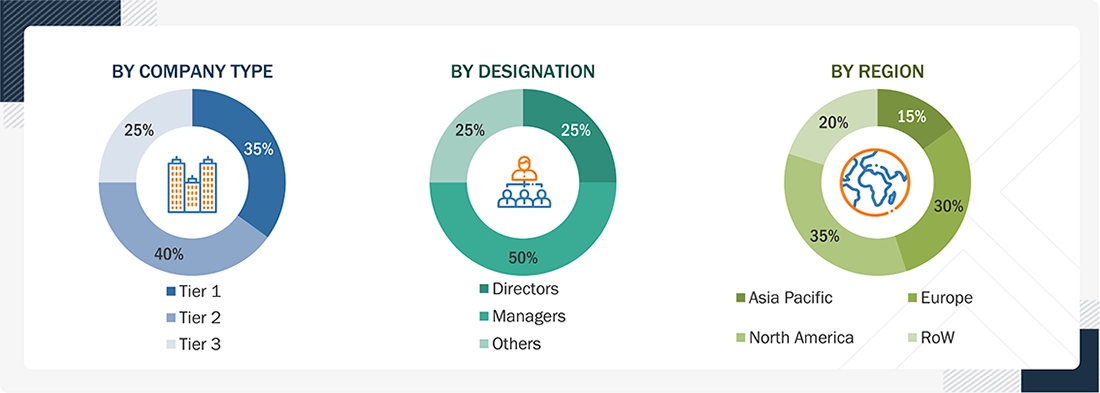
Note 1: C-level primaries include CEOs, COOs, CTOs, and VPs.
Note 2: Others include sales, marketing, and product managers.
Note 3: Companies are classified into tires based on their total revenue. As of 2025, Tier 1 = >USD 2 billion, Tier 2 = USD 50 million to USD 2 billion, and Tier 3 = <USD 50 million.
To know about the assumptions considered for the study, download the pdf brochure
Market Size Estimation
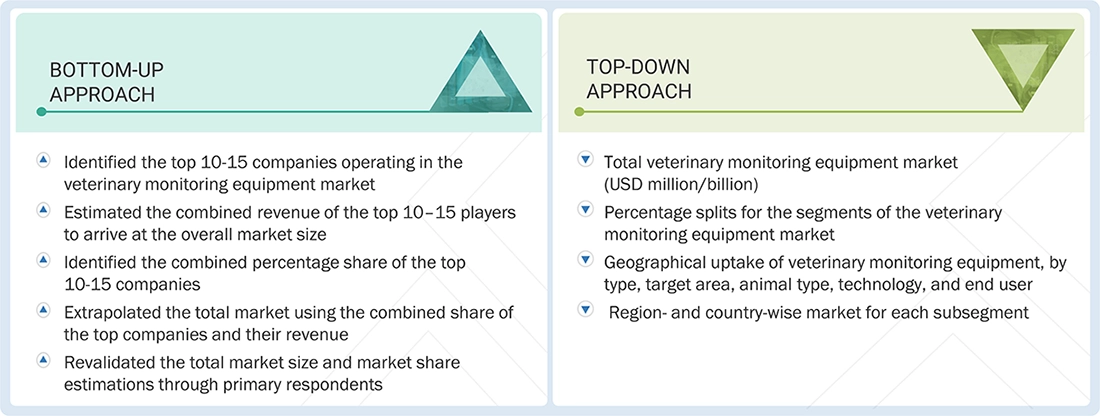
In this report, the global veterinary monitoring equipment market size was estimated using the revenue share analysis of leading players. To this end, key players in the market were identified, and their revenues from the veterinary monitoring equipment business were determined through insights gathered during the primary and secondary research phases. Secondary research included the study of the annual and financial reports of the top market players. In contrast, primary research included extensive interviews with key opinion leaders, such as CEOs, directors, and key marketing executives.
To calculate the global market value, segmental revenues were calculated based on the revenue mapping of major solution/service providers. This process involves the following steps:
- Generating a list of major global players operating in the veterinary monitoring equipment market
- Mapping annual revenues generated by major global players from the veterinary monitoring equipment segment (or nearest reported business unit/service category)
- Revenue mapping of key players to cover a major share of the global market as of 2025
- Extrapolating the global value of the veterinary monitoring equipment industry
Veterinary Monitoring Equipment Market: Top-Down and Bottom-Up Approach
Data Triangulation
After determining the overall market size through the market size estimation process described above, the global veterinary monitoring equipment market was segmented into segments and subsegments. Data triangulation and market breakdown procedures were used to complete the overall market engineering process and arrive at precise statistics for all segments and subsegments. The data was triangulated by analyzing various factors and trends from both the demand and supply sides. Additionally, the veterinary monitoring equipment market was validated using both top-down and bottom-up approaches.
Market Definition
The veterinary monitoring equipment market comprises devices and technologies that observe, measure, record, and communicate animals’ physiological status across care settings. These solutions support veterinarians, animal health professionals, researchers, and livestock operators in assessing patient status, detecting deterioration, guiding treatment, improving procedural safety, and enabling continuous or remote monitoring.
Key Stakeholders
- Companies manufacturing veterinary monitoring equipment
- Original equipment manufacturing companies
- Suppliers and distributors of veterinary monitoring equipment
- Healthcare service providers
- Health insurance payers
- Government bodies/municipal corporations
- Regulatory bodies
- Veterinary research institutes
- Business research and consulting service providers
- Venture capitalists
- Market research and consulting firms
Report Objectives
- To define, describe, segment, and forecast the global veterinary monitoring equipment market by type, target area, animal type, technology, end user, and region
- To strategically analyze the industry trends, technology trends, pricing analysis, regulatory scenario, supply/value chain, ecosystem mapping, Porter’s Five Forces analysis, patent analysis, key stakeholders & buying criteria, and key conferences & events
- To provide detailed information regarding the major factors influencing market growth (such as drivers, restraints, opportunities, and challenges)
- To strategically analyze micromarkets1 with respect to individual growth trends, prospects, and contributions to the overall veterinary monitoring equipment market
- To analyze market opportunities for stakeholders and provide details of the competitive landscape for market leaders
- To estimate the market size and growth potential of the market segments and sub-segments with respect to five key regions—North America, Europe, the Asia Pacific, Latin America, and the Middle East & Africa
- To profile the key players in the veterinary monitoring equipment market and comprehensively analyze their global revenue shares and core competencies2.
- To track and analyze competitive developments, such as product launches & approvals, partnerships, agreements, collaborations, and acquisitions in the veterinary monitoring equipment market
Available customizations:
With the given market data, MarketsandMarkets offers customizations as per the company’s specific needs. The following customization options are available for the present global veterinary monitoring equipment market report:
Product Analysis
- Product matrix, which gives a detailed comparison of the product portfolios of the top twelve companies
Company Information
-
Detailed analysis and profiling of additional market players (up to 10)
Get the Full Veterinary Monitoring Equipment Market Report
Full forecast, segment splits, and company analysis for all Veterinary Monitoring Equipment Market.
- Canada Veterinary Monitoring Equipment Market
- US Veterinary Monitoring Equipment Market
- Germany Veterinary Monitoring Equipment Market
- France Veterinary Monitoring Equipment Market
- Italy Veterinary Monitoring Equipment Market
- Spain Veterinary Monitoring Equipment Market
- China Veterinary Monitoring Equipment Market
- Japan Veterinary Monitoring Equipment Market
- India Veterinary Monitoring Equipment Market
- Rest Of Europe Veterinary Monitoring Equipment Market
- Rest Of Asia Pacific Veterinary Monitoring Equipment Market
Need a Tailored Report?
Customize this report to your needs
Get 10% FREE Customization
Customize This Report
