Polyamide Market

Polyamide Market by Type (Polyamide 6, Polyamide 66, Bio-Based & Specialty Polyamide), Application (Engineering Plastics (Automotive, Electrical & Electronics, Wire & Cable), and Fiber (Textile, Industrial, Carpet)), and Region - Global Forecast to 2031




OVERVIEW
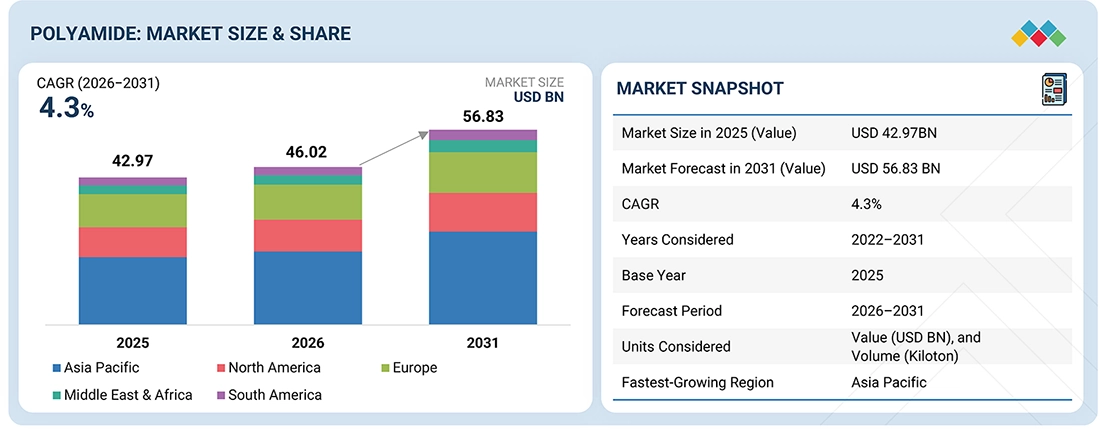
Source: Secondary Research, Interviews with Experts, MarketsandMarkets Analysis
The global polyamide market is projected to grow from USD 46.02 billion in 2026 to USD 56.83 billion in 2031, at a CAGR of 4.3% during the forecast period. Polyamides or nylons are plastics that are formed by the formation of amide linkages and are tough, durable materials. They are used in the fields of fibers as well as engineering plastics in a similar way to many other polymers. The polyamides are characterized by high mechanical strength, high resistance to heat, high chemical resistance, and good dimensional stability. Polyamides can be divided into several formulations according to chemical composition: Poly amide 6 (PA 6) which accounts for the highest volume of all the commercial polyamides and Poly amide 66 (PA 66). Other commercial polyamides that account for a smaller volume are the bio and specialty polyamides, including PA 11, PA 12, PA 46, PA6/10, PA6/12 and Polyphthalamide (PPA). Polyamides are also made of high performance variants for exotic products and demanding extreme environments. Polyamides are manufactured by injection molding, extrusion molding, or fiber extrusion according to the application. Polyamides are used in many industries for polymer engineering applications including automotive, industrial/machinery, electrical &electronics, consumer goods & appliances, packaging/film, and wire &cable. Polyamides used in fiber applications include fabric industry, carpets, industrial fabrics,and staple fiber. The growth of the polyamide market is driven by the high strength lightweight materials that are being demanded the most in the automotive and electronic market segments; however the growing demand for technical fibers, bio-based sustainable products, and continuing infrastructure and manufacturing growth around the world will help keep growing the dimensional growth of the polyamide market.
Market Size and Forecast:
- Market Size Value in 2026: USD 46.02 Billion
- Revenue Forecast in 2031: USD 56.83 Billion
- Growth Rate: CAGR of 4.3% from 2026 to 2031
- Data available from 2022 to 2031
Key Market Trends and Insights
- Segment Acceleration: Consistent growth in the polyamide market has been supported by increasing demand for lightweight, engineered high performance materials in automotive, electrical & electronics and industrial uses. With an increasing emphasis on fuel efficiency, durability, and engineering materials, market growth has been further enhanced.
-
Growth Opportunities: The growth opportunities in the polyamide market are driven by rising demand for lightweight materials in automotive and EVs, increasing use in electrical & electronics, and the shift toward bio-based and sustainable polyamides in emerging economies.
- Growth Drivers: Market growth is further driven by increasing substitution of traditional materials like metals and thermosets with polyamides due to their superior strength, durability, and chemical resistance.
- Market Share Analysis: By type, the bio-based polyamides segment is projected to grow at the highest CAGR of 5.4%.
KEY TAKEAWAYS
-
BY REGIONAsia Pacific is expected to register the highest CAGR (4.9%) during the forecast period.
-
BY TYPEBy type, the bio-based polyamides segment is projected to grow at the highest CAGR (5.4%) during the forecast period.
-
BY APPLICATIONBy application, the engineering plastics segment is projected to grow at the highest CAGR (4.3%) during the forecast period.
-
BY PROCESSBy process, the injection molding segment will dominate the market during the forecast period.
-
Competitive Landscape - Key PlayersBASF (Germany), Envalior (Germany), Ascend Performance Materials (US), INVISTA (US), and LEALEA ENTERPRISE CO., LTD. (Taiwan) were identified as leading players in the polyamide market, given their strong market share and product portfolios.
-
Competitive Landscape - StartupsTOYOBO MC, Grodno Azot, RTP Company, and Xiamen Keyuan Plastic Co., Ltd are leading startups or SMEs by identifying niche gaps early and delivering solutions that precisely match unmet customer needs. Their agility, faster decision-making, and continuous innovation allow them to outperform larger, less flexible competitors.
Consistent growth in the polyamide market has been supported by increasing demand for lightweight, engineered high performance materials in automotive, electrical & electronics and industrial uses. With an increasing emphasis on fuel efficiency, durability, and engineering materials, market growth has been further enhanced. Regionally, the Asia Pacific areas has become a key growth region due to continuing industrial expansion, growing automotive production, and electronics manufacturing. As by product category, bio-based and recycled polyamides are capturing good amount of market share on account of rising plastic consciousness and sustainability programs. The PA6 segment has proven its potential for a long period on account of optimum mechanical strength, tough consistency, and cost effectiveness. By process category, injection molding is leading the polyamide demand because of high process efficiency and capability to produce complex parts. From application perspective, automotive sector is the highest contributor toward standard polyamide for covering extensive applications of polyamide in lightweight and under-the-hood applications.
TRENDS & DISRUPTIONS IMPACTING CUSTOMERS' CUSTOMERS
The impact on consumers' businesses arises from evolving customer trends or market disruptions. Megatrends such as sustainability and digital transformation, alongside disruptions such as AI, supply chain localization, and the energy transition, are significantly reshaping customer priorities and business models. Traditionally, revenue mixes were dominated by legacy products and processes focused on volume and cost. Today, customers are shifting toward high-margin, innovation-driven, and sustainable solutions to remain competitive and future-proof. This transition is prompting businesses to adapt quickly, invest in cleaner technologies, and enhance agility, with suppliers expected to deliver compliant, efficient, and tech-enabled offerings that align with evolving market demands.
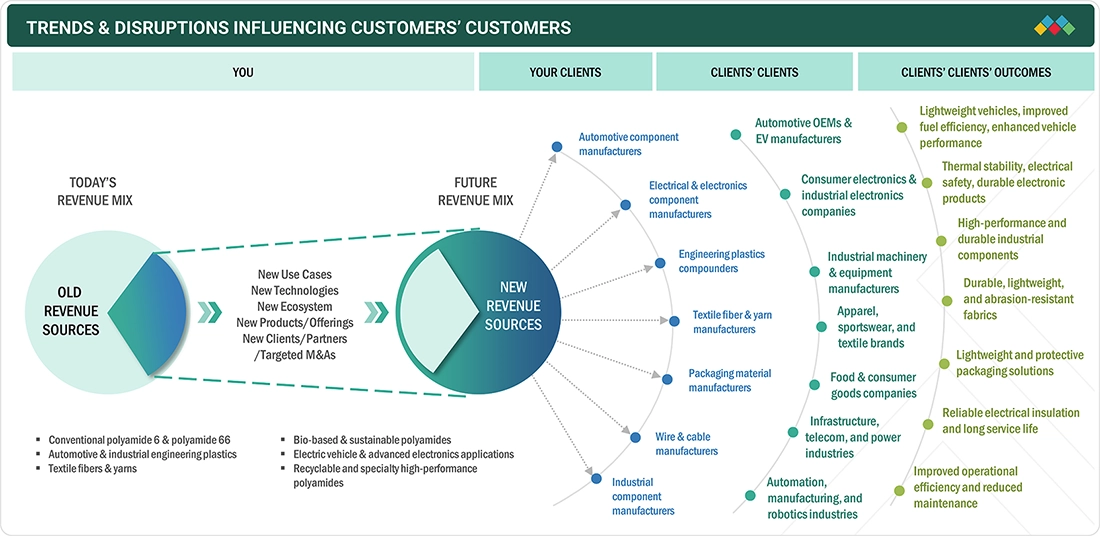
Source: Secondary Research, Interviews with Experts, MarketsandMarkets Analysis
MARKET DYNAMICS

Level
-
Increasing use of polyamides in the automotive sector to reduce vehicle weight and improve performance stability

-
Rising demand for polyamides from the electrical & electronics industry


Level
-
Presence of alternative engineering plastics and substitute materials


Level
-
Growing investments and research activities focused on bio-based polyamides


Level
-
Volatility in raw material prices

-
Environmental concerns related to plastic usage and disposal

Source: Secondary Research, Interviews with Experts, MarketsandMarkets Analysis
Driver: Increasing use of polyamides in the automotive sector to reduce vehicle weight and improve performance stability.
The demand from the automotive industry (a key driving force for the polyamide market) is only expected to increase with the boom in electric vehicle (EV) production. Due to the clear direction of car makers to increase energy efficient and efficient performance, demand for replacement of heavy metallic parts in automobiles with that of lightweight materials is predicted to increase. Having excellent weight-to- strength ratio, high-thermal stability combined with resistance to chemicals and wearability PA6, PA66, and some speciality grades such as PPA, are being increasingly used in the substitution of light weight materials. In addition to the advantages outlined for electric cars, polyamides have been adopted by EV manufactures as the preferred material for all under-the-hood parts, batteries and battery modules, and connection systems. Efforts to reduce weight in an electric vehicle are essential to extend the vehicle‘s battery span and enhance its driving range without compromising on safety and structural integrity; adding polyamides allows a light weight vehicle without sacrificing performance. As electric vehicle production expands in Asia Pacific, Europe and North America, these patterns of premium polyamide use are expected to be reinforced and expand across new car niches.
Restraint: Presence of alternative engineering plastics and substitute materials
A significant factor restraining the growth of the polyamide market is the fact that a large number of other materials (including some which are functionally equivalent, and some that have even better physical properties), are available to substitute polyamides, at a lower cost than a polyamide. In many end-use applications, polyesters (PBT, PET), polyurethanes, polyolefins, and even higher performing composite materials are becoming more and more popular substitutes for polyamides. These substitute materials offer enhanced performance, (through better physical properties or lower Moisture absorption or better dimensional stability or better processability, depending on the end use requirement). For example, for electrical components as well as automotive components, PBT and polypropylene are by far the most preferred materials due to their low cost and suitable thermal resistance. Furthermore, in the textile and flexible packaging fields, polyesters and polyolefins are their main competitors with respect to polyamide fibers and films respectively, especially where competitive prices are concerned. Emerging bio-based and biodegradable polymer markets, such as those based on polylactic acid, and thermoplastic starches used in sustainable packaging, are also not enablers of polyamide consumption. With continual material innovations and relatively good substitute polymer performances, the polyamides face significant challenges in many applications, which restrict it from entering other cost-sensitive markets.
Opportunity: Growing investments and research activities focused on bio-based polyamides
Investment and R&D in bio-based polyamides are setting promising growth perspectives in polyamide as the industries evolve toward sustainable, eco-friendly materials. Bio-based polyamides are said to have the same chemistry as other polyamide chemically, but from renewable sources (using plant oils, et cetera) so they can provide numerous advantages, including lower carbon footprint, lower demand for fossil fuels, etc., and excellent performance, durability, flexibility, heat and chemical resistance. An increase in R&D for enhancing the processing, cost and scope is evident while an increase in the investment to improve the overall production capacity and establish an entire supply chain for renewable monomers and bio-based polyamide resin is also known. Use in textiles, automobiles, electronics and medical devices continues to increase, in part due to performance advantages, but partly because of environmental benefits. Increasingly strict environmental regulations and more environmentally conscious consumers are helping to spur this development and adoption of these greener alternatives, which offer the benefit of being greener to the consumer and the manufacturer while also help to meet climate change commitments. Bio-based polyamides have become an excellent means by which polyamide producers can innovate, high-grade their image and stay on an upward growth trend, and look for profitability, for years to come.
Challenge: Volatility in raw material prices
Challenges to the development of the polyamide market are about rising raw prices and the wider pressures of plastics environmental risk. Polyamides especially the more prevalent types like PA6 and PA66 rely on petrochemically derived raw materials (e.g caprolactam, adipic acid and hexamethylene diamine) where flactuations in global crude-oil trends, geopolitics and supply chain problems places pressure on the prices of those raw materials which impacts the cost of polyamides and where cost pressures are absorbed by the manufacturers of polyamides they find it more difficult to hold their prices and margins steady. This is further compounded by polyamides being a finite, non-biodegradable resource which when placed in waste and not properly recycled adds to plastics waste residue. An increasing awareness of the risks to the environment from plastics residue and more increasingly stringent regulations on plastics with ease of disposal (such as single use plastics) mean end-use industries are reconsiderating their choice of polymer material. Therefore it is not surprising that many companies are switching to lower impact alternatives like bio-renewable, recyclable or biodegradable polymers. This combination pushes the wider market development of polyamides back. To work through these challenges industry players should have an invested interest into sustainable innovations, plastic recycling solutions and secure raw material supplies.
POLYAMIDE MARKET: COMMERCIAL USE CASES ACROSS INDUSTRIES
| COMPANY | USE CASE DESCRIPTION | BENEFITS |
|---|---|---|
 |
Supplies Polyamide 6 materials for lightweight automotive components | Provides engineering plastics for electrical & electronics housings | Supports industrial molded component manufacturing | Helps reduce overall component weight | Maintains performance under high-temperature conditions | Improves durability and mechanical strength |
 |
Manufactures polyamide solutions for automotive systems | Develops materials for electrical connectors and electronic applications | Supplies polymers for precision industrial components | Enhances dimensional stability in complex applications | Improves chemical and heat resistance | Supports long-term mechanical reliability. |
 |
Develops bio-based and specialty polyamides for automotive applications | Supplies advanced materials for sports equipment manufacturing | Supports industrial engineering plastic applications | Contributes toward sustainability goals | Provides lightweight and flexible material performance | Enhances efficiency in high-performance applications |
 |
Produces Polyamide 66 materials for automotive engineering applications | Supplies polyamide compounds for electrical & electronics systems | Supports industrial and consumer goods manufacturing | Provides high thermal and mechanical stability | Improves processability in engineered applications | Enhances durability and operational efficiency |
 |
Manufactures Polyamide 66 compounds for wire & cable systems | Supplies materials for automotive component production | Develops polyamide resins for consumer product applications | Enhances thermal and electrical insulation properties | Supports lightweight product manufacturing | Improves safety and performance in high-temperature applications |
Logos and trademarks shown above are the property of their respective owners. Their use here is for informational and illustrative purposes only.
MARKET ECOSYSTEM
The polyamide market ecosystem consists of raw material suppliers (e.g.,AdvanSix, Radici Novacips SpA), Manufacturer (e.g., BASF, Arkema), distributors (e.g., Ultrapolymers, Nexeo Plastics), and end users (e.g., Dolphin Sutures). Polyamides are utilized in fiber as well as engineering plastic applications
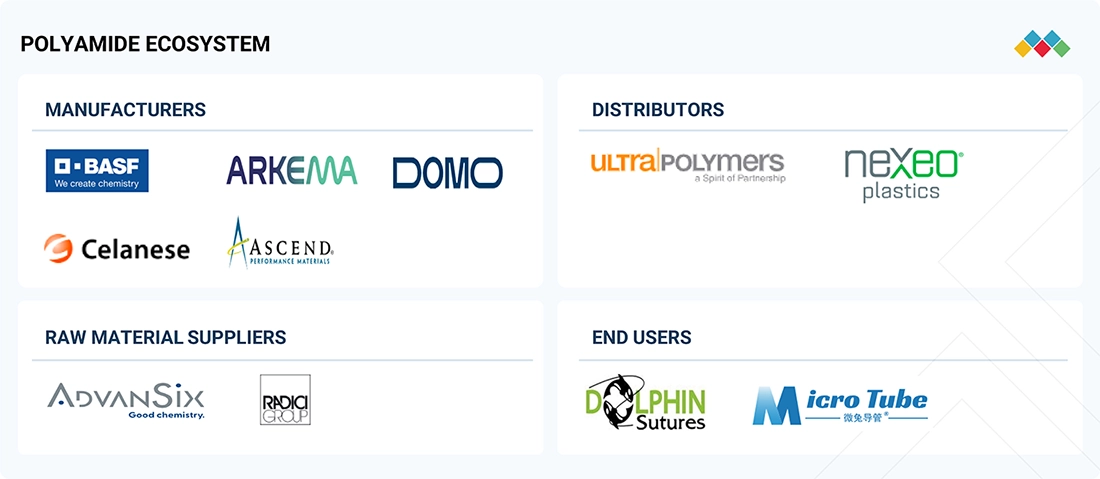
Logos and trademarks shown above are the property of their respective owners. Their use here is for informational and illustrative purposes only.
MARKET SEGMENTS
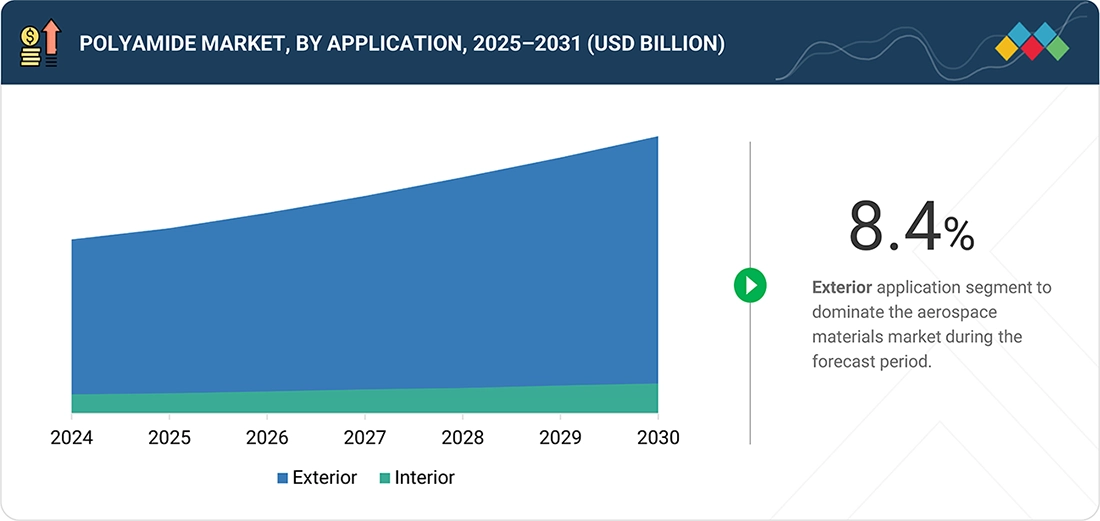
Source: Secondary Research, Interviews with Experts, MarketsandMarkets Analysis
Polyamide Market, By type
According to by type, the bio-based and specialty polyamide segment will be the fastest growing segment. The benefits of bio-based polyamides over the traditional, fossil-based polyamides include use of renewable feedstocks such as castor oil, improved energy efficiency through production process improvements and reduced greenhouse gases. Benefits such as these are resonating with consumers, government authorities and corporations worldwide, all of whom are increasingly supporting more aggressive sustainability targetsand green purchasing policies. A number of bio-based polyamides are already commercially available. Specialty polyamides like PPG6/12 and PA12 benefit from a wide array of distinctive properties such as: high chemical and corrosion resistance, excellent flow, outstanding thermal and mechanical properties, good electrical properties, low affinity for moisture and low swirl. They have applications in automotive (particularly for the EV segment), electronics, industrial and medical markets, where materials must withstand ‘extreme conditions with safety, performance and longevity.’ In addition, increased the use of smaller, higher temperature electronics and the trend of the automotive industry towards lighterweight materials is accelerating the usage and wider application of high performance plastics. These factorsin addition to ongoing R&D, capacity investments and technological breakthrough are leading to falling costs, better processability and higher adoption rates. Thus, this segment constitute the high technology complexity and green application trend, the fastest growing segment of the world polyamide market.
Polyamide Market, By Application
Engineering plastics are expected to witness the highest CAGR by volume in the forecast period. This is attributed to the increased consumption of polyamides as replacements to metals and traditional materials across numerous high performance applications. The unique properties of polyamides, such as their high mechanical strength, low thermal expansion, high energy absorption, make them suitable for applications where engineering plastics are typically used. Conversely, an increase in the use of lighter vehicle components, in order to improve their range, due to their switch to electric vehicles, is expected to propel demand for polyamides in the engineered plastic products market. The automotive industry is using polyamides for a number of parts including covers, batteness and cooling systems. This trend in turn, helps the manufacturers to reduce the weight of a vehicle, thus increasing the energy efficiency. Electrical & electronics industry also makes a significant contribution to volume growth, as polyamides are used as components in switches and connectors, insulation for cables, and housings due to their insulating and flame-retardant properties. Other industries including consumer goods, appliances, packaging and industrial machinery are anticipated to have a high dependence on engineering plastics as they are durable, heat resistant and chemically stable. The diverse applications of polyamides will fuel the growth of engineering plastics application in the polyamide market.
REGION
Asia Pacific to be fastest-growing region in polyamide market during forecast period
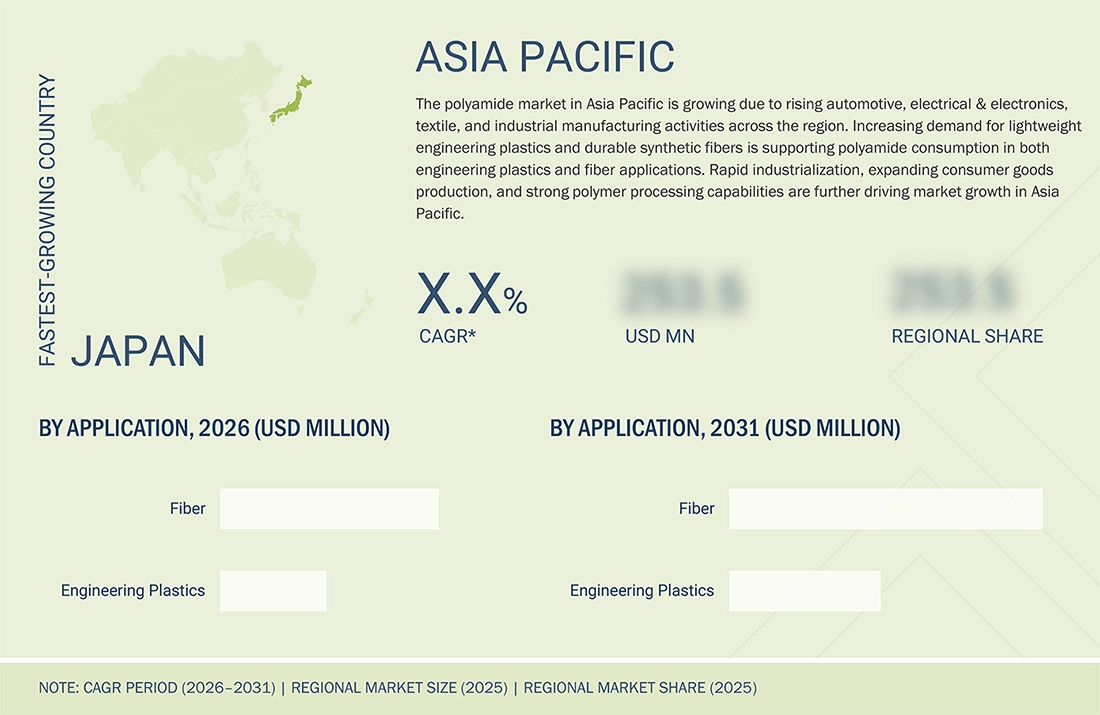
Asia Pacific will be the fastest growing region in the polyamide market during the forecast period owing to the rapid industrialization, automotive manufacturing growth and increase in electronics manufacturing activities in countries such as China, India, Japan and South Korea. Asia Pacific is the leading region in automotive and electronics markets, and with increased demand for lightweight and high performance engineering plastics used in these end-user industries is further supporting regional market growth. Growing investments in infrastructure developments, increase in electric vehicles adoption along with dominant manufacturing hubs are further driving regional polyamide consumption.
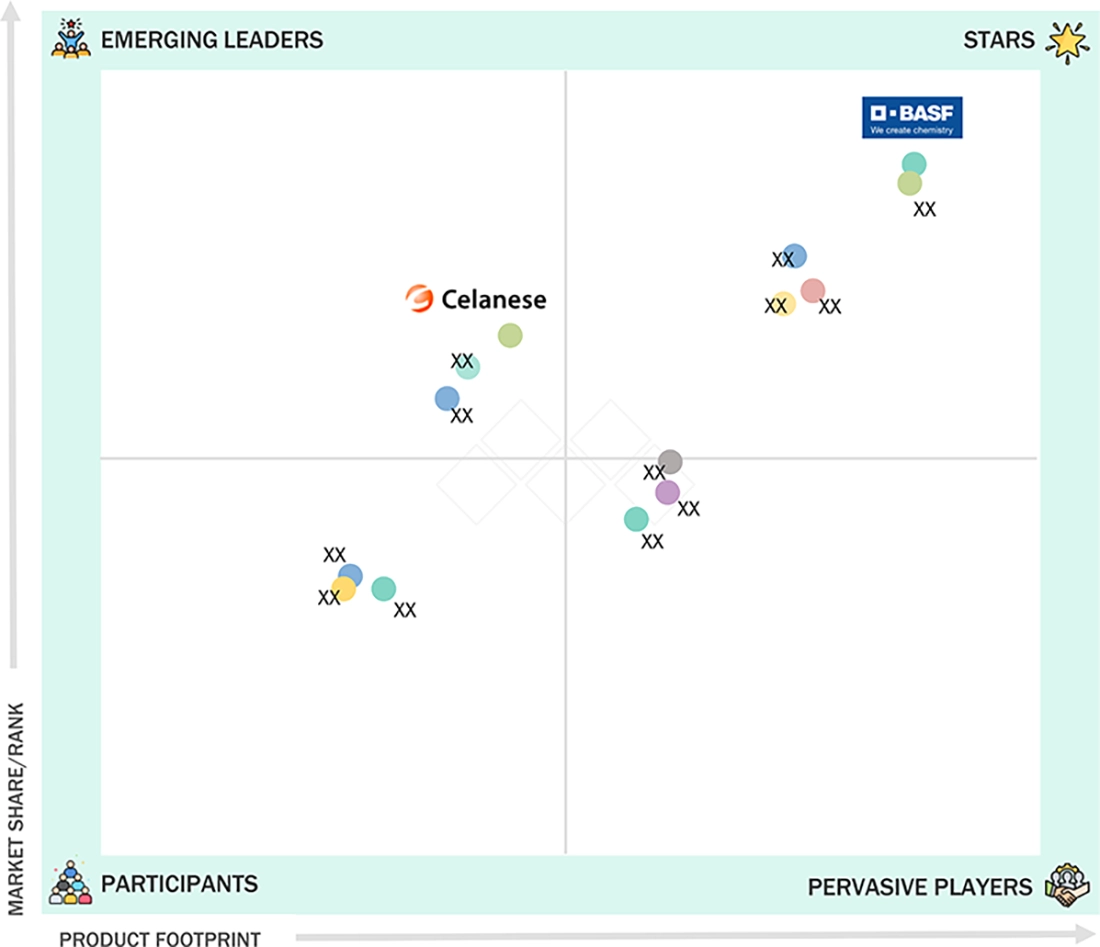
POLYAMIDE MARKET: COMPANY EVALUATION MATRIX
BASF is considered one of the top polyamide producers in the world with a global manufacturing footprint, strong global distribution systems and high performance engineering plastic portfolio. The company continues to invest heavily in developing new advanced polyamide compositions providing excellent mechanical properties, thermal stability and ultra-lighting advantages to automotive, electrical & electronics, industrial and consumer applications. The company also invests considerably in sustainable materials and technologies, including recycled and bio-based polyamides that are increasingly demanded in engineering plastics. BASF owns a large global customer base to provide custom tailored solutions and its expanding operations in emerging markets will continue to dominate the polyamide market in developed and developing economies. The polyamide market appears to be an emerging area for Celanese Corporation, as it has reconfirmed its intent to develop a high performance/engineered polymer portfolio. The emerging portfolio of polyamides will consist of application-leading products for under-the-hood components for automotive, electrical and industrial equipment and consumer applications, along with sustainable product development programs that will focus on polyamide material efficiency, recycled-content products and low-emission manufacturing processes. Celanese has also been growing its regional presence, deepening critical customer-focus’ technical support and application-specific polyamide development, and is an emerging polyamide provider to watch.
Source: Secondary Research, Interviews with Experts, MarketsandMarkets Analysis
KEY MARKET PLAYERS
- INVISTA
- BASF
- Ascend Performance Materials
- Envalior
- LEALEA ENTERPRISE CO., LTD
- Evonik Industries AG
- Arkema
- Celanese Corporation
- Domo Chemicals
- EMS-CHEMIE HOLDING AG
- Asahi Kasei
- SABIC
- Kuraray Co., Ltd
- TORAY INDUSTRIES, INC
- UBE Corporation
- Formosa Chemicals & Fibre Corp
- AdvanSix
- Mitsubishi Chemical Group
MARKET SCOPE
| REPORT METRIC | DETAILS |
|---|---|
| Market Size in 2025 (Value) | USD 42.97 Billion |
| Market Forecast in 2031 (Value) | USD 56.83 Billion |
| CAGR (2026–2031) | 4.3% |
| Years Considered | 2022–2031 |
| Base Year | 2025 |
| Forecast Period | 2026–2031 |
| Units Considered | Value (USD Billion) and Volume (Kiloton) |
| Report Coverage | Revenue forecast, competitive landscape, growth factors, and trends |
| Segments Covered | By Type:Polyamide 6, Polyamide 66, Bio - Based & Speciality polyamide |
| Regions Covered | North America, Europe, Asia Pacific, Middle East & Africa, South America |
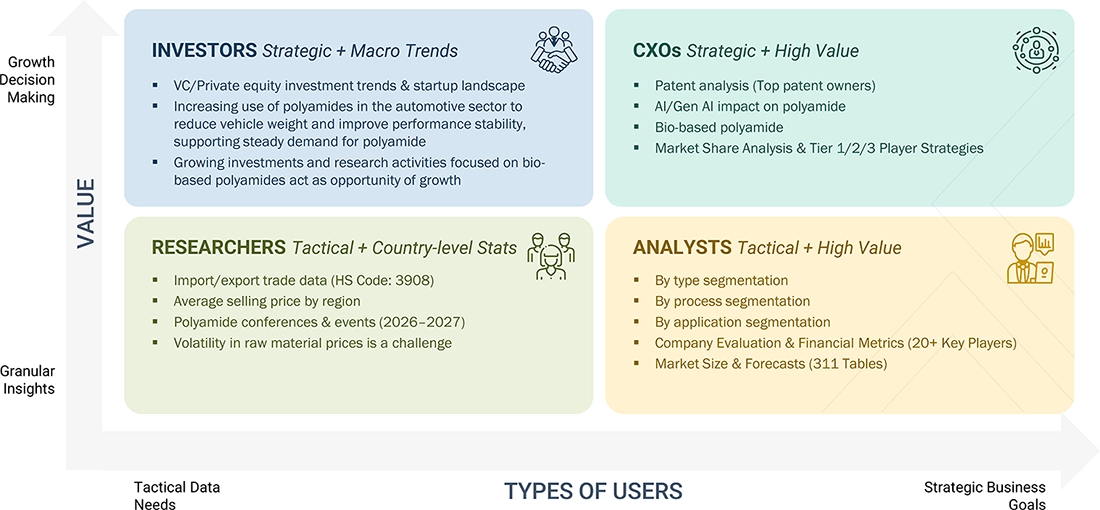
WHAT IS IN IT FOR YOU: POLYAMIDE MARKET REPORT CONTENT GUIDE
DELIVERED CUSTOMIZATIONS
We have successfully delivered the following deep-dive customizations:
| CLIENT REQUEST | CUSTOMIZATION DELIVERED | VALUE ADDS |
|---|---|---|
| Polyamide manufacturer seeking high-performance, sustainable additives, and processing solutions for engineering plastics, automotive parts, textiles, and industrial applications | Supplier benchmarking for polyamide additives and compounds; thermal and mechanical performance comparison across operating conditions; compatibility assessment with PA6, PA66, and bio-based polyamides; processing optimization for extrusion and injection molding; lifecycle and cost-benefit analysis | Improved tensile strength and heat resistance; enhanced durability and wear performance; reduced material waste and processing downtime; compliance with sustainability and recycling targets; lower carbon footprint and improved supply chain resilience |
| Automotive component manufacturer exploring lightweight and heat-resistant polyamide materials for under-the-hood applications | Comparative benchmarking of reinforced polyamide grades; evaluation of thermal stability, flame resistance, and dimensional stability; supplier assessment for glass-fiber and mineral-filled compounds; processing parameter optimization for injection molding; validation against automotive compliance standards | Reduced vehicle weight; improved fuel efficiency and thermal performance; enhanced component lifespan; lower maintenance costs; compliance with automotive safety and sustainability requiremen |
| Textile and apparel company seeking sustainable polyamide solutions for performance fabrics and sportswear | Identification and benchmarking of recycled and bio-based polyamide suppliers; tensile strength and moisture-management analysis; dyeability and durability assessment; lifecycle impact comparison with virgin nylon materials; customization for fabric processing compatibility | Enhanced fabric durability and elasticity; reduced environmental footprint; improved brand sustainability positioning; support for circular economy initiatives; optimized production efficiency and reduced raw material dependency |
RECENT DEVELOPMENTS
- January 2026: ARKEMA started operations at its new Rilsan® Clear transparent polyamide production unit in Singapore on January 13, 2026. The approximately US$20 million investment triples its global production capacity for Rilsan® Clear and establishes its largest transparent polyamide production capacity in Asia, supporting applications in eyewear, AR/VR, smart consumer electronics, healthcare devices and industrial filtration.
- April 2026: Evonik opened its Asia PAthletic Center in Shanghai on April 28, 2026, establishing a dedicated research and innovation hub for polyamide-based materials, particularly polyether block amides (PEBAs). The facility provides material evaluation, application development, technical support and application validation for sports and consumer goods manufacturers, with the objective of accelerating product development and commercialization.
- October 2025: BASF launched Ultramid® LowPCF and Ultramid BMB in North America on October 14, 2025, expanding its sustainable polyamide 6 portfolio. The two grades use renewable natural gas attributed through a mass-balance approach; BASF reported cradle-to-gate product carbon footprint reductions of 30% for LowPCF and approximately 50% for BMB compared with conventional Ultramid grades.
- May 2025: DOMO Chemicals announced on May 8, 2025, that it had expanded and ramped up its compounding operations in Mumbai, India, to meet demand for high-performance engineering plastics. The expansion strengthens its regional R&D and supply-chain capabilities and increases local production of engineered materials based on nylon and other resins for applications including electronic connectors, smart devices and automotive components.
- February 2025 : INVISTA inaugurated Texas Technology Center (TTC), a USD 13 million technology hub and research and development center in the Houston metro area. The nearly 40,000-square-foot facility located in Katy, Texas, which INVISTA first announced in August of last year, will have more than 50 members of R&D, Engineering and Advanced Process Control teams supporting INVISTA’s global technology needs in the chemical intermediates and polymer product lines for both the Nylon and Propylene businesses, as well as data scientists and members of INVISTA’s EHS, transformation and project teams.
Table of Contents
 Exclusive indicates content/data unique to MarketsandMarkets and not available with any competitors.
Methodology
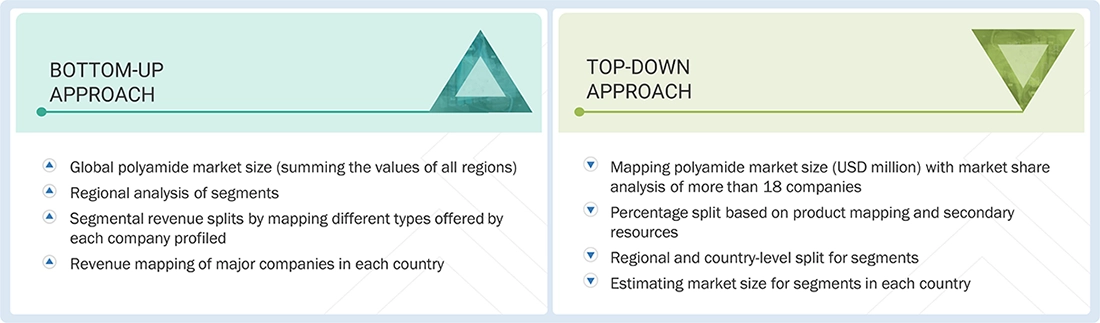
The study involved four major activities in estimating the current size of the polyamide market. Exhaustive secondary research was done to collect information on the market, peer markets, and parent market. The next step was to validate these findings, assumptions, and sizing with the industry experts across the polyamide value chain through primary research. Both top-down and bottom-up approaches were employed to estimate the complete market size. Thereafter, market breakdown and data triangulation were used to estimate the market size of segments and subsegments.
Secondary Research
Secondary sources for this research study include annual reports, press releases, and investor presentations of companies; white papers; certified publications; and articles by recognized authors; gold- and silver-standard websites; polyamide manufacturing companies, regulatory bodies, trade directories, and databases. The secondary research was mainly used to obtain key information about the industry’s supply chain, the total pool of key players, market classification, and segmentation according to industry trends to the bottom-most level and regional markets. It has also been used to obtain information about key developments from a market-oriented perspective.
Primary Research
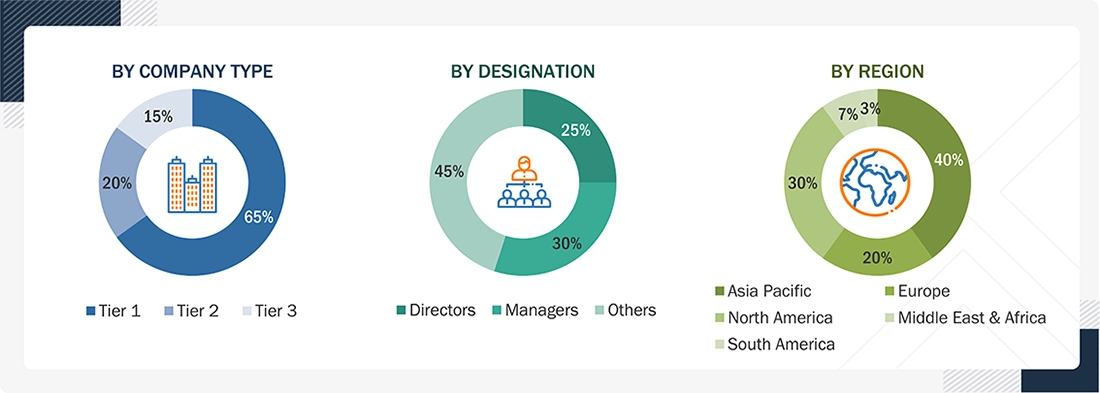
The polyamide market comprises several stakeholders, such as such as raw material suppliers, technology support providers, lithium-ion battery recyclers, and regulatory organizations in the supply chain. Various primary sources from both the supply and demand sides of the market were interviewed to obtain qualitative and quantitative information. Primary sources from the supply side included industry experts such as Chief Executive Officers (CEOs), vice presidents, marketing directors, technology and innovation directors, and related key executives from various key companies and organizations operating in the Polyamide market. Primary sources from the demand side included directors, marketing heads, and purchase managers from various sourcing industries. Following is the breakdown of the primary respondents:
To know about the assumptions considered for the study, download the pdf brochure
Market Size Estimation
The top-down and bottom-up approaches have been employed to estimate and validate the total size of the Polyamide market. These approaches have also been used extensively to estimate the size of various dependent market subsegments. The research methodology used to estimate the market size included the following:
The following segments provide details about the overall market size estimation process employed in this study:
- Extensive primary and secondary research was done to identify the key players.
- The value chain and market size of the Polyamide market, in terms of value, were determined through primary and secondary research.
- All percentage shares, splits, and breakdowns were collected through secondary sources and verified through primary sources.
- All possible parameters that affect the market were covered in this research study and are viewed in extensive detail, verified through primary research, and analyzed to obtain the final quantitative and qualitative data.
- The study of reports, reviews, and newsletters of top market players, along with extensive interviews for opinions from key leaders, such as CEOs, directors, and marketing executives, is included in this research.
Data Triangulation
After arriving at the overall market size using the market size estimation processes as explained above, the market was split into several segments and sub-segments. To complete the overall market engineering process and arrive at the exact statistics of each market segment and subsegment, the data triangulation and market breakdown procedures were employed, wherever applicable. The data was triangulated by studying various factors and trends from both the demand and supply sides.
Market Definition
Polyamides are engineering thermoplastics characterized by repeating amide bonds in their molecular structure. Known for their high mechanical strength, thermal stability, and chemical resistance, they are widely used in demanding applications. Common types include PA6 and PA66, along with high-performance variants tailored for specific requirements. Their versatility makes them suitable for use in automotive, electrical, industrial, and consumer goods. Polyamides can be reinforced or modified to enhance properties like impact strength or flame resistance.
Key Stakeholders
- Polyamide Manufacturers, Processors, and Recyclning Technology Providers
- Research Institutions, Standards Organizations, and Regulatory Agencies such as ASTM, EDQM, and Others
- NGOs, Governments, Investment Banks, Venture Capitalists, and Private Equity Firms
Report Objectives
- To define, describe, and forecast the market size of polyamide in terms of value and volume
- To provide detailed information regarding the key factors, such as drivers, restraints, opportunities, and industry-specific challenges, influencing the growth of the Polyamide market
- To analyze and forecast the global Polyamide market on the basis of type, application, process, and region
- To analyze the opportunities in the market for stakeholders and provide details of a competitive landscape for market leaders
- To forecast the size of various market segments based on four major regions: North America, Asia Pacific, Europe, Middle East & Africa and South America along with their respective key countries
- To track and analyze the competitive developments, such as acquisitions, partnerships, collaborations, agreements and expansions in the market
- To strategically profile the key players and comprehensively analyze their market shares and core competencies
Available customizations:
With the given market data, MarketsandMarkets offers customizations according to the client-specific needs.
The following customization options are available for the report:
- Additional country-level analysis of the Polyamide market
- Profiling of additional market players (up to 5)
Product Analysis
- Product matrix, which provides a detailed comparison of each company's product portfolio.


Personalize This Research
- Triangulate with your Own Data
- Get Data as per your Format and Definition
- Gain a Deeper Dive on a Specific Application, Geography, Customer or Competitor
- Any level of Personalization
Let Us Help You
- What are the Known and Unknown Adjacencies Impacting the Polyamide Market
- What will your New Revenue Sources be?
- Who will be your Top Customer; what will make them switch?
- Defend your Market Share or Win Competitors
- Get a Scorecard for Target Partners

Custom Market Research Services
We Will Customise The Research For You, In Case The Report Listed Above Does Not Meet With Your Requirements
Get 10% Free CustomisationTESTIMONIALS

We at Nissan Chemicals Corporation have been clients of MarketsandMarkets for more than a year now. We recently consulted MarketsandMarkets for a study, the team at MarketsandMarkets was extremely professional and organized. The business insights were very detailed and aligned well with our expectations that really helped us formulate the Business Plans and device new strategies for development themes. MarketsandMarkets offers a unique combination of expertise and dedicated engagement model. Their research findings have helped us in designing our Pricing Strategy which will make it easier for us to predict the future sales and profits for the next ten years. We look forward to working with MarketsandMarkets in the future.
VP of Strategy & New Business Development
Leading Specialty Chemical Company
The MarketsandMarkets Engagement Model, composed of both the Knowledge Store and advisory custom research, has greatly helped us in understanding our markets and making strategic decisions. The Knowledge Store is a fast way to allow everyone in our organization to understand more about most any market they are interested in. The ability to then get custom research done and get answers to specific strategic questions and market insight has been spectacular. The Markets and Markets team feel more like colleagues than vendors and their services have helped us change our culture where statements of things like growth opportunities and competitive position are always backed by industry research.

Rich Gibson,
Director, Corporate Strategy
Milliken & Company,
Leading Industrial Manufacturer of specialty chemical, floor covering, performance and protective textile materials, and healthcaremilliken.com
MarketsandMarkets is a trusted resource that helps us to better understand markets that are near-adjacencies-whether its technology, value chain or geography. Their Knowledge Store platform provides a dashboard of markets and their characteristics which is easy to use and saves us time.
Adam Shaw,
Market Development and Strategy Manager
AdvanSix Inc. USA,
An American Leader in Chemicalswww.advansix.com
The Knowledge Store from MarketsandMarkets is a valuable tool which has helped my team acquire greater insight in to the end markets that our business serves. This has enabled us to help our company build stronger strategies throughout our planning process.
TOSHIO KINOSHITA
Senior Chif Consultion Research & Consulting Division
Mitsubishi Chemical Research Corporation,
Leading Manufacturer of Chemical Productswww.mitsubishichem-res.co.jp/en/

We recently engaged with MarketsandMarkets for a study, the team not only clearly understood our business objectives but was also extremely professional in the way they handled the entire project. The study was efficiently conducted in a phase-wise manner, and the engagement model furnished us with high-quality business insights that far exceeded our expectations at each phase. We were especially happy that MarketsandMarkets could provide us with both, an English as well as a Japanese version of the study. A special thanks to the Analyst Team and Client Services Team, whose fluency in Japanese enhanced our comfort level, as we could converse with them in our preferred language.
Independent entrepreneurs
Arrow Precision
We approached MarketsandMarkets for study on Proppants Market, and their work exceeded our expectations. The study conducted was comprehensive and enabled us to view the market through the various dimensions. In addition, the team was extraordinarily responsive throughout the process and resolved our queries on time. I strongly recommend MarketsandMarkets and will certainly consider them for additional market assessments we will need in the future.
Global engineering company, Japan
Deputy Manager,
Strategic Planning OfficeThe high-quality insights shared by the MarketsandMarkets team helped us understand the pharmaceutical plant designers in a specific geography. It also captured the risks that we may likely face in communicating with our potential partners. The study would enable us identify partners, which would impact our future growth.
- China Polyamide Market
- South Korea Polyamide Market
- Japan Polyamide Market
- India Polyamide Market
- Taiwan Polyamide Market
- Indonesia Polyamide Market
- Germany Polyamide Market
- France Polyamide Market
- UK Polyamide Market
- Italy Polyamide Market
- Russia Polyamide Market
- Canada Polyamide Market
- Mexico Polyamide Market
- US Polyamide Market
- Brazil Polyamide Market
- Argentina Polyamide Market
- Rest Of Europe Polyamide Market
- Rest Of Asia Pacific Polyamide Market
- GCC Countries Polyamide Market
- –Rest Of GCC Countries Polyamide Market
- Rest Of South America Polyamide Market
Growth opportunities and latent adjacency in Polyamide Market






Paul
Aug, 2018
Looking for 3-5 years historical and 1-2 forecaste price of PA10 and P12.
Jinhee
Jun, 2016
Information on Automotive Polyamide market.
Ferran
Jul, 2019
General information about Polyamide Market for personal use.
Dhruv
Sep, 2014
Polyamides for energy (oil & gas, solar, wind) markets. Also interested in polyamides for wire & cable. Focus on specialty polyamides..
Frederic
May, 2013
General information on all types of Polyamides.
Roman
Mar, 2017
Market information on Nylon 6 and Nylon 66 on application for protective wear, work wear, back packs, military and others.
Antonio
Jun, 2017
Interested in the market demand size of polyamide in European countries (quantity and/or sales).