



Lateral Flow Assays Market
Report Code
MD 4158
Published in
Oct, 2026, By MarketsandMarkets™
Lateral Flow Assays Market by Product (Kits, Readers), Application (HIV, HPV, TB, Cardiac Marker, Pregnancy, Hepatitis, Food Safety), Sample (Blood, Urine, Saliva), Technique (Sandwich, Competitive), End User (Hospitals), Region - Global Forecast to 2031

$9.14B
MARKET SIZE, 2026
$13.52B
MARKET SIZE, 2031

8.1%
CAGR (2026-2031)

2026-2031
FORECAST PERIOD
LATERAL FLOW ASSAYS MARKET SIZE, SHARE & GROWTH SNAPSHOT
Source: Secondary Research, Interviews with Experts, MarketsandMarkets Analysis
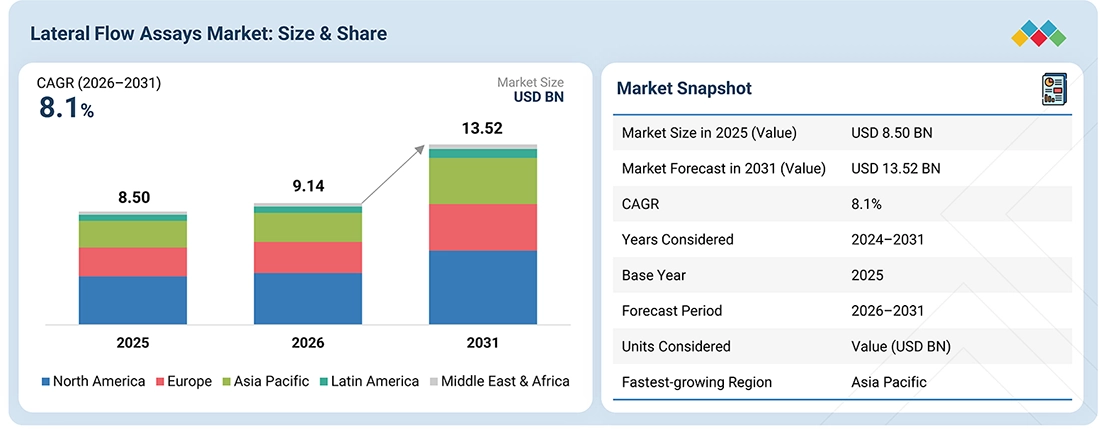
The global lateral flow assays market is projected to grow from USD 9.14 billion in 2026 to USD 13.52 billion by 2031, at a CAGR of 8.1% during the forecast period. The market was valued at USD 8.50 billion in 2025. The high prevalence of infectious diseases worldwide and the resulting need for testing, rapid growth in the geriatric population, the rising use of home-based lateral flow assay devices, and growing demand for POC testing are the major factors driving market growth. However, inconsistent accuracy compared to other methods and the reluctance of doctors and patients to shift from traditional diagnostics are restraining the growth of the lateral flow assays market.
KEY TAKEAWAYS
-
MARKET SNAPSHOT:
Base Year Market Size (2025): USD 8.50 Billion
Current Market Size (2026): USD 9.14 Billion
Forecast Market Size (2031): USD 13.52 Billion
CAGR (2026–2031): 8.1% -
SEGMENT LEADERSHIP:
Regional Leader: North America led the market with a share of 42.3% in 2025.
Product Leader: Kits & reagents held the prominent market share of 82.3% in 2025.
Application Leader: Clinical testing held the largest market share in 2025.
Technique: Multiplex detection assays are expected to be the fastest-growing segment from 2026 to 2031.
Sample Leader: Blood samples led the market with a share of 51.6% in 2025.
End User: Home Care Settings are expected to record the highest CAGR during the forecast period. -
MARKET OUTLOOK & COMPETITIVE LANDSCAPE:
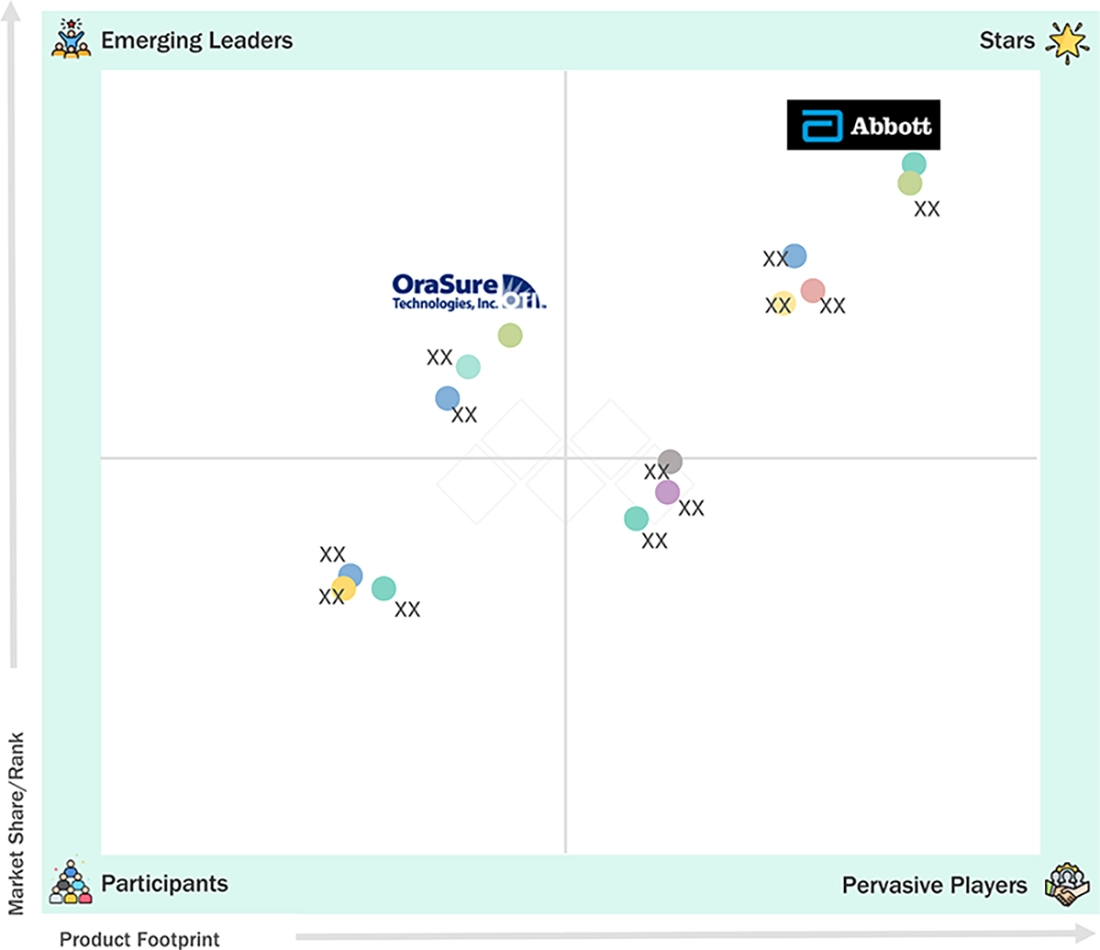
Abbott Laboratories (US), F. Hoffman-La Roche Ltd. (Switzerland), Danaher Corporation (US), and QuidelOrtho Corporation (US) were identified as star players in the lateral flow assays market, owing to their strong market presence and extensive product portfolios.
Chembio Diagnostics Inc. (US), DCN Diagnostics (US), Polysciences, Inc. (US), Abingdon Health (UK), Oranoxis, Inc. (US), and AESKU.Group GmbH (Germany), among others, have distinguished themselves among startups and SMEs in the lateral flow assays market by establishing strong positions in specialized segments.
The lateral flow assays market is expected to witness continued growth as demand increases for rapid, accessible, and decentralized testing across infectious diseases, women's health, chronic conditions, veterinary diagnostics, food safety, and environmental monitoring. Advances in nanomaterial-based signal enhancement, multiplexing, AI-enabled interpretation, and smartphone-based readout are enabling higher sensitivity, more objective results, and broader testing capabilities, while next-generation LFAs are increasingly evolving from conventional qualitative strips toward quantitative, digitally connected, and multi-analyte diagnostic platforms.
TRENDS & DISRUPTIONS IMPACTING CUSTOMERS' CUSTOMERS
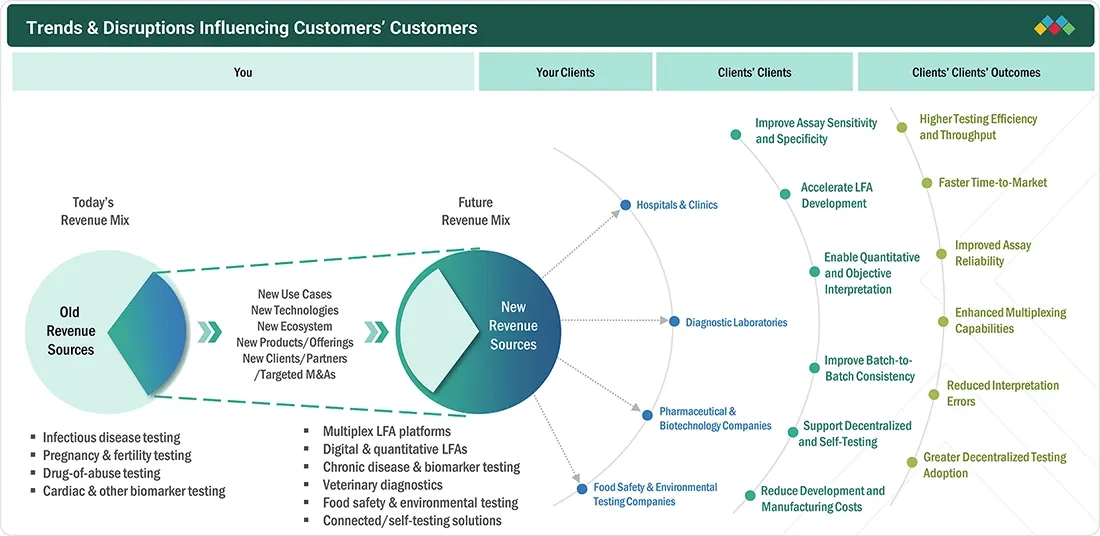
The lateral flow assays market continues to evolve as demand grows for rapid, accessible, and decentralized diagnostic testing. Advances in nanomaterial-based signal generation, signal amplification, multiplex assay formats, and improved assay engineering are enabling LFAs with higher sensitivity, specificity, and broader target detection capabilities. In parallel, integrating smartphone-based imaging, artificial intelligence, and machine learning is transforming conventional visually interpreted tests into more objective, quantitative diagnostic platforms. Expanding applications across infectious diseases, clinical biomarkers, food safety, environmental monitoring, and other point-of-need settings are creating additional opportunities for LFA adoption, while continued development of multiplex and digitally connected formats is expected to further enhance testing efficiency and analytical performance.
Source: Secondary Research, Interviews with Experts, MarketsandMarkets Analysis
MARKET DYNAMICS

Drivers
Impact
Level
Level
-
High prevalence of infectious diseases

-
Rising geriatric population


RESTRAINTS
Impact
Level
Level
-
Inconsistent results of lateral flow assay tests


OPPORTUNITIES
Impact
Level
Level
-
Evolving applications of lateral flow assays

-
Rising demand for lateral flow assays in food & beverage industry


CHALLENGES
Impact
Level
Level
-
Limited reimbursements for lateral flow assay products

-
Difficulties in procuring quality raw materials to develop tests

Source: Secondary Research, Interviews with Experts, MarketsandMarkets Analysis
Driver: High prevalence of infectious diseases
Despite major improvements in sanitation and medicine, the global prevalence of infectious diseases remains high. Although non-communicable diseases are the leading cause of morbidity and mortality, infectious diseases remain a major public health concern across the globe. According to the World Health Organization's Global Tuberculosis Report 2025, tuberculosis (TB) remained the leading infectious disease killer in 2024, with an estimated 10.7 million people falling ill with TB and 1.23 million deaths globally. In 2024, 14.6 million dengue cases and more than 12,000 dengue-related deaths were reported globally, representing the highest number of dengue cases recorded in a 12-month period.
Restraint: Inconsistent results of lateral flow assay tests
While lateral flow assay (LFA) tests offer advantages such as rapid turnaround time, user-friendliness, and affordability, a major drawback is their variable accuracy and reliability, especially compared with more established laboratory techniques like ELISA or PCR. LFAs often struggle with sensitivity and specificity, particularly when analyte concentrations are near the assay’s detection threshold or when sample-handling procedures are suboptimal. These issues can result in false negatives or false positives, potentially affecting clinical decisions and leading to suboptimal patient outcomes. For example, in tuberculosis screening, some antigen-based LFA tests have exhibited reduced sensitivity in HIV-positive patients, likely due to lower bacterial loads, contributing to missed diagnoses. Likewise, in malaria diagnostics, certain LFA tools have shown diminished ability to detect low-parasite-density cases, which is especially problematic in low-transmission regions or during elimination efforts.
Opportunity: Evolving applications of lateral flow assays
Lateral flow assays (LFAs) have advanced significantly over the past two decades and are now commonly used in point-of-care (POC) and diagnostic settings. While traditionally employed for infectious disease detection, cardiac disease diagnosis, and veterinary testing, their application scope has expanded in recent years. Emerging areas now include saliva-based diagnostics, behavioral health screening, agricultural testing (such as detection of genetically modified organisms and crop quality assessment), biowarfare agent detection (e.g., anthrax), environmental monitoring (for contaminating enzymes in manufacturing facilities), and food microbiology (identifying pathogens like E. coli O157, Salmonella, Listeria, and other spoilage organisms).
Challenge: Limited reimbursements for lateral flow assay products
Reimbursement challenges have hindered the widespread adoption of lateral flow assay (LFA)-based diagnostic tests in various countries. As healthcare expenditure continues to rise, insurance providers are increasingly scrutinizing the necessity and value of new diagnostic tools. This shift is further influenced by the global transition from traditional fee-for-service models to value-based reimbursement systems. Consequently, diagnostic tests that merely support clinical decision-making without directly influencing treatment pathways often receive insufficient reimbursement, leading to their reduced use or underfunding.
LATERAL FLOW ASSAYS MARKET: COMMERCIAL USE CASES ACROSS INDUSTRIES
| COMPANY | USE CASE DESCRIPTION | BENEFITS |
|---|---|---|
 |
Provides rapid lateral flow diagnostics through its BinaxNOW and other rapid-testing platforms, including digitally read LFA formats such as BinaxNOW Influenza A & B Card 2 for the DIGIVAL platform. | Enables rapid decentralized testing, supports objective digital interpretation, and provides results within minutes for point-of-care and other testing settings. |
 |
Develops lateral flow immunochromatographic tests for rapid diagnostics and is expanding access to large-scale LFA manufacturing through its strategic relationship with Sapphiros. Roche's SARS-CoV-2 Rapid Antigen Test 2.0 also incorporates digitally readable test identification. | Supports rapid decentralized testing, enables digital traceability of individual tests, and strengthens access to scalable LFA manufacturing capacity. |
 |
Through Abcam, provides LFA-related assay development tools, including a Universal Lateral Flow Assay Kit and antibody-conjugation technologies specifically applicable to LFA development. | Supports LFA assay development and optimization by enabling antibody labeling, conjugation with gold/fluorescent nanoparticles, and reproducible test development. |
 |
Provides the BD Veritor Plus System, combining a rapid point-of-care analyzer with lateral-flow-based assays for respiratory infections including influenza A/B, RSV and Group A Strep. | Provides rapid, objective digital results, supports decentralized testing, and enables multiple assays on a common point-of-care platform. |
 |
Offers QUICKVUE rapid lateral-flow tests and the SOFIA platform, which uses fluorescent immunoassay/lateral-flow technology for rapid point-of-care testing across infectious and other diagnostic applications. | Enables fast testing in point-of-care and laboratory settings, while SOFIA provides automated and objective interpretation to improve testing efficiency. |
Logos and trademarks shown above are the property of their respective owners. Their use here is for informational and illustrative purposes only.
MARKET ECOSYSTEM
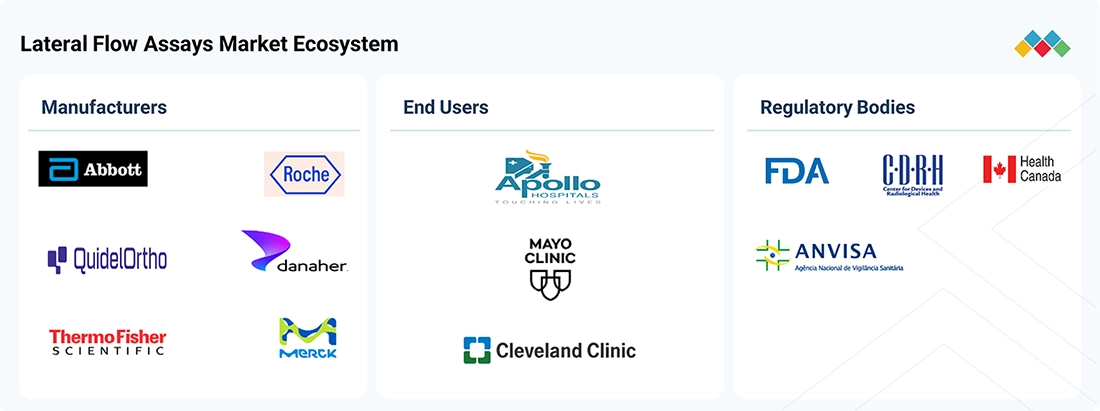
The ecosystem market map of the lateral flow assays market comprises the elements in this market and defines them by showing the bodies involved. It includes products, distribution channels, and end users. The product category includes products by type such as kits & reagents and readers. Manufacturers of various lateral flow assays include organizations involved in research, product development, optimization, and launch. Distributors include third parties and e-commerce sites linked with the organization to market lateral flow assay products. Research and product development include in-house research facilities, contract research organizations, and contract development and manufacturing organizations that play a key role in outsourcing product development services to manufacturers. The end customers are the key stakeholders in the supply chain of the lateral flow assays market. On the other hand, investors/funders and health regulatory bodies are the major influencers in this market.
Logos and trademarks shown above are the property of their respective owners. Their use here is for informational and illustrative purposes only.
MARKET SEGMENTS
Source: Secondary Research, Interviews with Experts, MarketsandMarkets Analysis
Lateral Flow Assays Market, By Product
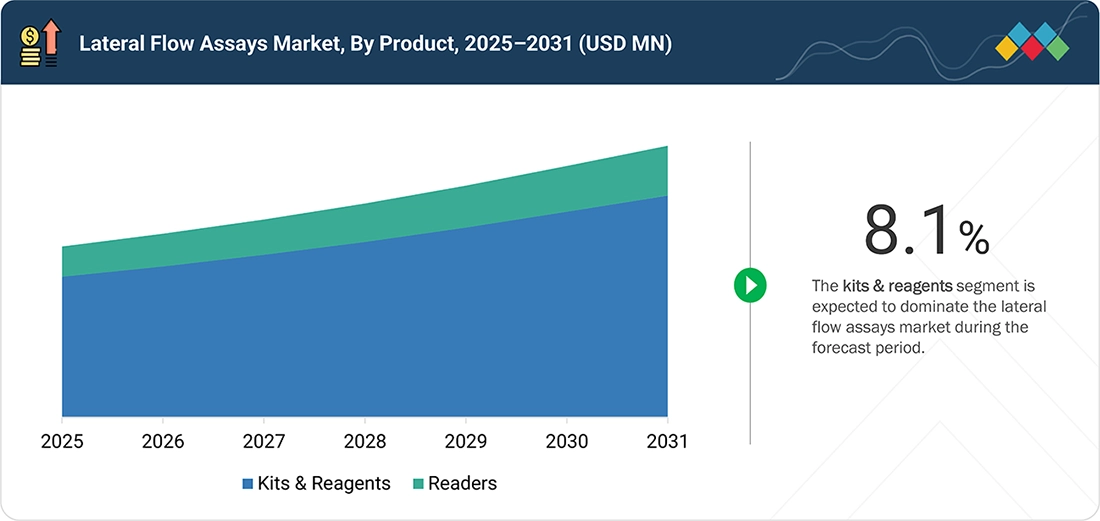
Based on product, the lateral flow assays market is segmented into lateral flow readers and kits & reagents. The kits & reagents segment dominated this market, with a share in 2025. This segment's large share can be attributed to the growing use of lateral flow kits & reagents for POC testing, the rising burden of chronic diseases, increased use in home care, and the convenience and ease of use of kits & reagents.
Lateral Flow Assays Market, By Application
Based on application, the lateral flow assays market is segmented into clinical testing, veterinary diagnostics, food safety & environmental testing, and drug development & quality testing. The clinical testing segment accounted for the largest share of the lateral flow assays market in 2025. The large share of this application segment can be attributed to the rising prevalence of chronic diseases and infectious diseases worldwide, the growing geriatric population, increasing patient awareness about rapid test options, the growing pressure to reduce healthcare costs, and the increasing demand for patient-centric care.
Lateral Flow Assays Market, By Technique
Based on technique, the market is segmented into competitive, sandwich, and multiplex detection assays. Sandwich assays dominated the market in 2025. This segment's large share is attributed to sandwich assays' better sensitivity and specificity and their extensive use in measuring critical analytes (such as cardiac and hepatitis markers).
Lateral Flow Assays Market, By Sample
Based on sample type, the lateral flow assays market is segmented into blood, urine, saliva, and other samples (nasal swabs, throat swabs, and vaginal fluid). Blood samples accounted for the largest market share in 2025. The extensive use of blood samples in lateral flow tests and the easy detection of disease antibodies from blood samples are the key factors driving the growth of this market segment.
Lateral Flow Assays Market, By End User
Based on end users, the LFA market is segmented into hospitals & clinics, diagnostic laboratories, home care settings, pharmaceutical & biotechnology companies, and others. The hospitals & clinics segment accounted for the largest market share in 2025. Technological advancements, increasing adoption of point-of-care testing, and a growing inclination toward fast, early diagnosis are driving growth in the hospitals & clinics segment.
REGION
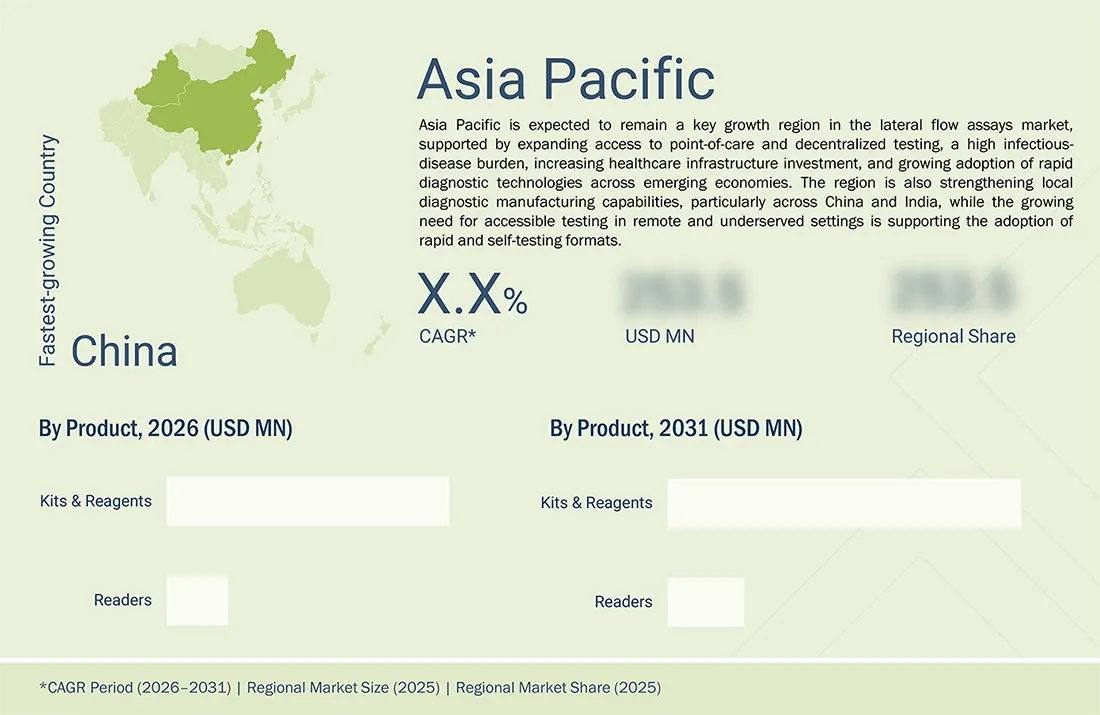
Asia Pacific to show high growth in the global lateral flow assay market
Asia Pacific is supported by expanding diagnostic capacity, increasing adoption of rapid and point-of-care testing, and growing efforts to strengthen local RDT manufacturing. WHO has highlighted the importance of local and regional production of rapid diagnostics in developing markets, including technology-transfer initiatives supporting manufacturers in Asia and other emerging regions. The region also has an established base of LFA developers and manufacturers, and WHO has identified multiple Asia-based LFA technologies for applications such as TB testing, while increasing emphasis on accessible and decentralized diagnostics is supporting broader adoption.
LATERAL FLOW ASSAYS MARKET: COMPANY EVALUATION MATRIX
Abbott is a major player in the LFA market, with a broad rapid-diagnostics portfolio spanning infectious disease, respiratory, and decentralized testing applications. Its LFA portfolio includes BinaxNOW and other rapid immunochromatographic tests, while its Bioline portfolio supports rapid testing for applications such as dengue and HIV/syphilis. Abbott's rapid-testing platforms provide results within minutes and support testing across professional, point-of-care, and decentralized settings. Roche is a major participant in the lateral flow assays market through its rapid diagnostic portfolio and expanding access to large-scale LFA manufacturing capabilities. The company offers rapid immunochromatographic testing solutions and, in November 2025, entered a strategic supply and manufacturing agreement with Sapphiros, providing access to at least 1 billion LFA tests annually from Sapphiros' UK extreme-volume manufacturing capacity of up to 5 billion tests per year. This strengthens Roche's ability to support scalable rapid diagnostics and decentralized testing while expanding access to high-volume LFA manufacturing.
Source: Secondary Research, Interviews with Experts, MarketsandMarkets Analysis
KEY MARKET PLAYERS
- Abbott Laboratories (US)
- F. Hoffman La Roche Ltd. (Switzerland)
- Danaher Corporation (US)
- QuidelOrtho (US)
- Siemens AG (Germany)
- Becton, Dickinson, and Company (US)
- Biomerieux S.A. (France)
- Thermo Fisher Scientific, Inc. (US)
- Revvity, Inc. (US)
- Qiagen N.V. (US)
MARKET SCOPE
| REPORT METRIC | DETAILS |
|---|---|
| Market Size in 2025 (Value) | USD 8.50 Billion |
| Market Forecast in 2026 (Value) | USD 9.14 Billion |
| Market Forecast in 2031 (Value) | USD 13.52 Billion |
| CAGR | CAGR of 8.1% from 2026-2031 |
| Years Considered | 2024-2031 |
| Base Year | 2025 |
| Forecast Period | 2026-2031 |
| Units Considered | Value (USD Billion) |
| Report Coverage | Revenue forecast, company ranking, competitive landscape, growth factors, and trends |
| Segments Covered |
|
| Regions Covered | North America, Europe, Asia Pacific, Latin America, Middle East & Africa, and GCC Countries |
WHAT IS IN IT FOR YOU: LATERAL FLOW ASSAYS MARKET REPORT CONTENT GUIDE
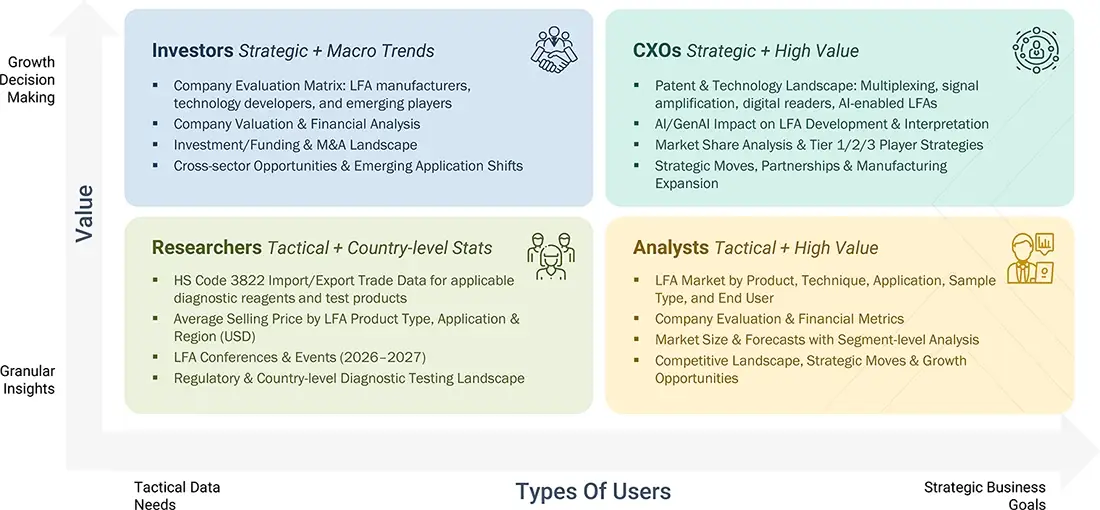
DELIVERED CUSTOMIZATIONS
We have successfully delivered the following deep-dive customizations:
| CLIENT REQUEST | CUSTOMIZATION DELIVERED | VALUE ADDS |
|---|---|---|
| Product Analysis | Product matrix, which provides a detailed comparison of the product portfolio of each company in the lateral flow assays market | Enables easy comparison of competitors’ offerings, helping identify gaps, overlaps, and differentiation opportunities |
| Company Information | Additional five company profiles of players operating in the lateral flow assays market. | Provides insights into competitors’ strategies, innovation focus, and partnerships, supporting strategic planning |
RECENT DEVELOPMENTS
- June 2026 : WHO prequalified Abbott's Determine Syphilis Advanced. The test is an immunochromatographic lateral-flow syphilis rapid diagnostic test manufactured by Abbott Diagnostics Medical Co., Ltd., intended for serum, plasma, and whole-blood specimens.
- November 2025 : Roche entered into a strategic supply and manufacturing option agreement with Sapphiros, giving Roche exclusive rights to at least 1 billion lateral-flow tests annually from Sapphiros' UK extreme-volume manufacturing process. Sapphiros' reel-to-reel facility has a stated capacity of up to 5 billion diagnostic tests annually. The agreement also provides Roche access to Sapphiros' future instrument-free multiplex molecular POC technology.
- December 2023 : Danaher completed the acquisition of Abcam, making it an indirect wholly owned subsidiary. Abcam supplies antibodies, reagents, biomarkers, and assays, and its portfolio includes lateral-flow assay development products such as LFA strips, conjugation tools, buffers, and controls. Abcam's LFA portfolio supports development of custom rapid tests rather than serving primarily as a branded clinical rapid-test business.
Table of Contents
 Exclusive indicates content/data unique to MarketsandMarkets and not available with any competitors.
TITLE
PAGE NO
1
INTRODUCTION
15
2
EXECUTIVE SUMMARY
3
PREMIUM INSIGHTS
4
MARKET OVERVIEW
Highlights the market structure, growth drivers, restraints, and near-term inflection points influencing performance.
4.1
INTRODUCTION
4.2
MARKET DYNAMICS
4.2.1
DRIVERS
4.2.2
RESTRAINTS
4.2.3
OPPORTUNITIES
4.2.4
CHALLENGES
4.3
UNMET NEEDS AND WHITE SPACES
4.4
INTERCONNECTED MARKETS AND CROSS-SECTOR OPPORTUNITIES
4.5
STRATEGIC MOVES BY TIER-1/2/3 PLAYERS
5
INDUSTRY TRENDS
Captures industry movement, adoption patterns, and strategic signals across key end-use segments and regions.
5.1
PORTER’S FIVE FORCES ANALYSIS
5.2
MACROECONOMIC INDICATORS
5.2.1
INTRODUCTION
5.2.2
GDP TRENDS AND FORECAST
5.2.3
TRENDS IN GLOBAL LATERAL FLOW ASSAYS INDUSTRY
5.3
SUPPLY CHAIN ANALYSIS
5.4
VALUE CHAIN ANALYSIS
5.5
ECOSYSTEM ANALYSIS
5.6
PRICING ANALYSIS
5.6.1
AVERAGE SELLING PRICE TREND, BY KEY PLAYER, 2024–2026
5.6.2
AVERAGE SELLING PRICE TREND, BY REGION, 2024–2026
5.7
TRADE ANALYSIS
5.7.1
IMPORT SCENARIO
5.7.2
EXPORT SCENARIO
5.8
KEY CONFERENCES AND EVENTS, 2026–2027
5.9
TRENDS/DISRUPTIONS IMPACTING CUSTOMER BUSINESS
5.10
INVESTMENT AND FUNDING SCENARIO
5.11
CASE STUDY ANALYSIS
5.12
IMPACT OF 2025 US TARIFFS – LATERAL FLOW ASSAYS MARKET
5.12.1
INTRODUCTION
5.12.2
KEY TARIFF RATES
5.12.3
PRICE IMPACT ANALYSIS
5.12.4
IMPACT ON COUNTRIES/REGIONS
5.12.4.1
US
5.12.4.2
EUROPE
5.12.4.3
APAC
5.12.5
IMPACT ON END-USER INDUSTRIES
6
TECHNOLOGICAL ADVANCEMENTS, AI-DRIVEN IMPACT, PATENTS, INNOVATIONS, AND FUTURE APPLICATIONS
6.1
KEY EMERGING TECHNOLOGIES
6.2
COMPLEMENTARY TECHNOLOGIES
6.3
TECHNOLOGY/PRODUCT ROADMAP
6.4
PATENT ANALYSIS
6.5
FUTURE APPLICATIONS
6.6
IMPACT OF AI/GEN AI ON LATERAL FLOW ASSAYS MARKET
6.6.1
TOP USE CASES AND MARKET POTENTIAL
6.6.2
BEST PRACTICES IN LATERAL FLOW ASSAYS MARKET
6.6.3
CASE STUDIES OF AI IMPLEMENTATION IN THE LATERAL FLOW ASSAYS MARKET
6.6.4
INTERCONNECTED ADJACENT ECOSYSTEM AND IMPACT ON MARKET PLAYERS
6.6.5
CLIENTS’ READINESS TO ADOPT GENERATIVE AI IN THE LATERAL FLOW ASSAYS MARKET
7
REGULATORY LANDSCAPE AND SUSTAINABILITY INITIATIVES
7.1
REGIONAL REGULATIONS AND COMPLIANCE
7.1.1
REGULATORY BODIES, GOVERNMENT AGENCIES, AND OTHER ORGANIZATIONS
7.1.2
INDUSTRY STANDARDS
7.2
SUSTAINABILITY INITIATIVES
7.2.1
ENVIRONMENTAL IMPACT AND ECO-FRIENDLY INITIATIVES IN THE LATERAL FLOW ASSAYS MARKET
7.3
IMPACT OF REGULATORY POLICIES ON SUSTAINABILITY INITIATIVES
7.4
CERTIFICATIONS, LABELING, ECO-STANDARDS
8
CUSTOMER LANDSCAPE & BUYER BEHAVIOR
8.1
DECISION-MAKING PROCESS
8.2
BUYER STAKEHOLDERS AND BUYING EVALUATION CRITERIA
8.3
ADOPTION BARRIERS & INTERNAL CHALLENGES
8.4
UNMET NEEDS FROM VARIOUS END-USER INDUSTRIES
8.5
MARKET PROFITABILITY
9
LATERAL FLOW ASSAYS MARKET, BY PRODUCT TYPE (MARKET SIZE & FORECAST TO 2031 – IN VALUE, USD MILLION)
9.1
INTRODUCTION
9.2
KITS AND REAGENTS
9.3
LATERAL FLOW ASSAYS READERS MARKET, BY TYPE
9.3.1
DIGITAL/HANDHELD READERS
9.3.2
BENCHTOP READERS
10
LATERAL FLOW ASSAYS MARKET, BY APPLICATION (MARKET SIZE & FORECAST TO 2031 – IN VALUE, USD MILLION)
10.1
INTRODUCTION
10.2
CLINICAL TESTING
10.2.1
INFECTIOUS DISEASE TESTING
10.2.1.1
INFLUENZA
10.2.1.2
SEXUALLY TRANSMITTED INFECTION TESTING
10.2.1.2.1
HIV
10.2.1.2.2
HPV
10.2.1.2.3
CHLAMYDIA
10.2.1.2.4
GONORRHEA
10.2.1.2.5
SYPHILIS
10.2.1.2.6
OTHER SEXUALLY TRANSMITTED DISEASES
10.2.1.3
MOSQUITO-BORNE DISEASES
10.2.1.4
HEPATITIS
10.2.1.5
TUBERCULOSIS
10.2.1.6
OTHER INFECTIOUS DISEASES
10.2.2
CARDIAC MARKERS TESTING
10.2.2.1
TROPONIN I & T TESTING
10.2.2.2
CK-MB TESTING
10.2.2.3
BNP OR NT-PROBNP TESTING
10.2.2.4
MYOGLOBIN TESTING
10.2.2.5
D-DIMER TESTING
10.2.2.6
OTHER CARDIAC MARKER TESTING
10.2.3
PREGNANCY & FERTILITY TESTING
10.2.3.1
PREGNANCY TESTING
10.2.3.2
FERTILITY TESTING
10.2.4
CHOLESTEROL/LIPID PROFILE
10.2.5
DRUGS OF ABUSE TESTING
10.3
VETERINARY DIAGNOSTICS
10.4
FOOD SAFETY & ENVIRONMENTAL TESTING
10.5
DRUG DEVELOPMENT & QUALITY TESTING
11
LATERAL FLOW ASSAYS MARKET, BY TECHNIQUE (MARKET SIZE & FORECAST TO 2031 – IN VALUE, USD MILLION)
11.1
INTRODUCTION
11.2
SANDWICH ASSAYS
11.3
COMPETITIVE ASSAYS
11.4
MULTIPLEX DETECTION ASSAYS
12
LATERAL FLOW ASSAYS MARKET, BY SAMPLE TYPE (MARKET SIZE & FORECAST TO 2031 – IN VALUE, USD MILLION)
12.1
INTRODUCTION
12.2
BLOOD SAMPLES
12.3
URINE SAMPLES
12.4
SALIVA SAMPLES
12.5
OTHER SAMPLES
13
LATERAL FLOW ASSAYS MARKET, BY END USER (MARKET SIZE & FORECAST TO 2031 – IN VALUE, USD MILLION)
13.1
INTRODUCTION
13.2
HOSPITALS AND CLINICS
13.3
DIAGNOSTIC LABORATORIES
13.4
HOME CARE SETTINGS
13.5
PHARMACEUTICAL & BIOTECHNOLOGY COMPANIES
13.6
OTHER END USERS
14
LATERAL FLOW ASSAYS MARKET, BY REGION (MARKET SIZE & FORECAST TO 2031 – IN VALUE, USD MILLION)
14.1
INTRODUCTION
14.2
NORTH AMERICA
14.2.1
US
14.2.2
CANADA
14.3
EUROPE
14.3.1
GERMANY
14.3.2
UK
14.3.3
FRANCE
14.3.4
ITALY
14.3.5
SPAIN
14.3.6
REST OF EUROPE
14.4
ASIA PACIFIC
14.4.1
JAPAN
14.4.2
CHINA
14.4.3
INDIA
14.4.4
AUSTRALIA
14.4.5
SOUTH KOREA
14.4.6
REST OF ASIA PACIFIC
14.5
LATIN AMERICA
14.5.1
BRAZIL
14.5.2
MEXICO
14.5.3
ARGENTINA
14.5.4
REST OF LATIN AMERICA
14.6
MIDDLE EAST & AFRICA
14.7
GCC COUNTRIES
15
COMPETITIVE LANDSCAPE
15.1
OVERVIEW
15.2
KEY PLAYER STRATEGIES/RIGHT TO WIN
15.3
REVENUE ANALYSIS
15.4
MARKET SHARE ANALYSIS
15.4.1
GLOBAL MARKET SHARE ANALYSIS
15.5
BRAND COMPARISON
15.6
COMPANY EVALUATION MATRIX: KEY PLAYERS,
15.6.1
STARS
15.6.2
EMERGING LEADERS
15.6.3
PERVASIVE PLAYERS
15.6.4
PARTICIPANTS
15.6.5
COMPANY FOOTPRINT: KEY PLAYERS,
15.6.5.1
COMPANY FOOTPRINT
15.6.5.2
REGION FOOTPRINT
15.6.5.3
PRODUCT FOOTPRINT
15.6.5.4
APPLICATION FOOTPRINT
15.6.5.5
TECHNIQUE FOOTPRINT
15.6.5.6
SAMPLE TYPE FOOTPRINT
15.7
COMPANY EVALUATION MATRIX: STARTUPS/SMES,
15.7.1
PROGRESSIVE COMPANIES
15.7.2
RESPONSIVE COMPANIES
15.7.3
DYNAMIC COMPANIES
15.7.4
STARTING BLOCKS
15.7.5
COMPETITIVE BENCHMARKING: STARTUPS/SMES,
15.7.5.1
DETAILED LIST OF KEY STARTUPS/SMES
15.7.5.2
COMPETITIVE BENCHMARKING OF KEY STARTUPS/SMES
15.8
COMPANY VALUATION AND FINANCIAL METRICS
15.9
COMPETITIVE SCENARIO
15.9.1
PRODUCT LAUNCHES
15.9.2
DEALS
15.9.3
EXPANSIONS
16
COMPANY PROFILES
16.1
KEY PLAYERS
16.1.1
ABBOTT LABORATORIES
16.1.2
F. HOFFMANN-LA ROCHE LTD.
16.1.3
DANAHER CORPORATION
16.1.4
QUIDELORTHO CORPORATION
16.1.5
SIEMENS AG
16.1.6
BECTON, DICKINSON AND COMPANY
16.1.7
BIOMÉRIEUX S.A.
16.1.8
THERMO FISHER SCIENTIFIC, INC.
16.1.9
REVVITY
16.1.10
QIAGEN NV
16.1.11
MERCK KGAA
16.1.12
HOLOGIC, INC.
16.1.13
SURMODICS, INC.
16.1.14
ORASURE TECHNOLOGIES
16.2
OTHER PLAYERS
16.2.1
CHEMBIO DIAGNOSTICS INC. (BIOSYNEX)
16.2.2
DCN DIAGNOSTICS
16.2.3
POLYSCIENCES, INC.
16.2.4
ABINGDON HEALTH
16.2.5
ORANOXIS INC.
16.2.6
AESKU.GROUP GMBH
16.2.7
BIO GROUP MEDICAL SYSTEM S.R.L.
16.2.8
PHARMACT GMBH
16.2.9
XIAMEN BIOTIME BIOTECHNOLOGY CO., LTD.
16.2.10
BIOPANDA REAGENTS LTD
16.2.11
ARTRON LABORATORIES INC.
18
RESEARCH METHODOLOGY
18.1
RESEARCH DATA
18.1.1
SECONDARY DATA
18.1.1.1
KEY DATA FROM SECONDARY SOURCES
18.1.2
PRIMARY DATA
18.1.2.1
KEY DATA FROM PRIMARY SOURCES
18.1.2.2
KEY PRIMARY PARTICIPANTS
18.1.2.3
BREAKDOWN OF PRIMARY INTERVIEWS
18.1.2.4
KEY INDUSTRY INSIGHTS
18.2
MARKET SIZE ESTIMATION
18.2.1
BOTTOM-UP APPROACH
18.2.2
TOP-DOWN APPROACH
18.2.3
BASE NUMBER CALCULATION
18.3
MARKET FORECAST APPROACH
18.3.1
SUPPLY SIDE
18.3.2
DEMAND SIDE
18.4
DATA TRIANGULATION
18.5
FACTOR ANALYSIS
18.6
RESEARCH ASSUMPTIONS
Methodology
The study focused on estimating the current market size of the global lateral flow assays market. Exhaustive secondary research was done to collect information on the lateral flow assays industry. The next step was to validate these findings, assumptions, and sizing with industry experts across the value chain using primary research. Different approaches, such as top-down and bottom-up, were employed to estimate the total market size. After that, the market breakup and data triangulation procedures were used to estimate the market size of the segments and subsegments of the lateral flow assays market.
The four steps involved in estimating the market size are:
Secondary Research
The secondary research process involves the widespread use of secondary sources, directories, databases, white papers, annual reports, investor presentations, SEC filings of companies, and publications from government sources [such as the US Food and Drug Administration, World Health Organization (WHO), ??Centers for Disease Control and Prevention, International Organization for Standardization (ISO), Agency for Healthcare Research and Quality] to identify and collect information for the global lateral flow assays market study. It was also used to obtain key information on players and market classification & segmentation, aligned with industry trends, down to the most granular level, along with key developments from market and technology perspectives. A database of the key industry leaders was also prepared using secondary research.
Primary Research
In the primary research process, various sources from both the supply and demand sides were interviewed to obtain qualitative and quantitative information for this report. Primary sources on the supply side include industry experts such as CEOs, vice presidents, marketing and sales directors, technology & innovation directors, and other key executives from key companies and organizations in the lateral flow assays market. Primary demand-side sources include hospitals, clinics, diagnostic laboratories, and pharmaceutical and biotechnology companies. Primary research was conducted to validate the market segmentation, identify key players in the market, and gather insights on key industry trends & key market dynamics.
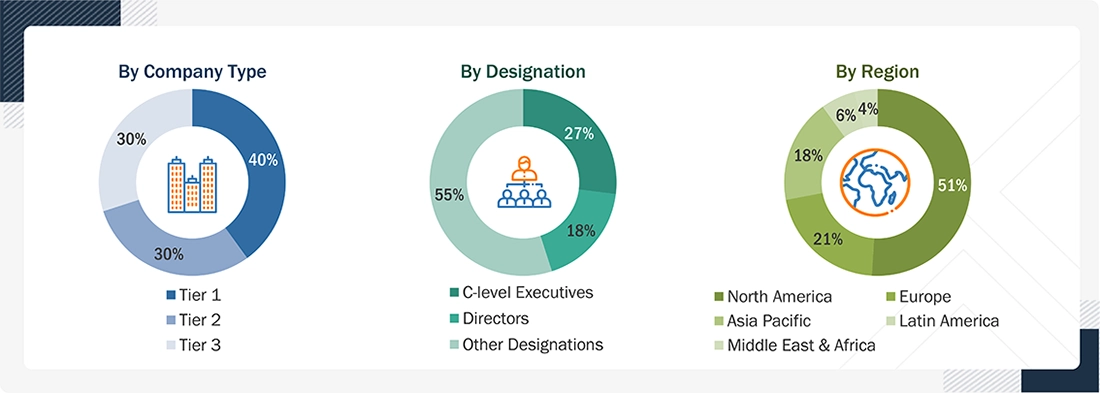
Note 1: Other designations include sales managers, marketing managers, and product managers.
Note 2: Companies are classified into tiers based on their total revenues. As of 2025, Tier 1 = >USD 100 million, Tier 2 = USD 10 million to USD 100 million, and Tier 3 = <USD 10 million.
To know about the assumptions considered for the study, download the pdf brochure
Market Size Estimation
For the global market value, annual revenues were calculated based on the revenue mapping of major product manufacturers and OEMs active in the global lateral flow assays market. All the major service providers were identified at the global and/or country/regional level. Revenue mapping for the respective business segments/subsegments was done for the major players. The global lateral flow assays market was split into various segments and subsegments based on:
- List of major players operating in the products market at the regional and/or country level
- Product mapping of lateral flow assay providers at the regional and/or country level
- Mapping of annual revenue generated by listed major players from lateral flow assays (or the nearest reported business unit/product category)
- Extrapolation of the revenue mapping of the listed major players to derive the global market value of the respective segments/subsegments
- Summation of the market value of all segments/subsegments to arrive at the global lateral flow assays market
The above data was consolidated with detailed inputs and analysis from MarketsandMarkets and presented in this report.
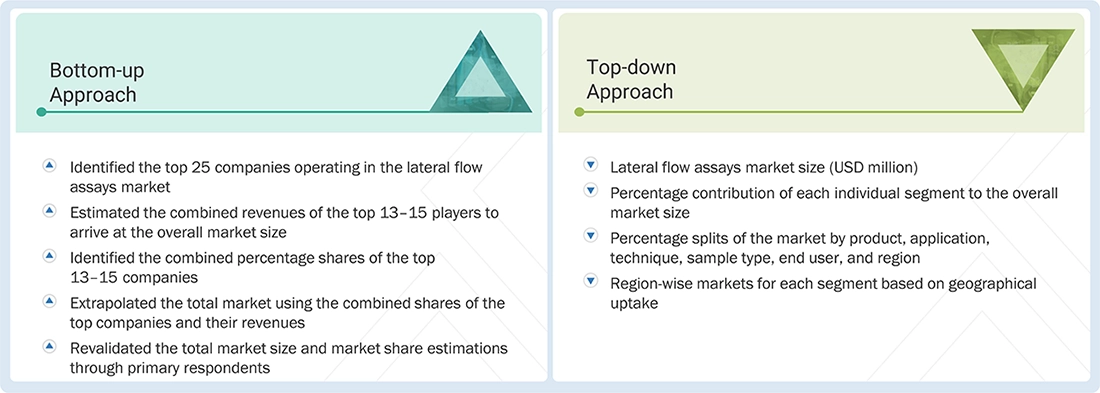
Data Triangulation
After arriving at the overall market size by applying the process mentioned above, the total market was split into several segments. To complete the overall market engineering process and arrive at the exact statistics for all segments and subsegments, data triangulation and market breakdown procedures were employed, wherever applicable. The data were triangulated by studying various factors and trends from both the demand and supply sides.
Market Definition
Lateral flow assays, or lateral flow immunochromatographic assays, are simple-to-use diagnostic devices to confirm the presence or absence of a target analyte, such as pathogens or biomarkers in humans or animals or contaminants in water supplies, without requiring specialized equipment.
Key Stakeholders
- Lateral flow assays Product Manufacturers
- Lateral flow assay vendors and distributors
- Hospitals
- Clinical and Diagnostic Laboratories
- ??Pharmaceutical and Biotechnological Companies
- Venture Capitalists and Investors
Report Objectives
- To define, describe, analyze, and forecast the lateral flow assays (LFA) market by product, application, technique, sample type, end user, and region
- To provide detailed information regarding the major factors influencing market growth (such as drivers, restraints, opportunities, and challenges)
- To analyze the micromarkets with respect to individual growth trends, prospects, and contributions to the overall lateral flow assays market
- To analyze market opportunities for stakeholders and provide details of the competitive landscape for key players
- To forecast market segment size across six regions: North America, Europe, Asia Pacific, Latin America, the Middle East & Africa, and GCC Countries
- To profile the key players and comprehensively analyze their product portfolios, market positions, and core competencies
- To benchmark players within the market using the proprietary Company Evaluation Matrix framework, which analyzes market players on various parameters within the broad categories of business and product excellence
- To study the impact of AI/Gen AI on the market, along with the macroeconomic outlook for each region
Available customizations:
MarketsandMarkets offers the following customizations for this market report.
Country Information
- Additional country-level analysis of the lateral flow assays market
Company profiles
- Additional five company profiles of players operating in the lateral flow assays market
Product Analysis
- Product matrix, which provides a detailed comparison of the product portfolio of each company in the lateral flow assays market
Fact checked
Personalize This Research
- Triangulate with your Own Data
- Get Data as per your Format and Definition
- Gain a Deeper Dive on a Specific Application, Geography, Customer or Competitor
- Any level of Personalization
Let Us Help You
- What are the Known and Unknown Adjacencies Impacting the Lateral Flow Assays Market
- What will your New Revenue Sources be?
- Who will be your Top Customer; what will make them switch?
- Defend your Market Share or Win Competitors
- Get a Scorecard for Target Partners

Custom Market Research Services
We Will Customise The Research For You, In Case The Report Listed Above Does Not Meet With Your Requirements
Get 10% Free CustomisationTESTIMONIALS

JAYANT RAJPUROHIT
Director of Market Insights, Data and Analytics
SFI Health,
Leading Pharmaceutical Companywww.sfihealth.com/

We at SFI Health approached MarketsandMarkets for an Opportunity Assessment on "Incidence and Prevalence of Focus Indications" as we wanted to know the most attractive HCPs like Physician, Functional MD, Naturopath and Pharmacist. The project was critical for us to ensure our focus on the right target which would enable sustainable growth and profitability for SFI Health. The business insights provided exceeded our expectations and we were extremely impressed. The team at MarketsandMarkets is highly professional and detail oriented and very well understood our business needs. MarketsandMarkets offers a unique combination of expertise and dedicated engagement model. We identified 2 new products to be launched in coming months, based on the research findings provided by MarketsandMarkets. We are happy with the services and would strongly recommend MarketsandMarkets to my peers in the industry.

BEATRIZ DE LA CALLE
Head of Commercial Analytics
Qualicaps,
Leading Pharmaceutical Companywww.qualicaps.com/

We partnered with MarketsandMarkets for an assessment study on hard empty capsules. The team was extremely professional in understanding our business requirements and we received timely responses to all our queries. The market intelligence and the recommendations has met our business requirements. We were extremely impressed to see the final study results; it really exceeded our expectations. The market intelligence offered by MarketsandMarkets, and clarity on next steps will help us achieve our business objective for the Year 2021. We are happy with the services and would strongly recommend MarketsandMarkets to my peers in the industry.

Bob Williams,
Senior Director Business Development & Innovation
Bracco Diagnostics Inc.,
Italian Multinational in life sciences sector and a World Leader in imaging diagnosticsimaging.bracco.com/us-en
We were pleased with targeted insights that MarketsandMarkets identified from a custom study on the 'Radiation Dose Management Solutions Market'. Your team identified and characterized the market participants as well as underlying trends accurately. This study was useful to Bracco in formulating business strategies for our dose monitoring product lines and we thank MarketsandMarkets for the job well done.
Cody Coonradt,
Market Development and Strategy Manager
3M Health Information Systems,
Leader in Health care Coding, Payment & Analytics Solutions.www.3m.com/3M/en_US/health-information-systems-us
The value for our organization comes from three things: depth of research, specificity of segments and being easy to work with. As important as the first two are, the third can't be underestimated. MarketsandMarkets, maybe more than any other research vendor, wants to know what is top of mind for our team and what big questions we are grappling to answer.
Their customer first approach and high value engagement model, have given us great analysis and excellent value for money
- Canada Lateral Flow Assays Market
- US Lateral Flow Assays Market
- Germany Lateral Flow Assays Market
- UK Lateral Flow Assays Market
- France Lateral Flow Assays Market
- Italy Lateral Flow Assays Market
- Spain Lateral Flow Assays Market
- Japan Lateral Flow Assays Market
- China Lateral Flow Assays Market
- India Lateral Flow Assays Market
- Australia Lateral Flow Assays Market
- South Korea Lateral Flow Assays Market
- Brazil Lateral Flow Assays Market
- Mexico Lateral Flow Assays Market
- Argentina Lateral Flow Assays Market
Growth opportunities and latent adjacency in Lateral Flow Assays Market



User
Nov, 2019
this is good.
Max
Oct, 2022
Which factors plays the vital role the global growth of Lateral Flow Assays Market?.
User
Jun, 2018
this is good.
Mason
Jun, 2026
I went through the Lateral Flow Assays Market report and it gave me a clearer business perspective on how point-of-care diagnostics are evolving, especially with decentralized testing gaining traction across emerging healthcare systems..
Avery
Jun, 2026
From a technical standpoint, I found the breakdown of assay formats and advancements in sensitivity quite insightful, particularly how innovations are addressing historical limitations of lateral flow technologies..
Julian
Jun, 2026
Reviewing the Lateral Flow Assays Market data helped me refine my strategic outlook, especially in identifying growth pockets where rapid diagnostics align with increasing demand for cost-effective and quick screening solutions..