Network API Market by API Type (Device Status, Identity, Location, Network Performance), Application (IoT, Priority Communication, Anti-fraud, Entertainment & Content Distribution, Enterprise IT, Autonomous Vehicles), Vertical - Global Forecast to 2030

icon1
USD 6.13 BN
MARKET SIZE, 2030
icon2
CAGR 25.7%
(2025-2030)
icon3
227
REPORT PAGES
icon4
161
MARKET TABLES

OVERVIEW

Network API Market Overview

Source: Secondary Research, Interviews with Experts, MarketsandMarkets Analysis

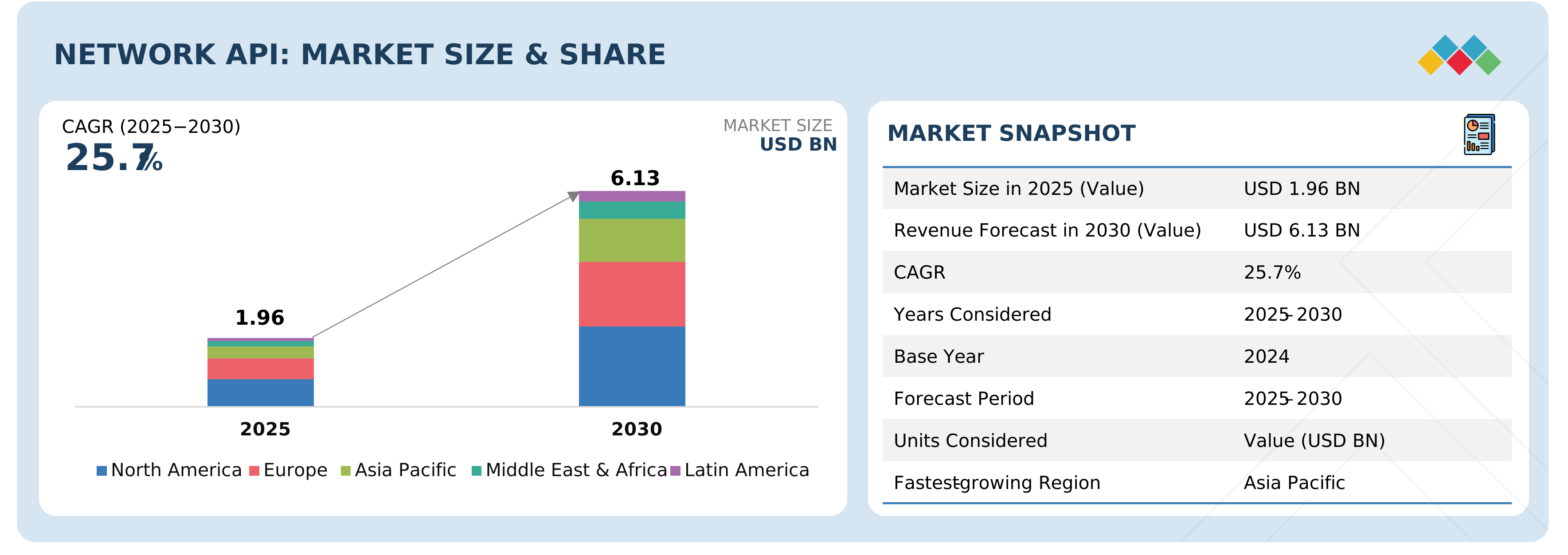
The network API market is projected to expand from USD 1.96 billion in 2025 to USD 6.13 billion by 2030, at a CAGR of 25.7% during the forecast period. The market is evolving into one of the most powerful enablers of digital transformation, bridging telecom infrastructure with enterprise applications through standardized programmability.

KEY TAKEAWAYS

  • BY VERTICAL
    BFSI is the largest vertical in the network API market, driven by the demand for robust identity verification, transaction security, real-time payment processing, and compliance with stringent regulatory requirements such as KYC (Know Your Customer), AML (Anti-Money Laundering), and PSD2 (Payment Services Directive) mandates.
  • BY REGION
    Asia Pacific is expected to grow fastest, with a CAGR of 28.7%, driven by rapid mobile internet adoption, rising 5G penetration, and the push for digital services across developing economies. Japan, South Korea, India, China, and Australia are actively engaging in trials and commercial rollouts of next-generation network APIs, particularly those aligned with the GSMA Open Gateway framework.
  • COMPETITIVE LANDSCAPE
    The major market players have adopted organic and inorganic strategies, including partnerships, collaborations, and investments. For instance, Ericsson officially launched Aduna as the industry's largest network API joint venture platform, combining network capabilities from twelve global operators to provide unified, standardized access to network functions worldwide, representing a paradigm shift in operator collaboration.

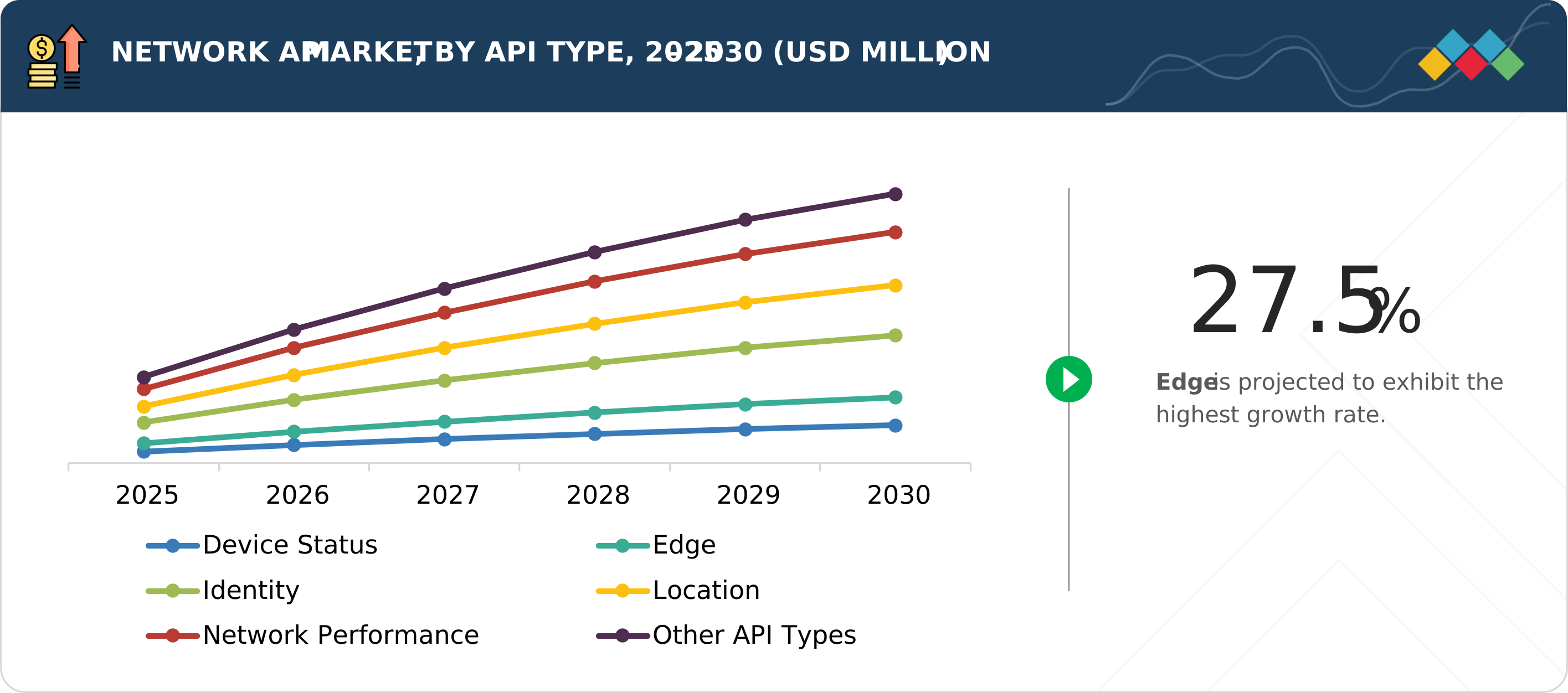
The network API market by API type categorizes offerings according to the network functionalities they expose via APIs. These API types include device status, edge, identity, location, network performance, and other API types (policy control, security, analytics). These offer insights into the different API Types used to deploy network API functionality

TRENDS & DISRUPTIONS IMPACTING CUSTOMERS' CUSTOMERS

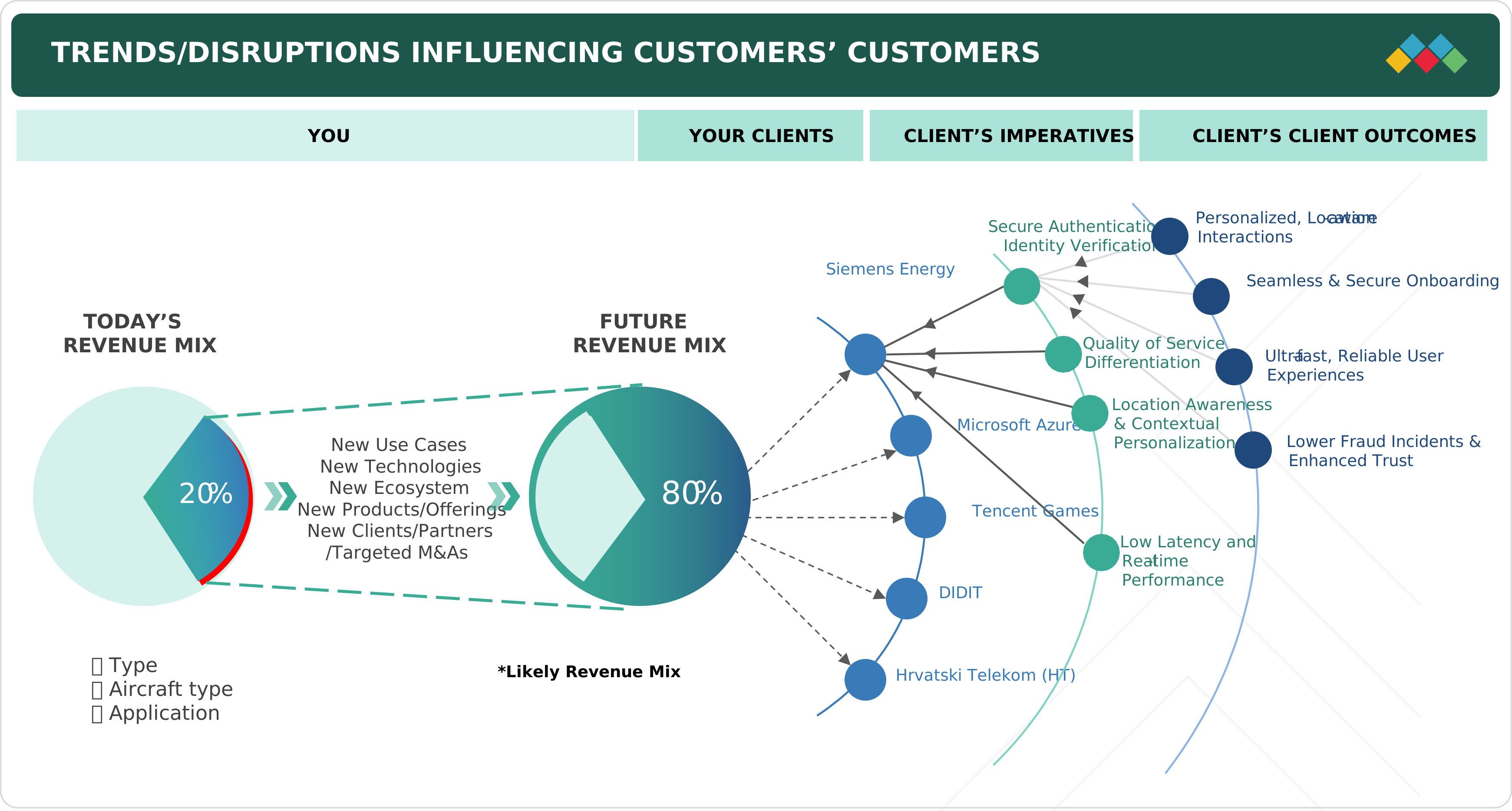
The network API market is shifting from legacy, service-led revenue toward API-first, edge-enabled offerings. As operators and platform players adopt programmable APIs, low-latency routing, monetization, and observability, customers gain faster time-to-market, new usage-based revenues, stronger partner ecosystems, and measurable QoE improvements. This shift delivers secure, context-aware experiences, lower operating costs, and verifiable SLAs that drive adoption and growth
Network API Market Disruptions

Source: Secondary Research, Interviews with Experts, MarketsandMarkets Analysis

MARKET DYNAMICS

Drivers
Impact
Level
  • Increasing shift toward cloud and digital transformation
  • 5G and IoT expansion
RESTRAINTS
Impact
Level
  • Stringent privacy and compliance regulations
  • Integration complexity and cost barriers
OPPORTUNITIES
Impact
Level
  • Growing demand for real-time data and services
  • Monetization of Network-as-a-Service
CHALLENGES
Impact
Level
  • Scalability & SLA assurance
  • Rising complexity of API security and cyber threats

Source: Secondary Research, Interviews with Experts, MarketsandMarkets Analysis

Driver: Rise of SDN/NFV technologies

The rise of Software Defined Networking (SDN) and Network Functions Virtualization (NFV) is one of the drivers for the network API market. These technologies decouple hardware from software, allowing operators to deliver programmable, cloud-native infrastructure that supports API exposure at scale. APIs for policy control, analytics, and performance are becoming viable only because of SDN/NFV’s flexibility, enabling operators to abstract complex network functions and present them to developers as easily consumable APIs. This shift is already evident in deployments where operators are leveraging SDN-based cores and virtualized edge nodes to launch CAMARA-compliant APIs for enterprises in IoT, autonomous mobility, and media distribution. As more networks transition to cloud-native architectures, the programmability unlocked by SDN/NFV will accelerate API adoption across all verticals

Restraint: Integration complexity and cost barriers

Enterprise-grade network APIs must interoperate with existing OSS/BSS systems, cloud platforms, and legacy hardware. This integration is non-trivial: each API often requires custom adapters, detailed documentation, and backend changes. The Ericsson white paper notes that even if a uniform API existed, developers would still face technical integration with each service provider and would need to establish separate commercial relationships with them. These hurdles indicate that building a solution using multiple network APIs can involve months of engineering work per operator. This complexity translates into higher development costs. In practice, carriers launching network APIs often need to build extensive developer portals and support systems. Small and medium enterprises may find the resource requirements prohibitive. Even large telecoms partner with API aggregators or join standards bodies such as GSMA Open Gateway to reduce friction. Furthermore, a shortage of skilled developers adds to the restraint, considering the complexity of telecom protocols. This talent gap can delay projects and increase costs. All these factors, including technical integration overhead, tooling costs, and staffing, make API initiatives expensive.

Opportunity: Monetization of Network-as-a-Service

The growing adoption of Network-as-a-Service (NaaS) presents a significant opportunity in the network API market, particularly as enterprises demand agile, programmable access to network functionalities. NaaS enables service providers to expose network resources, such as bandwidth, latency control, and security policies, through APIs on a pay-per-use or subscription basis. This shift from static, hardware-defined infrastructure to API-driven network services allows telecom operators and hyperscalers to diversify revenue streams by offering on-demand, customizable network capabilities to developers, cloud-native businesses, and vertical enterprises.

Challenge: Rising complexity of API security and cyber threats

As network APIs expose more sensitive network functions, they increasingly attract attention from cyber attackers. Securing these APIs is no longer a secondary concern but a central challenge. Unlike traditional APIs, network APIs facilitate real-time data exchange, control signaling, and session persistence, making them highly attractive attack vectors. Implementing robust security protocols is complex, as it involves authentication tokens, encrypted communications, intrusion detection, and rate-limiting mechanisms. The threat landscape is highly dynamic, with new vulnerabilities constantly emerging, requiring operators to maintain an evolving security posture. This is further complicated by the distributed nature of modern networks, which often span on-premises telecom infrastructure, cloud environments, and edge platforms. Each integration point introduces potential risks. Ensuring end-to-end protection across such environments is difficult, particularly for smaller operators who may lack resources to deploy enterprise-grade defenses. Moreover, every API release demands extensive security audits, delaying product timelines

Network API Market: COMMERCIAL USE CASES ACROSS INDUSTRIES

COMPANY USE CASE DESCRIPTION BENEFITS
Development of programmable network APIs for SD-WAN orchestration, enabling multi-vendor policy automation, dynamic path selection, and real-time telemetry. Faster deployment cycles, centralized policy control, improved application performance, reduced operational complexity
Deployment of MagentaBusiness API platform for enterprise customers focusing on Quality-on-Demand services for teleoperated driving, device location tracking for logistics optimization, and roaming status verification for fraud prevention Enhanced supply chain resilience, reduced operational costs, improved sustainability outcomes through precise location tracking, fraud mitigation, and guaranteed low-latency performance for safety-critical applications
Establishment of Network-as-a-Platform (NaaP) through centralized API catalog offering SIM swap detection for financial institutions, identity verification services, and network performance monitoring for industrial automation applications Stronger competitive positioning, improved productivity through API reuse, reduced operational risks via automated fraud detection, enhanced supply chain resilience, and measurable ROI from automation initiatives
Integration of NetAware Platform with 5G network APIs for manufacturing clients, enabling real-time equipment monitoring, predictive maintenance automation, and enhanced security protocols across industrial IoT networks and private 5G infrastructure Enhanced supply chain resilience, reduced operational costs through predictive maintenance, improved sustainability outcomes via automated optimization, and stronger security posture for industrial operations
Development of CAMARA-compliant API marketplace through Aduna joint venture offering standardized location services for fintech applications, quality-of-service APIs for healthcare applications, and edge computing capabilities for autonomous vehicle systems Increased R&D efficiency through standardized APIs, transparent idea evaluation across partners, faster commercialization of innovative services, and enhanced customer engagement through personalized location-based applications

Logos and trademarks shown above are the property of their respective owners. Their use here is for informational and illustrative purposes only.

MARKET ECOSYSTEM

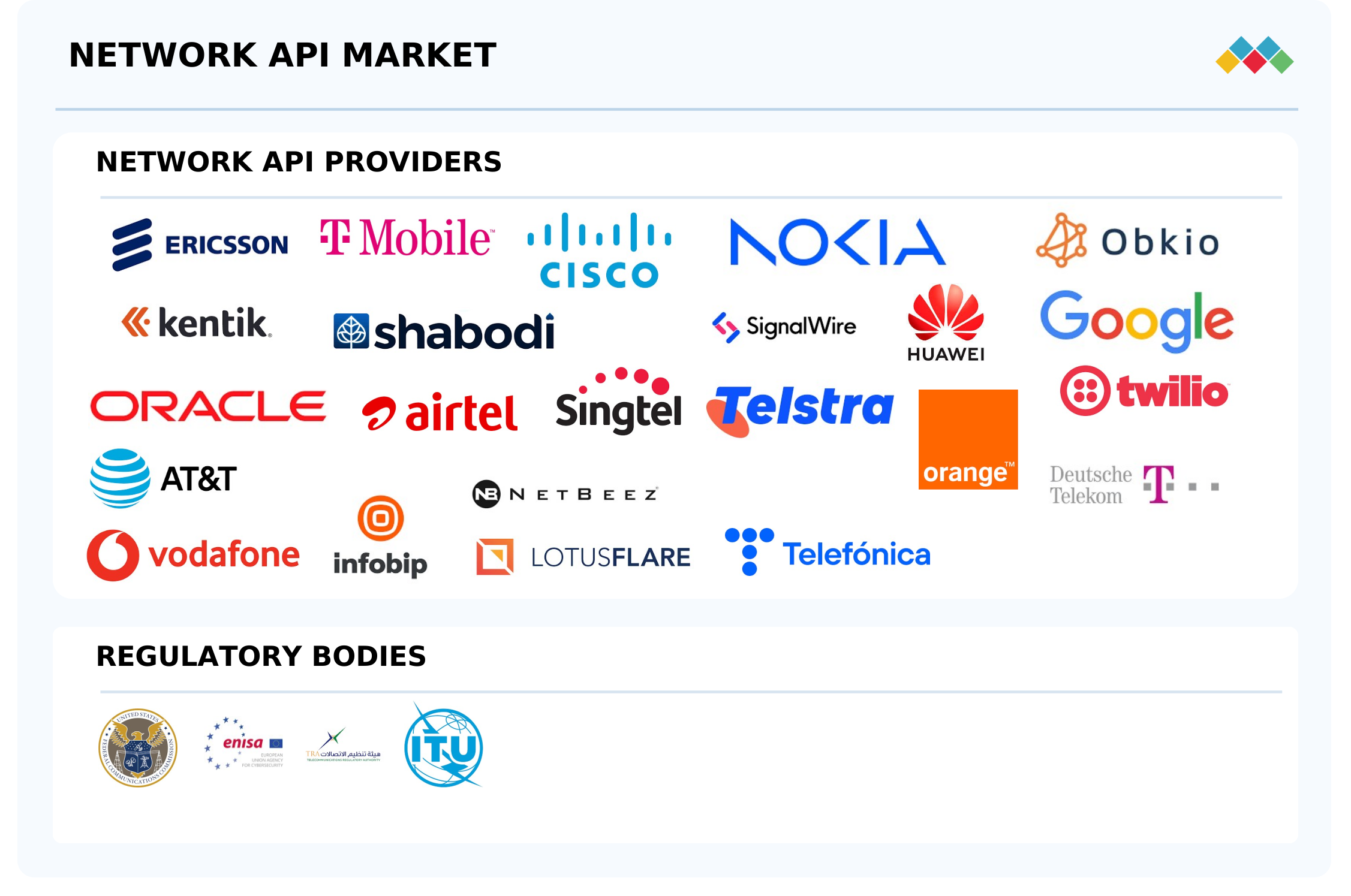
The network API market is highly competitive and comprises many vendors who offer solutions to a specific or niche market segment. Several changes have occurred in the market in recent years. The vendors are involved in various partnerships and collaborations to develop comprehensive solutions that address a wide range of requirements.

Network API Market Ecosystem

Logos and trademarks shown above are the property of their respective owners. Their use here is for informational and illustrative purposes only.

MARKET SEGMENTS

Network API Market Segments

Source: Secondary Research, Interviews with Experts, MarketsandMarkets Analysis

Network API Market, By API Type

The identity API type constitutes a critical category within the network API ecosystem, focusing on authentication, verification, and identity management capabilities that ensure secure access and protect against fraudulent activities across digital platforms and services. This comprehensive API segment includes number verification APIs that validate phone numbers and mobile identities without requiring SMS-based two-factor authentication, KYC (Know Your Customer) match APIs that streamline identity verification processes by cross-referencing user-provided information with authoritative databases, digital identity verification APIs that authenticate users through government-issued documents and biometric verification, and multi-factor authentication APIs that enhance security through layered verification mechanisms. These APIs are driving significant growth in the network API market by addressing the escalating challenges of digital fraud, identity theft, and security breaches that cost organizations billions of dollars annually while simultaneously improving user experience through streamlined authentication processes. The increasing digitization of financial services, the expansion of e-commerce platforms, and the growing sophistication of cyber threats have created substantial demand for robust identity verification solutions that can operate in real-time without compromising user convenience.

REGION

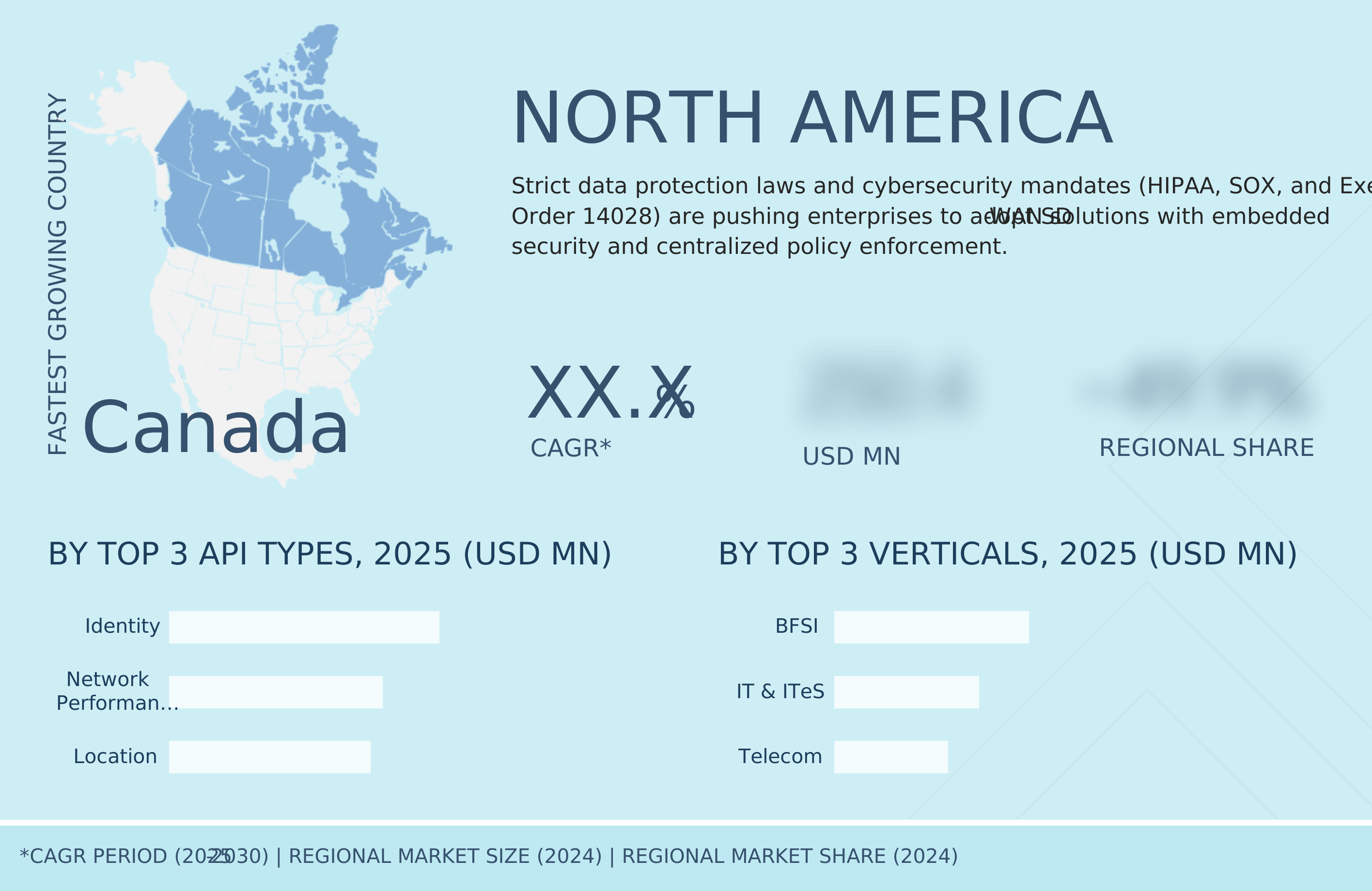
North America is estimated to account for the largest market share during the forecast period

The North American network API market is rapidly expanding, driven by enterprise adoption of edge computing and cloud-native architecture, and demand for secure API-based network programmability. The US leads the region, accounting for the majority of the spend on network APIs, with strong enterprise and hyperscale data centers integrating APIs to manage network visibility, load balancing, and network orchestration. A rising focus on integrating Wi-Fi, SD-WAN, and edge services through programmable APIs is boosting adoption. North America is a leading region in the network API market, driven by its advanced telecommunications infrastructure, particularly the maturity of 5G standalone (SA) core networks. The region benefits from a large developer community, with approximately 180,000 active API developers contributing to a 37% increase in API-based applications in 2023.

Network API Market Region

Network API Market: COMPANY EVALUATION MATRIX

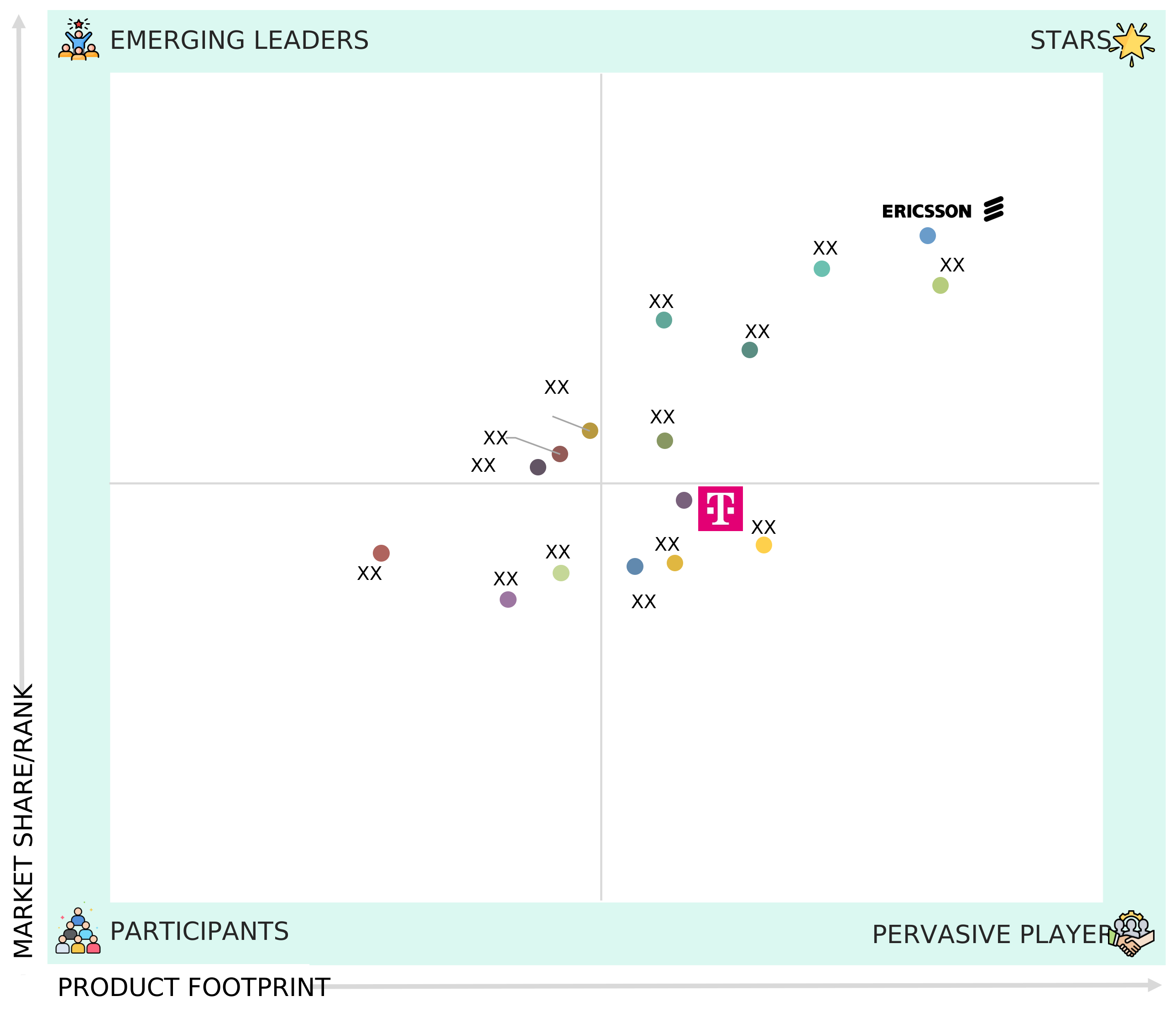
In the network API market matrix, Ericsson (Star) leads with a strong market presence and wide product portfolio, helping organizations identify growth opportunities, build innovation roadmaps, and scale new business models. T-Mobile (Pervasive player) is gaining traction as it streamlines idea capture, evaluation, and execution, enabling organizations to accelerate innovation, reduce risks, and maximize ROI.

Network API Market Evaluation Matrics

Source: Secondary Research, Interviews with Experts, MarketsandMarkets Analysis

MARKET SCOPE

REPORT METRIC DETAILS
Market Size in 2024 (Value) USD 6.46 Billion
Market Forecast in 2030 (value) USD 21.67 Billion
Growth Rate CAGR of 22.3% from 2025–2030
Years Considered 2019–2030
Base Year 2024
Forecast Period 2025–2030
Units Considered Value (USD) Million/Billion
Report Coverage Revenue forecast, company ranking, competitive landscape, growth factors, and trends
Segments Covered
  • By Offering
  • Organization size
  • End User
  • Region
Regions Covered North America, Europe, Asia Pacific, Middle East & Africa, and Latin America

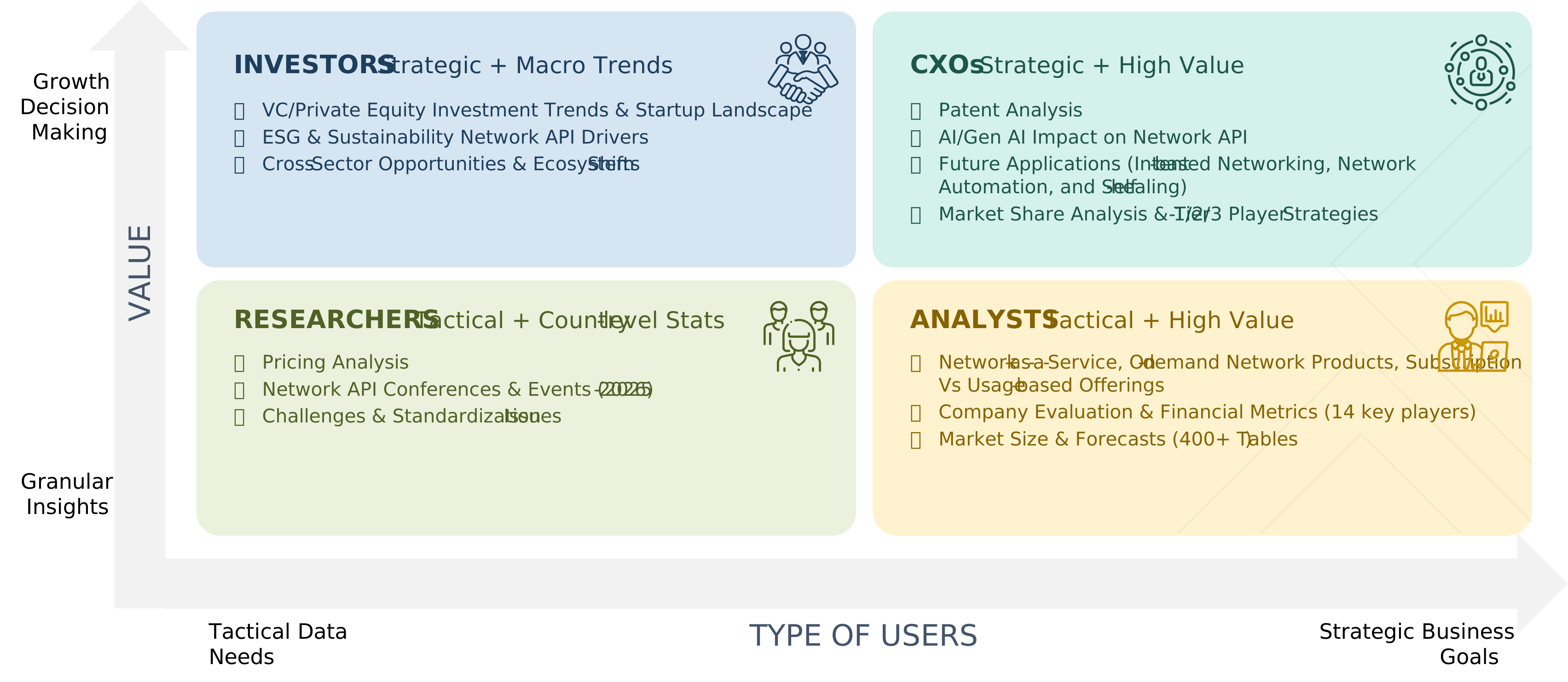
WHAT IS IN IT FOR YOU: Network API Market REPORT CONTENT GUIDE

Network API Market Content Guide

DELIVERED CUSTOMIZATIONS

We have successfully delivered the following deep-dive customizations:

CLIENT REQUEST CUSTOMIZATION DELIVERED VALUE ADDS

RECENT DEVELOPMENTS

  • June 2025 : Nokia signed a multi-year SD-WAN deal with Telefónica to transform enterprise connectivity using Nuage Networks. The deployment leverages Nuage SD-WAN to deliver scalable, policy-driven networking across Telefónica’s enterprise customer base.
  • May 2025 : Fortinet expanded its collaboration with Google Cloud to offer secure SD-WAN connectivity via Google Distributed Cloud Edge, targeting high-compliance sectors. This allows Fortinet SD-WAN users to directly connect and secure edge workloads across distributed cloud environments.
  • April 2025 : Aryaka partnered with Orange Business to deliver co-managed SD-WAN services across Europe and Asia, accelerating enterprise deployments. The partnership expands Aryaka’s SD-WAN reach and simplifies deployments for global enterprises seeking managed connectivity.
  • March 2025 : HPE acquired Axis Security to integrate zero-trust capabilities into its Aruba SD-WAN solutions, strengthening its SASE strategy. This enhances Aruba’s SD-WAN by embedding secure remote access, critical for hybrid workforce models and distributed edge environments.
  • February 2025 : Cato Networks raised USD 150 million to scale its global cloud-native SD-WAN and SASE backbone, with a focus on mid-market enterprises. The funding supports infrastructure expansion and product innovation in Cato’s all-in-one SD-WAN and security-as-a-service platform.


Table of Contents

Exclusive indicates content/data unique to MarketsandMarkets and not available with any competitors.

TITLE
PAGE NO
1
INTRODUCTION


23
2
RESEARCH METHODOLOGY


26
3
EXECUTIVE SUMMARY


36
4
PREMIUM INSIGHTS


39
5
MARKET OVERVIEW AND INDUSTRY TRENDS (STRATEGIC DRIVERS WITH QUANTITATIVE IMPLICATIONS)
5G, IoT, and cloud drive API market growth amid security and compliance challenges.


41
Unpacking the Forces Shaping network API Adoption & Future Growth Opportunities


5.1
INTRODUCTION


5.2
MARKET DYNAMICS


5.2.1
DRIVERS


5.2.1.1
Increasing shift toward cloud and digital transformation


5.2.1.2
5G and IoT expansion


5.2.1.3
Rise of SDN/NFV technologies


5.2.2
RESTRAINTS


5.2.2.1
Stringent privacy and compliance regulations


5.2.2.2
Integration complexity and cost barriers


5.2.3
OPPORTUNITIES


5.2.3.1
Growing demand for real-time data and services


5.2.3.2
Monetization of Network-as-a-Service


5.2.4
CHALLENGES


5.2.4.1
Scalability & SLA assurance


5.2.4.2
Rising complexity of API security and cyber threats
 
 
5.3
VALUE CHAIN ANALYSIS


5.4
ECOSYSTEM ANALYSIS


5.5
CASE STUDIES


5.5.1
NOKIA AND DEUTSCHE TELEKOM (DT) PUSH BOUNDARIES OF DRONE OPERATIONS USING NETWORK AS CODE'S 5G CAPABILITIES


5.5.2
CHINA TELECOM EMPOWERS ENTERPRISES WITH QOD APIS AND CNOS ARCHITECTURE


5.5.3
ORANGE ENABLES DIDIT ELIMINATE OTP DEPENDENCY AND STRENGTHEN DIGITAL IDENTITY SECURITY VIA CAMARA APIS


5.6
PORTER’S FIVE FORCES ANALYSIS


5.6.1
THREAT OF NEW ENTRANTS


5.6.2
THREAT OF SUBSTITUTES


5.6.3
BARGAINING POWER OF BUYERS


5.6.4
BARGAINING POWER OF SUPPLIERS


5.6.5
INTENSITY OF COMPETITIVE RIVALRY


5.7
KEY STAKEHOLDERS AND BUYING CRITERIA


5.7.1
KEY STAKEHOLDERS IN BUYING PROCESS


5.7.2
BUYING CRITERIA


5.8
PATENT ANALYSIS


5.8.1
METHODOLOGY


5.9
TRENDS/DISRUPTIONS IMPACTING CUSTOMER BUSINESS


5.10
PRICING ANALYSIS


5.10.1
AVERAGE SELLING PRICE OF KEY PLAYERS, BY API TYPE, 2024


5.10.2
INDICATIVE PRICING ANALYSIS OF KEY PLAYERS, 2024


5.11
TECHNOLOGY ANALYSIS


5.11.1
KEY TECHNOLOGIES


5.11.1.1
OpenAPI/Swagger


5.11.1.2
gRPC with Protocol Buffers


5.11.1.3
NETCONF/RESTCONF


5.11.1.4
YANG data models


5.11.1.5
gNMI (gRPC network management interface)


5.11.1.6
API gateways (e.g., Kong, Apigee Edge)


5.11.1.7
OAuth 2.0/OpenID Connect


5.11.1.8
Event-driven Webhooks/Kafka Topics


5.11.2
COMPLEMENTARY TECHNOLOGIES


5.11.2.1
Service mesh (Istio, Linkerd)


5.11.2.2
API lifecycle management platforms


5.11.2.3
Network function virtualization (NFV) orchestration


5.11.2.4
SDN controllers (OpenDaylight, ONOS)


5.11.2.5
Telemetry analytics engines (Prometheus, InfluxDB)


5.11.2.6
Policy-control engines (PCRF/PCF)


5.11.3
ADJACENT TECHNOLOGIES


5.11.3.1
OSS/BSS integration platforms


5.11.3.2
Edge orchestration frameworks (KubeEdge, OpenNESS)


5.11.3.3
IoT device management platforms


5.11.3.4
Zero-trust network access (ZTNA) gateways


5.11.3.5
Intent-based networking engines


5.11.3.6
Network assurance & digital twin tools
 
 
5.12
REGULATORY LANDSCAPE


5.12.1
REGULATORY BODIES, GOVERNMENT AGENCIES, AND OTHER ORGANIZATIONS


5.12.2
KEY REGULATIONS


5.12.2.1
North America


5.12.2.2
Europe


5.12.2.3
Asia Pacific


5.12.2.4
Middle East & Africa


5.12.2.5
Latin America
 
 
5.13
KEY CONFERENCES AND EVENTS, 2025–2026


5.14
TECHNOLOGY ROADMAP FOR NETWORK API MARKET


5.14.1
SHORT-TERM ROADMAP (2025–2026)


5.14.2
MID-TERM ROADMAP (2027–2028)


5.14.3
LONG-TERM ROADMAP (2028–2030)


5.15
BEST PRACTICES IN NETWORK API MARKET


5.15.1
ADOPT JSON FOR DATA EXCHANGE


5.15.2
AVOID VERBS IN URLS


5.15.3
IMPLEMENT API VERSIONING


5.15.4
ENFORCE SECURE AUTHENTICATION AND AUTHORIZATION


5.15.5
ENCRYPT ALL DATA TRANSMISSION


5.15.6
RATE LIMITING AND THROTTLING


5.15.7
LOGGING, MONITORING, AND AUDITING


5.15.8
CONDUCT REGULAR SECURITY TESTING


5.16
GSMA OPEN GATEWAY AND CAMARA INITIATIVES


5.17
CURRENT AND EMERGING BUSINESS MODELS


5.18
TOOLS, FRAMEWORKS, AND TECHNIQUES USED IN NETWORK API MARKET


5.19
INVESTMENT AND FUNDING SCENARIO


5.20
IMPACT OF AI/GENERATIVE AI ON NETWORK API MARKET


5.20.1
IMPACT OF GENERATIVE AI IN NETWORK API


5.21
IMPACT OF 2025 US TARIFF – NETWORK API MARKET


5.21.1
INTRODUCTION


5.21.2
KEY TARIFF RATES


5.21.3
PRICE IMPACT ANALYSIS


5.21.4
IMPACT ON COUNTRY/REGION


5.21.4.1
US


5.21.4.2
Europe


5.21.4.3
Asia Pacific


5.21.5
IMPACT ON END-USE INDUSTRIES
 
 
6
NETWORK API MARKET, BY API TYPE (MARKET SIZE & FORECAST TO 2030 – IN VALUE (USD))
Market Size & Growth Rate Forecast Analysis to 2030 in USD Million | 7 Data Tables


82
Detailed breakdown of market share and growth across network API device status, edge, identity, location, network performance, other API types


6.1
INTRODUCTION


6.1.1
API TYPE: MARKET DRIVERS


6.2
DEVICE STATUS


6.2.1
NEED FOR REAL-TIME VISIBILITY AND MANAGEMENT CAPABILITIES TO DRIVE DEMAND


6.3
EDGE


6.3.1
ULTRA-LOW LATENCY WORKFLOWS TO SPUR EDGE API ADOPTION


6.4
IDENTITY


6.4.1
INTEGRATION OF REAL-TIME NUMBER VERIFICATION TO DRIVE DEMAND FOR IDENTITY APIS


6.5
LOCATION


6.5.1
NETWORK-BASED GEOFENCING TO DRIVE DEMAND


6.6
NETWORK PERFORMANCE


6.6.1
ON-DEMAND QUALITY OF SERVICE TO INCREASE ADOPTION


6.7
OTHER API TYPES


7
NETWORK API MARKET, BY APPLICATION (MARKET SIZE & FORECAST TO 2030 – IN VALUE (USD))
Market Size & Growth Rate Forecast Analysis to 2030 in USD Million | 8 Data Tables


89
Detailed breakdown of market share and growth across network API applications


7.1
INTRODUCTION


7.1.1
APPLICATION: MARKET DRIVERS


7.2
IOT


7.2.1
AUTOMATING SIM ACTIVATION AND CONFIGURATION VIA SINGLE API ACCELERATES LARGE-SCALE IOT ROLLOUTS


7.3
PRIORITY COMMUNICATION


7.3.1
EMBEDDING AUTOMATED PRIORITY-CHANNEL RESERVATION TO DRIVE DEMAND FOR PRIORITY COMMUNICATION


7.4
AUTONOMOUS VEHICLES


7.4.1
ON-THE-FLY ALLOCATION OF DEDICATED NETWORK SLICES VIA API ENABLES RELIABLE TELEOPERATION AND REMOTE CONTROL


7.5
ANTI-FRAUD


7.5.1
INCORPORATING NETWORK-SIDE IDENTITY VALIDATION INTO TRANSACTION FLOWS VIA API DRAMATICALLY CUTS FRAUD RATES


7.6
ENTERTAINMENT & CONTENT DISTRIBUTION


7.6.1
EDGE-POWERED ADAPTIVE STREAMING TO DRIVE MARKET


7.7
ENTERPRISE IT


7.7.1
SINGLE API GATEWAY TO UNIFY MULTI-NETWORK CONNECTIVITY


7.8
OTHER APPLICATIONS


8
NETWORK API MARKET, BY VERTICAL (MARKET SIZE & FORECAST TO 2030 – IN VALUE (USD))
Market Size & Growth Rate Forecast Analysis to 2030 in USD Million | 10 Data Tables


99
Detailed breakdown of market share and growth across network API vertical


8.1
INTRODUCTION


8.1.1
VERTICAL: MARKET DRIVERS


8.2
BFSI


8.2.1
MANDATORY API-DRIVEN TRANSACTION AUTHENTICATION TO DRIVE MARKET


8.3
IT & ITES


8.3.1
ACCELERATION OF APP-TO-NETWORK INTEGRATION TO DRIVE DEMAND


8.4
TELECOM


8.4.1
MONETIZED NETWORK SLICES THROUGH SELF-SERVICE APIS TO SPUR MARKET


8.5
GOVERNMENT & PUBLIC SECTOR


8.5.1
STANDARDIZATION OF APIS TO DRIVE MARKET


8.6
MANUFACTURING


8.6.1
INTEGRATION OF PRECISION INDOOR POSITIONING APIS TO DRIVE SEGMENT


8.7
HEALTHCARE & LIFESCIENCES


8.7.1
DEMAND FOR NETWORK PERFORMANCE APIS IN TELEHEALTH APPLICATIONS TO DRIVE MARKET


8.8
RETAIL & E-COMMERCE


8.8.1
DEMAND FOR REAL-TIME LOCATION-BASED PERSONALIZATION TO DRIVE MARKET


8.9
MEDIA & ENTERTAINMENT


8.9.1
NEED FOR SEAMLESS STREAMING EXPERIENCES TO INCREASE NETWORK API ADOPTION


8.10
OTHER VERTICALS


9
NETWORK API MARKET, BY REGION (MARKET SIZE & FORECAST TO 2030 – IN VALUE (USD))
Market Size & Growth Rate Forecast Analysis to 2030 in USD Million | 55 Data Tables


108
Regional market sizing, forecasts, and regulatory landscapes


9.1
INTRODUCTION


9.2
NORTH AMERICA


9.2.1
NORTH AMERICA: MACROECONOMIC OUTLOOK


9.2.2
US


9.2.2.1
Increasing focus on 5G-driven API innovation to drive market


9.2.3
CANADA


9.2.3.1
Accelerating IoT and digital transformation to drive market
 
 
9.3
EUROPE


9.3.1
EUROPE: MACROECONOMIC OUTLOOK


9.3.2
UK


9.3.2.1
Focus on network API leadership with developer-centric innovation to drive market


9.3.3
GERMANY


9.3.3.1
Open Gateway to fuel market with identity & QoS APIs


9.3.4
FRANCE


9.3.4.1
GSMA Open Gateway initiative and Aduna alliance to expand network API ecosystem


9.3.5
SPAIN


9.3.5.1
Focus on smart city innovations via API integration to drive market


9.3.6
RUSSIA


9.3.6.1
Emergence of network API landscape with gradual 5G expansion to drive market


9.3.7
ITALY


9.3.7.1
Advancements in 5G infrastructure and government-led digitization programs to drive market


9.3.8
NORDIC COUNTRIES


9.3.8.1
Maturing 5G infrastructure to enable API-driven smart applications


9.3.9
REST OF EUROPE


9.4
ASIA PACIFIC


9.4.1
ASIA PACIFIC: MACROECONOMIC OUTLOOK


9.4.2
CHINA


9.4.2.1
Focus on OTP API commercialization for digital security to drive market


9.4.3
JAPAN


9.4.3.1
Accelerating network API revolution with Aduna partnerships


9.4.4
INDIA


9.4.4.1
Widespread 4G/5G adoption and initiatives by Reliance Jio and Bharti Airtel to drive market


9.4.5
AUSTRALIA AND NEW ZEALAND


9.4.5.1
High smartphone penetration and thriving digital economy to fuel market


9.4.6
SOUTH KOREA


9.4.6.1
Proactive involvement in global collaborations for unified open API framework to drive market


9.4.7
SOUTHEAST ASIA


9.4.7.1
Advancements in digital infrastructure to accelerate network API integration


9.4.8
REST OF ASIA PACIFIC


9.5
MIDDLE EAST & AFRICA


9.5.1
MIDDLE EAST & AFRICA: MACROECONOMIC OUTLOOK


9.5.2
MIDDLE EAST


9.5.2.1
KSA


9.5.2.2
UAE


9.5.2.3
KUWAIT


9.5.2.4
BAHRAIN


9.5.2.5
Rest of Middle East


9.5.3
AFRICA


9.5.3.1
Increasing focus on fintech and e-health to drive market
 
 
9.6
LATIN AMERICA


9.6.1
LATIN AMERICA: MACROECONOMIC OUTLOOK


9.6.2
BRAZIL


9.6.2.1
Strong market momentum to drive network API innovations


9.6.3
MEXICO


9.6.3.1
Growing digital economy and global collaborations to drive market


9.6.4
REST OF LATIN AMERICA
 
 
10
COMPETITIVE LANDSCAPE
Discover how top players outmaneuver rivals with strategic dominance and market share insights.


145
Strategic Profiles of Leading Players & Their Playbooks for Market Dominance


10.1
INTRODUCTION


10.2
KEY PLAYER STRATEGIES/RIGHT TO WIN, 2023–2025


10.3
MARKET SHARE ANALYSIS, 2024


10.4
REVENUE ANALYSIS, 2024


10.5
BRAND/PRODUCT COMPARISON


10.6
COMPANY VALUATION AND FINANCIAL METRICS


10.7
COMPANY EVALUATION MATRIX: KEY PLAYERS, 2024


10.7.1
STARS


10.7.2
EMERGING LEADERS


10.7.3
PERVASIVE PLAYERS


10.7.4
PARTICIPANTS


10.7.5
COMPANY FOOTPRINT: KEY PLAYERS, 2024


10.7.5.1
Company footprint


10.7.5.2
Region footprint


10.7.5.3
API type footprint


10.7.5.4
Application footprint


10.7.5.5
Vertical footprint
 
 
10.8
COMPANY EVALUATION MATRIX: STARTUPS/SMES, 2024


10.8.1
PROGRESSIVE COMPANIES


10.8.2
RESPONSIVE COMPANIES


10.8.3
DYNAMIC COMPANIES


10.8.4
STARTING BLOCKS


10.8.5
COMPETITIVE BENCHMARKING: STARTUPS/SMES, 2024


10.8.5.1
Detailed list of key startups/SMEs


10.8.5.2
Competitive benchmarking of key startups/SMEs
 
 
10.9
COMPETITIVE SCENARIO


10.9.1
PRODUCT LAUNCHES AND ENHANCEMENTS


10.9.2
DEALS
 
 
11
COMPANY PROFILES
In-depth Company Profiles of Leading Market Players with detailed Business Overview, Product and Service Portfolio, Recent Developments, and Unique Analyst Perspective (MnM View)


168
In-depth look at their Strengths, Weaknesses, Product Portfolios, Recent Developments, and Strategic Moves


11.1
KEY PLAYERS


11.1.1
ERICSSON


11.1.1.1
Business overview


11.1.1.2
Products/Solutions/Services offered


11.1.1.3
Recent developments


11.1.1.4
MnM view


11.1.2
CISCO


11.1.3
NOKIA


11.1.4
MICROSOFT


11.1.5
T-MOBILE


11.1.6
AT&T


11.1.7
ORANGE


11.1.8
DEUTSCHE TELEKOM


11.1.9
VODAFONE


11.1.10
TELEFONICA


11.2
OTHER PLAYERS


11.2.1
SINGTEL


11.2.2
TELSTRA


11.2.3
BHARTI AIRTEL


11.2.4
HUAWEI


11.2.5
ORACLE


11.2.6
INFOBIP


11.3
STARTUPS/SMES


11.3.1
KENTIK


11.3.2
OBKIO


11.3.3
NETBEEZ


11.3.4
GRAPHIANT


11.3.5
ALKIRA


11.3.6
SHABODI


11.3.7
LOTUSFLARE


11.3.8
PHOENIXNAP
 
 
12
ADJACENT/RELATED MARKETS


208
 
12.1
INTRODUCTION


12.2
API MANAGEMENT MARKET


12.2.1
MARKET DEFINITION


12.2.2
MARKET OVERVIEW


12.2.3
API MANAGEMENT MARKET, BY OFFERING


12.2.4
API MANAGEMENT MARKET, BY PLATFORM


12.2.5
API MANAGEMENT MARKET, BY ORGANIZATION SIZE


12.2.6
API MANAGEMENT MARKET, BY DEVELOPMENT TYPE


12.2.7
API MANAGEMENT MARKET, BY VERTICAL


12.2.8
API MANAGEMENT MARKET, BY REGION


12.3
INTEGRATION PLATFORM AS A SERVICE MARKET


12.3.1
MARKET DEFINITION


12.3.2
MARKET OVERVIEW


12.3.3
INTEGRATION PLATFORM AS A SERVICE MARKET, BY SERVICE TYPE


12.3.4
INTEGRATION PLATFORM AS A SERVICE MARKET, BY DEPLOYMENT MODEL


12.3.5
INTEGRATION PLATFORM AS A SERVICE MARKET, BY ORGANIZATION SIZE


12.3.6
INTEGRATION PLATFORM AS A SERVICE MARKET, BY VERTICAL


12.3.7
INTEGRATION PLATFORM AS A SERVICE MARKET, BY REGION
 
 
13
APPENDIX


219
 
13.1
DISCUSSION GUIDE


13.2
KNOWLEDGESTORE: MARKETSANDMARKETS’ SUBSCRIPTION PORTAL


13.3
CUSTOMIZATION OPTIONS


13.4
RELATED REPORTS


13.5
AUTHOR DETAILS


LIST OF TABLES


TABLE 1
USD EXCHANGE RATES, 2024


TABLE 2
FACTOR ANALYSIS


TABLE 3
NETWORK API MARKET: ROLE OF COMPANIES IN ECOSYSTEM


TABLE 4
IMPACT OF PORTER’S FIVE FORCES ON NETWORK API MARKET


TABLE 5
INFLUENCE OF STAKEHOLDERS ON BUYING PROCESS FOR TOP THREE VERTICALS (%)


TABLE 6
KEY BUYING CRITERIA FOR TOP THREE VERTICALS


TABLE 7
LIST OF PATENTS IN NETWORK API MARKET, 2023–2025


TABLE 8
AVERAGE SELLING PRICE OF KEY PLAYERS, BY API TYPE, 2024


TABLE 9
INDICATIVE PRICING ANALYSIS, BY API TYPE, 2024


TABLE 10
NORTH AMERICA: REGULATORY BODIES, GOVERNMENT AGENCIES, AND OTHER ORGANIZATIONS


TABLE 11
EUROPE: REGULATORY BODIES, GOVERNMENT AGENCIES, AND OTHER ORGANIZATIONS


TABLE 12
ASIA PACIFIC: REGULATORY BODIES, GOVERNMENT AGENCIES, AND OTHER ORGANIZATIONS


TABLE 13
REST OF THE WORLD: REGULATORY BODIES, GOVERNMENT AGENCIES, AND OTHER ORGANIZATIONS


TABLE 14
NETWORK API MARKET: KEY CONFERENCES AND EVENTS, 2025


TABLE 15
US ADJUSTED RECIPROCAL TARIFF RATES


TABLE 16
EXPECTED CHANGE IN PRICES AND LIKELY IMPACT ON END-USE MARKETS DUE TO TARIFF IMPACT


TABLE 17
NETWORK API MARKET, BY API TYPE, 2025–2030 (USD MILLION)


TABLE 18
DEVICE STATUS: NETWORK API MARKET, BY REGION, 2025–2030 (USD MILLION)


TABLE 19
EDGE: NETWORK API MARKET, BY REGION, 2025–2030 (USD MILLION)


TABLE 20
IDENTITY: NETWORK API MARKET, BY REGION, 2025–2030 (USD MILLION)


TABLE 21
LOCATION: NETWORK API MARKET, BY REGION, 2025–2030 (USD MILLION)


TABLE 22
NETWORK PERFORMANCE: NETWORK API MARKET, BY REGION, 2025–2030 (USD MILLION)


TABLE 23
OTHER API TYPES: NETWORK API MARKET, BY REGION, 2025–2030 (USD MILLION)


TABLE 24
NETWORK API MARKET, BY APPLICATION, 2025–2030 (USD MILLION)


TABLE 25
IOT: NETWORK API MARKET, BY REGION, 2025–2030 (USD MILLION)


TABLE 26
PRIORITY COMMUNICATION: NETWORK API MARKET, BY REGION, 2025–2030 (USD MILLION)


TABLE 27
AUTONOMOUS VEHICLES: NETWORK API MARKET, BY REGION, 2025–2030 (USD MILLION)


TABLE 28
ANTI-FRAUD: NETWORK API MARKET, BY REGION, 2025–2030 (USD MILLION)


TABLE 29
ENTERTAINMENT & CONTENT DISTRIBUTION: NETWORK API MARKET, BY REGION, 2025–2030 (USD MILLION)


TABLE 30
ENTERPRISE IT: NETWORK API MARKET, BY REGION, 2025–2030 (USD MILLION)


TABLE 31
OTHER APPLICATIONS: NETWORK API MARKET, BY REGION, 2025–2030 (USD MILLION)


TABLE 32
NETWORK API MARKET, BY VERTICAL, 2025–2030 (USD MILLION)


TABLE 33
BFSI: NETWORK API MARKET, BY REGION, 2025–2030 (USD MILLION)


TABLE 34
IT & ITES: NETWORK API MARKET, BY REGION, 2025–2030 (USD MILLION)


TABLE 35
TELECOM: NETWORK API MARKET, BY REGION, 2025–2030 (USD MILLION)


TABLE 36
GOVERNMENT & PUBLIC SECTOR: NETWORK API MARKET, BY REGION, 2025–2030 (USD MILLION)


TABLE 37
MANUFACTURING: NETWORK API MARKET, BY REGION, 2025–2030 (USD MILLION)


TABLE 38
HEALTHCARE & LIFESCIENCES: NETWORK API MARKET, BY REGION, 2025–2030 (USD MILLION)


TABLE 39
RETAIL & E-COMMERCE: NETWORK API MARKET, BY REGION, 2025–2030 (USD MILLION)


TABLE 40
MEDIA & ENTERTAINMENT: NETWORK API MARKET, BY REGION, 2025–2030 (USD MILLION)


TABLE 41
OTHER VERTICALS: NETWORK API MARKET, BY REGION, 2025–2030 (USD MILLION)


TABLE 42
NETWORK API MARKET, BY REGION, 2025–2030 (USD MILLION)


TABLE 43
NORTH AMERICA: NETWORK API MARKET, BY API TYPE, 2025–2030 (USD MILLION)


TABLE 44
NORTH AMERICA: NETWORK API MARKET, BY VERTICAL, 2025–2030 (USD MILLION)


TABLE 45
NORTH AMERICA: NETWORK API MARKET, BY APPLICATION, 2025–2030 (USD MILLION)


TABLE 46
NORTH AMERICA: NETWORK API MARKET, BY COUNTRY, 2025–2030 (USD MILLION)


TABLE 47
US: NETWORK API MARKET, BY API TYPE, 2025–2030 (USD MILLION)


TABLE 48
US: NETWORK API MARKET, BY VERTICAL, 2025–2030 (USD MILLION)


TABLE 49
US: NETWORK API MARKET, BY APPLICATION, 2025–2030 (USD MILLION)


TABLE 50
EUROPE: NETWORK API MARKET, BY API TYPE, 2025–2030 (USD MILLION)


TABLE 51
EUROPE: NETWORK API MARKET, BY VERTICAL, 2025–2030 (USD MILLION)


TABLE 52
EUROPE: NETWORK API MARKET, BY APPLICATION, 2025–2030 (USD MILLION)


TABLE 53
EUROPE: NETWORK API MARKET, BY COUNTRY, 2025–2030 (USD MILLION)


TABLE 54
UK: NETWORK API MARKET, BY API TYPE, 2025–2030 (USD MILLION)


TABLE 55
UK: NETWORK API MARKET, BY VERTICAL, 2025–2030 (USD MILLION)


TABLE 56
UK: NETWORK API MARKET, BY APPLICATION, 2025–2030 (USD MILLION)


TABLE 57
GERMANY: NETWORK API MARKET, BY API TYPE, 2025–2030 (USD MILLION)


TABLE 58
GERMANY: NETWORK API MARKET, BY VERTICAL, 2025–2030 (USD MILLION)


TABLE 59
GERMANY: NETWORK API MARKET, BY APPLICATION, 2025–2030 (USD MILLION)


TABLE 60
FRANCE: NETWORK API MARKET, BY API TYPE, 2025–2030 (USD MILLION)


TABLE 61
FRANCE: NETWORK API MARKET, BY VERTICAL, 2025–2030 (USD MILLION)


TABLE 62
FRANCE: NETWORK API MARKET, BY APPLICATION, 2025–2030 (USD MILLION)


TABLE 63
SPAIN: NETWORK API MARKET, BY API TYPE, 2025–2030 (USD MILLION)


TABLE 64
SPAIN: NETWORK API MARKET, BY VERTICAL, 2025–2030 (USD MILLION)


TABLE 65
SPAIN: NETWORK API MARKET, BY APPLICATION, 2025–2030 (USD MILLION)


TABLE 66
RUSSIA: NETWORK API MARKET, BY API TYPE, 2025–2030 (USD MILLION)


TABLE 67
RUSSIA: NETWORK API MARKET, BY VERTICAL, 2025–2030 (USD MILLION)


TABLE 68
RUSSIA: NETWORK API MARKET, BY APPLICATION, 2025–2030 (USD MILLION)


TABLE 69
ASIA PACIFIC: NETWORK API MARKET, BY API TYPE, 2025–2030 (USD MILLION)


TABLE 70
ASIA PACIFIC: NETWORK API MARKET, BY VERTICAL, 2025–2030 (USD MILLION)


TABLE 71
ASIA PACIFIC: NETWORK API MARKET, BY APPLICATION, 2025–2030 (USD MILLION)


TABLE 72
ASIA PACIFIC: NETWORK API MARKET, BY COUNTRY, 2025–2030 (USD MILLION)


TABLE 73
CHINA: NETWORK API MARKET, BY API TYPE, 2025–2030 (USD MILLION)


TABLE 74
CHINA: NETWORK API MARKET, BY VERTICAL, 2025–2030 (USD MILLION)


TABLE 75
CHINA: NETWORK API MARKET, BY APPLICATION, 2025–2030 (USD MILLION)


TABLE 76
JAPAN: NETWORK API MARKET, BY API TYPE, 2025–2030 (USD MILLION)


TABLE 77
JAPAN: NETWORK API MARKET, BY VERTICAL, 2025–2030 (USD MILLION)


TABLE 78
JAPAN: NETWORK API MARKET, BY APPLICATION, 2025–2030 (USD MILLION)


TABLE 79
INDIA: NETWORK API MARKET, BY API TYPE, 2025–2030 (USD MILLION)


TABLE 80
INDIA: NETWORK API MARKET, BY VERTICAL, 2025–2030 (USD MILLION)


TABLE 81
INDIA: NETWORK API MARKET, BY APPLICATION, 2025–2030 (USD MILLION)


TABLE 82
MIDDLE EAST & AFRICA: NETWORK API MARKET, BY API TYPE, 2025–2030 (USD MILLION)


TABLE 83
MIDDLE EAST & AFRICA: NETWORK API MARKET, BY VERTICAL, 2025–2030 (USD MILLION)


TABLE 84
MIDDLE EAST & AFRICA: NETWORK API MARKET, BY APPLICATION, 2025–2030 (USD MILLION)


TABLE 85
MIDDLE EAST & AFRICA: NETWORK API MARKET, BY REGION, 2025–2030 (USD MILLION)


TABLE 86
MIDDLE EAST: NETWORK API MARKET, BY API TYPE, 2025–2030 (USD MILLION)


TABLE 87
MIDDLE EAST: NETWORK API MARKET, BY VERTICAL, 2025–2030 (USD MILLION)


TABLE 88
MIDDLE EAST: NETWORK API MARKET, BY APPLICATION, 2025–2030 (USD MILLION)


TABLE 89
MIDDLE EAST: NETWORK API MARKET, BY COUNTRY, 2025–2030 (USD MILLION)


TABLE 90
LATIN AMERICA: NETWORK API MARKET, BY API TYPE, 2025–2030 (USD MILLION)


TABLE 91
LATIN AMERICA: NETWORK API MARKET, BY VERTICAL, 2025–2030 (USD MILLION)


TABLE 92
LATIN AMERICA: NETWORK API MARKET, BY APPLICATION, 2025–2030 (USD MILLION)


TABLE 93
LATIN AMERICA: NETWORK API MARKET, BY COUNTRY, 2025–2030 (USD MILLION)


TABLE 94
BRAZIL: NETWORK API MARKET, BY API TYPE, 2025–2030 (USD MILLION)


TABLE 95
BRAZIL: NETWORK API MARKET, BY VERTICAL, 2025–2030 (USD MILLION)


TABLE 96
BRAZIL: NETWORK API MARKET, BY APPLICATION, 2025–2030 (USD MILLION)


TABLE 97
OVERVIEW OF STRATEGIES DEPLOYED BY KEY NETWORK API MARKET PLAYERS, 2023–APRIL 2025


TABLE 98
NETWORK API MARKET: DEGREE OF COMPETITION


TABLE 99
NETWORK API MARKET: REGION FOOTPRINT


TABLE 100
NETWORK API MARKET: API TYPE FOOTPRINT


TABLE 101
NETWORK API MARKET: APPLICATION FOOTPRINT


TABLE 102
NETWORK API MARKET: VERTICAL FOOTPRINT


TABLE 103
NETWORK API MARKET: LIST OF KEY STARTUPS/SMES


TABLE 104
NETWORK API MARKET: COMPETITIVE BENCHMARKING OF KEY STARTUPS/SMES


TABLE 105
NETWORK API MARKET: PRODUCT LAUNCHES AND ENHANCEMENTS, FEBRUAY 2023–JULY 2025


TABLE 106
NETWORK API MARKET: DEALS, 2023–JULY 2025


TABLE 107
ERICSSON: COMPANY OVERVIEW


TABLE 108
ERICSSON: PRODUCTS/SOLUTIONS/SERVICES OFFERED


TABLE 109
ERICSSON: PRODUCT LAUNCHES AND ENHANCEMENTS


TABLE 110
ERICSSON: DEALS


TABLE 111
CISCO: COMPANY OVERVIEW


TABLE 112
CISCO: PRODUCTS/SOLUTIONS/SERVICES OFFERED


TABLE 113
CISCO: PRODUCT LAUNCHES AND ENHANCEMENTS


TABLE 114
NOKIA: COMPANY OVERVIEW


TABLE 115
NOKIA: PRODUCTS/SOLUTIONS/SERVICES OFFERED


TABLE 116
NOKIA: PRODUCT LAUNCHES AND ENHANCEMENTS


TABLE 117
NOKIA: DEALS


TABLE 118
MICROSOFT: COMPANY OVERVIEW


TABLE 119
MICROSOFT: PRODUCTS/SOLUTIONS/SERVICES OFFERED


TABLE 120
MICROSOFT: PRODUCT LAUNCHES AND ENHANCEMENTS


TABLE 121
T-MOBILE: COMPANY OVERVIEW


TABLE 122
T-MOBILE: PRODUCTS/SOLUTIONS/SERVICES OFFERED


TABLE 123
T-MOBILE: PRODUCT LAUNCHES AND ENHANCEMENTS


TABLE 124
AT&T: COMPANY OVERVIEW


TABLE 125
AT&T: PRODUCTS/SOLUTIONS/SERVICES OFFERED


TABLE 126
AT&T: PRODUCT LAUNCHES AND ENHANCEMENTS


TABLE 127
ORANGE: COMPANY OVERVIEW


TABLE 128
ORANGE: PRODUCTS/SOLUTIONS/SERVICES OFFERED


TABLE 129
ORANGE: PRODUCT LAUNCHES AND ENHANCEMENTS


TABLE 130
ORANGE: DEALS


TABLE 131
DEUTSCHE TELEKOM: COMPANY OVERVIEW


TABLE 132
DEUTSCHE TELEKOM: PRODUCTS/SOLUTIONS/SERVICES OFFERED


TABLE 133
DEUTSCHE TELEKOM: PRODUCT LAUNCHES AND ENHANCEMENTS


TABLE 134
DEUTSCHE TELEKOM: DEALS


TABLE 135
VODAFONE: COMPANY OVERVIEW


TABLE 136
VODAFONE: PRODUCTS/SOLUTIONS/SERVICES OFFERED


TABLE 137
VODAFONE: DEALS


TABLE 138
TELEFONICA: COMPANY OVERVIEW


TABLE 139
TELEFONICA: PRODUCTS/SOLUTIONS/SERVICES OFFERED


TABLE 140
API MANAGEMENT MARKET, BY OFFERING, 2019–2023 (USD MILLION)


TABLE 141
API MANAGEMENT MARKET, BY OFFERING, 2024–2029 (USD MILLION)


TABLE 142
API MANAGEMENT PLATFORMS MARKET, BY TYPE, 2019–2023 (USD MILLION)


TABLE 143
API MANAGEMENT PLATFORMS MARKET, BY TYPE, 2024–2029 (USD MILLION)


TABLE 144
API MANAGEMENT MARKET, BY ORGANIZATION SIZE, 2019–2023 (USD MILLION)


TABLE 145
API MANAGEMENT MARKET, BY ORGANIZATION SIZE, 2024–2029 (USD MILLION)


TABLE 146
API MANAGEMENT MARKET, BY DEPLOYMENT TYPE, 2019–2023 (USD MILLION)


TABLE 147
API MANAGEMENT MARKET, BY DEPLOYMENT TYPE, 2024–2029 (USD MILLION)


TABLE 148
API MANAGEMENT MARKET, BY VERTICAL, 2019–2023 (USD MILLION)


TABLE 149
API MANAGEMENT MARKET, BY VERTICAL, 2024–2029 (USD MILLION)


TABLE 150
API MANAGEMENT MARKET, BY REGION, 2019–2023 (USD MILLION)


TABLE 151
API MANAGEMENT MARKET, BY REGION, 2024–2029 (USD MILLION)


TABLE 152
INTEGRATION PLATFORM AS A SERVICE MARKET, BY SERVICE TYPE, 2016–2020 (USD MILLION)


TABLE 153
INTEGRATION PLATFORM AS A SERVICE MARKET, BY SERVICE TYPE, 2021–2026 (USD MILLION)


TABLE 154
INTEGRATION PLATFORM AS A SERVICE MARKET, BY DEPLOYMENT MODEL, 2016–2020 (USD MILLION)


TABLE 155
INTEGRATION PLATFORM AS A SERVICE MARKET, BY DEPLOYMENT MODEL, 2021–2026 (USD MILLION)


TABLE 156
INTEGRATION PLATFORM AS A SERVICE MARKET SIZE, BY ORGANIZATION SIZE, 2016–2020 (USD MILLION)


TABLE 157
INTEGRATION PLATFORM AS A SERVICE MARKET SIZE, BY ORGANIZATION SIZE, 2021–2026 (USD MILLION)


TABLE 158
INTEGRATION PLATFORM AS A SERVICE MARKET, BY VERTICAL, 2016–2020 (USD MILLION)


TABLE 159
INTEGRATION PLATFORM AS A SERVICE MARKET, BY VERTICAL, 2021–2026 (USD MILLION)


TABLE 160
INTEGRATION PLATFORM AS A SERVICE MARKET, BY REGION, 2016–2020 (USD MILLION)


TABLE 161
INTEGRATION PLATFORM AS A SERVICE MARKET, BY REGION, 2021–2026 (USD MILLION)


LIST OF FIGURES


FIGURE 1
NETWORK API MARKET: RESEARCH DESIGN


FIGURE 2
DATA TRIANGULATION


FIGURE 3
MARKET SIZE ESTIMATION METHODOLOGY – APPROACH 1 (SUPPLY SIDE): NETWORK API MARKET


FIGURE 4
MARKET SIZE ESTIMATION METHODOLOGY - APPROACH 1 (DEMAND-SIDE): NETWORK API MARKET


FIGURE 5
TOP-DOWN APPROACH


FIGURE 6
BOTTOM-UP APPROACH


FIGURE 7
NETWORK API MARKET, 2025–2030 (USD MILLION)


FIGURE 8
NETWORK API MARKET, REGIONAL SHARE, 2025


FIGURE 9
RISE OF SDN/NFV TECHNOLOGIES TO DRIVE MARKET


FIGURE 10
IDENTITY SEGMENT AND US TO LEAD MARKET IN NORTH AMERICA IN 2025


FIGURE 11
IDENTITY SEGMENT TO ACCOUNT FOR LARGEST MARKET SHARE IN 2025


FIGURE 12
BFSI SEGMENT TO ACCOUNT FOR LARGEST MARKET SHARE IN 2025


FIGURE 13
IOT SEGMENT TO ACCOUNT FOR LARGEST MARKET SHARE IN 2025


FIGURE 14
NETWORK API MARKET: DRIVERS, RESTRAINTS, OPPORTUNITIES, AND CHALLENGES


FIGURE 15
NETWORK API MARKET: VALUE CHAIN ANALYSIS


FIGURE 16
NETWORK API MARKET: ECOSYSTEM ANALYSIS


FIGURE 17
NETWORK API MARKET: PORTER’S FIVE FORCES ANALYSIS


FIGURE 18
INFLUENCE OF STAKEHOLDERS ON BUYING PROCESS FOR TOP THREE VERTICALS


FIGURE 19
KEY BUYING CRITERIA FOR TOP THREE VERTICALS


FIGURE 20
MAJOR PATENTS APPLIED AND GRANTED FOR NETWORK API, 2015–2024


FIGURE 21
NETWORK API MARKET: TREND/DISRUPTIONS IMPACTING BUYERS/CLIENTS


FIGURE 22
AVERAGE SELLING PRICE OF KEY PLAYERS, BY API TYPE, 2024


FIGURE 23
TOOLS, FRAMEWORKS, AND TECHNIQUES USED IN NETWORK API MARKET


FIGURE 24
INVESTMENT AND FUNDING SCENARIO


FIGURE 25
IMPACT OF GENERATIVE AI IN NETWORK API


FIGURE 26
EDGE SEGMENT TO RECORD HIGHEST CAGR DURING FORECAST PERIOD


FIGURE 27
AUTONOMOUS VEHICLES SEGMENT TO RECORD HIGHEST CAGR DURING FORECAST PERIOD


FIGURE 28
MEDIA & ENTERTAINMENT SEGMENT TO RECORD HIGHEST CAGR DURING FORECAST PERIOD


FIGURE 29
NORTH AMERICA: MARKET SNAPSHOT


FIGURE 30
ASIA PACIFIC: MARKET SNAPSHOT


FIGURE 31
SHARES OF LEADING COMPANIES IN NETWORK API MARKET, 2024


FIGURE 32
REVENUE ANALYSIS OF KEY PLAYERS IN NETWORK API MARKET, 2024 (USD MILLION)


FIGURE 33
NETWORK API MARKET: BRAND/PRODUCT COMPARISON


FIGURE 34
COMPANY VALUATION, 2025


FIGURE 35
FINANCIAL METRICS OF KEY VENDORS, 2025


FIGURE 36
NETWORK API MARKET: COMPANY EVALUATION MATRIX (KEY PLAYERS), 2024


FIGURE 37
NETWORK API MARKET: COMPANY FOOTPRINT


FIGURE 38
NETWORK API MARKET: COMPANY EVALUATION MATRIX (STARTUPS/SMES), 2024


FIGURE 39
ERICSSON: COMPANY SNAPSHOT


FIGURE 40
CISCO: COMPANY SNAPSHOT


FIGURE 41
NOKIA: COMPANY SNAPSHOT


FIGURE 42
MICROSOFT: COMPANY SNAPSHOT


FIGURE 43
T-MOBILE: COMPANY SNAPSHOT


FIGURE 44
AT&T: COMPANY SNAPSHOT


FIGURE 45
ORANGE: COMPANY SNAPSHOT


FIGURE 46
DEUTSCHE TELEKOM: COMPANY SNAPSHOT


FIGURE 47
VODAFONE: COMPANY SNAPSHOT


FIGURE 48
TELEFONICA: COMPANY SNAPSHOT


Methodology

This research study involved four major activities in estimating the network API market size. Exhaustive secondary research was carried out to collect important information about the market and peer markets. The next step involved validating these findings and assumptions and sizing them with the help of primary research with industry experts across the value chain. The top-down and bottom-up approaches were used to estimate the market size. After the market breakdown, data triangulation was utilized to estimate the sizes of segments and sub-segments.

Secondary Research

The revenue generated by companies providing network API solutions to different end users was evaluated using secondary data from both paid and unpaid sources. This process involved analyzing the product portfolios of major companies in the industry and assessing their performance and quality to rate them accordingly. In the secondary research process, various sources were referred to to identify and collect information for the study. These included annual reports, press releases, investor presentations of companies, white papers, certified publications, and articles from recognized associations and government publishing sources.

Secondary research was mainly used to obtain critical information about industry insights, the market’s monetary chain, the overall pool of key players, market classification and segmentation based on the industry trends to the bottom-most level, regional markets, and key developments from market- and technology-oriented perspectives.

Primary Research

In the primary research process, various sources from the supply and demand sides were interviewed to obtain qualitative and quantitative information for the report, such as Chief Experience Officers (CXOs), Vice Presidents (VPs), directors from business development, marketing, and product development/innovation teams, and related key executives from network API solutions vendors, system integrators, professional and managed service providers, industry associations, independent consultants, and key opinion leaders.

Primary interviews were conducted to gather insights, such as market statistics, data on revenue collected from platforms and services, market breakups, market size estimations, market forecasts, and data triangulation. Stakeholders from the demand side, such as Chief Information Officers (CIOs), Chief Finance Officers (CFOs), Chief Strategy Officers (CSOs), and the installation team of end users who use network API solutions, were interviewed to understand buyers’ perspectives on suppliers, products, service providers, and their use of network API solutions which is expected to affect the overall network API market growth.
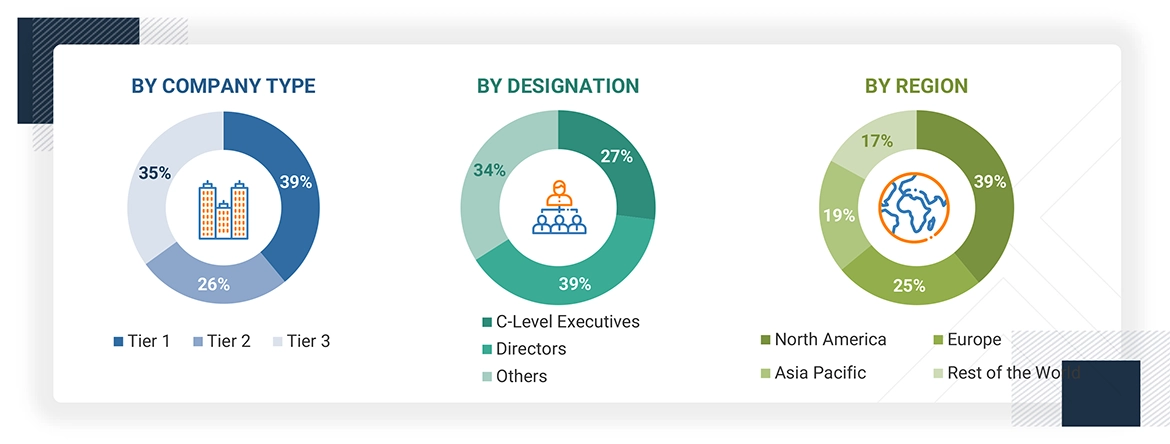
Network API Market Size, and Share

Note: Tier 1 companies have revenues over USD 1 billion, Tier 2 companies have revenues between
USD 500 million and 1 billion, and Tier 3 companies have revenues less than USD 500 million. Other
designations include sales managers, marketing managers, and product managers.
Source: Industry Experts

To know about the assumptions considered for the study, download the pdf brochure

Market Size Estimation

Both top-down and bottom-up approaches were used to estimate and validate the total size of the network API market. These methods were also used extensively to estimate the size of various subsegments in the market.

Network API Market : Top-Down and Bottom-Up Approach
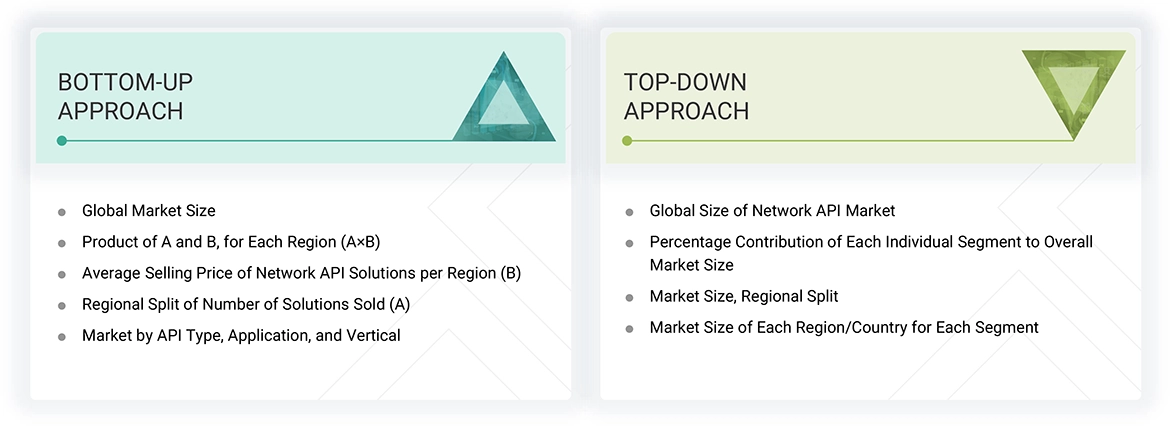
Network API Market Top Down and Bottom Up Approach

Data Triangulation

The network API market was split into several segments and sub-segments after determining the overall market size from the above estimation process. To complete the overall market engineering process and arrive at the exact statistics for all segments and sub-segments, data triangulation and market breakdown procedures were used, wherever applicable. The data was triangulated by studying various factors and trends from the demand and supply sides. The network API market size was validated using top-down and bottom-up approaches.

Market Definition

Network APIs are programming interfaces that allow developers and third-party applications to access and program the functions, data, and capabilities of network infrastructure. These APIs abstract the complexity of the underlying network, transforming it from a closed system into an open, programmable platform. This enables developers to build new applications and services that are deeply integrated with the network. The market includes a variety of API types that provide access to these capabilities, such as device status, edge, identity, location, network performance, and others (policy control, security, analytics, etc.).

Stakeholders

  • Cloud Service Providers
  • API Developers and Providers
  • Edge & CDN Providers
  • Security Vendors
  • API Management Vendors
  • Software Developers and Application Providers
  • Managed Service Providers
  • Regulatory Bodies

Report Objectives

  • To determine and forecast the network API market by API type, application, vertical, and region from 2025 to 2030, and analyze various macroeconomic and microeconomic factors that affect the market growth
  • To forecast the size of the market segments with respect to five main regions: North America, Europe, Asia Pacific (APAC), Latin America, and the Middle East & Africa (MEA)
  • To provide detailed information about the major factors (drivers, restraints, opportunities, and challenges) influencing the growth of the market
  • To analyze each submarket with respect to individual growth trends, prospects, and contributions to the overall market
  • To analyze the opportunities in the market for stakeholders by identifying the high-growth segments of the market
  • To profile the key market players, provide a comparative analysis on the basis of business overviews, regional presence, product offerings, business strategies, and key financials, and illustrate the competitive landscape of the market
  • To track and analyze competitive developments, such as mergers and acquisitions, product developments, partnerships and collaborations, and research and development (R&D) activities, in the market

Available Customizations

With the given market data, MarketsandMarkets offers customizations based on the company’s specific needs. The following customization options are available for the report:

Geographic Analysis as per Feasibility

  • Further break-up of the Asia Pacific market into countries contributing 75% to the regional market size
  • Further break-up of the North American market into countries contributing 75% to the regional market size
  • Further break-up of the Latin American market into countries contributing 75% to the regional market size
  • Further break-up of the Middle East & African market into countries contributing 75% to the regional market size
  • Further break-up of the European market into countries contributing 75% to the regional market size

Company Information

  • Detailed analysis and profiling of additional market players (up to five)

Key Questions Addressed by the Report

What is the definition of network API?

Network APIs are programming interfaces that allow developers and third-party applications to access and program the functions, data, and capabilities of network infrastructure. These APIs abstract the complexity of the underlying network, transforming it from a closed system into an open, programmable platform. This enables developers to build new applications and services that are deeply integrated with the network.

What is the size of the network API market?

The network API market is projected to grow from USD 1.96 billion in 2025 to USD 6.13 billion by 2030, at a CAGR of 25.7% during the forecast period.

What are the major drivers of the network API market?

Major drivers of the network API market include the increasing shift toward cloud and digital transformation, 5G and IoT expansion, and the rise of SDN/NFV technologies.

Which are the key players operating in the network API market?

The major players in the network API market include Ericsson (Sweden), Nokia (Finland), Cisco (US), Microsoft (US), T-Mobile (US), AT&T (US), Orange (France), Deutsche Telekom (Germany), Vodafone (UK), Telefonica (Spain), Singtel (Singapore), Telstra (Australia), Huawei (China), Oracle (US), Bharti Airtel (India), Infobip (Croatia), Kentik (US), Obkio (Canada), NetBeez (US), Graphiant (US), Alkira (US), Shabodi (Canada), LotusFlare (US), and PhoenixNAP (US). These players have adopted various growth strategies, such as partnerships, agreements, and collaborations, product launches/enhancements, and acquisitions, to expand their footprint in the network API market.

What are the opportunities for new entrants in the network API market?

Opportunities in the network API market include monetization of 5G capabilities, enterprise adoption, edge computing integration, developer ecosystem, and cross-industry collaborations.

Personalize This Research

  • Triangulate with your Own Data
  • Get Data as per your Format and Definition
  • Gain a Deeper Dive on a Specific Application, Geography, Customer or Competitor
  • Any level of Personalization
Request A Free Customisation

Let Us Help You

  • What are the Known and Unknown Adjacencies Impacting the Network API Market
  • What will your New Revenue Sources be?
  • Who will be your Top Customer; what will make them switch?
  • Defend your Market Share or Win Competitors
  • Get a Scorecard for Target Partners
Customized Workshop Request

Custom Market Research Services

We Will Customise The Research For You, In Case The Report Listed Above Does Not Meet With Your Requirements

Get 10% Free Customisation

Growth opportunities and latent adjacency in Network API Market

DMCA.com Protection Status