
Next-Generation Data Storage Market Size, Share & Trends

Next-generation Data Storage Market by Storage System (Direct-attached Storage, Network-attached Storage), Storage Medium (Hard Disk Drives, Solid-state Drives), and Storage Architecture (File and Object-based Storage) - Global Forecast to 2032




OVERVIEW
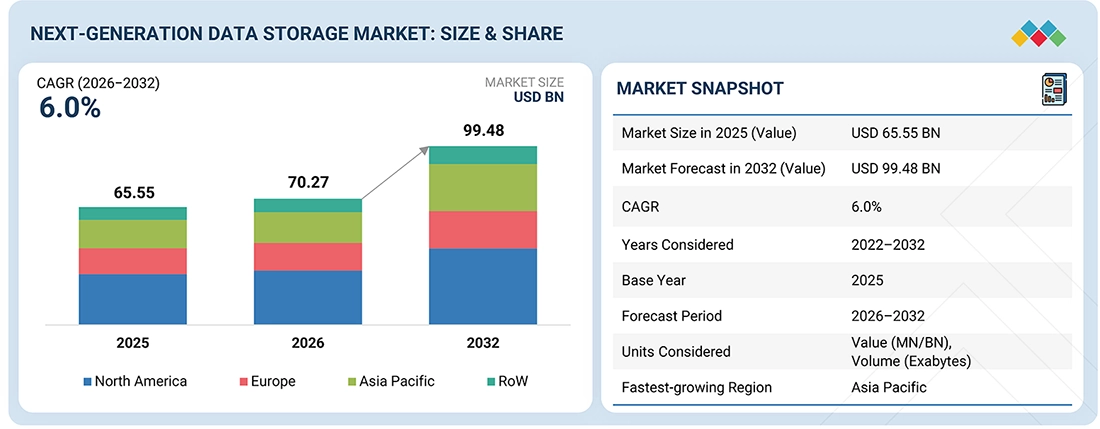
Source: Secondary Research, Interviews with Experts, MarketsandMarkets Analysis
The next-generation data storage market is estimated to be USD 70.27 billion in 2026 and is projected to reach USD 99.48 billion by 2032, at a CAGR of 6.0% over the forecast period. The growing adoption of AI, big data analytics, and cloud computing across enterprises is driving the demand for high-performance and scalable storage infrastructure. Additionally, the increasing generation of unstructured data and rising investments in data centers are accelerating the adoption of next-generation data storage solutions globally.
KEY TAKEAWAYS
-
BY REGIONNorth America accounted for a 43.1% revenue share of the next-generation data storage market in 2025.
-
BY STORAGE MEDIUMThe solid-state drives segment dominated the market with a share of 60.0% in 2025.
-
BY STORAGE ARCHITECTUREThe file and object-based storage segment is expected to register the highest CAGR of 6.5% during the forecast period.
-
BY DEPLOYMENT MODEThe hybrid segment is projected to experience the highest growth rate during the forecast period.
-
BY END USERThe enterprises segment is estimated to exhibit a high CAGR during the forecast period.
-
COMPETITIVE LANDSCAPE (KEY PLAYERS)Dell Inc. (US), Netapp (US), and Everpure, Inc. (US) were identified as star players in the next-generation data storage market due to their strong market share and extensive product footprint.
-
COMPETITIVE LANDSCAPE (STARTUPS/SMES)Lucidlink Corp. (UK), Wasabi Technologies (US), and Wishelf (US), among others, have distinguished themselves among startups and SMEs by securing strong footholds in specialized niche areas, underscoring their potential as emerging market leaders in the next-generation data storage market.
The next-generation data storage market is witnessing significant growth due to the increasing generation of digital data and the rising adoption of AI, cloud computing, and big data analytics across industries. Organizations are increasingly deploying advanced storage solutions such as SSDs, NAS, and object storage to improve scalability, performance, and data accessibility. Additionally, growing investments in hyperscale data centers, hybrid cloud infrastructure, and high-performance computing environments are further accelerating market expansion globally.
TRENDS & DISRUPTIONS IMPACTING CUSTOMERS' CUSTOMERS
The impact on consumers' business in the next-generation data storage market stems from evolving customer needs and industry disruptions. Cloud service providers, enterprises, government bodies, and telecom companies are the primary end users of next-generation data storage. Shifts toward cloud expansion, edge computing, 5G infrastructure, AI chips from CPU-based servers, standard memory, networking chips, and storage controllers directly influence the operational performance and revenues of end users. These impacts, in turn, drive the demand for next-generation data storage, shaping the market's growth trajectory.
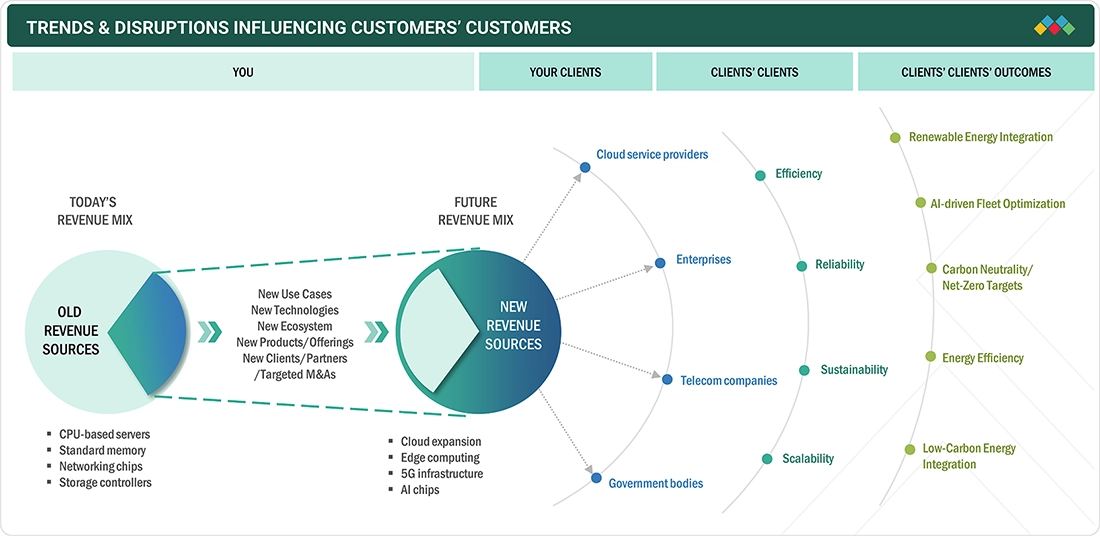
Source: Secondary Research, Interviews with Experts, MarketsandMarkets Analysis
MARKET DYNAMICS

Level
-
Increased data generation attributed to surging use of smartphones and smart wearable devices

-
Growing adoption of Internet of Things (IoT) technologies and connected devices


Level
-
High cost of advanced storage solutions

-
Long replacement cycles of legacy infrastructure


Level
-
Adoption of hybrid cloud storage architectures

-
Rising demand for high-performance storage, driven by real-time data processing needs


Level
-
High power and cooling requirements of advanced storage infrastructure

-
Interoperability and multi-tenancy challenges across shared, multi-vendor storage environments

Source: Secondary Research, Interviews with Experts, MarketsandMarkets Analysis
Driver: Increased data generation attributed to surging use of smartphones and smart wearable devices
The increasing use of smartphones and smart wearable devices is generating massive volumes of structured and unstructured data, driving demand for high-capacity and high-performance storage solutions. This growing data generation is accelerating the adoption of next-generation data storage technologies across cloud and enterprise environments.
Restraint: High cost of advanced storage solutions
The high cost associated with advanced storage solutions, including all-flash systems and AI-ready storage infrastructure, limits adoption among small and cost-sensitive organizations. Additionally, expenses related to deployment, maintenance, and infrastructure upgrades further restrain market growth.
Opportunity: Adoption of hybrid cloud storage architectures
The growing adoption of hybrid cloud storage architectures is creating significant opportunities for next-generation data storage solutions by enabling flexible, scalable, and cost-efficient data management. Enterprises are increasingly deploying hybrid environments to improve workload optimization, data accessibility, and disaster recovery capabilities.
Challenge: High power and cooling requirements of advanced storage infrastructure
Advanced storage infrastructure requires high power consumption and efficient cooling systems to support large-scale data processing and high-performance workloads. These increasing energy and cooling requirements raise operational costs and create infrastructure management challenges for data centers and enterprises.
NEXT-GENERATION DATA STORAGE MARKET SIZE, SHARE & TRENDS: COMMERCIAL USE CASES ACROSS INDUSTRIES
| COMPANY | USE CASE DESCRIPTION | BENEFITS |
|---|---|---|
 |
x10studio faced challenges related to data loss, backup failures, and limited IT expertise with its previous customized NAS systems. To address these issues, the company deployed QNAP NAS solutions with 10GbE connectivity and scalable configurations, enabling secure data management, simplified deployment, reliable backup capabilities, and efficient handling of increasing data workloads. | The solution improved secure data management, enabled scalable storage expansion, simplified system setup for non-IT staff, reduced backup failures, and enhanced operational efficiency for growing workloads. |
 |
ITCE required a reliable and cost-effective NAS solution to support its private cloud backup services and manage multiple overnight backup jobs efficiently. The company deployed Buffalo TeraStation 51210RH storage systems with high-capacity rackmount NAS architecture, enabling secure customer data backup, scalable storage capacity, and reliable long-term backup operations. | The solution provided reliable and scalable backup storage, improved operational continuity, supported high-capacity data workloads, and reduced service disruption risks through strong warranty and recovery support. |
 |
Gijima upgraded its aging storage infrastructure by deploying Hitachi VSP 5000 Series and VSP G700 arrays for production and disaster recovery operations. The solution enabled seamless client data migration, improved storage scalability, reduced physical infrastructure requirements, and enhanced operational efficiency through advanced compression, automation, and centralized storage management capabilities. | The solution improved application performance, reduced infrastructure space and energy consumption, enabled seamless disaster recovery, simplified storage management, and enhanced scalability and operational efficiency. |
 |
IDEC Corporation required a modern storage infrastructure to improve operational performance, reliability, and system availability for its ERP environment. The company implemented Dell EMC PowerMax 2000 storage systems, enabling faster processing and backup operations, improved infrastructure efficiency, and significant reduction in physical storage space requirements across enterprise workloads. | The solution improved storage reliability and performance, reduced processing and backup times, minimized rack space requirements, and enhanced operational efficiency for enterprise applications. |
Logos and trademarks shown above are the property of their respective owners. Their use here is for informational and illustrative purposes only.
MARKET ECOSYSTEM
The next-generation data storage market ecosystem comprises storage hardware providers, storage software companies, cloud service providers, semiconductor manufacturers, data center operators, and end users. Storage providers deliver advanced solutions such as SSDs, NAS, and object storage to support high-performance and scalable data management. Cloud service providers and data center operators are driving demand for AI-ready and cloud-integrated storage infrastructure, while enterprises across industries are increasingly adopting advanced storage solutions to manage growing data volumes and digital transformation initiatives.
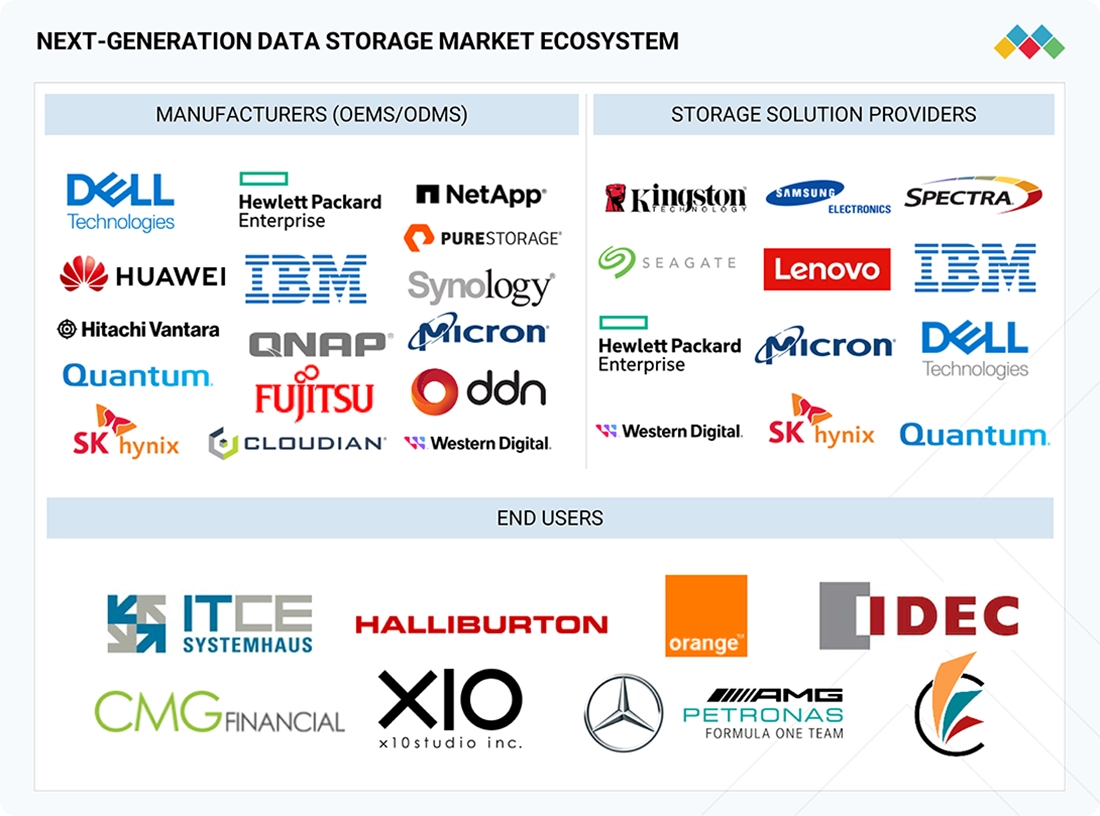
Logos and trademarks shown above are the property of their respective owners. Their use here is for informational and illustrative purposes only.
MARKET SEGMENTS
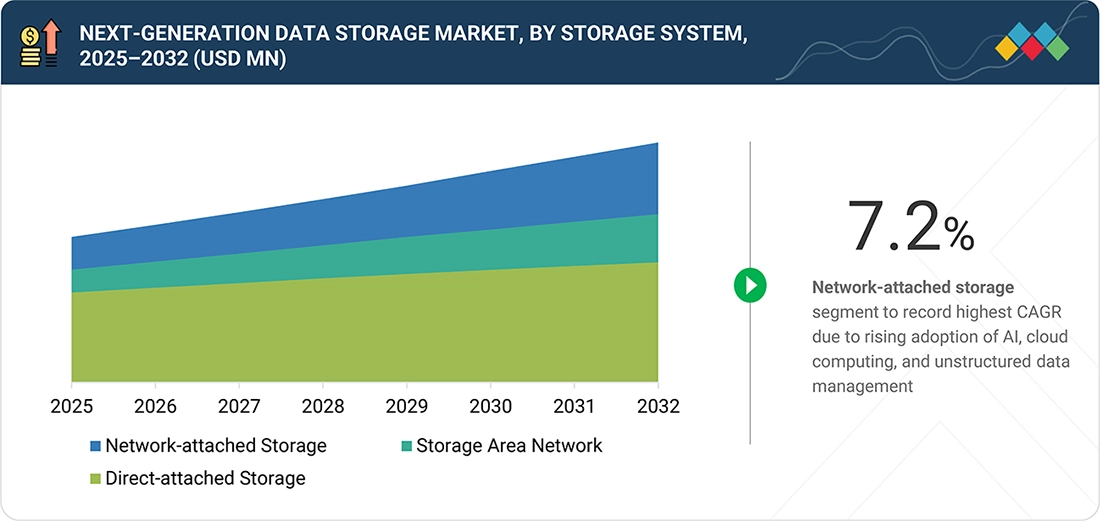
Source: Secondary Research, Interviews with Experts, MarketsandMarkets Analysis
Next-Generation Data Storage Market, By Storage System
The network-attached storage segment holds the largest share in the next-generation data storage market due to its ability to provide centralized, scalable, and cost-efficient data storage for enterprise environments. The growing demand for efficient management of unstructured data, along with increasing adoption of cloud computing, AI, and collaborative business applications, is driving the adoption of NAS solutions globally.
Next-Generation Data Storage Market, By Storage Medium
The solid-state drives segment holds the largest share in the next-generation data storage market due to its high-speed data processing, low latency, and energy-efficient performance compared to traditional storage technologies. Increasing adoption of AI, cloud computing, hyperscale data centers, and high-performance computing applications is further driving demand for SSD-based storage solutions.
Next-Generation Data Storage Market, By Storage Architecture
The file and object-based storage segment holds the largest share in the next-generation data storage market due to the increasing growth of unstructured data generated from cloud platforms, multimedia content, AI, and big data applications. These storage architectures provide high scalability, efficient data accessibility, and cost-effective data management capabilities, making them highly suitable for enterprise, cloud, and hyperscale data center environments.
Next-Generation Data Storage Market, By Deployment Mode
The hybrid segment is expected to witness the highest CAGR in the next-generation data storage market due to its ability to provide flexibility, scalability, and cost-efficient data management across on-premises and cloud environments. Increasing enterprise adoption of hybrid cloud strategies to support data security, workload optimization, and business continuity is further driving the demand for hybrid deployment storage solutions.
Next-Generation Data Storage Market, By End User
The enterprise segment is estimated to hold the largest share in the next-generation data storage market due to the growing need for secure, scalable, and high-performance storage infrastructure to manage large volumes of business data. Increasing adoption of AI, cloud computing, and data analytics across enterprises is further driving demand for advanced storage solutions.
REGION
Asia Pacific to be fastest-growing region in global next-generation data storage market during forecast period
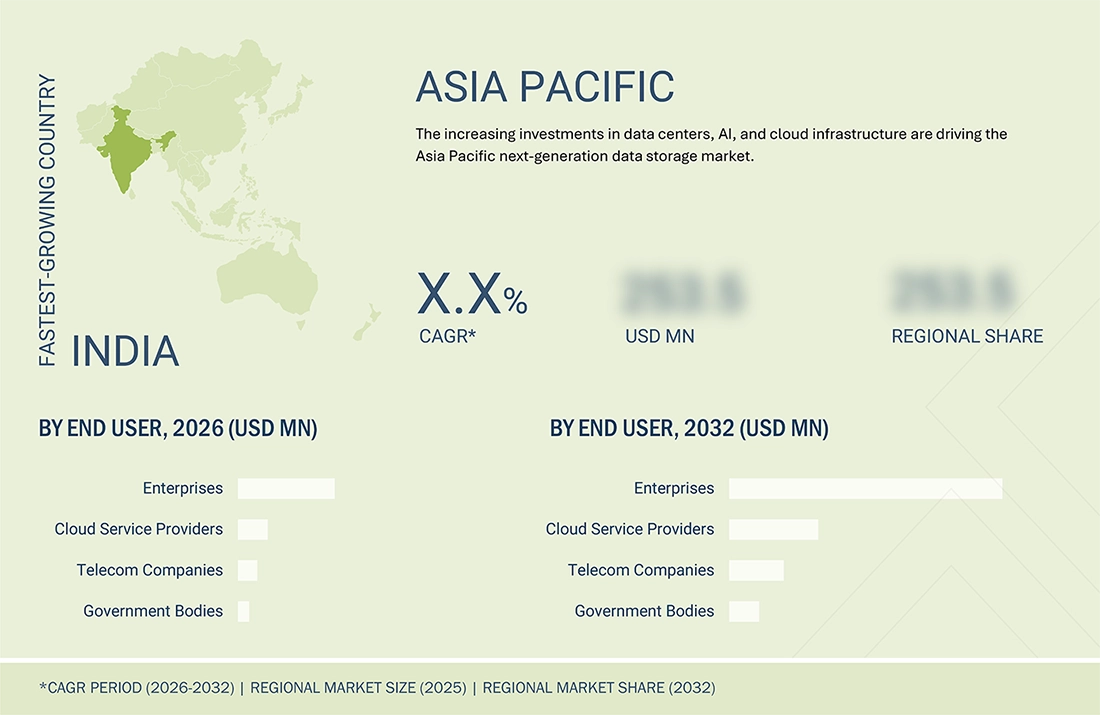
Asia Pacific is expected to exhibit the highest CAGR in the next-generation data storage market due to the rapid adoption of cloud computing, AI, big data analytics, and digital transformation initiatives across industries. Countries such as China, Japan, South Korea, and India are significantly investing in hyperscale data centers, high-performance computing infrastructure, and advanced storage technologies to support rising data generation and enterprise workload demands. Additionally, the growing deployment of 5G networks, edge computing, and AI-driven applications, along with supportive government initiatives for digital infrastructure development, is accelerating the adoption of next-generation data storage solutions across the region.
NEXT-GENERATION DATA STORAGE MARKET SIZE, SHARE & TRENDS: COMPANY EVALUATION MATRIX
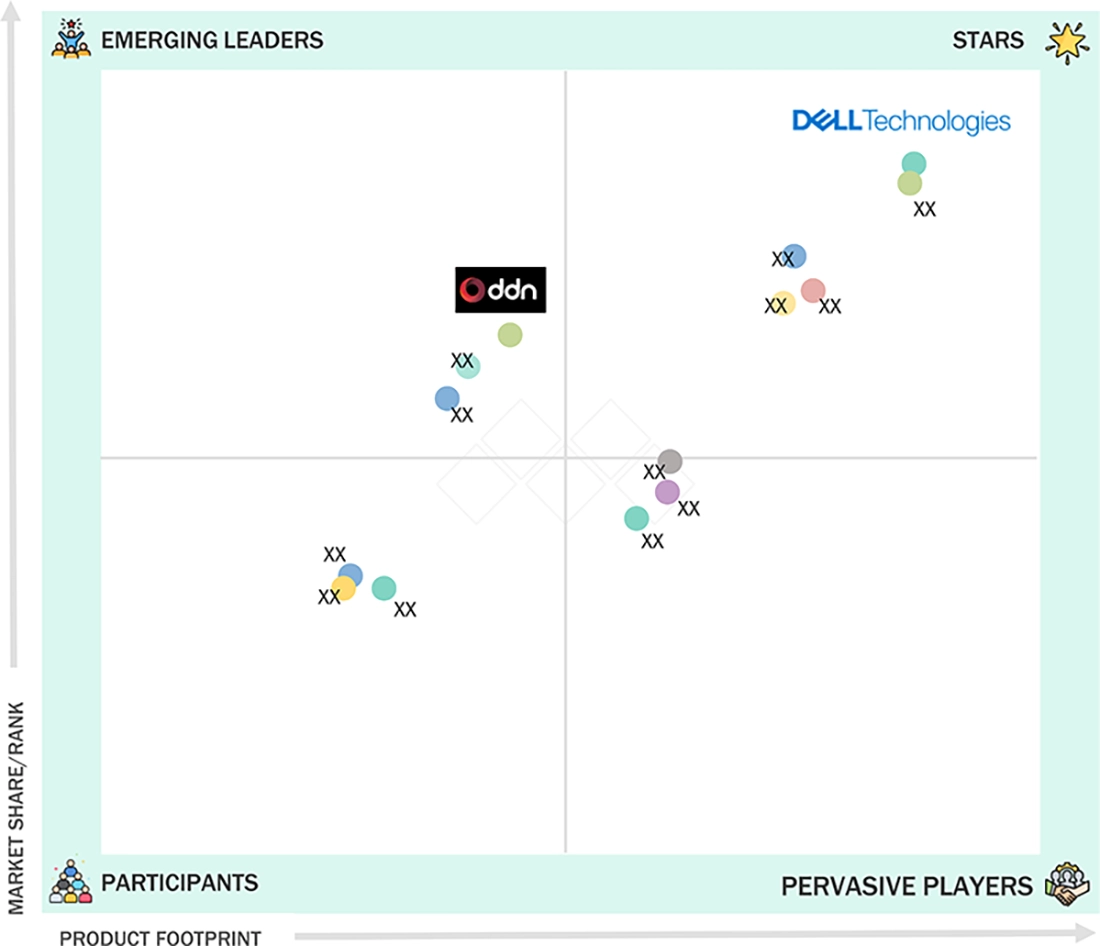
In the next-generation data storage market matrix, Dell Inc. (US) (Star) leads with a strong market presence and a broad portfolio of enterprise storage solutions across cloud, AI, and high-performance computing environments. DataDirect Networks, Inc. (US) (Emerging Leader) is gaining recognition with high-performance storage solutions for AI and data-intensive workloads, strengthening its position through advanced and scalable offerings. While Dell Technologies Inc. dominates through portfolio strength and global reach, DataDirect Networks, Inc. continues to expand its presence as demand for AI-ready storage infrastructure increases.
Source: Secondary Research, Interviews with Experts, MarketsandMarkets Analysis
KEY MARKET PLAYERS
- Dell Inc. (US)
- Hewlett-Packard Enterprise Development LP (US)
- Netapp (US)
- Huawei Technologies Co., Ltd. (China)
- Everpure, Inc. (US)
- Hitachi, Ltd. (Japan)
- Fujitsu (Japan)
- IBM (US)
- Datadirect Networks (US)
- Micron Technology, Inc. (US)
MARKET SCOPE
| REPORT METRIC | DETAILS |
|---|---|
| Market Size in 2025 (Value) | USD 65.55 Billion |
| Market Size in 2026 (Value) | USD 70.27 Billion |
| Market Forecast in 2032 (Value) | USD 99.48 Billion |
| CAGR | 6.0% |
| Years Considered | 2022–2032 |
| Base Year | 2025 |
| Forecast Period | 2026–2032 |
| Units Considered | Value (USD Million/Billion), Volume (Exabytes) |
| Report Coverage | Revenue Forecast, Company Ranking, Competitive Landscape, Growth Factors, and Trends |
| Segments Covered |
|
| Regions Covered | North America, Europe, Asia Pacific, Rest of the World |
WHAT IS IN IT FOR YOU: NEXT-GENERATION DATA STORAGE MARKET SIZE, SHARE & TRENDS REPORT CONTENT GUIDE
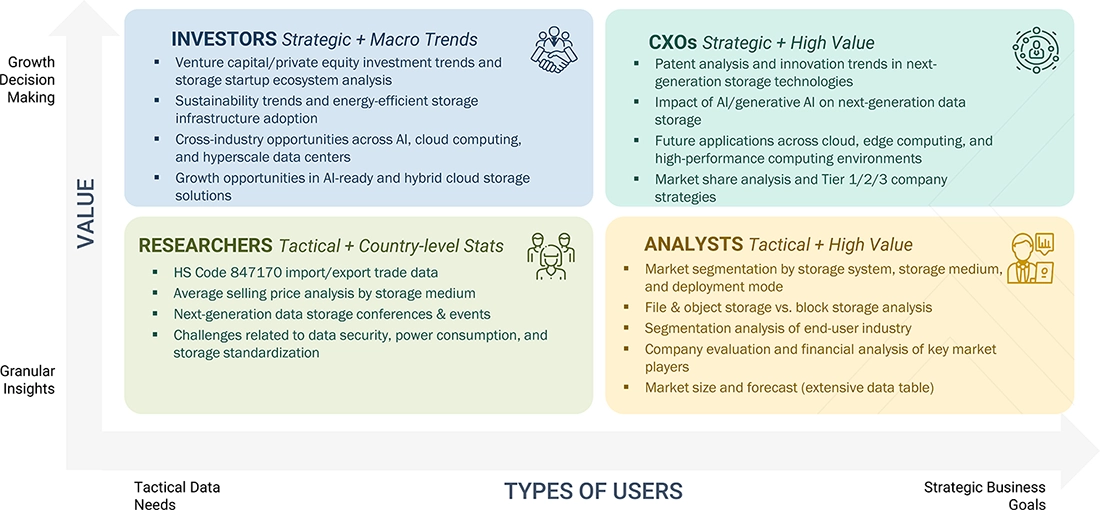
DELIVERED CUSTOMIZATIONS
We have successfully delivered the following deep-dive customizations:
| CLIENT REQUEST | CUSTOMIZATION DELIVERED | VALUE ADDS |
|---|---|---|
| Hyperscale Data Center Operator | Competitive benchmarking of next-generation storage architectures including all-flash storage, object storage, and hybrid cloud storage solutions with performance and scalability assessment |
|
| Cloud Service Provider | Regional demand analysis for cloud-integrated storage solutions, storage capacity expansion trends, and workload-based storage optimization strategies |
|
| Enterprise IT & Infrastructure Vendor | Evaluation of enterprise storage requirements across AI, big data analytics, and high-performance computing workloads with deployment roadmap analysis |
|
| Semiconductor & Storage Component Manufacturer | Supply-demand analysis for SSDs, memory technologies, and storage controllers with procurement and technology trend assessment |
|
RECENT DEVELOPMENTS
- March 2026 : Huawei Technologies Co., Ltd. launched an AI-integrated data platform combining OceanStor storage with AI capabilities to support high-performance data processing, analytics, and enterprise AI workloads.
- October 2025 : Dell Inc. announced enhancements to its AI Data Platform to improve enterprise data readiness for AI workloads. The update includes enhancements across storage solutions such as PowerScale and ObjectScale, enabling scalable, high-performance, and cloud-compatible architectures aligned with next-generation data storage requirements.
Table of Contents
 Exclusive indicates content/data unique to MarketsandMarkets and not available with any competitors.
Methodology
The research process for this technical, market-oriented, and commercial study of the next-generation data storage market included systematic gathering, recording, and analysis of data about companies operating in the market. It involved the extensive use of secondary sources, directories, and databases (Factiva, Oanda) to identify and collect relevant information. In-depth interviews were conducted with various primary respondents, including experts from core and related industries and preferred manufacturers, to obtain and verify critical qualitative and quantitative information as well as to assess the growth prospects of the market. Key players in the next-generation data storage market were identified through secondary research, and their market rankings were determined through primary and secondary research. This included studying annual reports of top players and interviewing key industry experts, such as CEOs, directors, and marketing executives.
Secondary Research
In the secondary research process, various secondary sources were referred to for identifying and collecting information relevant to this study. Secondary sources included annual reports, press releases, and investor presentations of companies; white papers, certified publications, and articles from recognized authors; directories; and databases. Secondary research was mainly conducted to obtain key information about the supply of the industry; a total pool of key players; segmentation of the market according to industry trends, geographic markets, and key developments from market- and technology-oriented perspectives.
Primary Research
In the primary research process, primary sources from the supply and demand sides were interviewed to obtain qualitative and quantitative information for this report. Primary sources from the supply side included experts, such as CEOs, vice presidents, marketing directors, technology and innovation directors, subject-matter experts, consultants, and related key executives from major companies and organizations operating in the next-generation data storage market.
After the complete market engineering process (market statistics calculations, market breakdown, market size estimations, market forecasting, and data triangulation), extensive primary research was conducted to gather information and verify and validate the critical market numbers.
Several primary interviews were conducted with experts from the demand and supply sides across four major regions—North America, Europe, Asia Pacific, and the Rest of the World (RoW). Approximately 25% of the primary interviews were conducted with the demand side and 75% with the supply side. This primary data was collected through questionnaires, emails, and telephonic interviews.
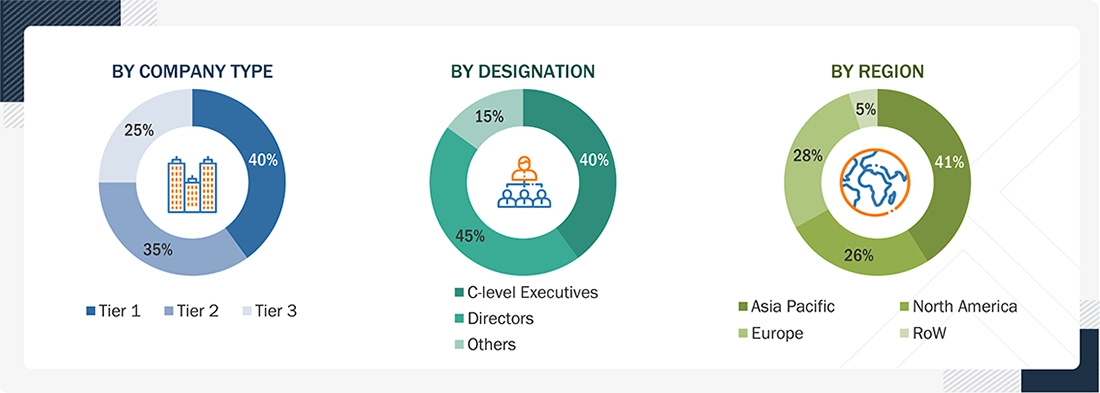
Notes: Tier 1 companies include market players with revenues above USD 500 million; tier 2 companies earn revenues between USD 100 million and USD 500 million; and tier 3 companies earn revenues up to USD 100 million. Other designations include sales, marketing, and product managers.
To know about the assumptions considered for the study, download the pdf brochure
Market Size Estimation
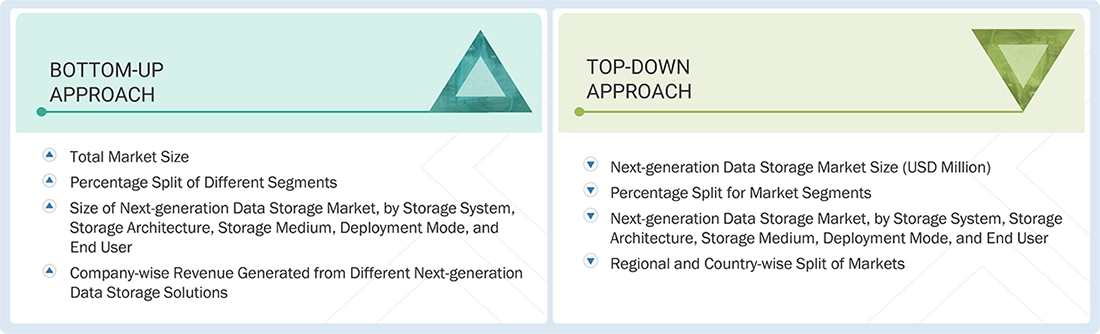
In the complete market estimation process, the top-down and bottom-up approaches were used, along with several data triangulation methods, to estimate and forecast the size of the market and its segments and subsegments listed in the report. Extensive qualitative and quantitative analyses were carried out on the complete market engineering process to list the key information/insights pertaining to the next-generation data storage market.
Key players in the next-generation data storage market were identified through secondary research, and their rankings in the respective regions were determined through primary and secondary research. This entire procedure involved the study of the annual and financial reports of top players and interviews with industry experts, such as chief executive officers, vice presidents, directors, and marketing executives, for quantitative and qualitative insights. All percentage shares, splits, and breakdowns were determined using secondary sources and verified through primary sources. All parameters that affect the markets covered in this research study were accounted for, viewed in extensive detail, verified through primary research, and analyzed to obtain the final quantitative and qualitative data. This data was consolidated and enhanced with detailed inputs and analysis from MarketsandMarkets and presented in this report.
Bottom-Up Approach
- Identifying various next-generation data storage solutions
- Analyzing the penetration of each system through secondary and primary research
- Analyzing the penetration of next-generation data storage solutions based on different storage systems, storage architecture, storage mediums, deployment mode, and end users through secondary and primary research
- Conducting multiple discussion sessions with key opinion leaders to understand the detailed working of next-generation data storage and their implementation in multiple end-user industries, which is expected to help analyze the break-up of the scope of work conducted by each major company
- Verifying and cross-checking the estimates at every level with key opinion leaders, including CEOs, directors, and operations managers, and then finally with the MarketsandMarkets domain experts
- Studying various paid and unpaid sources of information, such as annual reports, press releases, white papers, and databases.
Top-Down Approach
- Focusing initially on the top-line investments and expenditures made in the next-generation data storage ecosystem, further splitting the key market areas into the storage system, storage architecture, storage medium, deployment mode, end user, and region and listing key developments
- Identifying all leading players and end users in the next-generation data storage market-based storage system, storage architecture, storage medium, and deployment mode through secondary research, and fully verifying them through a brief discussion with industry experts
- Analyzing revenues, product mix, geographic presence, and key applications served by all identified players to estimate and arrive at percentage splits for all key segments
- Discussing splits with industry experts to validate the information and identify key growth pockets across all key segments
- Breaking down the total market based on verified splits and key growth pockets across all segments.
Next-generation Data Storage Market : Top-Down and Bottom-Up Approach
Data Triangulation
After arriving at the overall market size from the market size estimation process explained above, the total market was split into several segments and subsegments. To complete the overall market engineering process and arrive at the exact statistics for all segments and subsegments, the market breakdown and data triangulation procedures were employed, wherever applicable. The data was triangulated by studying various factors and trends from both the demand and supply sides. Along with this, the market size was validated using both the top-down and bottom-up approaches.
Market Definition
Next-generation data storage refers to advanced technologies and solutions aimed at meeting the growing needs for storing, managing, and accessing vast amounts of data more efficiently and on a larger scale. These technologies go beyond traditional storage methods, providing improved performance, capacity, reliability, and flexibility. It deals with the security and management of data and harnessing the information to meet the application and software networking needs of end users. Next-generation data storage comprises various computer-controlled systems, equipment, and software used to store and retrieve data more accurately for reuse.
Key Stakeholders
- Next-generation data storage solution providers
- Technology consultants and system integrators
- System distributors and suppliers
- Data storage experts
- Suppliers of accessories related to next-generation data storage systems
- Research organizations and consulting companies
- Government bodies, such as regulating authorities and policymakers
- Venture capitalists and private equity firms
- Associations, organizations, and alliances related to the next-generation data storage ecosystem
- Analysts and strategic business planners
- Technology investors
Report Objectives
- To describe and forecast the next-generation data storage market by storage system, storage medium, storage architecture, deployment mode, end user, and region in terms of value
- To describe and forecast by storage medium in terms of volume
- To describe and forecast the market size across four key regions, namely, North America, Europe, Asia Pacific, and the Rest of the World (RoW), along with their respective country-level market size, in terms of value
- To provide detailed information regarding the drivers, restraints, opportunities, and challenges in the market
- To strategically analyze the micromarkets concerning the individual growth trends, prospects, and their contribution to the market
- To map competitive intelligence based on company profiles, key player strategies, and key developments
- To analyze trends/disruptions impacting customer business; interconnected markets and cross-sector opportunities; strategic moves by tier-1/2/3 players; pricing analysis; patents analysis; trade analysis (export and import scenario); Porter's five forces analysis; Macroeconomics indicators; case studies; investment and funding scenario; decision-making process; buyer stakeholders and buying evaluation criteria; adoption barriers & internal challenges; unmet needs from various industries; technology analysis; technology roadmap; ecosystem analysis; regional regulations and compliance; impact of 2025 US tariff; and key conferences and events related to the market
- To benchmark the market players using the proprietary company evaluation matrix framework, which analyzes them on various parameters within the broad categories of market ranking/share and product portfolio
- To analyze competitive developments such as contracts, acquisitions, product launches & developments, collaborations, and partnerships, along with research & development, in the next-generation data storage market
Available customizations:
With the given market data, MarketsandMarkets offers customizations according to the company’s specific needs. The following customization options are available for the report:
Company Information
- Detailed analysis and profiling of additional market players (up to 7)
Need a Tailored Report?
Customize this report to your needs
Get 10% FREE Customization
Customize This ReportPersonalize This Research
- Triangulate with your Own Data
- Get Data as per your Format and Definition
- Gain a Deeper Dive on a Specific Application, Geography, Customer or Competitor
- Any level of Personalization
Let Us Help You
- What are the Known and Unknown Adjacencies Impacting the Next-generation Data Storage Market
- What will your New Revenue Sources be?
- Who will be your Top Customer; what will make them switch?
- Defend your Market Share or Win Competitors
- Get a Scorecard for Target Partners

Custom Market Research Services
We Will Customise The Research For You, In Case The Report Listed Above Does Not Meet With Your Requirements
Get 10% Free CustomisationTESTIMONIALS

Tetsuya Ohhira
Business Development Manager-Technology Business
Nikon Corporation,
Leading Japanese MNC specializing in optics and imaging productswww.nikon.com
MarketsandMarkets™ response
is quick. Their attitude is flexible and positive. Analyst Insights are globally considered and
significant. Client Services quickly respond to our inquiry and demand. Their wide range of global
surveys help us make our strategic plan.
We hope Knowledge Store will be easier to search
for a report.
VP - Marketing & Business Development
Leading Provider of Process Control Solutions
We engaged with MarketsandMarkets on a study to perform an analysis and recommend a Go-To-Market strategy for metrology and process control in the semiconductor market. The study was tailored to our targets and needs with well-defined milestones. Our overall experience with the MarketsandMarkets team was very good throughout the project in all aspects including the analysis methodologies used, the quality and depth of primary and secondary data sets, the professionalism and flexibility of the team and the ability to meet the target schedule and milestones. We want to thank MarketsandMarkets team for a job well done.

Still Researching the
Next-generation Data Storage Ecosystem?
See the competitors, opportunity evaluation, and growth signals shaping it - Instantly!
Generate 15+ consulting-grade strategic intelligence outputs - from competitor analysis to board-ready strategy decks, tailored to your Next-generation Data Storage growth question.






Growth opportunities and latent adjacency in Next-generation Data Storage Market