North America Cell Culture Market Size, Growth, Share & Trends Analysis

North America Cell Culture Market by Product [Consumable {Media, Sera, Reagent, Vessel (Roller Bottle, Flask, Cell Factory)}, Equipment {Bioreactor, Centrifuge, Filtration, Freezer}], Application [mAb, Vaccine, CGT], End User - Forecast to 2030




OVERVIEW
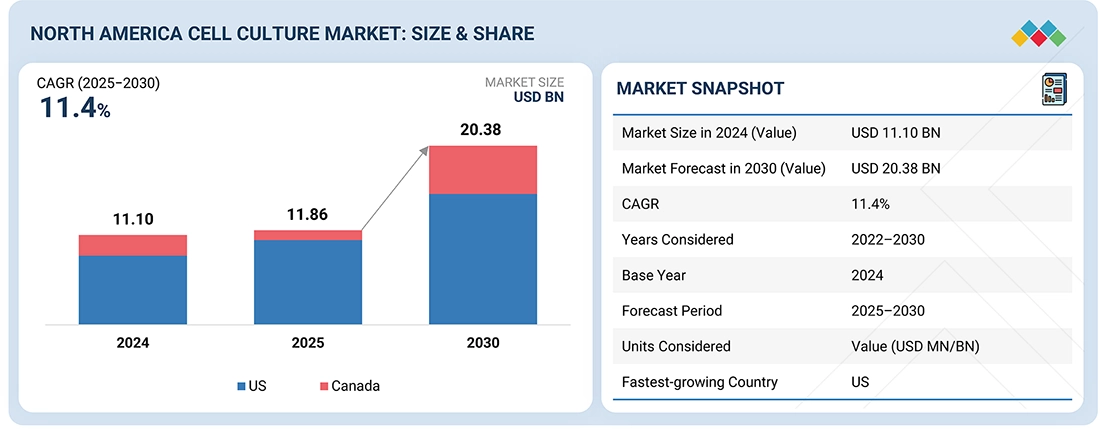
Source: Secondary Research, Interviews with Experts, MarketsandMarkets Analysis
The North America Cell Culture Market, valued at US$11.10 billion in 2024, stood at US$11.86 billion in 2025 and is projected to advance at a resilient CAGR of 11.4% from 2025 to 2030, culminating in a forecasted valuation of US$20.38 billion by the end of the period. Growth of the North America cell culture market is driven by a strong and expanding biopharmaceutical industry, with rising production of biologics such as monoclonal antibodies, vaccines, and cell-based therapies that rely heavily on advanced culture techniques and systems.
KEY TAKEAWAYS
-
By CountryThe US cell culture market dominated with 87.8% revenue share in 2024.
-
By ProductBy offering, the North America cell culture market services segment is expected to register the highest growth rate.
-
By ApplicationBy application, the biopharmaceutical production segment is projected to grow at the fastest rate from 2025 to 2030.
-
By End userBy end user, the pharmaceutical & biotechnology companies segment is projected to grow at the fastest rate from 2025 to 2030.
-
Competitive LandscapeCompanies such as Thermo Fisher Scientific, Danaher Corporation and Merck KGaA were identified as some of the key players in the North America cell culture market, given their strong market share and product footprint.
-
Competitive LandscapeCompanies such as Caisson Labs, Inc. and Solida Biotech GmbH, among others, have distinguished themselves among startups and SMEs by securing strong footholds in specialized niche areas, underscoring their potential as emerging market leaders
The cell culture market in North America is experiencing robust growth, driven by rising demand for advanced in vitro models and scalable bioprocessing platforms that support biologics production, precision medicine, and cutting-edge research applications. Increased use of cell culture technologies in monoclonal antibody and vaccine manufacturing, cell and gene therapies, and 3D culture systems, together with supportive regulatory frameworks, strong investment by biopharmaceutical companies, and broad adoption across academic centers and contract research and manufacturing organizations, is strengthening market momentum in the region.
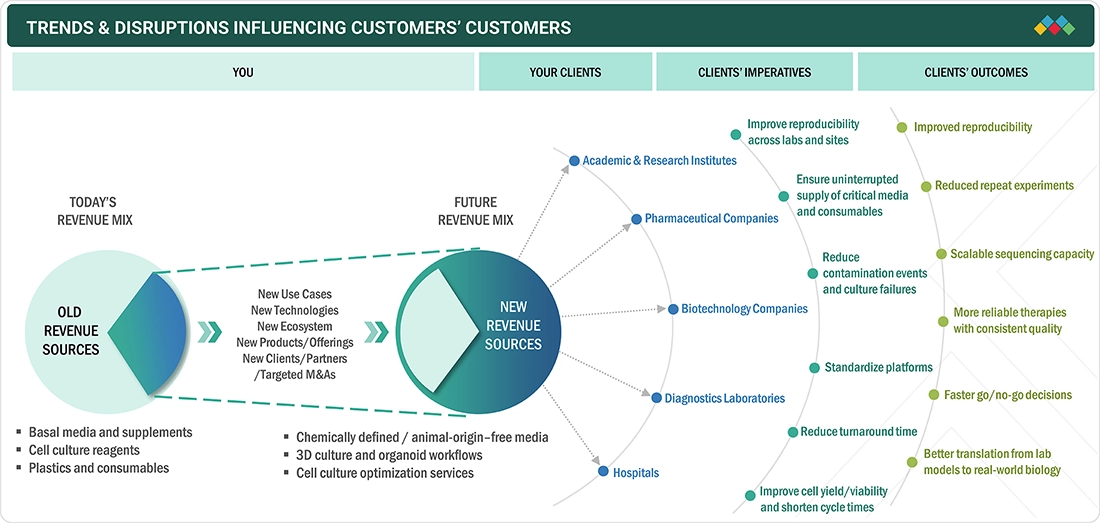
TRENDS & DISRUPTIONS IMPACTING CUSTOMERS' CUSTOMERS
Stakeholders’ businesses in the North America cell culture market are affected by shifting healthcare priorities toward biologics, regenerative medicine, and personalized therapies, along with rapid advances in bioprocessing, single-use technologies, and 3D culture systems that improve productivity and scalability. Biopharmaceutical and biotechnology companies, contract development and manufacturing organizations, and academic and research institutes are the major users of cell culture systems. These systems are primarily used for the production of monoclonal antibodies and vaccines, the development of cell and gene therapies, toxicology and disease modeling, and advanced drug discovery. The growing focus on precision medicine, chronic disease management, and automation-enabled high-throughput screening is making cell culture a foundational tool in R&D and manufacturing processes throughout the region.
Source: Secondary Research, Interviews with Experts, MarketsandMarkets Analysis
MARKET DYNAMICS

Level
-
Biomanufacturing scale-up for vaccines and biologics

-
Strong publicly funded research base


Level
-
High cost of GMP transition and quality expectations


Level
-
Shift to animal-origin-free and chemically defined media

-
Faster uptake of organoids and advanced in-vitro models


Level
-
Contamination risk and ongoing QC burden

Source: Secondary Research, Interviews with Experts, MarketsandMarkets Analysis
Driver: Biomanufacturing scale-up for vaccines and biologics
The US is pushing biomanufacturing capacity and supply resilience as a policy priority. That supports more local sourcing of critical upstream inputs like cell culture media. Suppliers are expanding capacity because vaccines and biologics require a dependable media supply. Animal-origin–free formats are gaining share, especially for regulated manufacturing. More multiproduct facilities are also growing in demand for standardized, ready-to-use media systems. Overall, manufacturing-led growth is a key driver of economic growth in North America.
Restraint: High cost of GMP transition and quality expectations
Costs rise as programs transition from research-grade to clinical and commercial supply. Sponsors must demonstrate strong control over safety, identity, purity, strength, and process consistency. That means tighter raw-material qualification, documentation, and change control. End users often run parallel lots and comparability checks after supplier or process changes. These steps add time, testing, and inventory buffers, driving operating costs higher. Smaller biotechs bear this burden most, since they buy lower volumes at premium prices.
Opportunity: Shift to animal-origin-free and chemically defined media
North American biomanufacturers are demanding more consistent media performance and cleaner documentation, driving a steady shift toward animal-origin–free and defined media systems. Suppliers are expanding AOF production capacity to meet demand from vaccines and biologics. For example, Thermo Fisher expanded AOF dry-powder media capacity at Grand Island. Sartorius is also adding media production capacity across the Americas network, creating opportunities for premium pricing and service-led revenue in formulation, optimization, and tech transfer.
Challenge: Contamination risk and ongoing QC burden
Contamination is a persistent operational risk in cell culture. Mycoplasma is particularly problematic because it often shows no clear visual signs. ATCC reports that mycoplasma contamination affects ~15–35% of continuous cell cultures. It can distort results, slow programs, and waste expensive reagents and time. In manufacturing settings, it can trigger batch loss and deeper investigations. Therefore, testing, prevention, and cleanroom discipline remain non-negotiable cost centers.
NORTH AMERICA CELL CULTURE MARKET: COMMERCIAL USE CASES ACROSS INDUSTRIES
| COMPANY | USE CASE DESCRIPTION | BENEFITS |
|---|---|---|
 |
The lab built a patient-derived pancreatic organoid library to test cancer therapies in vitro. Scientists embed patient tumor cells into a 3D matrix (Matrigel) and feed them with growth factor to drive organoid growth. They also use Corning HYPERFlasks to scale cultures faster with less incubator space | The organoids showed strong predictive power and reflected molecular details of the original tumor. The team reports that when organoids are drug-sensitive in vitro, patients often show similar sensitivity in clinic |
Logos and trademarks shown above are the property of their respective owners. Their use here is for informational and illustrative purposes only.
MARKET ECOSYSTEM
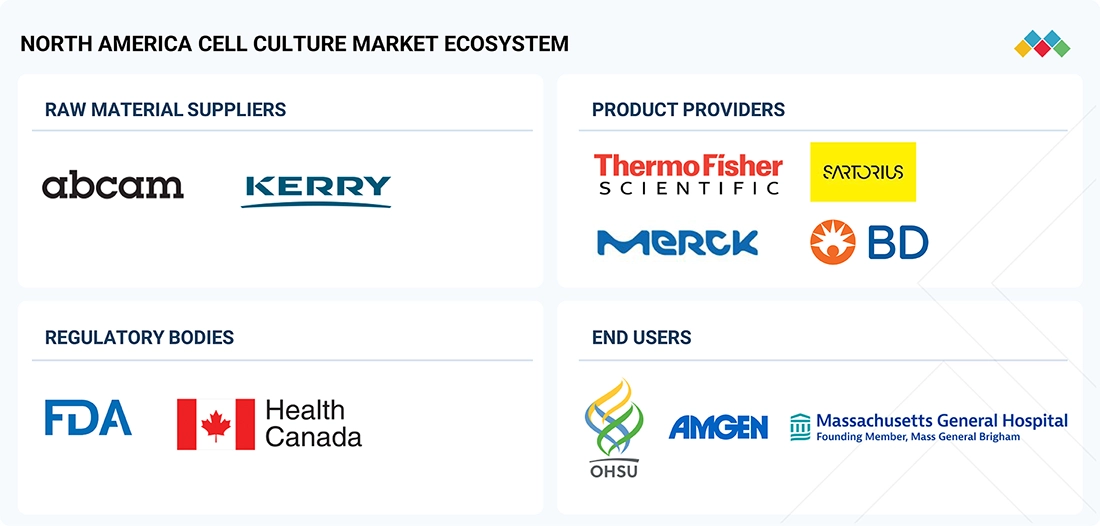
The North America cell culture market ecosystem comprises suppliers of media, sera, reagents, and consumables (including Thermo Fisher Scientific, Cytiva, Merck KGaA, Sartorius, and Corning), equipment manufacturers that provide bioreactors, incubators, and single-use systems, specialized cell line and cell bank providers, and a growing base of CDMOs and service laboratories offering custom culture, process development, and scale-up services. End users include biopharmaceutical and biotechnology companies, academic and government research institutes, hospitals and clinical laboratories, and contract research and manufacturing organizations that integrate these solutions into monoclonal antibody and vaccine production, cell and gene therapy manufacturing, toxicity testing, and translational research programs across the region.
Logos and trademarks shown above are the property of their respective owners. Their use here is for informational and illustrative purposes only.
MARKET SEGMENTS
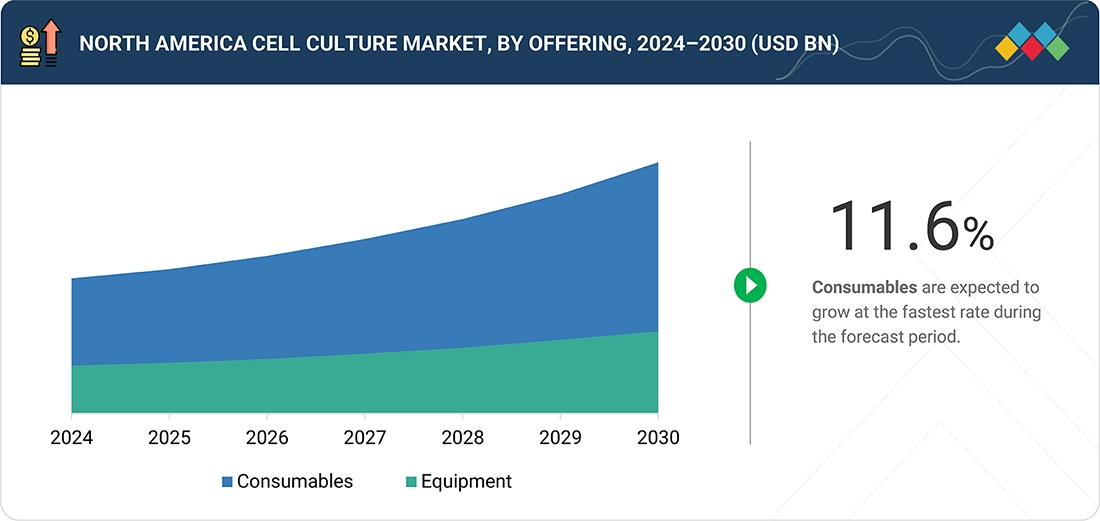
Source: Secondary Research, Interviews with Experts, MarketsandMarkets Analysis
North America cell culture market, By Product
As of 2024, products remain the biggest part of the North America cell culture market, and mainly due to the fact that labs and manufacturers consume supplies every day. Within products, consumables dominate, led by media, supplements, sera/serum replacements and plasticware, since they are repeat-purchase items across workflows. Demand is reinforced by steady lab activity along with scale-up needs in vaccines, biologics and cell & gene therapy manufacturing.
North America cell culture market, By Application
In North America, biopharmaceutical production was the leading application for cell culture in 2024 and is expected to remain so throughout the forecast period. This is because biologics manufacturing relies on cell culture at scale, making media and feeds a high, recurring expense. The US is also pushing to expand domestic biotech and biomanufacturing capacity, which supports more local production activity and steady upstream demand.
North America cell culture market, By End user
In North America, pharmaceutical & biotechnology companies are the leading end users of cell culture as of 2024. They purchase in large quantities because cell culture is central to producing biologics and vaccines, involving significant media and feed consumption continuously. The US policy initiatives promoting biotechnology and biomanufacturing are also driving increased investment and activity within this end user group.
REGION
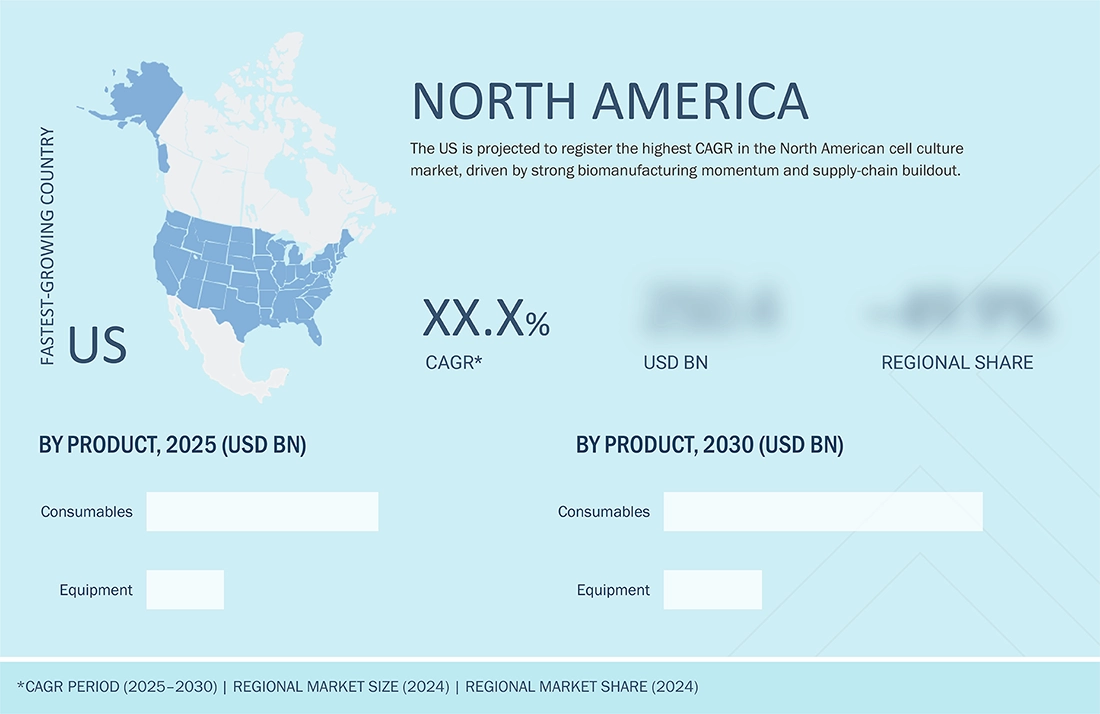
The US to be the fastest-growing country in the North America NGS market during the forecast period
The US cell culture market is emerging as the fastest-growing in North America, driven by faster scale-up in biologics, vaccines, and cell therapy manufacturing. Strong federal support for advancing US biotechnology and biomanufacturing is also expanding new capacity and supply-chain resilience, increasing demand for media and upstream consumables. Moreover, the reduction of animal testing indicated by the US FDA is a major reason for the rapid adoption of advanced in vitro assays and human-relevant models, which, in turn, directly increases the need for specialized cell culture reagents and compatible workflows.
NORTH AMERICA CELL CULTURE MARKET: COMPANY EVALUATION MATRIX
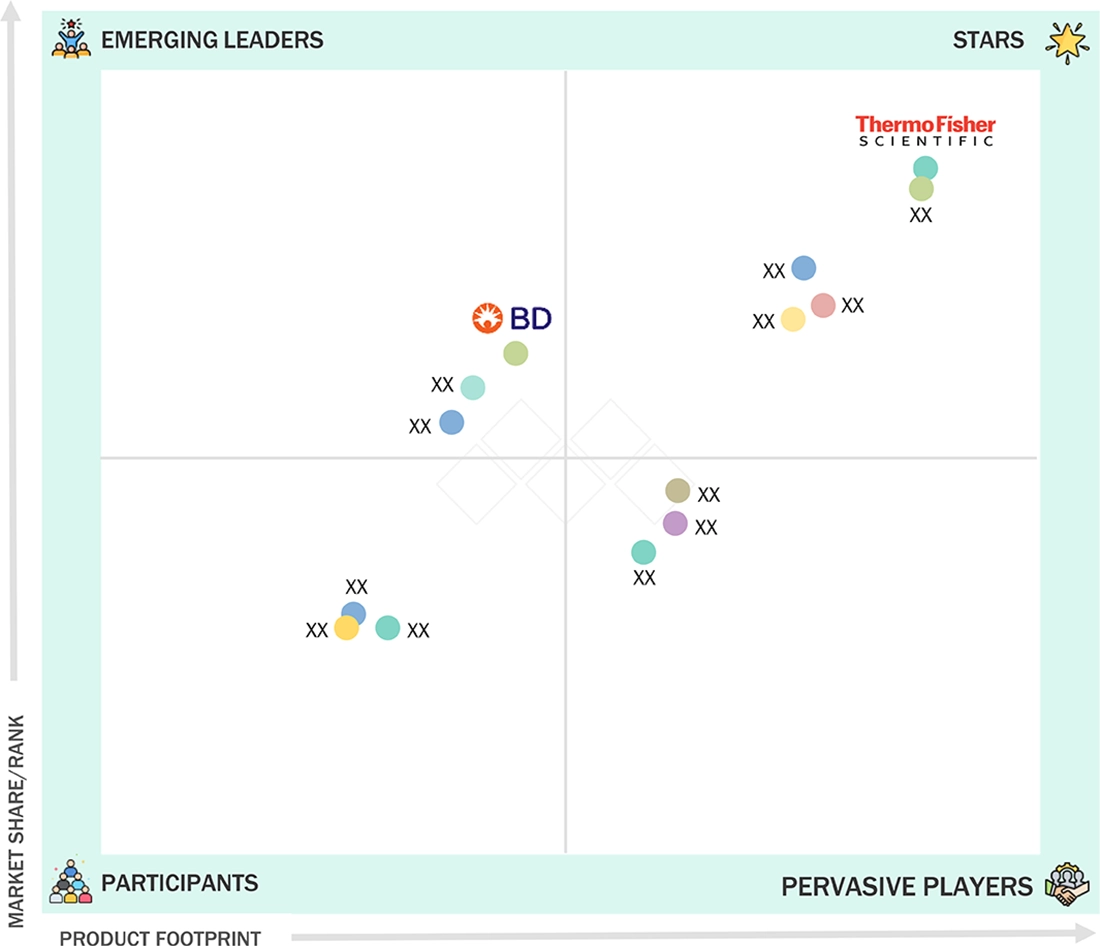
In the North America cell culture market matrix, Thermo Fisher Scientific (Star) is the most prominent player, with a very strong presence in labs and biomanufacturing. The company's Gibco portfolio covers standard cell culture media, reagents, supplements, and sera, supporting a strategy that maintains strong recurring consumables demand. BD (Emerging leader) is building momentum around cell therapy and translational workflows, where consistent cell handling and culture-linked steps matter. BD highlights end-to-end support for CAR-T programs, spanning research through clinical development and manufacturing QC needs.
Source: Secondary Research, Interviews with Experts, MarketsandMarkets Analysis
KEY MARKET PLAYERS
- Thermo Fisher Scientific, Inc. (US)
- Danaher Corporation (US)
- Corning Incorporated (US)
- Agilent Technologies, Inc. (US)
- BD (US)
- Bio-Techne (US)
- Meissner Filtration Products Inc. (US)
- Biospherix LLC (US)
- Advancion Corporation (US)
- STEMCELL Technologies (Canada)
MARKET SCOPE
| REPORT METRIC | DETAILS |
|---|---|
| Market Size in 2024 (Value) | USD 11.10 Billion |
| Market Forecast in 2030 (Value) | USD 20.38 Billion |
| Growth Rate | CAGR of 11.4% from 2025-2030 |
| Years Considered | 2023-2030 |
| Base Year | 2024 |
| Forecast Period | 2025-2030 |
| Units Considered | Value (USD Billion) |
| Report Coverage | Revenue forecast, company ranking, competitive landscape, growth factors, and trends |
| Segments Covered |
|
| Countries Covered | US, Canada |
| Parent & Related Segment Reports |
Cell Culture Market Europe Cell Culture Market Asia Pacific Cell Culture Market Cell Culture Reagents Market Cell Culture Equipment Market Middle East Cell Culture Market Latin America Cell Culture Market Germany Cell Culture Market Japan Cell Culture Market Biopharmaceutical Cell Culture Market Cell Culture Vessels Market |
WHAT IS IN IT FOR YOU: NORTH AMERICA CELL CULTURE MARKET REPORT CONTENT GUIDE
DELIVERED CUSTOMIZATIONS
We have successfully delivered the following deep-dive customizations:
| CLIENT REQUEST | CUSTOMIZATION DELIVERED | VALUE ADDS |
|---|---|---|
| US-based cell & gene therapy developer |
|
|
| Leading academic medical center |
|
|
RECENT DEVELOPMENTS
- May 2025 : BD launched the BD FACSDISCOVER A8 Cell Analyzer (Equipment) featuring spectral and real-time cell imaging technologies.
- April 2025 : Sartorius AG (Germany) acquired MatTek (US), a leading developer and manufacturer of 3D microtissue models for ~USD 80 million, from BICO Group AB (Sweden). This acquisition will advance Sartorius’ cell culture portfolio.
- January 2025 : BD (US) and Biosero (US), a developer of laboratory automation solutions, announced a framework collaboration agreement to enable and facilitate robotic arm integration with BD flow cytometry instruments to accelerate drug discovery and development.
Table of Contents
 Exclusive indicates content/data unique to MarketsandMarkets and not available with any competitors.
Methodology
This research study involved the extensive use of secondary sources, directories, and databases to identify and collect valuable information for the analysis of the North America Cell Culture Market. In-depth interviews were conducted with various primary respondents, including key industry participants, subject-matter experts (SMEs), C-level executives of key market players, and industry consultants, to obtain and verify critical qualitative and quantitative information and assess the growth prospects of the market. The North America market size estimated through secondary research was then triangulated with inputs from primary research to arrive at the final market size.
Secondary Research
Secondary research was used mainly to identify and collect information for the extensive, technical, market-oriented, and commercial study of the North America Cell Culture Market. The secondary sources used for this study include World Health Organization (WHO), Food and Drug Administration, American Society for Cell Biology (ASCB), National Institutes of Health (NIH), International Society for Cell & Gene Therapy (ISCT), American Society for Gene and Cell Therapy (ASGCT), Centers of Disease Control and Prevention (CDC), International Serum Industry Association (ISIA), Pharmaceutical Research and Manufacturers of America (PhRMA), International Society for Vaccines (ISV), International Federation of Pharmaceutical Manufacturers & Associations (IFPMA), the Society for In Vitro Biology (SIVB), Japan Agency for Medical Research and Development, European Federation of Pharmaceutical Industries and Associations (EFPIA), American Type Culture Collection (ATCC), and the Alliance for Regenerative Medicine (ARM); corporate filings such as annual reports, SEC filings, investor presentations, and financial statements; press releases; trade, business, professional associations and among others. These sources were also used to obtain key information about major players, market classification, and segmentation according to industry trends, regional/country-level markets, market developments, and technology perspectives.
Primary Research
After acquiring foundational knowledge about the North America Cell Culture Market through secondary research, extensive primary research was conducted. Multiple interviews were held with market experts from the demand side, including representatives from pharmaceutical and biopharmaceutical companies, hospitals & diagnostic laboratories, research & academic institutes, and CROs. Additionally, experts from the supply side were interviewed, including C-level and D-level executives, product managers, and marketing and sales managers from key manufacturers, distributors, and channel partners.
The primary data was collected through various methods, including questionnaires, emails, online surveys, personal interviews, and telephone interviews.
Market Size Estimation
Both top-down and bottom-up approaches were used to estimate and validate the total size of the North America Cell Culture Market. These methods were also used extensively to estimate the size of various subsegments in the market. The research methodology used to estimate the market size includes the following:
Data Triangulation
After arriving at the market size from the market size estimation process explained above, the total market was divided into several segments and subsegments. To complete the overall market engineering process and arrive at the exact statistics for all segments and subsegments, data triangulation and market breakdown procedures were employed, wherever applicable. The data was triangulated by studying various factors and trends from both the demand and supply sides.
Market Definition
Cell culture refers to removing cells from an animal or plant and their subsequent growth in an artificial environment under controlled conditions. It is a process of growing cells outside their natural environment, typically in a laboratory setting. This technique allows researchers to study cells in a controlled environment, providing insights into their behavior, growth, metabolism, and response to various stimuli.
Stakeholders
- Cell Culture Equipment and Reagents Manufacturers
- Analytical and Life Science Instrumentation Companies
- Academic and Research Institutes
- Pharmaceutical and Biotechnology Companies
- Life Science Companies
- Venture Capitalists and Investors
- Government Organizations
- Private Research Firms
- Contract Research Organizations (CROs)
- Hospitals and Diagnostic Laboratories
- Cell Banks
Report Objectives
- To define, describe, and forecast the North America Cell Culture Market based on the product, application, end user, and region
- To provide detailed information regarding the major factors influencing the growth of the market (such as drivers, restraints, opportunities, and challenges)
- To strategically analyze micro-markets with respect to individual growth trends, future prospects, and contributions to the overall North America Cell Culture Market
- To analyze opportunities in the market for stakeholders and provide details of the competitive landscape for market leaders
- To strategically profile the key players and comprehensively analyze their product portfolios, market positions, and core competencies
- To track and analyze competitive developments such as acquisitions, product launches, expansions, and R&D activities in the North America Cell Culture Market
- To benchmark players within the North America Cell Culture Market using the ‘Company Evaluation Matrix’ framework, which analyzes market players based on various parameters within the broad categories of business and product strategy


Personalize This Research
- Triangulate with your Own Data
- Get Data as per your Format and Definition
- Gain a Deeper Dive on a Specific Application, Geography, Customer or Competitor
- Any level of Personalization
Let Us Help You
- What are the Known and Unknown Adjacencies Impacting the North America Cell Culture Market
- What will your New Revenue Sources be?
- Who will be your Top Customer; what will make them switch?
- Defend your Market Share or Win Competitors
- Get a Scorecard for Target Partners

Custom Market Research Services
We Will Customise The Research For You, In Case The Report Listed Above Does Not Meet With Your Requirements
Get 10% Free CustomisationTESTIMONIALS

JAYANT RAJPUROHIT
Director of Market Insights, Data and Analytics
SFI Health,
Leading Pharmaceutical Companywww.sfihealth.com/

We at SFI Health approached MarketsandMarkets for an Opportunity Assessment on "Incidence and Prevalence of Focus Indications" as we wanted to know the most attractive HCPs like Physician, Functional MD, Naturopath and Pharmacist. The project was critical for us to ensure our focus on the right target which would enable sustainable growth and profitability for SFI Health. The business insights provided exceeded our expectations and we were extremely impressed. The team at MarketsandMarkets is highly professional and detail oriented and very well understood our business needs. MarketsandMarkets offers a unique combination of expertise and dedicated engagement model. We identified 2 new products to be launched in coming months, based on the research findings provided by MarketsandMarkets. We are happy with the services and would strongly recommend MarketsandMarkets to my peers in the industry.

BEATRIZ DE LA CALLE
Head of Commercial Analytics
Qualicaps,
Leading Pharmaceutical Companywww.qualicaps.com/

We partnered with MarketsandMarkets for an assessment study on hard empty capsules. The team was extremely professional in understanding our business requirements and we received timely responses to all our queries. The market intelligence and the recommendations has met our business requirements. We were extremely impressed to see the final study results; it really exceeded our expectations. The market intelligence offered by MarketsandMarkets, and clarity on next steps will help us achieve our business objective for the Year 2021. We are happy with the services and would strongly recommend MarketsandMarkets to my peers in the industry.

Bob Williams,
Senior Director Business Development & Innovation
Bracco Diagnostics Inc.,
Italian Multinational in life sciences sector and a World Leader in imaging diagnosticsimaging.bracco.com/us-en
We were pleased with targeted insights that MarketsandMarkets identified from a custom study on the 'Radiation Dose Management Solutions Market'. Your team identified and characterized the market participants as well as underlying trends accurately. This study was useful to Bracco in formulating business strategies for our dose monitoring product lines and we thank MarketsandMarkets for the job well done.
Cody Coonradt,
Market Development and Strategy Manager
3M Health Information Systems,
Leader in Health care Coding, Payment & Analytics Solutions.www.3m.com/3M/en_US/health-information-systems-us
The value for our organization comes from three things: depth of research, specificity of segments and being easy to work with. As important as the first two are, the third can't be underestimated. MarketsandMarkets, maybe more than any other research vendor, wants to know what is top of mind for our team and what big questions we are grappling to answer.
Their customer first approach and high value engagement model, have given us great analysis and excellent value for money






Growth opportunities and latent adjacency in North America Cell Culture Market