North America Smart Home Market Size, Share & Analysis, 2030

North America Smart Home Market by Product (Lighting Controls, Smart Speaker, Entertainment & Other Controls, Smart Kitchen, HVAC Controls, Security & Access Controls, Home Healthcare, Home Appliances), Offering (Behavioral, Proactive) - Forecast to 2030




OVERVIEW
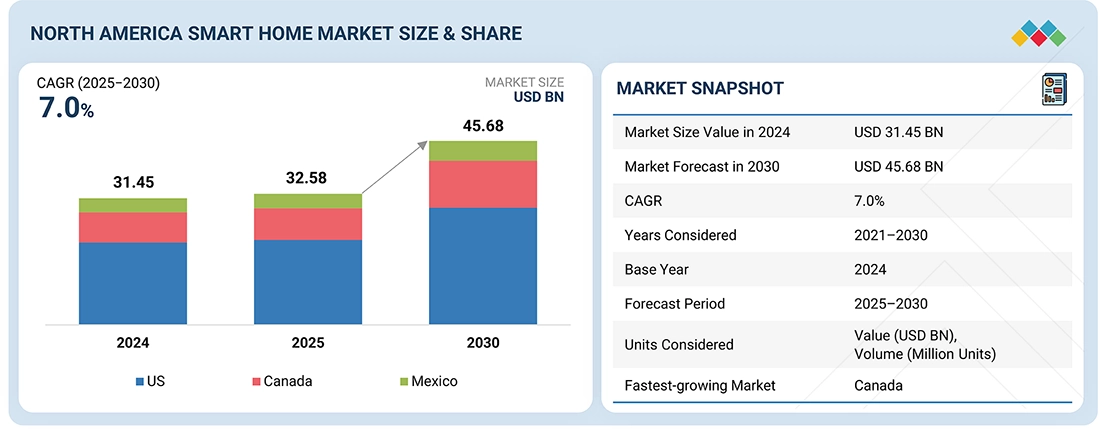
Source: Secondary Research, Interviews with Experts, MarketsandMarkets Analysis
The North America smart home market is projected to reach USD 45.68 billion by 2030 from USD 32.58 billion in 2025, at a CAGR of 7.0% from 2025 to 2030. Growth is due to the high disposable income and strong consumer spending support early adoption of smart home technologies. Homeowners are increasingly investing in smart security, energy management, and convenience solutions. Widespread availability of high-speed internet and strong penetration of smartphones and voice assistants make smart home systems easy to deploy and use.
Market Size & Forecast
KEY TAKEAWAYS
-
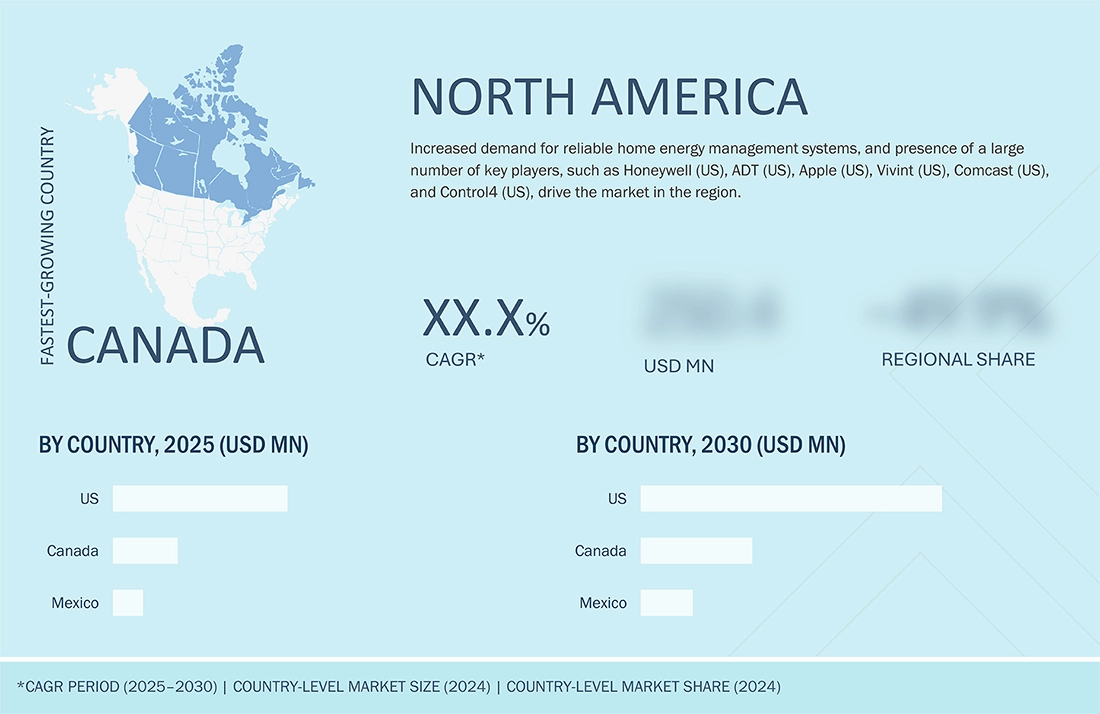
BY COUNTRYCanada is projected to register the fastest growth of CAGR of 8.3% between 2025 and 2030.
-
BY PRODUCTThe smart kitchen segment is projected to exhibit a growth rate of 11.1% during the forecast period.
-
BY OFFERINGThe behavioral segment held the largest market share of 95.0% in 2024.
-
BY SALES CHANNELIndirect sales segment captured the largest market share of 60.0% in 2024.
-
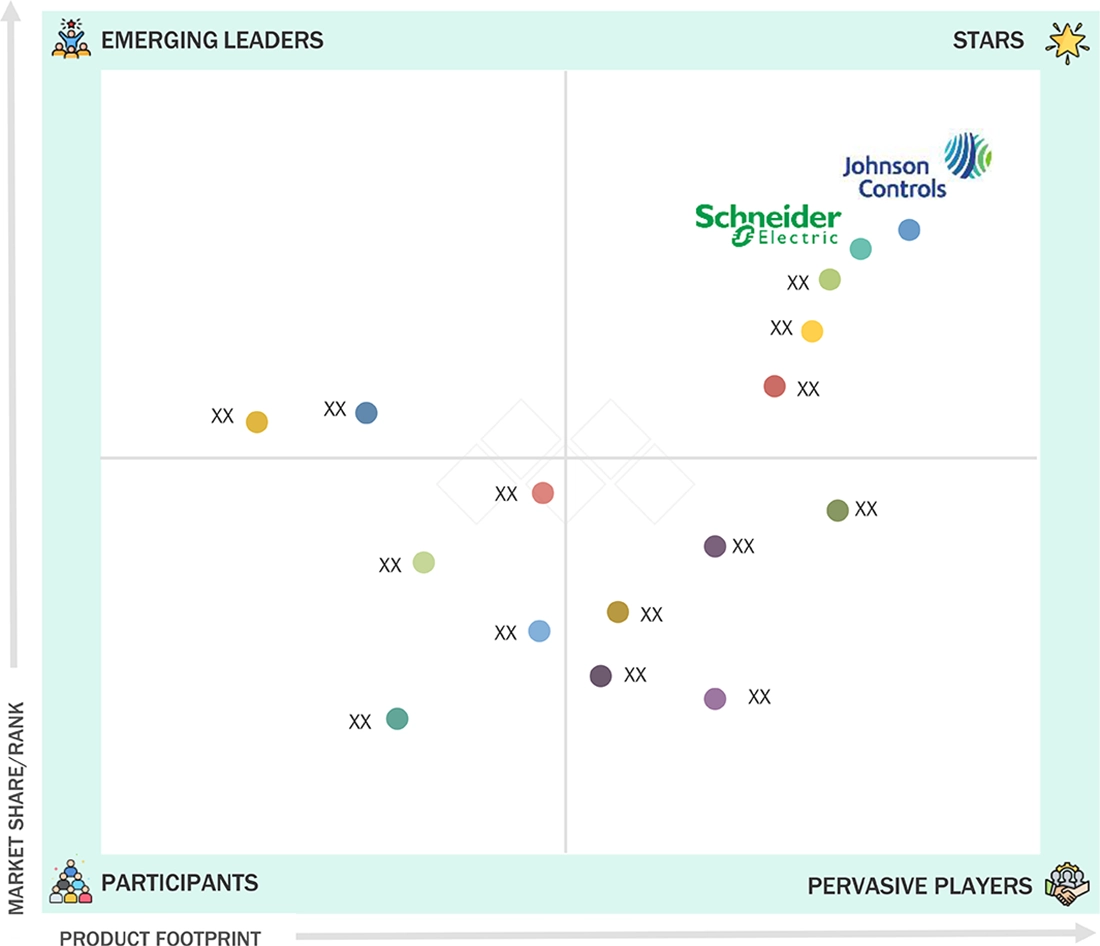
COMPETITIVE LANDSCAPEJohnson Controls Inc., Schneider Electric, and ASSA ABLOY were identified as some of the star players in the North America smart home market, given their strong market share and product footprint.
-
COMPETITIVE LANDSCAPELutron, and Legrand have distinguished themselves among startups and SMEs due to their strong product portfolio and business strategy.
The North America smart home market is projected to grow significantly during the forecast period, driven by rising energy costs and sustainability goals. These factors increase the need for smart thermostats, lighting, and energy monitoring systems. These solutions help reduce electricity consumption and utility bills. Growing concerns around home safety are increasing adoption of smart cameras, locks, and monitoring systems. This is especially strong in single-family homes and suburban areas.
TRENDS & DISRUPTIONS IMPACTING CUSTOMERS' CUSTOMERS
The North America smart home market primarily includes residential property developers, home automation integrators, energy management service providers, and public utility agencies. Smart home systems are widely adopted across these segments to enable centralized control, energy optimization, and enhanced occupant comfort. In addition, new opportunities are emerging with the integration of AI-driven analytics, IoT-based sensing networks, and cloud-enabled home management platforms for real-time monitoring and automation. These innovations are shaping the next generation of intelligent and sustainable home ecosystems, improving energy efficiency, security, and convenience while reducing operational costs for homeowners and real estate developers.
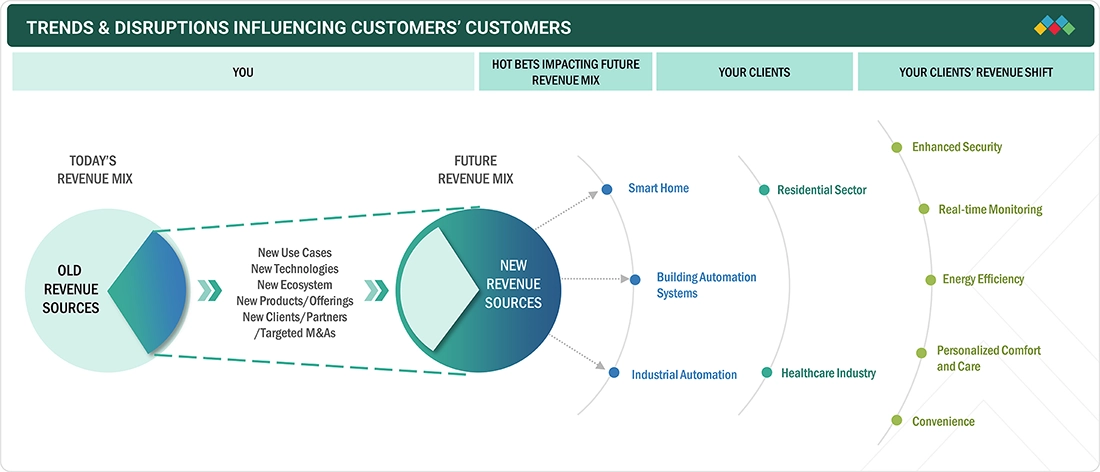
Source: Secondary Research, Interviews with Experts, MarketsandMarkets Analysis
MARKET DYNAMICS

Level
-
Increasing importance of home monitoring in remote locations in North America

-
Growing need for energy-saving and low carbon emission-oriented solutions


Level
-
High cost of switching for existing smart device consumers

-
Issues related to security and privacy breaches


Level
-
Incorporation of lighting controllers with in-built data connectivity technology

-
Integration of power line communication technology in smart homes


Level
-
Difficulties linking disparate systems, limited functionality, and lack of open standards

-
Risk of device malfunction

Source: Secondary Research, Interviews with Experts, MarketsandMarkets Analysis
Driver: Increasing importance of home monitoring in remote locations in North America
Growing ownership of vacation homes and properties in remote and suburban areas drives the demand for smart home monitoring in North America. Homeowners require continuous visibility of security, energy usage, and safety conditions when away. Smart cameras, sensors, and mobile-based control systems enable real-time monitoring and alerts. This increases adoption of connected home solutions across the region
Restraint: Issues related to security and privacy breaches
Security and privacy concerns remain a major restraint for the North America smart home market. Connected devices often store and transmit sensitive user data through cloud platforms. Risks of hacking, data leakage, and unauthorized access reduce consumer trust. These concerns can delay adoption, especially among first-time users.
Opportunity: Integration of power line communication technology in smart homes
Power line communication allows smart home devices to transmit data through existing electrical wiring. This reduces dependence on Wi-Fi and minimizes installation complexity. PLC is particularly useful in older homes with limited wireless coverage. Its adoption can improve system reliability and expand market penetration.
Challenge: Risk of device malfunction
Smart home systems rely heavily on software stability and continuous connectivity. Device malfunctions, network failures, or software bugs can disrupt daily home operations. Compatibility issues between devices from different brands further add to the challenge. Such issues can impact customer satisfaction and long-term adoption.
NORTH AMERICA SMART HOME MARKET: COMMERCIAL USE CASES ACROSS INDUSTRIES
| COMPANY | USE CASE DESCRIPTION | BENEFITS |
|---|---|---|
 |
Integration of voice-controlled smart home ecosystems including lighting, security, appliances, and entertainment across single-family and multi-dwelling homes | Hands-free control | Improved accessibility | Seamless device interoperability | Increased user comfort |
 |
Secure smart home automation platform enabling lighting, climate control, locks, and cameras with strong privacy controls across premium residential segments | High data security | Reliable device performance | Unified user experience across Apple devices |
 |
Deployment of smart HVAC, air quality monitoring, and safety systems in residential and light commercial buildings | Improved indoor comfort | Energy efficiency | Predictive maintenance | Reduced operating costs |
Logos and trademarks shown above are the property of their respective owners. Their use here is for informational and illustrative purposes only.
MARKET ECOSYSTEM
The North America smart home ecosystem comprises established providers, such as Siemens, ABB, Honeywell, and Schneider Electric. The synergy among these players is unlocking new opportunities across areas such as AI-driven home energy optimization, IoT-enabled sensor networks, cloud-based automation platforms, and predictive maintenance analytics. These companies are continuously enhancing their portfolios with interoperable solutions, open-protocol architectures, and integrated home energy management systems, driving efficiency, sustainability, and digital transformation across the North American residential and commercial smart living segments.
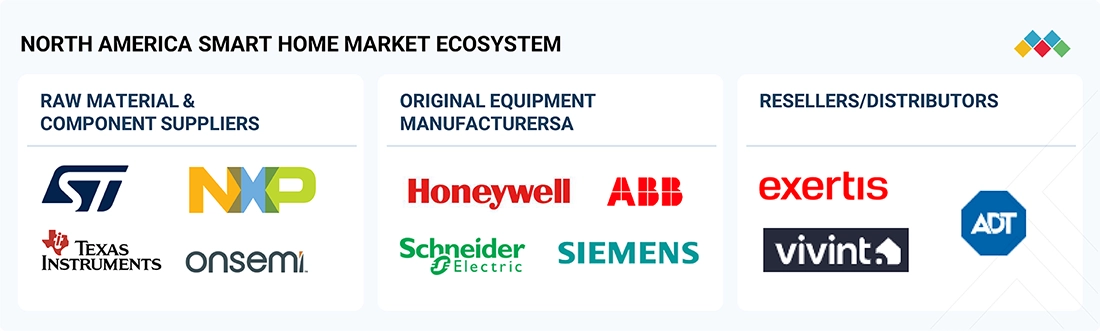
Logos and trademarks shown above are the property of their respective owners. Their use here is for informational and illustrative purposes only.
MARKET SEGMENTS
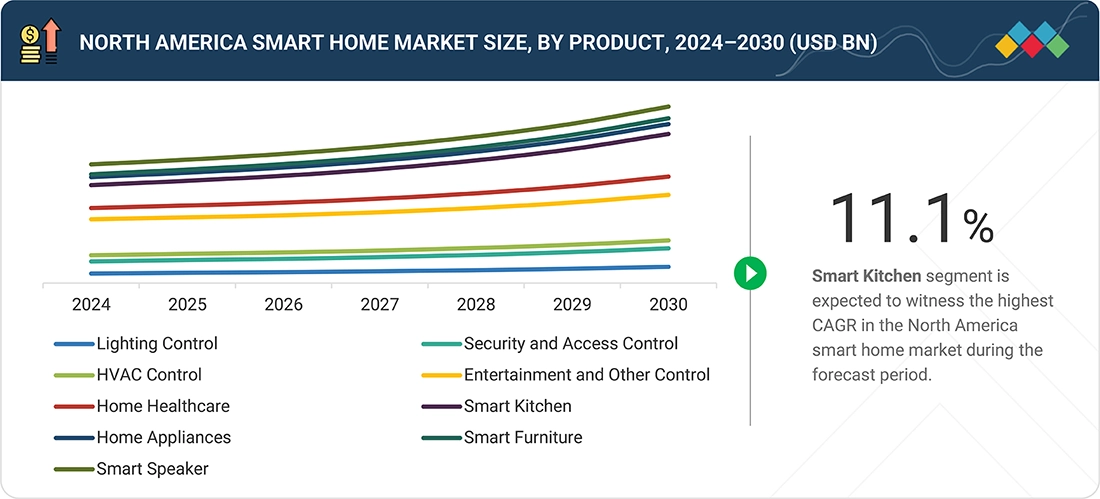
Source: Secondary Research, Interviews with Experts, MarketsandMarkets Analysis
North America Smart Home Market, By Product
The entertainment and other control segment accounted for a notable market share in North America smart home market in 2024. The segment is driven by the rising demand for real-time energy monitoring, smart HVAC optimization, and intelligent lighting control. The increasing use of AI- and IoT-enabled analytics is improving device interoperability and enabling predictive maintenance. These solutions support energy efficiency and sustainability across residential and light commercial buildings.
North America Smart Home Market, By Sales Channel
The indirect sales channel held a significant share of the North American smart home market in 2024. Widespread deployment across retail stores, offices, healthcare facilities, and educational institutions is supporting growth. Smart HVAC, lighting, and security systems help reduce energy consumption and operating costs. Adoption is also increasing in industrial and commercial buildings for energy management and compliance.
North America Smart Home Market, By Installation type
The new installation segment dominated the North America smart home market in 2024. This is supported by rapid construction of energy-efficient residential communities and mixed-use developments. Smart city initiatives and new housing projects increasingly integrate AI-based control systems for energy, lighting, and home security. These factors continue to drive demand for fresh installations over retrofit projects.
North America Smart Home Market, By Offering
The behavioral segment captured a significant market share in 2024, driven by growing consumer adoption of connected devices and mobile applications. These solutions enable real-time monitoring and personalized control of energy usage. At the same time, the proactive segment is gaining momentum as AI-driven automation platforms enable predictive insights. This helps reduce energy waste and improve overall sustainability performance.
REGION
Canada to be fastest-growing country across North America smart home market during forecast period
Canada is projected to grow at the highest rate during the forecast period, owing to the rising adoption of energy-efficient homes and growing electricity and heating costs. As a result, the usage of smart thermostats, lighting, and energy management systems is increasing. Government incentives and utility rebate programs further encourage homeowners to invest in smart home technologies. Strong internet penetration, high smartphone usage, and growing awareness of home automation are supporting market growth. Canadian consumers are increasingly adopting smart security, monitoring, and safety solutions, especially in urban and suburban areas
The Asia Pacific smart home market is projected to reach USD 41.05 billion by 2030 from USD 27.77 billion in 2025, at a CAGR of 8.1 % from 2025 to 2030. The market is primarily driven by rapid urbanization, rising disposable incomes, and a growing middle-class population, which is increasing the demand for connected comfort and lifestyle enhancement technologies. Additionally, strong government smart city initiatives, expanding broadband/5G infrastructure, and a heightened focus on energy efficiency and security are accelerating adoption of smart lighting, HVAC control, security systems, and IoT-enabled home automation across the region.
The European smart home market is projected to grow from USD 23.73 billion in 2025 to USD 32.67 billion by 2030 at a CAGR of 6.6% during the forecast period. Growth is driven by the rising adoption of connected home technologies, smart energy management systems, and home automation devices that enhance user comfort, convenience, and energy efficiency. Government-led initiatives promoting smart grids, renewable integration, and sustainable housing development across countries such as Germany, France, and the UK are fueling market demand. Furthermore, AI-based predictive control, IoT-enabled sensors, and cloud-integrated monitoring platforms are improving real-time energy optimization, reducing wastage, and supporting Europe’s long-term decarbonization and digital transformation goals in the residential sector.
NORTH AMERICA SMART HOME MARKET: COMPANY EVALUATION MATRIX
In the North America smart home market, Johnson Controls and Schneider Electric (Star) hold a leading position with a strong global presence, comprehensive product portfolio, and proven expertise in integrated home automation systems, HVAC optimization, and smart energy management solutions. The company’s continued focus on system interoperability, digital twin integration, and AI-enabled analytics has reinforced its position as a top-tier provider across residential and mixed-use buildings.
Source: Secondary Research, Interviews with Experts, MarketsandMarkets Analysis
KEY MARKET PLAYERS
- Johnson Controls (Ireland)
- Schneider Electric (France)
- Siemens (Germany)
- Honeywell International Inc. (US)
- ASSA ABLOY (Sweden)
- Amazon.com, Inc. (US)
- Apple (US)
- ADT (US)
- Robert Bosch (Germany)
- ABB (Switzerland)
MARKET SCOPE
| REPORT METRIC | DETAILS |
|---|---|
| Market Size in 2024 (Value) | USD 31.45 Billion |
| Market Forecast in 2030 (Value) | USD 45.68 Billion |
| Growth Rate | 7.0% |
| Years Considered | 2021–2030 |
| Base Year | 2024 |
| Forecast Period | 2025–2030 |
| Units Considered | Value (USD Million/Billion), Volume (Million Units) |
| Report Coverage | Revenue forecast, company ranking, competitive landscape, growth factors, and trends |
| Segments Covered |
|
| Countries Covered | US, Canada, Mexico |
WHAT IS IN IT FOR YOU: NORTH AMERICA SMART HOME MARKET REPORT CONTENT GUIDE
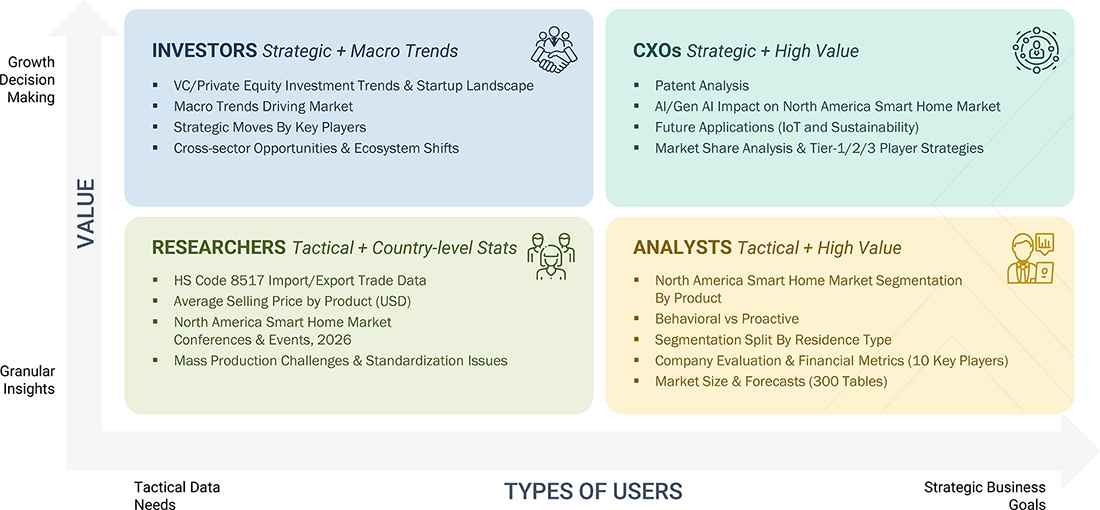
DELIVERED CUSTOMIZATIONS
We have successfully delivered the following deep-dive customizations:
| CLIENT REQUEST | CUSTOMIZATION DELIVERED | VALUE ADDS |
|---|---|---|
| Property developer / facility operator | Detailed benchmarking of smart home and building automation deployments across residential communities, multi-dwelling units, and mixed-use developments in North America. | Delivered cost–benefit analysis of smart HVAC, lighting, and security integration to improve energy efficiency and occupant comfort. |
| Energy & housing ministry / smart city authority | Assessed policy readiness and infrastructure maturity for large-scale smart home and smart community deployments. Evaluated alignment with energy-efficiency programs and sustainability goals. | Analyzed interoperability standards, data privacy regulations, and cybersecurity frameworks aligned with US and Canadian regulatory requirements. |
| Technology provider / IoT platform integrator | Conducted market mapping of connected home platforms, covering AI-based automation software, cloud analytics, device interoperability, and mobile application ecosystems. | Evaluated cybersecurity risks, data protection compliance, and integration opportunities across North American smart home ecosystems. |
RECENT DEVELOPMENTS
- March 2025 : Yale from ASSA ABLOY launched Yale Smart Lock with Matter, its next-generation smart lock designed specifically for Google Home and Matter-enabled smart home platforms. This new product represents a significant evolution from the popular Nest x Yale Lock, offering enhanced compatibility, improved features, and future-proof connectivity for smart home users.
- March 2025 : Honeywell launched Honeywell Home X2S smart thermostat during the CES 2025. The thermostat is designed for easy installation and features a simple display with buttons, differentiating it from more high-tech models, such as the Google Nest Learning Thermostat, which typically utilize touchscreens.
- August 2023 : The Yale brand of ASSA ABLOY launched Assure Smart Deadbolts, which offer a range of options. They typically include features such as keyless entry, touchscreen interfaces, and compatibility with smart home systems, including Amazon Alexa, Google Assistant, or Apple HomeKit. Yale offers various models with different features, such as the Yale Assure Lock SL and Yale Assure Lock Touchscreen Deadbolt.
Table of Contents
 Exclusive indicates content/data unique to MarketsandMarkets and not available with any competitors.
Methodology
The study involved four major activities in estimating the size of the smart home market . Exhaustive secondary research has been carried out to collect information on the market, the peer markets, and the parent market. Both top-down and bottom-up approaches have been employed to estimate the total market size. Market breakdown and data triangulation methods have also been used to estimate the market for segments and subsegments.
Secondary Research
Revenues of companies offering data center accelerator systems have been obtained from the secondary data available through paid and unpaid sources. The revenues have also been derived by analyzing the product portfolio of key companies, and these companies have been rated according to the performance and quality of their products.
In the secondary research process, various sources have been referred to for identifying and collecting information for this study on the smart home market share . Secondary sources considered for this research study include government sources, corporate filings, and trade, business, and professional associations. Secondary data has been collected and analyzed to arrive at the overall market size, which has been further validated through primary research.
Secondary research has been mainly used to obtain key information about the supply chain of data center accelerator systems to identify key players based on their products and prevailing industry trends in the smart home market share by product, offering, sales channel, and installation type, and region. Secondary research also helped obtain market information- and technology-oriented key developments undertaken by market players to expand their presence and increase their market share.
Primary Research
Extensive primary research has been conducted after understanding and analyzing the current scenario of the smart home market share through secondary research. Several primary interviews have been conducted with the key opinion leaders from the demand and supply sides across four main regions—North America, Europe, Asia Pacific, and the Rest of Europe. Approximately 25% of the primary interviews were conducted with the demand-side respondents, while approximately 75% were conducted with the supply-side respondents. The primary data has been collected through questionnaires, emails, and telephone interviews.
After interacting with industry experts, brief sessions were conducted with highly experienced independent consultants to reinforce the findings from our primary. This, along with the in-house subject matter experts’ opinions, has led us to the findings as described in the remainder of this report. The breakdown of primary respondents is as follows:
Market Size Estimation
The bottom-up approach has been employed to arrive at the overall size of the smart home market share from the revenues of key players and their share. Calculations based on revenues of the key players identified in the market led to the estimation of the market’s overall size.
- Approach to arrive at market size using bottom-up analysis (demand side)
- Initially, over 25 companies offering smart home solutions were identified. Their offerings were mapped based on products, software, and services.
- After understanding the different types of smart homes offered by various manufacturers, the market was categorized into different segments based on the data gathered through primary and secondary sources.
- To derive the global smart home market share , global shipments of top players for each smart home device that were considered in the scope of the report were tracked.
- A suitable penetration rate was assigned for each product type to derive the shipments of smart homes.
- We derived the smart home market share based on different product types using the average selling price (ASP) at which a particular company offers its devices. The ASP of each device was identified based on secondary sources and validated from primaries.
- For the projected market values of each device type, the Y-o-Y projections showed a steep growth initially until 2023. The market is expected to witness a sharp ascent after that, considering the demand for smart homes for different applications.
- For the CAGR, the market trend analysis was carried out by understanding the industry penetration rate and the demand and supply of smart homes in different applications.
- The smart home market share is also tracked through the data sanity method. The revenues of over 25 key providers were analyzed through annual reports and press releases and summed to derive the overall market.
- For each company, a percentage is assigned to its overall revenue or, in a few cases, segmental revenue to derive its revenue for the smart home. This percentage for each company is assigned based on its product portfolio and range of smart home offerings.
- The estimates at every level have been verified and cross-checked by discussing them with key opinion leaders, including CXOs, directors, and operation managers, and finally, with the domain experts at MarketsandMarkets.
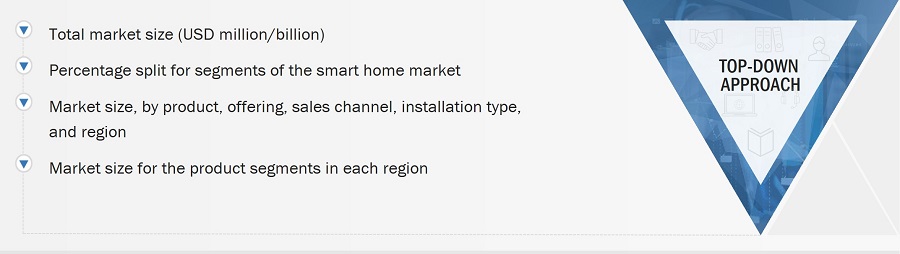
The top-down approach has been used to estimate and validate the total size of the smart home Industry .
- The global market size of smart homes was estimated through the data sanity of 25 major companies.
- The growth of the smart home Industry witnessed an upward trend during the studied period, as it is currently in the initial stage of the product cycle, with major players beginning to expand their business into various application areas of the market.
- Types of smart homes, their features and properties, geographical presence, and key applications served by all players in the smart home Industry were studied to estimate and arrive at the percentage split of the segments.
- Different types of smart homes and their penetration for products were also studied.
- Based on secondary research, the market split for smart homes by sales channel, offering, and installation type was estimated.
- Multiple discussions with key opinion leaders across major companies involved in developing the smart home and related components were conducted to validate the market split of sales channel, offering, and installation type.
- The regional splits were estimated using secondary sources based on factors such as the number of players in a specific country and region and the adoption and use cases of each implementation type with respect to products in the region.
Data Triangulation
After arriving at the overall market size-using the market size estimation processes as explained above-the market has been split into several segments and subsegments. To complete the entire market engineering process and arrive at the exact statistics of each market segment and subsegment, data triangulation and market breakdown procedures have been employed, wherever applicable. The data has been triangulated by studying various factors and trends from the demand and supply sides in the smart home Industry growth.
Market Definition
A smart home is incorporated with advanced automation systems that enable inhabitants to monitor and control the functions of the house. Smart home systems enable owners to control lights, heating, ventilation, and air conditioning (HVAC), security alarms, and other household devices remotely through their smartphones, tablets, or computers. Smart homes are equipped with wired and wireless communication technologies such as Wi-Fi, Bluetooth, universal powerline bus (UPB), Insteon, Z-Wave, and Zigbee to offer intelligent insights and details to homeowners by continuously monitoring various aspects of the homes. As part of the Internet of Things (IoT), smart home systems and devices often operate together, sharing consumer usage data and automating actions based on homeowners’ preferences.
According to Smart Home Energy, an association in the UK, smart homes use home automation technologies to provide homeowners with intelligent feedback and information by monitoring many aspects of a home. For example, a smart home’s refrigerator may be able to catalog its contents, suggest menus, recommend healthy alternatives, and order replacements as food is used up.
Key Stakeholders
- Raw Material and Manufacturing Equipment Suppliers
- Automation and Control Vendors
- Automation and Control Networking Technology Vendors
- Real Estate Builders
- System Integrators
- Homeowners
- Project Consultants
- Designers/Consultants (HVAC, Security, and Fire and Safety)
- Component Manufacturers (Sensors and Controls)
- Home Management System (Products and Servers) Providers
- Smart Home-related Associations, Organizations, Forums, and Alliances
- Government Bodies Associated with Green Buildings
Report Objectives
- To define, describe, segment, and forecast the smart home market, by product, offering, sales channel, and installation type, in terms of value
- To forecast the market for products, in terms of volume
- To describe the protocols and technologies used for smart home
- To provide detailed information regarding the drivers, restraints, opportunities, and challenges influencing the growth of the smart home industry
- To provide a detailed overview of the smart home market’s supply chain, along with the ecosystem, technology trends, use cases, regulatory environment, and Porter’s five forces analysis
- To analyze industry trends, pricing data, patents and innovations, and trade data (export and import data) related to the smart home
- To strategically analyze the micromarkets1 with respect to individual growth trends, prospects, and contributions to the total market
- To strategically profile the key players and comprehensively analyze their market shares and core competencies2
- To analyze opportunities for stakeholders and provide a detailed competitive landscape of the market
- To analyze competitive developments, such as product launches/developments, collaborations, partnerships, acquisitions, and research & development (R&D) activities carried out by players in the smart home Industry
Available customizations:
With the given market data, MarketsandMarkets offers customizations according to the specific requirements of companies. The following customization options are available for the report:
- Detailed analysis and profiling of additional market players based on various blocks of the supply chain
Key Questions Addressed by the Report
What is the projected value of the North America smart home market by 2030?
The North America smart home market is projected to grow from USD 32.58 billion in 2025 to USD 45.68 billion by 2030, exhibiting a CAGR of 7.0% driven by strong consumer spending and high adoption of connected home technologies
Which country in North America is expected to register the fastest growth during the forecast period?
Canada is expected to register the fastest growth in the North America smart home market through 2030 due to rising adoption of energy-efficient systems and utility incentive programs encouraging smart device deployment
How is the North America smart home market segmented by product type?
The North America smart home market is segmented by product into categories including lighting controls, security & access controls, HVAC controls, smart kitchen, home appliances, home healthcare, smart speakers, and entertainment & other controls, with smart kitchen devices projected to exhibit high growth.
Which offering segment held the largest share in the North America smart home market?
The behavioral offering segment held the largest share of the North America smart home market in 2024, as consumers increasingly adopt connected solutions for real-time monitoring and control of home systems.
Who are some of the key players operating in the North America smart home market?
Key players in the North America smart home market include Johnson Controls Inc., Schneider Electric, Siemens, Honeywell International Inc., ASSA ABLOY, Amazon.com, Apple, ADT, Robert Bosch, and ABB offering a wide range of smart home automation, security, energy management, and IoT solutions.


Personalize This Research
- Triangulate with your Own Data
- Get Data as per your Format and Definition
- Gain a Deeper Dive on a Specific Application, Geography, Customer or Competitor
- Any level of Personalization
Let Us Help You
- What are the Known and Unknown Adjacencies Impacting the North America Smart Home Market
- What will your New Revenue Sources be?
- Who will be your Top Customer; what will make them switch?
- Defend your Market Share or Win Competitors
- Get a Scorecard for Target Partners

Custom Market Research Services
We Will Customise The Research For You, In Case The Report Listed Above Does Not Meet With Your Requirements
Get 10% Free CustomisationTESTIMONIALS

Tetsuya Ohhira
Business Development Manager-Technology Business
Nikon Corporation,
Leading Japanese MNC specializing in optics and imaging productswww.nikon.com
MarketsandMarkets™ response
is quick. Their attitude is flexible and positive. Analyst Insights are globally considered and
significant. Client Services quickly respond to our inquiry and demand. Their wide range of global
surveys help us make our strategic plan.
We hope Knowledge Store will be easier to search
for a report.
VP - Marketing & Business Development
Leading Provider of Process Control Solutions
We engaged with MarketsandMarkets on a study to perform an analysis and recommend a Go-To-Market strategy for metrology and process control in the semiconductor market. The study was tailored to our targets and needs with well-defined milestones. Our overall experience with the MarketsandMarkets team was very good throughout the project in all aspects including the analysis methodologies used, the quality and depth of primary and secondary data sets, the professionalism and flexibility of the team and the ability to meet the target schedule and milestones. We want to thank MarketsandMarkets team for a job well done.






Growth opportunities and latent adjacency in North America Smart Home Market