Permanent Magnet Motor Market

Permanent Magnet Motor Market by Type (PMAC, PMDC, Brushless DC Motors), Power Rating (Up to 25 kW, 25–100 kW, 100–300 kW, 300 kW and Above), End User (Industrial, Commercial and Residential, and Others), and Region - Global Forecast to 2030




OVERVIEW
Source: Secondary Research, Interviews with Experts, MarketsandMarkets Analysis
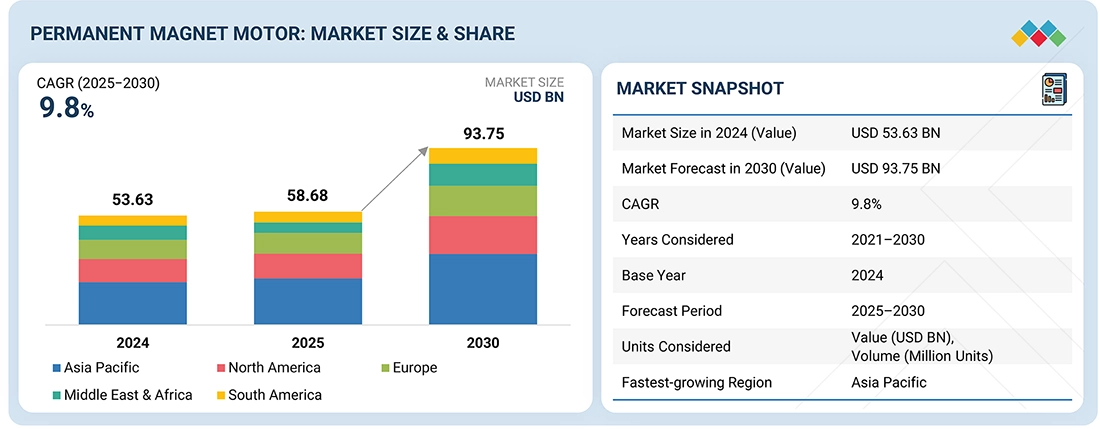
The global permanent magnet motor market is forecasted to grow at a CAGR of 9.8% from an estimated USD 58.68 billion in 2025 to USD 93.75 billion by 2030, driven by increasing demand for efficient and compact motor solutions across various industries. These motors deliver excellent performance, lower energy use, and minimal maintenance, making them suitable for modern applications. The rapid growth of electric vehicles and industrial automation has greatly boosted their popularity. Moreover, advancements in magnet technology and falling costs of rare-earth materials have made these motors more accessible. Government regulations on energy efficiency and sustainability are also encouraging industries to adopt permanent magnet motors.
Permanent Magnet Motor Market Size and Forecast:
- Market Size Value in 2024: USD 53.63 Billion
- Market Size Value in 2025: USD 58.68 Billion
- Revenue Forecast in 2030: USD 93.75 Billion
- Growth Rate: CAGR of 9.8% from 2025 to 2030
- Data available from 2021 to 2030
- The permanent magnet AC (PMAC) motor segment holds the largest market share due to its superior efficiency, high torque density, and widespread adoption across EVs and industrial applications.
Key Market Trends and Insights
- Market Growth: Driven by increasing adoption of electric vehicles, rising industrial automation, and growing demand for energy-efficient motor technologies across end-use industries.
- Growing Trends: The integration of permanent magnet motors in EV drivetrains, robotics, HVAC systems, and smart manufacturing applications is accelerating due to their compact design and high performance.
- Growth Opportunities: Expanding renewable energy projects, advancements in magnet technology, and favorable government regulations promoting energy efficiency are creating significant market opportunities.
- Market Share Analysis: The PMAC motor segment accounts for the largest market share in 2025 owing to its high efficiency and precise speed control capabilities, while the industrial segment remains the leading end-user category driven by automation and electrification initiatives.
KEY TAKEAWAYS
-
BY typeThe market is segmented by type into permanent magnet AC motors (PMAC), permanent magnet DC motors (PMDC), and brushless DC motors. PMAC motors hold the largest share, driven by their utilization in high-growth areas such as EVs, robotics, and industrial automation. PMDC and brushless DC motors are preferred in applications requiring compact size, high torque, and precise control.
-
BY Power ratingMotors in the up to 25 kW segment are commonly used in consumer electronics and small appliances, while higher ratings (above 25 kW) are essential for industrial drives, large equipment, and transportation, especially in electric vehicles and renewable energy systems.
-
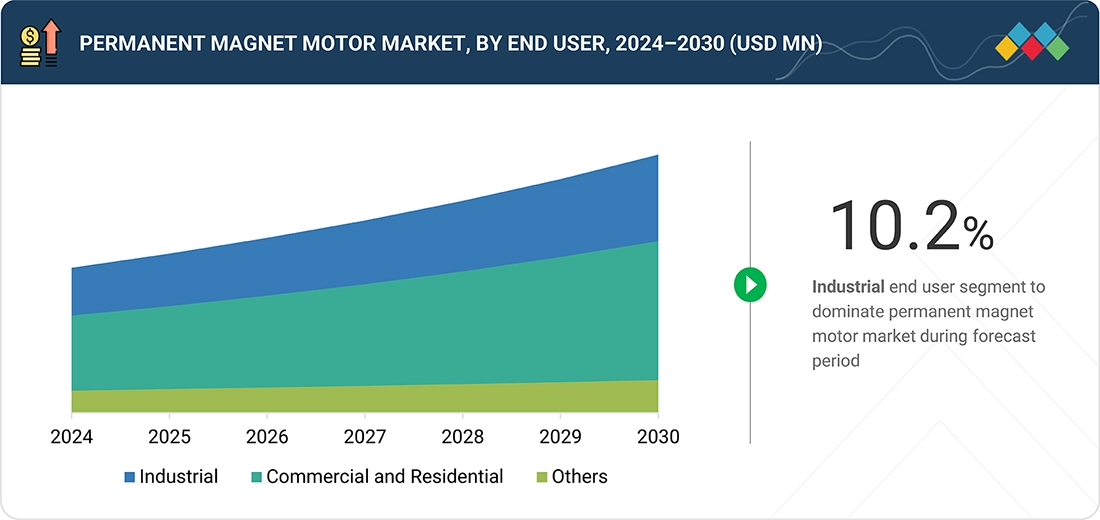
BY end userThe end user segments include industrial, commercial, residential, and others. The industrial segment leads, benefiting from automation, electrification, and energy savings initiatives. Commercial adoption is growing in HVAC, pumps, and office equipment, while residential uptake is driven by efficient appliances and smart home systems.
-
BY REGIONThe regions considered are North America, Europe, Asia Pacific, South America, and the Middle East & Africa. Asia Pacific leads because of rapid urbanization, extensive grid expansion, and vigorous electrification efforts.
-
COMPETITIVE LANDSCAPEMajor market players use both organic and inorganic strategies, such as partnerships and investments, to drive growth in permanent magnet motor applications. Companies like ABB and Johnson have entered various collaborations, partnerships, and acquisitions, and have enhanced product innovation to meet the increasing demand for permanent magnet motors in innovative applications.
The global permanent magnet motor market is experiencing strong growth, fueled by increasing demand for energy-efficient, compact motors in automotive, industrial automation, HVAC, consumer electronics, and renewable energy sectors. Permanent magnet motors use magnets to generate a magnetic field, resulting in superior torque, higher efficiency, and a smaller design compared to traditional motors. Major growth factors include the rapid adoption of electric vehicles (EVs), where PM motors dominate drivetrain markets, trends in industrial automation, and regulatory pressures for energy savings and sustainability.
TRENDS & DISRUPTIONS IMPACTING CUSTOMERS' CUSTOMERS
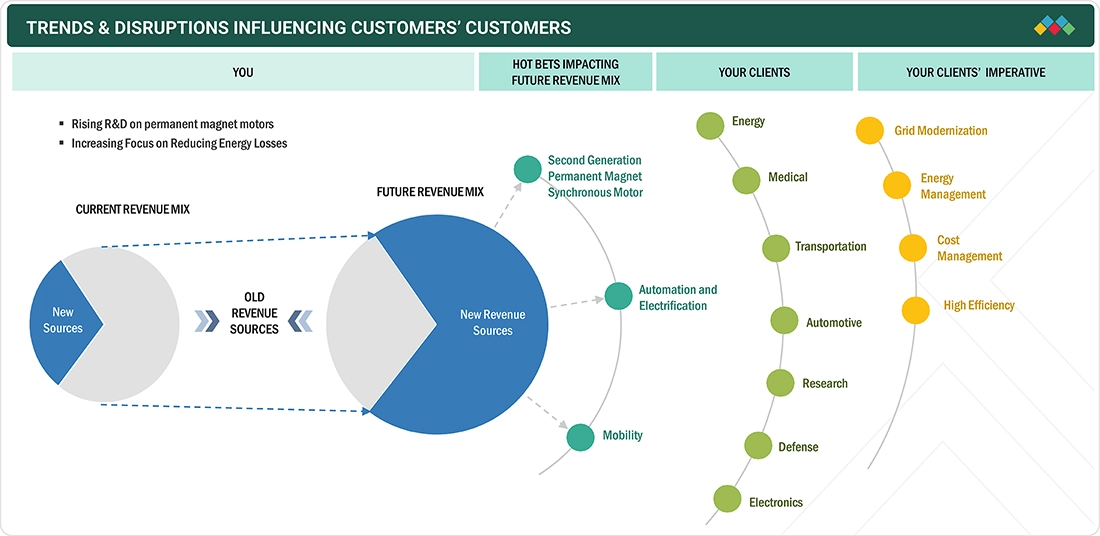
The market for permanent magnet motors is undergoing transformation driven by rapid electrification across electric vehicles, robotics, and industrial automation, thereby increasing the demand for compact and high-efficiency motor systems. Nevertheless, dependence on rare-earth elements such as neodymium and dysprosium has introduced notable vulnerabilities within the supply chain, prompting original equipment manufacturers (OEMs) to investigate alternative motor configurations and magnet recycling solutions. Progress in silicon carbide (SiC) and gallium nitride (GaN)-based power electronics further disrupts this landscape by facilitating integrated motor-drive systems that deliver superior performance and efficiency. Concurrently, digitalization and predictive maintenance are reorienting value from hardware components toward intelligent, connected solutions. Collectively, these developments are transforming the competitive environment from a component-centric market to a race focused on system-level innovation emphasizing sustainability, efficiency, and supply chain resilience.
Source: Secondary Research, Interviews with Experts, MarketsandMarkets Analysis
MARKET DYNAMICS

Level
-
•Surging demand for energy-efficient and low-cost maintenance motors across different industries

-
•Increasing use of permanent magnet motors in electric vehicles


Level
-
•High cost of permanent magnet motors

-
•Increased prices of raw materials


Level
-
•Adoption of cost-effective ferrite permanent magnet motors

-
•Emerging of robotics technology


Level
-
•Easy availability of low-quality and inexpensive electric motors

Source: Secondary Research, Interviews with Experts, MarketsandMarkets Analysis
Driver: Increasing demand for energy-efficient and low-cost maintenance motors across different industries
Permanent magnet synchronous motors (PMSMs) are notably more efficient and power-dense than induction motors, making them the preferred option for various applications. Growing demand for higher operational efficiency across multiple industries boosts the adoption of PMSMs in electronics, textiles, and pulp and paper manufacturing. These motors are used in advanced washing machines, fans, and solar-powered water pumps, improving performance even in low-light conditions. The residential and commercial sectors are rapidly adopting permanent magnet motors, especially in HVAC systems, to enhance energy savings and system reliability. PMSMs lead the electric vehicle (EV) market, with roughly 80% of future EVs expected to use these motors due to their high efficiency and compact design. Additionally, appliances powered by permanent magnet motors consume 22 to 42% less energy and are more reliable, which is particularly valuable in off-grid or rural areas. These benefits satisfy consumers and motivate them to invest in energy-efficient technologies with higher performance.
Restraints: High cost of permanent magnet motors
One major restraint for the permanent magnet motor market is the high initial cost, mainly because of the expensive rare-earth magnets used in their design. Despite their greater efficiency, many industrial and commercial electronics manufacturers remain reluctant to invest in these motors because of the upfront expense. However, this obstacle may lessen over time as the long-term advantages—such as lower maintenance needs and better operational efficiency—become clearer, ultimately boosting productivity in industrial and commercial settings.
Opportunities: Rise in robotics technology
The rapidly growing robotics technology has created a significant opportunity for the permanent magnet motor (PMM) market. Robots are increasingly used across various industries to perform repetitive tasks and work in hazardous environments, such as those involving chemicals, radiation, or extreme conditions. Some applications include space exploration, military, medical procedures, warehouse management, and agriculture. Permanent magnet motors (PMMs) are crucial in robotics because they help simplify drive mechanisms, improve force-to-volume ratios, and deliver better performance compared to traditional systems. With the rising adoption of robotics, the International Federation of Robotics has projected an addition of 1.7 million industrial robots by 2020. This trend suggests that the demand for efficient, compact motors like PMMs is expected to grow substantially.
Challenges: Competition from unorganized sector
The main challenge in the permanent magnet motor market is its high level of fragmentation, where both organized and unorganized players create intense competition. While global and established manufacturers focus on providing high-quality products to industrial buyers, local and unorganized players offer low-cost products to capture price-sensitive regional markets. These low-quality, inexpensive motors are driving down prices and diluting brand value, making it difficult for established companies to maintain market share and profitability. The growing competition from unorganized sectors poses a significant challenge to the sustainable growth of the permanent magnet motor market.
Permanent Magnet Motor Market: COMMERCIAL USE CASES ACROSS INDUSTRIES
| COMPANY | USE CASE DESCRIPTION | BENEFITS |
|---|---|---|
 |
Utilized permanent magnet motors in Model 3 and Model Y vehicles to enhance powertrain efficiency and performance while reducing overall motor size and weight | Improved driving range by up to 15%, reduced energy consumption, and optimized thermal management for sustained performance |
 |
Integrated high-efficiency permanent magnet synchronous motors (PMSMs) in its IONIQ electric lineup to deliver compact design and superior torque output | Increased torque density, enhanced acceleration response, and lowered system losses for greater energy efficiency |
 |
Applied permanent magnet motors in compressor systems for home appliances and HVAC units to achieve quieter and more energy-efficient operation | Reduced power consumption by 20%, minimized vibration and noise, and extended product lifespan through lower heat generation |
Logos and trademarks shown above are the property of their respective owners. Their use here is for informational and illustrative purposes only.
MARKET ECOSYSTEM
The permanent magnet motor ecosystem consists of a closely connected value chain that includes raw material suppliers, motor manufacturers, component providers, distributors, and end users. Upstream, rare-earth magnet suppliers and material refiners are crucial for determining costs and availability. Midstream, motor manufacturers incorporate magnets, coils, and advanced electronics—often collaborating with inverter and control system providers to create high-efficiency solutions. Downstream, distributors and system integrators serve industrial, automotive, and consumer markets, ensuring broad reach and customization. The ecosystem’s effectiveness relies on vertical collaboration, supply security, and technological integration, with digitalization and recycling becoming key enablers throughout all stages.
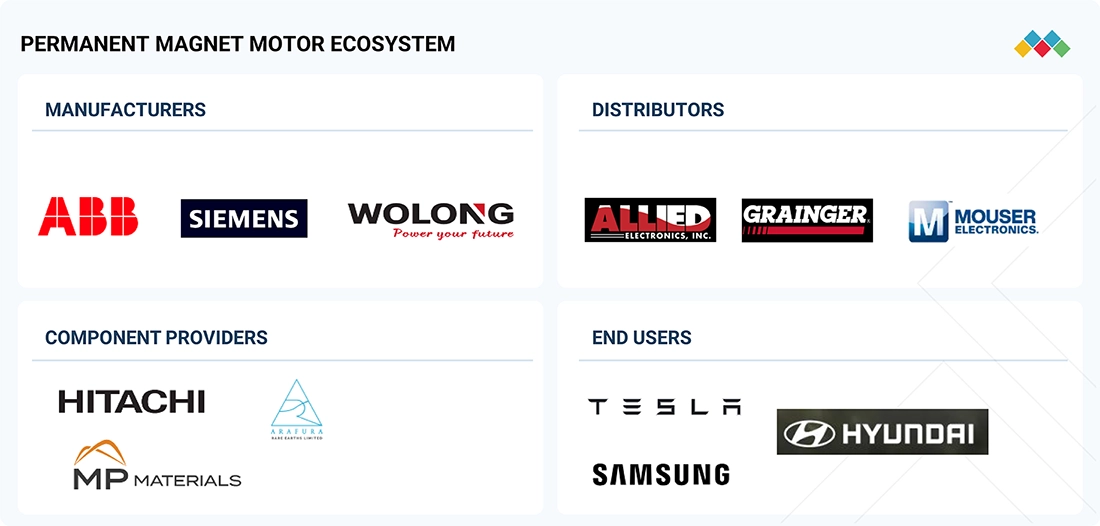
Logos and trademarks shown above are the property of their respective owners. Their use here is for informational and illustrative purposes only.
MARKET SEGMENTS
Source: Secondary Research, Interviews with Experts, MarketsandMarkets Analysis
Permanent Magnet Motor Market, By Type
The global market for permanent magnet motors is experiencing strong growth across all main types, with Permanent Magnet AC (PMAC) motors leading due to their superior efficiency, torque density, and versatility in variable-speed industrial, automotive, and renewable energy applications. PMAC motors are increasingly preferred for electric vehicles and factory automation because they offer higher operational efficiency and smaller size. Brushless DC motors, which are essential for robotics, consumer electronics, and HVAC systems, provide long service life and precise control. Permanent Magnet DC (PMDC) motors remain relevant in situations where cost-effectiveness and easy integration matter, such as in small appliances and automotive subsystems. Ongoing innovation in motor control and magnetic material technology is enhancing the utility, affordability, and market share of all three types, as end-users prioritize energy savings and reliability.
Permanent Magnet Motor Market, By Power Rating
Market adoption is widespread across power ratings, with lower power segments (up to 25 kW) leading in residential, commercial, and consumer applications—such as home appliances, small pumps, or electronics—due to their compactness and efficiency. The 25–100 kW and 100–300 kW segments experience strong demand for industrial automation, large-scale manufacturing systems, and commercial building operations, especially where higher torque and continuous operation are necessary. Motors over 300 kW are mainly used in heavy industry, electric transportation, and utility-scale renewable energy (wind turbines, rail), reflecting global trends in industrialization, electrification, and decarbonization. OEMs constantly develop new efficiency standards for each rating to meet increasing global regulations and application-specific needs.
Permanent Magnet Motor Market, By End User
The industrial segment is likely to have the highest CAGR and largest market share, driven by automation adoption, energy-saving regulations, and the growth of advanced manufacturing worldwide. Applications include process automation, robotics, conveyors, compressors, and EV supply chains. Commercial use is led by HVAC, building automation, and pumps, indicating investment in sustainable infrastructure. Residential demand is fueled by smart appliances, low-noise systems, and consumer electronics, which increasingly use PM motors for efficiency and precision control. Emerging segments include renewable energy projects, transportation, and aerospace, where PM motor features are vital to next-generation products.
REGION
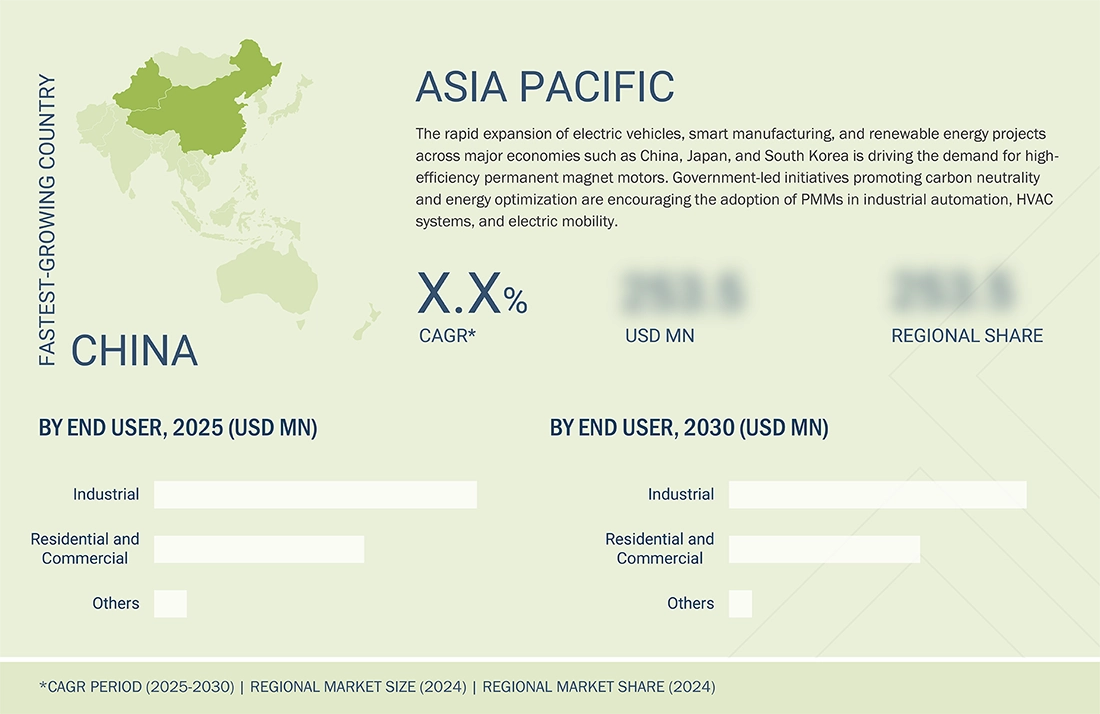
Asia Pacific will be the fastest-growing region in the global permanent magnet motor market during the forecast period.
The widespread growth of electric vehicles, smart manufacturing, and renewable energy initiatives in leading economies such as China, Japan, and South Korea is significantly increasing the demand for high-efficiency permanent magnet motors (PMMs). Government policies aimed at achieving carbon neutrality and optimizing energy use are further incentivizing the integration of PMMs in sectors including industrial automation, HVAC systems, and electric mobility.
Permanent Magnet Motor Market: COMPANY EVALUATION MATRIX
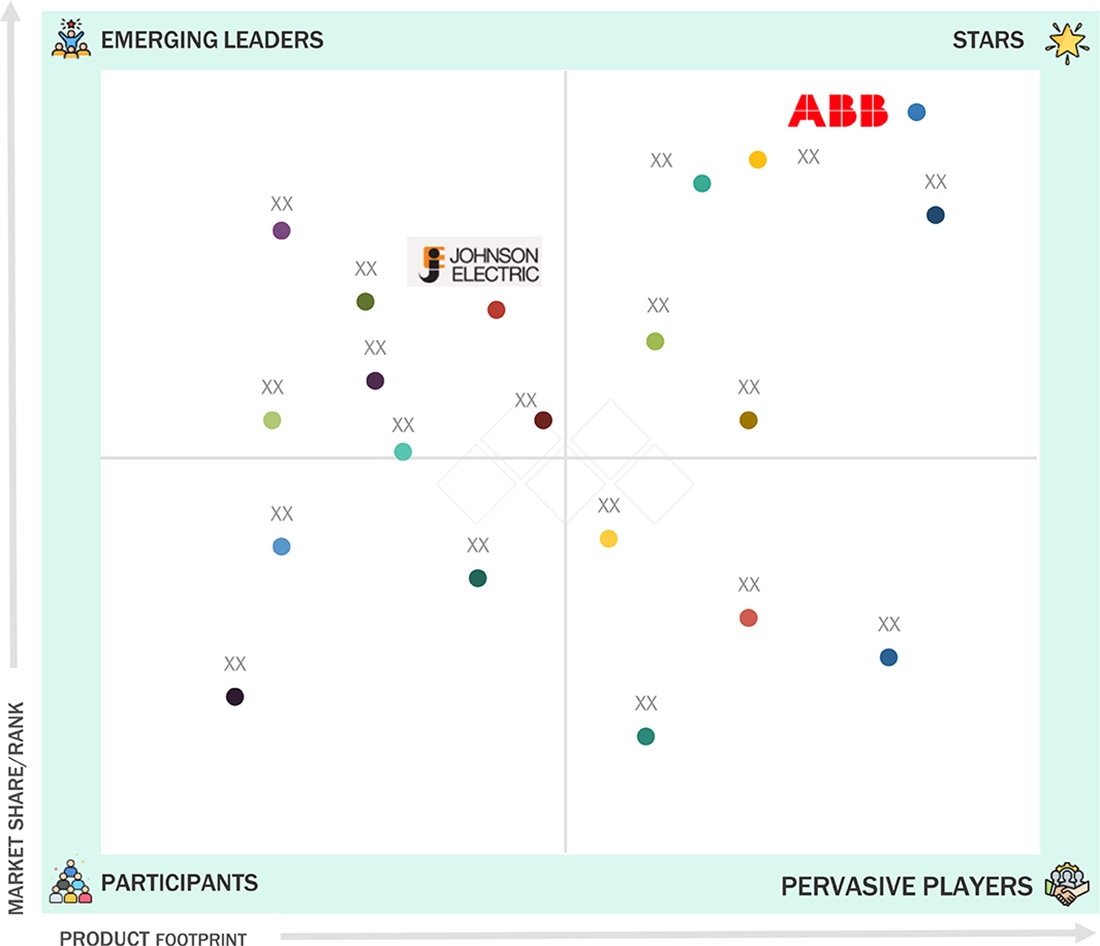
ABB (Star) maintains a strong market presence and offers a wide product portfolio, encouraging widespread adoption by end users. Johnson Electric (Emerging Leader) is gaining momentum with increased product coverage among multiple end users. While ABB leads with scale, Johnson demonstrates significant growth potential to move into the leaders' quadrant.
Source: Secondary Research, Interviews with Experts, MarketsandMarkets Analysis
KEY MARKET PLAYERS
MARKET SCOPE
| REPORT METRIC | DETAILS |
|---|---|
| Market Size in 2024 (Value) | USD 53.63 Billion |
| Market Forecast in 2030 (Value) | USD 93.75 Billion |
| Growth Rate | CAGR 9.8% from 2025-2030 |
| Years Considered | 2021-2030 |
| Base Year | 2024 |
| Forecast Period | 2025-2030 |
| Units Considered | Value (USD Million/Billion), Volume (Million Units) |
| Report Coverage | Revenue forecast, company ranking, competitive landscape, growth factors, and trends |
| Segments Covered |
|
| Regions Covered | North America, Europe, Asia Pacific, South America, and the Middle East & Africa |
WHAT IS IN IT FOR YOU: Permanent Magnet Motor Market REPORT CONTENT GUIDE
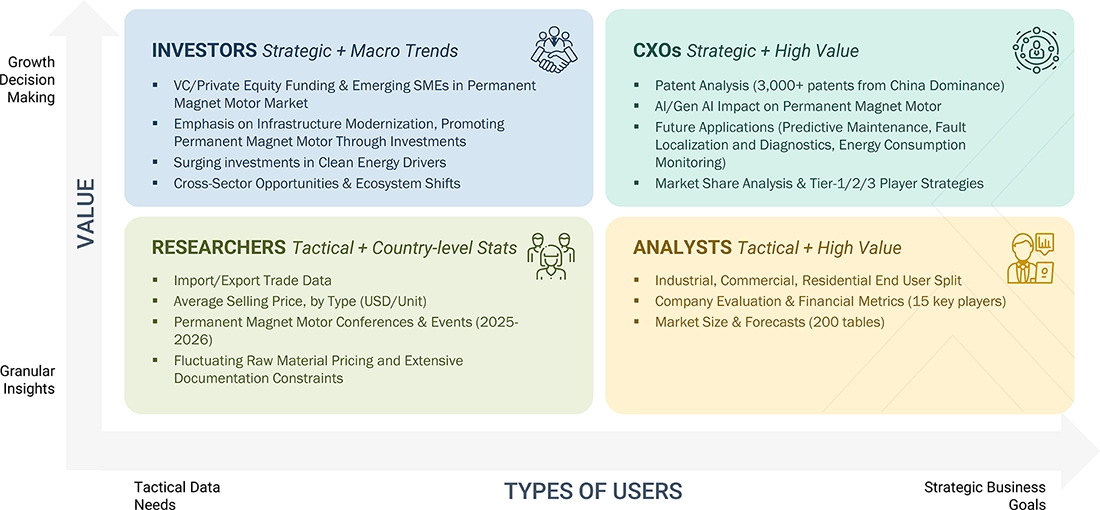
DELIVERED CUSTOMIZATIONS
We have successfully delivered the following deep-dive customizations:
| CLIENT REQUEST | CUSTOMIZATION DELIVERED | VALUE ADDS |
|---|---|---|
| End User & Application Segmentation |
|
|
RECENT DEVELOPMENTS
- December 2024 : In December 2024, ABB (Switzerland) agreed to acquire the power electronics division of Gamesa Electric from Siemens Gamesa, aiming to strengthen its portfolio in renewable power conversion. The acquisition includes doubly-fed induction generator (DFIG) wind converters, battery energy storage systems (BESS), solar inverters, and about 400 employees along with two manufacturing facilities in Spain. Scheduled to close in the second half of 2025, the deal supports ABB Motion’s growth strategy and is backed by Gamesa Electric’s reported revenue of €170 million in 2024.
- May 2023 : In May 2023, ABB finalized its acquisition of Siemens' low-voltage NEMA motor division. The transaction added roughly USD 63 million in revenue from 2021 and 600 employees to ABB's Motion segment.
- April 2024 : In April 2024, Rockwell Automation’s latest firmware update for the PowerFlex 6000T VFD enables support for efficient permanent magnet motor applications in high-speed, medium-voltage operations. Designed for the oil & gas, HVAC, metals, and forestry industries, it manages outputs up to 120 Hz and 680 A. Enhanced by TotalFORCE technology, the drive provides predictive maintenance through real-time health monitoring of key components.
- April 2024 : In April 2022, NIDEC CORPORATION introduced the SynRA synchronous motor, which offers IE4 and IE5 efficiencies when paired with the ID300 Perfectspeed drive for HVAC and pumping applications. Its magnet-free, easy-to-replace design reduces maintenance costs and supports compatibility with existing VFDs. SynRA’s innovative technology provides variable speed control, reducing wear and enhancing energy savings.
- September 2024 : In September 2024, WEG signed an agreement to acquire Volt Electric Motors, a Turkey-based company, to expand its industrial and commercial motor business. Volt has a production capacity of 1 million motors annually, maintains a strong regional presence, and primarily exports to Europe, the Middle East, and Central Asia.
Table of Contents
 Exclusive indicates content/data unique to MarketsandMarkets and not available with any competitors.
Methodology
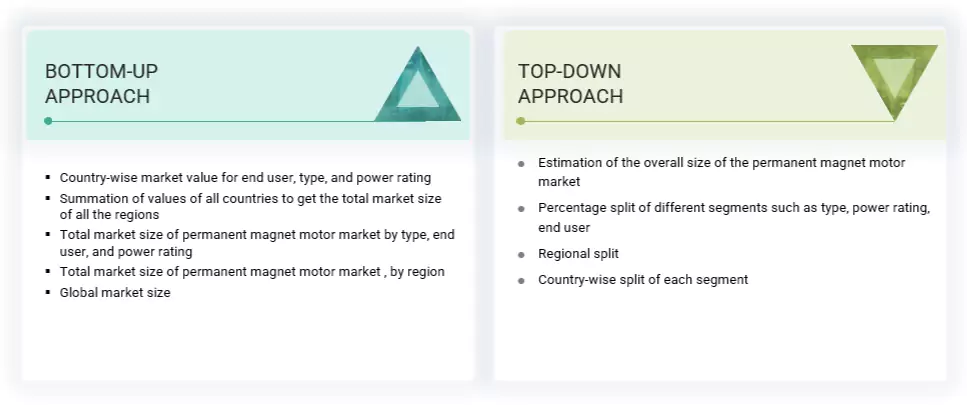
The study involved major activities in estimating the current size of the permanent magnet motor market. Exhaustive secondary research was done to collect information on the peer and parent markets. The next step was to validate these findings, assumptions, and sizing with industry experts across the value chain through primary research. Both top-down and bottom-up approaches were employed to estimate the complete market size. Thereafter, market breakdown and data triangulation were used to estimate the market size of the segments and subsegments.
Secondary Research
This research study on the permanent magnet motor market involved the use of extensive secondary sources, directories, and databases, such as Hoovers, Bloomberg, Businessweek, Factiva, International Energy Agency, and BP Statistical Review of World Energy, to identify and collect valuable information for a technical, market-oriented, and commercial study of the global permanent magnet motor market. Other secondary sources included annual reports, press releases, and investor presentations of companies, white papers, certified publications, articles by recognized authors, manufacturer associations, trade directories, and databases.
Primary Research
The permanent magnet motor market comprises stakeholders such as permanent magnet motor manufacturers, technology providers, and support providers in the supply chain. The demand side of this market is characterized by the rising demand for permanent magnet motors in nations due to their high energy efficiency, compact design, and superior performance. The supply side is characterized by the increasing demand for contracts from the distribution utilities, and mergers and acquisitions among big players. Various primary sources from the supply and demand sides of the market were interviewed to obtain qualitative and quantitative information. The following is the breakdown of primary respondents:
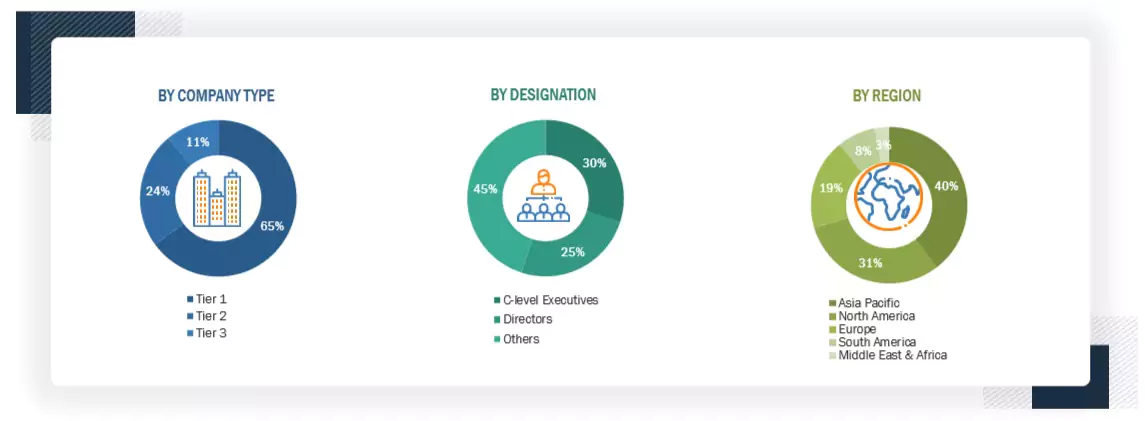
Note: Other designations include sales managers, engineers, and regional managers.
The tiers of the companies are defined based on their total revenue as of 2024: Tier 1: >USD 1 billion, Tier 2: USD 500 million–1
billion, and Tier 3:
To know about the assumptions considered for the study, download the pdf brochure
Market Size Estimation
Top-down and bottom-up approaches were used to estimate and validate the size of the permanent magnet motor market and its dependent submarkets. The key players in the market were identified through secondary research, and their market share in the respective regions was obtained through primary and secondary research. The research methodology includes studying top market players' annual and financial reports and interviews with industry experts, such as chief executive officers, vice presidents, directors, sales managers, and marketing executives, for key quantitative and qualitative insights related to the permanent magnet motor market.
Permanent Magnet Motor Market : Top-Down and Bottom-Up Approach
Data Triangulation
The total market was split into several segments and subsegments after arriving at the overall market size from the above estimation process. The data triangulation and market breakdown processes were employed to complete the overall market engineering process and arrive at the exact statistics for all the segments and subsegments, wherever applicable. The data was triangulated by studying various factors and trends from both the demand and supply sides. The market was also validated using both the top-down and bottom-up approaches.
Market Definition
The permanent magnet motor market encompasses the global electric motors industry that utilizes permanent magnets embedded in the rotor to generate a constant magnetic field. Unlike induction motors, which require an external power source to create rotor flux, permanent magnet motors achieve higher energy efficiency and performance through their inherent magnetic properties. This market includes the manufacturing, distribution, and application of these motors across diverse sectors, such as automotive, industrial automation, robotics, and consumer electronics. Growth in this market is primarily driven by increasing demand for energy-efficient solutions, advancements in electric vehicle technology, and broad industrial adoption for high-performance applications.
Stakeholders
- Permanent Magnet Motor Manufacturing Companies
- Permanent Magnet Motor Manufacturers Association
- Investment Banks
- Government & Research Organizations
- Institutional Investors
- Investors/Shareholders
- Permanent Magnet Motors Manufacturers, Dealers, and Suppliers
- Consulting Companies
- Automotive Manufacturers
- Electronic Equipment Manufacturers
- Companies Involved in Food & Beverages, Textiles, Pulp & Paper Industries
- Suppliers of Parts and Components for Motors
Report Objectives
- To define, describe, segment, and forecast the permanent magnet motor market, by type, power rating, end user, and region, in terms of value
- To forecast the market size for five regions, namely, North America, Europe, Asia Pacific, the Middle East & Africa, and South America, along with their key countries, in terms of value
- To forecast the market size, in terms of volume, by region and type
- To provide a detailed overview of the value chain, ecosystem analysis, case study analysis, patent analysis, trade analysis, technology analysis, average selling price (ASP) analysis, AI/gen AI impact analysis, 2025 US tariff impact analysis, Porter’s five forces analysis, and regulations about the permanent magnet motor market
- To provide detailed information about the key factors, including drivers, restraints, opportunities, and challenges, influencing the growth of the permanent magnet motor market
- To strategically analyze the subsegments with respect to individual growth trends, prospects, and contributions of each segment to the overall market size
- To analyze market opportunities for stakeholders and the details of the competitive landscape for market leaders
- To strategically profile the key players and comprehensively analyze their market shares and core competencies1.
- To analyze competitive developments, such as investments, agreements, acquisitions, partnerships, and expansions, in the permanent magnet motor market
Available Customizations
MarketsandMarkets offers customizations according to the specific needs of the companies using the given market data.
The following customization options are available for the report:
Product Analysis
- Product matrix, which gives a detailed comparison of the product portfolio of each company
Geographic Analysis as per Feasibility
- Further breakdown of the permanent magnet motor market, by country
Company Information
- Detailed analysis and profiling of additional market players (up to five)
Key Questions Addressed by the Report
What was the permanent magnet motor market size in 2024?
The permanent magnet motor market size was USD 557.0 million in 2024.
What are the major drivers for the permanent magnet motor market?
The permanent magnet motors market is mainly driven by high energy efficiency, compact design, and superior performance, crucial in powering electric vehicles, industrial automation, and various energy-saving applications.
Which region is projected to be the fastest-growing permanent magnet motor market during the forecast period?
Asia Pacific is expected to be the fastest-growing market between 2025 and 2030, fueled by rapid industrialization, increasing adoption of electric vehicles, and expanding manufacturing sectors.
Which will be the largest segment, by type, in the permanent magnet motor market during the forecast period?
The PMAC segment is expected to hold the dominant share of the permanent magnet motor market.
Which segment is projected to be the largest, by end user, in the permanent magnet motor market during the forecast period?
Industrial is likely to account for the largest market share during the forecast period.


Personalize This Research
- Triangulate with your Own Data
- Get Data as per your Format and Definition
- Gain a Deeper Dive on a Specific Application, Geography, Customer or Competitor
- Any level of Personalization
Let Us Help You
- What are the Known and Unknown Adjacencies Impacting the Permanent Magnet Motor Market
- What will your New Revenue Sources be?
- Who will be your Top Customer; what will make them switch?
- Defend your Market Share or Win Competitors
- Get a Scorecard for Target Partners

Custom Market Research Services
We Will Customise The Research For You, In Case The Report Listed Above Does Not Meet With Your Requirements
Get 10% Free CustomisationTESTIMONIALS

Kimberly Murphy
GLOBAL MARKETING DIRECTOR
Bently Nevada,
Leading Condition Monitoring & Asset Protectionwww.bakerhughesds.com/bently-nevada

MarketsandMarkets™ showed consistent rigor for success and relentlessly worked with Bently Nevada stakeholders to positively impact go-to-market strategy. Their proactiveness and flexibility has been instrumental in achieving the objectives to grow our sales pipeline in key industrial markets.

DARRICK HUEBER
Business Development Leader
Nexus Controls LLC,
Leading Manufacturer of Automation System & Electrical Panelswww.bakerhughesds.com/nexus-controls

We partnered with MarketsandMarkets to expand our business further by tapping into new industrial segments. It was critical for us to gather crucial business insights about specific markets to achieve this goal. MarketsandMarkets engagement model and client services helped us provide those insights, it was really impressive and valuable for my business. The team was extremely flexible and helpful.

Mike Schoff
Global Industrial Commercial Strategy Leader
Nexus Controls LLC
Leading Manufacturer of Automation System & Electrical Panelswww.bakerhughesds.com/nexus-controls
We consulted MarketsandMarkets for potential Partner Identification. Overall, it was a good experience. The insights provided through interviews conducted by the team helped us put together the questionnaire required for discussion with the selected partners. Their ability to provide insights through interviews with customers in a timely manner was quite impressive.
- China Permanent Magnet Motor Market
- Japan Permanent Magnet Motor Market
- India Permanent Magnet Motor Market
- South Korea Permanent Magnet Motor Market
- Australia Permanent Magnet Motor Market
- Canada Permanent Magnet Motor Market
- Mexico Permanent Magnet Motor Market
- US Permanent Magnet Motor Market
- Germany Permanent Magnet Motor Market
- UK Permanent Magnet Motor Market
- France Permanent Magnet Motor Market
- Italy Permanent Magnet Motor Market
- Russia Permanent Magnet Motor Market
- Brazil Permanent Magnet Motor Market
- Argentina Permanent Magnet Motor Market
- Saudi Arabia Permanent Magnet Motor Market
- UAE Permanent Magnet Motor Market
- South Africa Permanent Magnet Motor Market
- Rest Of Europe Permanent Magnet Motor Market
- Rest Of Asia Pacific Permanent Magnet Motor Market
- GCC Permanent Magnet Motor Market
- Rest Of Middle East And Africa Permanent Magnet Motor Market
- Rest Of South America Permanent Magnet Motor Market
- Rest Of GCC Permanent Magnet Motor Market






Growth opportunities and latent adjacency in Permanent Magnet Motor Market