Plant Growth Regulators Market

Plant Growth Regulator Market by Type (Auxins, Cytokinins, Gibberellins, Ethylene), Function (Plant Growth Promoters, Plant Growth Inhibitors), Crop Type (Cereals, Oilseeds, Fruits, Turfs), Formulation, And Region - Global Forecast To 2031




OVERVIEW
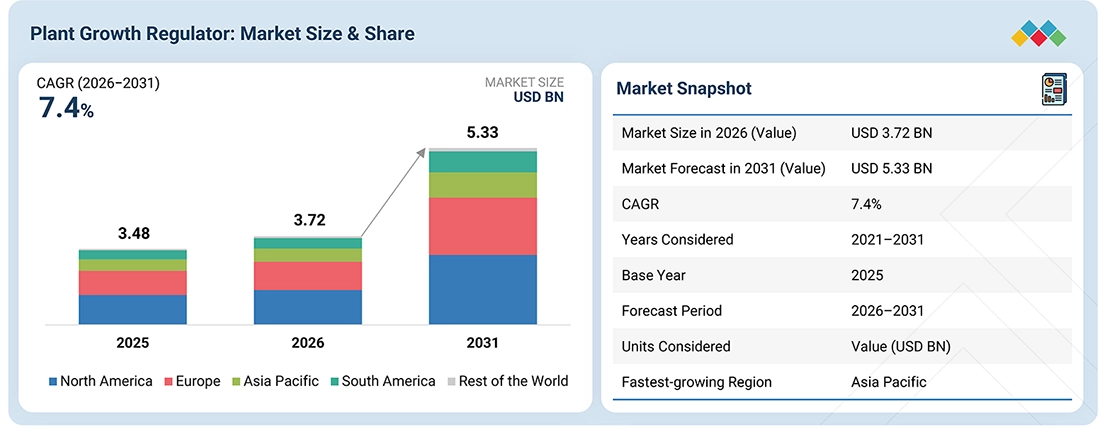
Source: Secondary Research, Interviews with Experts, MarketsandMarkets Analysis
The plant growth regulator market is projected to reach USD 5.33 billion by 2031 from USD 3.72 billion in 2026, at a CAGR of 7.4%. The plant growth regulator market is expanding rapidly due to rising demand for higher crop productivity, quality, and efficient growth management. Increasing cultivation of high-value crops, limited arable land, and the shift toward precision and sustainable farming practices are driving adoption. Advancements in formulations and growing acceptance of bio-based regulators further support market growth, making plant growth regulators an integral part of modern agricultural systems.
KEY TAKEAWAYS
-
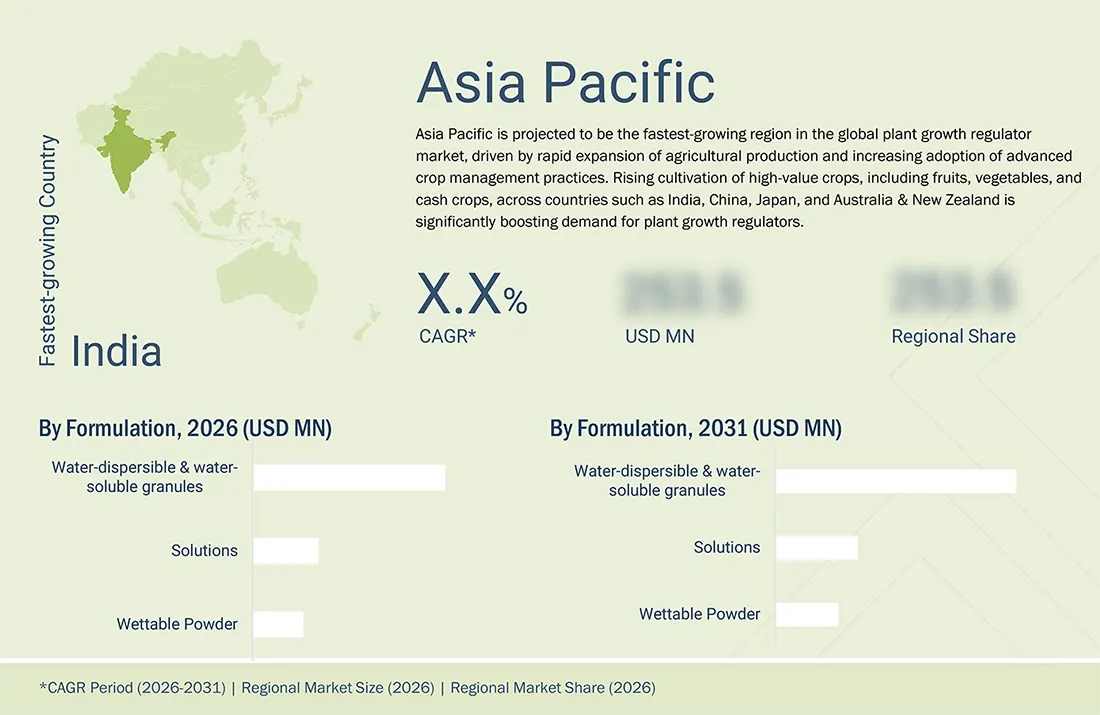
BY REGIONThe Asia Pacific plant growth regulator market will register the highest CAGR of 8.8% during 2026-2031.
-
BY TYPEBy type, the cytokinins segment is expected to dominate the market.
-
BY FUNCTIONBy function, the plant growth inhibitors segment is expected to register a significant CAGR of 8.3%.
-
BY FORMULATIONBy formulation, the wettable powder segment is expected to register a market share of 17.3% in 2031.
-
BY CROP TYPEBy crop type, the cereals & grains segment is expected to dominate the market.
-
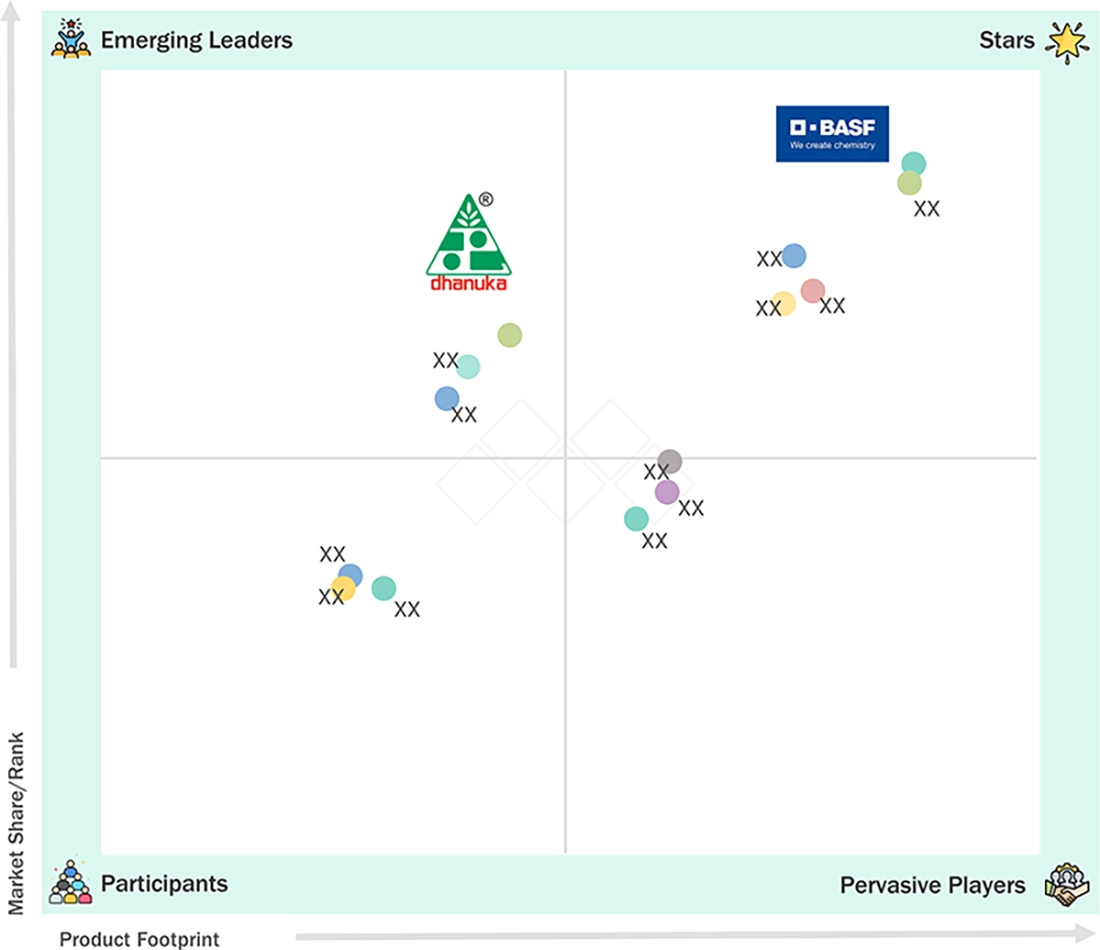
COMPETITIVE LANDSCAPE - Key PlayersCompany like BASF SE, Corteva Agriscience, Syngenta Group, and FMC Corporation were identified as some of the star players in the plant growth regulator market, given their strong market share and product footprint.
-
COMPETITIVE LANDSCAPE - Startups/SMEsZagro, Sichuan Guoguang Agrochemical Co., Ltd., and Dhanuka Agritech Ltd., among others, have distinguished themselves among startups and SMEs by securing strong footholds in specialized niche areas, underscoring their potential as emerging market leaders.
Plant growth regulators (PGRs) are a major driver of growth in plants in agriculture. The increasing pressure from the ever-growing global population, coupled with a limited area of good arable land, is driving output levels and quality, particularly for fruits, vegetables, and specialty crops. Such crops need to be precisely managed in terms of growth to achieve a consistent yield and marketable quality, for which using plant growth regulators stands a chance as a critical input into modern farming systems. Plant growth regulators essentially control plant development, improve fruit quality, and enhance yield by optimizing their use in modern farming practices toward improved productivity. Meanwhile, advancements in precision farming have made PGR application also targeted and efficient, hence improving input efficiency and returns on investments. Overall, high-value crop production goes hand in hand with the strategic importance of PGRs in sustainable and input resource-efficient agricultural production.
TRENDS & DISRUPTIONS IMPACTING CUSTOMERS' CUSTOMERS
A key trend in the plant growth regulator market is the rapid growth driven by biologicals, precision agriculture, and digital farming tools, all of which are revolutionizing the PGR market. The application of artificial intelligence, sensors, and data would ensure near-perfect application with less waste and better crop performance. Increased consumer demand for sustainable and environmentally friendly PGR formulations and biological alternatives is changing the face of traditional chemical delivery systems. Most importantly, regulatory changes and the consistent shift in consumer preferences toward higher-quality, uniform produce are creating further impetus for the development of innovative delivery systems and formulation technologies. Together, these trends are transforming the market, opening new opportunities for aspirants to enter while making it difficult for established players to continue without innovating and staying competitive.
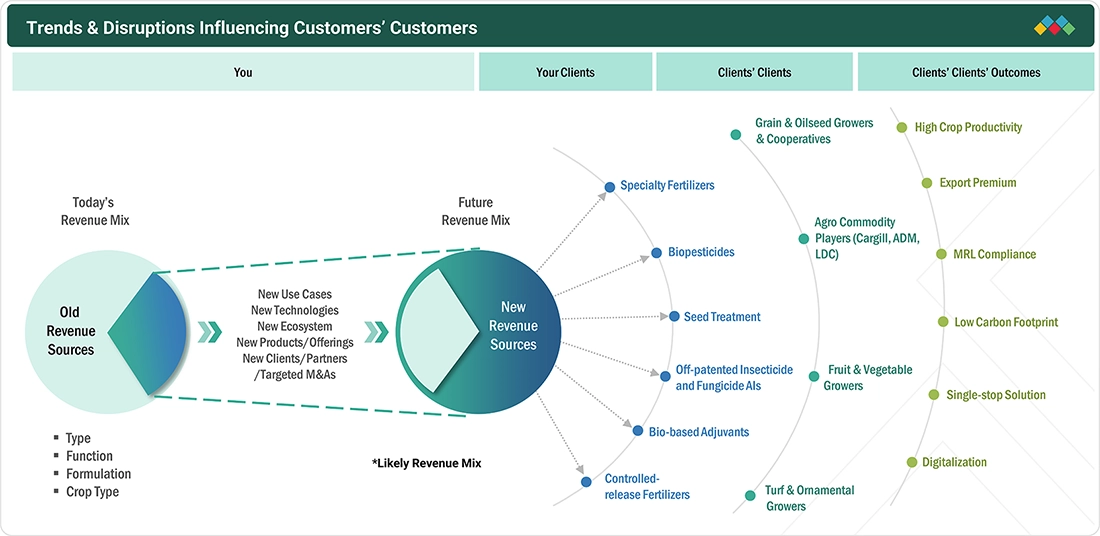
Source: Secondary Research, Interviews with Experts, MarketsandMarkets Analysis
MARKET DYNAMICS

Level
-
Expanding cultivation of high-value and specialty crops increasing input demand

-
Rising pest resistance and climate variability intensifying crop protection needs


Level
-
Prolonged regulatory approval timelines delaying product commercialization

-
Health and safety concerns limiting broader adoption of certain solutions


Level
-
Increasing focus on sustainable and productivity-driven agricultural practices

-
Advancements in crop science and precision agriculture technologies


Level
-
Complexity in identifying and validating effective plant growth regulator mechanisms

-
Limited grower awareness and understanding of plant growth regulator benefits

Source: Secondary Research, Interviews with Experts, MarketsandMarkets Analysis
Driver: Expanding cultivation of high-value and specialty crops increasing input demand
Increased cultivation of high-value and specialty crops is driving greater demand for plant growth regulators (PGRs). Farmers cultivating fruits, vegetables, flowers, and cash crops are seeking management solutions to enhance yield, uniformity, and quality. Because these crops require precise growth management and stress mitigation, the use of PGRs has increased, thereby boosting demand for inputs. This trend appears particularly strong in regions focused on export-oriented and premium agricultural produce.
Restraint: Prolonged regulatory approval timelines delaying product commercialization
A key restraint in the plant growth regulator (PGR) market is the lengthy regulatory approval process, which delays the commercialization of new products. Stringent safety, environmental, and efficacy assessments by regulators extend the time required to bring innovative PGR formulations to market. This slows product launches, limits timely adoption of advanced solutions, and increases development costs for manufacturers. Consequently, market growth can be hindered, particularly for novel or bio-based PGR products targeting high-value crops.
Opportunity: Increasing focus on sustainable and productivity-driven agricultural practices
An opportunity in the PGR market, which is taking shape, is the growing focus on sustainability and productivity-driven agricultural practices, as farmers and agribusinesses seek better solutions that enhance crop yield, quality, and stress tolerance while minimizing negative environmental impacts. This trend has contributed to increased demand for comprehensive, bio-based, and eco-friendly PGRs, as well as for integrated crop management approaches. At the moment, manufacturers have the advantage of developing exceptional PGR products that will help achieve smart, high-quality crop production while remaining environmentally responsible and sustainable by adopting smart practices integrated with precision agriculture technologies.
Challenge: Complexity in identifying and validating effective plant growth regulator mechanisms
Identifying and validating active ingredients and formulations for PGRs are among the challenges in the plant growth regulator (PGR) market. PGR responses vary markedly across crop types, growth stages, climates, soil conditions, and timing, making consistent performance nearly impossible. Therefore, extensive field trials and evaluations over several seasons are needed to confirm efficacy, safety, and economic value for investment, all of which add to development time and expense. PGRs also interact with other agrochemicals and biological inputs, further complicating validation. These technical and agronomic complexities could slow innovation, limit product differentiation, and create entry barriers for emerging or bio-based PGR solutions.
PLANT GROWTH REGULATORS MARKET : COMMERCIAL USE CASES ACROSS INDUSTRIES
| COMPANY | USE CASE DESCRIPTION | BENEFITS |
|---|---|---|
 |
Development and commercialization of chemical and bio-based PGRs for cereals and horticultural crops | Improved yield stability, enhanced stress tolerance, and regulatory-compliant solutions |
 |
PGRs and biological growth enhancers integrated with seed and crop protection programs | Optimized crop vigor, uniform growth, and improved productivity across cropping systems |
 |
Plant growth regulators and biostimulants for fruits, vegetables, and row crops | Enhanced crop quality, uniform ripening, and better resource-use efficiency |
 |
Growth regulators for crop and turf management applications | Controlled plant growth, reduced lodging, and improved crop performance |
Logos and trademarks shown above are the property of their respective owners. Their use here is for informational and illustrative purposes only.
MARKET ECOSYSTEM
Some of the prominent companies in this market include well-established, financially sound manufacturers of plant growth regulators. These companies have operated in the market for over a decade and have diversified portfolios, the latest technologies, and excellent global sales and marketing networks. The plant growth regulator ecosystem comprises manufacturers, regulatory bodies, and end users. Key manufacturers such as BASF SE, Corteva Agriscience, FMC Corporation, and Nufarm have a strong presence across the market.
Logos and trademarks shown above are the property of their respective owners. Their use here is for informational and illustrative purposes only.
MARKET SEGMENTS
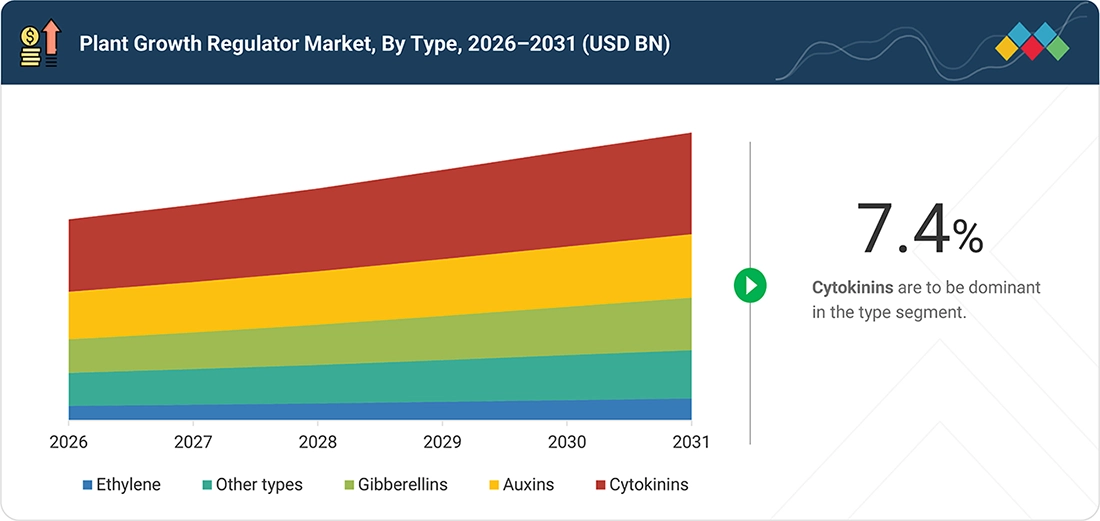
Source: Secondary Research, Interviews with Experts, MarketsandMarkets Analysis
Plant Growth Regulator Market, By Type
The plant growth regulator market, by type, is further classified into cytokinins, auxins, gibberellins, ethylene, and other regulator classes with distinct physiological functions related to crop development. Auxins and cytokinins are widely used to promote root formation, cell division, and structural growth, while gibberellins play an important role in stem elongation, seed germination, and fruit development. Ethylene-based regulators are also widely used for fruit ripening and flowering synchronization. Other types, such as abscisic acid and emerging bio-based regulators, address stress management needs. Together, these segments enable precision crop management across different agricultural systems.
Plant Growth Regulator Market, By Function
The plant growth regulators market, by function, has been segmented into plant growth inhibitors and enhancers; the segment which has the highest market share is plant growth inhibitors. Their dominance stems from their most common use in cereals, grains, turf, and ornamental crops to control vegetative overgrowth, reduce lodging, and improve uniformity. Growth inhibitors also improve harvest management and resource efficiency, especially in large-scale farming systems. Plant growth promoters are still proving their input into yield and quality improvement, while strong demand for effective growth control and management of crops makes plant growth inhibitors the leading functional segment in the global plant growth regulator market.
Plant Growth Regulator Market, By Formulation
The plant growth regulator market is segmented by formulation into solutions, wettable powders, and water-dispersible and water-soluble granules. Solution formulations account for the bulk of the market, largely because of their convenience, ease of dosing, rapid absorption, promotion of physiological response, and consistent coverage. A modern spray and fertigation operation's preferential compatibility with solutions for commercial applications, even for high-value crops worldwide, was a major factor in that market share. Wettable powders and granules still hold ground due to low cost and stability, but with increasing application efficiency and versatility, solution-based PGRs are now the go-to across most agricultural markets worldwide.
Plant Growth Regulator Market, By Crop Type
The plant growth regulator market is segmented by crop type into cereals & grains, oilseeds & pulses, fruits & vegetables, and other crops. Cereals & grains represent the largest market share by segment. This is primarily due to the large-scale global production of crops such as wheat, rice, and maize, where plant growth regulators are used to control lodging, improve tillering, and enhance grain filling. Oilseeds & pulses, given their importance in food security, also represent a significant share. Fruits & vegetables depend mainly on PGRs at certain stages for growth and for maintaining quality and aesthetic value.
REGION
Asia Pacific to be the fastest-growing region in the plant growth regulator market during the forecast period
Asia Pacific is projected to be the fastest-growing region in the global plant growth regulator market, driven by the rapid expansion of agricultural production and the increasing adoption of advanced crop management practices. The rising cultivation of high-value crops, including fruits, vegetables, and cash crops, across countries such as India, China, and Japan is significantly boosting demand for plant growth regulators. Additionally, population growth and food security concerns are encouraging farmers to improve yield efficiency through growth-regulating inputs. Supportive government initiatives promoting sustainable farming, precision agriculture, and biostimulant use, along with improved farmer awareness and the availability of cost-effective formulations, further accelerate market growth across the region.
PLANT GROWTH REGULATORS MARKET : COMPANY EVALUATION MATRIX
In the plant growth regulator segment, BASF SE (Star) leads through its strong R&D capabilities, innovative chemical and bio-based formulations, and a focus on sustainable, precision-driven crop growth solutions that enhance yield, stress tolerance, and resource efficiency across major crops globally. Dhanuka Agritech Ltd. (Emerging Leader) is steadily strengthening its position by offering region-specific, crop-focused plant growth regulator solutions, supported by strategic partnerships, localized innovation, and cost-effective formulations tailored to the needs of farmers in emerging markets, particularly India.
Source: Secondary Research, Interviews with Experts, MarketsandMarkets Analysis
KEY MARKET PLAYERS
- BASF SE (Germany)
- Corteva Agriscience (United States)
- Syngenta Group (Switzerland)
- FMC Corporation (United States)
- Nufarm (Australia)
- Bayer AG (Germany)
- Tata Chemicals Ltd. (India)
- UPL (India)
- Sumitomo Chemical Co., Ltd. (Japan)
- Nippon Soda Co., Ltd. (Japan)
- SIPCAM OXON S.p.A. (Italy)
- De Sangosse (France)
- Dhanuka Agritech Ltd. (India)
- Sichuan Guoguang Agrochemical Co., Ltd. (China)
- Zagro (Singapore)
MARKET SCOPE
| REPORT METRIC | DETAILS |
|---|---|
| Market Size in 2025 (Value) | USD 3.48 Billion |
| Market Size in 2026 (Value) | USD 3.72 Billion |
| Market Forecast in 2031 (Value) | USD 5.33 Billion |
| Growth Rate | 7.4% |
| Years Considered | 2021-2031 |
| Base Year | 2025 |
| Forecast Period | 2026-2031 |
| Units Considered | Value (USD Million/Billion) |
| Report Coverage | Revenue forecast, company ranking, competitive landscape, growth factors, and trends |
| Segments Covered |
|
| Region Covered | North America, South America, Asia Pacific, Europe, RoW |
WHAT IS IN IT FOR YOU: PLANT GROWTH REGULATORS MARKET REPORT CONTENT GUIDE
DELIVERED CUSTOMIZATIONS
We have successfully delivered the following deep-dive customizations:
| CLIENT REQUEST | CUSTOMIZATION DELIVERED | VALUE ADDS |
|---|---|---|
| Global Agrochemical/PGR Manufacturer |
|
|
| Seed & Crop Input Multinational |
|
|
| Biologicals/Biostimulants Company |
|
|
| Farmers/Cooperative Associations |
|
|
| Investor/Private Equity Firm |
|
|
RECENT DEVELOPMENTS
- June 2025 : BASF launched Valexio Insecticide and Mibelya Fungicide in India to support rice growers with enhanced pest and disease management, improve plant health, and increase yield potential just ahead of the monsoon transplanting season. These innovations are part of BASF’s strategy to strengthen rice crop performance in key Asia Pacific markets
- March 2024 : Corteva launched Stimulate Yield Enhancer, an innovative biological growth regulator designed to enhance plant vigor and support root/shoot development, reinforcing its presence in the plant growth regulator segment
- April 2025 : BASF SE launched a new line of bio-based plant growth regulators formulated from natural plant extracts and biostimulants to enhance crop resilience and yield under climate stress, signaling a shift toward sustainable PGR solutions
- August 2025 : Sumitomo Chemical Co., Ltd. engaged in AI-enabled deployment strategies for AI-optimized PGR application systems focused on high-value horticultural crops such as grapes and tomatoes, an innovation supporting more precise growth regulation
Table of Contents
 Exclusive indicates content/data unique to MarketsandMarkets and not available with any competitors.
Methodology
The study involved four major activities in estimating the current size of the plant growth regulator market. Exhaustive secondary research was done to collect information on the market, peer, and parent markets. The next step was to validate these findings, assumptions, and sizing with industry experts across the value chain through primary research. Both top-down and bottom-up approaches were employed to estimate the complete market size. After that, market breakdown and data triangulation were used to estimate the market size of segments and subsegments.
Secondary Research
This research study relied heavily on secondary sources—directories and databases such as Bloomberg Businessweek and Factiva—to identify and collect information useful for a technical, market-oriented, and commercial study of the plant growth regulator market.
In the secondary research process, various sources such as annual reports, press releases & investor presentations, white papers, certified publications, articles from recognized authors, gold- and silver-standard websites, directories, and databases were used to identify and collect information. This research study relied heavily on secondary sources—directories and databases such as Bloomberg Businessweek and Factiva—to identify and collect information useful for a technical, market-oriented, and commercial study of the plant growth regulator market.
Secondary research was mainly used to obtain key information on the industry’s supply chain, the total pool of key players, and market classification and segmentation aligned with industry trends, down to the regional market level, as well as key developments from both market- and technology-oriented perspectives.
Primary Research
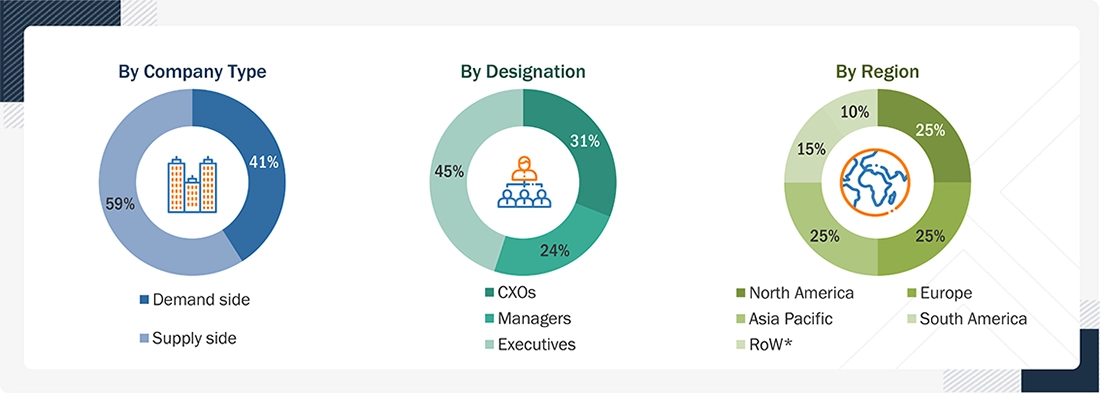
Extensive primary research was conducted after obtaining information regarding the plant growth regulator market scenario through secondary research. Several primary interviews were conducted with market experts from both the demand and supply sides across major countries of North America, Europe, Asia Pacific, the Middle East & Africa, and South America. Primary data was collected through questionnaires, emails, and telephone interviews. Primary supply-side sources included industry experts such as Chief X Officers (CXOs), Vice Presidents (VPs), Directors from business development, marketing, research, and development teams, and key executives from distributors and key opinion leaders. Primary interviews were conducted to gather insights such as market statistics, revenue data from products and services, market breakdowns, market size estimates, market forecasts, and data triangulation. Primary research also helped understand trends related to crop type, type, formulation, function, and region.
Breakdown of Primary Participants
To know about the assumptions considered for the study, download the pdf brochure
Market Size Estimation
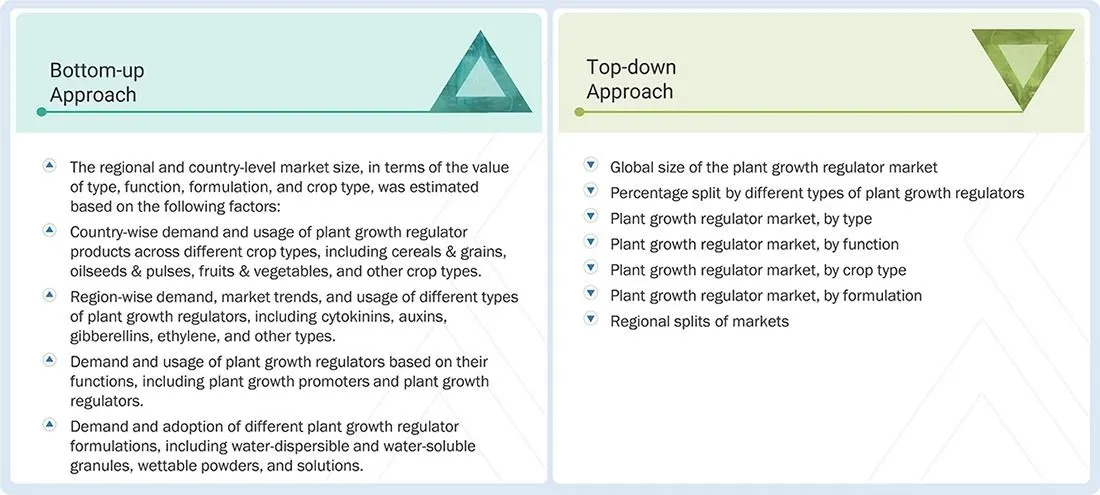
Both the top-down and bottom-up approaches were used to estimate and validate the total size of the plant growth regulator market. These approaches were also used extensively to estimate the size of various dependent submarkets. The research methodology used to estimate the market size includes the following:
- Key players were identified through extensive secondary research.
- Primary and secondary research determined the industry’s value chain and market size.
- All percentage share splits and breakdowns were determined using secondary sources and verified through primary sources.
- All possible parameters affecting the markets covered in this research study were accounted for, examined in detail, verified through primary research, and analyzed to obtain the final quantitative and qualitative data.
- The following figure illustrates the complete market size estimation process used in this research study, providing a consolidated estimate of the plant growth regulator market.
The following sections (bottom-up & top-down) depict the overall market size estimation process used in this study.
Global Plant Growth Regulator Market: Bottom-up Approach
Data Triangulation
After estimating the overall market size as explained above, the total market was split into several segments and subsegments. Data triangulation and market breakdown procedures were employed, wherever applicable, to estimate the overall plant growth regulators market and arrive at the exact statistics for all segments and subsegments. The data was triangulated by studying various factors and trends from the demand and supply sides. The market size was also validated using both the top-down and bottom-up approaches.
Market Definition
According to the Ministry of Agriculture, Food and Rural Affairs, Ontario:
Plant Growth Regulators are chemicals used to modify plant growth, such as increasing branching, suppressing shoot growth, increasing return bloom, removing excess fruit, or altering fruit maturity. Numerous factors affect plant growth regulator performance, including how well the plant absorbs the chemical, tree vigor and age, dose, timing, cultivar, and weather conditions before, during, and after application. Plant growth regulators fall into six classes: compounds related to auxins, gibberellins, gibberellin biosynthesis inhibitors, cytokinins, abscisic acid, and compounds affecting ethylene status.
Key Stakeholders
- Supply Side: Plant Growth Regulator Producers, Suppliers, Distributors, Importers, and Exporters
- Demand Side: Large-scale Crop Farmers, Large-scale Orchids, and Researchers
- Agricultural Co-operative Societies
- Government, Research Organizations, and Institutions
- Technology Providers to Plant Growth Regulator Manufacturing Companies
- Regulatory Bodies
- World Health Organization (WHO)
- European Crop Protection Agency (ECPA)
- Pesticides Manufacturers and Formulators Association (PMFAI)
- China Crop Protection Industry Association (CCPIA)
- Food and Agriculture Organization (FAO)
- US Department of Agriculture (USDA)
- Institute of Food and Agricultural Sciences (IFAS)
- US Environmental Protection Agency (US EPA)
- Organisation for Economic Co-operation and Development (OECD)
- Federal Office of Consumer Protection and Food Safety
- European Food Safety Authority
- Ministry of Agriculture & Farmers Welfare
- Department of Agriculture, Cooperation & Farmers Welfare
- Directorate of Plant Protection, Quarantine & Storage
- Commercial Research & Development (R&D) Institutions and Financial Institutions
Report Objectives
MARKET INTELLIGENCE
- To determine and project the size of the plant growth regulator market by function, type, formulation, crop type, and region over five years, from 2026 to 2031
- To identify the attractive opportunities in the market by determining the largest and fastest-growing segments across the key regions
- To analyze the demand-side factors based on the following:
- Impact of macro- and microeconomic factors on the market
- Shifts in demand patterns across different subsegments and regions
COMPETITIVE INTELLIGENCE
- Identifying and profiling the key players in the plant growth regulator market
- Providing a comparative analysis of market leaders based on the following:
- Product offerings
- Business strategies
- Strengths and weaknesses
- Key financials
- Understanding the competitive landscape and identifying the major growth strategies players across the country adopt
- Providing insights on key product innovations and investments in the plant growth regulator market.
Available customizations:
With the given market data, MarketsandMarkets offers customizations according to company-specific scientific needs.
The following customization options are available for the report:
PRODUCT ANALYSIS
- Product Matrix, which provides a detailed comparison of each company's product portfolio.
GEOGRAPHIC ANALYSIS
With the given market data, MarketsandMarkets offers customizations according to company-specific scientific needs.
- Further breakdown of the Rest of Europe into Spain, the Czech Republic, the Netherlands, Belgium, Hungary, Romania, Ireland, and other EU & non-EU countries.
- Further breakdown of the Rest of Asia Pacific into South Korea, Thailand, Kazakhstan, Vietnam, Indonesia, and Myanmar.
- Further breakdown of the Rest of South America into Chile, Colombia, Peru, Uruguay, and other South American countries.
COMPANY INFORMATION
- Detailed analyses and profiling of additional market players (up to five)


Personalize This Research
- Triangulate with your Own Data
- Get Data as per your Format and Definition
- Gain a Deeper Dive on a Specific Application, Geography, Customer or Competitor
- Any level of Personalization
Let Us Help You
- What are the Known and Unknown Adjacencies Impacting the Plant Growth Regulator Market
- What will your New Revenue Sources be?
- Who will be your Top Customer; what will make them switch?
- Defend your Market Share or Win Competitors
- Get a Scorecard for Target Partners

Custom Market Research Services
We Will Customise The Research For You, In Case The Report Listed Above Does Not Meet With Your Requirements
Get 10% Free CustomisationTESTIMONIALS

Business Innovation Director
US Based Leading Agribusiness,
Food and Ingredients ManufacturerI highly appreciate the team's efficiency for a well conducted study that helped us clarify some blind spots in food and agricultural niche markets. Although compiling information for B2B markets is very difficult, the MnM team pulled out the task successfully. The quality of research, level of insights, and responsiveness of team were commendable.
- Canada Plant Growth Regulators Market
- US Plant Growth Regulators Market
- Mexico Plant Growth Regulators Market
- Germany Plant Growth Regulators Market
- UK Plant Growth Regulators Market
- France Plant Growth Regulators Market
- Poland Plant Growth Regulators Market
- Spain Plant Growth Regulators Market
- China Plant Growth Regulators Market
- India Plant Growth Regulators Market
- Japan Plant Growth Regulators Market
- Brazil Plant Growth Regulators Market
- Argentina Plant Growth Regulators Market
- Rest Of Europe Plant Growth Regulators Market
- Rest Of Asia Pacific Plant Growth Regulators Market
- Africa Plant Growth Regulators Market
- Middle East Plant Growth Regulators Market
- Rest Of South America Plant Growth Regulators Market
Growth opportunities and latent adjacency in Plant Growth Regulator Market






B.
Oct, 2019
We need information on unique PGR product not being used in India and manufactured internationally. Is this information covered in the report?.