Radiation Detection and Monitoring Market Size, Growth, Share & Trends Analysis

Radiation Detection and Monitoring Market by Product Type (Personal Dosimeters; Monitors (Area, Process, Environmental Radiation, Surface Contamination), Application (Industry, Homeland Security & Defense, Diagnostics & Therapy) - Global Forecasts to 2031




OVERVIEW
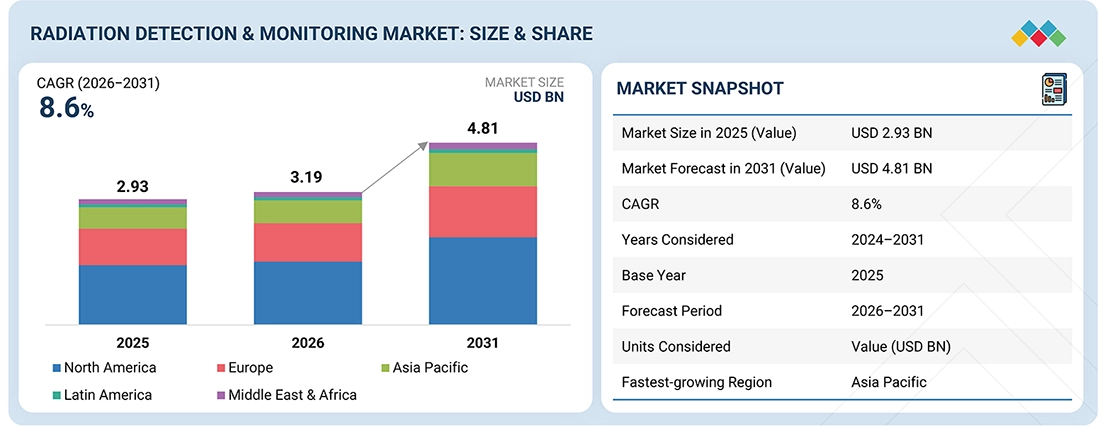
Source: Secondary Research, Interviews with Experts, MarketsandMarkets Analysis
The Radiation Detection and Monitoring market, valued at US$2.93 billion in 2025, stood at US$3.19 billion in 2026 and is projected to advance at a resilient CAGR of 8.6% from 2026 to 2031, culminating in a forecasted valuation of US$4.81 billion by the end of the period. The growing use of radiation in medicine for diagnostic and therapeutic purposes, the development of nuclear power plants, and the need to ensure safe working conditions for employees and the general population from exposure to radiation have all played a role in shaping the demand for radiation detection and monitoring devices. Growth in the radiation detection devices market has also been fueled by an increasing number of regulatory requirements, an increased demand for continuously monitored, near-real-time data, and growing security concerns about the illicit transport of radioactive materials across international borders. At the same time, advancements in technology, including artificial intelligence-based analytics, Internet of Things (IoT)-enabled detectors, and wearable dosimetry devices, have increased the efficiency and reliability of these instruments and have accelerated market penetration within healthcare, nuclear, defense, and industrial applications.
KEY TAKEAWAYS
-
BY REGIONNorth America accounted for the largest share of 56.0% of the radiation detection and monitoring market in 2025.
-
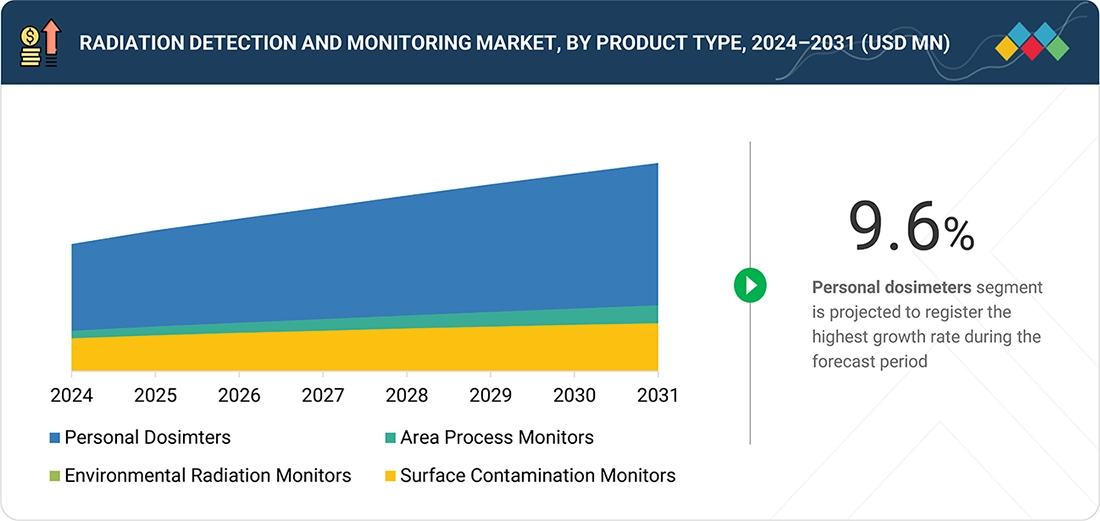
BY PRODUCTBy product, personal dosimeters accounted for the largest market share of 67.0% in 2025.
-
BY APPLICATIONBy application, the diagnostics & therapy segment is expected to register the highest CAGR of 10.0% during the forecast period.
-
COMPETITIVE LANDSCAPE- KEY PLAYERSCompanies like Mirion Technologies, Inc. (US), Fortive (US), Thermo Fisher Scientific Inc. (US), AMETEK, Inc. (US), and Fuji Electric Co., Ltd. (Japan) were identified as some of the key players in the radiation detection and monitoring market. These companies compete by offering a broad range of products, from portable detectors and dosimeters to full-scale radiation-monitoring systems, and by leveraging innovations such as digital dosimetry, real-time data monitoring, and enhanced detector sensitivity.
-
COMPETITIVE LANDSCAPE- STARTUPSCompanies such as Radiation Detection Company (US), Centronic (UK), and Micron Semiconductor Ltd. (UK) continue to innovate and have recently secured strategic investments to expand their portfolio of radiation detection and monitoring technologies.
The radiation detection and monitoring market encompasses technologies and systems that identify, quantify, and manage exposure to ionizing radiation across sectors such as medical, industrial, nuclear, and security. This market comprises a wide range of products, including personal dosimeters, area and process monitoring devices, environmental radiation monitors, surface contamination detectors, and software, typically integrated into real-time monitoring systems, analytics, and compliance solutions. The primary driving forces behind the radiation detection and monitoring market include the increased use of radiation in medical diagnostics and treatment, the growing adoption of nuclear energy, expanded industrial applications of radiation, and enhanced efforts to protect the public and workforce from potential radiological hazards.
TRENDS & DISRUPTIONS IMPACTING CUSTOMERS' CUSTOMERS
Numerous technological trends and innovations are shaping new methods of detecting radiation, tracking and managing it, and recording these measurements. Some of the primary emerging trends include a stronger push toward digitizing solutions through the increased use of integrated devices and software or service-based systems. This includes a rise in IoT-based detectors (Internet of Things) that are connected to networks, as well as a greater reliance on cloud-based radiation monitoring systems. Additionally, there is a significant uptick in the use of real-time data analytics tools, such as predictive analytics and AI/machine learning, to automate anomaly detection and enhance decision-making. The rise of wearable dosimetry instruments, remote monitoring systems, and networked environmental monitoring stations offers greater flexibility, scalability, and operational efficiency. These disruptive technologies will decrease reliance on manual processes, enhance regulatory compliance, and facilitate proactive radiation safety management. This will have a significant impact on product design, business models, and long-term growth potential for companies in the healthcare, nuclear, industrial, and security industries.
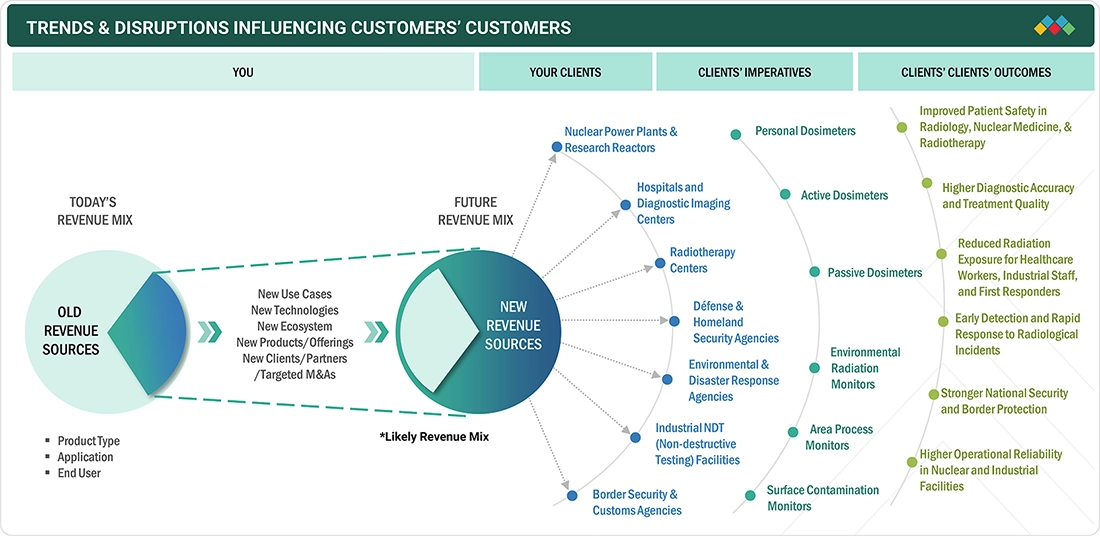
Source: Secondary Research, Interviews with Experts, MarketsandMarkets Analysis
MARKET DYNAMICS

Level
-
Increasing utilization of PET/CT imaging procedures

-
Rising adoption of nuclear medicine and radiotherapy procedures


Level
-
Growing reliance on alternative energy sources instead of nuclear power

-
Stringent regulatory frameworks and compliance requirements


Level
-
Advancements in radiation detection technology

-
Emergence of wearable and miniaturized technologies


Level
-
Limited skilled workforce for system operation

-
High system costs limit adoption

Source: Secondary Research, Interviews with Experts, MarketsandMarkets Analysis
Driver: Increasing utilization of PET/CT imaging procedures
The PET/CT industry is steadily growing due to the increasing prevalence of cancer, heart disease, and brain disorders. Accurate diagnoses for these conditions often require high-quality tests, such as PET/CT scans. Countries like Japan, China, and South Korea, along with developing nations like India, are investing significantly in building world-class hospitals and acquiring advanced medical equipment capable of conducting PET/CT scanning. Patients are becoming more aware of the importance of early diagnosis and the benefits of personalized treatment over standard options, driving rising demand for PET/CT scans. New technologies are being developed to enhance the accuracy of PET scanners while reducing radiation exposure and shortening scan time. These advancements will further fuel the demand for PET/CT scanners. To expand the number of healthcare facilities offering PET/CT scans, governments worldwide are investing heavily in developing these machines. Many international imaging companies are partnering with local healthcare providers to improve access to PET/CT services. Additionally, greater availability of the radiopharmaceuticals needed for PET/CT scans will increase the number of patients scanned, particularly in regions with high demand for cardiology and oncology care.
Restraint: Growing reliance on alternative energy sources instead of nuclear power
The technology for renewable energy sources such as solar, wind, and hydropower, as well as for energy storage, is improving rapidly, often surpassing that of nuclear power due to increased investments in these technologies. Concerns about the high capital costs of constructing nuclear power plants, the lengthy timeframes required to build and commission new facilities, issues related to waste disposal, and safety risks associated with nuclear energy have led many countries to shift toward a more diverse energy mix. This mix prioritizes cleaner and more flexible sources of electricity over nuclear power. Rapid advancements in renewable energy technology, coupled with trends in capital amortization, government support for renewable energy policies, and the global commitment to reducing greenhouse gas emissions, are all driving the swift adoption of these energy sources. As a result, many regions are prioritizing renewable energy and decentralized power generation over new nuclear power projects, marking a significant shift in long- and short-term energy supply strategies worldwide.
Opportunity: Advancements in radiation detection technology
Advancements in radiation detection technology are significantly improving the accuracy, sensitivity, and usability of radiation monitoring systems across various sectors. The development of solid-state and semiconductor detectors, enhanced scintillation materials, and silicon photomultipliers (SiPMs) is contributing to higher resolution and faster response times in more compact detector designs. Additionally, the integration of IoT platforms, cloud infrastructure, and artificial intelligence (AI) analytics is facilitating real-time monitoring, predictive insights, and automated anomaly detection. These advancements are also paving the way for miniaturized and wearable dosimetry solutions for continuous exposure tracking. Other recent technical improvements include wireless communication technology, longer battery life, and advanced data visualization software. Together, these enhancements are increasing the reliability, scalability, and ease of deployment of radiation detection technologies in healthcare, nuclear power, industry, environmental monitoring, and security sectors.
Challenge: Limited skilled workforce for system operation
The limited availability of skilled personnel to operate radiation detection equipment has created a significant problem in this market sector. Radiation detection systems are becoming increasingly sophisticated, requiring specialized training for installation, calibration, ongoing operation, and data interpretation. Many healthcare facilities, industrial sites, and nuclear facilities are facing challenges due to a shortage of trained personnel, such as radiation safety officers, medical physicists, and technical staff, who can manage these advanced software-based monitoring solutions. This skills gap may lead to underutilization of system capabilities, an increased likelihood of operational errors, greater dependence on external service providers, and delays in embracing advanced technology. Furthermore, there is a lack of supporting infrastructure and certification programs in emerging markets, exacerbating these issues.
RADIATION DETECTION AND MONITORING MARKET: COMMERCIAL USE CASES ACROSS INDUSTRIES
| COMPANY | USE CASE DESCRIPTION | BENEFITS |
|---|---|---|
 |
Provide advanced radiation detection instruments and software solutions for nuclear power, medical, and security sectors. The solutions enable precise measurement and compliance monitoring | Radiation measurement has become more accurate, and compliance with regulations has been improved through the assistance of Ion Science. Overall, industry safety protocols have also been enhanced |
 |
Offers a full range of radiation detection and monitoring products that include personal dosimeters, area monitors, and analytical software used in healthcare, defense, and nuclear energy | Provide the best radiation detection technology to enable real-time tracking of workers' radiation exposure, thereby enhancing job safety |
 |
Through its subsidiaries, it offers portable and fixed radiation detection systems primarily used in industrial inspection, homeland security, and nuclear decommissioning | There are no unnecessarily complicated, obsolete, or unreliable instruments in the realm of radiation detection technology; instead, they offer robust, dependable solutions applicable across various fields |
 |
Provides advanced radiation detection, imaging sensors, and monitoring solutions primarily for defense, aerospace, nuclear research, and scientific applications | Teledyne’s radiation detection technologies enable highly accurate, stable, and long-life radiation measurement, even under extreme operating conditions |
Logos and trademarks shown above are the property of their respective owners. Their use here is for informational and illustrative purposes only.
MARKET ECOSYSTEM
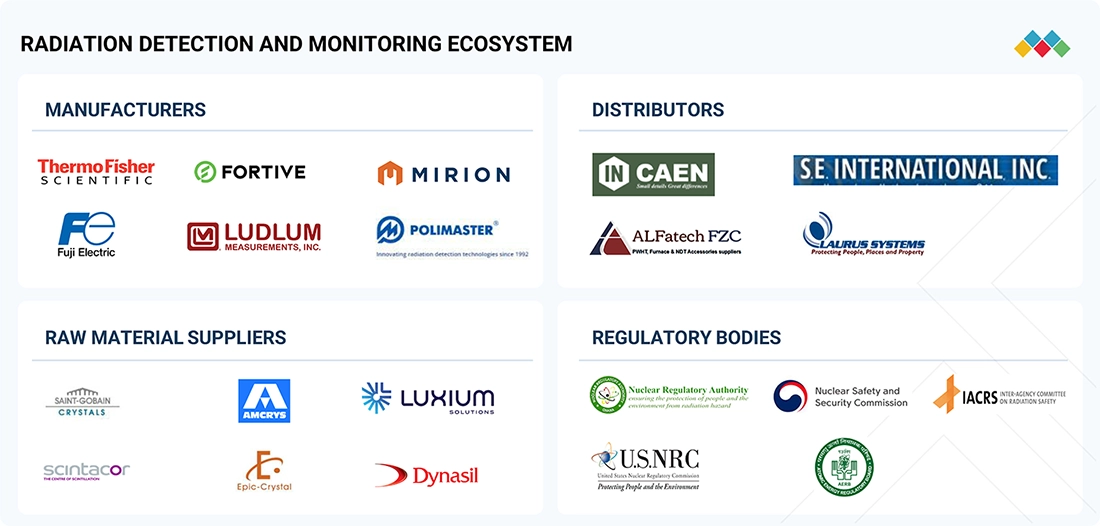
The ecosystem surrounding the radiation detection and monitoring markets consists of many interconnected networks of raw materials suppliers, device manufacturers, software providers, analytic service providers, calibrating and maintaining services, government, and regulators, as well as many end users from fields such as healthcare, nuclear power, defense, industrial applications, and environmental applications. This multi-layered network enables advanced radiation detection and monitoring devices and real-time monitoring tools that can provide solutions to meet safety regulations. Because radiation detection and monitoring can be used for both civilian and defense purposes, it helps maintain a reasonably stable demand for these products across economic and regulatory cycles. This interconnecting ecosystem of participants in the radiation detection and monitoring market creates a strong value chain that serves as a catalyst for continued innovation across industries and increases overall safety and capacity to manage the risks associated with radiation.
Logos and trademarks shown above are the property of their respective owners. Their use here is for informational and illustrative purposes only.
MARKET SEGMENTS
Source: Secondary Research, Interviews with Experts, MarketsandMarkets Analysis
Radiation Detection & Monitoring Market, by Product Type
By product, the radiation detection and monitoring market is categorized into personal dosimeters, area process monitors, environmental radiation monitors, and surface contamination monitors. Personal dosimeters account for the largest market share in the radiation detection and monitoring market due to their mandatory and widespread use across multiple radiation-exposed environments, particularly in healthcare, nuclear power, industrial facilities, and research laboratories. Regulatory bodies across regions require continuous monitoring of individual radiation exposure for workers, making personal dosimeters essential for occupational safety and compliance. Their routine, long-term use, and recurring replacement cycles and service requirements drive sustained demand. Additionally, the growing adoption of active and wearable dosimeters with real-time monitoring capabilities is further reinforcing the dominance of personal dosimeters as the largest revenue contributor.
Radiation Detection & Monitoring Market, by Application
By application, the radiation detection and monitoring market is categorized into industry, safety & security, diagnostics & therapy, and other applications. The?????? radiation detection & monitoring market is primarily led by the diagnostics and therapy segment, which also includes radiotherapy and nuclear medicine applications. The segment is driven by the rapid replacement and upgrade rate of radiation monitor systems in hospitals and imaging centers, fueled by new technology and the need for equipment to meet accreditation requirements, which provides a significant revenue stream. Additionally, the ongoing rise in unique and complex treatment plans, along with the demand for greater treatment accuracy, will require more stringent quality assurance/quality control and better verification of treatment methods, which, in turn, will increase demand for advanced monitoring solutions. The increase in diagnostic centers, private diagnostic chains, and multi-specialty hospitals, especially in urban areas, is leading to greater use of radiation monitor systems and contributing to the establishment of multiple radiation monitoring facilities. An increase in liability concerns and risk management practices within healthcare organizations will drive even higher spend on comprehensive radiation monitoring and documentation solutions, thereby reinforcing their dominant position in this segment of the industry.
Radiation Detection & Monitoring Market, by Region
North America continues to lead the global market due to the extensive use of modern radiation detection and monitoring technology, including AI-based analytics, cloud-based platforms, and wearable dosimeters. The region has access to substantial government funding for radiation safety research, emergency preparedness, and ongoing environmental monitoring, as well as strong infrastructure for calibration and certification to enable prompt deployment and subsequent upgrade cycles of equipment. North America is also a leader in terms of frequency of replacing older equipment due to accreditation/audit requirements, as well as a significant emphasis placed on mitigating the risk of equipment failure through risk management/insurance compliance and liability mitigation creating additional pressure to spend on radiation detection and monitoring/safety solutions all reinforcing North America’s strength and continued leadership within the radiation detection/monitoring/safety solutions market.
REGION
Asia Pacific to be fastest-growing region in radiation detection and monitoring market during forecast period
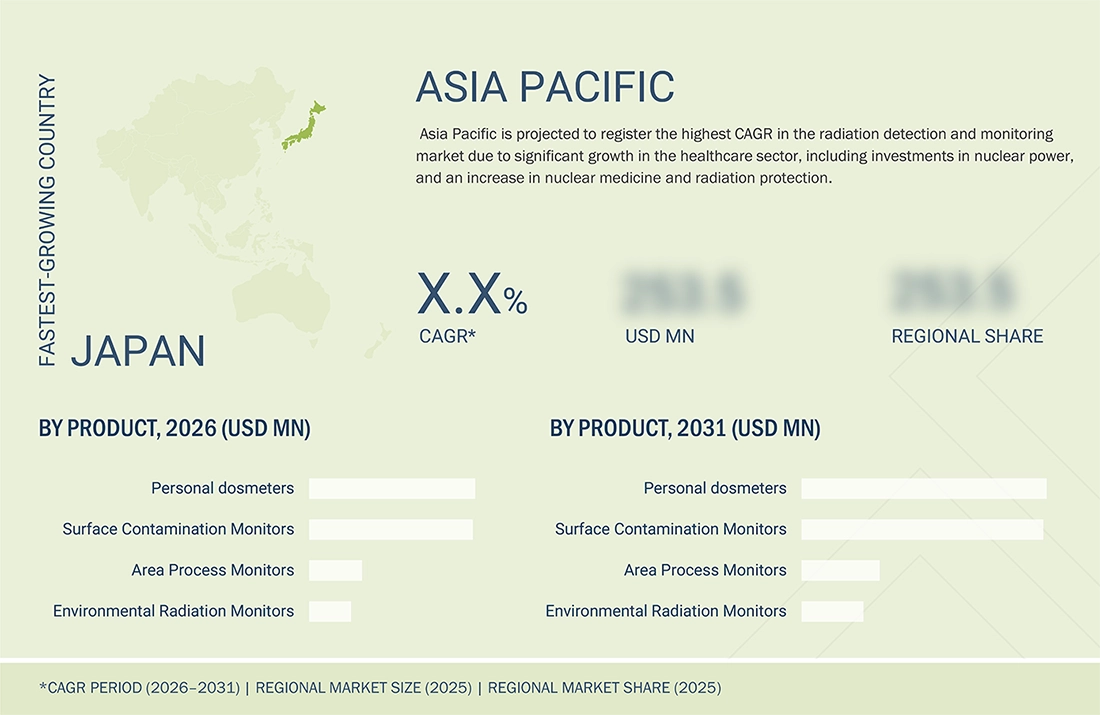
The radiation detection and monitoring market is divided into five key regions: North America, Europe, Asia Pacific, Latin America, and the Middle East & Africa. Among these, the Asia Pacific is expected to exhibit the highest CAGR in the radiation detection and monitoring market. This growth is largely driven by significant advancements in the healthcare sector, including increased investments in nuclear power and a rise in the use of nuclear medicine and radiation protection. Furthermore, there is growing awareness of radiation safety, along with stronger regulatory frameworks and government initiatives to enhance environmental monitoring and emergency preparedness. These factors will sustain demand for radiation detection and monitoring products. Additionally, the rapid growth of sectors such as semiconductor fabrication, pharmaceuticals, and research laboratories in the region has led to increased demand for dosimetry devices, contamination testing devices, and real-time radiation detection products. All these factors position Asia Pacific as the fastest-growing region for radiation detection and monitoring solutions.
RADIATION DETECTION AND MONITORING MARKET: COMPANY EVALUATION MATRIX
The radiation detection and monitoring market is mainly controlled by ‘star’ players such as Thermo Fisher Scientific, Mirion Technologies, Fortive, and AMETEK, who dominate the market because of their large product portfolios, worldwide reach, and strong brand recognition. These firms offer multiple ways to detect radiation, including detectors, dosimeters, and monitoring systems, which are used by businesses worldwide across industries such as healthcare, nuclear energy, defense, and industrial operations. Recently, new companies like Ludlum Measurements, Polimaster, and Arktis Radiation Detectors have entered the marketplace and are experiencing growth by developing specialized products that meet their customers' needs, such as portable detectors. Although the dominant companies continue to hold a significant share of the market, the increasing demand for advanced, low-cost, and portable detection devices is creating opportunities for smaller, agile companies to succeed in niche market segments where they can thrive in the long term. Recently, new companies like Ludlum Measurements, Polimaster, and Arktis Radiation Detectors have entered the market and are growing by developing specialized products that meet their customers' needs, such as portable detectors. Although the dominant companies continue to hold a significant share of the market, the increasing demand for advanced, low-cost, and portable detection devices is creating opportunities for smaller, agile companies to succeed in niche market segments where they can thrive in the long term.
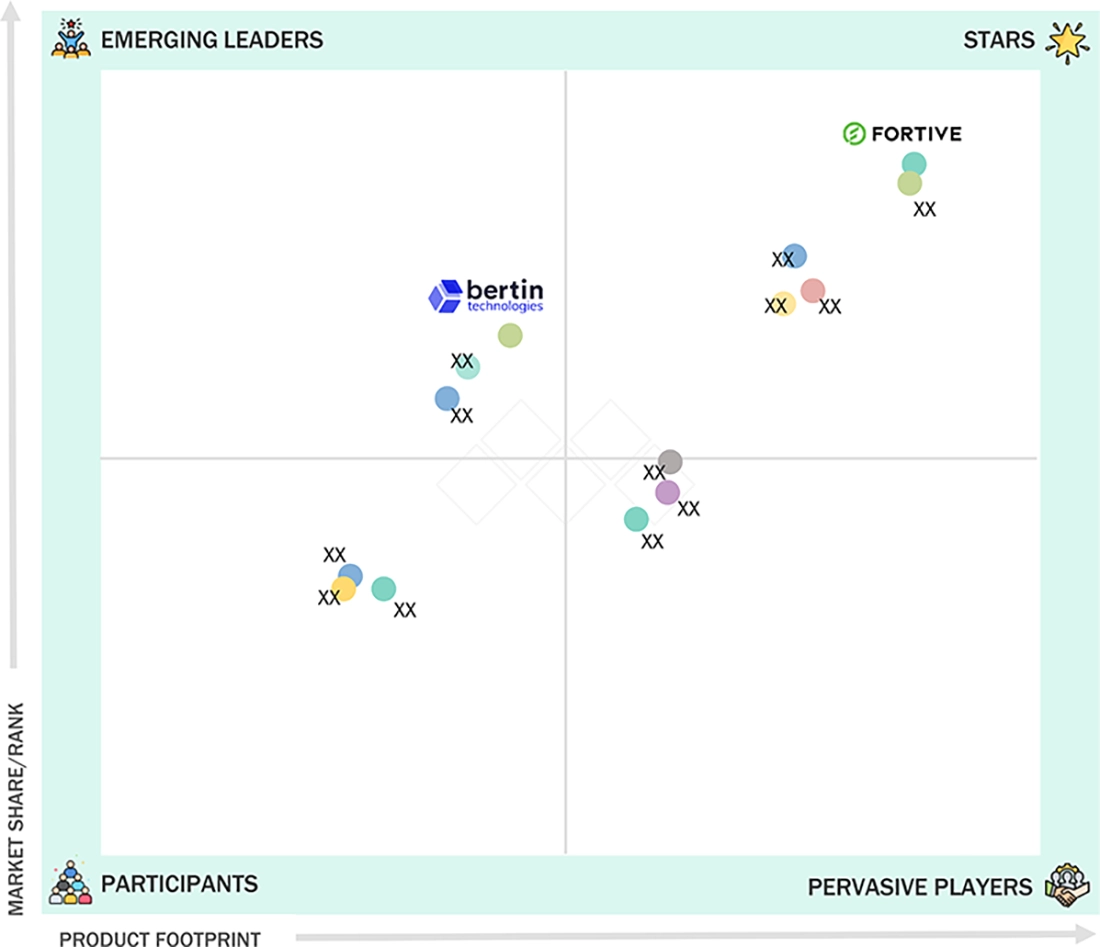
Source: Secondary Research, Interviews with Experts, MarketsandMarkets Analysis
KEY MARKET PLAYERS
- Thermo Fisher Scientific (US)
- Mirion Technologies, Inc. (US)
- Fortive (US)
- Fuji Electric Co., Ltd. (Japan)
- Ludlum Measurements, Inc. (US)
- Arktis Radiation Detectors Ltd (Switzerland)
- Polymaster Europe UAB (Lithuania)
- Amray Group (Ireland)
- Infab LLC (US)
- Ametek Inc. (US)
MARKET SCOPE
| REPORT METRIC | DETAILS |
|---|---|
| Market Size in 2026 (Value) | USD 3.19 Billion |
| Market Forecast in 2031 (Value) | USD 4.81 Billion |
| Growth Rate | CAGR of 8.6% from 2026–2031 |
| Years Considered | 2024–2031 |
| Base Year | 2025 |
| Forecast Period | 2026–2031 |
| Units Considered | Value (USD Billion) |
| Report Coverage | Revenue Forecast, Company Ranking, Competitive Landscape, Growth Factors, and Trends |
| Segments Covered |
|
| Region Covered | North America, Europe, Asia Pacific, Latin America, Middle East & Africa |
| Parent & Related Segment Reports |
Radiation Detection Monitoring Safety Market Asia-Pacific radiation detection monitoring safety market European radiation detection monitoring safety market United States Radiation Detection, Monitoring, and Safety Market Radiation detectors market |
WHAT IS IN IT FOR YOU: RADIATION DETECTION AND MONITORING MARKET REPORT CONTENT GUIDE
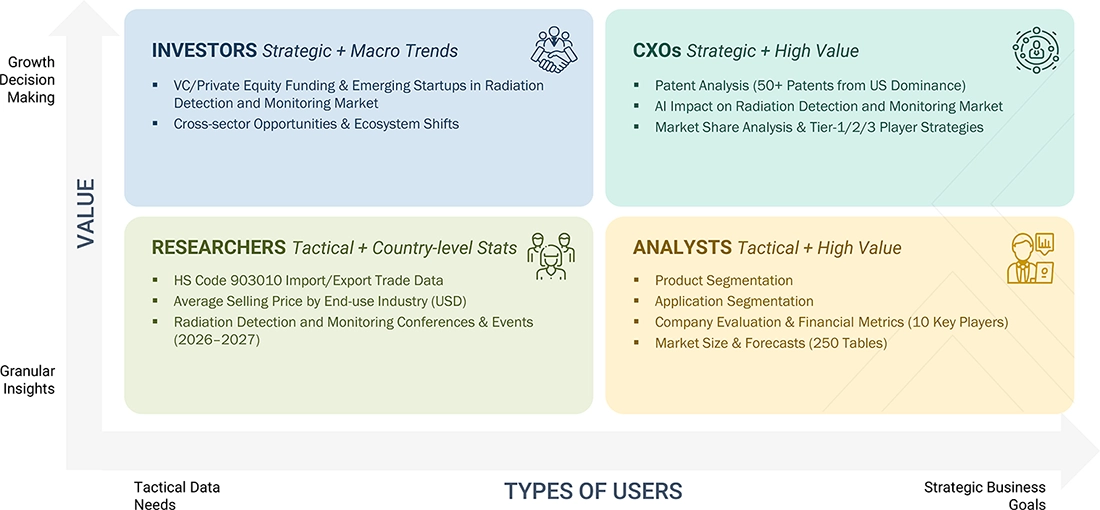
DELIVERED CUSTOMIZATIONS
We have successfully delivered the following deep-dive customizations:
| CLIENT REQUEST | CUSTOMIZATION DELIVERED | VALUE ADDS |
|---|---|---|
| Customer Buying Behavior Analysis | Procurement patterns, budget cycles, and decision criteria by end uses | Improves sales funnel efficiency and deal conversion |
| Supply Chain & Component Dependency Analysis | Assessment of critical components (scintillators, semiconductors, sensors) | Mitigates supply risk and supports sourcing strategy |
| ESG & Sustainability Impact Assessment | Role of radiation monitoring in ESG, worker safety, and environmental protection | Strengthens ESG positioning and stakeholder communication |
RECENT DEVELOPMENTS
- February 2025 : Framatome and IBA announced that they have signed a memorandum of understanding (MoU) to establish a strategic partnership to advance the industrial-scale production of Astatine-211, an alpha-emitting radioisotope, across Europe and the US.
- November 2024 : Teledyne FLIR Defense has secured a USD 168 million IDIQ contract for the US Army’s Nuclear, Biological, and Chemical Reconnaissance Vehicle Program.
- September 2024 : Mirion Technologies finalized a USD 45.0 million acquisition of Advanced Measurement Technology, strengthening its continuous air-monitoring capabilities and broadening its presence across the Asia Pacific region.
Table of Contents
 Exclusive indicates content/data unique to MarketsandMarkets and not available with any competitors.
Methodology
The study has used primary and secondary sources; the research involved investigating different factors influencing the industry to examine segmentation types, industry trends, key players, competitive landscape, key market dynamics, and key player approaches.
Secondary Research
Secondary research extensively uses secondary sources such as directories, databases (e.g., Bloomberg Businessweek, D&B Hoovers, Factiva), white papers, annual reports, company house documents, investor presentations, and SEC filings attached to companies. The secondary research assistance is used to source and collate general and technical data related to the market study and commercial analysis of the Radiation Detection and Monitoring market. It also acquired vital data relating to the key players, market taxonomy, and segmentation per industry trend as far as the base level and key developments related to market and technology perspectives. Secondary research has also prepared a database of key industry leaders.
Primary Research
Varied sources from the supply and demand sides have been interviewed in the primary research process to gather qualitative and quantitative information for this report. Supply-side primary sources include industry experts such as CEOs, vice presidents, marketing and sales directors, technology and innovation directors, and other major executives from various key companies and organizations in product therapy markets. Some primary sources on the demand side include medical OEMs, analytical instrument OEMs, CDMOs, and other service providers. The purpose of primary research is to validate the market segmentation, discover major players in the market, and gain insight into key industry trends and key market dynamics.
Market Estimation Methodology
The market size for Radiation Detection and Monitoring is determined in this report based on revenue estimates of significant market players. The scope included identifying the major players and determining their revenues from the market business through several insights gathered from the primary and secondary research phases. Secondary research involved looking into the annual and financial reports of leading players in the market. Primary research includes interviews with key opinion leaders such as CEOs, directors, and marketing executives.
This process calculated segmental revenues to arrive at the global market value using revenue mappings from major solution/service providers. This process involved the following steps:
- Establishing a list of major global players in the environmental testing products market.
- Mapping the annual revenues from the environmental testing products market (or nearest reported business unit/product category) generated from the major global players.
- Revenue mapping of key players to cover a major global market share as of 2023.
- Extrapolating the global value of the Radiation Detection and Monitoring market.
Data Triangulation
After deriving the total market size from the aforementioned sizing process, the Radiation Detection and Monitoring market was subdivided into segments and subsegments. Data triangulation and market breakdown methodologies were employed to complete the market engineering process and to derive the exact market numbers for all segments and subsegments. The data was triangulated by analyzing several parameters and trends, including demand and supply. In addition, the Radiation Detection and Monitoring market was validated via combined top-down and bottom-up approaches.
Market Definition
The Radiation Detection and Monitoring market includes technologies and devices for measuring and protecting against harmful radiation across various industries, such as healthcare, nuclear power, defense, and environmental monitoring. Key products include radiation detectors, dosimeters, area monitors, and safety equipment that ensure regulatory compliance and safety for workers, patients, and the public. Market growth is driven by the rising use of radiation in medical imaging, advancements in nuclear energy, concerns about nuclear threats, and strict regulations. Innovations in real-time radiation monitoring and AI-based detection further propel this market forward.
Stakeholders
- Manufacturers and distributors of radiation detection, monitoring, and safety detectors & monitors
- Healthcare institutions
- Research institutions
- Research and consulting firms
- Medical device suppliers, distributors, channel partners, and third-party suppliers
- Clinicians and healthcare professionals
- Global and national health agencies
- Academic medical centers and universities
- Contract research organizations (CROs) and contract manufacturing organizations (CMOs)
- Academic medical centers and universities
- Market research and consulting firms
- Clinical research organizations
- Group Purchasing Organizations (GPOs)
- Academic Medical Centers and Universities
- Accountable Care Organizations (ACOs)
Report Objectives
- To define, describe, and forecast the Radiation Detection and Monitoring market on product, composition, and application.
- To provide detailed information regarding the major factors influencing the market growth (such as drivers, restraints, opportunities, and challenges)
- To strategically analyze the micromarkets concerning individual growth trends, prospects, and contributions to the total market.
- To analyze the opportunities in the market for stakeholders and provide details of the competitive landscape for market leaders.
- To profile the key market players and comprehensively analyze their market shares and core competencies.
- To forecast the revenue of the market segments concerning five main regions, namely, North America (US and Canada), Europe (Germany, France, the UK, Italy, Spain, and Rest of Europe), the Asia Pacific (China, Japan, India, South Korea, Australia, and Rest of Asia Pacific), Latin America (Brazil, Mexico, and Rest of Latin America), and the Middle East & Africa (GCC Countries and Rest of Middle East & Africa)
- To track and analyze competitive developments such as new product launches and approvals; agreements, partnerships, expansions, acquisitions; and collaborations in the Radiation Detection and Monitoring market
Available Customizations
With the given market data, MarketsandMarkets offers customizations to meet the company’s specific needs. The following customization options are available for the present global environmental testing products market.
Product Analysis
- Product matrix, which gives a detailed comparison of the product portfolios of the top eleven companies.
Geographic Analysis as per Feasibility
- Further breakdown of the Rest of European Radiation Detection and Monitoring market into Russia, Belgium, the Netherlands, Switzerland, Austria, Finland, Sweden, Poland, Portugal, and other Rest of European countries
- Further breakdown of the Rest of Asia Pacific Radiation Detection and Monitoring market Singapore, Taiwan, New Zealand, the Philippines, Malaysia, and other Rest of Asia Pacific countries
- Further breakdown of the Rest of the World Radiation Detection and Monitoring market Latin America, the Middle East, and Africa
Company Information
- Detailed analysis and profiling of additional market players (up to 11)


Personalize This Research
- Triangulate with your Own Data
- Get Data as per your Format and Definition
- Gain a Deeper Dive on a Specific Application, Geography, Customer or Competitor
- Any level of Personalization
Let Us Help You
- What are the Known and Unknown Adjacencies Impacting the Radiation Detection and Monitoring Market
- What will your New Revenue Sources be?
- Who will be your Top Customer; what will make them switch?
- Defend your Market Share or Win Competitors
- Get a Scorecard for Target Partners

Custom Market Research Services
We Will Customise The Research For You, In Case The Report Listed Above Does Not Meet With Your Requirements
Get 10% Free CustomisationTESTIMONIALS

JAYANT RAJPUROHIT
Director of Market Insights, Data and Analytics
SFI Health,
Leading Pharmaceutical Companywww.sfihealth.com/
We at SFI Health approached MarketsandMarkets for an Opportunity Assessment on "Incidence and Prevalence of Focus Indications" as we wanted to know the most attractive HCPs like Physician, Functional MD, Naturopath and Pharmacist. The project was critical for us to ensure our focus on the right target which would enable sustainable growth and profitability for SFI Health. The business insights provided exceeded our expectations and we were extremely impressed. The team at MarketsandMarkets is highly professional and detail oriented and very well understood our business needs. MarketsandMarkets offers a unique combination of expertise and dedicated engagement model. We identified 2 new products to be launched in coming months, based on the research findings provided by MarketsandMarkets. We are happy with the services and would strongly recommend MarketsandMarkets to my peers in the industry.

BEATRIZ DE LA CALLE
Head of Commercial Analytics
Qualicaps,
Leading Pharmaceutical Companywww.qualicaps.com/

We partnered with MarketsandMarkets for an assessment study on hard empty capsules. The team was extremely professional in understanding our business requirements and we received timely responses to all our queries. The market intelligence and the recommendations has met our business requirements. We were extremely impressed to see the final study results; it really exceeded our expectations. The market intelligence offered by MarketsandMarkets, and clarity on next steps will help us achieve our business objective for the Year 2021. We are happy with the services and would strongly recommend MarketsandMarkets to my peers in the industry.

Bob Williams,
Senior Director Business Development & Innovation
Bracco Diagnostics Inc.,
Italian Multinational in life sciences sector and a World Leader in imaging diagnosticsimaging.bracco.com/us-en
We were pleased with targeted insights that MarketsandMarkets identified from a custom study on the 'Radiation Dose Management Solutions Market'. Your team identified and characterized the market participants as well as underlying trends accurately. This study was useful to Bracco in formulating business strategies for our dose monitoring product lines and we thank MarketsandMarkets for the job well done.
Cody Coonradt,
Market Development and Strategy Manager
3M Health Information Systems,
Leader in Health care Coding, Payment & Analytics Solutions.www.3m.com/3M/en_US/health-information-systems-us
The value for our organization comes from three things: depth of research, specificity of segments and being easy to work with. As important as the first two are, the third can't be underestimated. MarketsandMarkets, maybe more than any other research vendor, wants to know what is top of mind for our team and what big questions we are grappling to answer.
Their customer first approach and high value engagement model, have given us great analysis and excellent value for money






Growth opportunities and latent adjacency in Radiation Detection and Monitoring Market