US Radiation Detection, Monitoring, and Safety Market Size, Growth, Share & Trends Analysis

US Radiation Detection, Monitoring, and Safety Market by Product (Personal & Area Dosimeter, Material & Full Body Monitor), Component (GM Counter, Diamond Detector, Scintillator), Application (Nuclear Plant, MFG, ENV, Healthcare, Defense) - Forecast to 2031




OVERVIEW
Source: Secondary Research, Interviews with Experts, MarketsandMarkets Analysis
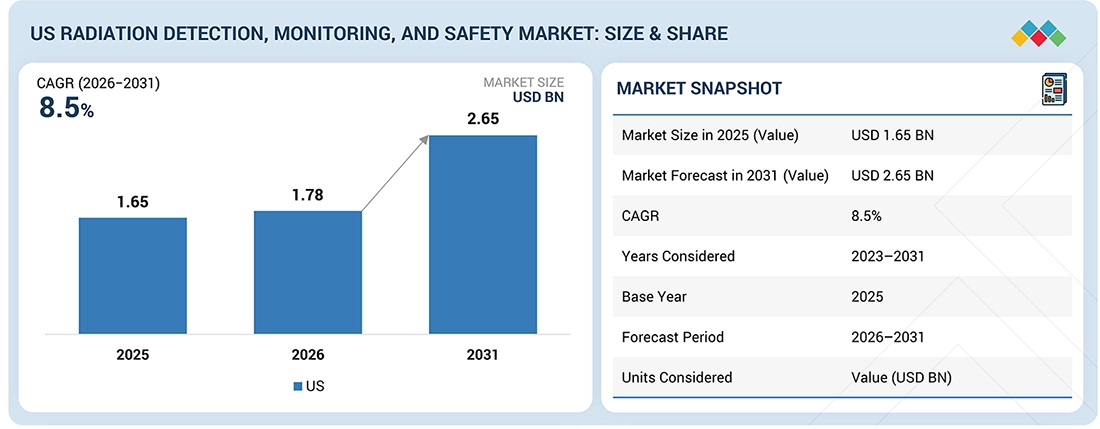
The US Radiation Detection, Monitoring, and Safety market, valued at USD 1.65 billion in 2025, stood at USD 1.78 billion in 2026 and is projected to advance at a resilient CAGR of 8.5% from 2026 to 2031, culminating in a forecasted valuation of USD 2.65 billion by the end of the period. The US market for radiation detection, monitoring, and safety is currently experiencing growth. The increased use of radiation in medical diagnostics, nuclear energy, and various industrial applications is heightening the need for precise monitoring. Additionally, the rising security threat of nuclear attacks is driving demand for enhanced border security and the protection of critical infrastructure.
KEY TAKEAWAYS
-
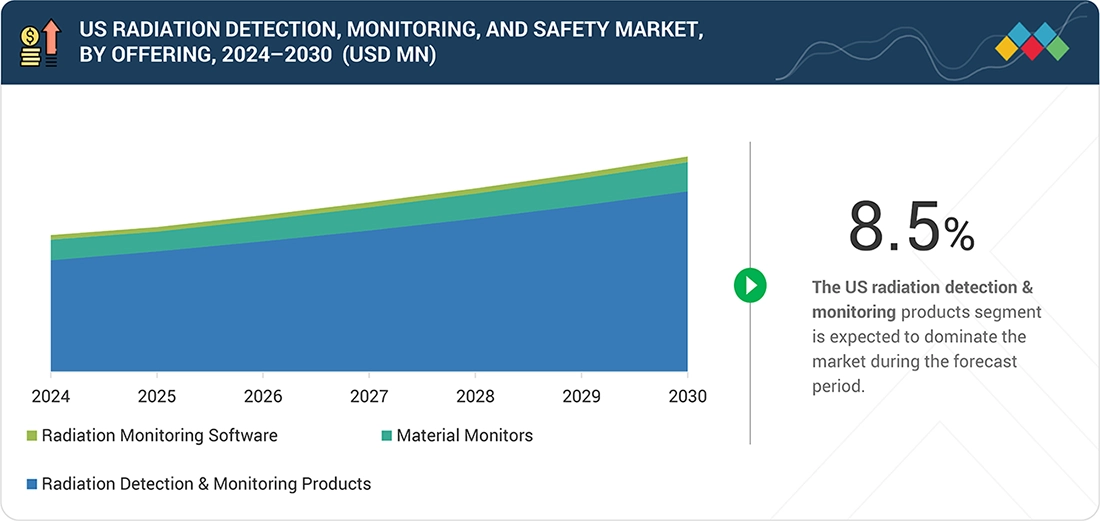
BY PRODUCTBy product, the US radiation detection and monitoring products segment is expected to register the highest CAGR of 8.5% during the forecast period.
-
BY COMPONENTBy component, the gas-filled detectors segment held a 65% share of the US radiation detection, monitoring, and safety market.
-
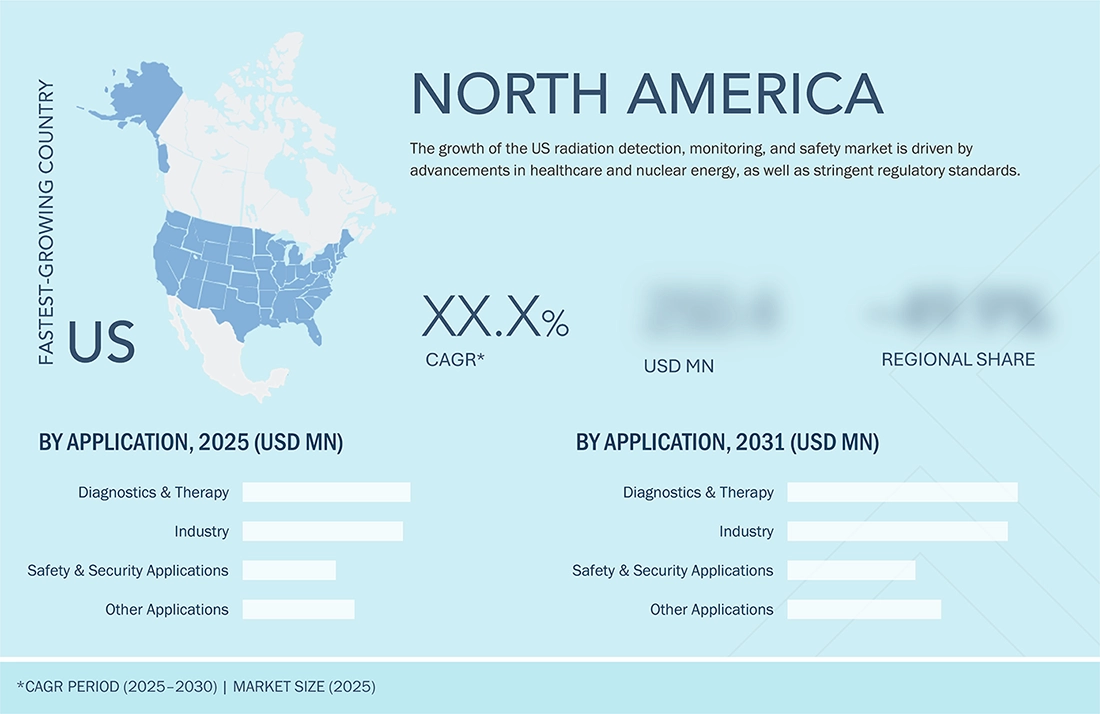
BY APPLICATIONBy application, the diagnostics & therapy segment is expected to register the highest CAGR of 9.0% during the forecast period.
-
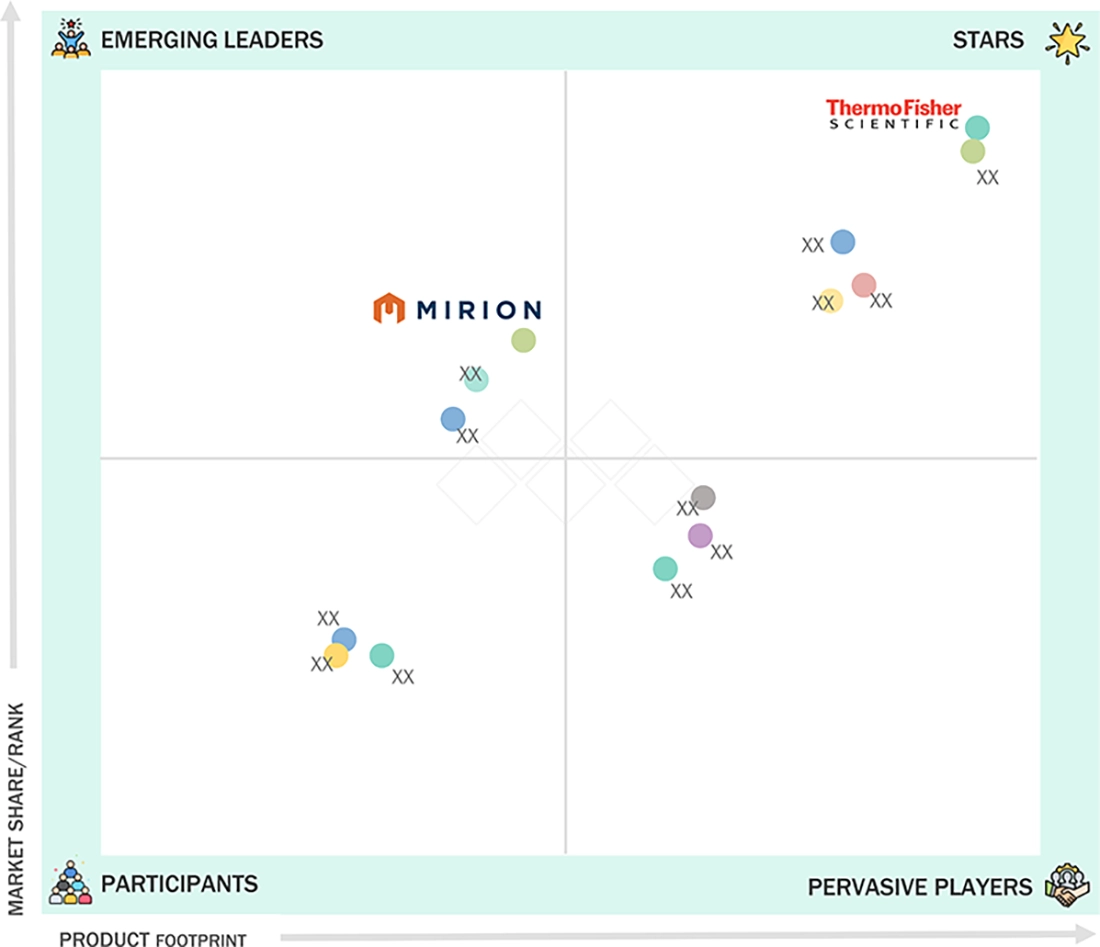
Competitive LandscapeCompanies such as Thermo Fisher Scientific Inc. (US), Fortive (US), and Mirion Technologies Inc. (US) were identified as some of the star players in the US radiation detection, monitoring, and safety market, given their strong market share and product footprint.
-
Competitive LandscapeCompanies such as Bertin Technologies (France) and Arrow-Tech Inc. (US), among others, have distinguished themselves among startups and SMEs by securing strong footholds in specialized niche areas, underscoring their potential as emerging market leaders.
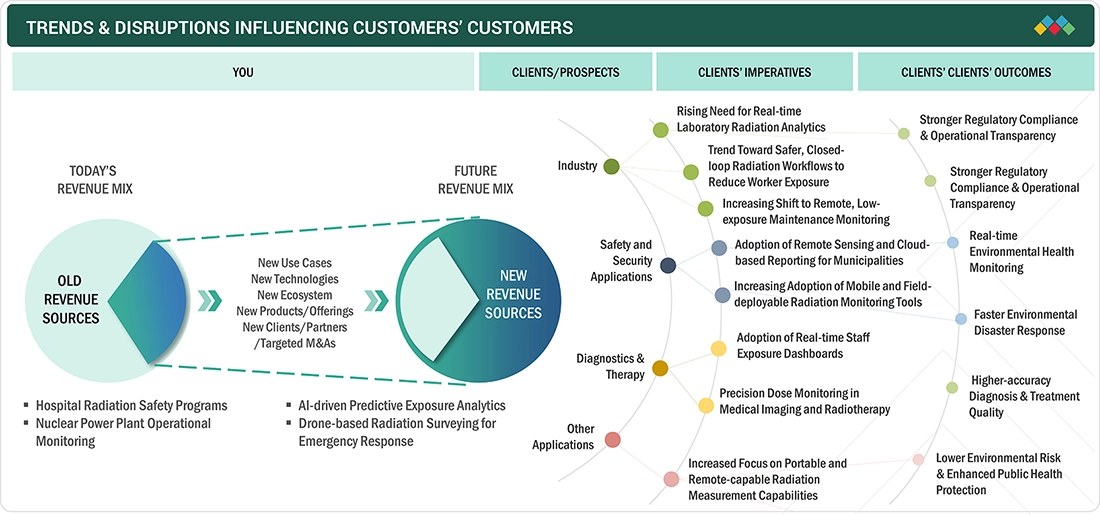
The radiation detection, monitoring, and safety market in US is rapidly growing, driven by increasing applications in medical imaging, nuclear energy, and various industrial sectors. Heightened concerns about nuclear threats are fueling demand for enhanced security measures in border control and other critical infrastructure. A significant transformation is underway, with AI-driven detection systems providing real-time monitoring, anomaly detection, and greater accuracy in high-risk environments. Additionally, next-generation personal dosimeters and remote monitoring technologies are becoming increasingly essential, as they enable more sophisticated exposure tracking, thereby improving safety in hazardous and hard-to-access locations.
TRENDS & DISRUPTIONS IMPACTING CUSTOMERS' CUSTOMERS
The US radiation detection, monitoring, and safety market is experiencing significant growth. This is driven by increased installation of personal dosimeters, area and environmental radiation monitors, surface contamination monitors, and monitoring systems for radioactive materials across sectors such as healthcare, nuclear power, and homeland security. A growing emphasis on worker safety is driving demand for advanced radiation protection products, including full-body protective gear, lead and lead-free aprons, and specialized face and hand safety equipment. Additionally, increased investments in nuclear facilities and medical imaging centers are boosting the adoption of lead-lined shielding walls and other radiation shielding solutions. Moreover, AI-enabled radiation monitoring software is improving real-time exposure tracking, providing automated alerts, and ensuring regulatory compliance.
Source: Secondary Research, Interviews with Experts, MarketsandMarkets Analysis
MARKET DYNAMICS

Level
-
Growing number of PET/CT scans

-
Increasing safety awareness among people working in radiation-prone environments


Level
-
Increasing use of alternatives for nuclear energy

-
Shift in nuclear energy policies and increased nuclear phase-out


Level
-
Technological advancements in radiation detection

-
Development of UAV-based gamma and neutron detection systems for large-area Radiation mapping


Level
-
Shortage of workforce and skilled professionals in nuclear power industry

-
Cybersecurity risks in connected radiation monitoring systems with growing adoption of cloud-based, IoT-enabled radiation monitoring platforms

Source: Secondary Research, Interviews with Experts, MarketsandMarkets Analysis
Driver: Increasing safety awareness among people working in radiation-prone environments
The growing awareness of radiation safety among professionals working in environments vulnerable to radiation is a significant driver of the US radiation detection, monitoring, and safety market. A 2024 study found that many medical practitioners have a limited understanding of radiation effects, suggesting that effective training and monitoring could improve their awareness. In response, government and regulatory bodies, such as the National Council on Radiation Protection and Measurement, have strengthened their policies and protocols to enhance radiation safety, leading to increased use of radiation monitoring and safety devices. Additionally, an article published in June 2024 emphasized that advancements in technology, including VR and AR devices and radiation monitoring devices, improve emergency preparedness and heighten awareness of radiation safety.
Restraint: Increasing use of alternatives for nuclear energy
The rapid shift toward renewable energy is likely to significantly hinder the growth of the radiation detection, monitoring, and safety market. Concerns about nuclear accidents, radioactive waste disposal, and the long-term health effects on the population have prompted governments to reduce their reliance on nuclear power and increase investments in clean energy sources such as solar, wind, hydro, and biomass. This trend is evident in the US power mix, where nuclear power accounts for only 18% of electricity production, while natural gas contributes 39%, and renewable sources are gradually gaining traction. As countries increasingly favor safer and more sustainable energy options, the reduced expansion of nuclear power directly limits the demand for radiation detection and safety systems.
Opportunity: Technological advancements in radiation detection
Technological innovations in radiation detection are positively impacting sectors such as medicine, homeland security, the military, and nuclear power generation. A significant milestone was achieved in 2024 with the successful application of Convolutional Neural Networks (CNNs) for detecting nuclear radiation in public areas. This success is attributed to CNNs' ability to perform real-time inspections of dynamic images, enabling faster detection of radiation. The utilization of video sequences to identify objects near radioactive sources has proven highly effective.
Challenge: Shortage of workforce and skilled professionals in nuclear power industry
Both nuclear power and radiation protection are facing a significant shortage of skilled professionals, particularly in the US and Canada, but this issue is also prevalent in many developed and developing nations. The US, for instance, continues to struggle with a declining supply of qualified medical physicists and radiation protection specialists. This is mainly due to a lack of accredited training programs and non-standardized educational standards related to radiation medicine. A report from the Institute of Alternative Futures (IAF) supports this concern, highlighting a steady decline in trained professionals in the field, a trend that is corroborated by findings from the United States Environmental Protection Agency. The shortage of qualified individuals is particularly problematic given the growing operational demands for nuclear energy and radiation-based medical applications. This scarcity poses a significant challenge to the industry.
US RADIATION DETECTION, MONITORING, AND SAFETY MARKET: COMMERCIAL USE CASES ACROSS INDUSTRIES
| COMPANY | USE CASE DESCRIPTION | BENEFITS |
|---|---|---|
 |
Introduction of the Thermo Scientific NetDose Pro digital dosimeter, a wearable device intended to inform the wearer about their real-time radiation exposure | Enables continuous radiation monitoring, improves worker safety through real-time dose tracking, and supports digital radiation safety programs |
 |
The launch of InstadoseVUE Personal Dosimeter, where users can get personalized radiation dose readings on demand and virtually anywhere | Enhances individual radiation exposure management and improves portability and supports instant access to dose data for faster safety decisions |
 |
Introduction of the new SaphyRAD C survey meter, designed for the monitoring of Alpha and Beta Surface Contaminations in harsh and demanding conditions | Enables reliable contamination detection in extreme conditions, improves environmental and occupational safety, and strengthens emergency response capabilities |
 |
Launching XENOLITE 800 NL, a lead-free, Super Lightweight, flexible, and Recyclable, material for X-ray radiation protection | Improves user comfort, reduces physical strain, supports sustainability goals, and enhances radiation protection for medical professionals |
Logos and trademarks shown above are the property of their respective owners. Their use here is for informational and illustrative purposes only.
MARKET ECOSYSTEM
The US radiation detection, monitoring, and safety market comprises a network of interconnected components and entities that form a cohesive ecosystem. Key participants in this landscape include manufacturers of radiation detection devices, providers of radiation protection and shielding, and developers of radiation monitoring software. Additionally, a diverse range of end users spans industrial applications, safety and security measures, and diagnostics and therapy. The market is organized by product categories, which encompass various types of hardware. This includes personal radiation detectors (both active and passive), area process monitors, environmental monitors, and material monitoring devices, such as radioactive material monitors. Furthermore, the market offers different forms of direct hardware protection, including full-body suits, face shields, and hand protection, alongside lead-lined radiation shielding products like shielding walls. Emerging technology platforms featuring radiation monitoring software enable real-time information acquisition, detection, warnings, tracking, reporting, and optimization. On the demand side, various sectors contribute to market growth due to stringent regulations and guidelines concerning safe radiation usage. This includes nuclear power facilities, manufacturing industries, organizations involved in radionuclide production, environmental monitoring authorities, homeland security and defense agencies, hospitals, and forensic laboratories. Strong collaboration and relationships among market stakeholders are crucial for improving detection accuracy and enhancing overall market growth.
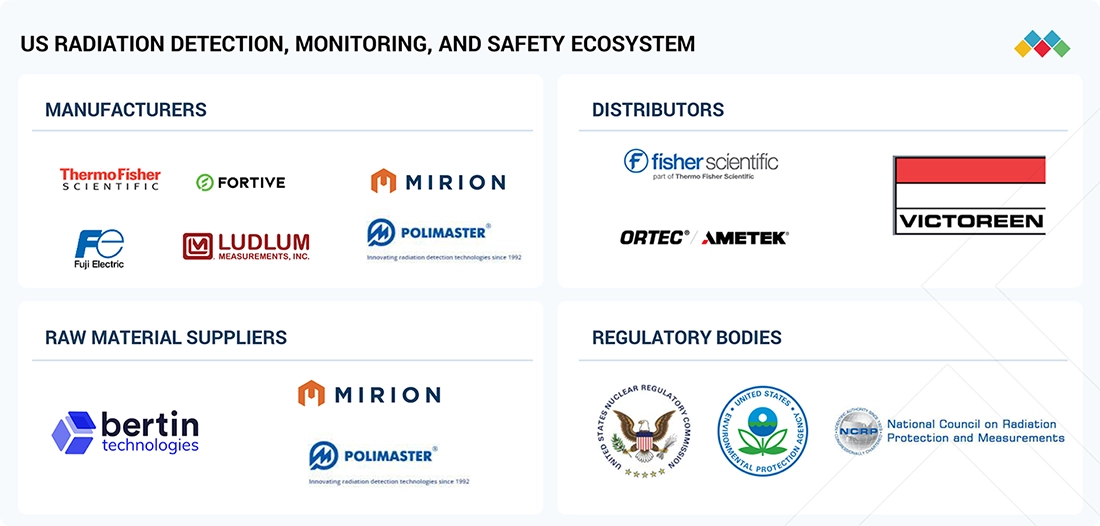
Logos and trademarks shown above are the property of their respective owners. Their use here is for informational and illustrative purposes only.
MARKET SEGMENTS
Source: Secondary Research, Interviews with Experts, MarketsandMarkets Analysis
US Radiation Detection, Monitoring, and Safety Market, by Product
Based on product, the US radiation detection, monitoring, and safety market is segmented into radiation detection and monitoring products, material monitors, radiation protection products, radiation shielding products, and radiation monitoring software. The radiation detection and monitoring products segment accounted for the largest share of the US market, primarily due to its crucial role in detecting, locating, identifying, and assessing radioactivity in any situation. This segment offers the most advanced and sensitive detection capabilities, ensuring safety by utilizing highly effective detectors. These detectors enable simultaneous monitoring of radioactivity at both micro and macro levels across sectors that require protection against radiation risks. The ability to provide real-time data tailored to safety needs, along with immediate intelligence in hazardous situations, makes radiation detection and monitoring the most widely used segment in the US market.
US Radiation Detection, Monitoring, and Safety Market, by Component
Based on component, the US radiation detection, monitoring, and safety market can be divided into gas-filled detectors, solid-state detectors, and scintillators. Gas-filled detectors hold the largest share of the market due to their reliability, cost-effectiveness, and extensive deployment across high-priority applications in nuclear power plants, healthcare, industrial sites, and homeland security & defense. These work on a rather simple and robust principle: measurement of electron-ion pairs produced when radiation ionizes gas.
US Radiation Detection, Monitoring, and Safety Market, by Gas-filled Detector Type
The Geiger-Mueller (GM) detectors segment accounted for the largest share of the US market, offering an unmatched combination of robustness, mobility, sensitivity, and cost-effectiveness across defense, homeland security, medicine, and major industries. These detectors are primarily used for border surveillance, port and cargo monitoring, embassy protection, regulatory agency oversight, and workplace safety. GM detectors can detect all types of radioactive particles, including alpha, beta, gamma, X-ray, and even neutrons, making them the most versatile radiation detection system available. Additionally, they have a significant presence in both clinical medicine and industry for monitoring radioactive contaminants and dosage rates. Despite some limitations in discrimination capability and radiation rate measurement, these detectors have established a strong foothold in the US market.
US Radiation Detection, Monitoring, and Safety Market, by Application
Based on application, the diagnostics and therapy segment contributes the largest share of the US market. This is largely due to their widespread adoption and availability for monitoring and detecting radiation exposure, as well as for dosage delivery through imaging and therapy equipment, such as CT, PET, and SPECT scans, and radiation therapy used to treat cancer and cardiovascular diseases. Additionally, the increasing incidence of chronic conditions like cancer and cardiovascular diseases has heightened reliance on these devices for effective treatment and management. This trend has consequently led to a greater demand for radiation safety and monitoring equipment.
REGION
Growth Outlook of US Radiation Detection, Monitoring, and Safety Market
The US market for radiation detection, monitoring, and safety is experiencing growth for several key reasons. One significant factor is the growing importance of this sector, driven by the expansion of the nuclear industry and the aging population in the US. By 2034, the population aged 65 and older is projected to reach nearly 77 million, with an expected 60% of this demographic facing multiple coexisting chronic diseases by 2030. This situation presents substantial opportunities for radiography in healthcare, while also underscoring the need for radiation safety devices. Moreover, the US is the largest producer of nuclear-powered electricity, supplying over 30% of the world's total. Currently, 94 nuclear reactors are in operation, and this number is anticipated to increase in both quantity and capacity over the next decade. Strong federal funding also supports the growth of this market, highlighted by the USD 1.6 billion budget allocation from the Department of Energy (DOE) for nuclear energy in fiscal year 2025, aimed at advancing reactor technologies and AI-based monitoring systems. Other contributing factors to the market's dominance include the rising incidence of cancer, heightened internal security and border vigilance, an increasing emphasis on nuclear energy, and a robust presence of major market players.
US RADIATION DETECTION, MONITORING, AND SAFETY MARKET: COMPANY EVALUATION MATRIX
In the US market landscape, Thermo Fisher Scientific Inc. (Star) holds a dominant position. This is primarily due to its extensive range of radiological detection systems (RDS) and radiation monitoring measurement (RMM) equipment available across various business divisions within its Analytical segment, particularly in its Clinical Analytics (CA) and Food Safety and Inspection (FSI) businesses. On the other hand, Ludlum Measurements is recognized as a leading "Pervasive Player" in the industry. The company serves a wide array of sectors with its comprehensive range of RDS and measurement equipment for health physics, medical physics, and industrial applications. This broad scope of business engagements has significantly strengthened Ludlum's long-term customer base in the RDS market.
Source: Secondary Research, Interviews with Experts, MarketsandMarkets Analysis
KEY MARKET PLAYERS
- Fortive Corporation (US)
- Mirion Technologies, Inc. (US)
- AMETEK, Inc. (US)
- Thermo Fisher Scientific Inc. (US)
- Fuji Electric Co., Ltd. (Japan)
- Ludlum Measurements Inc. (US)
- Arktis Radiation Detectors Ltd. (Switzerland)
- Polimaster Europe UAB (Lithuania)
- AMRay, Inc. (US)
- INFAB, LLC (US)
- IBA Worldwide (Belgium)
- Centronic Ltd. (UK)
- Micron Technology, Inc. (US)
- Alpha Spectra, Inc. (US)
- Bertin Technologies (France)
- Arrow-Tech Inc. (US)
- ATOMTEX (Belarus)
- S.E. International, Inc. (US)
- Nucleonix Systems (India)
- LND, Inc. (US)
- Bar-Ray Products, Inc. (US)
- Trivitron Healthcare (India)
- Fluke Biomedical (US)
- Radiation Detection Company, Inc. (US)
MARKET SCOPE
| REPORT METRIC | DETAILS |
|---|---|
| Market Size in 2025 (Value) | USD 1.65 Billion |
| Market Forecast in 2031 (Value) | USD 2.65 Billion |
| Growth Rate | CAGR of 8.5% from 2026–2031 |
| Years Considered | 2023–2031 |
| Base Year | 2025 |
| Forecast Period | 2026–2031 |
| Units Considered | Value (USD Billion), Volume (Units Installed) |
| Report Coverage | Revenue Forecast, Company Ranking, Competitive Landscape, Growth Factors, and Trends |
| Segments Covered |
|
| Countries Covered | US |
| Parent & Related Segment Reports |
Radiation Detection Monitoring Safety Market Asia-Pacific radiation detection monitoring safety market European radiation detection monitoring safety market Radiation Detection and Monitoring Market Radiation detectors market |
WHAT IS IN IT FOR YOU: US RADIATION DETECTION, MONITORING, AND SAFETY MARKET REPORT CONTENT GUIDE
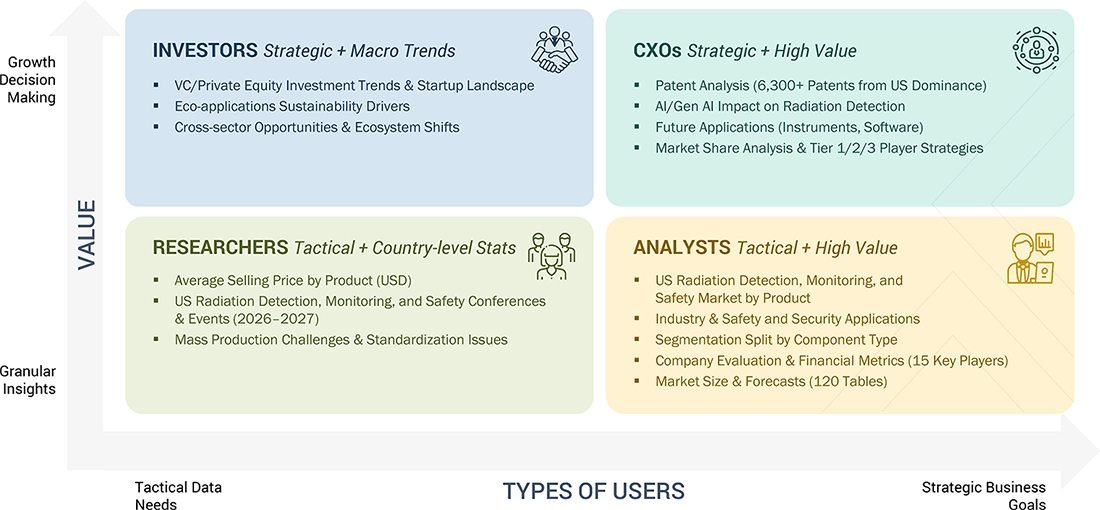
DELIVERED CUSTOMIZATIONS
We have successfully delivered the following deep-dive customizations:
| CLIENT REQUEST | CUSTOMIZATION DELIVERED | VALUE ADDS |
|---|---|---|
| Radiation Detection & Monitoring Product Manufacturers | Competitive benchmarking of personal dosimeters, passive & active, area process monitors, environmental radiation monitors, surface contamination monitors, material monitors, as well as radiation protection & shielding products in the US market | Product Portfolio - Differentiation Analysis in healthcare, nuclear, homeland security, and industrial safety segments |
| Hospitals, Nuclear Power Plants, & Industrial End Users | Workflow benchmarking for radiation safety in healthcare imaging & therapy, nuclear facilities, radionuclide handling units, manufacturing plants, etc. | Evaluation of radiation monitoring software, dosimetry, and shielding solutions |
| Government Agencies, Homeland Security, & Environmental Authorities | Analysis of the Regulatory Alignment Standards for the NRC, DHS, EPA, and Occupational Radiation | Mapping of adoption of radiation detection technology usage in border security, cargo inspection, emergency response, and environmental surveillance |
RECENT DEVELOPMENTS
- February 2025 : IBA Worldwide (US) and Framatome (France) signed a strategic MoU to advance the industrial-scale production of Astatine-211, an alpha-emitting radioisotope, across Europe and the US.
- November 2024 : IBA Worldwide (US) won an order from BENEBION of Mexico, to deliver one Rhodotron TT1000 for the sterilization of medical devices and the irradiation for phytosanitary treatments to be installed at the new irradiation site in San Luis Potosí, Mexico.
- May 2024 : Mirion Technologies, Inc. (US) joined forces with the Canadian Nuclear Isotope Council in furthering educational efforts regarding the importance of radiation safety in all facets of the nuclear medicine supply chain.
Table of Contents
 Exclusive indicates content/data unique to MarketsandMarkets and not available with any competitors.
Methodology
The study has used primary and secondary sources the research involved investigating different factors influencing the industry to examine segmentation types, industry trends, key players, competitive landscape, key market dynamics, and key player approaches.
Secondary Research
Secondary research extensively uses secondary sources such as directories, databases (e.g., Bloomberg Businessweek, D&B Hoovers, Factiva), white papers, annual reports, company house documents, investor presentations, and SEC filings attached to companies. The secondary research assistance is used to source and collate general and technical data related to the market study and commercial analysis of the US radiation detection, monitoring & safety market. It also acquired vital data relating to the key players, market taxonomy, and segmentation per industry trend as far as the base level and key developments related to market and technology perspectives. Secondary research has also prepared a database of key industry leaders.
Primary Research
Varied sources from the supply and demand sides have been interviewed in the primary research process to gather qualitative and quantitative information for this report. Supply-side primary sources include industry experts such as CEOs, vice presidents, marketing and sales directors, technology and innovation directors, and other major executives from various key companies and organizations in product therapy markets. Some primary sources on the demand side include medical OEMs, analytical instrument OEMs, CDMOs, and other service providers. The purpose of primary research is to validate the market segmentation, discover major players in the market, and gain insight into key industry trends and key market dynamics.
Market Estimation Methodology
The market size for US radiation detection, monitoring & safety is determined in this report based on revenue estimates of significant market players. The scope included identifying the major players and determining their revenues from the market business through several insights gathered from the primary and secondary research phases. Secondary research involved looking into the annual and financial reports of leading players in the market. Primary research includes interviews with key opinion leaders such as CEOs, directors, and marketing executives.
This process calculated segmental revenues to arrive at the market value using revenue mappings from major solution/service providers. This process involved the following steps:
- Establishing a list of major players in the environmental testing products market.
- Mapping the annual revenues from the environmental testing products market (or nearest reported business unit/product category) generated from the major players.
- Revenue mapping of key players to cover a major market share as of 2023.
- Extrapolating the market value of the US radiation detection, monitoring & safety market.
Data Triangulation
After deriving the total market size from the aforementioned sizing process, the US radiation detection, monitoring & safety market was subdivided into segments and subsegments. Data triangulation and market breakdown methodologies were employed to complete the market engineering process and to derive the exact market numbers for all segments and subsegments. The data was triangulated by analyzing several parameters and trends, including demand and supply. In addition, the US radiation detection, monitoring & safety market was validated via combined top-down and bottom-up approaches.
Market Definition
Radiation detection, monitoring & safety includes technologies and devices for measuring and protecting against harmful radiation across various industries, such as healthcare, nuclear power, defense, and environmental monitoring. Key products include radiation detectors, dosimeters, area monitors, and safety equipment that ensure regulatory compliance and safety for workers, patients, and the public. Market growth is driven by the rising use of radiation in medical imaging, advancements in nuclear energy, concerns about nuclear threats, and strict regulations. Innovations in real-time radiation monitoring and AI-based detection further propel this market forward.
Stakeholders
- Manufacturers and distributors of radiation detection, monitoring, and safety detectors & monitors
- Healthcare institutions
- Research institutions
- Research and consulting firms
- Medical device suppliers, distributors, channel partners, and third-party suppliers
- Clinicians and healthcare professionals
- Global and national health agencies
- Academic medical centers and universities
- Contract research organizations (CROs) and contract manufacturing organizations (CMOs)
- Academic medical centers and universities
- Market research and consulting firms
- Clinical research organizations
- Group Purchasing Organizations (GPOs)
- Academic Medical Centers and Universities
- Accountable Care Organizations (ACOs)
Report Objectives
- To define, describe, and forecast the US radiation detection, monitoring & safety market on product, composition, and application.
- To provide detailed information regarding the major factors influencing the market growth (such as drivers, restraints, opportunities, and challenges)
- To strategically analyze the micromarkets concerning individual growth trends, prospects, and contributions to the total market.
- To analyze the opportunities in the market for stakeholders and provide details of the competitive landscape for market leaders.
- To profile the key market players and comprehensively analyze their market shares and core competencies.
- To track and analyze competitive developments such as new product launches and approvals; agreements, partnerships, expansions, acquisitions; and collaborations in the US radiation detection, monitoring & safety market
Available Customizations
With the given market data, MarketsandMarkets offers customizations to meet the company’s specific needs. The following customization options are available for the present global environmental testing products market.
Product Analysis
- Product matrix, which gives a detailed comparison of the product portfolios of the top eleven companies.
Geographic Analysis as per Feasibility
- Further breakdown of the Rest of European radiation detection, monitoring & safety market into Russia, Belgium, the Netherlands, Switzerland, Austria, Finland, Sweden, Poland, Portugal, and other Rest of European countries
- Further breakdown of the Rest of Asia Pacific radiation detection, monitoring & safety market Singapore, Taiwan, New Zealand, the Philippines, Malaysia, and other Rest of Asia Pacific countries
- Further breakdown of the Rest of the World radiation detection, monitoring & safety market Latin America, the Middle East, and Africa
Company Information
- Detailed analysis and profiling of additional market players (up to 11)


Personalize This Research
- Triangulate with your Own Data
- Get Data as per your Format and Definition
- Gain a Deeper Dive on a Specific Application, Geography, Customer or Competitor
- Any level of Personalization
Let Us Help You
- What are the Known and Unknown Adjacencies Impacting the US Radiation Detection, Monitoring, and Safety Market
- What will your New Revenue Sources be?
- Who will be your Top Customer; what will make them switch?
- Defend your Market Share or Win Competitors
- Get a Scorecard for Target Partners

Custom Market Research Services
We Will Customise The Research For You, In Case The Report Listed Above Does Not Meet With Your Requirements
Get 10% Free CustomisationTESTIMONIALS

JAYANT RAJPUROHIT
Director of Market Insights, Data and Analytics
SFI Health,
Leading Pharmaceutical Companywww.sfihealth.com/
We at SFI Health approached MarketsandMarkets for an Opportunity Assessment on "Incidence and Prevalence of Focus Indications" as we wanted to know the most attractive HCPs like Physician, Functional MD, Naturopath and Pharmacist. The project was critical for us to ensure our focus on the right target which would enable sustainable growth and profitability for SFI Health. The business insights provided exceeded our expectations and we were extremely impressed. The team at MarketsandMarkets is highly professional and detail oriented and very well understood our business needs. MarketsandMarkets offers a unique combination of expertise and dedicated engagement model. We identified 2 new products to be launched in coming months, based on the research findings provided by MarketsandMarkets. We are happy with the services and would strongly recommend MarketsandMarkets to my peers in the industry.

BEATRIZ DE LA CALLE
Head of Commercial Analytics
Qualicaps,
Leading Pharmaceutical Companywww.qualicaps.com/

We partnered with MarketsandMarkets for an assessment study on hard empty capsules. The team was extremely professional in understanding our business requirements and we received timely responses to all our queries. The market intelligence and the recommendations has met our business requirements. We were extremely impressed to see the final study results; it really exceeded our expectations. The market intelligence offered by MarketsandMarkets, and clarity on next steps will help us achieve our business objective for the Year 2021. We are happy with the services and would strongly recommend MarketsandMarkets to my peers in the industry.

Bob Williams,
Senior Director Business Development & Innovation
Bracco Diagnostics Inc.,
Italian Multinational in life sciences sector and a World Leader in imaging diagnosticsimaging.bracco.com/us-en
We were pleased with targeted insights that MarketsandMarkets identified from a custom study on the 'Radiation Dose Management Solutions Market'. Your team identified and characterized the market participants as well as underlying trends accurately. This study was useful to Bracco in formulating business strategies for our dose monitoring product lines and we thank MarketsandMarkets for the job well done.
Cody Coonradt,
Market Development and Strategy Manager
3M Health Information Systems,
Leader in Health care Coding, Payment & Analytics Solutions.www.3m.com/3M/en_US/health-information-systems-us
The value for our organization comes from three things: depth of research, specificity of segments and being easy to work with. As important as the first two are, the third can't be underestimated. MarketsandMarkets, maybe more than any other research vendor, wants to know what is top of mind for our team and what big questions we are grappling to answer.
Their customer first approach and high value engagement model, have given us great analysis and excellent value for money






Growth opportunities and latent adjacency in US Radiation Detection, Monitoring, and Safety Market