Radiotherapy Market

Radiotherapy Market by Technology (EBRT: LINAC, Stereotactic, Particle; Internal Beam/Brachytherapy, Cobalt-60 Teletherapy), Procedure (IGRT, IMRT, 3D-CRT, LDR, PDR), Cancer (Prostate, Lung, Breast, CRC), End User (Hospital, IRC) - Global Forecast to 2031



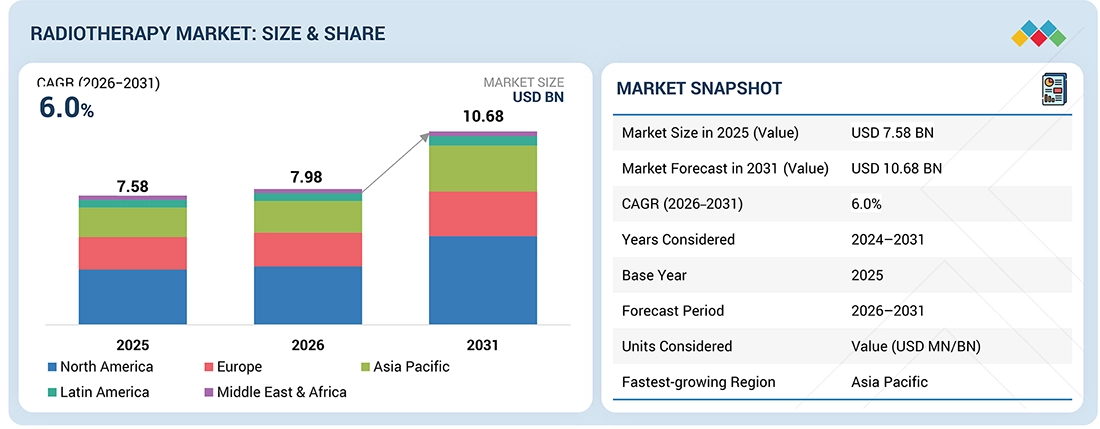
RADIOTHERAPY MARKET SIZE, SHARE & GROWTH SNAPSHOT
Source: Secondary Research, Interviews with Experts, MarketsandMarkets Analysis
The global radiotherapy market is projected to grow from USD 7.98 billion in 2026 to USD 10.68 billion by 2031, at a CAGR of 6.0% during the forecast period. The market was valued at USD 7.58 billion in 2025. The growth of the radiotherapy market is driven by several factors, including the rising global incidence of cancer, increased spending on healthcare facilities, and growing demand for precision oncology treatments. The rapid adoption of innovative applications such as proton beam therapy, adaptive radiotherapy, stereotactic radiosurgery, and artificial intelligence-based treatment planning is improving the accuracy of tumor treatment while minimizing damage to surrounding tissues.
KEY TAKEAWAYS
-
MARKET SNAPSHOT:
Base Year Market Size (2025): USD 7.58 Billion
Current Market Size (2026): USD 7.98 Billion
Forecast Market Size (2031): USD 10.68 Billion
CAGR (2026–2031): 6.0% -
SEGMENT LEADERSHIP:
Regional Outlook: Asia Pacific is projected to witness the highest CAGR of 7.1% during the forecast period.
Offering Leader: Systems segment accounted for the largest market share of 55.5% in 2025.
Technology Leader: External beam radiotherapy segment is expected to register the highest CAGR of 5.7% during the forecast period.
Application Leader: EBRT applications segment dominated the market with a share of 96.0% in 2025.
Procedure Leader: External beam radiotherapy procedures segment accounted for the largest market share of 96.0% in 2025.
End User Leader: Hospitals segment is projected to grow at the fastest rate of 5.7% from 2026 to 2031. -
MARKET OUTLOOK & COMPETITIVE LANDSCAPE:
Siemens Healthineers AG (Varian Medical Systems, Inc.) (Germany), Elekta (Sweden), Accuray Incorporated (US), IBA Worldwide (Belgium), and ViewRay, Inc. (US) are identified as star players in the radiotherapy market, given their strong global market presence, extensive portfolios, advanced R&D capabilities, and well-established distribution networks across developed and emerging regions.
Brainlab AG (Germany) and BEBIG Medical (Germany) are among the successful startups and SMEs offering specialized radiotherapy solutions and strengthening their positions in niche segments.
The growth of the radiotherapy market is driven by several factors, including the rising global incidence of cancer, increased healthcare spending, and a growing demand for precision oncology treatments. The rapid adoption of advanced applications such as proton beam therapy, adaptive radiotherapy, stereotactic radiosurgery, and artificial intelligence-based treatment planning is improving the accuracy of tumor treatment while minimizing damage to surrounding tissues.
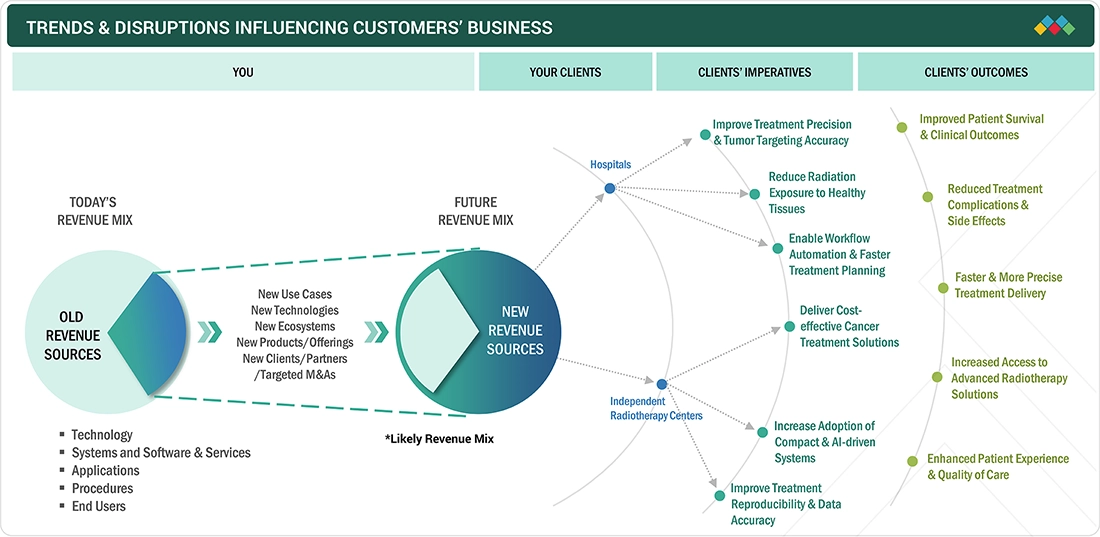
TRENDS & DISRUPTIONS IMPACTING CUSTOMERS' CUSTOMERS
Several technological developments and trends are likely to significantly impact the radiotherapy market. Key advancements include sophisticated technologies such as Linear Accelerators (LINACs), proton therapy systems, MRI-guided radiotherapy systems, and stereotactic radiotherapy systems. Additionally, innovations such as artificial intelligence-based treatment-planning solutions, workflow optimization tools, and real-time tumor-tracking systems are expected to shape the market's future. The primary goal of these technological advancements is to enhance the efficacy of radiotherapy procedures. Recently, hypofractionated radiotherapy and image-guided treatment procedures have gained increasing popularity.
Source: Secondary Research, Interviews with Experts, MarketsandMarkets Analysis
MARKET DYNAMICS

Level
-
Advancements in radiotherapy treatments

-
Increasing use of advanced applications, including adaptive radiotherapy, stereotactic body radiation therapy (SBRT), and MRI-guided radiotherapy


Level
-
Limited access to advanced radiotherapy facilities in low- and middle-income countries

-
Shortage of skilled radiation oncologists, medical physicists, and trained technicians


Level
-
Emerging markets offering significant growth potential for radiotherapy technologies

-
AI-based treatment planning, automated contouring, and adaptive radiotherapy


Level
-
Regulatory complexity and lengthy approval timelines for advanced radiotherapy technologies

-
Managing treatment accuracy for moving tumors through real-time imaging and motion tracking

Source: Secondary Research, Interviews with Experts, MarketsandMarkets Analysis
Driver: Advancements in radiotherapy treatments
Technological advancements in radiotherapy have become a key factor driving the growth of the radiotherapy market. The increasing adoption of advanced treatment technologies, such as intensity-modulated radiation therapy (IMRT), stereotactic body radiation therapy (SBRT), MRI-guided linear accelerators (MRI-guided LINACs), adaptive radiotherapy, and AI-based treatment planning software, is significantly improving the precision of radiation doses, the accuracy of tumor targeting, and overall treatment efficiency while minimizing exposure to surrounding healthy tissues. Furthermore, the shift from conventional 2D radiotherapy to real-time image-guided and 3D conformal radiotherapy systems is enhancing clinical outcomes and broadening the applications of radiotherapy across hospitals and cancer care centers. Recent innovations, including AI-powered adaptive CT-LINAC systems, robotic radiosurgery platforms, and real-time motion tracking technologies, are further accelerating the global adoption of advanced radiotherapy solutions.
Restraint: Limited access to advanced radiotherapy facilities in low- and middle-income countries
Limited access to advanced radiotherapy facilities in low- and middle-income countries poses a significant barrier to the radiotherapy market. This issue stems from inadequate healthcare infrastructure, a shortage of skilled oncology professionals, and the high costs associated with advanced radiotherapy systems. Many healthcare facilities in emerging regions struggle to adopt technologies such as proton therapy, MRI-guided radiotherapy, and adaptive radiotherapy due to limited funding and insufficient reimbursement support. Additionally, the uneven distribution of cancer care centers and the delayed installation of advanced treatment systems continue to hinder patient access to precision oncology services. However, emerging trends like compact linear accelerator systems, AI-assisted treatment planning, cloud-based oncology workflows, and mobile radiotherapy solutions are expected to gradually enhance accessibility and operational efficiency in underserved regions.
Opportunity: Emerging markets offering significant growth potential for radiotherapy technologies
Emerging economies offer significant growth opportunities for the radiotherapy market due to the rising prevalence of cancer, improved healthcare infrastructure, and increased investments in oncology care in countries such as China, India, Brazil, and Mexico. Governments in these regions are boosting healthcare spending and enhancing access to advanced cancer treatment technologies. It is projected that government health expenditures will grow by 14% in low-income countries (LICs) and 17% in lower-middle-income countries (LMICs) between 2024 and 2030, which will support the expansion of radiotherapy infrastructure and oncology services. Additionally, the rise of medical tourism, lower treatment costs compared to developed countries, and the increasing adoption of advanced technologies such as AI-enabled radiotherapy, CyberKnife radiosurgery, and proton therapy are creating further significant growth opportunities for the radiotherapy market in emerging economies.
Challenge: Regulatory complexity and lengthy approval timelines for advanced radiotherapy technologies
Regulatory complexity and lengthy approval timelines for advanced radiotherapy technologies pose significant challenges for the radiotherapy market. Advanced systems, such as proton therapy, MRI-guided radiotherapy, adaptive radiotherapy platforms, and AI-based treatment planning software, require extensive clinical validation, safety assessments, and adherence to stringent regulatory standards before they can be commercialized. Variations in regulatory frameworks across different regions further prolong approval timelines and delay the launch of products for market players. Additionally, evolving regulations concerning AI integration, radiation safety, and software interoperability create ongoing operational and compliance challenges for manufacturers developing next-generation radiotherapy solutions.
RADIOTHERAPY MARKET: COMMERCIAL USE CASES ACROSS INDUSTRIES
| COMPANY | USE CASE DESCRIPTION | BENEFITS |
|---|---|---|
 |
Provides Varian LINACs and AI-enabled adaptive radiotherapy solutions. | Improves treatment precision and adaptive workflow efficiency. |
 |
Offers MRI-guided and adaptive radiotherapy systems. | Enables real-time imaging and accurate tumor targeting. |
 |
Delivers CyberKnife and Radixact radiotherapy platforms. | Supports robotic radiosurgery and motion-tracked treatment delivery. |
 |
Provides proton therapy and particle therapy solutions. | Minimizes radiation exposure to surrounding healthy tissues. |
Logos and trademarks shown above are the property of their respective owners. Their use here is for informational and illustrative purposes only.
MARKET ECOSYSTEM
The stakeholders in the radiotherapy market include manufacturers of radiotherapy systems, providers of software and treatment planning solutions, component suppliers, distributors, hospitals, independent radiotherapy centers, and regulatory authorities. Companies in this market are focused on developing advanced radiotherapy systems, such as linear accelerators (LINACs), MRI-guided radiotherapy systems, particle therapy systems, brachytherapy solutions, and AI-enabled treatment planning platforms to enhance treatment precision and improve clinical outcomes. Suppliers and service providers contribute to the market by delivering consumables, software integration, installation, maintenance, and workflow optimization services. Hospitals and independent radiotherapy centers are the primary end users due to the growing demand for advanced cancer treatment procedures. Regulatory bodies, such as the US Food and Drug Administration (FDA) and the European Medicines Agency (EMA), ensure the safety, efficacy, and approval of innovative radiotherapy technologies. Key companies operating within the radiotherapy ecosystem include Siemens Healthineers AG (Germany), Elekta (Sweden), Accuray Incorporated (US), IBA Worldwide (Belgium), Brainlab AG (Germany), and BEBIG Medical (Germany).
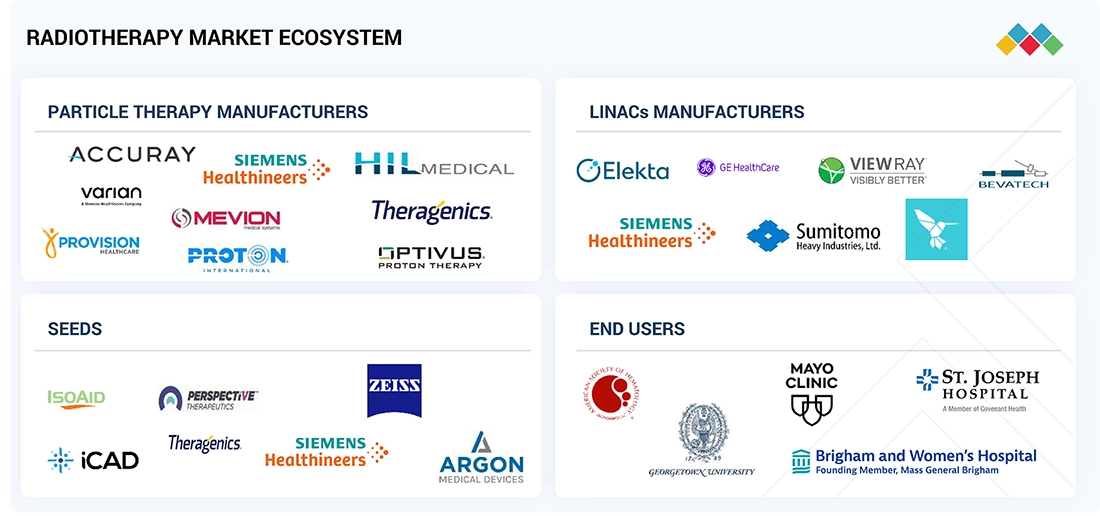
Logos and trademarks shown above are the property of their respective owners. Their use here is for informational and illustrative purposes only.
MARKET SEGMENTS
Source: Secondary Research, Interviews with Experts, MarketsandMarkets Analysis
RADIOTHERAPY MARKET, BY OFFERING
By offering, the radiotherapy market is divided into systems and software & services. The systems segment is expected to experience significant growth in the coming years due to the increasing popularity of technology-enabled radiotherapy equipment in developing countries and the rising number of manufacturers producing these advanced systems. This segment includes systems, consumables, probes, and applicators used in external beam radiation therapy and brachytherapy. Furthermore, the growing incidence of cancer, the increasing demand for precision radiotherapy, and ongoing advancements in technology are also contributing to the market's expansion.
RADIOTHERAPY MARKET, BY TECHNOLOGY
Based on technology, radiotherapy is segmented into external beam radiotherapy and internal beam radiotherapy/brachytherapy. The external beam radiotherapy segment is anticipated to have the largest market share among other segments during the forecast period, owing to its capability of providing highly accurate and precise tumor targeting without exposing adjacent healthy tissue to any unnecessary radiation. Growth in the adoption of more advanced procedures and increased demand for precision medicine are driving the growth of this segment.
RADIOTHERAPY MARKET, BY APPLICATION
By application, the radiotherapy market is segmented into external beam radiotherapy (EBRT) applications and internal beam radiotherapy (IBRT)/brachytherapy applications. During the forecast period, the external beam radiotherapy (EBRT) applications segment is poised to command the most substantial market share in the radiotherapy market. This dominance is fueled by the increasing adoption and efficacy of EBRT for new cancer types.
RADIOTHERAPY MARKET, BY PROCEDURE
By procedure, the radiotherapy market is segmented into external beam radiotherapy procedures and internal beam radiotherapy/brachytherapy procedures. The external beam radiotherapy procedures segment is estimated to dominate the radiotherapy market during the forecast period, owing to the non-invasive nature of this procedure, high degree of accuracy, low radiation exposure to nearby healthy cells, and increasing adoption of advanced technology-based devices. The rising requirement for personal cancer treatment, high incidence of cancer, and technological innovations are propelling the growth of this segment.
RADIOTHERAPY MARKET, BY END USER
On the basis of end user, the radiotherapy market is classified into hospitals and standalone radiotherapy centers. The hospitals segment will hold the largest share of the worldwide radiotherapy market in the coming years, due to the large volume of patients, availability of advanced radiotherapy equipment, and rising demand for complete cancer treatment facilities in hospitals. The other factors that will support the growth of this segment include the increasing number of hospitals in developing nations, investments in the healthcare infrastructure sector, and availability of trained oncologists.
REGION
Asia Pacific to be fastest-growing region in global radiotherapy market during forecast period
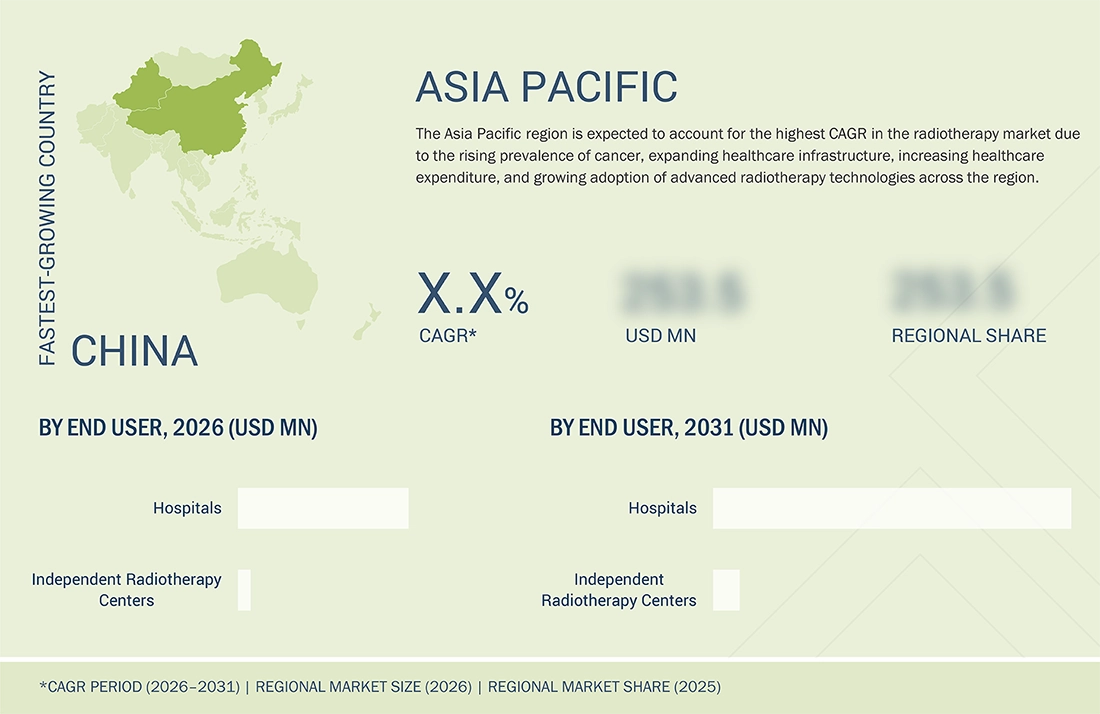
The Asia Pacific region is expected to register the highest CAGR in the radiotherapy market during the forecast period. Asia Pacific comprises China, India, South Korea, Australia, Japan, and the Rest of Asia Pacific. Growth is driven by the increasing prevalence of cancer, an aging population, expanding oncology infrastructure, and growing adoption of advanced radiotherapy equipment such as linear accelerators, image-guided radiation therapy, and proton therapy. Other factors driving the market include increased government spending, increased medical tourism, and collaborations between market vendors.
RADIOTHERAPY MARKET: COMPANY EVALUATION MATRIX
The radiotherapy market is characterized by several established and emerging players operating across the Stars, Emerging Leaders, Pervasive Players, and Participants categories. Companies categorized as Stars, including Siemens Healthineers, Elekta, Accuray, IBA Worldwide, and ViewRay Technologies, hold strong market positions due to their broad product portfolios, advanced radiotherapy technologies, global presence, and strong focus on innovation in precision oncology, adaptive radiotherapy, proton therapy, and AI-enabled treatment planning. Emerging Leaders such as Sumitomo, Carl Zeiss, and Hitachi are strengthening their market presence through continuous technological advancements and specialized radiotherapy offerings. Pervasive Players, including Philips and Mevion, possess established business strategies and focused technology portfolios, particularly in imaging and proton therapy applications. Meanwhile, Participants such as MIM Software, Panacea Medical Technologies, Optivus Proton Therapy, Perspective Therapeutics, and Provision Healthcare are expanding their market presence through niche product offerings, software solutions, and specialized radiotherapy applications. Although these companies currently hold smaller market shares compared to leading players, their growing focus on innovation, strategic collaborations, and expansion into emerging application areas is expected to enhance their competitiveness in the global radiotherapy market.
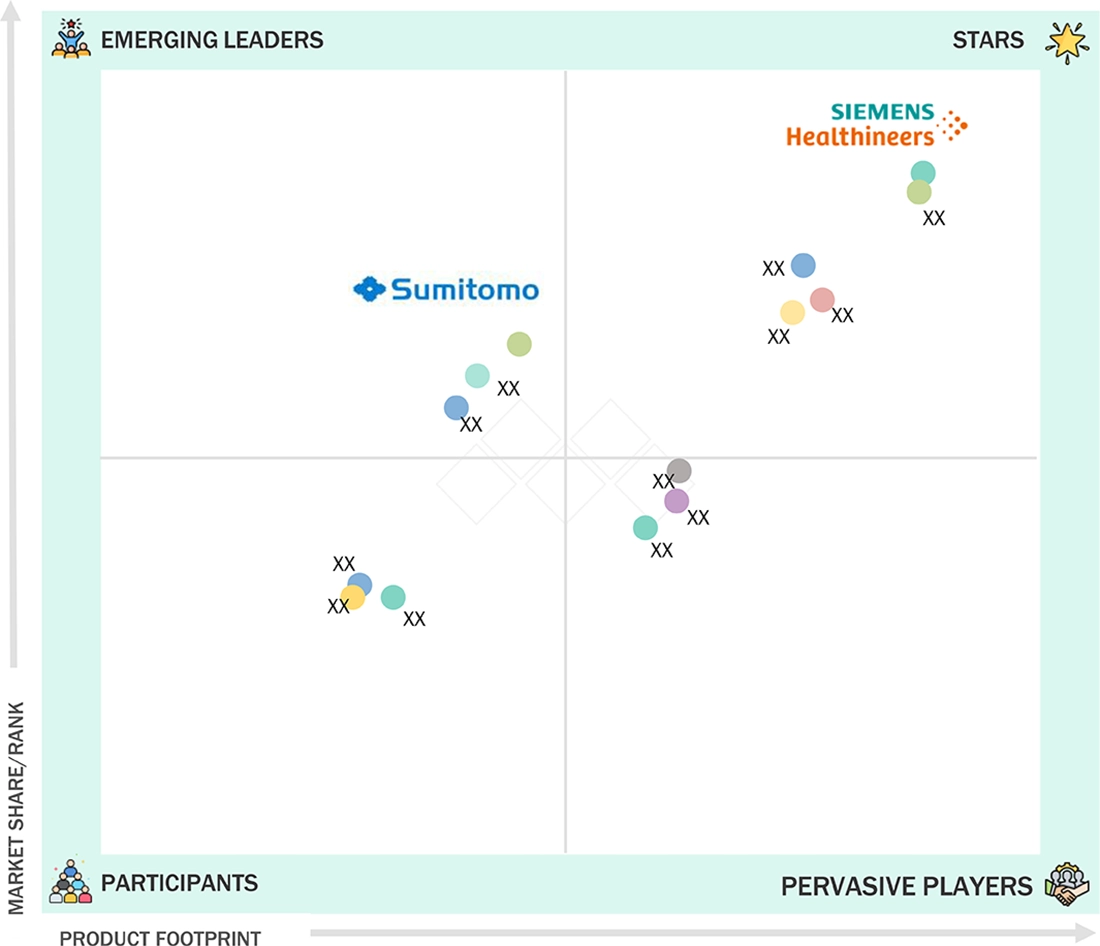
Source: Secondary Research, Interviews with Experts, MarketsandMarkets Analysis
KEY MARKET PLAYERS
- Siemens Healthineers AG (Germany)
- Elekta (Sweden)
- Accuray Incorporated (US)
- IBA Worldwide (Belgium)
- ViewRay, Inc. (US)
- Perspective Therapeutics (US)
- Hitachi Ltd. (Japan)
- Sumitomo Heavy Industries, Ltd. (Japan)
- Carl Zeiss Meditec AG (Germany)
- MIM Software Inc. (US)
- Panacea Medical Technologies Pvt. Ltd. (India)
- Provision Healthcare (US)
- Mevion Medical Systems (US)
- Koninklijke Philips N.V. (Netherlands)
MARKET SCOPE
| REPORT METRIC | DETAILS |
|---|---|
| Market Size in 2025 (Value) | USD 7.58 Billion |
| Market Forecast in 2026 (Value) | USD 7.98 Billion |
| Market Forecast in 2031 (Value) | USD 10.68 Billion |
| Growth Rate | CAGR of 6.0% from 2026-2031 |
| Years Considered | 2024-2031 |
| Base Year | 2025 |
| Forecast Period | 2026-2031 |
| Units Considered | Value (USD Billion) |
| Report Coverage | Revenue Forecast, Company Ranking, Competitive Landscape, Growth Factors, and Trends |
| Segments Covered |
|
| Regions Covered | North America, Asia Pacific, Europe, Latin America, Middle East & Africa |
WHAT IS IN IT FOR YOU: RADIOTHERAPY MARKET REPORT CONTENT GUIDE
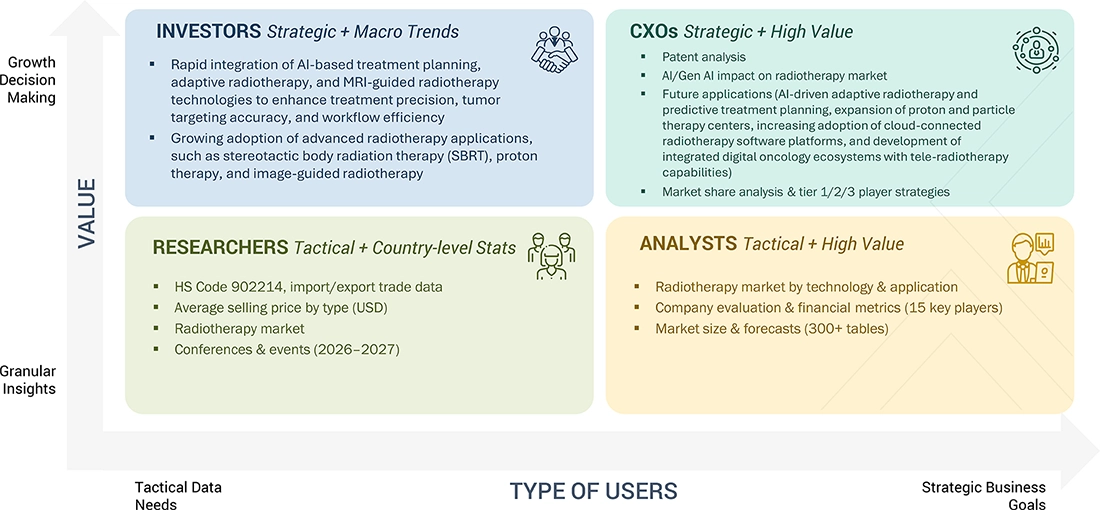
DELIVERED CUSTOMIZATIONS
We have successfully delivered the following deep-dive customizations:
| CLIENT REQUEST | CUSTOMIZATION DELIVERED | VALUE ADDS |
|---|---|---|
| Radiotherapy System Manufacturer |
|
|
| Hospitals/Independent Radiotherapy Centers |
|
|
RECENT DEVELOPMENTS
- February 2025 : IBA Worldwide entered into an agreement with the Asian Institute of Gastroenterology (AIG) to provide a ProteusONE compact therapy system to support research in its oncology center.
- January 2025 : Accuray Incorporated (US) received NMPA approval for the Radixact SynC System and the CyberKnife S7 System, which provide accurate and minimally invasive radiotherapy.
- August 2024 : Accuray received CE Mark for the new Helical Radiation Delivery System.
- May 2024 : Elekta launched the AI-powered adaptive CT-Linac, Evo, which is capable of delivering both offline and online adaptive radiation therapy, in addition to improving standard IGRT treatments.
Table of Contents
 Exclusive indicates content/data unique to MarketsandMarkets and not available with any competitors.
Methodology
This study involved the extensive use of both primary and secondary sources. Exhaustive secondary research was done to collect information on the radiotherapy industry. The next step was to validate these findings, assumptions, and sizing estimates with industry experts across the value chain using primary research. Different approaches, such as top-down and bottom-up, were employed to estimate the total market size. After that, the market breakup and data triangulation procedures were used to estimate the market sizes of the radiotherapy market's segments and subsegments. The research process involved examining various factors affecting the industry to identify segmentation types, industry trends, key players, the competitive landscape, key market dynamics, and key players' strategies.
Secondary Research
The secondary research process involves the widespread use of secondary sources, directories, databases (such as Bloomberg Businessweek, Factiva, and D&B Hoovers), white papers, annual reports, Companies House documents, investor presentations, and SEC filings. Secondary research was used to identify and collect information useful for the extensive, technical, market-oriented, and commercial study of the radiotherapy market. It was also used to obtain important information about key players, market classification & segmentation according to industry trends, down to the bottom-most level, and key developments from market and technology perspectives. A database of the key industry leaders was also prepared using secondary research.
The market for companies offering radiotherapy products is derived from secondary data available through paid and unpaid sources, by analyzing the product portfolios of the major companies in the ecosystem and rating them by performance and quality. Various sources were consulted during the secondary research process to identify and collect information for this study. Secondary research was used to obtain critical information on the industry's value chain, the total pool of key players, market classification, and segmentation from market- and technology-oriented perspectives.
Primary Research
In the primary research process, various sources from both the supply and demand sides were interviewed to obtain qualitative and quantitative information for this report. The primary sources from the supply side include industry experts such as CEOs, vice presidents, marketing and sales directors, technology & innovation directors, and related key executives from various key companies and organizations in the radiotherapy market. The primary sources from the demand side include OEMs, private and contract testing organizations, and service providers, among others. Primary research was conducted to validate the market segmentation, identify key players in the market, and gather insights on key industry trends & key market dynamics.
After the complete market engineering (calculations for market statistics, market breakdown, market estimation, market forecasting and data triangulation), extensive primary research was conducted to gather information and verify and validate the critical numbers arrived at fill primary research was also conducted to identify the segmentation types industry trends competitive landscape of radiotherapy offered by various market players and key market dynamics such as drivers, restraints, opportunities, challenges, industry trends and key players strategies.
In the complete market engineering process, the top-down and bottom-up approaches were extensively used, along with several data regulation methods, to perform market estimation and forecasting across the overall market segments and subsegments listed in this report. Extensive qualitative and quantitative analyses were conducted across the entire market engineering process to identify key insights throughout the report.
A breakdown of the primary respondents is provided below:
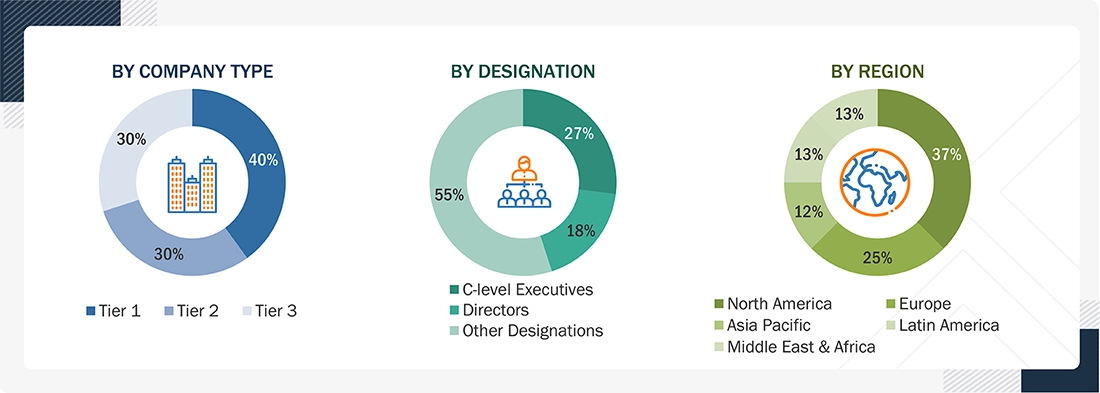
Note 1: Other designations include sales managers, marketing managers, business development managers, product managers, distributors, and suppliers.
Note 2: Companies are classified into tiers based on their total revenue. As of 2025, Tier 1 = >USD 2 billion, Tier 2 = USD 50 million to USD 2 billion, and Tier 3 = <USD 50 million.
To know about the assumptions considered for the study, download the pdf brochure
Market Size Estimation
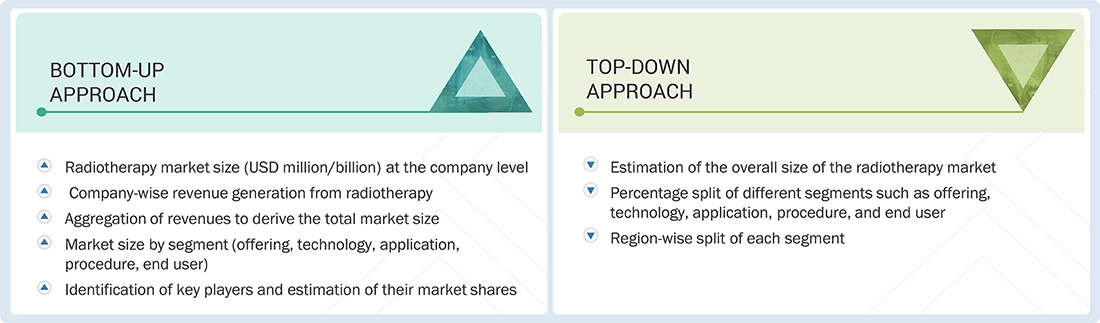
Both top-down and bottom-up approaches were used to estimate and validate the total size of the radiotherapy market. These methods were also used extensively to estimate the size of various market segments.
To determine the size of the global radiotherapy market, revenue share analysis was employed with the leading players. In this case, key market players have been identified, and their radiotherapy product business revenues have been determined using insights gathered during the primary and secondary research phases. Secondary research included the study of top market players' annual and financial reports. On the other hand, primary research included in-depth interviews with key opinion leaders, particularly chief executive officers, directors, and key marketing executives.
Radiotherapy Market : Top-Down and Bottom-Up Approach
Data Triangulation
After arriving at the overall market size through the market size estimation process described above, the global radiotherapy market was segmented. Data triangulation and market breakdown procedures were employed to complete the overall market engineering process and arrive at the exact statistics for all segments. The data was triangulated by studying various factors and trends from both the demand and supply sides. Additionally, the radiotherapy market was validated using both top-down and bottom-up approaches.
Market Definition
The radiotherapy market includes a range of products, solutions, technologies, and services that utilize high-energy radiation for therapeutic purposes. This encompasses various types of radiation, such as X-ray, gamma, electron, and particle radiation. The technologies segment of radiotherapy features systems designed to treat diseases, primarily cancer. This includes external beam radiotherapy methods like LINAC, MRI-LINAC, and cobalt-60 teletherapy. Additionally, internal radiotherapy solutions, commonly known as brachytherapy, are also part of this market segment. Other components of the radiotherapy market include software for imaging and treatment planning. Furthermore, the market provides maintenance and training services related to radiotherapy technologies.
Key Stakeholders
- Radiotherapy product manufacturing companies
- Distributors, suppliers, and commercial service providers
- Healthcare service providers
- Clinical research organizations (CROs)
- Radiotherapy service providers
- Radiotherapy product distributors
- Medical research laboratories
- Cancer care centers
- Cancer research organizations
- Academic medical centers and universities
- Market research and consulting firms
Report Objectives
- To define, describe, and forecast the radiotherapy market based on offering, technology, application, procedure, end user, and region
- To provide detailed information regarding the major factors influencing the growth potential of the global radiotherapy market (drivers, restraints, opportunities, challenges, and trends)
- To analyze the micromarkets for individual growth trends, prospects, and contributions to the global radiotherapy market
- To analyze key growth opportunities in the global radiotherapy market for key stakeholders and provide details of the competitive landscape for market leaders
- To forecast the size of market segments and/or subsegments with respect to five major regions: North America (the US and Canada), Europe (Germany, the UK, France, Italy, Spain, and the Rest of Europe), Asia Pacific (Japan, China, India, Australia, South Korea, and the Rest of Asia Pacific), Latin America (Brazil, Mexico, and the Rest of Latin America), and the Middle East & Africa (GCC Countries and the Rest of Middle East & Arica)
- To profile the key players in the global radiotherapy market and comprehensively analyze their market shares and core competencies
- To track and analyze the competitive developments undertaken in the global radiotherapy market, such as agreements, expansions, and product launches
Available customizations:
With the given market data, MarketsandMarkets offers customizations as per the company’s specific needs. The following customization options are available for the present global radiotherapy market report:
Product Analysis
- Product matrix, which gives a detailed comparison of the product portfolios of the top 16 companies
Company Information
- Detailed analysis and profiling of additional market players (up to 15)
Geographic Analysis
- Further breakdown of the Rest of Europe radiotherapy market into Russia, Belgium, the Netherlands, Switzerland, Austria, Finland, Sweden, Poland, and Portugal, among others
- Further breakdown of the Rest of Asia Pacific radiotherapy market into Singapore, Taiwan, New Zealand, the Philippines, Malaysia, and other APAC countries
- Further breakdown of the Rest of Latin America radiotherapy market into Argentina, Chile, Peru, and Colombia, among others


Personalize This Research
- Triangulate with your Own Data
- Get Data as per your Format and Definition
- Gain a Deeper Dive on a Specific Application, Geography, Customer or Competitor
- Any level of Personalization
Let Us Help You
- What are the Known and Unknown Adjacencies Impacting the Radiotherapy Market
- What will your New Revenue Sources be?
- Who will be your Top Customer; what will make them switch?
- Defend your Market Share or Win Competitors
- Get a Scorecard for Target Partners

Custom Market Research Services
We Will Customise The Research For You, In Case The Report Listed Above Does Not Meet With Your Requirements
Get 10% Free CustomisationTESTIMONIALS

JAYANT RAJPUROHIT
Director of Market Insights, Data and Analytics
SFI Health,
Leading Pharmaceutical Companywww.sfihealth.com/
We at SFI Health approached MarketsandMarkets for an Opportunity Assessment on "Incidence and Prevalence of Focus Indications" as we wanted to know the most attractive HCPs like Physician, Functional MD, Naturopath and Pharmacist. The project was critical for us to ensure our focus on the right target which would enable sustainable growth and profitability for SFI Health. The business insights provided exceeded our expectations and we were extremely impressed. The team at MarketsandMarkets is highly professional and detail oriented and very well understood our business needs. MarketsandMarkets offers a unique combination of expertise and dedicated engagement model. We identified 2 new products to be launched in coming months, based on the research findings provided by MarketsandMarkets. We are happy with the services and would strongly recommend MarketsandMarkets to my peers in the industry.

BEATRIZ DE LA CALLE
Head of Commercial Analytics
Qualicaps,
Leading Pharmaceutical Companywww.qualicaps.com/

We partnered with MarketsandMarkets for an assessment study on hard empty capsules. The team was extremely professional in understanding our business requirements and we received timely responses to all our queries. The market intelligence and the recommendations has met our business requirements. We were extremely impressed to see the final study results; it really exceeded our expectations. The market intelligence offered by MarketsandMarkets, and clarity on next steps will help us achieve our business objective for the Year 2021. We are happy with the services and would strongly recommend MarketsandMarkets to my peers in the industry.

Bob Williams,
Senior Director Business Development & Innovation
Bracco Diagnostics Inc.,
Italian Multinational in life sciences sector and a World Leader in imaging diagnosticsimaging.bracco.com/us-en
We were pleased with targeted insights that MarketsandMarkets identified from a custom study on the 'Radiation Dose Management Solutions Market'. Your team identified and characterized the market participants as well as underlying trends accurately. This study was useful to Bracco in formulating business strategies for our dose monitoring product lines and we thank MarketsandMarkets for the job well done.
Cody Coonradt,
Market Development and Strategy Manager
3M Health Information Systems,
Leader in Health care Coding, Payment & Analytics Solutions.www.3m.com/3M/en_US/health-information-systems-us
The value for our organization comes from three things: depth of research, specificity of segments and being easy to work with. As important as the first two are, the third can't be underestimated. MarketsandMarkets, maybe more than any other research vendor, wants to know what is top of mind for our team and what big questions we are grappling to answer.
Their customer first approach and high value engagement model, have given us great analysis and excellent value for money
- Canada Radiotherapy Market
- US Radiotherapy Market
- Germany Radiotherapy Market
- France Radiotherapy Market
- UK Radiotherapy Market
- Spain Radiotherapy Market
- Italy Radiotherapy Market
- Japan Radiotherapy Market
- China Radiotherapy Market
- India Radiotherapy Market
- South Korea Radiotherapy Market
- Australia Radiotherapy Market
- Brazil Radiotherapy Market
- Mexico Radiotherapy Market
- Rest Of Europe Radiotherapy Market
- Rest Of Asia Pacific Radiotherapy Market
- Rest Of Latin America Radiotherapy Market






Growth opportunities and latent adjacency in Radiotherapy Market