Semiconductor Cleanroom Market Size, Share & Trends

Semiconductor Cleanroom Market by HVAC System, Fan Filter Unit, Laminar Flow Unit, HEPA & ULPA Filter, Air Shower, Particle Counter, Overhead Hoist Transport, Cleanroom Robot and Automated Guided Vehicle (AGV) - Global Forecast to 2030




SEMICONDUCTOR CLEANROOM MARKET OVERVIEW
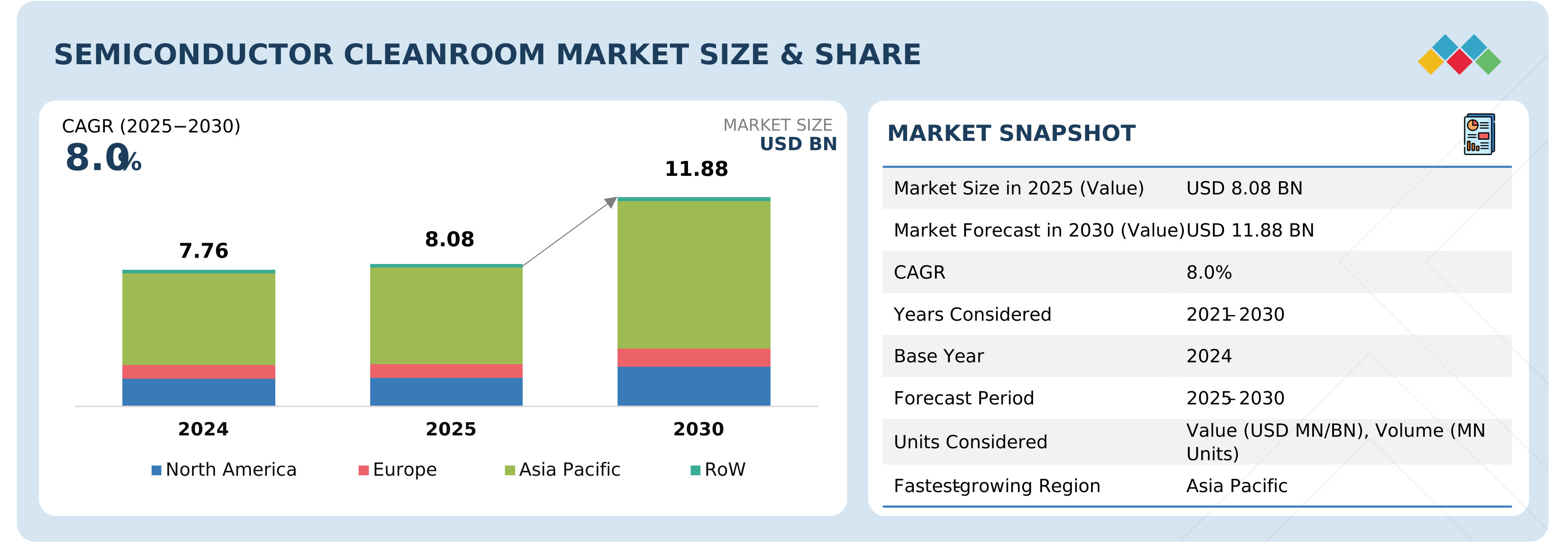
According to Marketsandmarkets, the Semiconductor Cleanroom Market Size was valued at USD 8.08 billion in 2025 and is projected to reach USD 11.88 billion by 2030, growing at a CAGR of 8.0% from 2025 to 2030. The semiconductor cleanroom Industry is primarily driven by the rising complexity of semiconductor manufacturing, where the miniaturization of nodes and the transition to advanced processes, such as EUV lithography, demand stringent contamination control. Increasing wafer throughput and higher capital investments in leading-edge fabs further accelerate the need for advanced cleanroom equipment, consumables, and automation systems to ensure consistent yields.
REPORT SCOPE
| REPORT METRIC | DETAILS |
|---|---|
| Market Size in 2025 (Value) | USD 8.08 Billion |
| Market Forecast in 2030 (Value) | USD 11.88 Billion |
| Growth Rate | CAGR of 8.0% from 2025-2030 |
| Years Considered | 2021-2030 |
| Base Year | 2024 |
| Forecast Period | 2025-2030 |
| Units Considered | Value (USD Million/Billion) and Volume (Million Units) |
| Report Coverage | Revenue forecast, company ranking, competitive landscape, growth factors, and trends |
| Top Companies |
|
| Growth Driver |
|
| Segments Covered |
|
| Regions Covered | North America, Europe, Asia Pacific, and RoW |
SEMICONDUCTOR CLEANROOM MARKET SIZE & FORECAST
SEMICONDUCTOR CLEANROOM MARKET KEY TAKEAWAYS
-
BY OFFERINGOffering includes equipment and consumables. Equipment leads the market as fabs increasingly invest in advanced HVAC, filtration, and monitoring systems to meet stringent contamination control standards essential for high-yield semiconductor production.
-
BY EQUIPMENT TYPEEquipment type includes cleanroom infrastructure & systems, moniroting & control systems, cleanroom robotics & automation, and other equipment types. Cleanroom robotics and automation are witnessing the fastest growth, driven by the need to minimize human-induced contamination, optimize wafer handling, and support fully automated high-volume fabs.
-
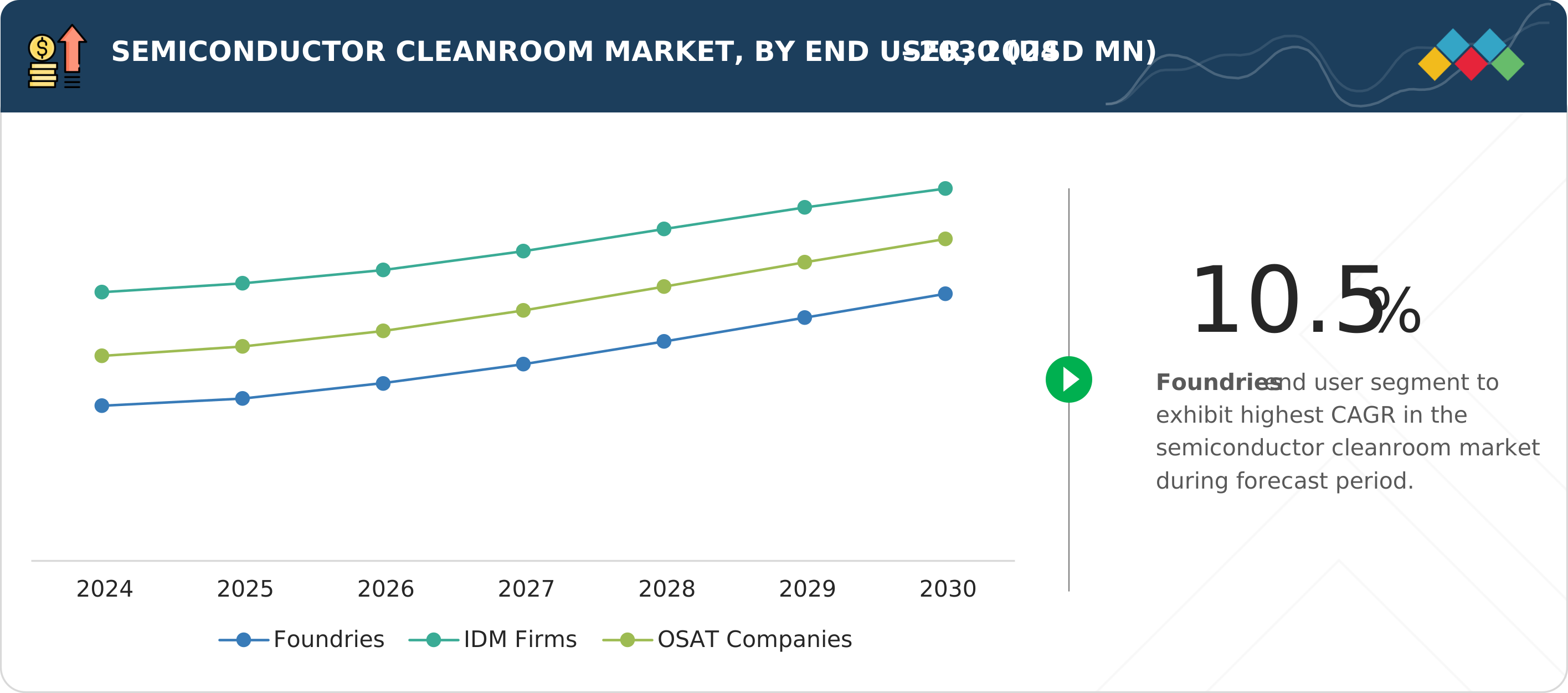
BY END USEREnd users include IDM firms, foundries, and OSAT companies. Integrated device manufacturer (IDM) firms dominate the market due to their large-scale investments in advanced fabs and higher reliance on end-to-end cleanroom solutions for design and manufacturing.
-
BY REGIONRegions include North America, Asia Pacific, Europe, and RoW. Asia Pacific leads globally, supported by massive fab expansions in China, Taiwan, South Korea, and Japan, coupled with government-backed semiconductor self-sufficiency initiatives.
-
COMPETITIVE LANDSCAPEMajor market players have adopted both organic and inorganic strategies, including partnerships, expansions, and product launches. For instance, in August 2025, Daifuku Co., Ltd. completed construction of a new factory building, designated as Building M, at its core production base, Shiga Works, in Shiga, Japan.
The growing demand for AI, 5G, EVs, and high-performance computing has pushed semiconductor manufacturers to expand capacity, fueling the deployment of ultra-clean environments that meet ISO Class 1–5 requirements. Regulatory emphasis on quality, worker safety, and environmental sustainability also encourages the adoption of energy-efficient HVAC systems, low-particulate consumables, and modular cleanroom solutions, strengthening market growth.
Source: Secondary Research, Interviews with Experts, MarketsandMarkets Analysis
TRENDS & DISRUPTIONS IMPACTING CUSTOMERS' CUSTOMERS
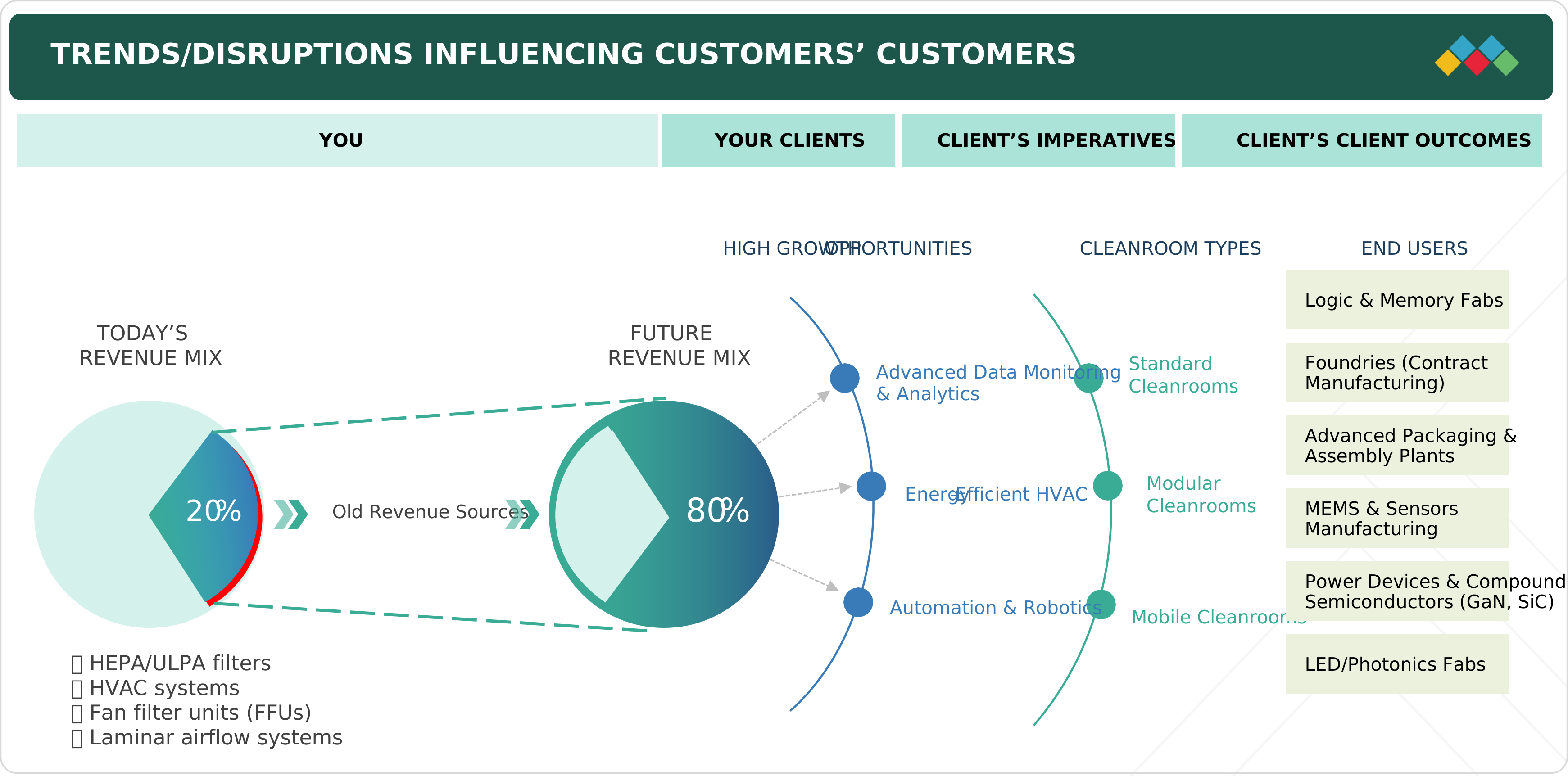
Semiconductor cleanroom customers face disruption as fabs adopt advanced monitoring and analytics for predictive control, energy-efficient HVAC to cut costs and meet regulations, and automation/robotics to reduce manual errors and contamination. These shifts create strong growth opportunities but require rapid modernization to stay competitive.
Source: Secondary Research, Interviews with Experts, MarketsandMarkets Analysis
SEMICONDUCTOR CLEANROOM MARKET DYNAMICS

Level
-
Rising demand for advanced semiconductors

-
Increasing government initiatives and investments to boost semiconductor production


Level
-
High capital and operational costs

-
Complexity in cleanroom design and operation


Level
-
Adoption of eco-friendly materials

-
Integration of robotics and automation in cleanrooms


Level
-
Stringent regulatory compliance

-
Contamination control challenges in semiconductor cleanrooms

Source: Secondary Research, Interviews with Experts, MarketsandMarkets Analysis
Driver: Rising demand for advanced semiconductors
The surge in demand for AI, IoT, 5G, and automotive electronics augments the need for advanced semiconductors produced in ultra-clean environments. Cleanrooms are vital in ensuring wafer integrity and yield for high-performance memory and logic chips, which dominate industry growth. Recent WSTS and SIA data show double-digit sales growth, reinforcing the reliance on cleanrooms as semiconductor miniaturization and performance demands accelerate globally.
Restraint: Complexity in cleanroom design and operation
Designing and operating semiconductor cleanrooms is highly complex, requiring precise control of particles, pressure, temperature, and humidity while accommodating sensitive equipment and automation systems. Facilities integrate IoT sensors, AI-driven monitoring, and automated alerts to maintain real-time stability. Compliance with ISO classifications and GMP adds further challenges, demanding continuous investment in skilled labor, validation protocols, and advanced engineering expertise.
Opportunity: Adoption of eco-friendly materials
Sustainability initiatives boost the adoption of eco-friendly materials in semiconductor cleanrooms, reducing emissions, waste, and energy use. Manufacturers increasingly deploy recyclable panels, low-emission coatings, and energy-efficient flooring that improve insulation and airflow. These solutions support compliance with ESG goals and lower operating costs, enhance brand value, and open opportunities for government incentives.
Challenge: Contamination control challenges in semiconductor cleanrooms
Maintaining ultra-clean conditions in semiconductor cleanrooms remains a critical challenge, as even microscopic particles or residues can damage wafers and lower yields. With chip architectures shrinking, tolerances are minimal, and deviations in air quality, temperature, or humidity can cause costly defects. To overcome this, manufacturers are adopting advanced filtration, real-time monitoring, and automated wafer handling systems that minimize human interaction and strengthen contamination control.
SEMICONDUCTOR CLEANROOM MARKET: COMMERCIAL USE CASES ACROSS INDUSTRIES
| COMPANY | USE CASE DESCRIPTION | BENEFITS |
|---|---|---|
 |
Cleanroom automation systems, including overhead hoist transport (OHT), automated guided vehicles (AGVs), and robotic material handling for semiconductor fabs | Higher production throughput | minimized particle generation | enhanced wafer transport efficiency | reduced human-induced contamination |
 |
Integrated cleanroom logistics solutions, such as stockers, conveyors, and robotic handling systems optimized for semiconductor manufacturing environments | Streamlined wafer handling | improved fab space utilization | reduced operational downtime | consistent contamination control |
 |
Advanced cleanroom equipment, such as high-efficiency filtration systems, airflow modules, and contamination control products tailored for semiconductor fabs | Precise environmental control | reduced airborne molecular contamination (AMC) | extended equipment uptime | compliance with ultra-clean manufacturing standards |
 |
Specialty cleanroom consumables and protective apparel, including anti-static suits, gloves, wipes, and barrier materials, tailored for semiconductor fabs | Reduced electrostatic discharge (ESD) risk | improved yield protection | enhanced worker safety | reliable contamination control in ultra-clean environments |
 |
Wide range of cleanroom consumables, such as sterile gloves, apparel, wipes, disinfectants, and sterile packaging materials, designed for semiconductor cleanroom operations | Enhanced contamination control | compliance with ISO Class 4–6 cleanroom standards | consistent protection of wafers from particles and microbes | improved operator safety |
Logos and trademarks shown above are the property of their respective owners. Their use here is for informational and illustrative purposes only.
SEMICONDUCTOR CLEANROOM MARKET ECOSYSTEM
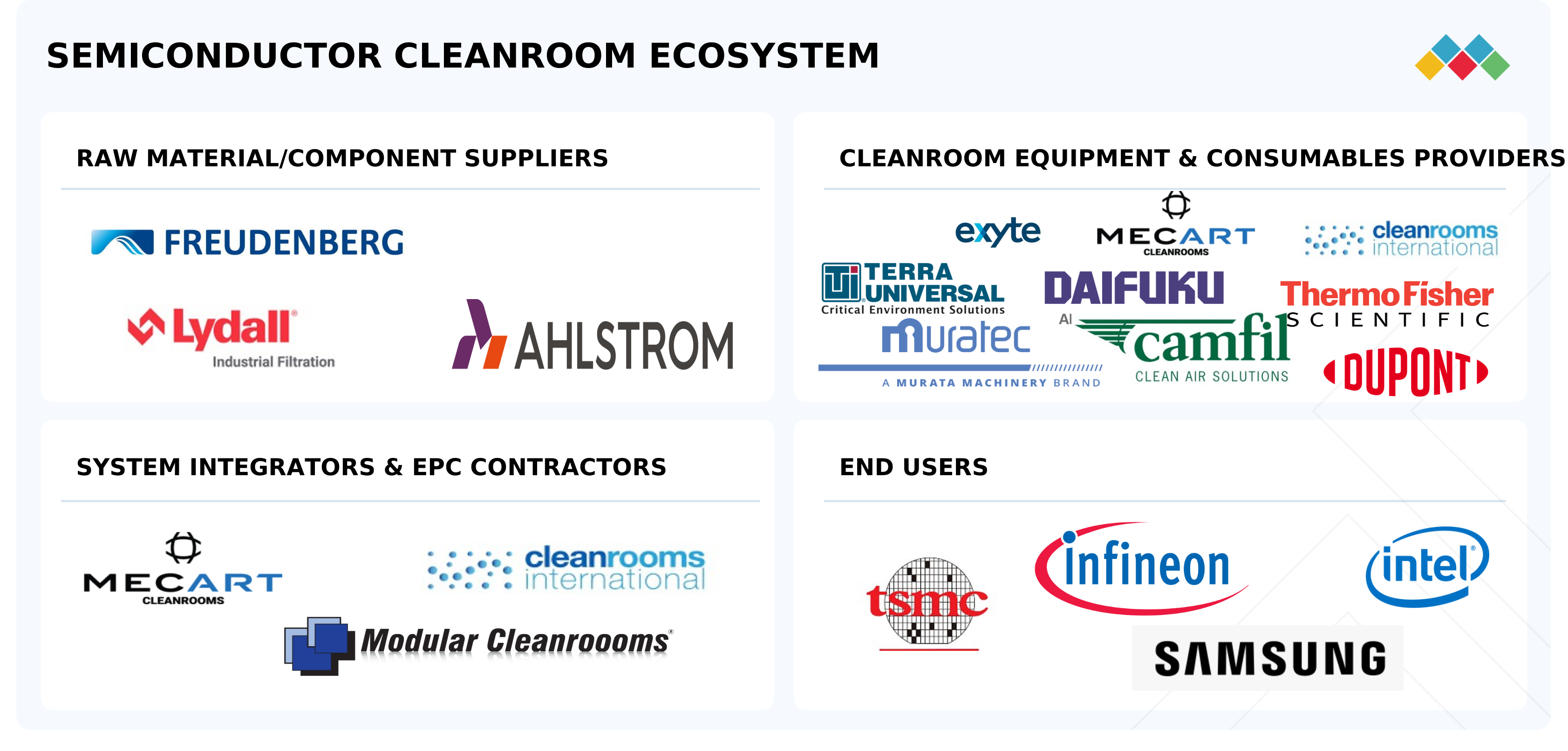
Raw material/component suppliers provide critical inputs such as specialty gases, HEPA/ULPA media, filtration materials, and contamination-resistant construction elements. Cleanroom equipment & consumables providers translate these inputs into filtration systems, process tools, protective garments, and single-use items essential for controlled environments. System integrators & EPC contractors design, construct, and validate turnkey cleanroom facilities, ensuring compliance with stringent contamination control standards. End users including foundries, OSAT companies, and IDM firms drive specifications and continuous demand, pushing the ecosystem toward higher yield, reliability, and advanced process capabilities.
Logos and trademarks shown above are the property of their respective owners. Their use here is for informational and illustrative purposes only.
SEMICONDUCTOR CLEANROOM MARKET SEGMENTS
Source: Secondary Research, Interviews with Experts, MarketsandMarkets Analysis
Semiconductor Cleanroom Market, Offering
Equipment dominates the market as semiconductor fabs prioritize investments in advanced HVAC systems, HEPA/ULPA filtration units, laminar flow systems, and real-time monitoring solutions. These technologies are essential to maintain ISO Class 1–5 standards, particularly as chip nodes shrink and processes, such as EUV lithography demand ultra-clean environments. Rising capital expenditure on mega-fabs further reinforces equipment as the backbone of contamination control.
Semiconductor Cleanroom Market, Equipment Type
Cleanroom robotics and automation are experiencing the fastest growth, as fabs aim to reduce manual handling and achieve precision in wafer transfer and material movement. Automated guided vehicles (AGVs), robotic arms, and overhead transport systems ensure higher throughput, lower error rates, and reduced risk of particle introduction. With the growing trend toward lights-out manufacturing, these solutions are becoming central to high-volume, next-generation fabs.
Semiconductor Cleanroom Market, End User
IDM firms lead the market since they operate large-scale, end-to-end fabs requiring extensive cleanroom infrastructure and consumables. Their ability to invest heavily in advanced contamination control, automation, and sustainability initiatives gives them an edge over fabless companies and smaller players. Continuous node scaling and vertical integration strategies drive IDMs’ reliance on comprehensive cleanroom solutions.
SEMICONDUCTOR CLEANROOM MARKET BY REGION
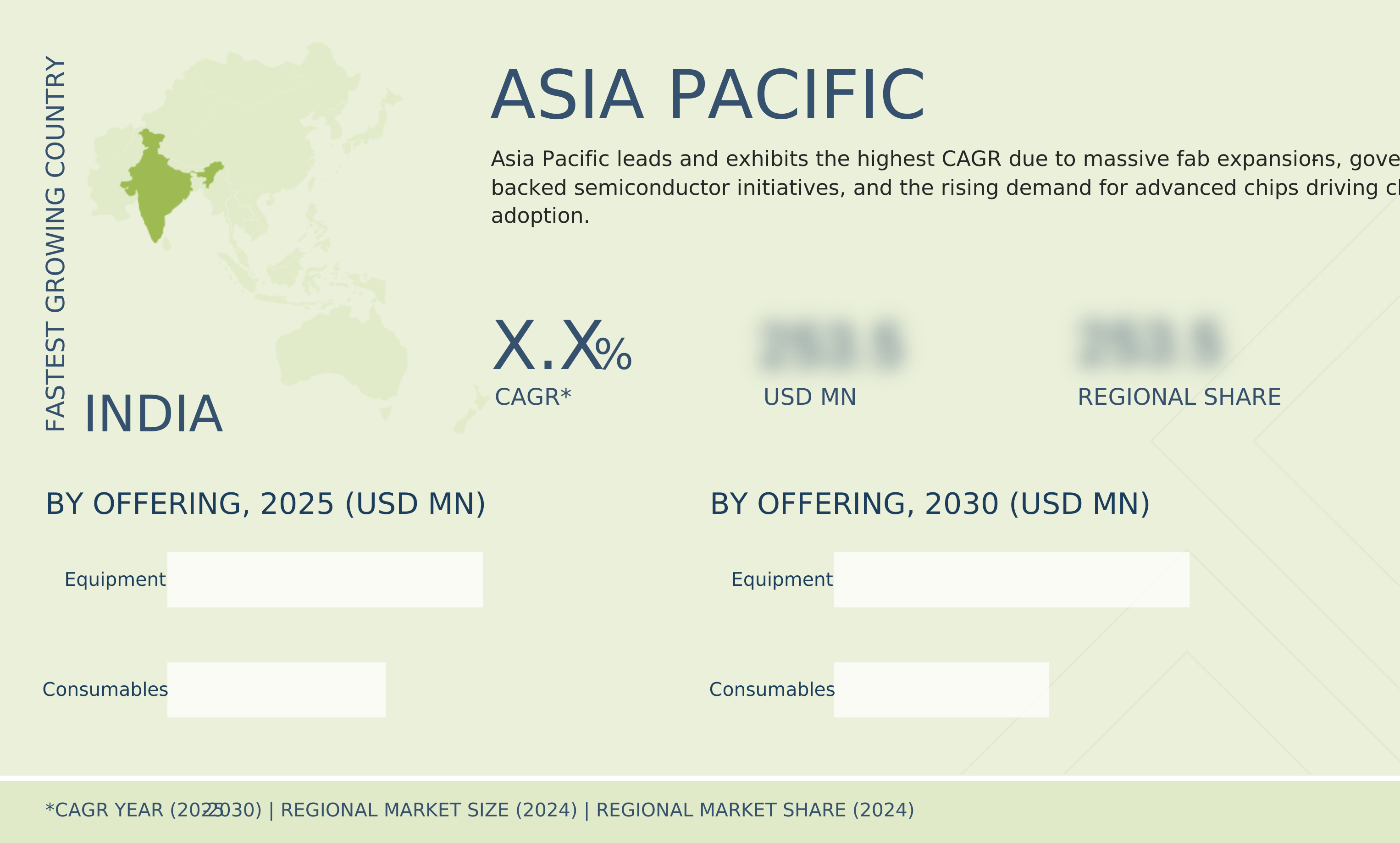
Asia Pacific to exhibit the highest CAGR in the global semiconductor cleanroom market during the forecast period
Asia Pacific is poised to exhibit the highest CAGR in the semiconductor cleanroom market during the forecast period due to the massive investments in new and expanding fabs, particularly in China, Taiwan, South Korea, and Japan. The region hosts a significant share of global foundries and memory manufacturing facilities, driving sustained demand for advanced cleanroom equipment, automation, and consumables. Government-backed initiatives promoting semiconductor self-sufficiency, coupled with growing domestic and international demand for AI, 5G, and automotive electronics, further accelerate cleanroom adoption. Additionally, the rapid modernization of existing fabs and expansion into high-volume, next-generation nodes creates strong growth opportunities for suppliers, reinforcing the region's dominance in market size and growth rate.
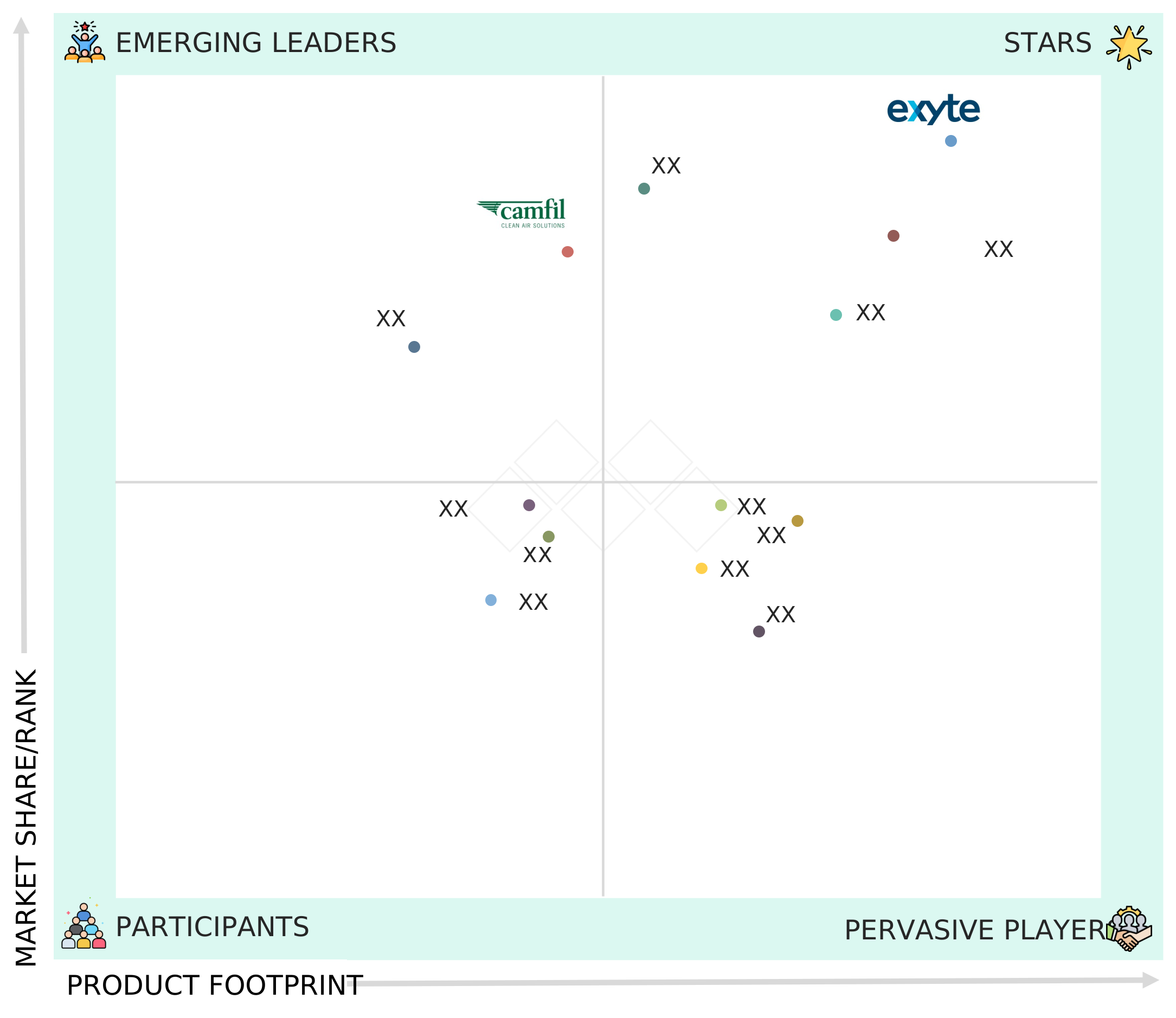
SEMICONDUCTOR CLEANROOM MARKET: COMPANY EVALUATION MATRIX
Exyte Group is a star player in the semiconductor cleanroom infrastructure and systems segment, commanding a high market share with an extensive product footprint across filtration, airflow, and environmental control solutions. Camfil, as an emerging leader, holds a significant share with strong capabilities in cleanroom filtration and HVAC systems, though its overall presence remains lower than Exyte’s, positioning it as a fast-growing competitor in the market.
Source: Secondary Research, Interviews with Experts, MarketsandMarkets Analysis
KEY MARKET PLAYERS
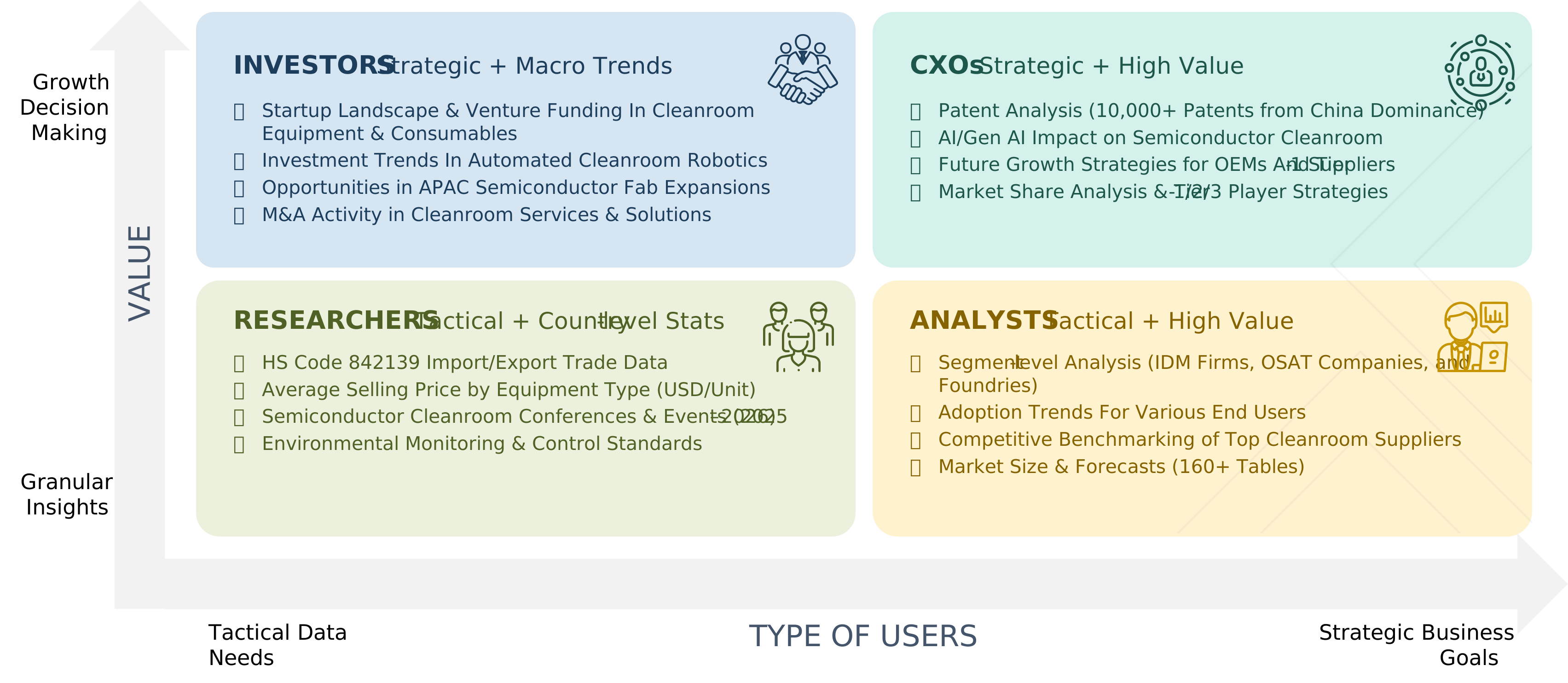
WHAT IS IN IT FOR YOU: semiconductor cleanroom REPORT CONTENT GUIDE
DELIVERED CUSTOMIZATIONS
We have successfully delivered the following deep-dive customizations:
| CLIENT REQUEST | CUSTOMIZATION DELIVERED | VALUE ADDS |
|---|---|---|
| Global IDM Semiconductor Manufacturer | Comprehensive benchmarking of cleanroom equipment and consumables across Tier-1 fabs globally, including HVAC, filtration, and automation systems. |
|
| Asia Pacific Foundry | Analysis of cleanroom robotics and automation adoption trends, including AGVs, OHTs, and robotic wafer handling systems. |
|
| North American IDM | Evaluation of consumables sourcing and anti-static apparel usage, comparing global suppliers like DuPont, Thermo Fisher, and Ansell. |
|
| Global Tier-1 Cleanroom Equipment Supplier | Cost-performance and market share benchmarking of HEPA/ULPA filters, laminar flow units, and environmental monitoring systems. |
|
| Asia Pacific Memory & Logic Fab | Analysis of energy-efficient HVAC and eco-friendly materials adoption in modular and standard cleanrooms. |
|
RECENT DEVELOPMENTS
- August 2025 : Daifuku Co., Ltd. completed construction of a new factory building, designated as Building M, at its core production base, Shiga Works, in Shiga, Japan. This facility is part of a broader redevelopment project aimed at increasing production capacity and enhancing distribution efficiency at the site.
- July 2025 : Camfil expanded its Hi-Flo range with the introduction of the Hi-Flo ePM1 70% air filter. This development follows the earlier release of the Hi-Flo ePM1 60% and ePM10 60% models in 2023. The new filter provides an average 12% improvement in energy performance across multiple sizes compared with the previous version, reflecting the company’s focus on advancing air filtration technologies with greater efficiency and sustainability.
- October 2024 : Exyte introduced Exentec as the new name and brand identity for its Technology & Services business area, a leading global provider of advanced cleanroom and production environment solutions. Moving forward, this business area, along with its subsidiaries and associated brands, will operate under the Exentec name worldwide. As part of the Exyte Group, Exentec remains dedicated to delivering innovative solutions that support high-tech industries in response to rapid growth and evolving market demands. Beginning in early 2025, all aspects of the business area will be unified under a cohesive brand identity.
- May 2023 : Horton Automatics expanded its cleanroom product line with 17 new door models, all ISO 14644-3 certified for Class 3 cleanroom applications, ensuring compliance with stringent standards for airborne particulate emissions. These manual and automatic sliding doors are offered in multiple configurations, providing architects with flexible options to meet cleanroom requirements and support efficient building design.
- January 2022 : Clean Rooms International introduced the Flow-Thru Light Troffer, developed specifically for cleanroom applications. The product is certified under Underwriters Laboratory standard 1598 as an air-handling illuminated troffer and is suitable for environments ranging from Class 10 to Class 100,000.
Table of Contents
 Exclusive indicates content/data unique to MarketsandMarkets and not available with any competitors.
Methodology
The study involved major activities in estimating the current market size for the semiconductor cleanroom market. Exhaustive secondary research was done to collect information on the market. The next step was to validate these findings, assumptions, and sizing with industry experts across the value chain using primary research. Different approaches, such as top-down and bottom-up, were employed to estimate the total market size. After that, the market breakup and data triangulation procedures were used to estimate the market size of the segments and subsegments of the semiconductor cleanroom market.
Secondary Research
The secondary research for this study involved gathering information from credible sources. These included company annual reports, investor presentations, press releases, whitepapers, certified publications, and articles from reputable associations and government publications. Additional data was obtained from corporate filings, professional and trade associations, journals, and industry-recognized authors. Research from consortia, councils, and gold- and silver-standard websites, directories, and databases also contributed to the qualitative framework. Key global sources, such as the International Trade Centre (ITC) and the International Monetary Fund (IMF), were consulted to support and validate the market analysis.
Primary Research
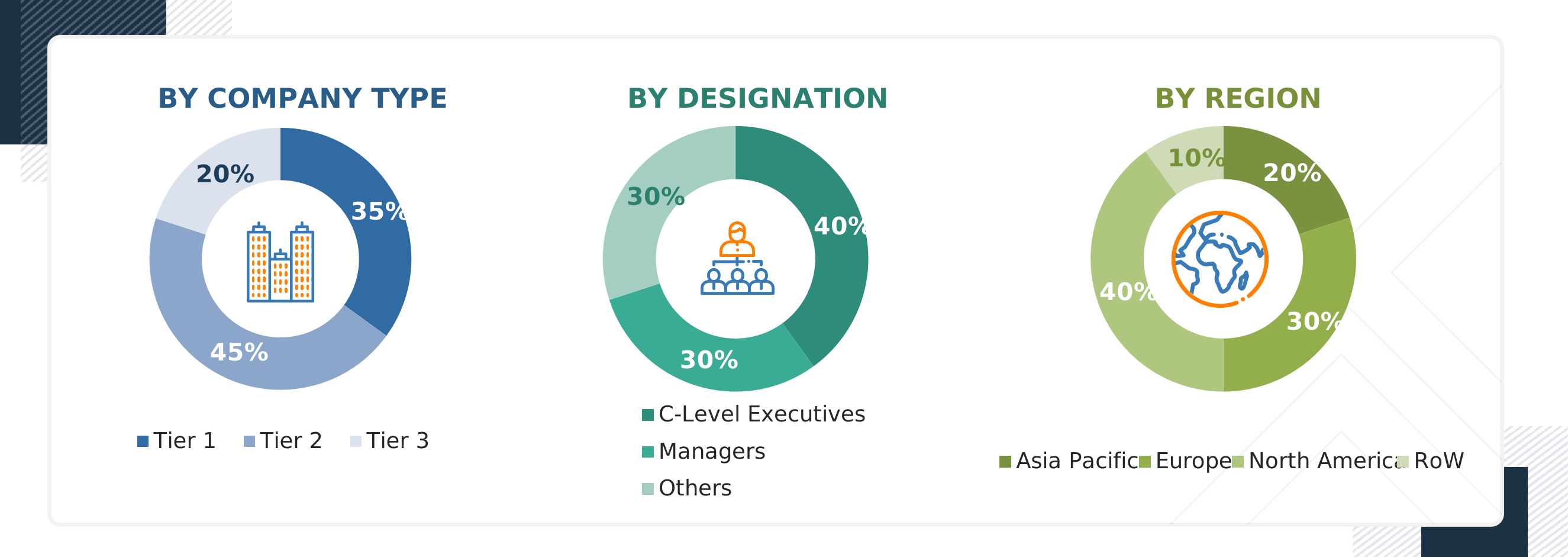
Extensive primary research was conducted after understanding and analyzing the semiconductor cleanroom market scenario through secondary research. Several primary interviews were conducted with key opinion leaders from demand- and supply-side vendors across four major regions—North America, Europe, Asia Pacific, and RoW. Approximately 20% of the primary interviews were conducted with the demand side and 80% with the supply side. Primary data was collected through questionnaires, e-mails, and telephonic interviews. Various departments within organizations, such as sales, operations, and administration, were contacted to provide a holistic viewpoint in the report.
To know about the assumptions considered for the study, download the pdf brochure
Market Size Estimation
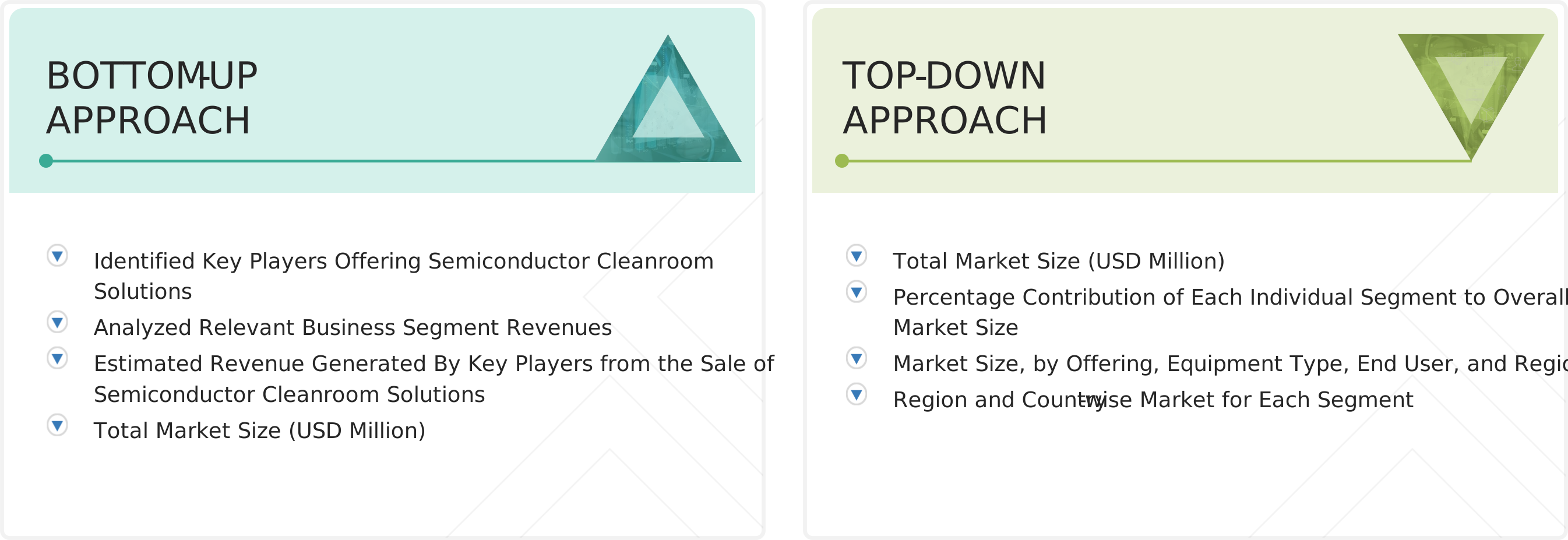
Both top-down and bottom-up approaches were used to estimate and validate the total size of the semiconductor cleanroom market. These methods were also used extensively to estimate the size of various subsegments in the market. The research methodology used to estimate the market size includes the following:
- Major players in the industry and markets have been identified through extensive secondary research.
- The industry’s value chain and market size (in terms of value) have been determined through primary and secondary research processes.
- All percentage shares, splits, and breakdowns have been determined using secondary sources and verified through primary sources.
Semiconductor Cleanroom Market: Top-Down and Bottom-Up Approach
Data Triangulation
After arriving at the overall size of the semiconductor cleanroom market through the process explained above, the overall market has been split into several segments. Data triangulation procedures have been employed to complete the overall market engineering process and arrive at the exact statistics for all the segments, wherever applicable. The data has been triangulated by studying various factors and trends from the demand and supply sides. The market has also been validated using top-down and bottom-up approaches.
Market Definition
A semiconductor cleanroom is a highly controlled environment designed to minimize airborne particles, contaminants, and chemical vapors that could interfere with semiconductor fabrication processes. These cleanrooms use advanced filtration systems, airflow control, and strict protocols to maintain specific ISO classifications, ensuring ultra-clean conditions for critical steps, such as lithography, etching, deposition, and packaging. By providing contamination-free environments, semiconductor cleanrooms help improve wafer yield, maintain device reliability, and enable the production of increasingly complex chips at smaller technology nodes.
Key Stakeholders
- Raw material suppliers
- Original equipment manufacturers (OEMs)
- Original design manufacturers (ODM)
- Research institutes
- Semiconductor cleanroom solution providers
- Forums, alliances, and associations
- Governments and financial institutions
- Analysts and strategic business planners
- Distributors
- End users
Report Objectives
- To describe and forecast the size of the semiconductor cleanroom market, by offering, equipment type, and end user, in terms of value
- To describe and forecast the market size of various segments across four key regions—North America, Europe, Asia Pacific, and the Rest of the World (RoW), in terms of value
- To describe and forecast the size of the semiconductor cleanroom market, by equipment type, in terms of volume
- To provide detailed information regarding the drivers, restraints, opportunities, and challenges influencing the growth of the semiconductor cleanroom market
- To provide an overview of the value chain pertaining to the semiconductor cleanroom ecosystem and the average selling prices of equipment types
- To provide a detailed overview of the impact of AI/Gen AI and the US 2025 tariff on the semiconductor cleanroom market
- To provide information about key technological trends, trade analysis, and patents related to the semiconductor cleanroom
- To benchmark the market players using the proprietary company evaluation matrix framework, which analyzes them on various parameters within the broad categories of market ranking/share and product portfolio
- To analyze competitive developments, such as partnerships, expansions, acquisitions, and product launches, in the market
- To strategically profile key players and analyze their market share, ranking, and core competencies
Customization Options
With the market data given, MarketsandMarkets offers customizations according to the company’s specific needs. The following customization options are available for the report:
Company Information:
- Detailed analysis and profiling of additional market players (up to 7)
Key Questions Addressed by the Report
What is the current market size of the semiconductor cleanroom market?
The semiconductor cleanroom market is valued at USD 8.08 billion in 2025.
What is the projected market size by 2030?
The market is expected to reach USD 11.88 billion by 2030.
What is the CAGR of the semiconductor cleanroom market?
The market is projected to grow at a CAGR of 8.0% from 2025 to 2030.
What are the key growth drivers in this market?
Major drivers include rising demand for advanced semiconductors, miniaturization of nodes, EUV lithography adoption, and increased fab investments.
What are the major trends in the semiconductor cleanroom market?
Key trends include integration of robotics & automation, adoption of eco-friendly materials, and advanced contamination control technologies.
Which segment is expected to grow the fastest?
The cleanroom robotics & automation segment is expected to witness the highest growth rate.
Who are the key companies operating in the market?
Major players include Daifuku Co., Ltd., Murata Machinery, Exyte Group, DuPont, and Thermo Fisher Scientific.
Which region dominates or grows fastest in this market?
Asia Pacific is the fastest-growing region due to heavy semiconductor fab investments in China, Taiwan, South Korea, and Japan.
What are the major challenges or restraints in the market?
Key challenges include high capital and operational costs, complex cleanroom design, and stringent regulatory compliance requirements.
What does the report analysis include?
The report provides market sizing (top-down & bottom-up), segmentation, competitive landscape, regional analysis, trends, and primary & secondary research validation.


Personalize This Research
- Triangulate with your Own Data
- Get Data as per your Format and Definition
- Gain a Deeper Dive on a Specific Application, Geography, Customer or Competitor
- Any level of Personalization
Let Us Help You
- What are the Known and Unknown Adjacencies Impacting the Semiconductor Cleanroom Market
- What will your New Revenue Sources be?
- Who will be your Top Customer; what will make them switch?
- Defend your Market Share or Win Competitors
- Get a Scorecard for Target Partners

Custom Market Research Services
We Will Customise The Research For You, In Case The Report Listed Above Does Not Meet With Your Requirements
Get 10% Free CustomisationTESTIMONIALS

Tetsuya Ohhira
Business Development Manager-Technology Business
Nikon Corporation,
Leading Japanese MNC specializing in optics and imaging productswww.nikon.com
MarketsandMarkets™ response
is quick. Their attitude is flexible and positive. Analyst Insights are globally considered and
significant. Client Services quickly respond to our inquiry and demand. Their wide range of global
surveys help us make our strategic plan.
We hope Knowledge Store will be easier to search
for a report.
VP - Marketing & Business Development
Leading Provider of Process Control Solutions
We engaged with MarketsandMarkets on a study to perform an analysis and recommend a Go-To-Market strategy for metrology and process control in the semiconductor market. The study was tailored to our targets and needs with well-defined milestones. Our overall experience with the MarketsandMarkets team was very good throughout the project in all aspects including the analysis methodologies used, the quality and depth of primary and secondary data sets, the professionalism and flexibility of the team and the ability to meet the target schedule and milestones. We want to thank MarketsandMarkets team for a job well done.






Growth opportunities and latent adjacency in Semiconductor Cleanroom Market