Specialty Fertilizers Market

Specialty Fertilizer Market by Technology (Controlled-Release Fertilizers, Micronutrients, Water-Soluble Fertilizers, and Other Technologies), Form (Dry and Liquid), Application Method, Type, Crop Type, and Region - Global Forecast To 2031




OVERVIEW
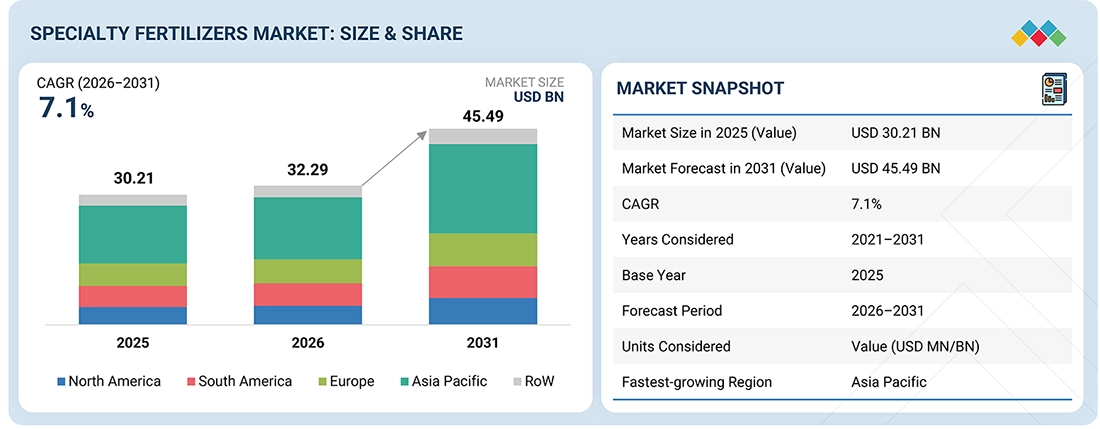
Source: Secondary Research, Interviews with Experts, MarketsandMarkets Analysis
The specialty fertilizers market is projected to reach USD 45.49 billion by 2031 from USD 32.29 billion in 2026, at a CAGR of 7.1% from 2026 to 2031. The specialty fertilizer market is experiencing substantial growth due to the increasing demand for efficient nutrient management systems that enhance crop productivity, improve nutrient use efficiency and support sustainable farming practices. There is a notable shift towards precision farming, fertigation systems, and protected cultivation, making specialty fertilizers—such as water-soluble types, controlled-release fertilizers, and micronutrients—more essential than ever. Additionally, concerns about soil nutrient depletion are growing. There is a constant need to refine fertilizer application, and the regulatory focus on reducing nutrient losses is accelerating overall market expansion. Fertilizer formulations are continuously improving, with advancements in enhanced-efficiency products and crop-specific nutrient solutions leading to better performance and stronger crop responses. As high-value crops are increasingly cultivated and agrarian practices continue to modernize across various countries, the demand for specialty fertilizers in major agricultural regions is becoming even stronger.
Market Size and Forecast:
- Market Size Value in 2025: USD 30.21 Billion
- Market Size Value in 2026: USD 32.29 Billion
- Revenue Forecast in 2031: USD 45.49 Billion
- Growth Rate: CAGR of 7.1% from 2026 to 2031
- Data available from 2021 to 2031
- Base year: 2025
- Forecast period: 2026–2031
- Asia Pacific specialty fertilizers market accounted for the largest share of 44.5% of the market in 2025.
- The dry segment is projected to grow at the highest CAGR of 7.4% from 2026 to 2031.
Key Market Trends and Insights
- By Technology: Advanced fertilizer technologies such as controlled-release fertilizers, water-soluble fertilizers, micronutrients, and liquid fertilizers are gaining adoption due to improved nutrient efficiency, precision application, and enhanced crop productivity.
-
Growth Drivers: Rising focus on sustainable agriculture, soil health improvement, food security, and efficient nutrient management is driving the adoption of specialty fertilizers.
- Growing Trends: Increasing use of precision agriculture, fertigation, customized nutrient solutions, and advanced fertilizer technologies is shaping market growth.
- Growth Opportunities: Growing demand for specialty crops, protected cultivation, sustainable farming practices, and innovative fertilizer formulations is creating strong growth opportunities.
KEY TAKEAWAYS
-
BY REGIONBy region, the Asia Pacific specialty fertilizers market accounted for the largest share of 44.5% of the market in 2025.
-
BY TYPEBy type, the monoammonium phosphate segment is expected to register the highest CAGR of 8.3% during the forecast period.
-
BY TECHNOLOGYBy technology, the water-soluble fertilizers segment is expected to dominate the market during the forecast period.
-
BY APPLICATIONBy application, the fertigation segment is expected to register the highest CAGR during the forecast period.
-
BY FORMBy form, the dry segment is projected to grow at the highest CAGR of 7.4% from 2026 to 2031.
-
BY CROP TYPEBy crop type, the cereals & grains segment is expected to dominate the market.
-
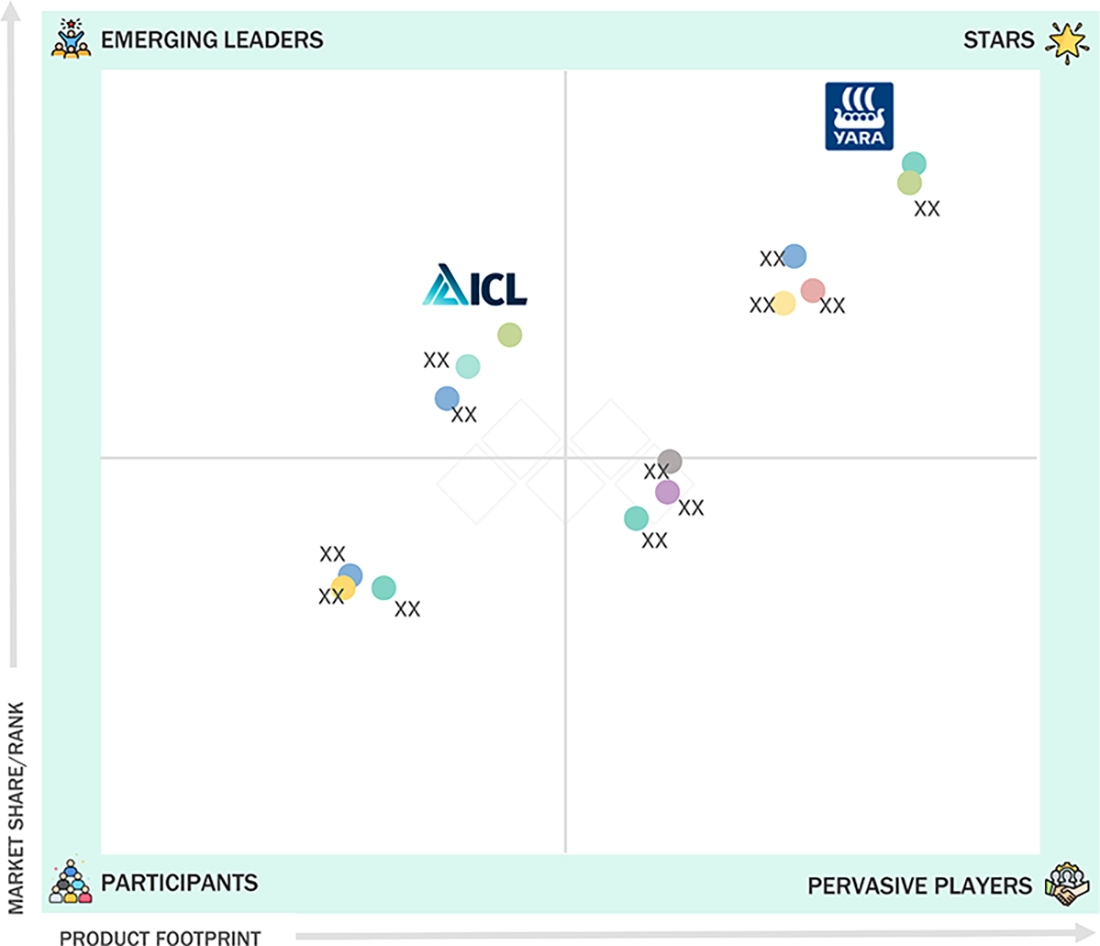
COMPETITIVE LANDSCAPE - KEY PLAYERSYara International, Nutrien, SQM, and The Mosaic Company were identified as the star players in the specialty fertilizers market, given their strong market share and product footprint.
-
COMPETITIVE LANDSCAPE - SMEs/STARTUPSEuroChem Group, Aries Agro Limited, and Gujarat State Fertilizers & Chemicals Ltd. (GSFC) have distinguished themselves among startups and SMEs by securing strong footholds in specialized niche areas, underscoring their potential as emerging market leaders.
The specialty fertilizers market is projected to reach USD 45.49 billion by 2031 from USD 32.29 billion in 2026, at a CAGR of 7.1% from 2026 to 2031. Market expansion is being driven by the adoption of advanced crop nutrition solutions, including controlled-release and water-soluble fertilizers, micronutrients, and specialty nutrient blends. These innovations help improve nutrient use efficiency and increase overall crop output. Additionally, the rise of precision agriculture, along with fertigation systems and modern irrigation technologies, enables farmers to apply nutrients more accurately. This targeted approach is significantly boosting the demand for specialty fertilizers across various cropping systems.
TRENDS & DISRUPTIONS IMPACTING CUSTOMERS' CUSTOMERS
The specialty fertilizers market is currently experiencing a significant trend focused on high-efficiency and sustainable nutrient management practices. Market growth is being driven by an increasing adoption of advanced crop nutrition solutions such as controlled-release fertilizers, water-soluble fertilizers, micronutrients, and specialty nutrient blends. These solutions enhance nutrient use efficiency and directly boost crop productivity. Additionally, there is a growing implementation of precision agriculture, fertigation systems, and new irrigation technologies that allow for more targeted nutrient application. This supports the demand for specialty fertilizers across a diverse range of cropping systems. Farmers are increasingly utilizing these products to improve yields, enhance crop quality, and address nutrient deficiencies while minimizing environmental impact. The rising cultivation of fruits & vegetables, along with the expansion of greenhouse and protected agriculture, is also contributing to this trend. Moreover, the strong emphasis on sustainable farming practices is creating significant growth opportunities for specialty fertilizers in both developed and emerging agricultural markets.
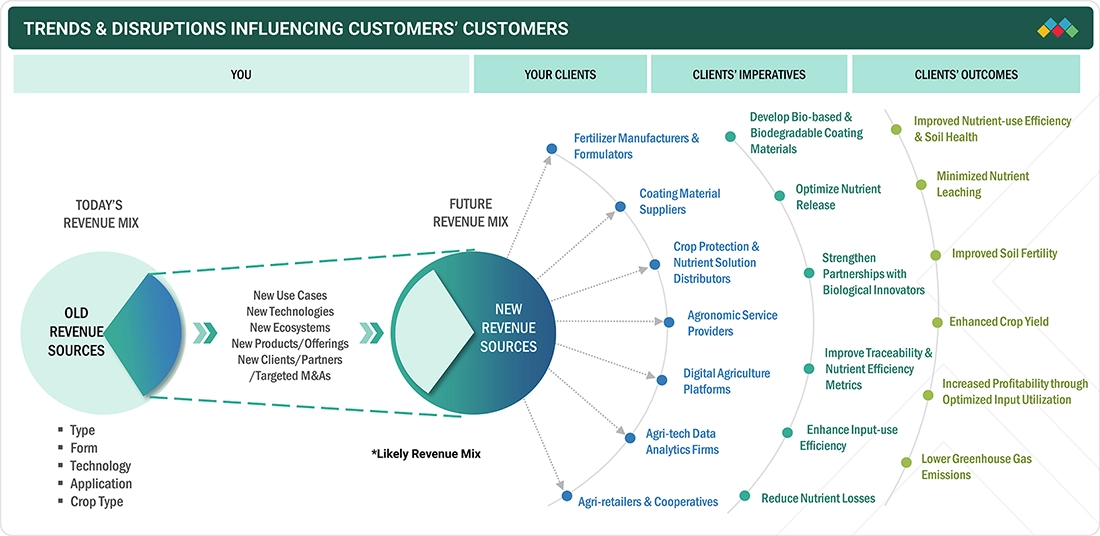
Source: Secondary Research, Interviews with Experts, MarketsandMarkets Analysis
MARKET DYNAMICS

Level
-
Increasing demand for higher crop productivity and nutrient-use efficiency

-
Rising adoption of precision agriculture and fertigation systems


Level
-
High cost of specialty fertilizers compared to conventional fertilizers

-
Limited awareness and adoption among small-scale farmers


Level
-
Expanding cultivation of high-value fruits & vegetables

-
Growing demand for sustainable and environmentally friendly crop nutrition solutions


Level
-
Volatility in raw material prices and supply chains

-
Stringent environmental and regulatory compliance requirements

Source: Secondary Research, Interviews with Experts, MarketsandMarkets Analysis
Driver: Increasing demand for higher crop productivity and nutrient-use efficiency
A primary driver of the specialty fertilizers market is the increasing need to enhance agricultural productivity while optimizing fertilizer use. As arable land diminishes and global food demand continues to rise, many farmers are turning to specialty fertilizers to boost crop yields and improve nutrient uptake. Options such as controlled-release fertilizers, micronutrients, and water-soluble formulations help reduce nutrient losses, increase fertilizer effectiveness, and promote more sustainable crop growth across various farming practices.
Restraint: High cost of specialty fertilizers compared to conventional fertilizers
One significant constraint in the specialty fertilizers market is the relatively high cost of these products compared to conventional fertilizers. The advanced formulations, coating technologies, and micronutrient enrichment involved in specialty fertilizers increase production costs. As a result, these fertilizers can be less affordable for price-sensitive growers. This cost gap may slow adoption rates, particularly among smallholder farmers in developing regions, despite the long-term agronomic benefits and improved yields offered by specialty fertilizer solutions.
Opportunity: Expanding cultivation of high-value fruits & vegetables
A significant opportunity for the specialty fertilizers market is the increasing global cultivation of fruits & vegetables. These crops require precise nutrient management to achieve optimal yield, quality, appearance, and shelf life. Additionally, as consumers demand more premium fresh produce, farmers are increasingly investing in specialty fertilizers, including water-soluble options and micronutrients. This trend is creating real growth opportunities for manufacturers in both developed regions and emerging agricultural markets, where changes are happening rapidly.
Challenge: Volatility in raw material prices and supply chains
A major challenge facing the specialty fertilizers market is the volatility of raw material prices and disruptions in global supply chains. The production of specialty fertilizers depends on essential inputs such as nitrogen, phosphate, potash, and micronutrient minerals, which can fluctuate due to geopolitical events, energy costs, trade restrictions, and logistics bottlenecks. When the supply of these materials changes, their prices tend to rise as well, leading manufacturers to incur higher production costs and tighter profit margins. Meanwhile, end users face uncertainty about product availability and procurement timing.
SPECIALTY FERTILIZERS MARKET TRENDS, GROWTH, AND FORECAST [LATEST]: COMMERCIAL USE CASES ACROSS INDUSTRIES
| COMPANY | USE CASE DESCRIPTION | BENEFITS |
|---|---|---|
 |
Application of specialty NPK fertilizers through fertigation in fruits & vegetables. | Enhances nutrient use efficiency, improves yield and quality, and supports precision nutrient management. |
 |
Use of specialty water-soluble fertilizers in large-scale field crops under drip irrigation. | Ensures uniform nutrient distribution, reduces input losses, and increases productivity per hectare. |
 |
Integration of micronutrient fertilizers in greenhouse cultivation. | Improves nutrient uptake, corrects deficiencies quickly, and enhances crop uniformity and quality. |
 |
Application of crop-specific fertilizers in high-value horticulture and plantation crops. | Supports balanced plant nutrition, improves stress tolerance, and maximizes commercial yield potential. |
Logos and trademarks shown above are the property of their respective owners. Their use here is for informational and illustrative purposes only.
MARKET ECOSYSTEM
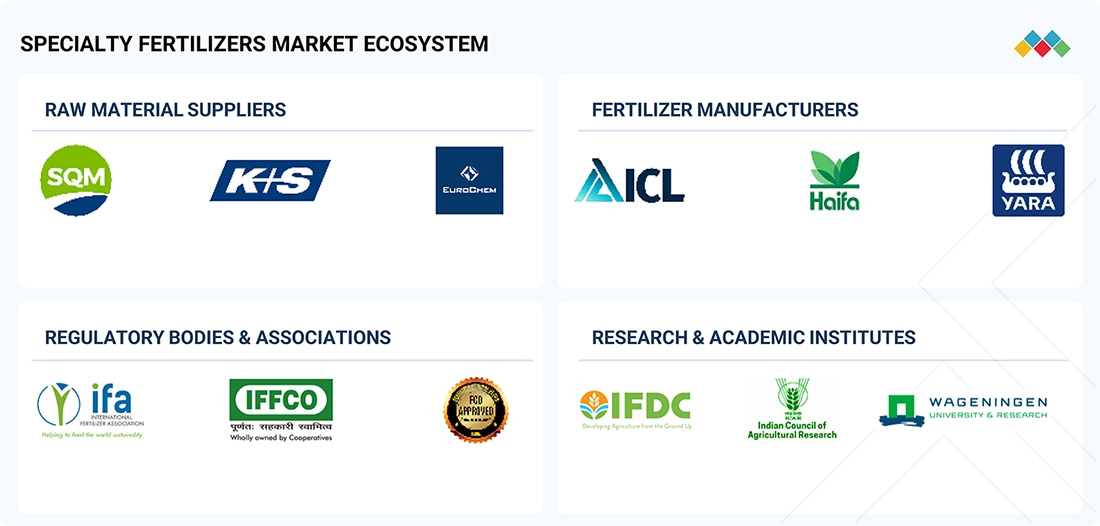
The specialty fertilizers market is characterized by several well-established and financially robust manufacturers that offer a diverse range of specialty nutrition products and advanced formulation capabilities. These companies operate through extensive global distribution networks and prioritize high-efficiency nutrient solutions. The WSF (Water-Soluble Fertilizer) ecosystem comprises raw material suppliers, manufacturers, irrigation system providers, distributors, and growers. Key players in this market, such as Yara International, Nutrien, ICL Group, and Haifa Group, focus on developing specialty fertilizer micronutrients for fertigation (the application of fertilizers through irrigation systems) and foliar applications (application directly to plant leaves).
Logos and trademarks shown above are the property of their respective owners. Their use here is for informational and illustrative purposes only.
MARKET SEGMENTS
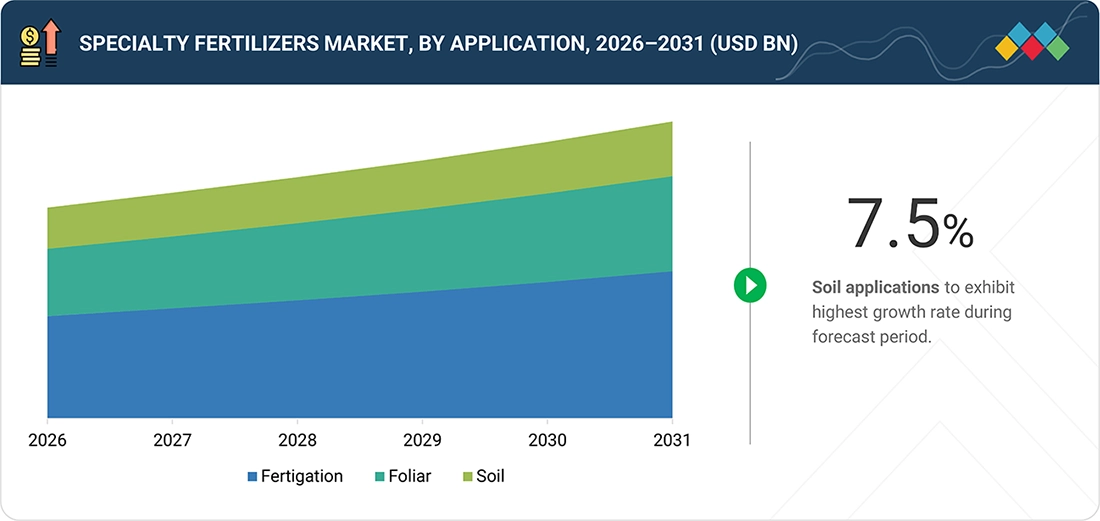
Source: Secondary Research, Interviews with Experts, MarketsandMarkets Analysis
Specialty Fertilizers Market, by Type
The type segment includes urea-ammonium nitrate (UAN), calcium ammonium nitrate (CAN), monoammonium phosphate (MAP), sulfate of potash (SOP), potassium nitrate, urea derivatives, blends of NPK, and others. Among these, urea-ammonium nitrate (UAN) holds the largest share due to its high nitrogen content, ease of application, and compatibility with precision agriculture and fertigation systems. UAN provides a readily available source of nitrogen throughout the crop cycle and is widely used across cereals, grains, and other field crops. Its liquid form allows uniform application and efficient nutrient management, supporting its strong market position.
Specialty Fertilizers Market, by Application
The application segment includes fertigation, foliar, soil, and other applications. Among these, the foliar application segment holds the largest share due to its ability to deliver nutrients directly to plant tissues for rapid absorption and immediate correction of nutrient deficiencies. Foliar fertilizers are extensively used in fruits, vegetables, horticultural crops, and plantations where crop quality and nutrient precision are critical. The increasing use of water-soluble fertilizers and micronutrients, coupled with the adoption of precision nutrient management practices, continues to support the dominance of foliar applications.
Specialty Fertilizers Market, by Technology
The technology segment includes controlled-release fertilizers, water-soluble fertilizers, micronutrients, and other specialty fertilizers. Among these, micronutrients hold a significant share due to the increasing prevalence of micronutrient deficiencies in agricultural soils and their essential role in plant growth and crop quality. Nutrients such as zinc, iron, boron, and manganese are widely used to improve nutrient uptake, photosynthesis, and overall crop productivity. While controlled-release fertilizers and water-soluble fertilizers are gaining traction through precision farming and fertigation, micronutrients remain a key component of balanced crop nutrition programs across major agricultural regions.
Specialty Fertilizers Market, by Form
The form segment includes dry and liquid fertilizers. Among these, the dry form holds the largest share owing to its longer shelf life, ease of storage, lower transportation costs, and compatibility with conventional fertilizer application equipment. Dry specialty fertilizers, including controlled-release fertilizers, granular micronutrients, and specialty NPK blends, are widely used across large-scale agricultural operations. Their stability, convenience, and suitability for broad-acre farming make them the preferred choice among growers, particularly in cereals and grain production systems.
Specialty Fertilizers Market, by Crop Type
The crop type segment includes cereals & grains, oilseeds & pulses, fruits & vegetables, and other crop types. Among these, cereals & grains hold a significant share due to their extensive cultivation area and their importance in ensuring global food security. Crops such as wheat, rice, maize, and barley require efficient nutrient management to achieve high yields and maintain soil fertility. The growing adoption of specialty fertilizers in cereal production helps improve nutrient-use efficiency, optimize input costs, and enhance overall productivity, supporting the segment's strong market presence.
REGION
Asia Pacific to be fastest-growing region in specialty fertilizers market during forecast period
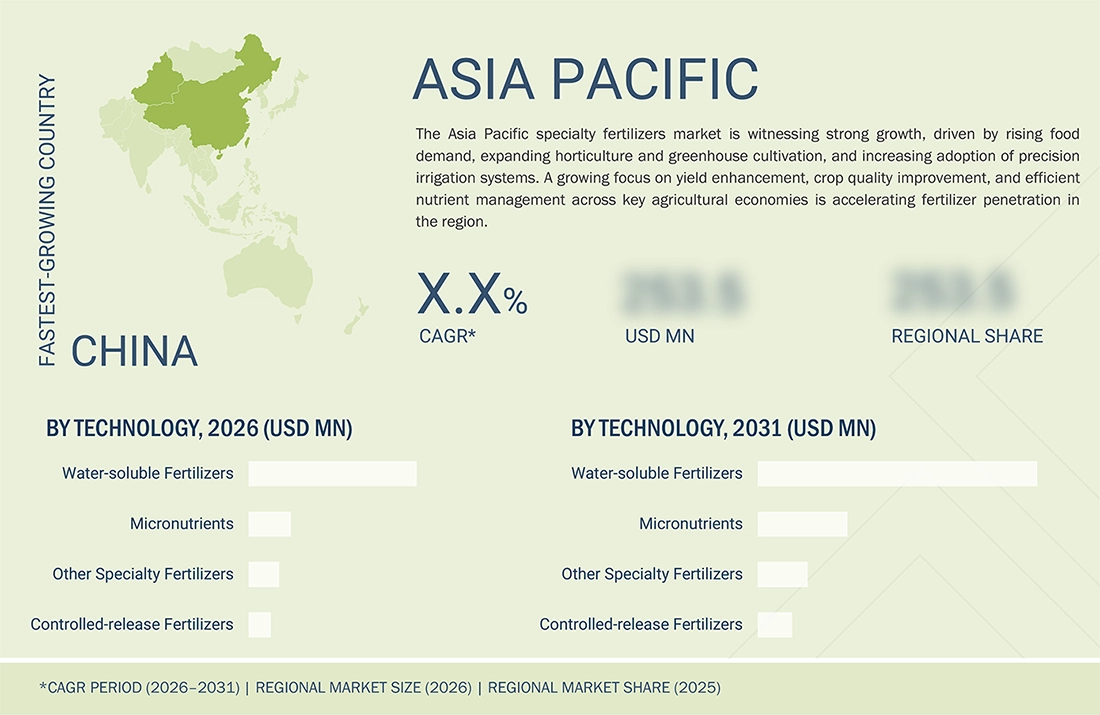
In the specialty fertilizers market, the regional segments include North America, Europe, Asia Pacific, South America, and the Rest of the World. Among these regions, Asia Pacific holds the largest share, primarily due to its extensive agricultural base, high fertilizer consumption, and increasing demand for improved crop productivity. Countries in this region are increasingly adopting specialty fertilizers, such as water-soluble, micronutrient, and controlled-release fertilizers, to address soil nutrient deficiencies and enhance crop yields. Furthermore, growing investments in precision agriculture, modern irrigation systems, and sustainable farming practices continue to strengthen Asia Pacific's leading position in the global specialty fertilizers market.
SPECIALTY FERTILIZERS MARKET TRENDS, GROWTH, AND FORECAST [LATEST]: COMPANY EVALUATION MATRIX
Leading companies in the specialty fertilizers industry, such as Yara International and other top global manufacturers, have extensive and diversified portfolios of specialty nutrition. They possess strong brand recognition and significant influence in key agricultural regions. Emerging players like ICL are experiencing rapid growth by introducing innovative, environmentally friendly fertilizers. Various industry participants operate consistently, while established companies maintain a moderate yet growing presence in the market.
Source: Secondary Research, Interviews with Experts, MarketsandMarkets Analysis
KEY MARKET PLAYERS
- Nutrien Ltd. (Canada)
- Yara International ASA (Norway)
- ICL Group Ltd. (Israel)
- K+S Aktiengesellschaft (Germany)
- SQM S.A. (Chile)
- EuroChem Group (Switzerland)
- CF Industries Holdings, Inc. (US)
- Nufarm Limited (Australia)
- The Mosaic Company (US)
- OCI Global (Netherlands)
- OCP Group (Morocco)
- Grupa Azoty (Poland)
- Coromandel International Limited (India)
- Deepak Fertilisers and Petrochemicals Corporation Limited (India)
- Zuari Agro Chemicals Limited (India)
MARKET SCOPE
| REPORT METRIC | DETAILS |
|---|---|
| Market Size in 2025 (Value) | USD 30.21 Billion |
| Market Forecast in 2026 (Value) | USD 32.29 Billion |
| Market Forecast in 2031 (value) | USD 45.49 Billion |
| Growth Rate | CAGR of 7.1% during 2026–2031 |
| Years Considered | 2021–2031 |
| Base Year | 2025 |
| Forecast Period | 2026–2031 |
| Units Considered | Value (USD Million/Billion) |
| Report Coverage | Revenue Forecast, Company Ranking, Competitive Landscape, Growth Factors, Trends |
| Segments Covered |
|
| Regions Covered | North America, South America, Europe, Asia Pacific, Rest of the World |
WHAT IS IN IT FOR YOU: SPECIALTY FERTILIZERS MARKET TRENDS, GROWTH, AND FORECAST [LATEST] REPORT CONTENT GUIDE
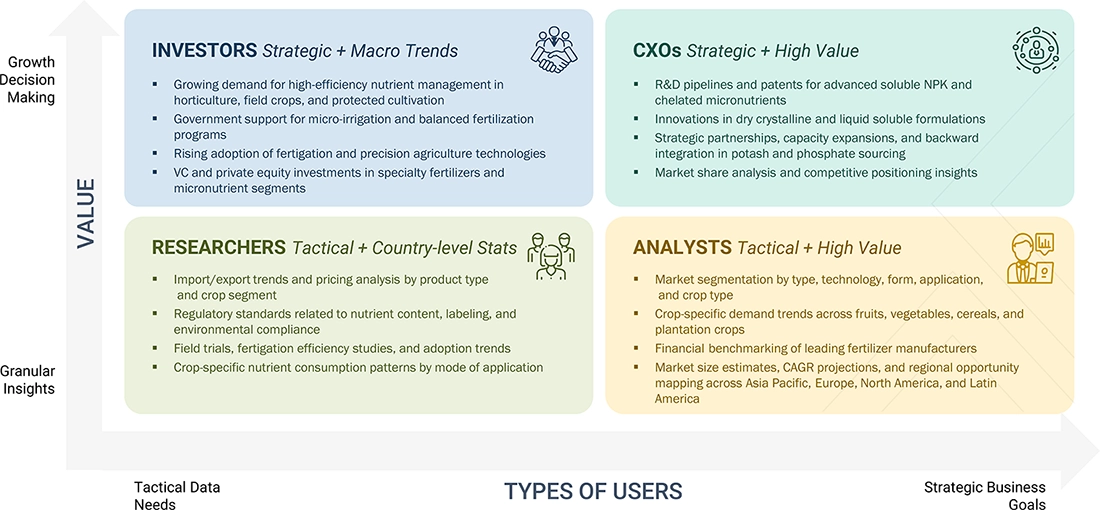
DELIVERED CUSTOMIZATIONS
We have successfully delivered the following deep-dive customizations:
| CLIENT REQUEST | CUSTOMIZATION DELIVERED | VALUE ADDS |
|---|---|---|
| Specialty Fertilizer Manufacturer |
|
|
| Agricultural Input Distributor |
|
|
| Crop Nutrition & Specialty Fertilizer Company |
|
|
| Investor/Private Equity Firm |
|
|
RECENT DEVELOPMENTS
- 7/1/2024 12:00:00 AM : EuroChem Group commissioned a new potassium nitrate (NOP) production facility, increasing its capacity for water-soluble fertilizers used in fertigation and high-value crop production.
- 3/1/2024 12:00:00 AM : EuroChem Group inaugurated its Serra do Salitre phosphate fertilizer complex in Brazil, significantly expanding its phosphate and specialty fertilizer production capacity to serve the growing South American agricultural market.
- 5/1/2024 12:00:00 AM : Yara International ASA expanded the commercialization of its YaraAmplix biostimulant portfolio, complementing its specialty fertilizer offerings and strengthening its crop nutrition solutions portfolio across key agricultural markets.
- 9/1/2023 12:00:00 AM : ICL Group Ltd. launched eqo.x, a biodegradable controlled-release fertilizer coating technology designed to improve nutrient-use efficiency while reducing environmental impact compared to conventional coated fertilizers.
- 8/1/2023 12:00:00 AM : Nutrien Ltd. announced the acquisition of Agrichem, a Brazil-based specialty plant nutrition company, strengthening its specialty fertilizer portfolio and expanding its presence in the Latin American crop nutrition market.
Table of Contents
 Exclusive indicates content/data unique to MarketsandMarkets and not available with any competitors.
Methodology
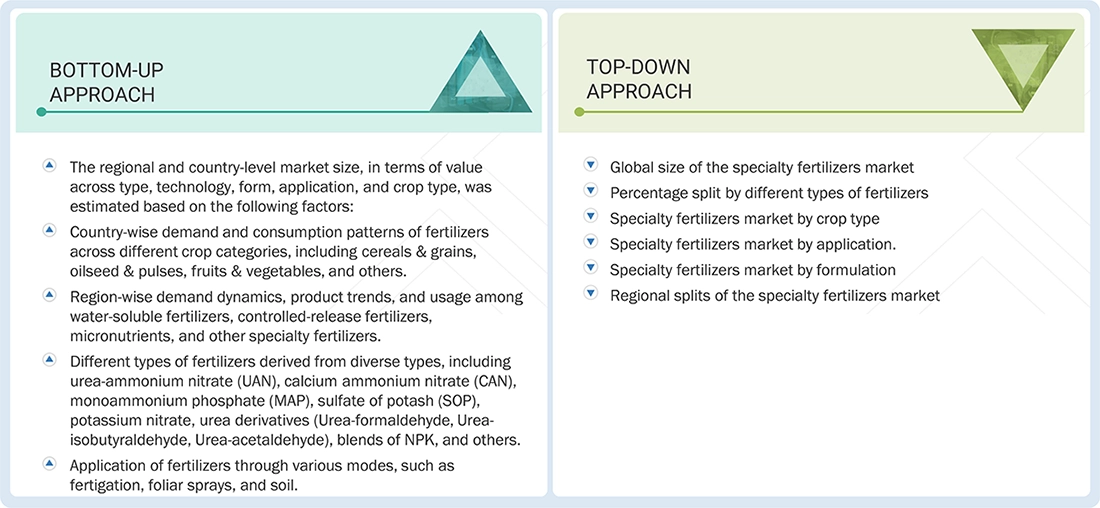
The study involved two major approaches in estimating the current size of the specialty fertilizers market. Exhaustive secondary research was done to collect information on the market, peer, and parent markets. The next step was to validate these findings, assumptions, and sizing with industry experts across the value chain through primary research. Both top-down and bottom-up approaches were employed to estimate the complete market size. After that, market breakdown and data triangulation were used to estimate the market size of segments and subsegments.
Secondary Research
This research study involved the extensive use of secondary sources—directories and databases such as Bloomberg Businessweek and Factiva—to identify and collect information useful for a technical, market-oriented, and commercial study of the market.
In the secondary research process, various sources such as annual reports, press releases & investor presentations from companies, white papers, food journals, certified publications, articles by recognized authors, directories, and databases were consulted to identify and collect information.
Secondary research was mainly used to obtain key information about the industry’s supply chain, the total pool of key players, and market classification and segmentation aligned with industry trends, down to the bottom-most level, regional markets, and key developments from both market- and technology-oriented perspectives.
Primary Research
Extensive primary research was conducted after obtaining information regarding the specialty fertilizer market scenario through secondary research. Several primary interviews were conducted with market experts from both the demand and supply sides across major countries of North America, Europe, Asia Pacific, South America, and the Rest of the World. Primary data was collected through questionnaires, emails, and telephonic interviews. The primary sources from the supply side included industry experts, such as Chief X Officers (CXOs), Vice Presidents (VPs), and Directors from business development, marketing, research, and development teams, as well as related key executives from distributors and key opinion leaders. Primary interviews were conducted to gather insights, including market statistics, revenue data from products and services, market breakdowns, market size estimates, market forecasts, and triangulation. Primary research also helped in understanding the various trends related to specialty fertilizer active ingredients, by form, crop type, mode of application, and region. Stakeholders from the demand side, such as research institutions and universities, agrochemical distributors and retailers, and food processing companies, were interviewed to understand the buyer’s perspective on the suppliers, products, and their current usage of specialty fertilizers and the outlook of their business, which will affect the overall market.
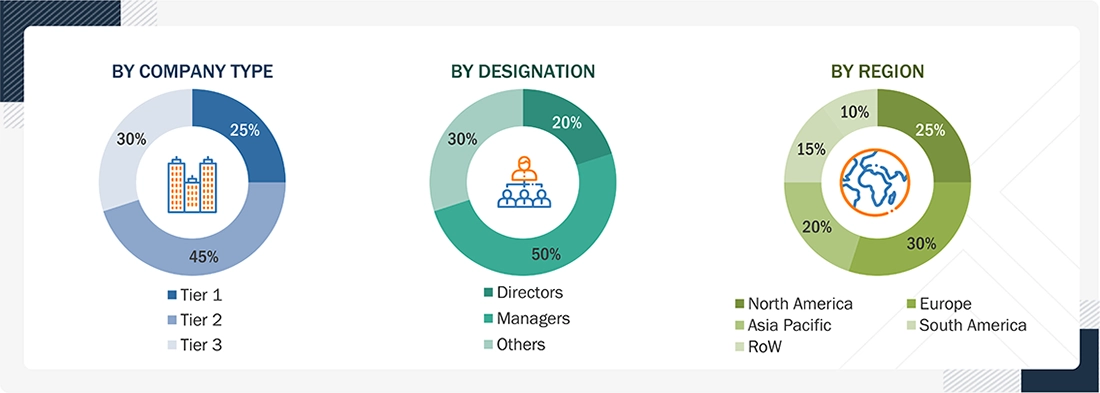
Note: The three tiers of companies are defined by their 2025 total revenue. Based on the availability of financial data: Tier 1: Revenue = >USD 1 billion, Tier 2: USD 100 million-≤ USD 1 billion, and Tier 3: <USD 100 million.
|
COMPANY NAME |
DESIGNATION |
|
UPL (India) |
General Manager |
|
BASF SE (Germany) |
Sales Manager |
|
Syngenta Group (Switzerland) |
Manager |
|
Sumitomo Chemical Co., Ltd. (Japan) |
Sales Manager |
|
PI Industries (India) |
Marketing Manager |
To know about the assumptions considered for the study, download the pdf brochure
Market Size Estimation
Both the top-down and bottom-up approaches were used to estimate and validate the total size of the specialty fertilizers market. These approaches were also used extensively to determine the sizes of various market subsegments. The research methodology used to estimate the market size includes the following details:
- The key players in the industry and the overall markets were identified through extensive secondary research.
- All shares, splits, and breakdowns were determined using secondary sources and verified through primary sources.
- All possible parameters that affect the market covered in this research study were accounted for, viewed in extensive detail, verified through primary research, and analyzed to obtain final quantitative and qualitative data.
- The research included the study of reports, reviews, and newsletters of top market players, along with extensive interviews for opinions from leaders, such as CEOs, directors, and marketing executives.
Data Triangulation
After arriving at the overall market size from the estimation process explained above, the total market was split into several segments and subsegments. The data triangulation and market breakdown procedures were employed, where applicable, to estimate the overall specialty fertilizers market and derive precise statistics for all segments and subsegments. The data was triangulated by studying various factors and trends from the demand and supply sides. The market size was also validated using both the top-down and bottom-up approaches.
Market Definition
According to the Gulf Petrochemicals & Chemicals Association (GPCA), specialty fertilizers are a fast-growing and diverse group of products with distinct characteristics and essential primary, secondary, or micronutrient content. Specialty fertilizers are designed to yield higher efficiency. They are designed for slow or controlled release and aim to enhance nutrient use efficiency, reduce costs, and minimize environmental risk.
Key Stakeholders
- Fertilizer manufacturers, formulators, and blenders
- Specialty fertilizer manufacturers, formulators, and blenders
- Fertilizer traders, suppliers, distributors, importers, and exporters
- Specialty fertilizer traders, suppliers, distributors, importers, and exporters
- Raw material suppliers and technology providers to manufacturers
- Agricultural co-operative societies
- Fertilizer associations and industry bodies:
- Food and Agriculture Organization (FAO)
- International Fertilizer Association (IFA) and Association of American Plant Food Control Officials (AAPFCO)
- Micronutrient Manufacturers Association (MMA)
- Government agricultural departments and regulatory bodies:
- US Environmental Protection Agency (EPA)
- Canadian Food Inspection Agency (CFIA)
- US Department of Agriculture (USDA)
Report Objectives
- To determine and project the size of the specialty fertilizers market with respect to type, form, technology, application, crop type, and region, in terms of value over five years, ranging from 2026 to 2031
- To identify the attractive opportunities in the market by determining the largest and fastest-growing segments across regions
- To provide detailed information about the key factors influencing market growth (drivers, restraints, opportunities, and challenges)
- To analyze the opportunities in the market for stakeholders and provide details of the competitive landscape for market leaders
- To analyze the micromarkets with respect to individual growth trends, prospects, and their contribution to the total market
- To identify and profile the key players in the specialty fertilizers market
- To understand the competitive landscape and identify the major growth strategies adopted by players across the key regions
Available customizations:
With the given market data, MarketsandMarkets offers customizations according to company-specific scientific needs.
The following customization options are available for the report:
PRODUCT ANALYSIS
- Product Matrix, which provides a detailed comparison of each company's product portfolio.
GEOGRAPHIC ANALYSIS
With the given market data, MarketsandMarkets offers customizations according to company-specific scientific needs.
- Further breakdown of the Rest of Europe specialty fertilizers market into key countries.
- Further breakdown of the Rest of Asia Pacific specialty fertilizers market into key countries.
- Further breakdown of the Rest of South America specialty fertilizers market into key countries.
COMPANY INFORMATION
- Detailed analyses and profiling of additional market players (up to five)
Key Questions Addressed by the Report
What is the current size of the specialty fertilizers market?
The specialty fertilizers market is estimated at USD 32.29 billion in 2026 and is projected to reach USD 45.49 billion by 2031, reflecting strong demand for advanced crop nutrition products across global agriculture.
What is the expected CAGR of the specialty fertilizers market?
The market is expected to grow at a CAGR of 7.1% between 2026 and 2031, supported by rising adoption of precision farming, water-soluble fertilizers, controlled-release fertilizers, and micronutrients.
What factors are driving specialty fertilizers market growth?
Market growth is driven by increasing demand for higher crop yields, efficient nutrient management, sustainable farming practices, precision agriculture technologies, fertigation systems, and the cultivation of high-value crops.
What are the latest trends in the specialty fertilizers market?
Key trends include the growing use of precision agriculture, customized nutrient formulations, enhanced-efficiency fertilizers, protected cultivation, and digital farming solutions that optimize fertilizer application and improve productivity.
What opportunities exist in the specialty fertilizers market?
The market offers significant opportunities through expanding greenhouse farming, increasing demand for specialty crops, adoption of sustainable agricultural practices, and continuous innovation in fertilizer technologies.


Personalize This Research
- Triangulate with your Own Data
- Get Data as per your Format and Definition
- Gain a Deeper Dive on a Specific Application, Geography, Customer or Competitor
- Any level of Personalization
Let Us Help You
- What are the Known and Unknown Adjacencies Impacting the Specialty Fertilizer Market
- What will your New Revenue Sources be?
- Who will be your Top Customer; what will make them switch?
- Defend your Market Share or Win Competitors
- Get a Scorecard for Target Partners

Custom Market Research Services
We Will Customise The Research For You, In Case The Report Listed Above Does Not Meet With Your Requirements
Get 10% Free CustomisationTESTIMONIALS

Business Innovation Director
US Based Leading Agribusiness,
Food and Ingredients ManufacturerI highly appreciate the team's efficiency for a well conducted study that helped us clarify some blind spots in food and agricultural niche markets. Although compiling information for B2B markets is very difficult, the MnM team pulled out the task successfully. The quality of research, level of insights, and responsiveness of team were commendable.






Growth opportunities and latent adjacency in Specialty Fertilizer Market