US AI in Healthcare Market Size, Growth, Share & Trends Analysis

US Artificial Intelligence (AI) in Healthcare Market by Offering (Integrated), Function (Diagnosis, Genomic, Precision Medicine, Radiation, Telehealth, Immunotherapy, Pharmacy, Supply Chain), Application (Clinical), End User (Hospitals) - Forecast to 2030




OVERVIEW
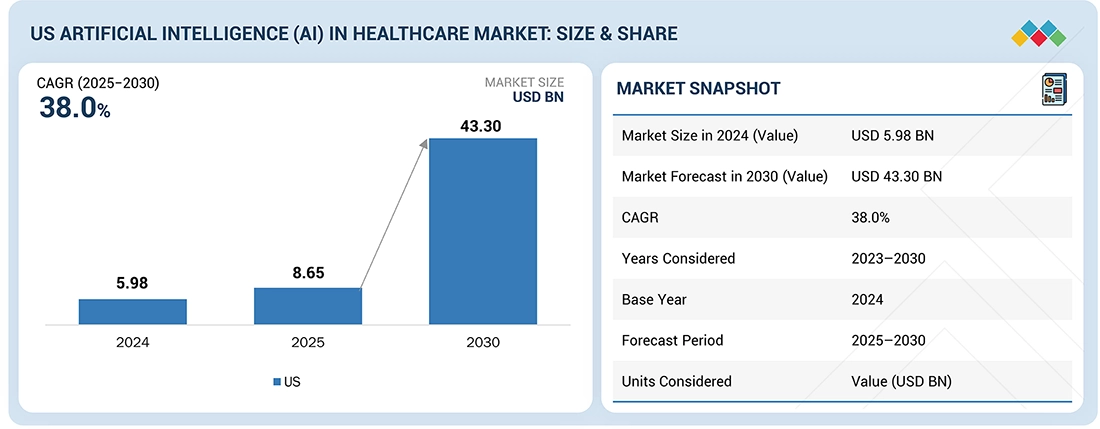
Source: Secondary Research, Interviews with Experts, MarketsandMarkets Analysis
The US artificial intelligence (AI) in healthcare market, valued at US$5.98 billion in 2024, stood at US$8.65 billion in 2025 and is projected to advance at a resilient CAGR of 38.0% from 2025 to 2030, culminating in a forecasted valuation of US$43.30 billion by the end of the period. Market growth is driven by rising demand from providers for automation, nationwide labor shortages, increasing clinical complexity, and strong investment in predictive analytics, imaging AI, and GenAI. Expanding regulatory support, EHR–AI integration, and the shift toward value-based care further accelerate the large-scale adoption of these technologies.
KEY TAKEAWAYS
-
By OfferingBy offering, the integrated solutions segment is expected to register the highest CAGR of 39.7% during the forecast period.
-
By FunctionBy function, the diagnosis & early detection segment is projected to grow at the fastest rate from 2025 to 2030.
-
By ApplicationBy application, the clinical applications segment accounted for the largest share (77.2%) of the US artificial intelligence (AI) in healthcare market.
-
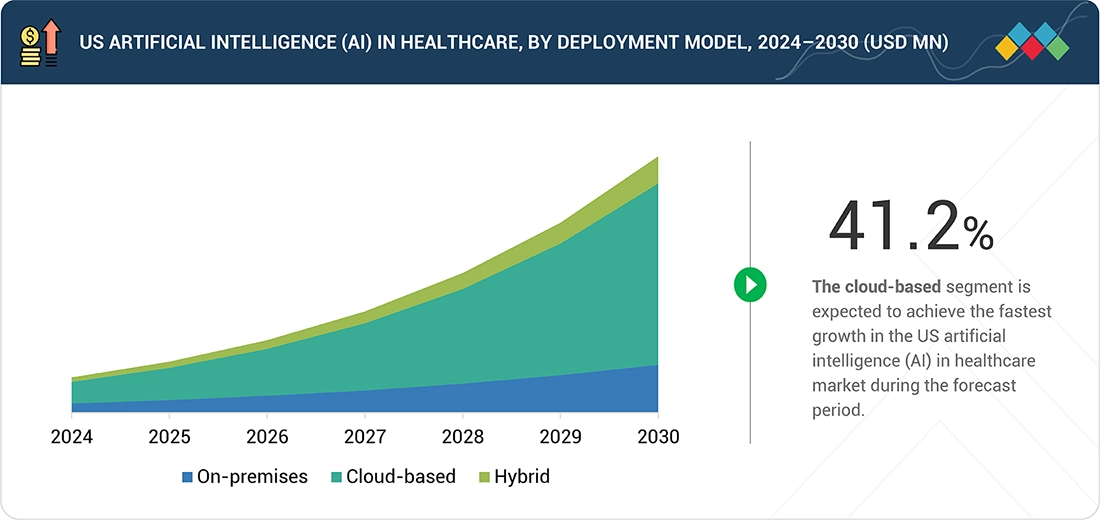
By Deployment ModelBy deployment model, the cloud-based models segment is expected to register the highest growth rate during the forecast period, at a CAGR of 41.2%.
-
By ToolBy tool, the machine learning segment is expected to dominate the market, growing at the highest CAGR.
-
By End userBy end user, the healthcare providers segment accounted for the largest share of the US artificial intelligence (AI) in healthcare market in 2024.
-
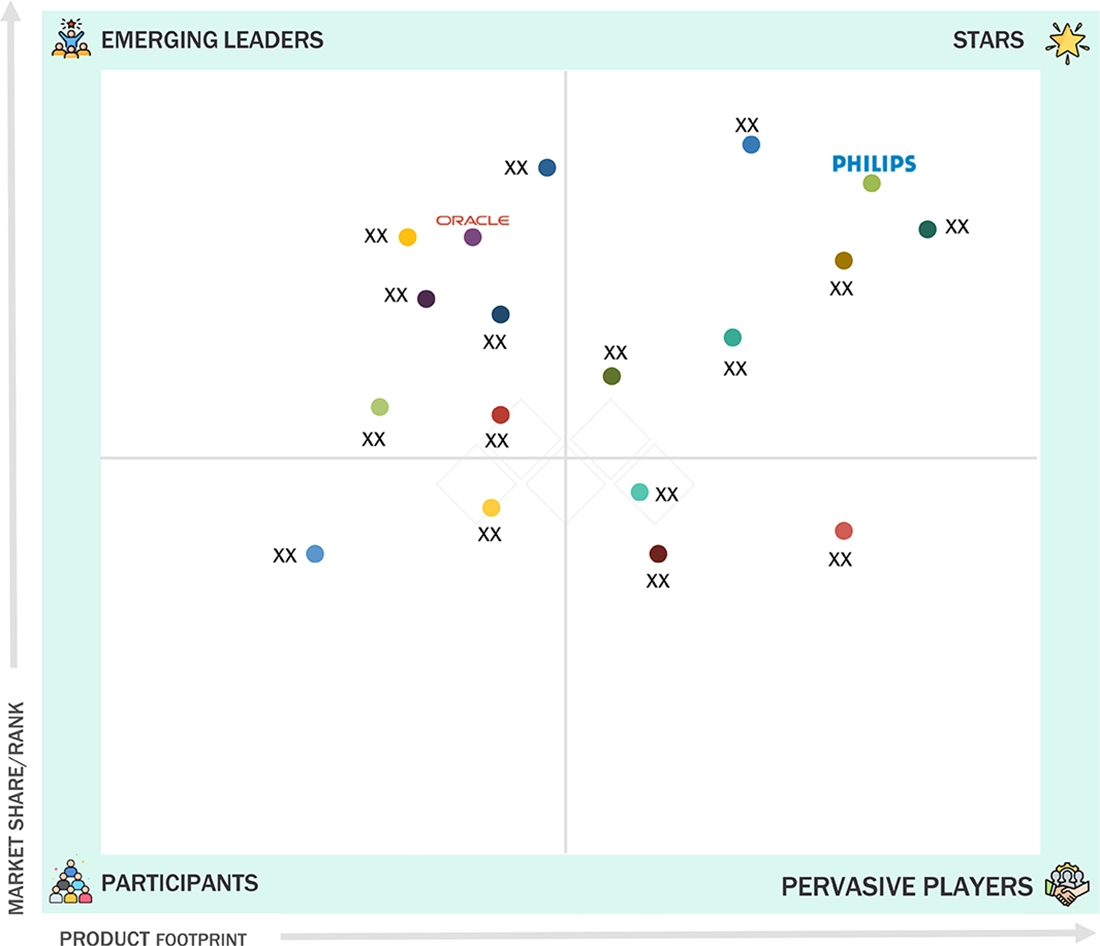
Competitive LandscapeMicrosoft Corporation, NVIDIA Corporation, and GE Healthcare were identified as key players in the US artificial intelligence (AI) in healthcare market, given their strong market share and extensive product footprint.
-
Competitive LandscapeQventus, Qure.AI, and Numerion Labs have distinguished themselves among startups and SMEs by securing strong footholds in specialized niche areas, underscoring their potential as emerging market leaders.
The artificial intelligence (AI) in healthcare market in US is experiencing rapid growth as the country faces mounting clinician shortages, rising healthcare costs, and an increasing administrative burden. US health systems are aggressively adopting AI for imaging, population health, revenue optimization, and clinical documentation to counter efficiency gaps. Federal initiatives supporting AI safety, reimbursement modernization, and EHR interoperability are further fueling the adoption of these technologies.
TRENDS & DISRUPTIONS IMPACTING CUSTOMERS' CUSTOMERS
US healthcare organizations are rapidly adopting AI to address structural challenges, including clinician shortages, escalating operational costs, and the rising demand for faster and more accurate clinical decision-making. As hospitals, payers, pharmacies, ASCs, home health agencies, and research institutions modernize their digital infrastructure, their imperatives center on deploying AI that improves diagnostic precision, automates high-burden workflows, enhances financial performance, and strengthens the patient experience. These priorities are shaping the next generation of AI-enabled care delivery across the US.
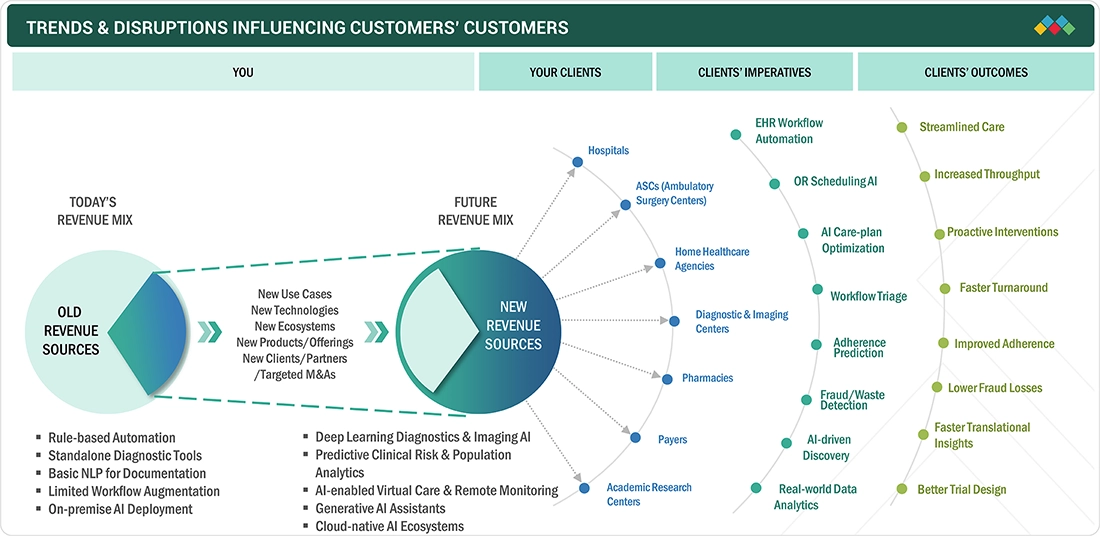
Source: Secondary Research, Interviews with Experts, MarketsandMarkets Analysis
MARKET DYNAMICS

Level
-
Administrative burden crisis driving urgent demand for AI automation solutions in US

-
Strong financial investment from major tech firms and venture capital


Level
-
High implementation costs creating barriers for smaller providers

-
Data privacy breaches and cybersecurity vulnerabilities


Level
-
Accelerated drug discovery and reduced pharmaceutical development timelines

-
Precision medicine growth, enabling personalized patient treatment and better outcomes


Level
-
Algorithmic bias issues and health equity gaps across patient populations

-
Lack of AI model transparency creating trust issues among healthcare providers

Source: Secondary Research, Interviews with Experts, MarketsandMarkets Analysis
Driver: Administrative burden crisis driving urgent demand for AI automation solutions in US
The US healthcare system faces one of the highest administrative burdens globally, with clinicians and support staff spending excessive time on documentation, billing, prior authorization, and EHR navigation. Studies show that US physicians spend nearly two hours on administrative tasks for every hour of patient care, creating burnout and productivity losses. Additionally, payer-provider complexity, fragmented reimbursement structures, and stringent regulatory requirements contribute to overwhelming operational workloads. This environment has accelerated demand for AI-driven automation that can streamline documentation, coding, claims processing, clinical decision support, and patient triage. Hospitals and physician groups are increasingly adopting ambient documentation, AI-powered revenue cycle tools, and predictive analytics to reduce manual effort and improve care quality. The US market’s scale, digital maturity, and strong cloud infrastructure further accelerate adoption. As workforce shortages intensify and labor costs rise, AI is becoming essential, rather than optional, for sustaining financial stability and operational efficiency across American healthcare systems.
Restraint: High implementation costs creating barriers for smaller providers
Despite strong momentum for AI adoption in the US, high implementation costs remain a significant barrier, particularly for small and mid-sized healthcare organizations, such as rural hospitals, independent physician practices, and community clinics. AI deployments require significant upfront investments in data integration, cloud infrastructure, cybersecurity, workflow redesign, and ongoing model maintenance. Unlike large health systems, smaller providers often lack the capital, IT expertise, and data volume needed to fully leverage enterprise-grade AI tools. Additionally, the cost of integrating AI with legacy EHR systems, many of which vary significantly across organizations, can be prohibitive. Reimbursement models for AI-enabled care are still evolving, leaving providers uncertain about ROI timelines. Concerns about vendor lock-in, lengthy implementation cycles, and hidden operational costs further hinder adoption. Given that over 40% of US hospitals operate with thin or negative margins, AI’s financial barrier disproportionately affects underserved and rural regions, potentially widening digital health inequities nationwide.
Opportunity: Accelerated drug discovery and reduced pharmaceutical development timelines
AI presents a transformative opportunity in the US by significantly compressing drug discovery and development timelines, which are traditionally a 10–12-year process costing over USD 2 billion per approved therapeutic. US biopharma companies are aggressively leveraging AI for target identification, molecular design, toxicity prediction, and trial optimization. AI-accelerated screening and simulation reduce experimental cycles, enabling researchers to identify promising candidates more quickly. GenAI-powered literature mining, clinical trial modeling, and real-world data analytics also streamline regulatory submissions and adaptive trial designs. With the FDA increasingly supportive of AI-enabled methodologies, US biotech startups and pharma giants are shifting toward computational-first R&D models. The growing availability of EHR-based datasets, biomarker repositories, and genomic databases in the US further strengthens AI’s predictive accuracy. As venture capital heavily backs AI-driven biotech firms, the nation is positioned to lead a new era of faster, more cost-efficient, and precision-focused drug development, reshaping the entire therapeutic pipeline.
Challenge: Algorithmic bias issues and health equity gaps across patient populations
AI models in US healthcare often inherit biases from training data, which frequently overrepresents certain demographics while underrepresenting minorities, rural populations, and low-income groups. This imbalance can lead to inaccurate predictions, incorrect diagnoses, and unequal access to AI-enabled care. For example, risk prediction algorithms have historically underestimated disease severity for Black patients due to flawed proxies in training data. Such gaps heighten concerns around fairness, transparency, and clinical safety. The US healthcare system already experiences significant disparities in outcomes, access, and quality of care; biased AI models risk amplifying these inequities. Regulatory and ethical frameworks specific to AI fairness are still evolving, and providers struggle with evaluating vendor models for bias. Additionally, many health systems lack diverse and interoperable datasets needed to train equitable AI tools. Addressing algorithmic bias is now a top priority, requiring stronger governance, explainability standards, and ongoing bias monitoring across AI deployments.
US AI IN HEALTHCARE MARKET: COMMERCIAL USE CASES ACROSS INDUSTRIES
| COMPANY | USE CASE DESCRIPTION | BENEFITS |
|---|---|---|
 |
Cloud-based AI platforms enabling clinical analytics, NLP-driven documentation, predictive risk modeling, and interoperable EHR-integrated AI workflows. | Improved decision-making, scalable AI deployment, enhanced interoperability, and streamlined clinical workflows. |
 |
GPU-accelerated AI for imaging, digital twins, drug discovery, and real-time inference through NVIDIA Clara and MONAI ecosystems. | Faster diagnostics, accelerated model training, improved precision medicine, and reduced latency. |
 |
AI-enabled imaging interpretation, ICU and patient monitoring intelligence, and workflow orchestration across radiology and cardiology environments. | Higher diagnostic accuracy, faster reporting cycles, better care coordination, and reduced clinician burden. |
 |
AI-driven imaging acquisition, patient monitoring analytics, and predictive maintenance through the Edison AI platform. | Quicker image processing, lower workload, improved equipment uptime, and enhanced operational reliability. |
 |
AI-based diagnostic imaging, clinical decision support, and pathway optimization via AI-Rad Companion and digital twin technologies. | Standardized diagnostic quality, optimized care pathways, more personalized treatment planning, and greater clinical consistency. |
Logos and trademarks shown above are the property of their respective owners. Their use here is for informational and illustrative purposes only.
MARKET ECOSYSTEM
The US artificial intelligence (AI) in healthcare market operates within a highly interconnected ecosystem comprising technology leaders, health systems, payers, pharmacies, ASCs, home health networks, and research institutions. Enterprise cloud adoption, robust federal incentives for digital modernization, and expanding data-sharing frameworks are driving the acceleration of AI integration across clinical, operational, and financial workflows. As providers pursue efficiency, payers seek cost containment, and vendors scale AI-driven platforms, the ecosystem is evolving into a mature, innovation-intensive market that supports nationwide transformation in care delivery and healthcare economics.
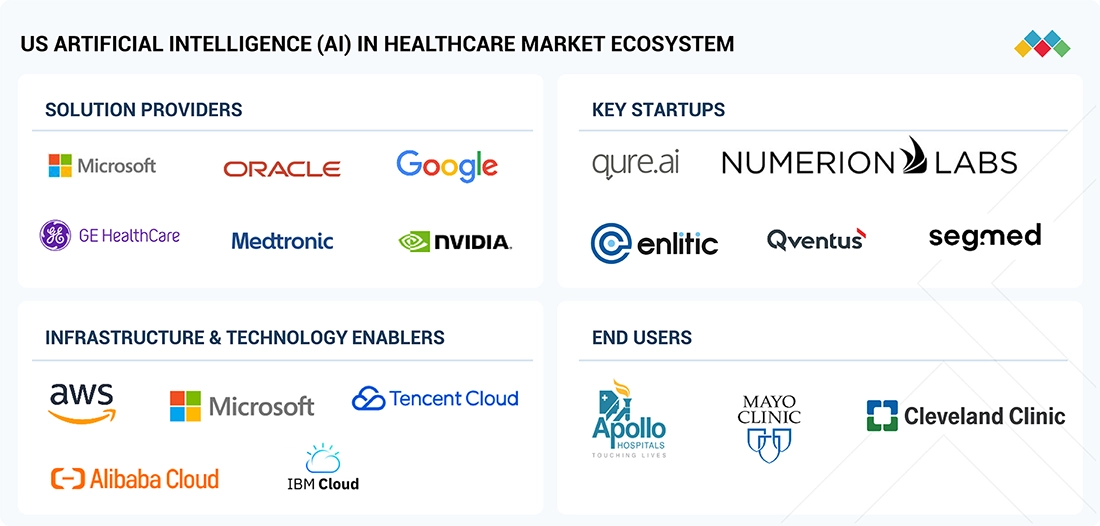
Logos and trademarks shown above are the property of their respective owners. Their use here is for informational and illustrative purposes only.
MARKET SEGMENTS
Source: Secondary Research, Interviews with Experts, MarketsandMarkets Analysis
US Artificial Intelligence (AI) in Healthcare Market, By Offering
Based on offerings, the market is segmented into integrated solutions, niche/point solutions, AI technology, and services. In 2024, integrated solutions held the largest share because US health systems increasingly pursue enterprise-wide modernization programs that require unified platforms for clinical workflows, imaging analytics, documentation automation, and operational coordination. Large provider networks are moving toward single-vendor or tightly integrated ecosystems to meet internal interoperability requirements and reduce the cost of managing multiple, disconnected AI tools. Adoption has also accelerated as multi-hospital systems prioritize the standardized deployment of AI across emergency care, inpatient operations, and specialty services to improve consistency in outcomes and performance.
US Artificial Intelligence (AI) in Healthcare Market, By Function
Based on function, the market is segmented into diagnosis & early detection, treatment planning & personalization, patient engagement & remote monitoring, post-treatment surveillance & survivorship care, pharmacy management, data management & analytics, and administrative functions. In 2024, diagnosis & early detection held the largest share because US hospitals have expanded the deployment of AI tools that support radiology prioritization, oncology screening, cardiac image quantification, and early identification of sepsis or clinical deterioration. Health systems are increasingly integrating AI into stroke assessment workflows and lung nodule detection programs to reduce diagnostic delays and meet federally tracked quality metrics. Rising imaging volumes and shortages of radiologists have also prompted providers to adopt AI-assisted interpretation to enhance throughput. The growing adoption of multimodal models, which combine imaging, laboratory data, and clinical history, further strengthens the dominance of early detection applications across acute and outpatient settings.
US Artificial Intelligence (AI) in Healthcare Market, By Application
Based on applications, the market is segmented into clinical applications and non-clinical applications. In 2024, clinical applications accounted for the largest share, driven by the strong adoption of AI in diagnostic interpretation, acute condition detection, and specialty care workflows across US hospitals. Providers are increasingly adopting AI models for stroke assessment, cardiac imaging, oncology screening, and ICU deterioration prediction as they work to reduce turnaround times and meet stringent quality benchmarks tied to reimbursement and accreditation. The expansion of advanced ED triage tools and AI-assisted surgical planning has further strengthened the adoption of these technologies. Growth is also supported by system-wide efforts to standardize clinical pathways across large integrated delivery networks, where AI-enabled insights help harmonize care protocols and improve consistency in outcomes.
US Artificial Intelligence (AI) in Healthcare Market, By Deployment Model
Based on deployment model, the market is segmented into on-premises, cloud-based, and hybrid systems. Cloud-based deployments are expected to grow at the fastest rate as US health systems expand AI workloads that require scalable compute, real-time analytics, and multi-site data integration. Hospitals are increasingly moving imaging archives, ambient documentation engines, and predictive analytics tools to cloud environments to support higher model complexity and streamline updates without requiring local infrastructure upgrades. Growth is also driven by the rise of virtual nursing programs, remote monitoring operations, and centralized command centers that depend on cloud-hosted AI for continuous coordination across facilities. Federal efforts promoting interoperability and standardized data exchange further reinforce cloud adoption by enabling cross-organizational data sharing, which is essential for training and deploying AI at scale.
US Artificial Intelligence (AI) in Healthcare Market, By Tool
Based on tools, the market is segmented into machine learning, natural language processing, context-aware computing, generative AI, computer vision, and image analysis. In 2024, machine learning accounted for a significant share and is expected to grow rapidly, driven by strong adoption of ML models across diagnostic triage, risk prediction, throughput optimization, and clinical operations in US health systems. Hospitals increasingly rely on ML-based sepsis alerts, readmission prediction models, and surgical scheduling optimization tools to improve quality metrics and manage staffing constraints. ML uptake is further supported by the expansion of structured EHR datasets, payer-level claims databases, and federated learning initiatives that allow health systems to train and deploy models using distributed clinical data while maintaining compliance requirements.
US Artificial Intelligence (AI) in Healthcare Market, By End User
Based on end users, the market is segmented into healthcare providers, healthcare payers, patients, and other end users. In 2024, healthcare providers held the largest share due to the rapid adoption of AI across diagnostic imaging, emergency care triage, inpatient operations, and virtual care programs in US hospitals. Large integrated delivery networks implement AI to support real-time bed management, early deterioration alerts, surgical workflow coordination, and clinical quality reporting. Providers have also expanded the use of ambient documentation tools and AI-supported pathology and radiology workflows to address specialist shortages and improve throughput. Growing reliance on AI-driven command centers and cross-site coordination platforms further solidifies provider dominance, as health systems prioritize technologies that directly improve patient flow, clinical efficiency, and operational resilience.
US AI IN HEALTHCARE MARKET: COMPANY EVALUATION MATRIX
Koninklijke Philips N.V. is positioned as a Star player in the US artificial intelligence (AI) in healthcare market based on the scale of its installed base in imaging, monitoring, and clinical informatics, which enables broad integration of AI across diagnostic and acute-care workflows. Its portfolio alignment with hospital modernization priorities and its ability to embed AI within enterprise platforms support sustained market leadership. Google is emerging as a Leader due to its investments in health-focused foundation models, cloud infrastructure, and data-management capabilities. The company’s expanding collaborations with research institutions and life science organizations are strengthening its role in advancing next-generation clinical and analytical AI applications.
Source: Secondary Research, Interviews with Experts, MarketsandMarkets Analysis
KEY MARKET PLAYERS
- Koninklijke Philips N.V. (Netherlands)
- Microsoft Corporation (US)
- Siemens Healthineers AG (Germany)
- NVIDIA Corporation (US)
- Epic Systems Corporation (US)
- GE Healthcare (US)
- Medtronic (US)
- Oracle (US)
- Veradigm LLC (US)
- Merative (IBM) (US)
- Google (US)
- Cognizant (US)
- Johnson & Johnson (US)
- Amazon Web Services, Inc. (US)
- SOPHiA GENETICS (US)
- Riverian Technologies (US)
- TeraRecon (ConcertAI) (US)
- Solventum Corporation (US)
- Tempus (US)
- Viz.ai (US)
MARKET SCOPE
| REPORT METRIC | DETAILS |
|---|---|
| Market Size in 2024 (Value) | USD 5.98 BN |
| Market Forecast in 2030 (Value) | USD 43.30 BN |
| Growth Rate | 38.0% |
| Years Considered | 2023–2030 |
| Base Year | 2024 |
| Forecast Period | 2025–2030 |
| Units Considered | Value (USD BN) |
| Report Coverage | Revenue forecast, company ranking, competitive landscape, growth factors, and trends |
| Segments Covered |
|
| Country Covered | US |
| Parent & Related Segment Reports |
Artificial Intelligence (AI) in Healthcare Market Europe AI in Healthcare Market AI in Clinical Workflow Market AI Agents in Healthcare Market AI in Hospital Operations Market Stroke AI Market |
WHAT IS IN IT FOR YOU: US AI IN HEALTHCARE MARKET REPORT CONTENT GUIDE
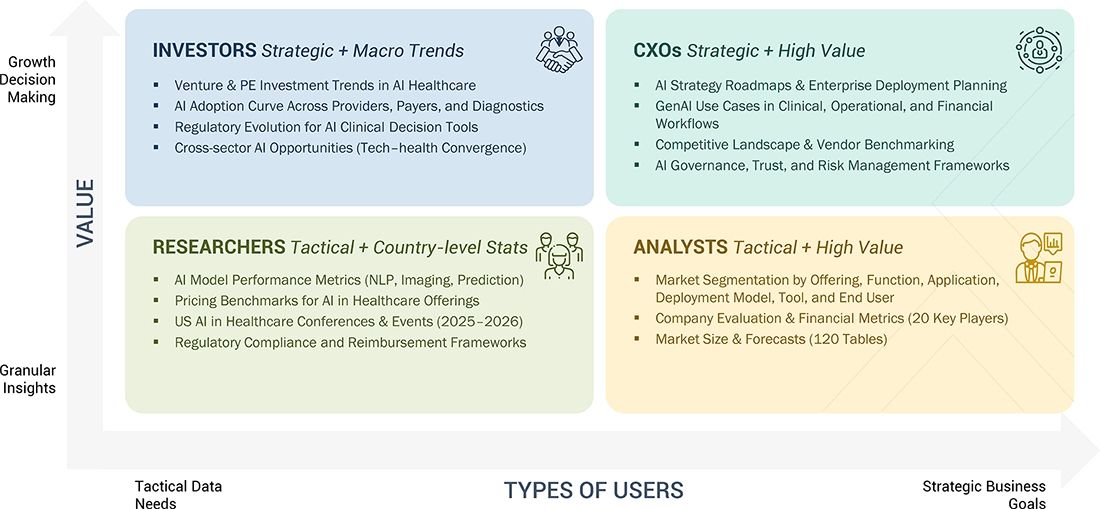
DELIVERED CUSTOMIZATIONS
We have successfully delivered the following deep-dive customizations:
| CLIENT REQUEST | CUSTOMIZATION DELIVERED | VALUE ADDS |
|---|---|---|
| Map the US AI healthcare ecosystem | Comprehensive ecosystem mapping across vendors, providers, payers, pharmacies, ASCs, home health, research bodies, and regulators. | Clear visibility into market structure and interaction points to guide partnerships and investment decisions. |
| Understand AI integration with US healthcare infrastructure | Deep analysis of AI–EHR interoperability, cloud deployment models, data-sharing frameworks, and compliance requirements (HIPAA, ONC, CMS, TEFCA). | Reduces integration risk and informs technology roadmap aligned to US regulatory and data ecosystems. |
| Identify high-ROI AI use cases for providers and payers | Prioritized use-case assessment across clinical, operational, financial, and patient-experience domains. | Enables targeted product development and stronger go-to-market focus in high-value segments. |
| Benchmark competitors in the US AI landscape | Capability benchmarking across major AI vendors (Microsoft, NVIDIA, Oracle Health, GE, Philips, AWS, Google). | Strengthens competitive positioning and identifies whitespace opportunities for differentiation. |
| Assess policy, reimbursement, and regulatory impacts on AI adoption | Analysis of FDA AI/ML SaMD guidelines, CMS reimbursement pathways, and Medicare Advantage analytics trends. | Improves product compliance strategy and enhances commercialization feasibility. |
| Build a GTM strategy aligned with US market demand | Strategic recommendations on partnerships, customer segmentation, pricing, and commercialization pathways. | Accelerates market penetration and improves revenue predictability in a highly competitive ecosystem. |
RECENT DEVELOPMENTS
- April 2025 : NVIDIA expanded DGX Cloud with additional generative AI microservices optimized for biology, chemistry, imaging, and healthcare data workloads, enabling faster model development and broader adoption of advanced AI capabilities in life sciences and digital health.
- March 2025 : Microsoft released Dragon Copilot, a unified voice AI solution designed to streamline clinical documentation, improve information retrieval, and automate routine tasks, thereby enhancing workflow efficiency across provider organizations and clinical teams.
- January 2025 : GE HealthCare formed a strategic partnership with Sutter Health to deploy advanced AI-enabled imaging solutions across the network, supporting improved diagnostic performance, clinician workflow efficiency, and enhanced care delivery outcomes.
Table of Contents
 Exclusive indicates content/data unique to MarketsandMarkets and not available with any competitors.
Methodology
The study involved significant activities in estimating the current size of theUS Artificial Intelligence (AI) in Healthcare Market . Exhaustive secondary research was done to collect information on theUS Artificial Intelligence (AI) in Healthcare Market . The next step was to validate these findings, assumptions, and sizing with industry experts across the value chain using primary research. Different approaches, such as top-down and bottom-up, were employed to estimate the total market size. After that, the market breakup and data triangulation procedures were used to estimate the market size of the segments and subsegments of theUS Artificial Intelligence (AI) in Healthcare Market .
Secondary Research
This research study involved the wide use of secondary sources, directories, and databases such as Dun & Bradstreet, Bloomberg Businessweek, and Factiva; white papers, annual reports, and companies’ house documents; investor presentations; and the SEC filings of companies. The market for the companies offering Artificial Intelligence (AI) in healthcare solutions is arrived at by secondary data available through paid and unpaid sources, analyzing the product portfolios of the major companies in the ecosystem, and rating the companies by their performance and quality. Various sources were referred to in the secondary research process to identify and collect information for this study. The secondary sources include annual reports, press releases, investor presentations of companies, white papers, journals, certified publications, and articles from recognized authors, directories, and databases.
Various secondary sources were referred to in the secondary research process to identify and collect information related to the study. These sources included annual reports, press releases, investor presentations of Artificial Intelligence (AI) in healthcare vendors, forums, certified publications, and whitepapers. The secondary research was used to obtain critical information on the industry’s value chain, the total pool of key players, market classification, and segmentation from the market and technology-oriented perspectives.
Primary Research
In the primary research process, various sources from both the supply and demand sides were interviewed to obtain qualitative and quantitative information for this report. Primary sources are mainly industry experts from the core and related industries and preferred suppliers, manufacturers, distributors, technology developers, researchers, and organizations related to all segments of this industry’s value chain. In-depth interviews were conducted with various primary respondents, including key industry participants, subject-matter experts (SMEs), C-level executives of key market players, and industry consultants, among other experts, to obtain and verify the critical qualitative and quantitative information as well as assess prospects.
Primary research was conducted to identify segmentation types, industry trends, key players, and key market dynamics such as drivers, restraints, opportunities, challenges, industry trends, and strategies adopted by key players.
After the complete market engineering (calculations for market statistics, market breakdown, market size estimations, market forecasting, and data triangulation), extensive primary research was conducted to gather information and verify and validate the critical numbers arrived at.
In the complete market engineering process, the top-down and bottom-up approaches and several data triangulation methods were extensively used to perform the market estimation and market forecasting for the overall market segments and subsegments listed in this report. Extensive qualitative and quantitative analysis was performed on the complete market engineering process to list the key information/insights throughout the report.
Market Size Estimation
The market size estimates and forecasts provided in this study are derived through a mix of the bottom-up approach (revenue share analysis of leading players) and top-down approach (assessment of utilization/adoption/penetration trends by offering, function, application, deployment, tool, end user, and region).
Data Triangulation
After arriving at the overall market size—using the market size estimation processes—the market was split into several segments and subsegments. To complete the overall market engineering process and arrive at the exact statistics of each market segment and sub-segment, data triangulation and market breakdown procedures were employed, wherever applicable. The data was triangulated by studying various factors and trends from both the demand and supply sides in theUS Artificial Intelligence (AI) in Healthcare Market .
Market Definition
Artificial Intelligence (AI) in healthcare market encompasses the application of artificial intelligence technologies, such as machine learning, natural language processing, computer vision, and robotics, to improve healthcare delivery, enhance operational efficiencies, and provide personalized care. These solutions address a wide range of use cases, including diagnostic imaging, predictive analytics, drug discovery, patient engagement, remote monitoring, and administrative workflows, enabling healthcare providers, payers, and pharmaceutical companies to drive innovation and improve outcomes.
Stakeholders
- AI in healthcare software vendors
- AI in healthcare service providers
- Independent software vendors (ISVs)
- Platform providers
- Technology providers
- System integrators
- Cloud service providers
- Healthcare IT service providers
- Hospitals and surgical centers
- Diagnostic imaging centers
- Academic institutes and research laboratories
- Forums, alliances, and associations
- Government organizations
- Institutional investors and investment banks
- Investors/Shareholders
- Venture capitalists
- Research and consulting firms
Report Objectives
- To define, describe, and forecast the US Artificial Intelligence (AI) in Healthcare Market based on offering, function, application, deployment, tools, end user, and region
- To provide detailed information regarding the factors influencing the growth of the market (such as the drivers, restraints, opportunities, and challenges)
- To strategically analyze micromarkets with respect to individual growth trends, prospects, and contributions to the overallUS Artificial Intelligence (AI) in Healthcare Market
- To analyze market opportunities for stakeholders and provide details of the competitive landscape for market leaders
- To forecast the size of theUS Artificial Intelligence (AI) in Healthcare Market in five main regions (along with their respective key countries): North America, Europe, the Asia Pacific, Latin America, and the Middle East & Africa
- To profile key players and comprehensively analyze their product portfolios, market positions, and core competencies in the market
- To track and analyze competitive developments such as product & service launches, expansions, partnerships, agreements, and collaborations; and acquisitions in theUS Artificial Intelligence (AI) in Healthcare Market
- To benchmark players within theUS Artificial Intelligence (AI) in Healthcare Market using the Company Evaluation Matrix framework, which analyzes market players on various parameters within the broad categories of business strategy, market share, and product offering


Personalize This Research
- Triangulate with your Own Data
- Get Data as per your Format and Definition
- Gain a Deeper Dive on a Specific Application, Geography, Customer or Competitor
- Any level of Personalization
Let Us Help You
- What are the Known and Unknown Adjacencies Impacting the US Artificial Intelligence (AI) in Healthcare Market
- What will your New Revenue Sources be?
- Who will be your Top Customer; what will make them switch?
- Defend your Market Share or Win Competitors
- Get a Scorecard for Target Partners

Custom Market Research Services
We Will Customise The Research For You, In Case The Report Listed Above Does Not Meet With Your Requirements
Get 10% Free CustomisationTESTIMONIALS

JAYANT RAJPUROHIT
Director of Market Insights, Data and Analytics
SFI Health,
Leading Pharmaceutical Companywww.sfihealth.com/

We at SFI Health approached MarketsandMarkets for an Opportunity Assessment on "Incidence and Prevalence of Focus Indications" as we wanted to know the most attractive HCPs like Physician, Functional MD, Naturopath and Pharmacist. The project was critical for us to ensure our focus on the right target which would enable sustainable growth and profitability for SFI Health. The business insights provided exceeded our expectations and we were extremely impressed. The team at MarketsandMarkets is highly professional and detail oriented and very well understood our business needs. MarketsandMarkets offers a unique combination of expertise and dedicated engagement model. We identified 2 new products to be launched in coming months, based on the research findings provided by MarketsandMarkets. We are happy with the services and would strongly recommend MarketsandMarkets to my peers in the industry.

BEATRIZ DE LA CALLE
Head of Commercial Analytics
Qualicaps,
Leading Pharmaceutical Companywww.qualicaps.com/

We partnered with MarketsandMarkets for an assessment study on hard empty capsules. The team was extremely professional in understanding our business requirements and we received timely responses to all our queries. The market intelligence and the recommendations has met our business requirements. We were extremely impressed to see the final study results; it really exceeded our expectations. The market intelligence offered by MarketsandMarkets, and clarity on next steps will help us achieve our business objective for the Year 2021. We are happy with the services and would strongly recommend MarketsandMarkets to my peers in the industry.

Bob Williams,
Senior Director Business Development & Innovation
Bracco Diagnostics Inc.,
Italian Multinational in life sciences sector and a World Leader in imaging diagnosticsimaging.bracco.com/us-en
We were pleased with targeted insights that MarketsandMarkets identified from a custom study on the 'Radiation Dose Management Solutions Market'. Your team identified and characterized the market participants as well as underlying trends accurately. This study was useful to Bracco in formulating business strategies for our dose monitoring product lines and we thank MarketsandMarkets for the job well done.
Cody Coonradt,
Market Development and Strategy Manager
3M Health Information Systems,
Leader in Health care Coding, Payment & Analytics Solutions.www.3m.com/3M/en_US/health-information-systems-us
The value for our organization comes from three things: depth of research, specificity of segments and being easy to work with. As important as the first two are, the third can't be underestimated. MarketsandMarkets, maybe more than any other research vendor, wants to know what is top of mind for our team and what big questions we are grappling to answer.
Their customer first approach and high value engagement model, have given us great analysis and excellent value for money






Growth opportunities and latent adjacency in US Artificial Intelligence (AI) in Healthcare Market