US Injectable Drug Delivery Market Size, Growth, Share & Trends Analysis

US Injectable Drug Delivery Market by Type (Device, Formulation), Therapeutic (Infectious Diseases, Cancer, Obesity), Usage Pattern (Immunization), Administration (Skin, Musculoskeletal), End Users (Hospital, Home Care) - Forecast to 2031




OVERVIEW
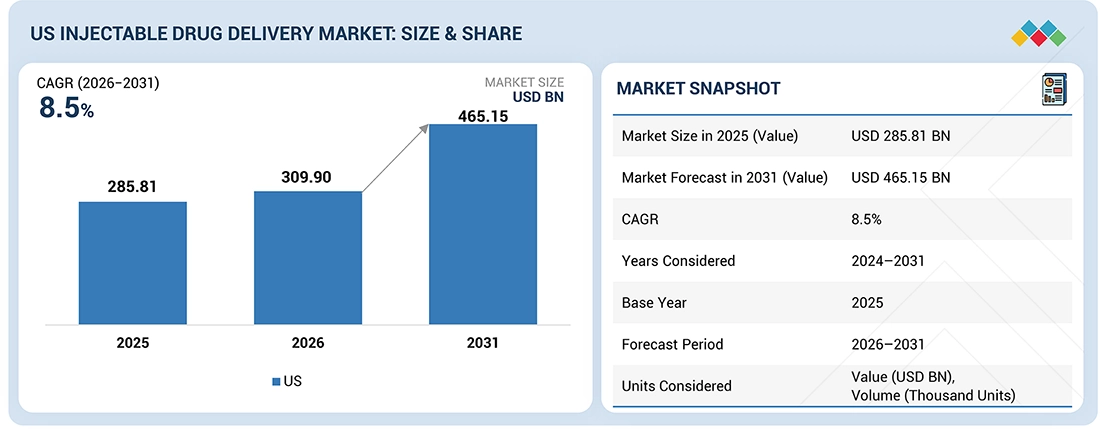
Source: Secondary Research, Interviews with Experts, MarketsandMarkets Analysis
The US injectable drug delivery market, valued at US$285.81 billion in 2025, stood at US$309.90 billion in 2026 and is projected to advance at a resilient CAGR of 8.5% from 2026 to 2031, culminating in a forecasted valuation of US$465.15 billion by the end of the period. The growth of the veterinary contract manufacturing & research market is driven by the increasing adoption of biologics and long-acting injectables, rising demand for patient-centric and self-administration delivery systems, and the need for advanced formulation, device engineering, and scalable manufacturing capabilities. The expansion of specialty and chronic disease therapies, combined with the shift toward home-based care and connected delivery technologies, is further accelerating market growth.
KEY TAKEAWAYS
-
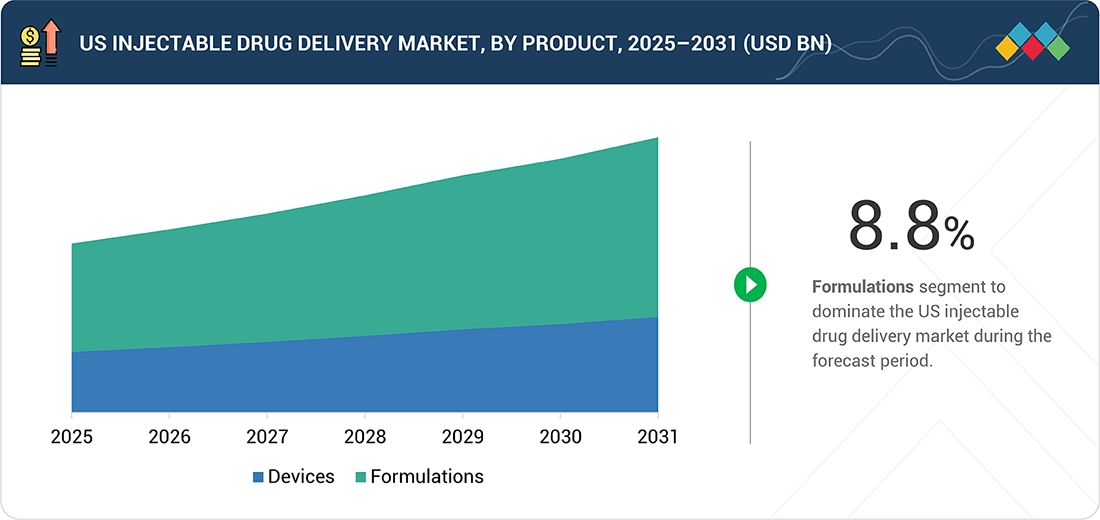
By ProductBy product, the formulations segment is expected to register the highest CAGR of 8.8%.
-
By Formulation PackagingBy formulation packaging, the ampoules segment is expected to dominate the market with a 46.3% share in 2025.
-
By Therapeutic ApplicationBy therapeutic application, the obesity segment is projected to grow at the fastest rate from 2026 to 2031.
-
By Usage PatternBy usage pattern, the curative care segment accounted for the largest share of 66.1%.
-
By Site of AdministrationBy site of administration, the dermal-based administration is expected to register the highest CAGR of 9.0%
-
By End UserBy end user, the hospitals & clinics segment dominated the market, with a share of 56.4% in 2025.
-
Competitive Landscape - Device Key PlayersBD, West Pharmaceutical Services, Inc., and Cardinal Health were identified as key players in the US injectable drug delivery market, due to their extensive global reach and comprehensive product portfolios.
-
Competitive Landscape - Formulation Key PlayersPfizer Inc., Johnson & Johnson and Merck & Co., Inc. were identified as some of the star players in the US injectable drug delivery market , given their large-scale manufacturing capacity and international presence.
The injectable drug delivery market in US is witnessing steady growth, driven by the expanding pipeline of biologics and specialty therapeutics, rising adoption of self-injection systems, and increasing demand for patient-centric and home-based treatment options. New advancements, such as AI-enabled formulation design, automation in fill-finish operations, smart and connected injection devices, and integrated drug–device development models, are reshaping the competitive landscape and accelerating innovation across the market. Strategic collaborations among pharmaceutical companies, device manufacturers, and CDMOs are further enhancing scalability, improving delivery efficiency, and supporting the development of next-generation injectable solutions.
TRENDS & DISRUPTIONS IMPACTING CUSTOMERS' CUSTOMERS
The impact on consumers’ businesses in the US injectable drug delivery market stems from rising demand for biologics, expanding chronic disease burdens, and rapid technological innovation in drug–device combinations. Pharmaceutical and biotechnology companies, as well as healthcare providers, are primary adopters of advanced injectable systems, relying on specialized partners for device design, formulation optimization, and manufacturing scalability. The growing need for patient-friendly delivery formats, digital monitoring capabilities, and accelerated commercialization timelines is reshaping development strategies across the sector. These factors are driving stronger demand for integrated drug–device expertise and outsourcing collaboration, influencing market growth, competitiveness, and differentiation in the injectable delivery landscape.
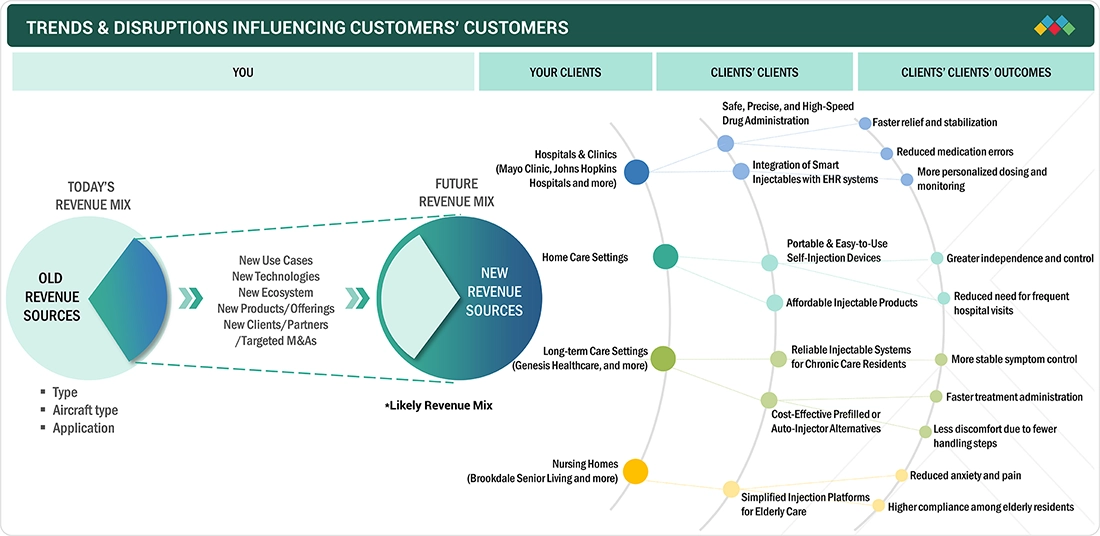
Source: Secondary Research, Interviews with Experts, MarketsandMarkets Analysis
MARKET DYNAMICS

Level
-
Growing demand for self-injection devices

-
Rising prevalence of chronic diseases


Level
-
Infections associated with needlestick injuries

-
Stringent government regulations


Level
-
Development of novel drug delivery systems

-
Growing preference for home-based care devices


Level
-
Alternative methods of drug delivery

-
Complexities in developing wearable drug delivery systems

Source: Secondary Research, Interviews with Experts, MarketsandMarkets Analysis
Driver: Growing demand for self-injection devices
The increasing shift toward patient-centric care and home-based treatment is driving demand for self-injection devices, including auto-injectors, pen injectors, prefilled syringes, and wearable injectors. These solutions support improved convenience, adherence, and disease management for chronic conditions like diabetes, autoimmune disorders, and obesity. As healthcare systems focus on reducing hospital burden and implementing remote monitoring, the preference for easy-to-use, minimally invasive self-administration options continues to drive market growth.
Restraint: Infections associated with needlestick injuries
Needlestick injuries pose a significant safety concern, as they can transmit infections and increase healthcare risks for clinicians and patients. These events contribute to rising liability costs, regulatory scrutiny, and increased adoption barriers, especially in hospital and clinical settings. The challenge of maintaining sterility, preventing accidental exposure, and improving disposal practices acts as a limiting factor, prompting higher investment in safety-engineered delivery solutions.
Opportunity: Development of novel drug delivery systems
Emerging technologies such as microneedle patches, connected injectors, long-acting formulations, and on-body wearable infusion devices create significant innovation opportunities. These advanced systems enable targeted, painless, and programmable drug delivery while supporting remote monitoring and personalized dosing. As biologics pipelines expand and demand for self-administration rises, companies developing next-generation delivery technologies can capture substantial market share and unlock new revenue streams.
Challenge: Alternative methods of drug delivery
Competition from alternative administration routes, such as oral, transdermal, inhalation, and intranasal delivery, poses a challenge for injectable systems. Many patients prefer non-invasive options, pushing pharmaceutical companies to explore reformulation and delivery technologies that reduce dependence on injections. As these alternatives evolve and improve in efficacy, they may limit the uptake of injectable solutions in certain therapeutic areas, prompting market players to innovate and enhance the value propositions for injectables.
US INJECTABLE DRUG DELIVERY MARKET: COMMERCIAL USE CASES ACROSS INDUSTRIES
| COMPANY | USE CASE DESCRIPTION | BENEFITS |
|---|---|---|
 |
Provides needles, syringes, safety-engineered injection systems, and prefilled syringe technologies used across US hospitals and biopharma supply chains. | Ensures safe drug administration, supports mass vaccination programs, and improves clinical workflow efficiency. |
 |
Develops and commercializes a wide range of injectable therapies, vaccines, and biologics used in US healthcare. | Ensures broad therapeutic access, strong regulatory credibility, and rapid supply during public health needs. |
 |
Produces biologic injectables for oncology, immunology, infectious diseases, and hospital care. | Enhances treatment outcomes, expands biologics availability, and ensures reimbursement-supported access. |
 |
Manufactures injectable metabolic therapies, biologics, and pen-injector compatible medicines for chronic care. | Enables patient-friendly self-administration, strengthens adherence, and expands treatment reach in diabetes and obesity. |
 |
Delivers specialty biologic injectables, including long-acting and immunomodulatory formulations for autoimmune conditions. | Improves durability of therapeutic response, supports value-based treatment outcomes, and reduces dosing burden for patients. |
Logos and trademarks shown above are the property of their respective owners. Their use here is for informational and illustrative purposes only.
MARKET ECOSYSTEM
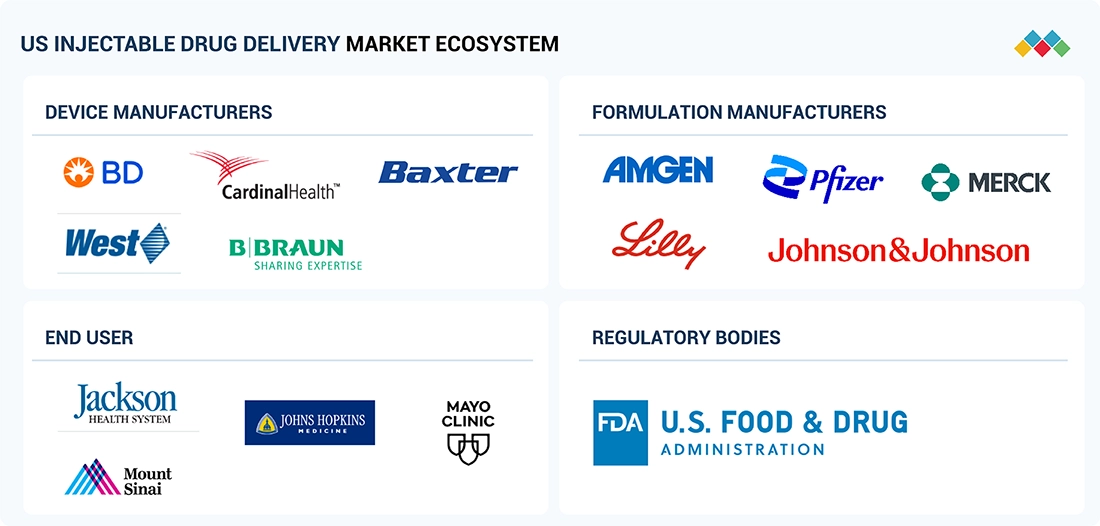
The ecosystem of the US injectable drug delivery market comprises a broad set of stakeholders that collectively drive innovation, device development, formulation engineering, and commercial delivery of injectable therapies. Core contributors include pharmaceutical companies, biologics manufacturers, device developers, and CDMOs that provide formulation support, fill–finish capabilities, packaging solutions, and drug–device integration services. These players collaborate closely with healthcare providers, biotech innovators, and research institutions that rely on advanced delivery systems to enhance therapeutic outcomes and improve patient access. Technology partners, such as AI-driven design platforms, digital health monitoring firms, and automation solution providers, are increasingly influencing the market by enhancing usability, data connectivity, and operational efficiency. Together, this ecosystem accelerates development, improves delivery performance, and supports the broader adoption of next-generation injectable products across the US healthcare landscape.
Logos and trademarks shown above are the property of their respective owners. Their use here is for informational and illustrative purposes only.
MARKET SEGMENTS
Source: Secondary Research, Interviews with Experts, MarketsandMarkets Analysis
US Injectable Drug Delivery Market, By Product
As of 2025, formulations held the largest share in the US injectable drug delivery market because they are fundamental to ensuring drug stability, safety, and therapeutic efficacy, especially for biologics, peptides, and long-acting injectables. As the demand for complex molecules increases, the need for advanced formulation technologies that improve solubility, bioavailability, and sustained release grows significantly. Continuous innovation in extended-release solutions, preservative-free formats, and combination drug–device products further drives investment, making formulations a central and high-value segment in the injectable delivery landscape.
US Injectable Drug Delivery Market, By Formulation Packaging
In 2025, ampoules held the largest share because they provide secure, contamination-free packaging for sterile injectable solutions, especially vaccines, small-volume biologics, and sensitive liquid formulations. Their single-dose format minimizes dosing errors and infection risks, making them highly preferred in hospital and clinical settings. Additionally, ampoules are cost-efficient, compatible with automated filling systems, and widely accepted in regulatory frameworks, which supports high production and widespread adoption across pharmaceutical applications.
US Injectable Drug Delivery Market, By Therapeutic Application
As of 2025, autoimmune diseases accounted for the largest share because they require long-term, repeated injectable therapies such as biologics, monoclonal antibodies, and targeted immunomodulators. The rising prevalence of conditions like rheumatoid arthritis, psoriasis, and inflammatory bowel disease continues to increase demand for injectable treatments that offer superior efficacy over oral options. Strong innovation pipelines, expanding patient access programs, and growing adoption of self-injectable biologics further reinforce this segment’s dominant position in the market.
US Injectable Drug Delivery Market, By Usage Pattern
As of 2025, curative care held the largest share because injectable therapies are widely used for treating acute and chronic conditions where rapid onset, targeted delivery, and high efficacy are required. Diseases such as cancer, infections, autoimmune disorders, and metabolic conditions depend heavily on injectables for therapeutic intervention, driving consistent demand. The expanding biologics pipeline and increasing focus on disease-modifying treatments further strengthen the dominance of curative applications within the injectable drug delivery market.
US Injectable Drug Delivery Market, By Site of Administration
As of 2025, dermal-based administration held the largest share because it supports convenient self-injection, reduced pain perception, and improved patient compliance, especially for chronic therapies delivered subcutaneously or intradermally. Many biologics, vaccines, insulin products, and specialty injectables are designed for dermal routes due to better absorption, controlled delivery, and ease of use outside clinical settings. The growth of microneedle patches, auto-injectors, and wearable injectors further strengthens demand for dermal administration, reinforcing its dominant position in the market.
US Injectable Drug Delivery Market, By End User
Hospitals and clinics held the largest share because they are primary centers for administering injectable therapies, managing acute care cases, and initiating treatment for chronic conditions. They handle high patient volumes, specialized procedures, and complex injectable regimens that require trained healthcare personnel and monitoring. Additionally, strong infrastructure, access to emergency care, and higher adoption of advanced biologics and infusion-based therapies further reinforce their dominant role as key end-users in the injectable drug delivery market.
US INJECTABLE DRUG DELIVERY MARKET: COMPANY EVALUATION MATRIX
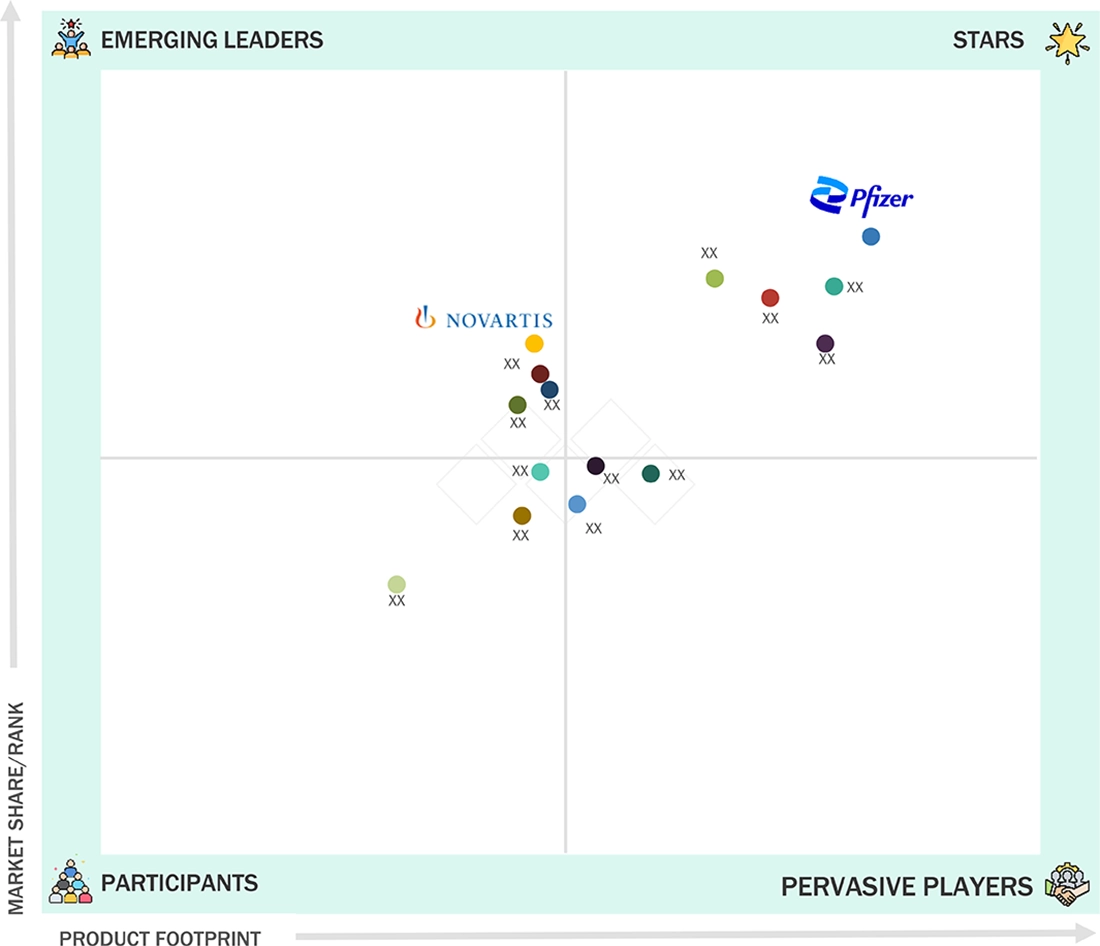
In the US injectable drug delivery market matrix, Pfizer Inc. (Star) leads with a dominant market presence, driven by its broad portfolio of sterile injectables, biologics, and large-scale manufacturing capabilities. The company’s position is strengthened by its advanced fill–finish infrastructure, extensive distribution network, and deep experience in drug–device integration, enabling consistent supply and strong adoption across therapeutic areas. Novartis AG (Emerging Leader) is rapidly gaining visibility through its expanding injectable biologics pipeline, investments in innovative delivery technologies, and strategic partnerships that enhance formulation development and patient-centric device design. While other pharmaceutical companies continue to scale capacity and modernize their injectable platforms, Pfizer’s scale and Novartis’s accelerating innovation momentum position them prominently within the evolving US injectable drug delivery landscape.
Source: Secondary Research, Interviews with Experts, MarketsandMarkets Analysis
KEY MARKET PLAYERS
- BD (US)
- West Pharmaceutical Services, Inc. (US)
- Cardinal Health (US)
- Baxter (US)
- B. Braun SE (Germany)
- Pfizer Inc. (US)
- Johnson & Johnson (US)
- Merck & Co., Inc. (US)
- Eli Lilly and Company (US)
- AbbVie Inc. (US)
MARKET SCOPE
| REPORT METRIC | DETAILS |
|---|---|
| Market Size in 2025 (Value) | USD 285.81 BN |
| Market Forecast in 2031 (Value) | USD 465.15 BN |
| Growth Rate | CAGR of 8.5% from 2026-2031 |
| Years Considered | 2024-2031 |
| Base Year | 2025 |
| Forecast Period | 2026-2031 |
| Units Considered | Value (USD Billion), Volume (Thousand Units) |
| Report Coverage | Revenue forecast, company ranking, competitive landscape, growth factors, and trends |
| Segments Covered |
|
| Regions Covered | US |
| Parent & Related Segment Reports |
Injectable Drug Delivery Market APAC Injectable Drug Delivery Market Europe Injectable Drug Delivery Market MEA Injectable Drug Delivery Market |
WHAT IS IN IT FOR YOU: US INJECTABLE DRUG DELIVERY MARKET REPORT CONTENT GUIDE
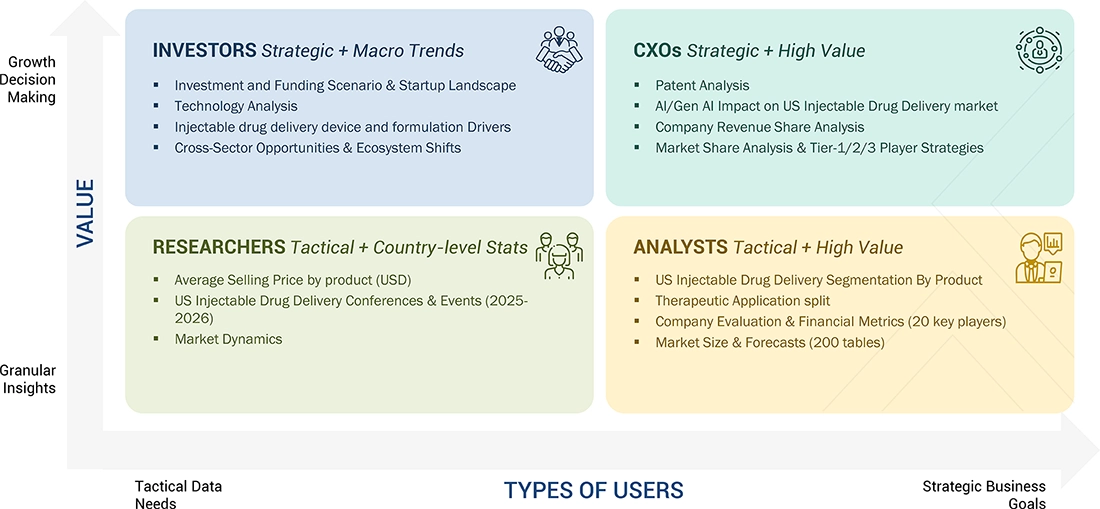
DELIVERED CUSTOMIZATIONS
We have successfully delivered the following deep-dive customizations:
| CLIENT REQUEST | CUSTOMIZATION DELIVERED | VALUE ADDS |
|---|---|---|
| Product Analysis | Comparison of key injectable drug delivery solutions in the US market, including auto-injectors, pen injectors, prefilled syringes, wearable injectors, microneedle patches, and vial/ampoule packaging formats. Highlighted capacity trends in biologics delivery, innovation in self-injection systems, connectivity features, and differentiation across major device developers and manufacturing partners. | Enabled understanding of technology evolution, user preferences, and product positioning; supported decisions on partner selection, pipeline alignment, scalability planning, and investment in next-generation delivery platforms. |
| Company Information | Key players: BD, West Pharmaceutical Services, Gerresheimer and Terumo. Provided top players’ portfolios, device manufacturing strengths, biologics compatibility, and competitive positioning in the US market. | Delivered insights on collaboration trends, biologic drug–device integration opportunities, and innovation hotspots shaping auto-injectors, wearable systems, and smart injectable solutions. |
| Country-level volume Analysis | Provided detailed volume analysis of various product types in the injectable drug delivery market across the US | Supported strategic decision-making by helping identify high-volume product segments, regional demand hotspots, and growth pockets for product expansion. |
RECENT DEVELOPMENTS
- March 2025 : Johnson & Johnson Services, Inc. announced that the US FDA approved the first and only IL-23 inhibitor, TREMFYA, with subcutaneous and intravenous induction options for adult Crohn’s disease patients.
- February 2025 : Pfizer Inc. announced that the US FDA approved ADCETRIS for the treatment of relapsed or refractory large B-cell lymphoma (LBCL) in adult patients.
- October 2024 : BD collaborated with Ypsomed to advance self-injection solutions for high-viscosity biologic drugs. In a joint project, Ypsomed and BD have pre-assessed and streamlined the integration of the BD Neopak XtraFlow Glass Prefillable Syringe with Ypsomed’s YpsoMate 2.25 autoinjector platform, addressing current limitations by enabling the delivery of higher viscosity (> 15 cP) biologic drugs in an autoinjector format.
Table of Contents
 Exclusive indicates content/data unique to MarketsandMarkets and not available with any competitors.
Methodology
This study extensively used both primary and secondary sources. The research process involved studying various factors affecting the industry to identify segmentation types, industry trends, key players, competitive landscape, key market dynamics, and key player strategies.
Secondary Research
This research study involved the usage of comprehensive secondary sources; directories; databases such as Bloomberg Business, Factiva, and Dun & Bradstreet; white papers; annual reports; company house documents; investor presentations; and SEC filings of companies. Secondary research was used to identify and collect information useful for an extensive, technical, market-oriented, and commercial study of the US Injectable Drug Delivery Market. It was also used to identify key players in the market and classify and segment the industry based on trends to the most detailed level. Additionally, significant developments related to market and technology perspectives were noted. A database of the primary industry leaders was also created using secondary research.
Primary Research
In the primary research process, various sources from both the supply and demand sides were interviewed to obtain qualitative and quantitative information for this report. Primary sources from the supply side include project/sales/marketing/business development managers, presidents, CEOs, vice presidents, chairpersons, chief operating officers, chief strategy officers, directors, chief information officers, and chief medical information officers related to the US Injectable Drug Delivery Markets. Primary sources from the demand side include healthcare professionals from hospitals, nursing care facilities, long-term health centers, and ambulatory surgical centers.
Market Size Estimation
The total size of the US Injectable Drug Delivery Market was determined after data triangulation from three approaches, as mentioned below. After each approach, the weighted average of the three approaches was taken based on the level of assumptions used in each approach.
Data Triangulation
After arriving at the market size, the total market was divided into several segments and subsegments. Data triangulation and market breakdown procedures were employed wherever applicable to complete the overall market engineering process and arrive at the exact statistics for all segments and subsegments.
Market Definition
The US Injectable Drug Delivery Market encompasses products, technologies, and services involved in the administration of drugs through injections. It includes a broad range of devices such as conventional syringes, auto-injectors, pen injectors, prefilled syringes, and wearable injectors, as well as various formulations like solutions, suspensions, and emulsions specifically designed for injections. This market addresses the delivery of biologics, vaccines, insulin, cancer therapies, and other treatments requiring precise and rapid drug absorption. It caters to diverse settings, including hospitals, clinics, home care, and ambulatory centers.
Stakeholders
- Injectable Drug and Device Manufacturing Companies
- Pharmaceutical & Injectable Drug Manufacturing Companies
- Healthcare Institutions (Hospitals & Outpatient Clinics)
- Distributors and Suppliers of Injectable Drugs & Devices
- Research Institutes
- Health Insurance Payers
- Market Research and Consulting Firms
Report Objectives
- To define, describe, segment, and forecast the US Injectable Drug Delivery Market by product, therapeutic application, usage pattern, site of administration, end user, and region
- To provide detailed information about the factors influencing market growth (such as drivers, restraints, opportunities, and challenges)
- To analyze micromarkets with respect to individual growth trends, prospects, and contributions to the overall US Injectable Drug Delivery Market
- To analyze market opportunities for stakeholders and provide details of the competitive landscape for key players
- To profile the key players in the US Injectable Drug Delivery Market and comprehensively analyze their core competencies and market shares
- To track and analyze competitive developments such as acquisitions, product launches, expansions, collaborations, agreements, and partnerships


Personalize This Research
- Triangulate with your Own Data
- Get Data as per your Format and Definition
- Gain a Deeper Dive on a Specific Application, Geography, Customer or Competitor
- Any level of Personalization
Let Us Help You
- What are the Known and Unknown Adjacencies Impacting the US Injectable Drug Delivery Market
- What will your New Revenue Sources be?
- Who will be your Top Customer; what will make them switch?
- Defend your Market Share or Win Competitors
- Get a Scorecard for Target Partners

Custom Market Research Services
We Will Customise The Research For You, In Case The Report Listed Above Does Not Meet With Your Requirements
Get 10% Free CustomisationTESTIMONIALS

JAYANT RAJPUROHIT
Director of Market Insights, Data and Analytics
SFI Health,
Leading Pharmaceutical Companywww.sfihealth.com/
We at SFI Health approached MarketsandMarkets for an Opportunity Assessment on "Incidence and Prevalence of Focus Indications" as we wanted to know the most attractive HCPs like Physician, Functional MD, Naturopath and Pharmacist. The project was critical for us to ensure our focus on the right target which would enable sustainable growth and profitability for SFI Health. The business insights provided exceeded our expectations and we were extremely impressed. The team at MarketsandMarkets is highly professional and detail oriented and very well understood our business needs. MarketsandMarkets offers a unique combination of expertise and dedicated engagement model. We identified 2 new products to be launched in coming months, based on the research findings provided by MarketsandMarkets. We are happy with the services and would strongly recommend MarketsandMarkets to my peers in the industry.

BEATRIZ DE LA CALLE
Head of Commercial Analytics
Qualicaps,
Leading Pharmaceutical Companywww.qualicaps.com/

We partnered with MarketsandMarkets for an assessment study on hard empty capsules. The team was extremely professional in understanding our business requirements and we received timely responses to all our queries. The market intelligence and the recommendations has met our business requirements. We were extremely impressed to see the final study results; it really exceeded our expectations. The market intelligence offered by MarketsandMarkets, and clarity on next steps will help us achieve our business objective for the Year 2021. We are happy with the services and would strongly recommend MarketsandMarkets to my peers in the industry.

Bob Williams,
Senior Director Business Development & Innovation
Bracco Diagnostics Inc.,
Italian Multinational in life sciences sector and a World Leader in imaging diagnosticsimaging.bracco.com/us-en
We were pleased with targeted insights that MarketsandMarkets identified from a custom study on the 'Radiation Dose Management Solutions Market'. Your team identified and characterized the market participants as well as underlying trends accurately. This study was useful to Bracco in formulating business strategies for our dose monitoring product lines and we thank MarketsandMarkets for the job well done.
Cody Coonradt,
Market Development and Strategy Manager
3M Health Information Systems,
Leader in Health care Coding, Payment & Analytics Solutions.www.3m.com/3M/en_US/health-information-systems-us
The value for our organization comes from three things: depth of research, specificity of segments and being easy to work with. As important as the first two are, the third can't be underestimated. MarketsandMarkets, maybe more than any other research vendor, wants to know what is top of mind for our team and what big questions we are grappling to answer.
Their customer first approach and high value engagement model, have given us great analysis and excellent value for money






Growth opportunities and latent adjacency in US Injectable Drug Delivery Market