Polymethyl Methacrylate (PMMA) Market

Polymethyl Methacrylate (PMMA) Market by Grade (General Purpose, Optical), Form (Extruded Sheet, Cast Acrylic Sheet), End-Use Industry (Signs & Displays, Construction, Automotive, Lighting Fixtures, Electronics) - Global Forecast to 2031




OVERVIEW
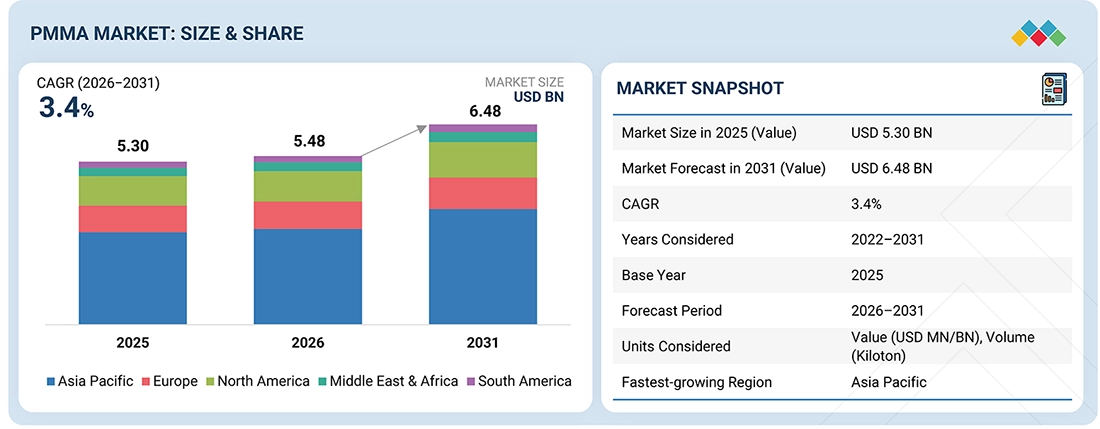
Source: Secondary Research, Interviews with Experts, MarketsandMarkets Analysis
The PMMA market is projected to reach USD 6.48 billion by 2031 from USD 5.48 billion in 2026, at a CAGR of 3.4% during the same period. The global PMMA market is primarily driven by increased automotive production and sales, the expansion of electronics manufacturing, and a rise in construction and renovation activities. The growing demand for lightweight, transparent, and durable materials in vehicle components, electronic displays, lighting systems, and building applications continues to drive worldwide market growth.
KEY TAKEAWAYS
-
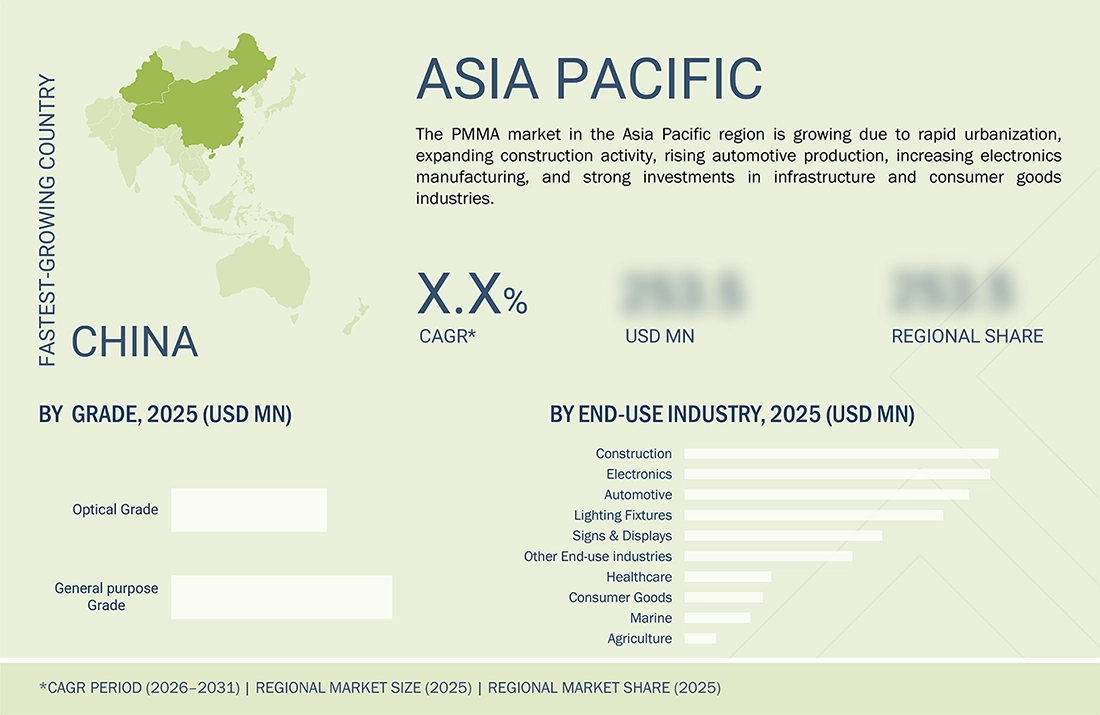
By RegionAsia Pacific accounted for a significant share of 56.6% in 2025.
-
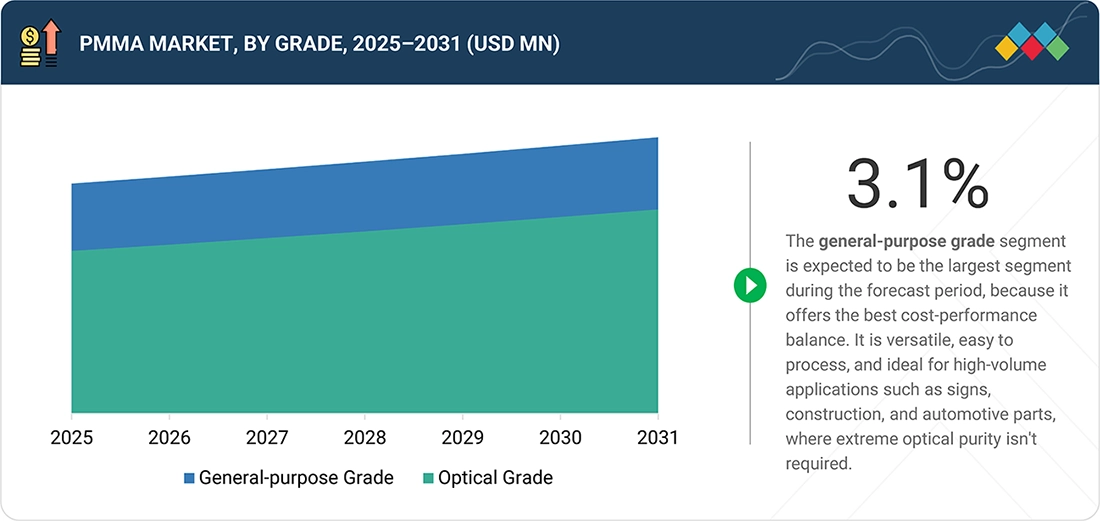
By GradeThe optical grade segment is projected to register the higher CAGR of 3.8% during the period.
-
By FormThe extruded sheet segment is projected to register the highest CAGR of 3.7% during the period.
-
By End-use IndustyThe paints & coatings segment dominated the market in 2025, accounting for a share of 17.8%.
-
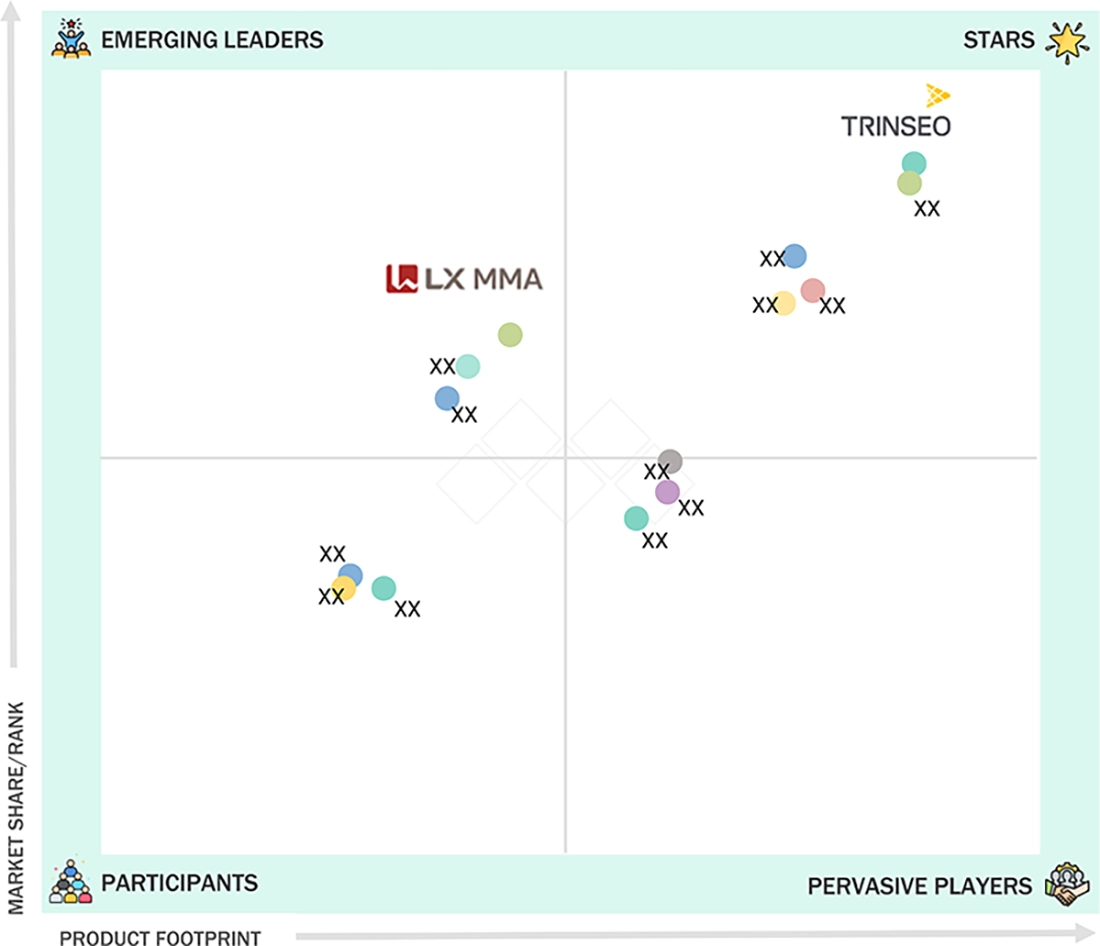
Competitive Landscape - Key PlayersTrinseo (US), Rohm GmbH (Germany), Asahi Kasei Corporation (Japan), Mitsubishi Chemical Group Corporation (Japan), LX MMA (South Korea), and CHIMEI Corporation (Taiwan) were identified as star players in the PMMA market (global), given their strong market share and product footprint.
-
Competitive Landscape - Startups/SMEsAsia Poly Holdings Berhad (Malaysia), Makevale Group Ltd. (UK), and Spartech LLC (US) have distinguished themselves among startups and SMEs by securing strong footholds in specialized niche areas, underscoring their potential as emerging market leaders.
The PMMA market is growing due to increases in automotive sales and production, supported by the booming construction industry and rising demand from the electrical and electronics industry.
TRENDS & DISRUPTIONS IMPACTING CUSTOMERS' CUSTOMERS
The PMMA market is witnessing strong growth driven by rising demand for lightweight, transparent, and durable materials across key sectors. Automotive manufacturers are increasingly adopting PMMA for taillights, interior components, and EV applications due to its excellent optical properties and weight reduction benefits. The construction and signage sectors continue to favor PMMA for glazing, skylights, and displays because of its weather resistance and shatterproof nature. A major emerging trend is the shift toward sustainable solutions, including bio-based and recycled PMMA grades. Additionally, demand for high-performance optical and impact-modified grades is rising in electronics, lighting, and medical applications.
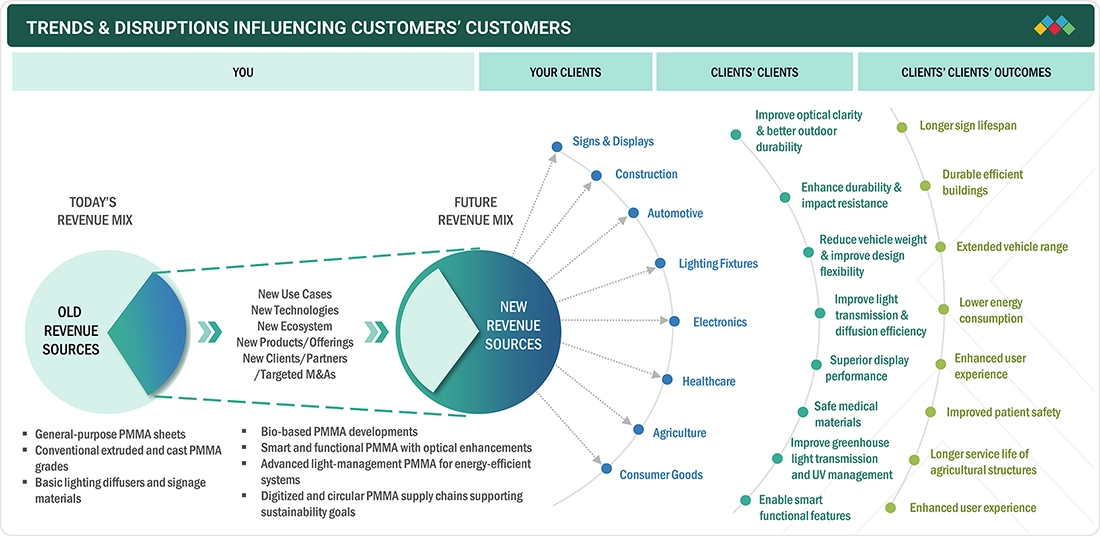
Source: Secondary Research, Interviews with Experts, MarketsandMarkets Analysis
MARKET DYNAMICS

Level
-
Increase in automotive sales and production

-
Growing electrical and electronics industry


Level
-
Availability of low-cost substitutes

-
Fluctuating feedstock costs and supply imbalances


Level
-
Rising adoption of circular PMMA

-
Increasing applications in healthcare sector


Level
-
Environmental & regulatory pressure

-
Supply chain disruptions

Source: Secondary Research, Interviews with Experts, MarketsandMarkets Analysis
Driver:Growing electrical and electronics industry
One of the major applications of PMMA is the electrical and electronics industry. Its high light transmission (up to 92%), high clarity, and excellent dimensional stability are well-suited to applications such as LED light guides, display panels, LCD screens, touch panels, and diffusers. This demand is driven by the growth of consumer electronics, smart devices, TV screens, and car screens, among others. Along with the expansion of 5G, the growing application of OLED/LED technology, and the use of PMMA in lighting fixtures, the demand is further increasing. General-purpose and optical-grade PMMA will experience strong volume growth in emerging markets due to urbanization and rising disposable incomes, which are encouraging electronics manufacturing. The benefits for manufacturers are lightness, ease of processing via injection molding and extrusion, and lower cost compared to glass. The electronics industry is constantly developing new, smaller, and more aesthetically pleasing displays, and PMMA is a material of choice for improving product aesthetics and functionality.
Restraint:Availability of low-cost substitutes
Low cost substitutes is the major constraint in the PMMA market. Polycarbonate sheets (PC), Polyethylene Terephthalate Glycol (PETG), PVC, and multiwall polycarbonate sheets are all transparent and impact-resistant sheets that are lower in cost. Despite being less scratch resistant, PC has better impact resistance and is appealing for automotive and construction applications. In the high volume market, like signage, glazing and general construction, there are constraints on the price sensitivity of the buyer, which in turn influences his desire to buy the more expensive option. The raw material costs, especially for MMA, can vary from time to time, and in these times PMMA is less competitive. In addition, glass is still a traditional low cost material in some non-safety critical applications. The alternatives restrict the market uptake of PMMA in cost-sensitive sectors and compel manufacturers to specialize to premium optical grades or specialty variants. This competitive pressure puts pressure on margins and dampens overall volume growth in price sensitive areas.
Opportunity: Rising adoption of circular PMMA
The increasing use of circular PMMA presents a significant opportunity. As there is increasing pressure from regulators and corporate sustainability goals, demand for recycled PMMA is rising rapidly. Recycling challenges have been overcome, and high-quality, virgin-like PMMA from post-industrial and post-consumer waste is now achievable with chemical recycling technologies. Circular PMMA is ideal for closed-loop applications in electronics, automotive, and construction, helping companies achieve recycled content targets and reduce their carbon footprint. Efficient depolymerization of MMA monomer via innovations to reduce reliance on fossil-based feedstocks. This trend aligns with the global circular economy movement and will create opportunities for premium grades of sustainable products. Businesses that invest in recycling initiatives and collaborations have the potential to secure a competitive edge, secure green procurement contracts, and access environmentally conscious markets in Europe and North America.
Challenge: Supply chain disruptions
The PMMA industry is still facing supply chain disruptions. The production of PMMA is highly reliant on the availability of methyl methacrylate (MMA) monomer, which is susceptible to crude oil price volatility, geopolitical conflicts, and raw material scarcity. Delays in shipments and higher costs are common due to logistics problems, port congestion, and regional conflicts. The disruptions contribute to price fluctuations, production delays, and stock shortages, hindering manufacturers' ability to maintain steady demand in the automotive, electronics, and construction industries. Smaller producers are particularly impacted, while reliance on Asia-centric supply chains adds risk. To reduce this, one must diversify the supply chain, strategically stockpile, and invest in regional production. The long-term solutions involve vertical integration and development of bio-based alternatives to minimize exposure to the volatility of traditional petrochemicals.
POLYMETHYL METHACRYLATE (PMMA) MARKET: COMMERCIAL USE CASES ACROSS INDUSTRIES
| COMPANY | USE CASE DESCRIPTION | BENEFITS |
|---|---|---|
 |
DIAM used Trinseo’s ALTUGLAS R-Life recycled PMMA (via depolymerization) for premium beauty POS displays, matching virgin material in optics, gloss, and durability. | Supports circular economy | Cuts fossil resource use and CO2 emissions | Helped DIAM reach 80% recycled plastic target by 2030 with identical high-end aesthetics |
 |
BWF Profiles applied PLEXIGLAS proTerra M5 (30% recycled PMMA) in optical lenses for RIDI’s premium lighting systems, combining sustainability with excellent light transmission. | Reduced carbon footprint by 30% vs. virgin PMMA while maintaining optical purity, impact strength, and recyclability for high-performance, eco-friendly luminaires |
 |
Cameron Mitchell Restaurants installed AMGARD antimicrobial acrylic safety shields with silver-ion technology in premium dining areas for hygiene and guest protection. | Provided lasting antimicrobial protection, scratch resistance, and crystal-clear visibility | Enhanced safety and durability in high-traffic hospitality while preserving elegant design |
Logos and trademarks shown above are the property of their respective owners. Their use here is for informational and illustrative purposes only.
MARKET ECOSYSTEM
The PMMA market ecosystem comprises raw material suppliers, PMMA manufacturers, distributors, and end-use industries that operate across an integrated value chain. Raw material suppliers provide key feedstocks, particularly the methyl methacrylate (MMA) monomer, which manufacturers convert into PMMA through polymerization. PMMA producers then process the material into various forms such as extruded sheets, cast acrylic sheets, pellets, and beads. These products are distributed through regional distributors, wholesalers, and channel partners, ensuring availability across global markets. The final demand is generated by end-use industries, including construction, automotive, electronics, lighting, healthcare, marine, agriculture, signs & displays, and consumer goods, where PMMA is valued for its optical clarity, weather resistance, durability, and lightweight properties.
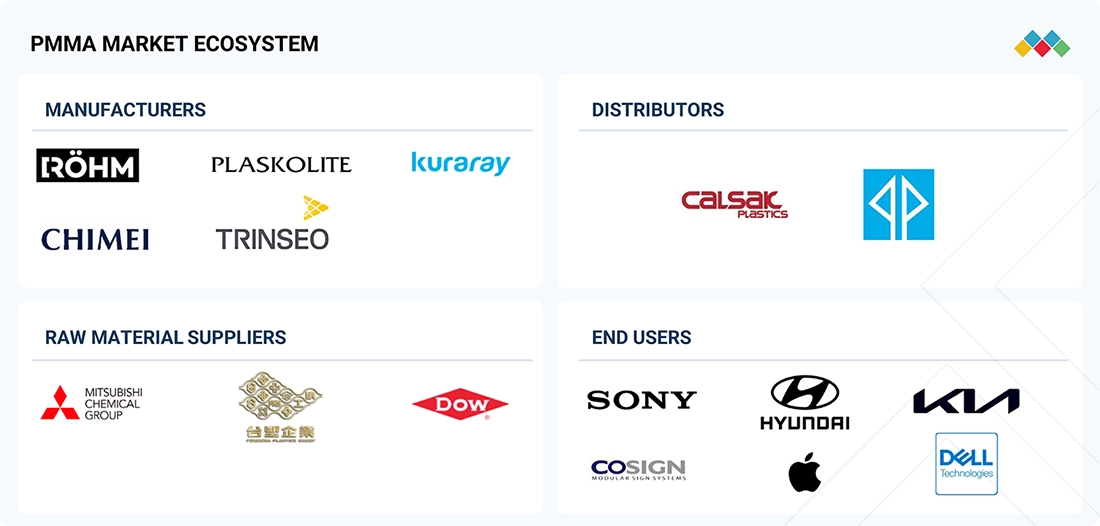
Logos and trademarks shown above are the property of their respective owners. Their use here is for informational and illustrative purposes only.
MARKET SEGMENTS
Source: Secondary Research, Interviews with Experts, MarketsandMarkets Analysis
PMMA Market, By Grade
The PMMA (Polymethyl Methacrylate) market is dominated by the general-purpose grade. Its leadership is based on outstanding versatility, value, and well-rounded performance characteristics that are ideal for a broad range of high-volume applications. GP-grade PMMA has excellent impact resistance, weatherability, and UV stability, with high optical clarity (typically>90% light transmission), and it is easily processed by either extrusion or injection molding. It has all the qualities needed in a wide range of applications, including signage and displays, construction glazing, automotive parts (such as taillights), lighting fixtures, consumer goods, and food packaging, not to mention the high costs of optical-grade varieties. General-purpose grade is preferred by producers for mass production because of lower cost and high throughput, thus achieving economies of scale. In the construction and signage industry, where aesthetics, durability, and cost are more important than ultra-high optical precision, GP-grade is a better choice because it is not only lightweight and shatterproof but also more affordable. The demand also increases in pace with urbanization and infrastructure growth, as it serves the general order requirements of all the industries which value the price over performance. The use of optical grades expands in niche high-end segments (such as displays) but GP-grade's large and diverse application profile continues to drive its volume market leadership worldwide.
PMMA Market, By Form
Extruded sheets account for the major portion of the PMMA market. This domination is due to the superior cost-effectiveness, production scalability, uniformity, and versatility for large-scale applications. The advantages of high volume production of sheets of uniform thickness, good width flexibility, and cheaper production than cast sheets make extrusion more attractive than cast sheets. This enables the reduction of the cost of extruded PMMA sheets without sacrificing important characteristics such as high transparency, weather resistance, impact resistance, and ease of fabrication (cutting, thermoforming, bonding). Main applications include storefronts, signs, architectural glass (windows, skylights, partitions), lighting covers, displays, and facades. The lightweight property, durability, and UV resistance of these sheets are all useful for these applications. The construction industry, along with graphic design, drives high demand due to the large amount of infrastructure work underway and the desire to use aesthetic and energy-efficient materials. Forming extruded sheets at scale enables the customization of complex shapes that cannot be achieved with pellets or beads in sheet-dependent industries. They strike a good balance between performance and cost, making them the preferred option over higher-priced cast options for most commodity and mid-range applications. This segment is further leading by continuing urbanization as well as green building trend.
PMMA Market, By End-use Industry
The construction industry is one of the major end-users of PMMA as the global infrastructure, urbanization, and demand for sustainable high-performance materials are surging. This dominance is due to the use of PMMA in windows, skylights, sound barriers, facades and partitions, greenhouses, aquariums, and decorative applications. Some of the most significant benefits are superior optical clarity, resistance to UV radiation, weatherability, low structural load, shatter resistance, and ease of installation over traditional glass. These allow for energy-efficient designs, improved natural lighting, and reduced maintenance within modern buildings. Otherwise, the design regulations and energy codes encourage PMMA use in retrofits and new construction in various geographic areas, including Europe, the US, and Asia. Urbanization in emerging economies drives the surge of construction activity in both commercial and residential sectors, with the need for aesthetic and durable glazing and signage. PMMA is an economical alternative to glass that offers enhanced design flexibility. This is enhanced by renovation, noise barriers, and waterproofing applications.
REGION
Asia Pacific to be the largest regional PMMA market in the world during the forecast period
Asia Pacific is the leading region in the PMMA market, owing to high demand from key industries such as construction, electronics, automotive, and displays, as well as rapid industrialization and urbanization in the region. Leading contributors are countries in the Far East, such as China, India, Japan, and South Korea, as well as Southeast Asian countries. China dominates in large display panel manufacturing (such as LED and LCD), infrastructure development, and automotive development, all of which are helped by local brands such as CHI MEI. The growth of the middle class and the government's infrastructure investments benefit India and others. The region's lower cost of labor, access to raw materials (MMA), and growing supply chains provide a cost-effective opportunity for high-volume production and exports in APAC. Glazing, signage, and facades are in demand for construction in urban areas, for electronics components, lighting, and for lightweight parts in the automotive industry. Growth is fueled by favorable policies, EV adoption, and the green building trend. Strong positions on regional players with investments in capacity expansion.
POLYMETHYL METHACRYLATE (PMMA) MARKET: COMPANY EVALUATION MATRIX
Trinseo (Star) is a star player in the PMMA market with a strong presence in specialty materials and sustainable acrylic solutions. The company focuses on innovation, recycled-content PMMA products, and circular economy initiatives, strengthening its position across automotive, construction, healthcare, and consumer applications globally. LX MMA (emerging leader) is an emerging leader in the PMMA market with significant manufacturing capabilities in Asia. The company leverages vertical integration, production capacity expansion, and technological expertise in MMA value chains to serve growing demand from automotive, electronics, construction, and display applications across global markets.
Source: Secondary Research, Interviews with Experts, MarketsandMarkets Analysis
KEY MARKET PLAYERS
- Trinseo PLC (US)
- Sabic (Saudi Arabia)
- Mitsubishi Chemical Group Corporation (Japan)
- Asahi Kasei Corporation (Japan)
- Sumitomo Chemical Co., Ltd. (Japan)
- Kuraray Co., Ltd. (Japan)
- CHIMEI (Taiwan)
- LOTTE Chemical Corporation (South Korea)
- Rohm GmbH (Germany)
- PLASKOLITE (US)
- LX MMA (South Korea)
- Schweiter Technologies AG (Switzerland)
- Makevale Group Ltd. (UK)
- Spartech LLC (US)
- Nitto Jushi Kogyo Co., Ltd. (Japan)
MARKET SCOPE
| REPORT METRIC | DETAILS |
|---|---|
| Market Size in 2025 (Value) | USD 5.30 Billion |
| Market Forecast in 2026 (Value) | USD 5.48 Billion |
| Market Forecast in 2031 (Value) | USD 6.48 Billion |
| Growth Rate | CAGR of 3.4% from 2026 to 2031 |
| Years Considered | 2022–2031 |
| Base Year | 2025 |
| Forecast Period | 2026–2031 |
| Units Considered | Value (USD Million/Billion), Volume (Kiloton) |
| Report Coverage | Revenue forecast, company ranking, competitive landscape, growth factors, and trends |
| Segments Covered |
|
| Regions Covered | North America, Asia Pacific, Europe, South America, Middle East & Africa |
WHAT IS IN IT FOR YOU: POLYMETHYL METHACRYLATE (PMMA) MARKET REPORT CONTENT GUIDE
DELIVERED CUSTOMIZATIONS
We have successfully delivered the following deep-dive customizations:
| CLIENT REQUEST | CUSTOMIZATION DELIVERED | VALUE ADDS |
|---|---|---|
| PMMA Market- grades across end-use industries | Detailed analysis of PMMA grades based on the usage for different end-use industries, including construction, signs & displays, automotive, and consumer goods |
|
| CLIENT REQUEST | CUSTOMIZATION DELIVERED | VALUE ADDS | | | | | ||
| Deeper analysis of high-growth end-use industries | Detailed demand breakdown for semiconductor, healthcare, metal fabrication, and environmental monitoring sectors | Consumption pattern analysis across industries | Purity requirement mapping for specialt | ||
| Assessment of competitive positioning in specialty gas mixtures | Benchmarking of key players based on blending capabilities, purity levels, distribution models, and technology integration | Comparative analysis of product portfolios and certification cap |
RECENT DEVELOPMENTS
- August 2026 : Researchers at the Bangladesh Council of Scientific and Industrial Research and University of Dhaka developed a stronger, more sustainable acrylic composite using cellulose recovered from teak sawdust. The teak cellulose–reinforced PMMA composite achieved a tensile strength of 13.55 MPa at just 2.5% cellulose loading, more than twice that of unmodified PMMA. The process uses aqueous ethanol and converts woodworking waste into a functional reinforcement material. The technology could support applications requiring lightweight, stronger acrylic materials while reducing reliance on conventional petroleum-derived additives. The development highlights a promising route toward sustainable PMMA composites and higher-value utilization of wood-processing waste.
- May 2026 : Arkema is reshaping its portfolio around higher-value specialty materials after divesting its PMMA and Coating Resins businesses. The strategy is shifting the group toward advanced adhesives, high-performance polymers, and specialty solutions. Arkema is targeting growth markets including batteries, electric mobility, electronics, and sustainable construction. The repositioning is designed to reduce exposure to lower-margin, more cyclical chemical businesses while increasing the contribution of differentiated materials. The shift strengthens Arkema’s positioning as a specialty materials player focused on higher-growth applications.
- April 2026 : Researchers at the University of Bath developed a lower-energy method to chemically recycle PMMA using UV light and sustainable solvents. The process achieves more than 95% plastic conversion and over 70% recovery of monomer for producing new PMMA. Operating at 120–180°C, it requires significantly less heat than conventional pyrolysis. The approach can preserve material quality while addressing energy and contamination challenges in acrylic recycling. The development could accelerate more circular and commercially viable recycling of PMMA used in automotive, construction, screens, and other applications.
- April 2026 : Röhm is scaling its in-house PMMA chemical recycling technology to industrial levels at its Worms site, enabling waste PMMA to be converted back into high-quality methyl methacrylate (MMA). The process achieves more than 90% yield and integrates directly with existing MMA production. From summer 2027, the recycled MMA is planned for use in proTerra products. The move supports a closed-loop PMMA value chain while reducing dependence on fossil feedstocks. It strengthens Röhm’s position in Europe’s growing circular plastics market.
- November 2025 : Trinseo partnered with Tapì Group, a global closure solutions provider, to integrate ALTUGLAS R-LIFE PMMA containing 50% chemically recycled content into premium closure solutions for spirits, cosmetics, and packaging applications. The collaboration highlighted Trinseo’s circular PMMA capabilities and strengthened the adoption of sustainable acrylic materials in high-value packaging markets.
Table of Contents
 Exclusive indicates content/data unique to MarketsandMarkets and not available with any competitors.
Methodology
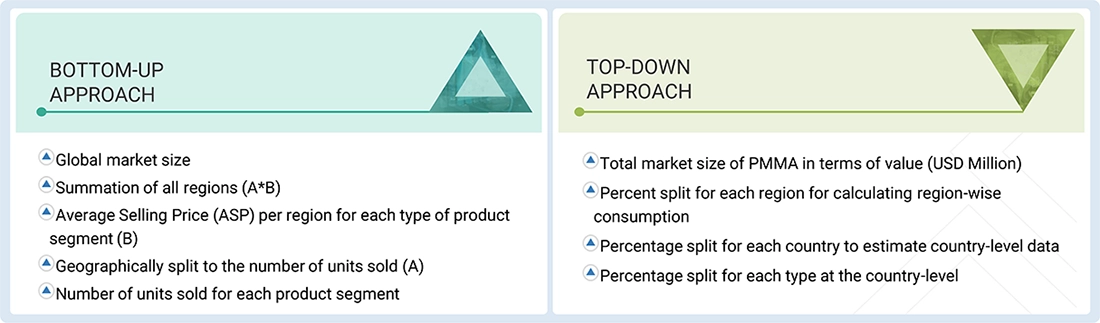
The study involved four major activities to estimate the current size of the global PMMA market. Exhaustive secondary research was carried out to collect information on the market, the peer product market, and the parent product group market. The next step was to validate these findings, assumptions, and sizes with industry experts across the PMMA value chain through primary research. The top-down and bottom-up approaches were employed to estimate the overall size of the PMMA market. After that, market breakdown and data triangulation procedures were used to determine the sizes of the different market segments.
Secondary Research
The market for companies offering PMMA was arrived at by studying the secondary data available through paid and unpaid sources, analyzing the product portfolios of the major companies in the ecosystem, and rating the companies by their performance and quality. Various secondary sources, such as Business Standard, Bloomberg, World Bank, and Factiva, were referred to identify and collect information for this study on the PMMA market. In the secondary research process, various secondary sources were referred to identify and collect information related to the study. Secondary sources included annual reports, press releases, investor presentations, PMMA vendors, forums, certified publications, and white papers. The secondary research was used to obtain critical information on the industry’s value chain, the total pool of key players, market classification, and segmentation from the market and technology-oriented perspectives.
Primary Research
In the primary research process, various primary sources from the supply and demand sides were interviewed to obtain qualitative and quantitative information for this report. The primary sources from the supply side included industry experts, such as Chief Executive Officers (CEOs), Vice Presidents (VPs), marketing directors, technology and innovation directors, and related key executives from several key companies and organizations operating in the PMMA market. After the complete market engineering (calculations for market statistics, market breakdown, market size estimations, market forecasting, and data triangulation), extensive primary research was conducted to gather information and verify and validate the critical numbers arrived at. Primary research was also conducted to identify the segmentation types, industry trends, competitive landscape of PMMA offered by various market players, and key market dynamics, such as drivers, restraints, opportunities, challenges, industry trends, and key player strategies. In the complete market engineering process, the top-down and bottom-up approaches and several data triangulation methods were extensively used to perform the market estimation and market forecasting for the overall market segments and subsegments listed in this report. Extensive qualitative and quantitative analysis was performed on the complete market engineering process to list the key information/insights throughout the report.
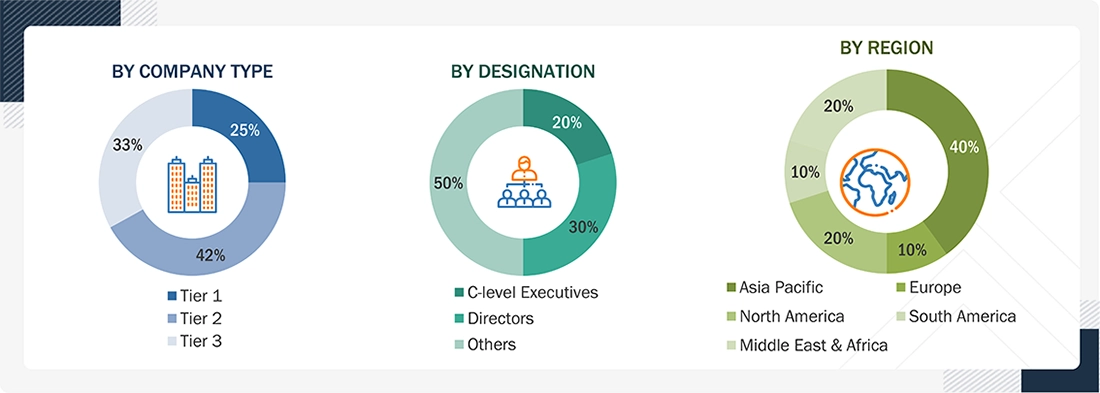
Note: Others include Sales, Marketing, and Product Managers.
Tier 1: > USD 1 billion; Tier 2: USD 500 million–1 billion; and Tier 3: < USD 500 million
To know about the assumptions considered for the study, download the pdf brochure
Market Size Estimation
The top-down and bottom-up approaches were used to estimate and validate the size of the global PMMA market. These approaches were also used extensively to estimate the size of various dependent market segments
Data Triangulation
After arriving at the overall market size using the market size estimation processes, the market was split into several segments and subsegments. The data triangulation and market breakdown procedures were employed, wherever applicable, to complete the overall market engineering process and arrive at the exact statistics of each market segment and subsegment. The data was triangulated by studying various factors and trends from both the demand and supply sides.
Market Definition
Polymethyl Methacrylate (PMMA), commonly known as acrylic or acrylic glass, is a transparent thermoplastic polymer valued for its excellent optical clarity, lightweight nature, weather resistance, and impact strength. It is widely used as a glass substitute. It is made primarily from methyl methacrylate (MMA) and is used across various end-use industries, including automotive components, construction materials, electronics, signage, healthcare devices, and consumer goods.
Key Stakeholders
- PMMA Manufacturers
- PMMA Suppliers
- Electronics and Semiconductor Companies
- Construction Companies
- Automotive Manufacturers
- Automotive Component Suppliers
- Panel and Screen Manufacturers
- Raw Material Suppliers
Report Objectives
- To define, describe, and forecast the size of the global PMMA market based on grade, form, end-use industry, and region in terms of value and volume
- To provide detailed information on the significant drivers, restraints, opportunities, and challenges influencing the market
- To analyze and forecast the market based on grade, form, and end-use industry
- To strategically analyze micro markets concerning individual growth trends, prospects, and their contribution to the market
- To assess the growth opportunities in the market for stakeholders and provide details on the competitive landscape for market leaders
- To forecast the market size of segments for North America, Europe, Asia Pacific, South America, and the Middle East & Africa
- To strategically profile key players and comprehensively analyze their market shares and core competencies
- To analyze competitive developments, such as expansions, partnerships, and acquisitions in the PMMA market
- To provide the impact of AI on the PMMA market
Available customizations:
With the given market data, MarketsandMarkets offers customizations according to client-specific needs.
The following customization options are available for the PMMA report:
Product Analysis
- A product matrix that gives a detailed comparison of the product portfolio of each company
Regional Analysis
- A further breakdown of the PMMA market for additional countries
Company Information
- Detailed analysis and profiling of additional market players (up to five)


Personalize This Research
- Triangulate with your Own Data
- Get Data as per your Format and Definition
- Gain a Deeper Dive on a Specific Application, Geography, Customer or Competitor
- Any level of Personalization
Let Us Help You
- What are the Known and Unknown Adjacencies Impacting the Polymethyl Methacrylate (PMMA) Market
- What will your New Revenue Sources be?
- Who will be your Top Customer; what will make them switch?
- Defend your Market Share or Win Competitors
- Get a Scorecard for Target Partners

Custom Market Research Services
We Will Customise The Research For You, In Case The Report Listed Above Does Not Meet With Your Requirements
Get 10% Free CustomisationTESTIMONIALS

We at Nissan Chemicals Corporation have been clients of MarketsandMarkets for more than a year now. We recently consulted MarketsandMarkets for a study, the team at MarketsandMarkets was extremely professional and organized. The business insights were very detailed and aligned well with our expectations that really helped us formulate the Business Plans and device new strategies for development themes. MarketsandMarkets offers a unique combination of expertise and dedicated engagement model. Their research findings have helped us in designing our Pricing Strategy which will make it easier for us to predict the future sales and profits for the next ten years. We look forward to working with MarketsandMarkets in the future.
VP of Strategy & New Business Development
Leading Specialty Chemical Company
The MarketsandMarkets Engagement Model, composed of both the Knowledge Store and advisory custom research, has greatly helped us in understanding our markets and making strategic decisions. The Knowledge Store is a fast way to allow everyone in our organization to understand more about most any market they are interested in. The ability to then get custom research done and get answers to specific strategic questions and market insight has been spectacular. The Markets and Markets team feel more like colleagues than vendors and their services have helped us change our culture where statements of things like growth opportunities and competitive position are always backed by industry research.

Rich Gibson,
Director, Corporate Strategy
Milliken & Company,
Leading Industrial Manufacturer of specialty chemical, floor covering, performance and protective textile materials, and healthcaremilliken.com
MarketsandMarkets is a trusted resource that helps us to better understand markets that are near-adjacencies-whether its technology, value chain or geography. Their Knowledge Store platform provides a dashboard of markets and their characteristics which is easy to use and saves us time.
Adam Shaw,
Market Development and Strategy Manager
AdvanSix Inc. USA,
An American Leader in Chemicalswww.advansix.com
The Knowledge Store from MarketsandMarkets is a valuable tool which has helped my team acquire greater insight in to the end markets that our business serves. This has enabled us to help our company build stronger strategies throughout our planning process.
TOSHIO KINOSHITA
Senior Chif Consultion Research & Consulting Division
Mitsubishi Chemical Research Corporation,
Leading Manufacturer of Chemical Productswww.mitsubishichem-res.co.jp/en/

We recently engaged with MarketsandMarkets for a study, the team not only clearly understood our business objectives but was also extremely professional in the way they handled the entire project. The study was efficiently conducted in a phase-wise manner, and the engagement model furnished us with high-quality business insights that far exceeded our expectations at each phase. We were especially happy that MarketsandMarkets could provide us with both, an English as well as a Japanese version of the study. A special thanks to the Analyst Team and Client Services Team, whose fluency in Japanese enhanced our comfort level, as we could converse with them in our preferred language.
Independent entrepreneurs
Arrow Precision
We approached MarketsandMarkets for study on Proppants Market, and their work exceeded our expectations. The study conducted was comprehensive and enabled us to view the market through the various dimensions. In addition, the team was extraordinarily responsive throughout the process and resolved our queries on time. I strongly recommend MarketsandMarkets and will certainly consider them for additional market assessments we will need in the future.
Global engineering company, Japan
Deputy Manager,
Strategic Planning OfficeThe high-quality insights shared by the MarketsandMarkets team helped us understand the pharmaceutical plant designers in a specific geography. It also captured the risks that we may likely face in communicating with our potential partners. The study would enable us identify partners, which would impact our future growth.
- China Polymethyl Methacrylate (PMMA) Market
- India Polymethyl Methacrylate (PMMA) Market
- Japan Polymethyl Methacrylate (PMMA) Market
- South Korea Polymethyl Methacrylate (PMMA) Market
- Malaysia Polymethyl Methacrylate (PMMA) Market
- US Polymethyl Methacrylate (PMMA) Market
- Canada Polymethyl Methacrylate (PMMA) Market
- Mexico Polymethyl Methacrylate (PMMA) Market
- Germany Polymethyl Methacrylate (PMMA) Market
- UK Polymethyl Methacrylate (PMMA) Market
- France Polymethyl Methacrylate (PMMA) Market
- Italy Polymethyl Methacrylate (PMMA) Market
- Spain Polymethyl Methacrylate (PMMA) Market
- Brazil Polymethyl Methacrylate (PMMA) Market
- Argentina Polymethyl Methacrylate (PMMA) Market
- Saudi Arabia Polymethyl Methacrylate (PMMA) Market
- UAE Polymethyl Methacrylate (PMMA) Market
- South Africa Polymethyl Methacrylate (PMMA) Market
Growth opportunities and latent adjacency in Polymethyl Methacrylate (PMMA) Market






Felisa
Nov, 2013
PMMA market report .
User
May, 2021
PMMA grades list.
Sagar
Jul, 2017
PMMA clear Pellets, ABS Pellets, Acrylic caste & extruded sheet and Chemical called: Methyl Methacrylate Monomer .
shirin
May, 2019
General information on global PMMA market.
Mark
Mar, 2015
PMMA market and application insights.
AISOON
Jan, 2013
Separate resin and casting Demand/Supply by regionPMMA resin and Casting.
AISOON
Jan, 2013
PMMA resin and Casting Demand/Supply by region..
Terese
Oct, 2015
General information on market trends and new developments for PMMA market.
yokaprakash
Sep, 2019
General information on global PMMA market.
shailesh
Aug, 2021
Which companies buy PMMA extrusion grade scrap?.
Arifur
Jun, 2016
Looking out for raw material supplier (PMMA & PS).
VINEETH
May, 2019
Information on PMMA used as bone cement in cemented total hip replacement surgeries..
Karin
Feb, 2016
Profile of Sheet moulding compounds manufacturers.