Zinc Oxide Market

Zinc Oxide Market by Process (Indirect, Direct, Wet-Chemical), by Grade (Standard, treated, USP, FCC), Application (Rubber, Ceramics, Chemicals, Cosmetics & Personal Care, Pharmaceuticals) & Region - Global Forecast to 2031




OVERVIEW
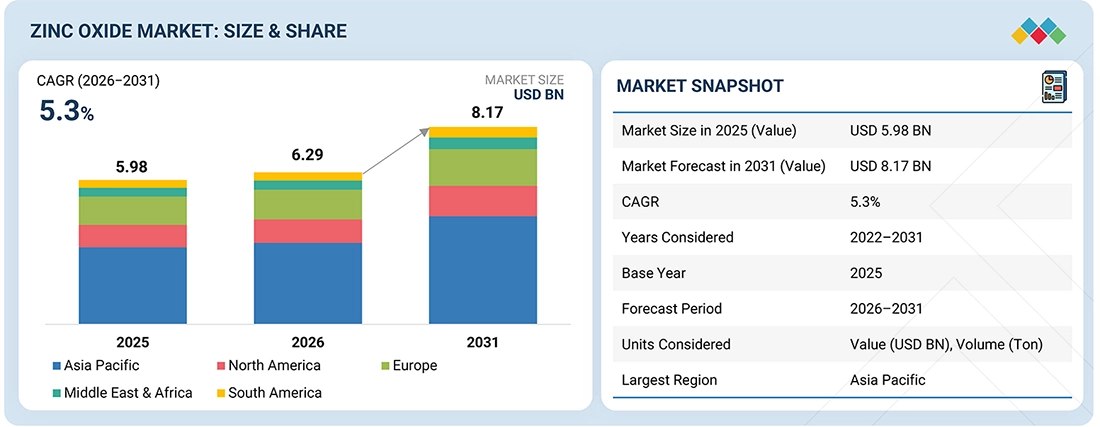
Source: Secondary Research, Interviews with Experts, MarketsandMarkets Analysis
The zinc oxide market is projected to grow from USD 6.29 billion in 2026 to USD 8.17 billion by 2031, at a CAGR of 5.3% during the forecast period. The demand for zinc oxide is due to the rubber industry majorly supported by the growing automotive segment, and other industries like cosmetics and pharmaceuticals.
KEY TAKEAWAYS
-
By RegionAsia Pacific accounted for a significant share of 53.3% in 2025.
-
By ProcessThe wet-chemical segment is projected to register the highest CAGR of 5.7% during the forecast period.
-
By GradeThe United States Pharmacopeia (USP) segment is projected to register the highest CAGR of 6.0%.
-
By ApplicationThe rubber segment dominated the market in 2025, accounting for a share of 39.7%.
-
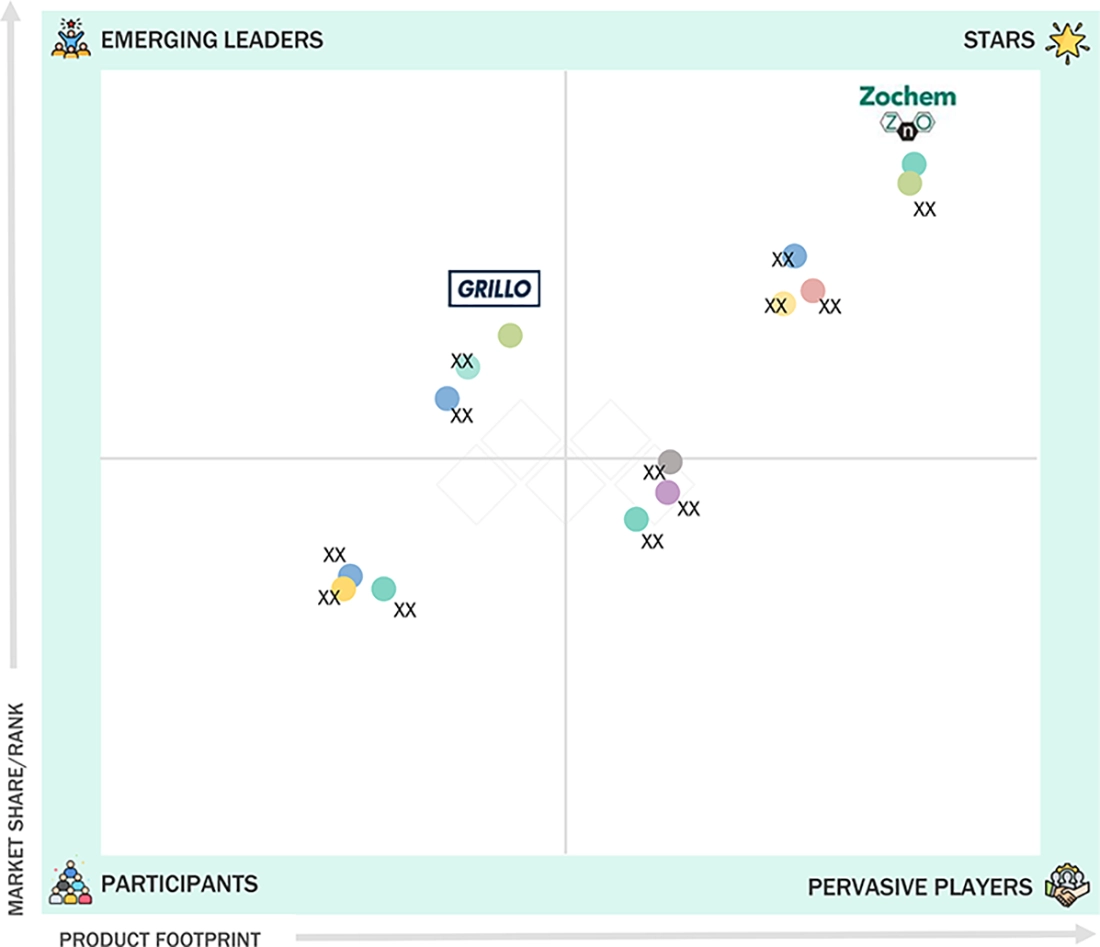
Competitive Landscape - Key PlayersEverZinc (US), Zochem LLC (US), Grupa Boryszew (Poland), Lanxess (Germany), and JG Chemicals Limited (India) were identified as star players in the zinc oxide market (global), given their strong market share and product footprint.
-
Competitive Landscape - Startups/SMEsBrüggemann (Germany), SILOX Group (Belgium), Entekno Materials (Turkey), Nanomox (England), and Global Chemical Co., Ltd. (Thailand) have distinguished themselves among startups and SMEs by securing strong footholds in specialized niche areas, underscoring their potential as emerging market leaders.
The growing adoption of zinc oxide is becoming increasingly apparent as industries shift toward high-performance, multifunctional materials that meet evolving regulatory and sustainability standards. Traditional materials that lack durability, antimicrobial properties, or UV resistance are gradually being replaced by zinc oxide due to its versatility and cost-effectiveness. From rubber and ceramics to coatings and personal care products, manufacturers are leveraging zinc oxide to enhance product performance while simplifying processing requirements. Collectively, these developments position zinc oxide as a critical material in modern manufacturing, supporting efficiency, product longevity, and regulatory compliance across sectors such as automotive, construction, healthcare, electronics, and consumer goods.
TRENDS & DISRUPTIONS IMPACTING CUSTOMERS' CUSTOMERS
The zinc oxide market is undergoing a clear transition from traditional, commodity-grade applications toward high-value, performance-driven use cases. While legacy demand has been anchored in bulk uses such as rubber manufacturing, basic ceramics, chemicals, and conventional agriculture, growth is increasingly fueled by advanced applications across industries, including rubber, ceramics, chemicals, pharmaceuticals, agriculture, and cosmetics & personal care. This shift is driven by evolving customer imperatives such as the need for high-performance vulcanization, enhanced thermal stability and glaze quality, high purity for catalysts, regulatory compliance, and bioavailable inputs for fertilizers and feed. As a result, new revenue streams are emerging around low-carbon and recycled-content zinc oxide, positioning zinc oxide as a critical material aligned with sustainability, innovation, and regulatory trends across global markets.
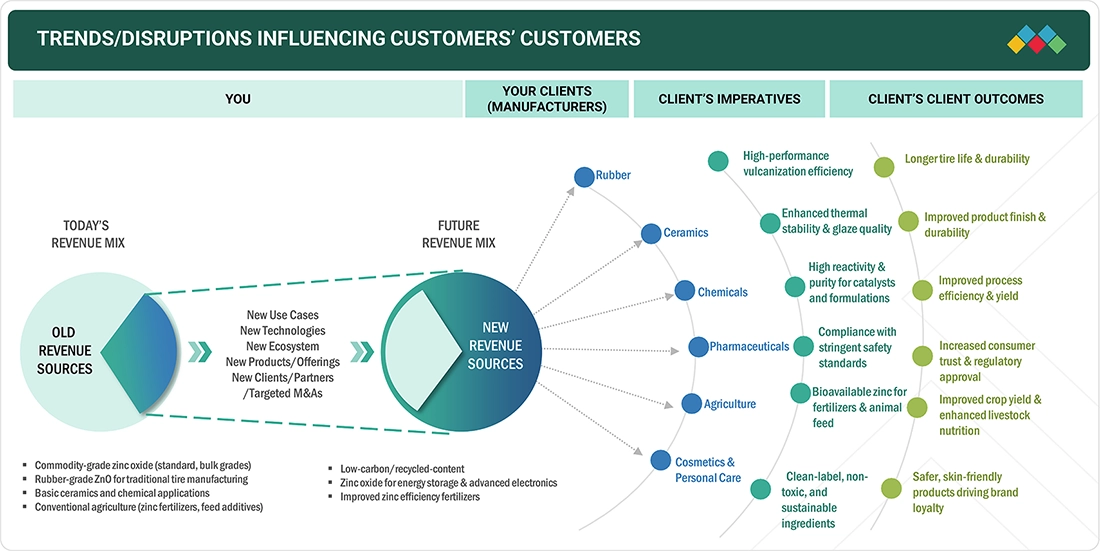
Source: Secondary Research, Interviews with Experts, MarketsandMarkets Analysis
MARKET DYNAMICS

Level
-
Zinc oxide demand in rubber industry fueled by automotive production and tire needs

-
Increasing demand from cosmetics and personal care products


Level
-
Raw material price volatility

-
Strict environmental regulatory frameworks


Level
-
Rapid industrialization and infrastructure development

-
Nanotechnology adoption


Level
-
Supply chain dependency on zinc mining and refining

-
Health concerns related to zinc oxide fumes and heavy metal exposure

Source: Secondary Research, Interviews with Experts, MarketsandMarkets Analysis
Driver: Zinc oxide demand in rubber industry fueled by automotive production and tire needs
Zinc oxide is very significant in the rubber industry, especially as an activator in the vulcanization process that increases the strength, elasticity, and durability of the rubber products. The increase in the world automotive industry remains one of the key contributors to the demand for zinc oxide due to tires constituting one of the biggest end-use markets. The growing capacity to manufacture vehicle tires, and an augmenting demand for tires to replace worn-out tires on the vehicles, is rapidly increasing the use of zinc oxide. Also, the transition to electric vehicles (EVs) is indirectly boosting demand, with EVs necessitating tires with enhanced tire characteristics (high torque and weight) and thus necessitating better rubber compounds. Additionally to tires, zinc oxide finds extensive application in other automotive rubber parts like hoses, belts, and seals, among others, which will further increase its market presence. The use of tire manufacturing techniques, such as pushing towards longer life time, fuel economy, and high-performance tires, is strengthening the need for zinc oxide in attaining the required material characteristics. Due to the changing mobility trends in all countries of the world and especially in emerging economies as more people acquire vehicles, the rubber industry will continue to be one of the pillars of growth of the zinc oxide market.
Restraint: Raw material price volatility
The volatility of prices of the raw materials, especially zinc metal, which has a direct effect on the cost of production, is one of the greatest threats to the zinc oxide market. There are fluctuations in the prices of zinc caused by some factors, including mining production, geopolitical instabilities, energy prices, and imbalances in the supply and demand of zinc globally. The majority of the production of zinc oxide relies on the availability of zinc feedstock, hence any volatility in upstream markets would greatly affect profitability among the manufacturers. Moreover, production processes that consume energy also increase the pressure on costs, particularly in areas where there is high volatility in the prices of energy. The uncertainty of this makes it hard to have any consistent pricing strategy and long-term supply contracts among the producers and causes uncertainty to the downstream industries like rubber, ceramics, and chemicals. This is especially true of small and medium-sized manufacturers, which in most cases have no financial leeway to absorb the immediate rise in costs. Also, the volatility of prices can put off investments in capacity increase or even innovation, which stalls the growth of the market in general. Whereas certain firms tend to hedge the risks by diversified sourcing or hedging strategies, it is the incessant variations of the cost of raw materials that remain a major limitation that may impact the stability and competitiveness of the zinc oxide market.
Opportunity: Rapid industrialization and infrastructure development
The zinc oxide market has a lot of growth opportunities, especially in the emerging economies, due to rapid industrialization and the development of infrastructure, especially the railway system. The need to develop high investments in construction, transportation, and manufacturing industries is increasing the demand for zinc oxide materials in various applications. Zinc oxide also finds applications in the construction industry as it is utilized in coatings, sealants, and ceramics, wherein the substance has been employed to increase durability, resistance to corrosion, and UV protection. The increase in urbanization is also attracting the use of paints and protective coatings and this increases the consumption of zinc oxide. Besides this, infrastructure developments like roads, bridges, and railways also contribute to the demand of zinc oxide indirectly by enhancing the consumption of rubber products like rubber tires and industrial parts. Development of manufacturing centers also plays a role in increasing the consumption in chemicals, electronics and specialty use. The development of sustainable and high-performance materials is gaining more and more attention of governments in the developing regions, which is providing opportunities to develop more advanced types of zinc oxide like low-carbon and high-purity grades. Moreover, the increasing agricultural activities attributed to infrastructure development are also sustaining zinc oxide in fertilizers. With the ever-growing industrial ecosystems, zinc oxide stands to gain in the various end-use applications of its versatility and functional benefits in a broad range of industries.
Challenge: Health concerns related to zinc oxide fumes and heavy metal exposure
The health and environmental issues related to zinc oxide, especially in the fume form, and the possibility of exposure to heavy metals pose a significant barrier to the growth of the market. Zinc oxide fumes may be produced during high-temperature industrial processes, like smelting or welding, and in this case, the short-term health effects may include metal fume fever when large amounts of the fume are inhaled. Such risks are normally temporary but require stringent work safety and regulations, making operations more complicated for manufacturers and end users. There is also the issue of trace heavy metal contamination with some grades of zinc oxide, which may become problematic in sensitive uses, such as in pharmaceuticals, cosmetics, and food-related uses. Safety and environmental requirements are being raised by regulatory bodies in different regions, and companies are obliged to spend on high-level purification systems, emission control, and safety measures for workers. These needs may raise the cost of production and pose a hindrance to the smaller players. In addition, increasing consumer consciousness on the safety and sustainability of products is compelling manufacturers to use less toxic, non-toxic, and green formulations. Although some of these issues are being addressed using high-purity and nano-grade zinc oxide solutions, the challenge of compliance and safe handling throughout the value chain continues to be a concern to the industry.
ZINC OXIDE MARKET: COMMERCIAL USE CASES ACROSS INDUSTRIES
| COMPANY | USE CASE DESCRIPTION | BENEFITS |
|---|---|---|
 |
RUBAMIN developed low-dust zinc oxide in MicroPrills and palletized forms to reduce airborne particles during handling and processing in industrial environments. | Improves worker health and safety by minimizing inhalation risks, enhances shop-floor efficiency through free-flowing material, reduces material loss from dusting, and supports automation in weighing and conveying systems. |
 |
Sustainable product ECO ZINC developed. Zinc oxide produced with ECO ZINC integrates recycled and low-carbon raw materials into industrial applications such as chemicals, rubber, paints, and energy systems. | Reduces carbon footprint through climate-neutral production, supports circular economy practices, ensures high product quality and reliability, and enables sustainable manufacturing across multiple industries. |
|
|
High surface area zinc oxide engineered for removing sulfur compounds from fuels and hydrocarbon feedstocks, enabling cleaner refining operations. | Enhances sulfur removal efficiency, supports compliance with stringent emission standards, improves catalyst performance and lifespan, and contributes to cleaner fuels and reduced environmental pollution. |
Logos and trademarks shown above are the property of their respective owners. Their use here is for informational and illustrative purposes only.
MARKET ECOSYSTEM
The zinc oxide market operates through a well-defined and integrated ecosystem comprising raw material suppliers, manufacturers, distributors, and diverse end users. Raw material suppliers primarily provide zinc metal, concentrates, or recycled zinc, which serve as the key inputs for zinc oxide production. Some large players are vertically integrated, securing zinc supply from mining operations to ensure cost stability and consistent quality. Moving downstream, manufacturers convert these inputs into various grades of zinc oxide (industrial, pharmaceutical, cosmetic, and nano-grade) using processes such as the French or American method. Distributors and traders act as a critical link between manufacturers and end users, ensuring bulk availability, regulatory compliance, and efficient logistics across regions. End users span a wide range of industries including rubber (especially tires), ceramics, chemicals, pharmaceuticals, agriculture, paints and coatings, and personal care. Zinc oxide's UV protection, antimicrobial behavior, and high thermal stability drive its widespread adoption across these sectors.
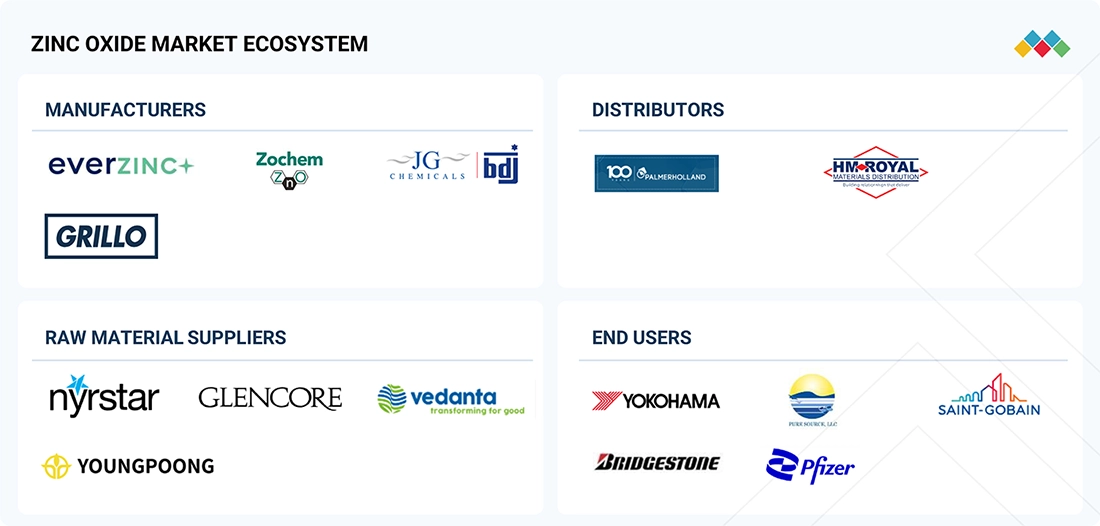
Logos and trademarks shown above are the property of their respective owners. Their use here is for informational and illustrative purposes only.
MARKET SEGMENTS
Source: Secondary Research, Interviews with Experts, MarketsandMarkets Analysis
Zinc Oxide Market, By Process
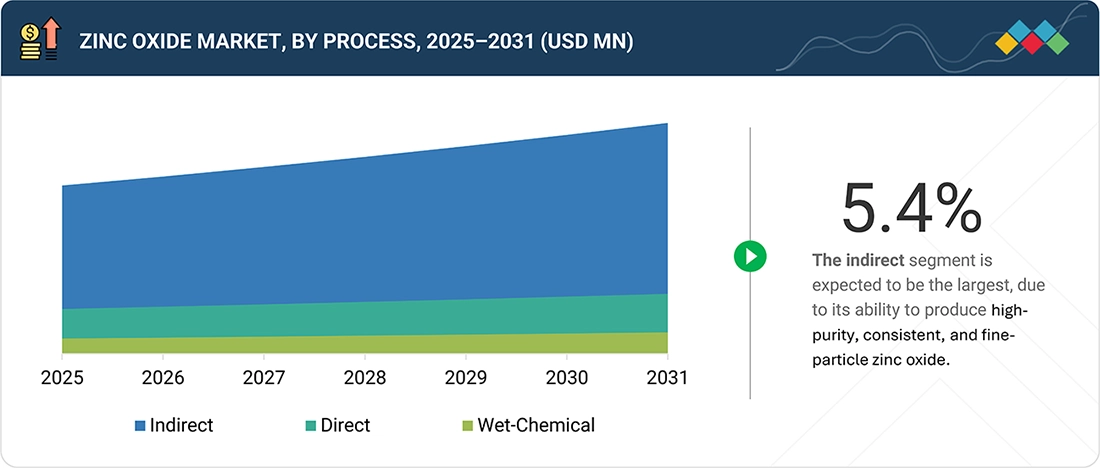
The zinc oxide market is controlled by the indirect (French) process, which synthesises high-purity, uniform, and fine-particle zinc oxide, needed in the greatest number of applications. This is done by using refined zinc metal to give high quality with controlled particle size, high surface area, and low impurities. These features make it the choice of rubber, ceramics, chemicals, cosmetics, and pharmaceuticals with the widest range of applications of any process. Specifically, the rubber industry, which is the greatest consumer of zinc oxide, uses indirect zinc oxide in large quantity because it has a consistent reactivity and efficiency in the vulcanization process and makes better products. The process can also be described as well established worldwide, having large-scale industrial infrastructure and reliability, and facilitating large volumes of production. Although it is comparatively more costly than the direct process the benefits of performance and versatility of the process supersede the cost, particularly in those applications where consistency is paramount. Consequently, the indirect process remains predominant because of its equilibrium of quality, scalability, and broad acceptance in the industry, and is the cornerstone of zinc oxide manufacturing worldwide.
Zinc Oxide Market, By Grade
The most common form of zinc oxide is standard-grade zinc oxide, as it is the most commonly used and least expensive type of zinc oxide, serving mostly in industrial-volume markets. This grade has sufficiently good purity and performance for high-volume purposes like rubber manufacture, ceramics, paints, chemicals, and agriculture, where ultra-high purity is not required. It is cheap and flexible, and is therefore preferred by cost-sensitive and volume-oriented industries, especially in emerging markets. Zinc oxide in standard form finds wide application in the rubber industry as a vulcanization activator, and in this case, the standard grade is capable of giving the desired performance without the premium grades. Likewise, it offers practical value such as stability and durability in ceramics and coatings with reduced cost. Although grades such as the treated or USP are increasing because of specialty applications, they have narrow areas of application. Conversely, mass consumption in various industries allows standard grade to enjoy the benefit of a steady demand. The high competitive cost of its grade combined with its capability to deliver performance needs has made it the leading grade in the zinc oxide market.
Zinc Oxide Market, By Application
The biggest application area of zinc oxide is the rubber industry since zinc oxide is a vital and fundamental part of the vulcanization procedure in manufacturing hard rubber items. Zinc oxide is an activator that increases the cross-linking between rubber molecules, which contributes to the strengthening of the rubber, elasticity, resistance to heat, and ageing. Through its automotive production, replacement, and rising mobility, global tire consumption is directly linked to high zinc oxide usage. The amount of zinc oxide needed by each tire is a constant, which means that the segment is very volume-driven. In addition to tires, zinc oxide is also utilized in industrial rubber products, footwear, conveyor belts and hoses, and the demand base continues to expand. This is because zinc oxide has no effective substitutes that could replace it in the vulcanization process, which means that it will remain dominant in the segment. Other uses such as pharmaceuticals and cosmetics are relatively minor and increasing at a faster rate. High consumption intensity, a necessity, and close association with the automotive industry mean that rubber will constitute the largest usage area in the zinc oxide market.
REGION
Asia Pacific to be the largest region in the global zinc oxide market during the forecast period
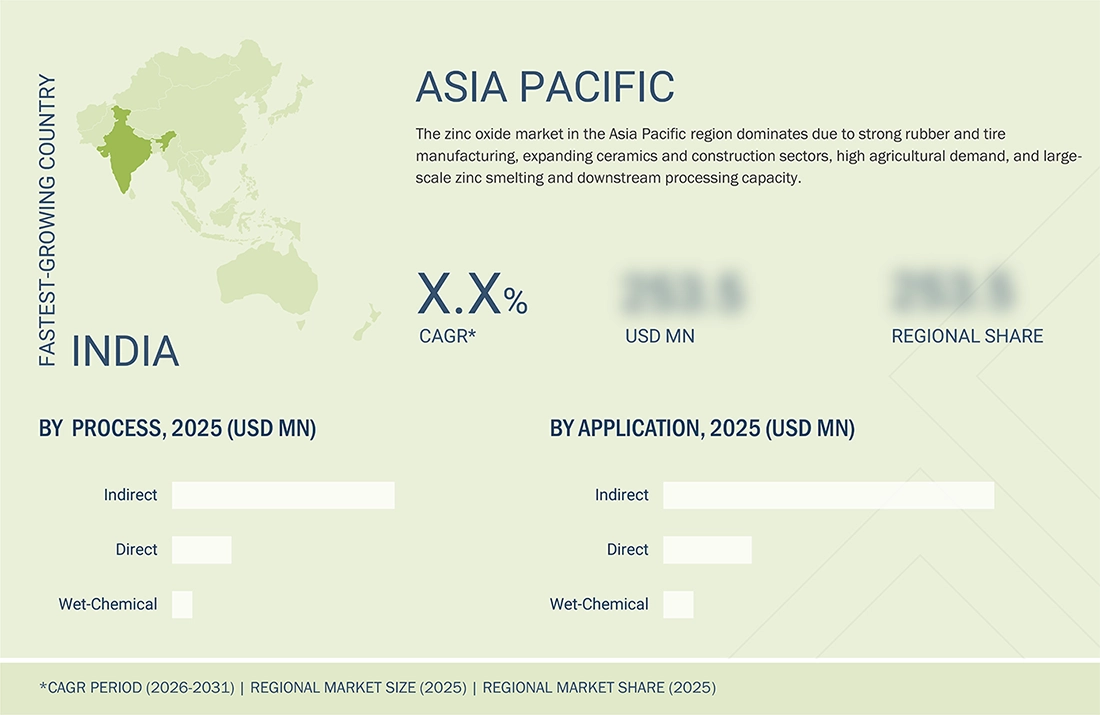
Asia Pacific constitutes the largest zinc oxide market because of its large manufacturing level, high representation in major end-use sectors, and availability of raw materials, and hence it is the world center in zinc oxide production and consumption. Automotive and tire manufacturing are the key industries in the region, and with a large-scale production capacity and high domestic demand, zinc oxide consumption in the rubber industry is driven. Also, the production of natural rubber is majorly dominated by the Asia Pacific, which provides an integrated supply chain, which further boosts the demand for zinc oxide. The high rate of urbanization and infrastructure growth is increasing the application of paints, coatings, and ceramics, and the vast agricultural industry is driving zinc oxide demand in fertilizers and micronutrients. The region also enjoys a low cost of production, good government policies, and good export industries, and therefore, it is a better place to establish zinc oxide manufacturing. Asia Pacific has a clear advantage: it is combining high-volume industrial demand with growing specialty applications, whereas the developed regions are focusing on high-value applications. The Asia Pacific region offers the largest market for zinc oxide due to its combination of scale, cost advantages, and diversified demand.
ZINC OXIDE MARKET: COMPANY EVALUATION MATRIX
Zochem LLC (Star) stands out as a leading dedicated zinc oxide producer in North America, distinguished by its strong emphasis on scale, product quality, and supply reliability. With a business model focused exclusively on zinc oxide manufacturing, the company has developed deep technical expertise and operational efficiency across a broad spectrum of applications. Its large production capacity further strengthens its ability to serve high-volume industrial demand consistently. Overall, Zochem’s combination of specialization, scale, and commitment to reliability and sustainability positions it as a mature and dominant player in the global zinc oxide market. GRILLO-Werke AG (Emerging leader) is emerging as a strong, innovation-driven player in the zinc oxide market, particularly in Europe, supported by its focus on sustainability, high-purity products, and advanced applications. The company differentiates itself through its emphasis on premium-quality zinc oxide and customized solutions, backed by stringent quality control, advanced laboratory testing, and close customer collaboration. Sustainability is a core pillar of its strategy, with initiatives such as ECO ZINC and circular economy practices aimed at reducing carbon footprint and aligning with strict European environmental standards.
Source: Secondary Research, Interviews with Experts, MarketsandMarkets Analysis
KEY MARKET PLAYERS
- EverZinc (US)
- Zochem LLC (US)
- Grupa Boryszew (Poland)
- Lanxess (Germany)
- JG Chemicals Limited (India)
- Akrochem Corporation (US)
- Pan-Continental Chemical Co. Ltd. (Taiwan)
- RUBAMIN (India)
- GRILLO-Werke AG (Germany)
- Zhiyi Zinc Industry Group (China)
- Grupo PROMAX (Mexico)
- Brüggemann (Germany)
- SILOX Group (Belgium)
- Entekno Materials (Turkey)
- Nanomox (England)
MARKET SCOPE
| REPORT METRIC | DETAILS |
|---|---|
| Market Size in 2025 (Value) | USD 5.98 Billion |
| Market Forecast in 2031 (Value) | USD 8.17 Billion |
| Growth Rate | CAGR of 5.3% during 2026–2031 |
| Years Considered | 2022–2031 |
| Base Year | 2025 |
| Forecast Period | 2026–2031 |
| Units Considered | Value (USD Billion), Volume (Ton) |
| Report Coverage | Revenue forecast, company ranking, competitive landscape, growth factors, and trends |
| Segments Covered |
|
| Regions Covered | North America, Asia Pacific, Europe, South America, Middle East & Africa |
WHAT IS IN IT FOR YOU: ZINC OXIDE MARKET REPORT CONTENT GUIDE
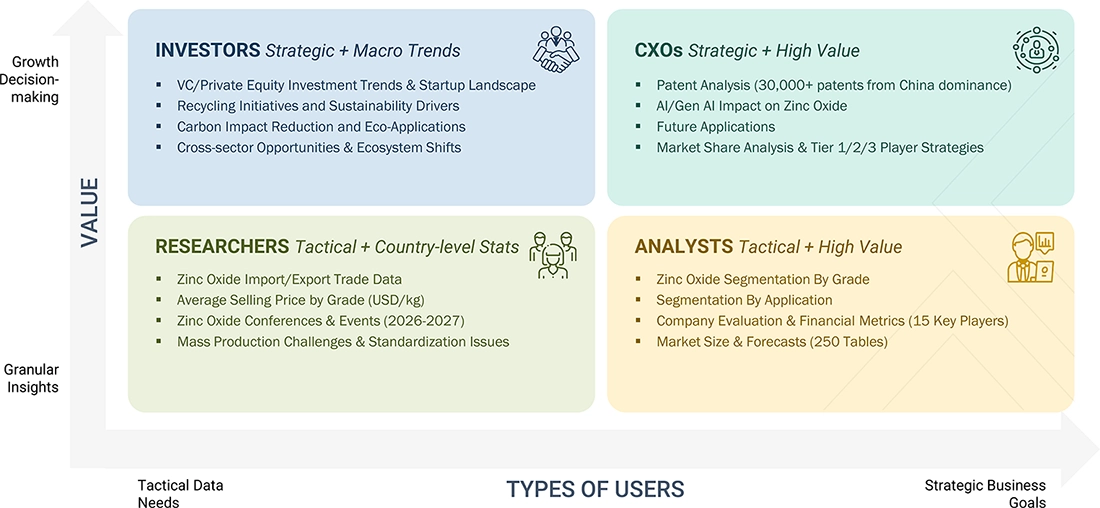
DELIVERED CUSTOMIZATIONS
We have successfully delivered the following deep-dive customizations:
| CLIENT REQUEST | CUSTOMIZATION DELIVERED | VALUE ADDS |
|---|---|---|
| Zinc oxide market - grades across applications | Detailed analysis of zinc oxide grades based on the usage for different applications, including rubber, ceramics, chemicals, agriculture, cosmetics & personal care, pharmaceuticals, others |
|
RECENT DEVELOPMENTS
- August 2025 : JG Chemicals approved a greenfield project in Dahej, Gujarat, aimed at manufacturing zinc chemicals. This initiative is designed to meet growing demand across the ceramics, specialty chemicals, pharmaceutical, and agriculture industries, with a production capacity exceeding 40,000 metric tonnes per annum (MTPA). The project is expected to begin operations in the first half of FY27.
- August 2023 : Zochem LLC acquired a 40% stake in Peru-based Industrias Electro-Químicas S.A. (IEQSA), a major South American zinc products manufacturer, forming a strategic partnership while allowing both companies to operate independently. This has expanded Zochem’s global reach, strengthened its supply and logistics network, broadened its product portfolio and enhanced its capabilities for emerging applications.
- May 2022 : GRILLO entered into a cooperation with Aurubis AG and developed the “Closing the Loop” project that creates a circular recycling system for copper and zinc. Aurubis recovers metals from residues generated during GRILLO’s zinc sulphate production, enabling resource efficiency and sustainable metal recycling.
Table of Contents
 Exclusive indicates content/data unique to MarketsandMarkets and not available with any competitors.
Methodology
The study involved four major activities to estimate the current size of the global zinc oxide market. Exhaustive secondary research was carried out to collect information on the market, the peer product market, and the parent product group market. The next step was to validate these findings, assumptions, and sizes with the industry experts across the value chain of zinc oxide through primary research. The top-down and bottom-up approaches were employed to estimate the overall size of the zinc oxide market. After that, market breakdown and data triangulation procedures were used to determine the size of different segments of the market.
Secondary Research
The market for companies offering zinc oxide was arrived at by studying the secondary data available through paid and unpaid sources, analyzing the product portfolios of the major companies in the ecosystem, and rating the companies by their performance and quality. Various secondary sources, such as Business Standard, Bloomberg, World Bank, and Factiva, were referred to identify and collect information for this study on the zinc oxide market. In the secondary research process, various secondary sources were referred to identify and collect information related to the study. Secondary sources included annual reports, press releases, investor presentations, zinc oxide vendors, forums, certified publications, and white papers. The secondary research was used to obtain critical information on the industry’s value chain, the total pool of key players, market classification, and segmentation from the market and technology-oriented perspectives.
Primary Research
In the primary research process, various primary sources from the supply and demand sides were interviewed to obtain qualitative and quantitative information for this report. The primary sources from the supply side included industry experts, such as Chief Executive Officers (CEOs), Vice Presidents (VPs), marketing directors, technology and innovation directors, and related key executives from several key companies and organizations operating in the zinc oxide market. After the complete market engineering (calculations for market statistics, market breakdown, market size estimations, market forecasting, and data triangulation), extensive primary research was conducted to gather information and verify and validate the critical numbers arrived at. Primary research was also conducted to identify the segmentation types, industry trends, competitive landscape of zinc oxide offered by various market players, and key market dynamics, such as drivers, restraints, opportunities, challenges, industry trends, and key player strategies. In the complete market engineering process, the top-down and bottom-up approaches and several data triangulation methods were extensively used to perform the market estimation and market forecasting for the overall market segments and subsegments listed in this report. Extensive qualitative and quantitative analysis was performed on the complete market engineering process to list the key information/insights throughout the report.
The following is a breakdown of the primary respondents:
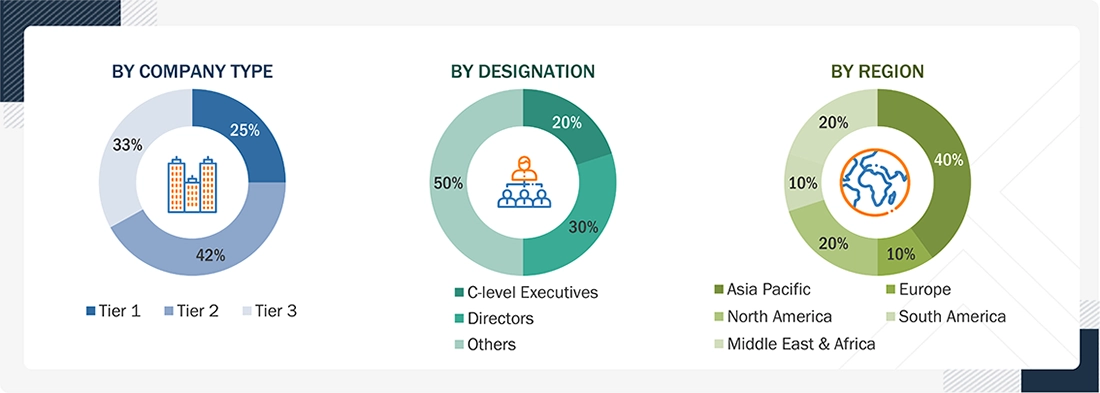
Others include sales, marketing, and product managers.
Tier 1: > USD 1 billion; Tier 2: USD 500 million–1 billion; and Tier 3: < USD 500 million
To know about the assumptions considered for the study, download the pdf brochure
Market Size Estimation
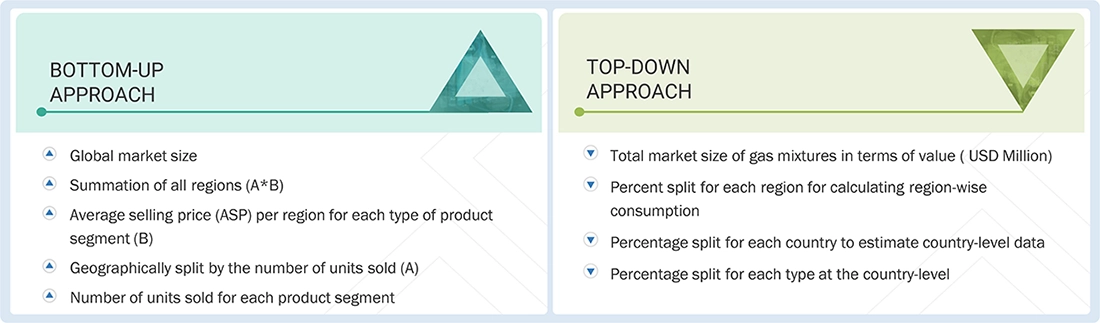
The top-down and bottom-up approaches were used to estimate and validate the size of the global zinc oxide market. These approaches were also used extensively to estimate the size of various dependent market segments.
The research methodology used to estimate the market size included the following approaches:
Data Triangulation
After arriving at the overall market size using the market size estimation processes, the market was split into several segments and subsegments. The data triangulation and market breakup procedures were employed, wherever applicable, to complete the overall market engineering process and arrive at the exact statistics of each market segment and subsegment. The data was triangulated by studying various factors and trends from both the demand and supply sides.
Market Definition
Zinc oxide is an inorganic compound composed of zinc and oxygen, in general appearing as a white, odorless powder that is insoluble in water. It is generally used as a functional additive due to its key properties, including UV absorption, antimicrobial activity, chemical stability, and catalytic behavior. Because of these characteristics, it is extensively applied across industries such as rubber (for vulcanization), pharmaceuticals (ointments and creams), cosmetics (sunscreens), ceramics, paints, and agriculture (micronutrient fertilizers).
Report Objectives
- To define, describe, and forecast the size of the global zinc oxide market based on process, grade, application, and region in terms of value and volume
- To provide detailed information on the significant drivers, restraints, opportunities, and challenges influencing the market
- To strategically analyze micro markets concerning individual growth trends, prospects, and their contribution to the market
- To assess the growth opportunities in the market for stakeholders and provide details on the competitive landscape for market leaders
- To forecast the market size of segments for North America, Europe, Asia Pacific, South America, and the Middle East & Africa
- To strategically profile key players and comprehensively analyze their market shares and core competencies
- To analyze competitive developments, such as expansions, partnerships, and acquisitions, in the zinc oxide market
- To provide the impact of AI on the zinc oxide market
Key Stakeholders
- Raw Material Suppliers
- Regulatory Bodies
- Government and Consulting Firms
- End Users
- Research and Development Organizations
- Zinc Oxide Manufacturers, Dealers, Traders, and Suppliers
Available customizations:
With the given market data, MarketsandMarkets offers customizations according to client-specific needs.
The following customization options are available for the zinc oxide report:
Product Analysis
A product matrix that gives a detailed comparison of the product portfolio of each company
Regional Analysis
A further breakdown of the zinc oxide market for additional countries
Company Information
Detailed analysis and profiling of additional market players (up to five)


Personalize This Research
- Triangulate with your Own Data
- Get Data as per your Format and Definition
- Gain a Deeper Dive on a Specific Application, Geography, Customer or Competitor
- Any level of Personalization
Let Us Help You
- What are the Known and Unknown Adjacencies Impacting the Zinc Oxide Market
- What will your New Revenue Sources be?
- Who will be your Top Customer; what will make them switch?
- Defend your Market Share or Win Competitors
- Get a Scorecard for Target Partners

Custom Market Research Services
We Will Customise The Research For You, In Case The Report Listed Above Does Not Meet With Your Requirements
Get 10% Free CustomisationTESTIMONIALS
We at Nissan Chemicals Corporation have been clients of MarketsandMarkets for more than a year now. We recently consulted MarketsandMarkets for a study, the team at MarketsandMarkets was extremely professional and organized. The business insights were very detailed and aligned well with our expectations that really helped us formulate the Business Plans and device new strategies for development themes. MarketsandMarkets offers a unique combination of expertise and dedicated engagement model. Their research findings have helped us in designing our Pricing Strategy which will make it easier for us to predict the future sales and profits for the next ten years. We look forward to working with MarketsandMarkets in the future.
VP of Strategy & New Business Development
Leading Specialty Chemical Company
The MarketsandMarkets Engagement Model, composed of both the Knowledge Store and advisory custom research, has greatly helped us in understanding our markets and making strategic decisions. The Knowledge Store is a fast way to allow everyone in our organization to understand more about most any market they are interested in. The ability to then get custom research done and get answers to specific strategic questions and market insight has been spectacular. The Markets and Markets team feel more like colleagues than vendors and their services have helped us change our culture where statements of things like growth opportunities and competitive position are always backed by industry research.

Rich Gibson,
Director, Corporate Strategy
Milliken & Company,
Leading Industrial Manufacturer of specialty chemical, floor covering, performance and protective textile materials, and healthcaremilliken.com
MarketsandMarkets is a trusted resource that helps us to better understand markets that are near-adjacencies-whether its technology, value chain or geography. Their Knowledge Store platform provides a dashboard of markets and their characteristics which is easy to use and saves us time.
Adam Shaw,
Market Development and Strategy Manager
AdvanSix Inc. USA,
An American Leader in Chemicalswww.advansix.com
The Knowledge Store from MarketsandMarkets is a valuable tool which has helped my team acquire greater insight in to the end markets that our business serves. This has enabled us to help our company build stronger strategies throughout our planning process.
TOSHIO KINOSHITA
Senior Chif Consultion Research & Consulting Division
Mitsubishi Chemical Research Corporation,
Leading Manufacturer of Chemical Productswww.mitsubishichem-res.co.jp/en/

We recently engaged with MarketsandMarkets for a study, the team not only clearly understood our business objectives but was also extremely professional in the way they handled the entire project. The study was efficiently conducted in a phase-wise manner, and the engagement model furnished us with high-quality business insights that far exceeded our expectations at each phase. We were especially happy that MarketsandMarkets could provide us with both, an English as well as a Japanese version of the study. A special thanks to the Analyst Team and Client Services Team, whose fluency in Japanese enhanced our comfort level, as we could converse with them in our preferred language.
Independent entrepreneurs
Arrow Precision
We approached MarketsandMarkets for study on Proppants Market, and their work exceeded our expectations. The study conducted was comprehensive and enabled us to view the market through the various dimensions. In addition, the team was extraordinarily responsive throughout the process and resolved our queries on time. I strongly recommend MarketsandMarkets and will certainly consider them for additional market assessments we will need in the future.
Global engineering company, Japan
Deputy Manager,
Strategic Planning OfficeThe high-quality insights shared by the MarketsandMarkets team helped us understand the pharmaceutical plant designers in a specific geography. It also captured the risks that we may likely face in communicating with our potential partners. The study would enable us identify partners, which would impact our future growth.
- China Zinc Oxide Market
- India Zinc Oxide Market
- Japan Zinc Oxide Market
- US Zinc Oxide Market
- Canada Zinc Oxide Market
- Mexico Zinc Oxide Market
- Germany Zinc Oxide Market
- UK Zinc Oxide Market
- France Zinc Oxide Market
- Italy Zinc Oxide Market
- Spain Zinc Oxide Market
- Russia Zinc Oxide Market
- South Africa Zinc Oxide Market
- Brazil Zinc Oxide Market
- Argentina Zinc Oxide Market
- Rest Of Europe Zinc Oxide Market
- Rest Of Asia Pacific Zinc Oxide Market






Growth opportunities and latent adjacency in Zinc Oxide Market