Radiation Dose Management Market

Radiation Dose Management Market by Function (Dose Monitoring, Benchmarking, Reporting, Radiation Management), Technology (AI [ML, Computer Vision), Deployment, Modality (CT, PET, SPECT), Application (Onco), End User (Hospital) - Global Forecast to 2031



RADIATION DOSE MANAGEMENT MARKET SIZE, SHARE & GROWTH SNAPSHOT
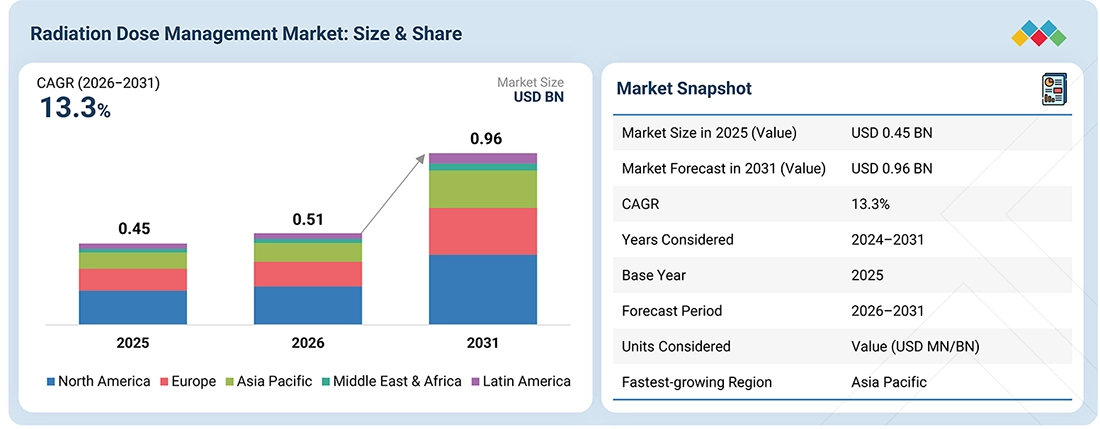
Source: Secondary Research, Interviews with Experts, MarketsandMarkets Analysis
The global radiation dose management market is projected to grow from USD 0.51 billion in 2026 to USD 0.96 billion by 2031, at a CAGR of 13.3% during the forecast period. The market was valued at USD 0.45 billion in 2025. The market is influenced by the increasing use of medical imaging procedures, growing emphasis on the safety of patients undergoing radiation, and the need for systematic radiation-dose monitoring, benchmarking, and optimization. Healthcare organizations are increasingly adopting RDM systems to collect, monitor, and evaluate dose metrics and technical data, identify dose variations, and support optimization of imaging practices across modalities. The growing use of dose registries, Diagnostic Reference Levels (DRLs), automated dose tracking, and interoperable dose-management systems is further supporting market adoption. In addition, advances in imaging technologies and the increasing emphasis on quality assurance, regulatory compliance, and patient-specific dose assessment are creating opportunities for broader adoption of RDM solutions across hospitals, healthcare systems, diagnostic and imaging centers, and other imaging facilities.
KEY TAKEAWAYS
-
MARKET SNAPSHOT:
Base Year Market Size (2025): USD 0.45 Billion
Current Market Size (2026): USD 0.51 Billion
Forecast Market Size (2031): USD 0.96 Billion
CAGR (2026–2031): 13.3% -
SEGMENT LEADERSHIP:
Regional Leader: North America dominates the market, with a share of 42.1% of the global radiation dose management market in 2025.
Offering Leader: Solutions held the largest share of 69.6% of the radiation dose management market in 2025.
Technology Leader: AI-enabled technology is projected to register the highest CAGR during the forecast period.
Application Leader: Dose tracking & monitoring held the largest share of the radiation dose management market in 2025.
Deployment Leader: Cloud-based deployment is projected to register the highest CAGR during the forecast period.
Modality Leader: Computed tomography (CT) held the largest share of the radiation dose management market in 2025.
Fastest-Growing Segment: Cardiology is projected to register the highest CAGR of 14.6%% during the forecast period.
End User Leader: Hospitals & healthcare systems accounted for the largest share of the radiation dose management market in 2025. -
MARKET OUTLOOK & COMPETITIVE LANDSCAPE:
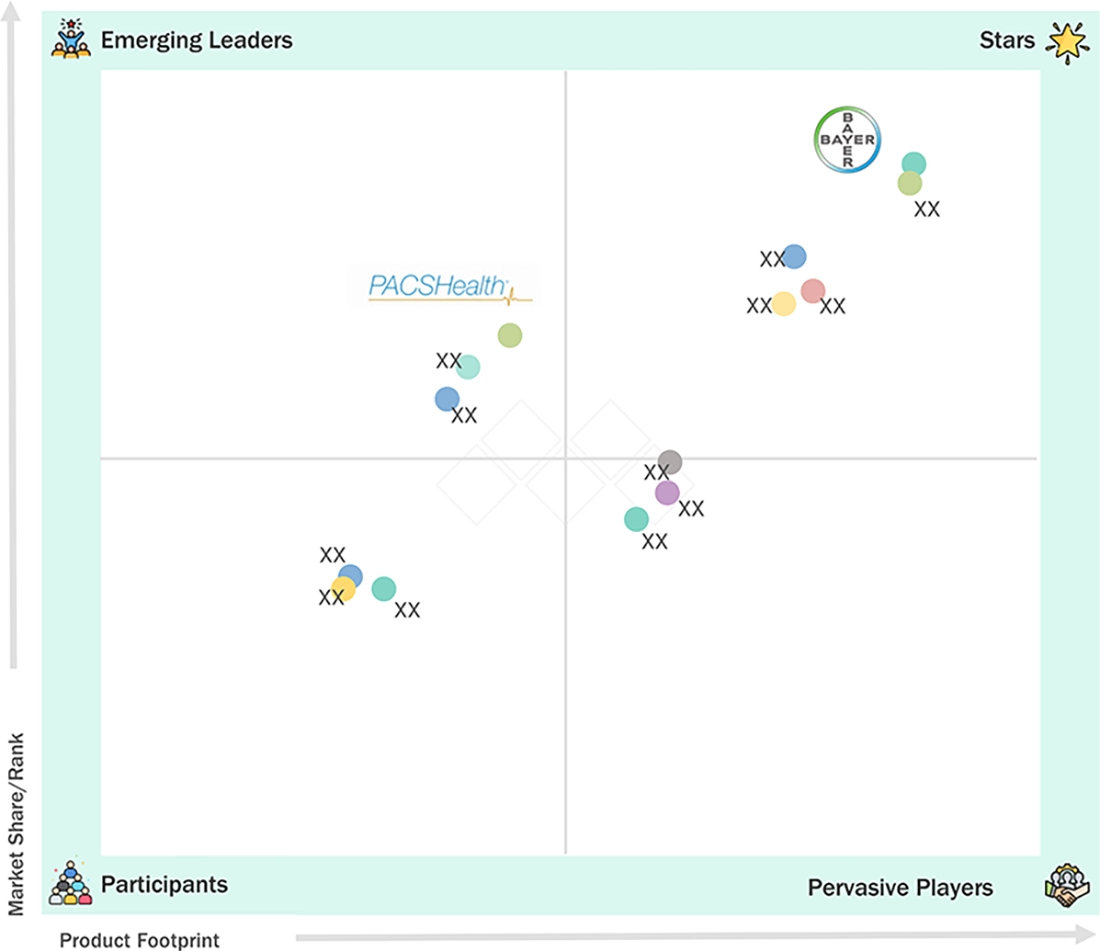
Bayer AG, Siemens Healthineers AG, Koninklijke Philips N.V., GE Healthcare, and Fujifilm Holdings Corporation were identified as some of the star players in the market (global), given their strong market share and product footprint.
Qit Systeme GmbH, Imalogix, Idose, Myxraydose, and Virtual Phantoms Inc., among others, have distinguished themselves among startups and SMEs by securing strong footholds in specialized niche areas, underscoring their potential as emerging market leaders.
The radiation dose management market continues to expand as healthcare organizations place greater emphasis on patient radiation safety and the optimization of medical imaging practices. The increasing volume and complexity of imaging procedures, particularly CT and fluoroscopy-guided examinations, are creating a greater need to monitor radiation exposure, identify dose variations, and improve imaging protocols. At the same time, growing regulatory attention to radiation-dose monitoring and the use of diagnostic reference levels is encouraging healthcare facilities to adopt systems that automate dose-data collection, benchmarking, and reporting. Advances in AI-enabled dose monitoring and optimization, patient-specific dosimetry, interoperable dose-data exchange, and cloud-based, vendor-neutral dose-management platforms are further expanding the capabilities of RDM solutions. These developments are supporting wider adoption across hospitals, healthcare systems, and diagnostic and imaging centers.
TRENDS & DISRUPTIONS IMPACTING CUSTOMERS' CUSTOMERS
The radiation dose management (RDM) market is changing because of the increased emphasis on limiting radiation exposure to the lowest level feasible while ensuring the necessary quality for accurate diagnosis. High use of CT scans, fluoroscopy, and interventional radiology procedures leads to an increased demand for patient dose monitoring and a need for changes in protocols. In addition, the availability of advanced technologies, including AI-based dose monitoring systems, patient-specific dosimetry systems, interoperable dose-data registries, and cloud-based and vendor-independent platforms, is making it easier to collect, analyze, and apply dose information. This creates an opportunity to spot abnormal doses, benchmark imaging practices, and optimize imaging protocols.
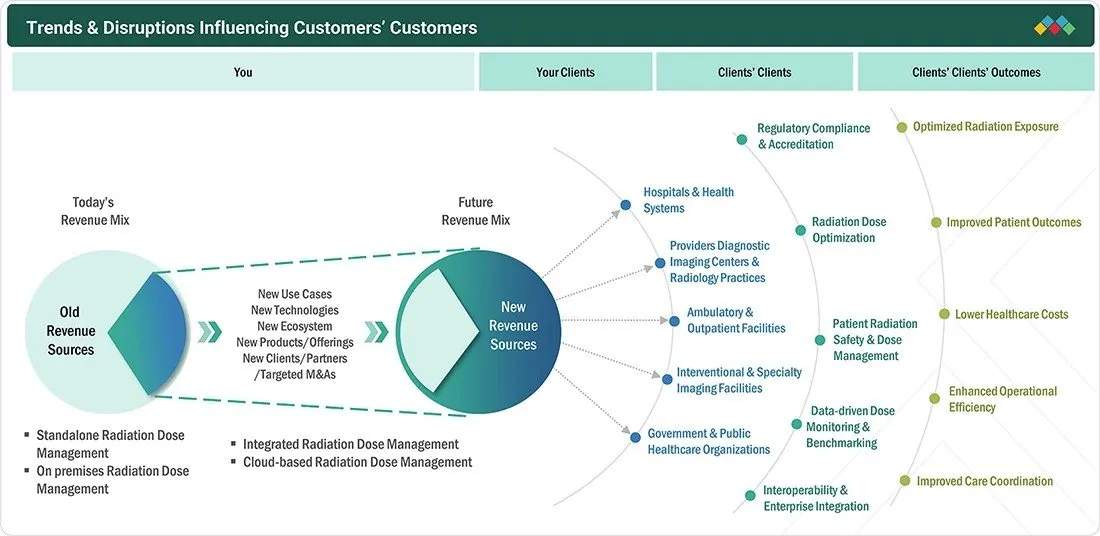
Source: Secondary Research, Interviews with Experts, MarketsandMarkets Analysis
MARKET DYNAMICS

Level
-
Increasing utilization and complexity of imaging procedures

-
Increasing regulatory emphasis on dose monitoring, optimization, and reference levels


Level
-
High implementation, integration, and maintenance costs

-
Shortage of skilled professionals for radiation dose management and optimization


Level
-
Increasing adoption of AI-enabled radiation-dose optimization

-
Growing adoption of vendor-neutral and cloud-based dose management platforms


Level
-
Lack of standardized and interoperable dose data across modalities and systems

-
Variability in dose benchmarks and imaging protocols across institutions

Source: Secondary Research, Interviews with Experts, MarketsandMarkets Analysis
Driver: Increasing utilization and complexity of imaging procedures
Medical imaging is being used more frequently and for a wider range of diagnostic and interventional procedures, increasing the amount of radiation dose information that healthcare organizations need to manage. CT alone accounts for an estimated 400 million examinations worldwide each year, and although CT represents a relatively small share of all medical imaging examinations, it contributes substantially to the collective radiation dose from medical exposure. As patients undergo repeated examinations and imaging protocols become more varied, hospitals and imaging centers need better visibility into dose levels across scanners, procedures, and patient groups. Dose management systems help address this need by bringing together dose metrics and technical information from different imaging modalities, allowing healthcare professionals to identify variations, compare practices, and improve imaging protocols. The continued growth and increasing complexity of medical imaging are therefore expected to create greater demand for RDM solutions that help healthcare organizations manage radiation exposure while maintaining the quality of diagnostic imaging.
Restraint: High implementation, integration, and maintenance costs
The high cost and amount of effort that are needed in implementing a radiation dose management system may prevent its deployment, especially among small healthcare organizations and ambulatory centers. The usual process of installing such systems entails linking the dose management software with multiple CT, radiography, fluoroscopy, and other imaging units as well as current PACS, RIS, and hospital IT systems. The differences in equipment, data format, protocol, and current workflow may cause problems in the process of implementation that may be more challenging than anticipated. In addition, after the RDM system has been implemented, periodic maintenance includes routine evaluation of dose data, connected devices, examinations, and configuration of the installed software. For small-scale organizations with limited resources, such requirements can make the decision to implement an RDM system more difficult.
Opportunity: Increasing adoption of AI-enabled radiation dose optimization
There are a number of ways in which AI can create opportunities for RDM. They include helping detect any irregular dose levels, comparing different imaging protocols, and assisting in deciding how examinations can be carried out while minimizing the use of radiation. With increased production of dose-related and technical data in imaging departments, AI can assist in analyzing the data and identifying trends that are hard to notice manually. Also, AI is able to assess individual dose levels and optimize imaging protocols based on factors like type of examination, patient and dose information previously received. This is important because there are certain imaging modalities like CT and fluoroscopy whose difference in protocol and patient profile has an observable impact on the dose level. As healthcare organizations become more comfortable using AI in imaging workflows, integrating AI with RDM platforms is expected to create opportunities for more automated and personalized dose optimization.
Challenge: Lack of standardized and interoperable dose data across modalities and systems
RDM solutions usually interface with different imaging modalities, hardware vendors, and various health-related IT solutions that generate the dose data. The way in which the dose data is captured, structured, and transported differs between different vendors' solutions, complicating the effort to consolidate all of the data into one source. There may also be differences in terms of data format, terminology, dose metric definitions, and examination protocol. This becomes increasingly complicated if healthcare organizations have older imaging systems and solutions that are less compatible with the new platform. Improving interoperability and standardization is therefore required for organizations to take full advantage of dose data consistency.
RADIATION DOSE MANAGEMENT MARKET: COMMERCIAL USE CASES ACROSS INDUSTRIES
| COMPANY | USE CASE DESCRIPTION | BENEFITS |
|---|---|---|
 |
Provides Radimetrics® Enterprise Application for automated radiation-dose documentation and management across CT, mammography, CR, DX, XA, RF, and nuclear medicine. The platform supports dose-reference levels, outlier identification, protocol management, compliance KPI tracking, flexible reporting, and integration with PACS, RIS, and speech-reporting systems. | Reduces manual dose documentation, supports regulatory and quality requirements, enables enterprise-wide dose benchmarking and outlier identification, facilitates protocol optimization, improves workflow efficiency, and provides visibility into cumulative and examination-level patient dose. |
 |
Provides teamplay Dose, a cloud-based, enterprise-wide radiation dose management solution that collects and analyzes dose data across radiation-emitting imaging devices and vendors. It uses DICOM dose reports, image-header data, and OCR, and provides patient-centric monitoring, dose-event alerts, benchmarking against institutional/national reference levels, and protocol-optimization insights. | Enables enterprise-wide dose visibility, supports regulatory compliance and ALARA-based optimization, identifies dose outliers and their causes, facilitates benchmarking and protocol improvement, and improves efficiency of dose monitoring, reporting, and quality assurance |
 |
Offers DoseWise Portal, a vendor-agnostic, web-based radiation dose management solution that collects, measures, analyzes, and reports patient and staff radiation exposure. It provides dose dashboards, CT exposure summaries, dose-reference levels, exam-dose alerts, patient dose-history warnings, and customizable reporting and analytics. | Supports radiation-safety and dose-management programs, facilitates monitoring against dose-reference levels, enables identification of potentially high-dose examinations, improves dose reporting and analytics, and supports workflow and quality-improvement initiatives |
 |
Provides DoseWatch, an enterprise-wide dose management solution that automatically collects and analyzes patient radiation and contrast-exposure data across multi-facility, multi-modality, and multi-vendor imaging environments. It identifies dose outliers and their potential root causes and supports dose tracking, reporting, benchmarking, and optimization. | Enables automated dose monitoring and outlier detection, supports regulatory and quality-improvement activities, facilitates protocol and dose optimization, reduces variability in imaging practices, and improves operational efficiency across imaging networks |
 |
Offers a vendor-neutral, web-based radiation dose management solution that collects, monitors, and analyzes radiation dose information across imaging modalities. The platform supports centralized dose monitoring, dose tracking, alerts, reporting, and analysis to identify dose outliers and support optimization of imaging protocols and patient radiation exposure. | Enables centralized radiation dose visibility, reduces manual dose monitoring and reporting, supports regulatory and patient-safety requirements, helps identify dose outliers and optimization opportunities, facilitates protocol standardization and benchmarking, and improves workflow efficiency and management of patient radiation exposure |
Logos and trademarks shown above are the property of their respective owners. Their use here is for informational and illustrative purposes only.
MARKET ECOSYSTEM
The RDM market ecosystem includes medical imaging and radiation-dose management providers such as Bayer AG, GE HealthCare, Siemens Healthineers AG, and Sectra AB, which offer dose management, dose monitoring, imaging informatics, and related radiation optimizations. Specialized RDM and imaging informatics companies, including FUJIFILM Holdings Corporation, Canon Inc., Agfa-Gevaert Group, PACSHealth, LLC, Qaelum N.V., Medsquare, Novarad Corporation, and INFINITT Healthcare Co., Ltd., provide dose monitoring, dose analysis, imaging workflow, and related software capabilities. Other imaging and dosimetry technology providers, including Carestream Health, Shimadzu Corporation, Nanjing Perlove Medical Equipment Co., Ltd., Neusoft Medical Systems Co., Ltd., Konica Minolta, IBA, and Lunit, contribute through medical imaging equipment, radiation dosimetry, image-guided systems, imaging software, and AI-based diagnostic technologies that support or complement radiation-dose optimization. The ecosystem is completed by hospitals and healthcare systems, diagnostic and imaging centers, ambulatory care settings, academic and research institutions, and government and public health organizations, which adopt RDM solutions to monitor radiation exposure, benchmark dose levels, optimize imaging protocols, support quality assurance, and meet radiation-safety requirements across imaging workflows.
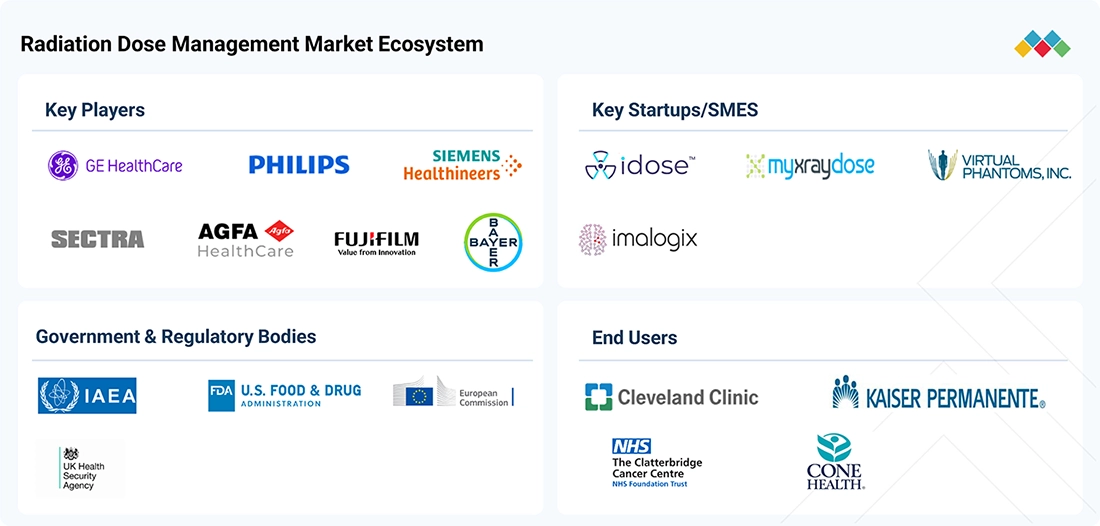
Logos and trademarks shown above are the property of their respective owners. Their use here is for informational and illustrative purposes only.
MARKET SEGMENTS
Source: Secondary Research, Interviews with Experts, MarketsandMarkets Analysis
Radiation Dose Management, By Offering
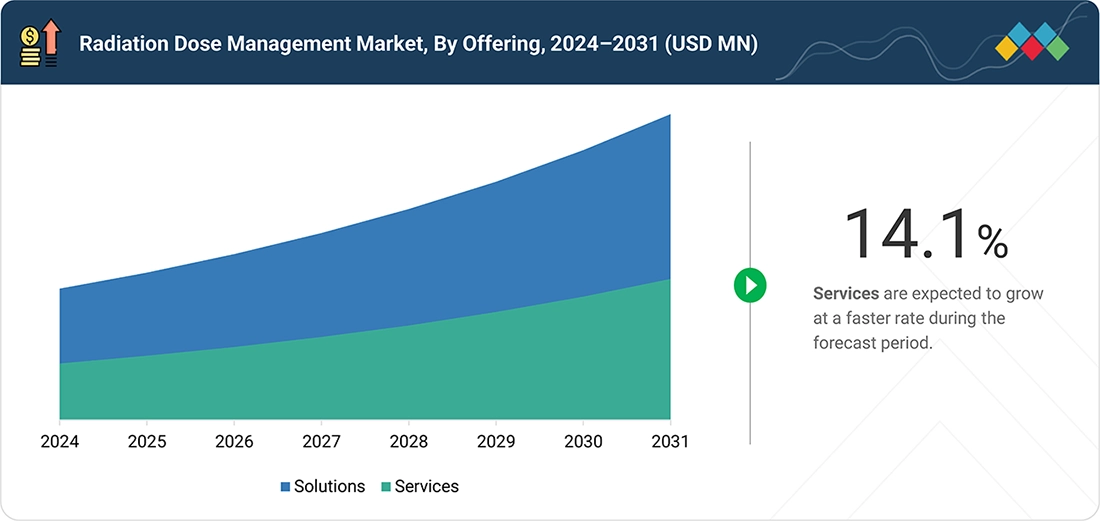
In 2025, the solutions segment accounted for the dominant share of the RDM market, as hospitals increasingly adopted software platforms to collect, monitor, analyze, and report radiation-dose information across imaging procedures. RDM solutions help healthcare organizations track patient dose, compare exposure levels with diagnostic reference levels, identify dose variations, and support optimization of imaging protocols across different modalities. The growing volume of CT, fluoroscopy, radiography, mammography, and nuclear medicine procedures is increasing the amount of dose information that needs to be managed across healthcare facilities. At the same time, advances in AI-enabled dose analysis, patient-specific dosimetry, interoperability, and cloud-based and vendor-neutral platforms are expanding the capabilities of RDM solutions. The services segment is expected to register faster growth during the forecast period, supported by the increasing need for implementation and integration, system configuration, maintenance, consulting, and education and training as healthcare organizations deploy RDM systems across multiple imaging devices and locations. The need to connect RDM platforms with existing imaging and hospital IT systems and maintain reliable dose data is expected to further support demand for related services.
Radiation Dose Management, By Function
In 2025, the dose tracking & monitoring segment accounted for the largest share of the RDM market. This is mainly because healthcare organizations use RDM solutions to automatically capture and monitor radiation exposure from imaging procedures across different modalities and facilities. The growing volume of CT, fluoroscopy, radiography, mammography, and other radiation-based examinations is increasing the need for continuous dose tracking, alerts, and examination-level monitoring. These capabilities also provide the dose information needed for reporting, benchmarking, and further optimization of imaging practices. The protocol & dose optimization segment is expected to register the fastest growth during the forecast period. This growth is driven by the increasing focus on reducing unnecessary radiation exposure while maintaining adequate diagnostic image quality. RDM solutions are increasingly being used to identify dose variations, assess imaging protocols, and support adjustments to examination parameters based on dose data. As healthcare providers place greater emphasis on radiation safety and standardized imaging practices, demand for protocol optimization capabilities is expected to increase.
Radiation Dose Management, By Technology
In 2025, the non-AI/conventional technology segment accounted for the largest share of the RDM market. This is mainly because conventional RDM platforms are already widely used for automated dose tracking, monitoring, reporting, benchmarking, and compliance across. These systems provide established capabilities for collecting dose information from imaging equipment and identifying examinations that require further review. The AI-enabled technology segment is expected to register the fastest growth during the forecast period. The growing use of machine learning, deep learning, computer vision, and natural language processing is expanding the role of RDM systems from basic monitoring toward more automated analysis and decision support. AI-enabled solutions can help identify dose patterns and outliers, support protocol optimization, and analyze large volumes of imaging and dose data more efficiently. As healthcare providers increasingly look for ways to improve dose optimization while maintaining diagnostic image quality, the adoption of AI-enabled RDM technologies is expected to increase.
Radiation Dose Management, By Deployment Model
In 2025, the on-premises segment accounted for the largest share of the RDM market, as many hospitals and imaging centers continue to rely on locally deployed systems for managing sensitive patient and radiation-dose data. On-premises deployment gives healthcare organizations greater control over their data, system configuration, and integration with existing PACS, RIS, hospital information systems, and imaging equipment. It is also well suited to facilities with established IT infrastructure and requirements for maintaining dose-management systems within their own network environment. The cloud-based/web-based segment is expected to register the fastest growth during the forecast period, supported by the growing need for scalable and accessible RDM platforms across hospitals and imaging networks. Cloud deployment can simplify access to dose information across multiple locations, support centralized monitoring and analytics, and reduce the need for organizations to maintain dedicated hardware. The increasing adoption of cloud-based healthcare IT, remote access, and vendor-neutral RDM platforms is expected to further support the shift toward cloud deployment during the forecast period.
Radiation Dose Management, By Revenue Model
In 2025, the capital/annual purchase segment had the largest share of the RDM market because healthcare organizations buy these solutions and services through annual licenses or subscriptions. These arrangements allow hospitals and imaging networks to use dose-monitoring platforms across multiple imaging systems and facilities along with periodic upgrades and maintenance. This is a strong fit for large imaging networks that require continuous dose monitoring and analysis. Pay-per-procedure is projected to be the fastest-growing segment in the forecast period due to imaging providers' increasing interest in flexible business models that let them finance RDM solutions based on volume. These models help avoid large upfront investments and can attract smaller institutions or organizations with variable imaging volumes. As RDM providers continue to explore more flexible commercial arrangements, pay-per-procedure models are expected to gain adoption during the forecast period.
Radiation Dose Management, By Modality
In 2025, the computed tomography (CT) segment accounted for the largest share of the Radiation Dose Management market. It is supported by the widespread use of CT across diagnostic, emergency, oncology, and other clinical applications and the relatively high radiation exposure associated with CT examinations. The growing use of CT, along with repeated examinations, varied imaging protocols, and different dose levels is increasing the need for effective dose monitoring and optimization. RDM solutions enable healthcare organizations to collect CT dose information, monitor dose levels, compare results with diagnostic reference levels, identify variations, and support improvements in imaging protocols. The increasing use of advanced CT technologies and greater emphasis on patient-specific dose assessment and protocol optimization are further strengthening demand for RDM solutions in this modality. CT is therefore expected to maintain its leading position in the RDM market during the forecast period.
Radiation Dose Management, By Application
In 2025, the oncology segment accounted for the largest share of the RDM market. It is supported by the extensive use of medical imaging for cancer screening, diagnosis, treatment planning, and follow-up. Patients undergoing cancer care may require multiple imaging examinations, increasing the importance of monitoring cumulative radiation exposure and maintaining imaging protocols. RDM solutions help healthcare organizations track dose information, identify variations in exposure, compare imaging practices, and support dose optimization across repeated examinations. The growing use of CT and other imaging modalities, along with greater attention to patient safety and protocol optimization, is expected to sustain demand for RDM solutions in this application. The cardiology segment is expected to register the fastest growth during the forecast period. It is driven by the increasing use of fluoroscopy, angiography, and other image-guided cardiovascular procedures. The growing adoption of dose monitoring and optimization practices in interventional cardiology is expected to further support the growth of this segment.
Radiation Dose Management, By End User
In 2025, the hospitals & healthcare systems segment accounted for the largest share of the RDM market. This is because hospitals operate a broad range of imaging equipment and perform a large volume of diagnostic and interventional procedures across multiple departments. The need to monitor radiation exposure across modalities is driving the use of RDM solutions for dose tracking, benchmarking, reporting, and protocol optimization. Large healthcare systems also benefit from centralized RDM platforms that allow dose information to be reviewed across multiple facilities. The diagnostic & imaging centers segment is expected to register the fastest growth during the forecast period. This is supported by the continued expansion of outpatient diagnostic imaging and the growing use of CT, radiography, mammography, and other imaging services outside hospital settings. As these centers manage increasing imaging volumes and multiple imaging systems, the need for consistent dose monitoring, benchmarking, and radiation safety practices is expected to increase. The availability of cloud-based and vendor-neutral RDM platforms is also making it easier to implement dose-management capabilities without maintaining extensive on-site infrastructure.
REGION
Asia Pacific to be fastest-growing region in radiation dose management market during forecast period
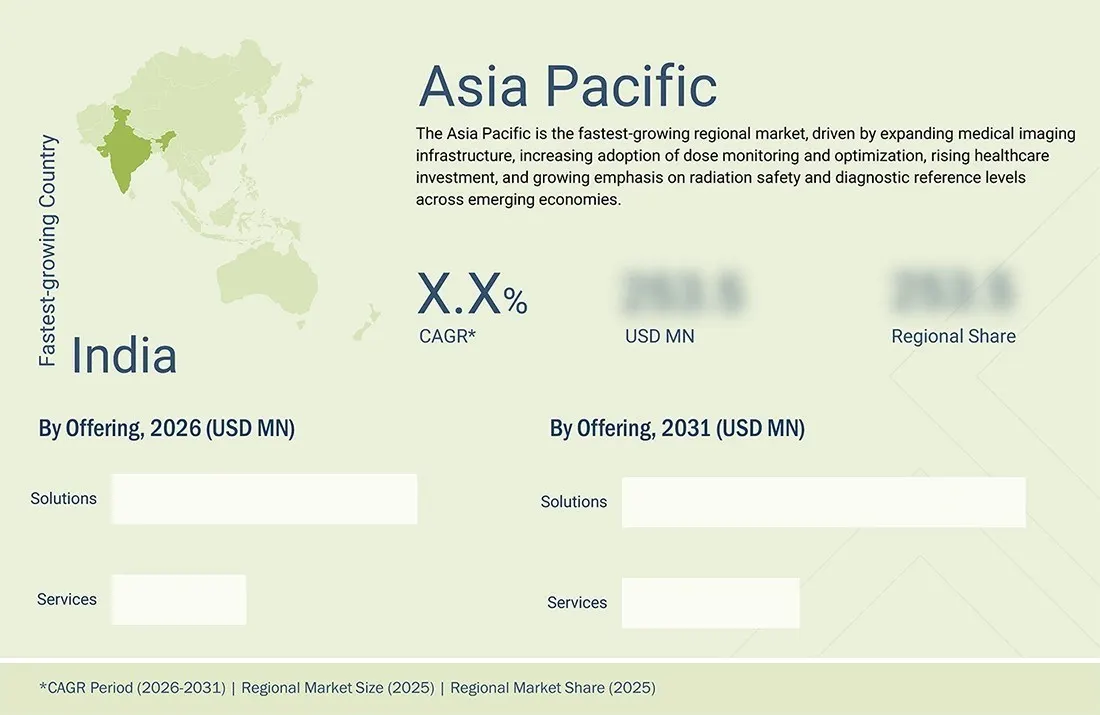
The Asia Pacific region is expected to register the highest growth in the RDM market during the forecast period. The region's expanding healthcare infrastructure and growing use of medical imaging are increasing the need for better monitoring and optimization of radiation exposure. Countries such as China, Japan, India, South Korea, Australia, and Singapore are investing in medical imaging capacity, digital healthcare infrastructure, and radiation safety practices. At the same time, national efforts to strengthen dose monitoring and diagnostic reference levels are creating a more supportive environment for RDM adoption. For example, Australia updated its national CT diagnostic reference levels in 2025, with healthcare facilities required to compare doses against the updated levels and review imaging protocols when doses exceed the reference levels. The growing use of CT, fluoroscopy, nuclear medicine, and other imaging procedures across the region, together with greater attention to radiation protection and dose optimization, is expected to increase demand for RDM solutions. The development of digital and interoperable imaging systems and the growing use of AI in medical imaging are likely to further support the adoption of RDM technologies across Asia Pacific.
RADIATION DOSE MANAGEMENT MARKET: COMPANY EVALUATION MATRIX
Within the radiation dose management market matrix, Bayer AG (Star) dominates the current market because of its established Radimetrics platform, broad imaging and contrast-media portfolio, and global presence across healthcare organizations. Bayer's Radimetrics solution supports enterprise-wide radiation-dose monitoring, data collection, dose analytics, benchmarking, and protocol management across multiple imaging modalities. PACSHealth, LLC (Emerging Leader) continues to strengthen its position through its medical imaging IT portfolio and dose-management capabilities. Its imaging ecosystem, including DoseTrack, supports radiation-dose monitoring and analysis while complementing Sectra's broader enterprise imaging and radiology workflow solutions.
Source: Secondary Research, Interviews with Experts, MarketsandMarkets Analysis
KEY MARKET PLAYERS
- Bayer AG (Germany)
- Siemens Healthineers AG (Germany)
- Koninklijke Philips N.V. (Netherlands)
- GE HealthCare (US)
- FUJIFILM Holdings Corporation (Japan)
- Sectra AB (Sweden)
- Canon Inc. (Japan)
- Agfa-Gevaert Group (Belgium)
- PACSHealth, LLC (US)
- Qaelum (Belgium)
- Medsquare (France)
- Novarad (US)
- INFINITT Healthcare Co., Ltd. (South Korea)
- Carestream Health (US)
- Shimadzu Corporation (Japan)
- Nanjing Perlove Medical Equipment Co., Ltd. (China)
- Neusoft Medical Systems Co., Ltd. (China)
- Konica Minolta, Inc. (Japan)
- IBA (Belgium)
- Lunit Inc. (South Korea)
MARKET SCOPE
| REPORT METRIC | DETAILS |
|---|---|
| Market Size in 2025 (Value) | USD 0.45 Billion |
| Market Size in 2026 (Value) | USD 0.51 Billion |
| Market Forecast in 2031 (value) | USD 0.96 Billion |
| Growth Rate | CAGR of 13.3% from 2026-2031 |
| Years Considered | 2024-2031 |
| Base Year | 2025 |
| Forecast Period | 2026-2031 |
| Units Considered | Value (USD Million/Billion) |
| Report Coverage | Revenue forecast, company ranking, competitive landscape, growth factors, and trends |
| Segments Covered |
|
| Regions Covered | North America, Asia Pacific, Europe, Latin America, Middle East & Africa |
WHAT IS IN IT FOR YOU: RADIATION DOSE MANAGEMENT MARKET REPORT CONTENT GUIDE
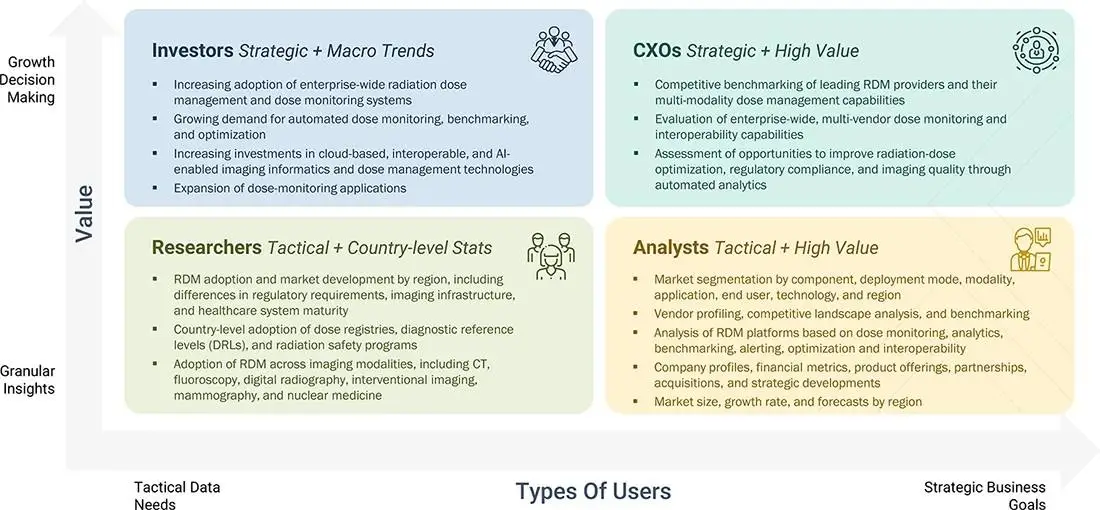
DELIVERED CUSTOMIZATIONS
We have successfully delivered the following deep-dive customizations:
| CLIENT REQUEST | CUSTOMIZATION DELIVERED | VALUE ADDS |
|---|---|---|
| Local Competitive Landscape | Profiling of leading RDM vendors, including Bayer AG, GE HealthCare, Koninklijke Philips N.V., Siemens Healthineers AG, Sectra AB, FUJIFILM Corporation, Canon Inc., Agfa-Gevaert Group, PACSHealth, LLC, Qaelum N.V., and other relevant RDM and imaging technology providers, covering radiation-dose management offerings, imaging modalities, product capabilities, deployment models, interoperability, AI-enabled technologies, and geographic presence | Enables competitive benchmarking, identifies capability gaps, supports vendor shortlisting and partnership evaluation, and helps assess companies based on RDM product breadth, dose-management capabilities, technology adoption, and regional presence |
| Regional Market Entry Strategy | Assessment of regional RDM adoption, radiation-safety requirements, diagnostic reference levels, medical imaging infrastructure, healthcare digitization, regulatory environment, and demand for dose monitoring and optimization across North America, Europe, Asia Pacific, Latin America, and the Middle East & Africa | Reduces market-entry risk, identifies high-growth regional opportunities, and supports localization of RDM solutions based on imaging practices, regulatory requirements, healthcare infrastructure, and radiation-protection priorities |
| Local Risk & Opportunity Assessment | Evaluation of RDM adoption barriers and opportunities, including implementation and integration costs, interoperability of dose data, availability of standardized dose information, skilled-professional requirements, regulatory developments, imaging utilization, and opportunities associated with AI-enabled dose optimization, patient-specific dosimetry, and cloud-based and vendor-neutral RDM platforms | Strengthens risk assessment and investment planning, identifies areas where technology or service improvements can address adoption barriers, and highlights markets and applications with strong potential for RDM adoption |
| Technology Adoption by Region | Assessment of regional adoption of AI-enabled radiation-dose monitoring and optimization, patient-specific and personalized dosimetry, advanced imaging technologies for dose optimization, DICOM/RDSR and interoperability technologies, cloud-based and vendor-neutral dose-management platforms, dose registries, benchmarking, and population-level dose analytics | Supports region-specific product roadmaps, prioritizes technology investments, aligns solution development with radiation-safety and imaging trends, and identifies emerging opportunities for RDM vendors across major healthcare markets |
RECENT DEVELOPMENTS
- May-26 : Philips introduced SmartIQ for its Azurion image-guided therapy platform, a coronary imaging technology designed to improve image quality while reducing radiation exposure. The technology includes an ultra-low-dose protocol for coronary procedures that uses over 50% less X-ray radiation dose compared with the lowest dose settings available with Philips’ ClarityIQ. SmartIQ strengthens Philips’ focus on dose management and lower-dose imaging for coronary and other image-guided procedures.
- May-26 : Siemens Healthineers received FDA clearance for six new interventional imaging systems featuring its Optiq AI imaging chain. The AI-powered technology uses deep-learning-based noise reduction across fluoroscopy, acquisition, and digital subtraction angiography to improve image quality during interventional procedures. Optiq AI also supports real-time optimization of image data and is designed to help maintain image quality while keeping radiation dose as low as reasonably achievable. The development strengthens Siemens Healthineers’ AI-enabled approach to dose-efficient image-guided procedures.
- Jan-26 : FUJIFILM India introduced FCT iStream at IRIA 2026, a CT system that combines high-definition imaging, dose optimization, and AI-enabled workflow automation. The system incorporates advanced image reconstruction and organ-based dose modulation to support diagnostic imaging at significantly reduced radiation doses. FCT iStream is intended for applications, including oncology, cardiology, neurology, trauma, and preventive health screening, making the launch particularly relevant to the growing use of dose-optimization technologies in CT imaging.
- Nov-25 : Canon Medical announced FDA 510(k) clearance for its Alphenix 4D CT with Aquilion ONE/INSIGHT Edition, an integrated Angio-CT solution that combines the Alphenix Sky+ angiography system with the Aquilion ONE/INSIGHT Edition CT scanner in a single room. The system is designed to support diagnosis, treatment planning, intervention, and verification while reducing the need for patient transfers between imaging systems. Canon also highlights dose optimization for patients and medical teams, making the development relevant to radiation dose management in complex image-guided and interventional procedures.
- May 2025 : Philips launched the RADIQAL (Radiation Dose and Image Quality Trial) study to generate real-world evidence on its new ultra-low X-ray dose technology for coronary procedures. The multicenter randomized study is designed to evaluate whether the technology can reduce radiation exposure for patients and staff without affecting coronary procedure performance. The technology is integrated with Philips’ Azurion image-guided therapy system and uses an ultra-low-dose protocol that reduces X-ray exposure by 50% compared with the lowest setting available with Philips’ ClarityIQ technology. The development is directly relevant to radiation dose management by focusing on dose reduction while maintaining image quality and procedural performance.
Table of Contents
 Exclusive indicates content/data unique to MarketsandMarkets and not available with any competitors.
Methodology
The study involved five major activities to estimate the current size of the radiation dose management market. Exhaustive secondary research was done to collect information on the market and its different subsegments. The next step was to validate these findings, assumptions, and sizing with industry experts across the value chain through primary research. Both top-down and bottom-up approaches were employed to estimate the complete market size. Thereafter, market breakdown and data triangulation procedures were used to estimate the market size of the segments and subsegments.
Secondary Research
This research study involved the widespread usage of secondary sources, directories, databases such as Bloomberg Business, Factiva, and Dun & Bradstreet, white papers, annual reports, company house documents, investor presentations, and the SEC filings of companies. Secondary research was used to identify and collect valuable information for this study. It was also used to obtain important information about the key players, market classification and segmentation according to industry trends to the bottom- most level, and key market & technology developments. A database of the key industry leaders was also prepared using secondary research.
Some of the key secondary sources referred to for this study include:
- International Atomic Energy Agency (IAEA)
- International Commission on Radiological Protection (ICRP)
- United Nations Scientific Committee on the Effects of Atomic Radiation (UNSCEAR)
- World Health Organization (WHO)
- US Food and Drug Administration (FDA)
- American College of Radiology (ACR)
- Radiological Society of North America (RSNA)
- European Society of Radiology (ESR)
- European Commission (EC)
- UK Health Security Agency (UKHSA)
- Government and national radiation-protection/regulatory authorities
- Investor Presentations, SEC Filings, and Company Annual Reports
- White Papers, Scientific Journals/Magazines, and News Articles
- Paid Databases, such as Factiva, D&B Hoovers, and Bloomberg
Primary Research
Extensive primary research was conducted after acquiring basic knowledge about the global radiation dose management market scenario through secondary research. Several primary interviews were conducted with market experts from both the demand side (hospital directors, hospital vice presidents, department heads, and critical care specialists) and supply side (such as C-level and D-level executives, technology experts, product managers, marketing and sales managers, among others) across five major regions - North America, Europe, the Asia Pacific, Latin America, and the Middle East & Africa. This primary data was collected through questionnaires, e-mails, online surveys, personal interviews, and telephonic interviews. In the primary research process, various supply and demand sources were interviewed to obtain qualitative and quantitative information for this report. Primary sources are mainly industry experts from core and related industries and solution providers, technology vendors, system integrators, researchers, and organizations related to all segments of this industry’s value chain. In-depth interviews were conducted with various primary respondents, including key industry participants, subject-matter experts (SMEs), C-level executives of key market players, and industry consultants, among others, to obtain and verify critical qualitative and quantitative information and assess prospects. Primary research was conducted to identify segmentation, industry trends, key players, and key market dynamics such as drivers, restraints, opportunities, challenges, industry trends, and strategies adopted by key players.
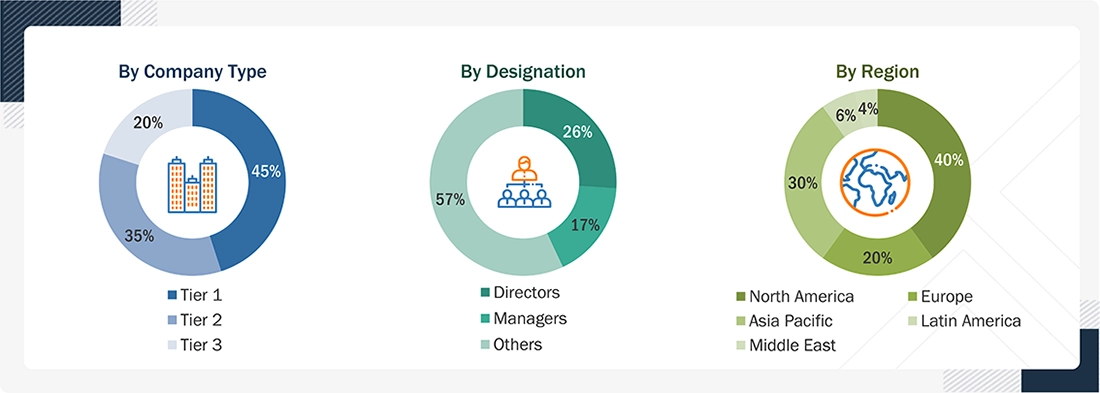
Note 1: C-level primaries include CEOs, CFOs, and COOs.
Note 2: Others include sales managers, marketing managers, business development managers, product managers, distributors, and suppliers.
Note 3: Companies are classified into tiers based on their total revenues. As of 2025, Tier 1 = >USD 2 billion, Tier 2 = USD 50 million to USD 2 billion, and Tier 3 = <USD 50 million.
To know about the assumptions considered for the study, download the pdf brochure
Market Size Estimation
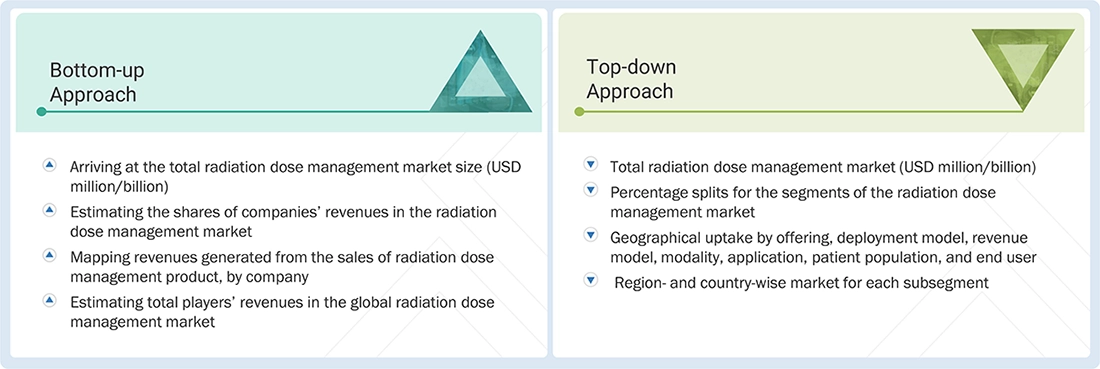
Both top-down and bottom-up approaches were used to estimate and validate the total size of the radiation dose management market. These methods were also used extensively to estimate the size of various subsegments in the market.
Global Radiation Dose Management Market Size: Top-Down Approach and Bottom-Up Approach
Data Triangulation
After arriving at the overall market size, using the market size estimation processes, the market was split into several segments and subsegments. To complete the overall market engineering process and arrive at the exact statistics of each market segment and sub-segment, the data triangulation and market breakdown procedures were employed, wherever applicable. The data was triangulated by studying various factors and trends from both the demand and supply sides in the radiation dose management market.
Market Definition
Radiation dose management (RDM) refers to software-based systems used to collect, monitor, analyze, and manage patient-related radiation-dose metrics and technical data generated during medical imaging and image-guided procedures. These systems can integrate dose and related technical information from multiple imaging modalities and interface with healthcare information systems such as Picture Archiving and Communication System (PACS), Radiology Information System (RIS), and Hospital Information System (HIS).
Key Stakeholders
- Radiation Dose Management and Related Solution Providers
- Medical Imaging Equipment Manufacturers
- Hospitals and Healthcare Systems (Public and Private)
- Diagnostic and Imaging Centers
- Ambulatory Care Settings
- Academic and Research Institutions
- Government and Radiation Protection Regulatory Agencies
- Radiologists, Medical Physicists, and Other Radiation Protection Professionals
Report Objectives
- To define, describe, and forecast the global radiation dose management market based on offering, function, technology, deployment model, revenue model, modality, application, end user, and region
- To provide detailed information regarding the major factors (such as drivers, restraints, opportunities, and challenges) influencing the market growth
- To strategically analyze micro-markets with respect to individual growth trends, prospects, and contributions to the overall radiation dose management market
- To analyze opportunities in the market for stakeholders and provide details of the competitive landscape for market leaders
- To strategically analyze the market structure profile of the key players of the radiation dose management market and comprehensively analyze their core competencies
- To forecast the size of the market segments with respect to five regions, namely, North America, Europe, Asia Pacific, Latin America, and the Middle East & Africa
- To track and analyze competitive developments such as product launches, partnerships, collaborations, acquisitions, expansions, and agreements in the radiation dose management market during the forecast period.
Available customizations:
With the given market data, MarketsandMarkets offers customizations as per the company’s specific needs. The following customization options are available for the report:
- Product Analysis: Product matrix, which gives a detailed comparison of the product portfolios of each company.
- Geographic Analysis: Further breakdown of the Rest of the Asia Pacific radiation dose management market into Taiwan, New Zealand, Thailand, Singapore, Malaysia, and other countries. Further breakdown of the Rest of the European radiation dose management market into Russia, Austria, Finland, Turkey, Norway, Poland, Portugal, Romania, Denmark, and other countries.


Personalize This Research
- Triangulate with your Own Data
- Get Data as per your Format and Definition
- Gain a Deeper Dive on a Specific Application, Geography, Customer or Competitor
- Any level of Personalization
Let Us Help You
- What are the Known and Unknown Adjacencies Impacting the Radiation Dose Management Market
- What will your New Revenue Sources be?
- Who will be your Top Customer; what will make them switch?
- Defend your Market Share or Win Competitors
- Get a Scorecard for Target Partners

Custom Market Research Services
We Will Customise The Research For You, In Case The Report Listed Above Does Not Meet With Your Requirements
Get 10% Free CustomisationTESTIMONIALS

JAYANT RAJPUROHIT
Director of Market Insights, Data and Analytics
SFI Health,
Leading Pharmaceutical Companywww.sfihealth.com/
We at SFI Health approached MarketsandMarkets for an Opportunity Assessment on "Incidence and Prevalence of Focus Indications" as we wanted to know the most attractive HCPs like Physician, Functional MD, Naturopath and Pharmacist. The project was critical for us to ensure our focus on the right target which would enable sustainable growth and profitability for SFI Health. The business insights provided exceeded our expectations and we were extremely impressed. The team at MarketsandMarkets is highly professional and detail oriented and very well understood our business needs. MarketsandMarkets offers a unique combination of expertise and dedicated engagement model. We identified 2 new products to be launched in coming months, based on the research findings provided by MarketsandMarkets. We are happy with the services and would strongly recommend MarketsandMarkets to my peers in the industry.

BEATRIZ DE LA CALLE
Head of Commercial Analytics
Qualicaps,
Leading Pharmaceutical Companywww.qualicaps.com/

We partnered with MarketsandMarkets for an assessment study on hard empty capsules. The team was extremely professional in understanding our business requirements and we received timely responses to all our queries. The market intelligence and the recommendations has met our business requirements. We were extremely impressed to see the final study results; it really exceeded our expectations. The market intelligence offered by MarketsandMarkets, and clarity on next steps will help us achieve our business objective for the Year 2021. We are happy with the services and would strongly recommend MarketsandMarkets to my peers in the industry.

Bob Williams,
Senior Director Business Development & Innovation
Bracco Diagnostics Inc.,
Italian Multinational in life sciences sector and a World Leader in imaging diagnosticsimaging.bracco.com/us-en
We were pleased with targeted insights that MarketsandMarkets identified from a custom study on the 'Radiation Dose Management Solutions Market'. Your team identified and characterized the market participants as well as underlying trends accurately. This study was useful to Bracco in formulating business strategies for our dose monitoring product lines and we thank MarketsandMarkets for the job well done.
Cody Coonradt,
Market Development and Strategy Manager
3M Health Information Systems,
Leader in Health care Coding, Payment & Analytics Solutions.www.3m.com/3M/en_US/health-information-systems-us
The value for our organization comes from three things: depth of research, specificity of segments and being easy to work with. As important as the first two are, the third can't be underestimated. MarketsandMarkets, maybe more than any other research vendor, wants to know what is top of mind for our team and what big questions we are grappling to answer.
Their customer first approach and high value engagement model, have given us great analysis and excellent value for money
- US Radiation Dose Management Market
- Canada Radiation Dose Management Market
- France Radiation Dose Management Market
- Germany Radiation Dose Management Market
- UK Radiation Dose Management Market
- Italy Radiation Dose Management Market
- Spain Radiation Dose Management Market
- Japan Radiation Dose Management Market
- China Radiation Dose Management Market
- India Radiation Dose Management Market
- Brazil Radiation Dose Management Market
- Mexico Radiation Dose Management Market






Growth opportunities and latent adjacency in Radiation Dose Management Market