Asia Pacific Capnography Equipment Market Size, Growth, Share & Trends Analysis

Asia Pacific Capnography Equipment Market by Product (Multiparameter, Standalone, Software, Accessories), Technology (Mainstream, Sidestream, Microstream), Application (Cardiac Care, Respiratory Monitoring), End User (Hospitals, ASC) - Forecast to 2031




OVERVIEW
Source: Secondary Research, Interviews with Experts, MarketsandMarkets Analysis
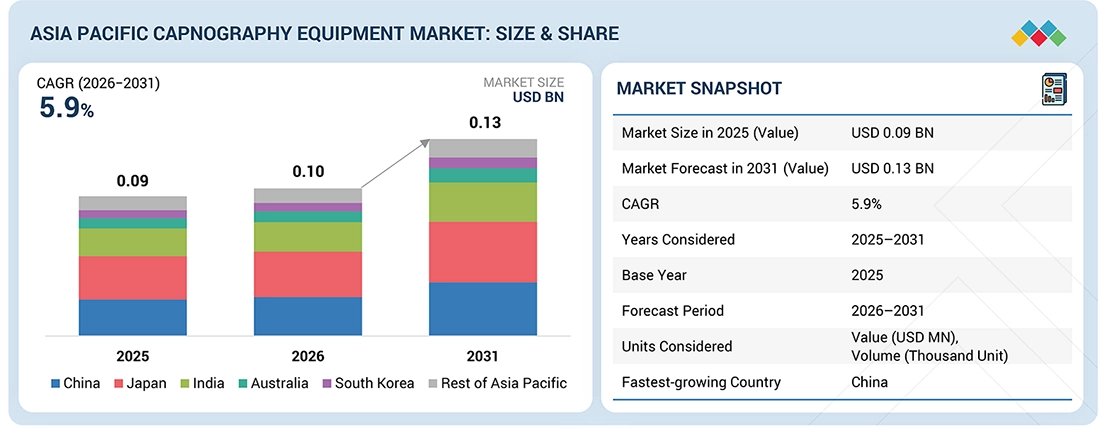
The Asia Pacific capnography equipment market, valued at USD 0.09 billion in 2025, stood at USD 0.10 billion in 2026 and is projected to advance at a resilient CAGR of 5.9% from 2026 to 2031, culminating in a forecasted valuation of USD 0.13 billion by the end of the period. The Asia Pacific capnography equipment market is growing as healthcare infrastructure development and the number of surgical procedures, ICU cases, and emergency admissions increase in major countries like China, India, and Japan. The increasing prevalence of chronic respiratory conditions, the demographic shift toward an elderly population, and greater awareness among healthcare professionals of patient safety and resuscitation efforts are the main factors driving increased demand for capnography in anesthesia and ventilated patients. In addition to government programs to upgrade hospitals, the increasing adoption of portable and integrated patient monitoring solutions is a significant driver of market growth. Continuous innovation and declining prices of capnography devices are key developments driving their widespread use in the Asia Pacific region, particularly in hospitals, ambulatory surgical centers, and pre-hospital emergency care settings.
KEY TAKEAWAYS
-
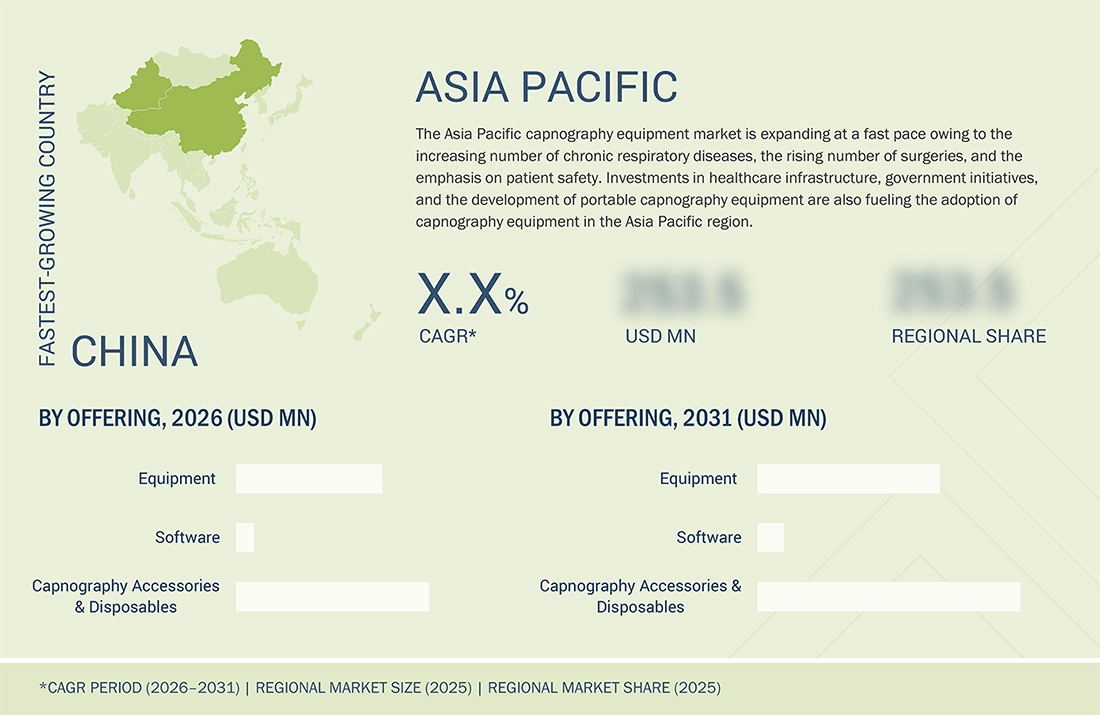
By CountryBased on country, Japan accounted for the largest share of 30.9% of the Asia Pacific capnography equipment market in 2025.
-
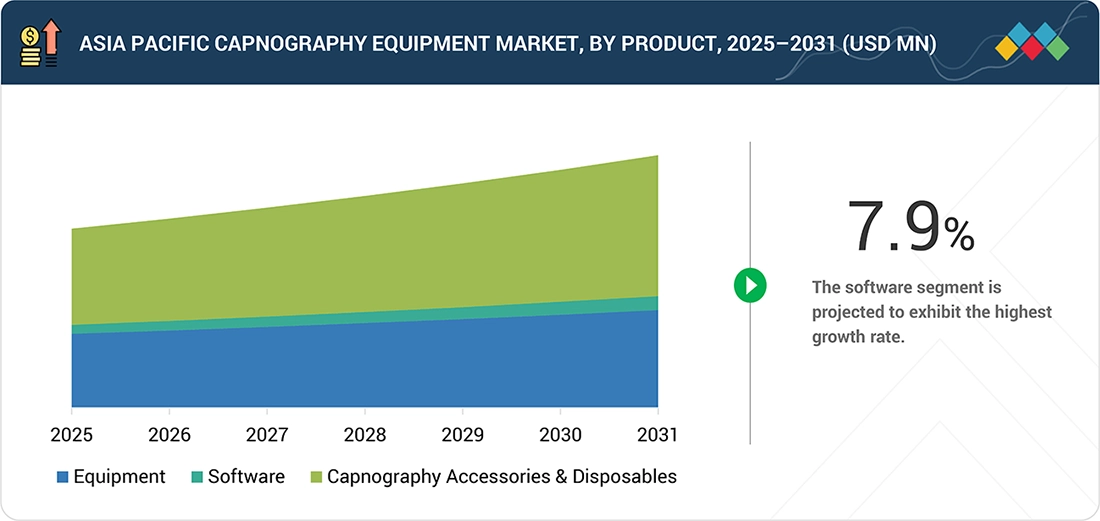
By OfferingBased on product, the capnography accessories and disposables segment accounted for the largest share of 53.7% of the Asia Pacific capnography equipment market in 2025.
-
By ApplicationBased on technology, the mainstream capnography segment accounted for the largest share of the Asia Pacific capnography equipment market in 2025.
-
By TechnologyBased on application, the cardiac care segment accounted for the largest share of the Asia Pacific capnography equipment market in 2025.
-
By End UserBased on end user, the hospitals segment is projected to register the highest growth rate in the Asia Pacific capnography equipment market during the forecast period.
-
COMPETITIVE LANDSCAPEMedtronic and Koninklijke Philips N.V. were recognized as star players due to their established strong product portfolio.
-
COMPETITIVE LANDSCAPEShenzhen Comen Medical Instruments Co., Ltd. have established themselves as among startups and SMEs due to their strong product portfolio and business strategy.
The Asia Pacific capnography equipment market is mainly influenced by the rapid expansion of healthcare facilities and the increased spending on critical care and surgical departments by governments in countries like China, India, and Southeast Asian nations. More surgeries, accidents, and ICU cases have increased the need for continuous respiratory monitoring both during the administration of anesthesia and after mechanical ventilation. Moreover, the rising incidence of chronic respiratory and cardiovascular disorders, combined with a continuously increasing geriatric population, is leading to a need for precise, real-time CO monitoring for the sake of patient safety and better clinical outcomes.
TRENDS & DISRUPTIONS IMPACTING CUSTOMERS' CUSTOMERS
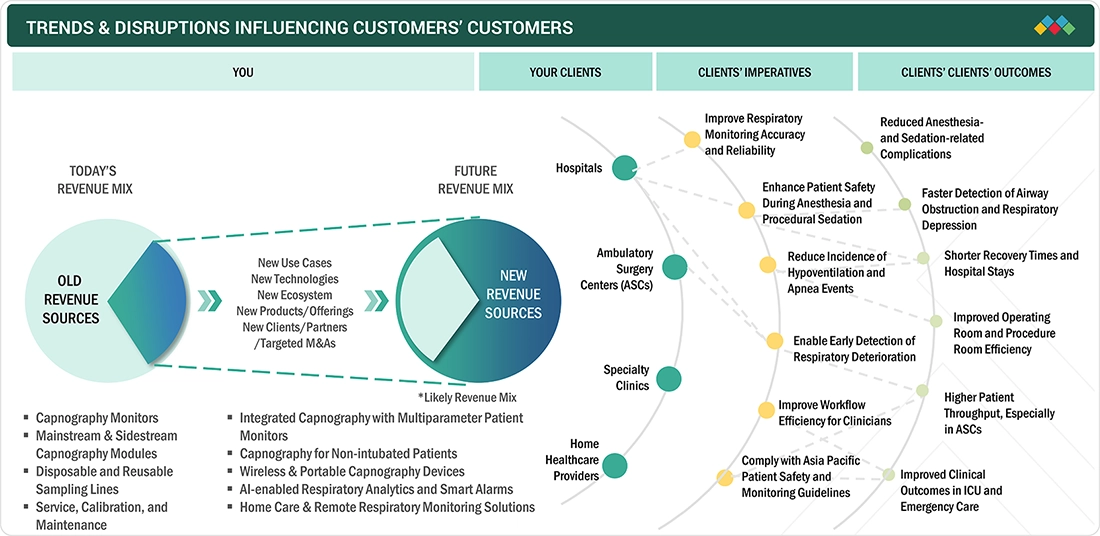
The Asia Pacific capnography equipment market is currently experiencing significant changes that are altering traditional revenue streams and improving outcomes for end users. Revenue from sales of capnography monitors, modules, sampling lines, and maintenance services, which are typically considered traditional, now accounts for a small portion of the market. However, emerging use cases, new technologies, innovative product offerings, and strategic partnerships are expected to significantly transform the future revenue landscape. Key trends include the integration of capnography into multi-parameter patient monitors, the use of wireless and portable devices, AI-driven respiratory analytics, and solutions for home and remote monitoring. These advancements are enabling hospitals, ambulatory surgery centers, specialty clinics, and home healthcare providers to enhance the accuracy of respiratory monitoring, improve patient safety during anesthesia and procedures, facilitate early detection of respiratory issues, and optimize workflow efficiency. Ultimately, these developments lead to better clinical outcomes, shorter hospital stays, and increased patient throughput across the region.
Source: Secondary Research, Interviews with Experts, MarketsandMarkets Analysis
MARKET DYNAMICS

Level
-
Rising prevalence of chronic respiratory diseases

-
Increasing surgical procedures and patient safety focus


Level
-
High cost of capnography monitors and accessories


Level
-
Portable and wireless monitoring devices

-
Growing clinician awareness and adoption


Level
-
Limited adoption in rural areas

-
Intense competition

Source: Secondary Research, Interviews with Experts, MarketsandMarkets Analysis
Driver: Rising prevalence of chronic respiratory diseases
The growth of the Asia Pacific capnography equipment market is significantly driven by the rise in chronic respiratory diseases such as chronic obstructive pulmonary disease (COPD), asthma, and sleep apnea. Countries like China, India, and Japan are witnessing an increasing trend in these diseases, largely due to factors such as an aging population, urbanization, and environmental pollution. Patients with chronic respiratory conditions require continuous monitoring of breathing and carbon dioxide levels, both in hospitals and during surgery, to prevent complications and receive timely assistance. This increasing patient population is prompting hospitals, intensive care units, and surgical centers to adopt the latest capnography equipment, which is contributing to the growth of the market.
Restraint: High cost of capnography monitors and accessories
The high prices of capnography monitors and accessories are a major factor limiting the growth of the Asia Pacific capnography equipment market. Sophisticated machines, such as mainstream and microstream capnographs, as well as their disposable sensors and accessories, require a large initial capital outlay and ongoing costs. This price may reduce uptake, especially in small hospitals, clinics, and healthcare facilities in developing Asia Pacific countries where financial resources are limited. Consequently, although the need for respiratory monitoring is increasing, the high cost of devices and consumables hampers the widespread adoption of capnography technologies across the region.
Opportunity: Portable and wireless monitoring devices
The demand for portable and wireless capnography monitors has been increasing significantly, a factor recognized as a key driver of market expansion in the Asia Pacific region. These compact, convenient systems enable continuous respiratory monitoring across various clinical settings, including emergency care, ambulatory surgery, and home care, where traditional bedside monitors are impractical. Their ease of use, simplicity, and ability to transmit real-time data to healthcare providers make portable and wireless devices highly desirable for hospitals and clinics seeking to enhance patient safety and improve workflow efficiency. Market growth in this region is expected to be propelled by these innovative capnography solutions, particularly as telemedicine and remote patient monitoring continue to gain popularity.
Challenge: Limited adoption in rural areas
The lack of widespread adoption of capnography devices in rural settings is one of the major challenges faced by the Asia Pacific market. This is because rural and remote healthcare settings are often faced with challenges such as a lack of infrastructure, poor accessibility to advanced medical technology, and a lack of qualified healthcare professionals to operate advanced monitoring equipment. This means that the advantages of continuous respiratory monitoring offered by capnography are not accessible to patients in these regions.
ASIA PACIFIC CAPNOGRAPHY EQUIPMENT MARKET: COMMERCIAL USE CASES ACROSS INDUSTRIES
| COMPANY | USE CASE DESCRIPTION | BENEFITS |
|---|---|---|
 |
Continuous Patient Monitors are advanced monitoring systems designed to provide real-time measurement of multiple vital signs, including CO2 levels, heart rate, SpO2, blood pressure, and respiratory rate across critical, surgical, and general care settings | Enable continuous assessment of patient status, support early detection of respiratory or cardiac distress, and improve patient safety and clinical decision-making |
 |
Capnography Systems are specialized devices that measure and display the concentration or partial pressure of exhaled CO2 to assess ventilation and airway integrity during anesthesia, sedation, and critical care | Ensure accurate monitoring of respiratory function, enable early detection of hypoventilation or airway obstruction, and enhance patient safety during surgical and emergency procedures |
 |
Airway Adapters are disposable or reusable connectors that link the patient’s breathing circuit to the capnography sensor for CO2 measurement during ventilation | Provide a secure and accurate interface for gas sampling, minimize leakage, and ensure reliable CO2 readings for both intubated and non-intubated patients |
 |
Capnography Sensors are a core component of capnography systems that detect and analyze CO2 levels from exhaled breath using infrared spectroscopy or similar technologies | Deliver precise, real-time CO2 readings, improve diagnostic accuracy, and enhance the effectiveness of patient monitoring in both mainstream and sidestream configurations |
 |
Integrated software that processes and visualizes CO2 waveform data, enabling clinicians to monitor trends, set alerts, and analyze ventilation performance remotely or locally | Enhance clinical workflow efficiency, enable data-driven decisions through trend analysis, and support interoperability with hospital information systems for better patient management |
Logos and trademarks shown above are the property of their respective owners. Their use here is for informational and illustrative purposes only.
MARKET ECOSYSTEM
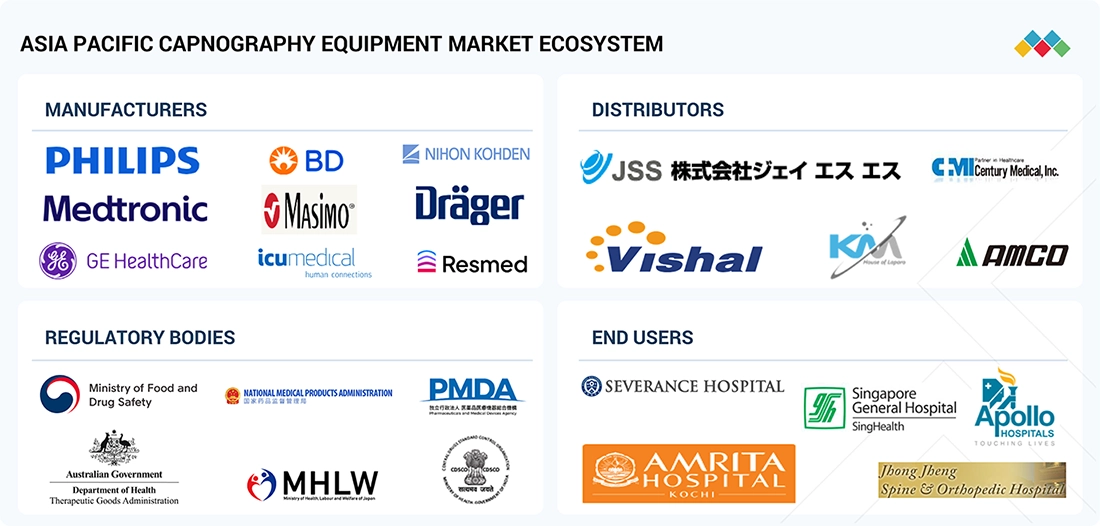
The Asia Pacific capnography equipment market is a dynamic sector supported by a robust ecosystem of manufacturers, distributors, end users, and regulatory authorities, all collaborating to promote market growth and adoption. Leading manufacturers such as Philips, Medtronic, Dräger, Masimo, GE Healthcare, BD, Nihon Kohden, ResMed, and ICU Medical offer a wide range of capnography monitors, modules, and disposables. Distributors like Vishal, JSS, Century Medical, KM, and AMCO play a crucial role in connecting these products with hospitals, specialty clinics, and other healthcare facilities throughout the region in a timely manner. Major end users, including Severance Hospital, Singapore General Hospital, Apollo Hospitals, Amrita Hospital, and Jhong Jheng Spine & Orthopedic Hospital, rely on these products for precise respiratory monitoring in operating rooms, ICUs, and emergency departments. Furthermore, the ecosystem is strengthened by the involvement of regulatory agencies such as the Ministry of Food and Drug Safety, PMDA, National Medical Products Administration, Australian Therapeutic Goods Administration, MHLW, and CDSCO. These agencies grant approval to the products by verifying their compliance with safety and quality standards, thereby endorsing their clinical effectiveness and ensuring patient safety.
Logos and trademarks shown above are the property of their respective owners. Their use here is for informational and illustrative purposes only.
MARKET SEGMENTS
Source: Secondary Research, Interviews with Experts, MarketsandMarkets Analysis
Asia Pacific Capnography Equipment Market, by Product
In the Asia Pacific capnography equipment market, capnography accessories and disposables hold the largest share. This is primarily because they are the most utilized items and are regularly replaced in hospitals and emergency care settings. Components such as sampling lines, nasal cannulas, airway adapters, and filters must be changed for every new patient, resulting in a consistent demand for these items compared to capital equipment. The rising number of surgical operations, ICU admissions, and emergency interventions in countries like China, India, and Japan has further increased the use of these disposable products. Additionally, strict infection control protocols and hospital policies that promote the use of single-use consumables reinforce the leading role of accessories and disposables in the regional market.
Asia Pacific Capnography Equipment Market, by Technology
In the Asia Pacific capnography equipment market, mainstream capnography technology currently holds the largest share due to its high accuracy and ability to directly measure exhaled CO2 from the airway. This technology is especially favored in operating rooms and intensive care units, where precise respiratory monitoring is crucial for patients undergoing general anesthesia and mechanical ventilation. The rise in complex surgeries and the development of critical care infrastructure in key countries within the Asia Pacific region have contributed to the increased adoption of mainstream capnography technology. Furthermore, its ease of integration with multi-parameter patient monitors and the high level of confidence in its performance have solidified its leading position in the market.
Asia Pacific Capnography Equipment Market, by Application
Cardiac care leads the Asia Pacific capnography equipment market, with the largest share. The primary driver of this trend is the demand for continuous respiratory monitoring of patients with cardiovascular conditions, particularly during surgeries, cardiac catheterizations, and intensive care. Accurate measurement of exhaled carbon dioxide (CO2) is essential for detecting respiratory issues, ensuring proper ventilation, and maintaining patient safety during cardiac procedures. The increasing prevalence of heart diseases, along with a rise in the number of cardiac procedures and the development of cardiac care facilities in countries such as China, India, and Japan, has led to a greater utilization of capnography in this area.
Asia Pacific Capnography Equipment Market, by End User
In the end-user market for capnography equipment in the Asia Pacific region, hospitals hold the largest market share. This is primarily due to their well-established infrastructure, high patient volume, and the need for continuous monitoring of respiratory patterns. Hospitals perform various procedures that involve anesthesia and ventilation, making capnography an essential tool in the operating room. Additionally, the rising number of hospitalizations, the development of intensive care units (ICUs), and strict adherence to infection control and monitoring guidelines have further increased the demand for capnography equipment in hospital settings.
REGION
Japan accounted for largest share of Asia Pacific capnography equipment market in 2025
Japan holds a significant share of the Asia Pacific capnography equipment market, driven by its advanced healthcare infrastructure, widespread adoption of cutting-edge patient monitoring technologies, and a strong emphasis on patient safety in anesthesia and critical care. The country performs numerous surgeries and is experiencing a rapidly aging population, both of which increase the demand for continuous respiratory monitoring in operating rooms, intensive care units (ICUs), and emergency departments. Moreover, Japanese hospitals were among the first to implement technologically advanced and integrated monitoring systems, including mainstream and microstream capnography. This early adoption has contributed to the country's market leadership. Additional factors supporting Japan's dominance in the capnography equipment market include attractive reimbursement policies, stringent clinical guidelines, and the presence of both large global and local medical device manufacturers.
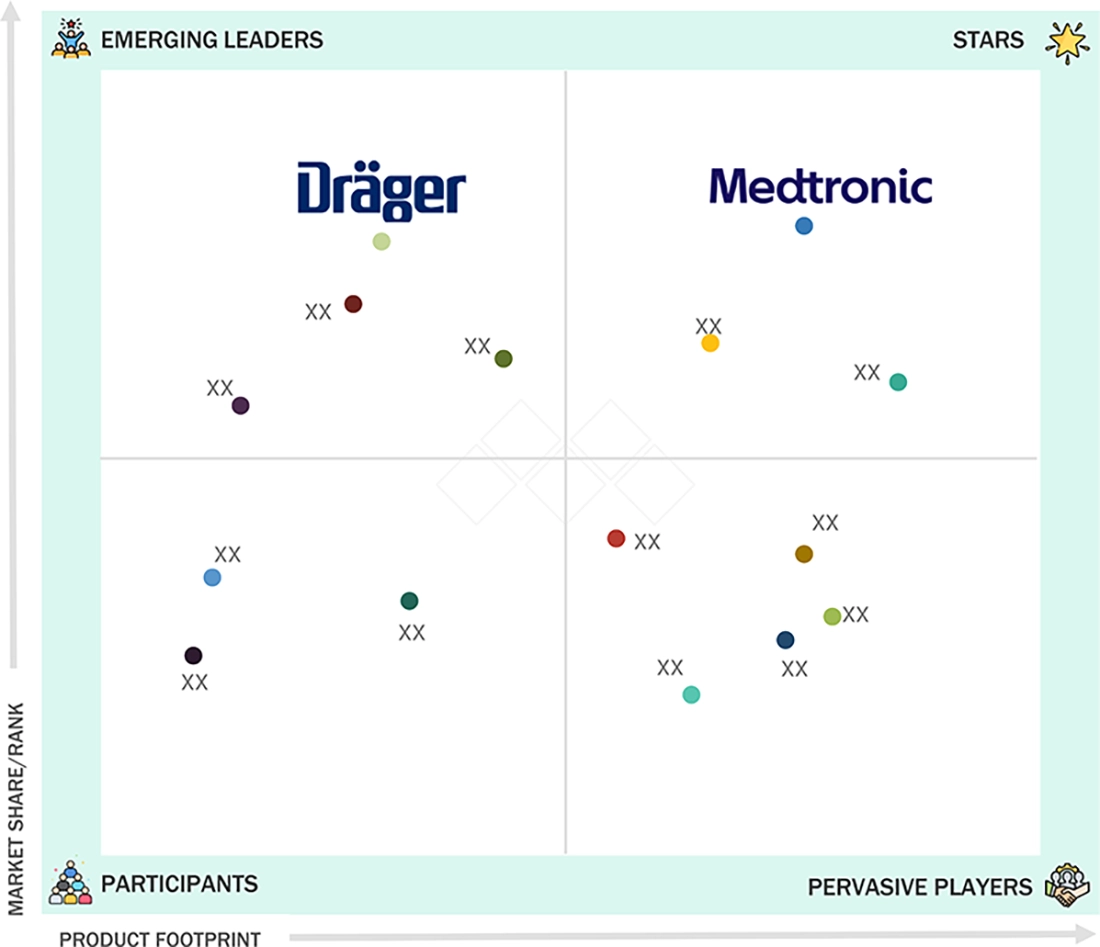
ASIA PACIFIC CAPNOGRAPHY EQUIPMENT MARKET: COMPANY EVALUATION MATRIX
In the Asia Pacific capnography equipment market matrix, Medtronic (Star) leads with scale, extensive distribution, and a comprehensive portfolio of monitoring solutions. Dräger (Emerging Leader) is gaining momentum by offering innovative capnography devices that enhance clinical accuracy, improve patient safety, and support efficient respiratory monitoring. While Medtronic dominates through its regional reach and established presence, Dräger’s focus on technological innovation positions it for rapid growth toward the leaders quadrant.
Source: Secondary Research, Interviews with Experts, MarketsandMarkets Analysis
KEY MARKET PLAYERS
- Becton, Dickinson and Company (US)
- Medtronic (Ireland)
- Koninklijke Philips N.V. (Netherlands)
- GE HealthCare (US)
- Drägerwerk AG & Co. KGaA (Germany)
- Nihon Kohden Corporation (Japan)
- Masimo (US)
- ICU Medical, Inc. (US)
- Shenzhen Mindray Bio-Medical Electronics Co., Ltd. (China)
- ZOLL Medical Corporation (US)
- EDAN Instruments, Inc. (China)
- Hamilton Medical (Switzerland)
MARKET SCOPE
| REPORT METRIC | DETAILS |
|---|---|
| Market Size in 2025 (Value) | USD 0.09 Billion |
| Revenue Forecast in 2031 (Value) | USD 0.13 Billion |
| Growth Rate | CAGR of 5.9% from 2026–2031 |
| Actual data | 2025–2031 |
| Base year | 2025 |
| Forecast Period | 2026–2031 |
| Units Considered | Value (USD Million), Volume (Thousand Unit) |
| Report Coverage | Revenue Forecast, Company Ranking, Competitive Landscape, Growth Factors, and Trends |
| Segments Covered |
|
| Regional Scope | Asia Pacific (India, China, Japan, South Korea, Australia, and the Rest of Asia Pacific) |
| Parent & Related Segment Reports |
Capnography Equipment Market North America Capnography Equipment Market Europe Capnography Equipment Market |
WHAT IS IN IT FOR YOU: ASIA PACIFIC CAPNOGRAPHY EQUIPMENT MARKET REPORT CONTENT GUIDE
DELIVERED CUSTOMIZATIONS
We have successfully delivered the following deep-dive customizations:
| CLIENT REQUEST | CUSTOMIZATION DELIVERED | VALUE ADDS |
|---|---|---|
| Product Analysis | Further breakdown of general applications into gastrointestinal surgeries, gynecology surgeries, other general surgeries in the market | Insights on other applications involved in the market |
| Company Information |
|
|
| Geographic Analysis | Further breakdown of the Rest of Asia Pacific capnography equipment market into Malaysia, Indonesia, and others | Country-level demand mapping for new product launches and localization strategy planning |
RECENT DEVELOPMENTS
- September 2025 : Masimo and Philips renewed and expanded their strategic partnership to accelerate the integration and market adoption of Masimo’s advanced monitoring technologies into Philips’ patient monitoring platforms. This collaboration also includes co-development and promotion of next-generation AI-driven monitoring solutions, which can further enhance respiratory monitoring capabilities. For the Asia Pacific capnography equipment market, this expanded alliance may drive broader deployment of integrated capnography features in multi-parameter monitors.
- June 2025 : Philips has deepened its long-term collaboration with Medtronic through a new multi-year agreement aimed at broadening access to advanced patient monitoring technologies, including integrated systems that bundle consumables and validated monitoring solutions such as Microstream capnography. While the initial focus is on global expansion beyond North America, the move signals increased availability and streamlined procurement of integrated monitoring solutions (including capnography) that can support clinicians in emerging healthcare markets such as the Asia Pacific, where demand for multi-parameter and respiratory monitoring technologies is growing as health systems expand critical care capacity.
Table of Contents
 Exclusive indicates content/data unique to MarketsandMarkets and not available with any competitors.
Methodology
The study used an extensive amount of both primary and secondary sources to conduct an all-around study of forces affecting the industry. This methodology included market segmentation analysis, industry trends, finding prominent players, competitive landscape analysis, key market dynamics, and the strategies used by the prominent companies.
Secondary Research
This secondary research used D&B Hoovers, Bloomberg Businessweek, Factiva, white papers, annual reports, company filings, investor presentations, and SEC filings to create a comprehensive database of the leading participants in the industry. The database combined key data from leading companies, market segmentation at multiple levels, industry trends by segment, major mergers and acquisition activity, and the role played by technology progressions in the Asia Pacific capnography equipment market.
Primary Research
The primary research was a qualitative and quantitative investigation through comprehensive interviews with the participants in both the demand and supply sides of the market. Supply side involved high-level executives including CEOs, VPs, marketing and sales directors, regional sales managers, and even the technology and innovation directors in leading companies and organizations in the product therapy markets. Through interviews of professionals - clinicians, procurement managers, purchase managers, department heads and experts from hospitals, diagnostic centers, pharmaceutical and biotechnological firms, and research and academic institutes, the market segmentation, the key players and the related trends and dynamics that are encouraging the growth of this market can be understood.
To know about the assumptions considered for the study, download the pdf brochure
Market Size Estimation
This report is a deep analysis of the market for the Asia Pacific capnography equipment. It involves the identification of the main market players through a combination of primary and secondary research. The secondary research is conducted based on annual and financial reports from the leading market players, while the primary research is composed of extensive interviews with key opinion leaders who included CEOs, directors, and senior marketing executives.
- To estimate the global market value, a segment-based methodology was adopted. This methodology involves gathering revenue data of major solution and service providers. The process includes: - Identification of key players in the global market for Asia Pacific capnography equipment.
- Charting their announced annual revenues, either from Asia Pacific capnography equipment specifically or from their overall business unit/product.
Data Triangulation
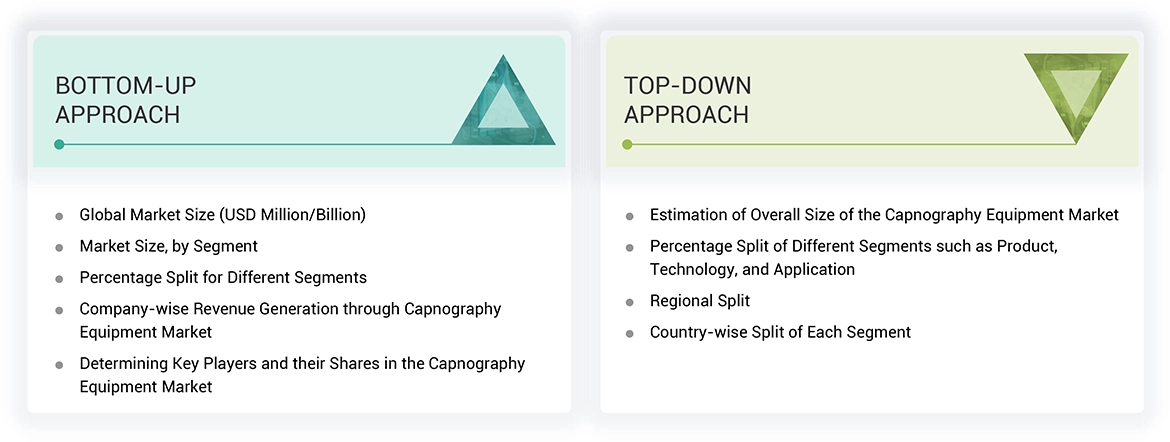
The research methodology undertaken included segmenting the Asia Pacific capnography equipment market into different categories and subcategories. The data triangulation and segmentation processes helped ensure that accurate data were available for the various market segments. Various analyses were done to understand all the factors and trends related to both the demand and supply sides of the market. The detailed integration between the top-down and bottom-up approaches provided a comprehensive overview of the Asia Pacific capnography equipment market.
Market Definition
Capnography is defined as the medical monitoring technique that measures the amount of carbon dioxide (CO2) exhaled with every breath. The asia pacific capnography equipment like a capnograph is applied for monitoring the patient's respiratory status, ventilation, and circulation. With its wide applicability in any field of health such as in hospitals, intensive care units, and operating rooms, capnography helps healthcare providers assess the effectiveness of ventilation, early detection of respiratory problems, and adjustment of treatment accordingly.
Stakeholders
- Healthcare institutions (hospitals and Home care)
- Healthcare institutions (hospitals)
- Research institutions
- Clinical research organizations
- Academic medical centers and universities
- Reference laboratories
- Accountable Care Organizations (ACOs)
- Research and consulting firms
- Contract research organizations (CROs) and contract manufacturing organizations (CMOs)
- Academic medical centers and universities
- Market research and consulting firms
- Group Purchasing Organizations (GPOs)
- Medical Research Laboratories
- Academic Medical Centers and Universities
Report Objectives
- Market analysis can be made on various dimensions like product types, technologies, applications, end-users, and regional areas.
- Explore any opportunity for stakeholders and carry out a fine scrutiny of the competitive landscape along with key players.
- Provide in-depth insights into the key drivers influencing market growth.
- Analyze the growth trend of the individual, their potential contribution to the micro-markets' overall market.
- Competitive responses such as new product launches, approvals, agreements, partnerships, expansions, acquisitions, and collaborations in the Asia Pacific capnography equipment market.


Personalize This Research
- Triangulate with your Own Data
- Get Data as per your Format and Definition
- Gain a Deeper Dive on a Specific Application, Geography, Customer or Competitor
- Any level of Personalization
Let Us Help You
- What are the Known and Unknown Adjacencies Impacting the Asia Pacific Capnography Equipment Market
- What will your New Revenue Sources be?
- Who will be your Top Customer; what will make them switch?
- Defend your Market Share or Win Competitors
- Get a Scorecard for Target Partners

Custom Market Research Services
We Will Customise The Research For You, In Case The Report Listed Above Does Not Meet With Your Requirements
Get 10% Free CustomisationTESTIMONIALS

JAYANT RAJPUROHIT
Director of Market Insights, Data and Analytics
SFI Health,
Leading Pharmaceutical Companywww.sfihealth.com/

We at SFI Health approached MarketsandMarkets for an Opportunity Assessment on "Incidence and Prevalence of Focus Indications" as we wanted to know the most attractive HCPs like Physician, Functional MD, Naturopath and Pharmacist. The project was critical for us to ensure our focus on the right target which would enable sustainable growth and profitability for SFI Health. The business insights provided exceeded our expectations and we were extremely impressed. The team at MarketsandMarkets is highly professional and detail oriented and very well understood our business needs. MarketsandMarkets offers a unique combination of expertise and dedicated engagement model. We identified 2 new products to be launched in coming months, based on the research findings provided by MarketsandMarkets. We are happy with the services and would strongly recommend MarketsandMarkets to my peers in the industry.

BEATRIZ DE LA CALLE
Head of Commercial Analytics
Qualicaps,
Leading Pharmaceutical Companywww.qualicaps.com/

We partnered with MarketsandMarkets for an assessment study on hard empty capsules. The team was extremely professional in understanding our business requirements and we received timely responses to all our queries. The market intelligence and the recommendations has met our business requirements. We were extremely impressed to see the final study results; it really exceeded our expectations. The market intelligence offered by MarketsandMarkets, and clarity on next steps will help us achieve our business objective for the Year 2021. We are happy with the services and would strongly recommend MarketsandMarkets to my peers in the industry.

Bob Williams,
Senior Director Business Development & Innovation
Bracco Diagnostics Inc.,
Italian Multinational in life sciences sector and a World Leader in imaging diagnosticsimaging.bracco.com/us-en
We were pleased with targeted insights that MarketsandMarkets identified from a custom study on the 'Radiation Dose Management Solutions Market'. Your team identified and characterized the market participants as well as underlying trends accurately. This study was useful to Bracco in formulating business strategies for our dose monitoring product lines and we thank MarketsandMarkets for the job well done.
Cody Coonradt,
Market Development and Strategy Manager
3M Health Information Systems,
Leader in Health care Coding, Payment & Analytics Solutions.www.3m.com/3M/en_US/health-information-systems-us
The value for our organization comes from three things: depth of research, specificity of segments and being easy to work with. As important as the first two are, the third can't be underestimated. MarketsandMarkets, maybe more than any other research vendor, wants to know what is top of mind for our team and what big questions we are grappling to answer.
Their customer first approach and high value engagement model, have given us great analysis and excellent value for money






Growth opportunities and latent adjacency in Asia Pacific Capnography Equipment Market