
Hemodialysis and Peritoneal Dialysis Market: Growth, Size, Share, and Trends

Hemodialysis & Peritoneal Dialysis Market by Product (Hemodialysis Equipment, Dialysates, PD Machine, Consumables), Modality (CAPD, APD, SDHD, Conventional HD, Nocturnal HD), Disease Indication (CKD, ESRD, AKI), End User, Region - Global Forecast to 2031




OVERVIEW
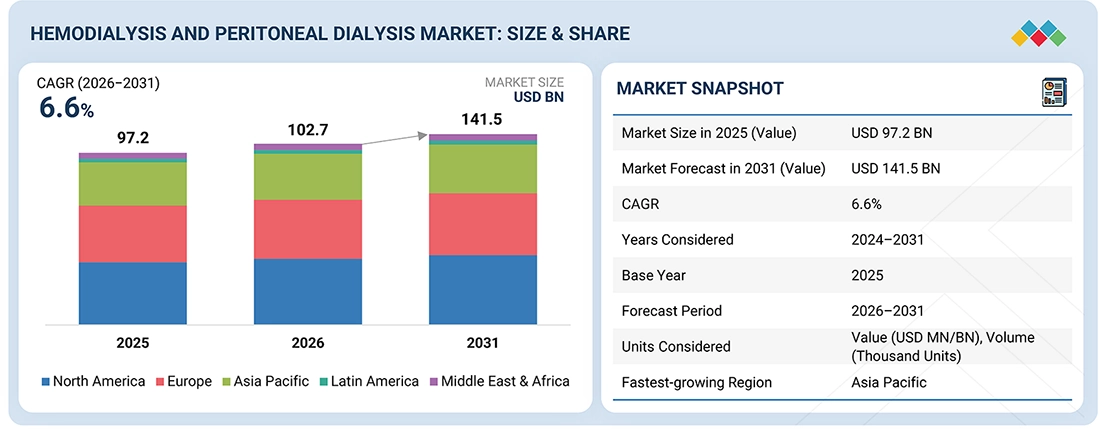
Source: Secondary Research, Interviews with Experts, MarketsandMarkets Analysis
The hemodialysis and peritoneal dialysis market is projected to reach USD 141.5 billion by 2031 from USD 102.7 billion in 2026, at a CAGR of 6.6% from 2026 to 2031. The primary forces behind this growth are the rising prevalence of chronic kidney disease and end-stage renal disease, driven by increasing rates of diabetes, hypertension, and aging populations worldwide. Expanding dialysis infrastructure in emerging markets across Asia Pacific, Latin America, and the Middle East and Africa is broadening the global patient base. Improved reimbursement frameworks, particularly the CMS ESRD Prospective Payment System in the US, are sustaining treatment volumes across both in-center and home settings. In addition, the integration of AI-assisted therapy management, remote patient monitoring platforms, and automated peritoneal dialysis cyclers is accelerating the adoption of home-based dialysis, while the shift toward value-based kidney care is making home hemodialysis and APD commercially central to payer and provider strategies globally.
KEY TAKEAWAYS
-
BY REGIONBy region, North America accounted for a share of approximately 46.2% of the hemodialysis and peritoneal dialysis market in 2025, supported by a large ESRD patient population, mature reimbursement frameworks, and a dense network of CMS-recognized ESRD facilities.
-
BY HD CONSUMABLE TYPEBy HD consumable type, the HD access products subsegment is projected to register the highest CAGR of 10.6% from 2026 to 2031, driven by growing procedure volumes for arteriovenous fistula creation and increasing use of tunneled hemodialysis catheters.
-
BY HD SERVICE TYPEBy HD service type, home hemodialysis (HHD) services are projected to grow at the highest CAGR of 11.4% from 2026 to 2031, outpacing in-center hemodialysis services at 6.5% CAGR, as payer mandates and patient preference shift toward home-based care.
-
BY PD MODALITYBy PD modality, automated peritoneal dialysis (APD) accounted for the largest share in 2025, gaining from expanding use of connected cycler platforms that enable remote therapy monitoring.
-
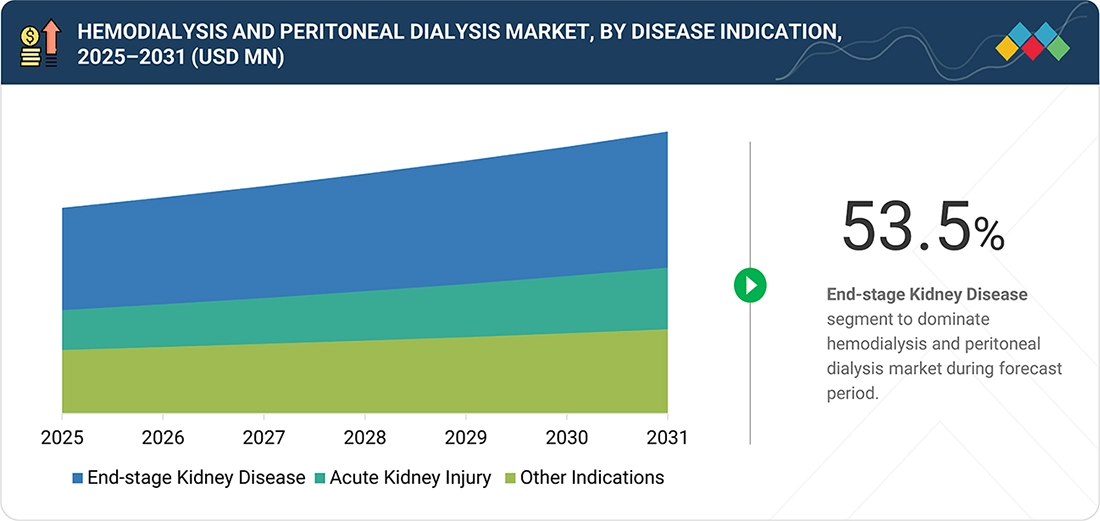
BY DISEASE INDICATIONBy disease indication, end-stage renal disease (ESRD) accounted for the largest share of 53.5% of the global hemodialysis and peritoneal dialysis market, as it constitutes the primary indication requiring long-term renal replacement therapy.
-
BY END USERBy end user, hospitals held the largest share in 2025, reflecting their role as the primary site for initiating therapy in newly diagnosed and high-acuity ESRD and AKI patients.
-
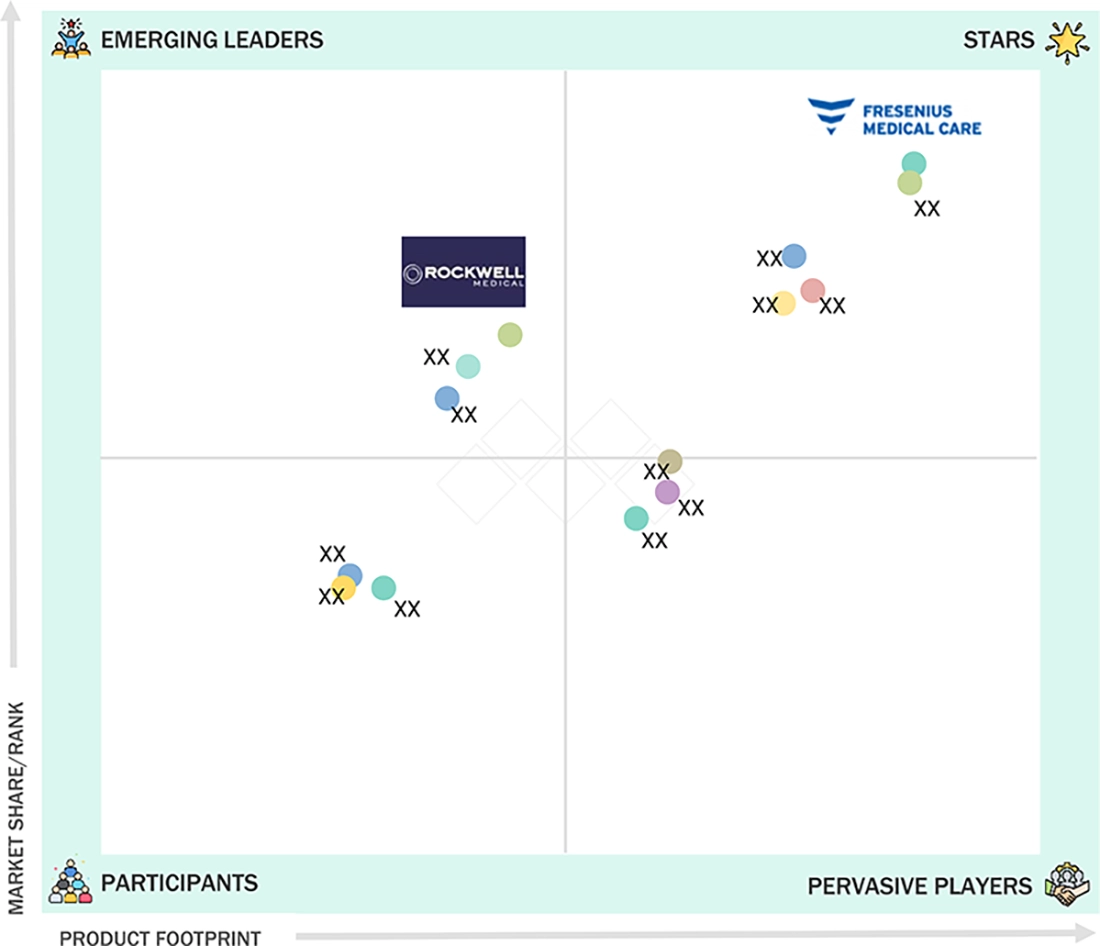
COMPETITIVE LANDSCAPE - KEY PLAYERSFresenius Medical Care (Germany), Vantive (US), B. Braun (Germany), Nipro Corporation (Japan), and Nikkiso Co., Ltd. (Japan) were identified as star players, given their vertically integrated product-to-service portfolios and global dialysis center networks.
-
COMPETITIVE LANDSCAPE - SMES/STARTUPSRockwell Medical (US), Outset Medical (US), and AWAK Technologies (Singapore) have distinguished themselves among emerging players by offering specialized products for home dialysis, portable systems, and wearable PD devices.
The hemodialysis and peritoneal dialysis market is expanding steadily, attributed to the structural growth of the ESRD patient population and rising government investment in renal care infrastructure. Advances in dialyzer membrane technology, including the clinical adoption of medium-cut-off membranes for expanded hemodialysis, along with the wider rollout of cloud-connected APD cyclers and home HD systems with digital monitoring, are promoting adoption across hospitals, independent dialysis centers, and home care settings. These dynamics collectively support sustained market growth through the forecast period.
TRENDS & DISRUPTIONS IMPACTING CUSTOMERS' CUSTOMERS
Manufacturers and service providers in the hemodialysis and peritoneal dialysis space currently derive the majority of their revenues from established product lines: in-center hemodialysis systems and consumables, conventional dialyzers, bloodlines, concentrates, vascular access products, and standard peritoneal dialysis solutions with manual CAPD consumables. This base accounts for roughly 80% of today's revenue mix. The remaining 20% reflects the early but accelerating commercialization of next-generation offerings. New use cases in remote and home-based care, new technologies including high-flux and high-efficiency dialyzers and HDF-enabled systems, an expanding ecosystem of digital care platforms, and new client partnerships with home care providers and value-based kidney care operators are together driving a material shift. Targeted acquisitions, like Vantive's separation from Baxter and its investment in the HomeAdvantage digital ecosystem, illustrate how the revenue mix of the future will be weighted toward connected, home-enabled, and data-driven therapies.
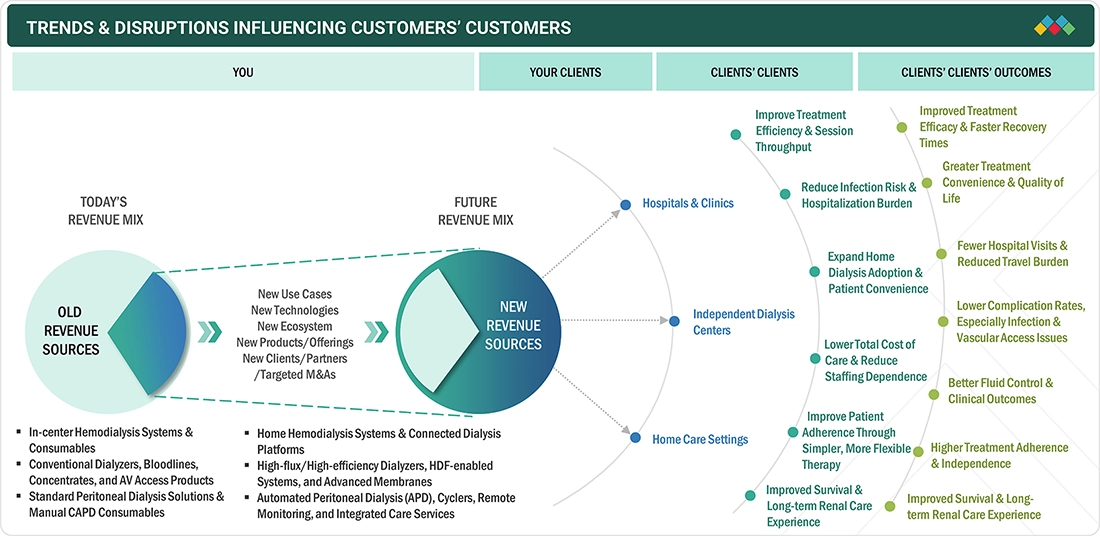
Source: Secondary Research, Interviews with Experts, MarketsandMarkets Analysis
MARKET DYNAMICS

Level
-
Increasing prevalence of chronic kidney disease (CKD) and end-stage renal disease (ESRD) due to diabetes, hypertension, and aging populations

-
Rising adoption of dialysis treatment worldwide, supported by expanding access to renal care infrastructure


Level
-
High cost of dialysis equipment, consumables, and long-term treatment

-
Limited access to advanced dialysis infrastructure and trained nephrology staff in low-resource regions


Level
-
Technological advancements in home hemodialysis, automated peritoneal dialysis (APD), and connected dialysis platforms

-
Increasing demand for remote monitoring, tele-nephrology, and portable/compact dialysis systems


Level
-
Risk of infection, vascular access complications, and peritonitis

-
Need for strong patient training, adherence, and home-care support

Source: Secondary Research, Interviews with Experts, MarketsandMarkets Analysis
Driver: Increasing prevalence of chronic kidney disease (CKD) and end-stage renal disease (ESRD) due to diabetes, hypertension, and aging populations
Chronic kidney disease is one of the most structurally persistent drivers of demand in the global dialysis market. More than 808,000 people in the US are living with ESRD, of whom 68% receive dialysis, according to the US Renal Data System 2023 Annual Data Report. The convergence of aging demographics, rising rates of type 2 diabetes, and hypertension is producing a growing pool of patients who will require long-term renal replacement therapy. In Asia Pacific and Latin America, urbanization-linked lifestyle shifts are driving CKD prevalence faster than public health systems can expand dialysis capacity. This structural deficit in dialysis supply relative to patient demand provides a long-duration demand tailwind for hemodialysis machines, dialyzers, consumables, PD products, and dialysis services across both established and emerging markets.
Restraint: High cost of dialysis equipment, consumables, and long-term treatment
The per-patient cost of maintenance dialysis remains a substantial barrier to access and market penetration in lower-income regions. In-center hemodialysis in the US costs approximately USD 90,000 per patient per year, and home hemodialysis systems carry significant upfront capital requirements for both patients and providers. In low- and middle-income countries, the cost of dialysis machines, single-use consumables, and water treatment infrastructure places renal replacement therapy beyond the reach of many patients without government subsidy programs. Reimbursement disparities between in-center and home hemodialysis, particularly in markets outside North America and Western Europe, further slow the transition to home-based modalities where clinical outcomes and long-term cost efficiency are superior.
Opportunity: Technological advancements in home hemodialysis, automated peritoneal dialysis (APD), and connected dialysis platforms
The integration of digital connectivity, remote monitoring, and automated pre-treatment functionality into dialysis devices is creating a generation of products that are both clinically superior and commercially differentiated. Fresenius Medical Care's Kinexus platform, launched globally in June 2026, and Vantive's HomeAdvantage ecosystem, introduced at ASN Kidney Week 2025, exemplify the shift toward unified digital platforms that connect device performance data with care team oversight in real time. The FDA clearance of Nikkiso's DBB-06 PRO with D-FAS full-assist functionality for the US market in May 2025 addresses a long-standing clinical need by reducing pre-treatment setup burden on dialysis nurses. The growing need among health systems for integrated care management platforms creates an opportunity for manufacturers to bundle hardware, software, and services into recurring-revenue contracts that deepen customer relationships and improve patient outcomes.
Challenge: Risk of infection, vascular access complications, and peritonitis
Clinical complication rates remain a structural challenge in both hemodialysis and peritoneal dialysis. Vascular access-related infections are the second most common cause of hospitalization among hemodialysis patients, and fistula failure rates affect outcomes and consumable cycles. Peritonitis remains the leading cause of PD technique failure globally. For manufacturers, these rates translate into post-market surveillance obligations and ongoing investment in membrane biocompatibility. For care providers, complication management determines reimbursement performance under value-based contracts and the CMS ESRD Quality Incentive Program.
HEMODIALYSIS AND PERITONEAL DIALYSIS MARKET: GROWTH, SIZE, SHARE, AND TRENDS: COMMERCIAL USE CASES ACROSS INDUSTRIES
| COMPANY | USE CASE DESCRIPTION | BENEFITS |
|---|---|---|
 |
Provides hemodialysis machines, dialyzers, consumables, and home dialysis solutions for ESRD management. | Improves treatment efficiency, expands home care access, and enhances patient outcomes. |
 |
Offers peritoneal dialysis solutions, cyclers, and automated PD systems for home-based renal replacement therapy. | Enables patient independence, reduces hospital visits, and supports flexible treatment schedules. |
 |
Supplies dialysis machines, concentrates, and renal care products for hospitals and dialysis centers. | Enhances operational efficiency and delivers reliable dialysis treatment. |
 |
Provides dialyzers, blood tubing sets, dialysis machines, and vascular access products. | Supports high-quality dialysis care and improves treatment safety. |
 |
Develops advanced hemodialysis and hemodiafiltration systems with digital monitoring capabilities. | Improves treatment precision, workflow efficiency, and patient management. |
Logos and trademarks shown above are the property of their respective owners. Their use here is for informational and illustrative purposes only.
MARKET ECOSYSTEM
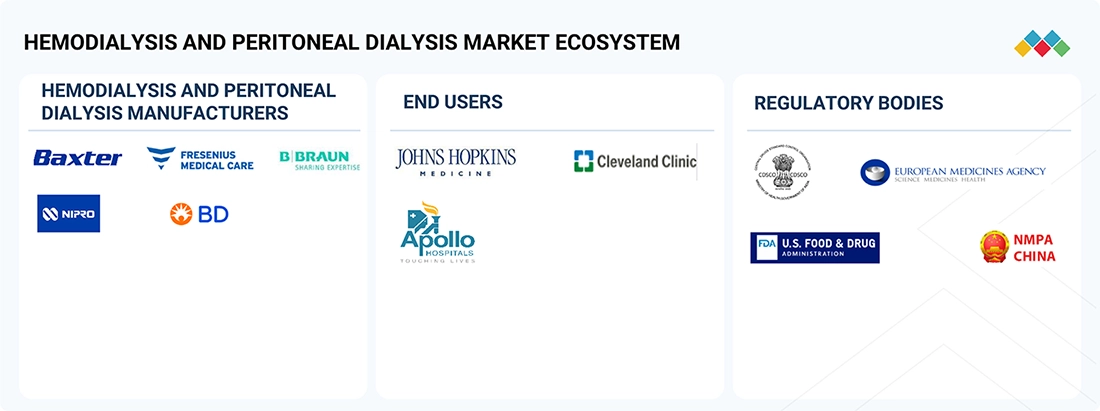
The hemodialysis and peritoneal dialysis market ecosystem encompasses manufacturers of HD machines, dialyzers, and consumables; PD product and cycler suppliers; dialysis water treatment system providers; in-center and home dialysis service operators; regulatory bodies governing device safety and reimbursement policy; and a diverse end-user base spanning hospitals, independent dialysis centers, and home care settings. These groups interact through supply agreements, reimbursement systems, clinical training programs, and digital care platforms that connect device performance to care team oversight. The incumbent tier of the ecosystem is dominated by Fresenius Medical Care (Germany), Vantive (formerly Baxter Kidney Care, US), B. Braun (Germany), Nipro Corporation (Japan), and Nikkiso Co., Ltd. (Japan). These companies each operate across the full product spectrum from machines and dialyzers to consumables, water treatment, and services. Fresenius Medical Care operates approximately 3,600 dialysis centers globally and is undertaking the largest HD machine infrastructure upgrade in its history with the 2026 rollout of the 5008X CAREsystem. Vantive separated from Baxter in February 2025 following a USD 3.8 billion acquisition by Carlyle Group, establishing a standalone kidney care company with over 23,000 employees. The specialist tier includes Asahi Kasei Medical, Toray Medical, JMS Co., Outset Medical, Rockwell Medical, and AWAK Technologies, each focusing on high-performance dialyzers, specialized HD platforms, or portable and wearable dialysis systems. Consolidation momentum is visible in Nipro's December 2024 acquisition of a dialysis RO equipment manufacturer in China and Vantive's October 2025 collaboration with US Renal Care to expand home PD access across 32 US states.
Logos and trademarks shown above are the property of their respective owners. Their use here is for informational and illustrative purposes only.
MARKET SEGMENTS
Source: Secondary Research, Interviews with Experts, MarketsandMarkets Analysis
Hemodialysis and Peritoneal Dialysis Market, By Disease Indication
End-stage renal disease (ESRD) accounted for the largest share of the hemodialysis and peritoneal dialysis market in 2025. ESRD drives the majority of long-term dialysis demand because patients require ongoing renal replacement therapy for the duration of their lives in the absence of a transplant. The structural growth of the ESRD patient population, linked to rising rates of type 2 diabetes and hypertension across high-burden markets, sustains a large and expanding volume of hemodialysis and PD sessions globally. ESRD is projected to grow at the fastest rate among disease indications. This is driven by improvements in early detection programs, which increase the number of CKD patients in the ESRD registry and by the expansion of reimbursement coverage in emerging markets.
Hemodialysis and Peritoneal Dialysis Market, By HD Service Type
In-center hemodialysis services held the largest share of the HD services market in 2025, reflecting the established infrastructure of over 7,600 CMS-recognized ESRD facilities in the US alone and the widespread clinic-based delivery model globally. In-center HD is the default treatment setting for the majority of prevalent ESRD patients because it does not require patients to operate equipment independently or manage their own supply chains. Home hemodialysis (HHD) services, while currently at a 5.4% share, are projected to grow at an 11.4% CAGR from 2026 to 2031. The CY 2025 ESRD PPS final rule extended Medicare payment to home dialysis for AKI patients, and CMS's ESRD Treatment Choices (ETC) Model continues to apply payment adjustments that incentivize providers to transition eligible patients to home modalities.
Hemodialysis and Peritoneal Dialysis Market, By End User
Hospitals held the largest end-user share in 2025, driven by their role as the primary point of care for newly incident ESRD patients, AKI patients in intensive care requiring CRRT, and patients with significant comorbidities who require supervised treatment. Independent dialysis centers collectively accounted for 49.1% but are distributed across a highly fragmented operator landscape. Home care settings are the fastest-growing end-user segment, as healthcare systems under cost-containment pressure increasingly view home dialysis as a more sustainable care model. Policy support from CMS and provider-level investment by operators like Fresenius Medical Care and Vantive in home therapy ecosystems are converting this preference into commercial volume.
REGION
Asia Pacific to be fastest-growing region in global hemodialysis and peritoneal Dialysis market during forecast period
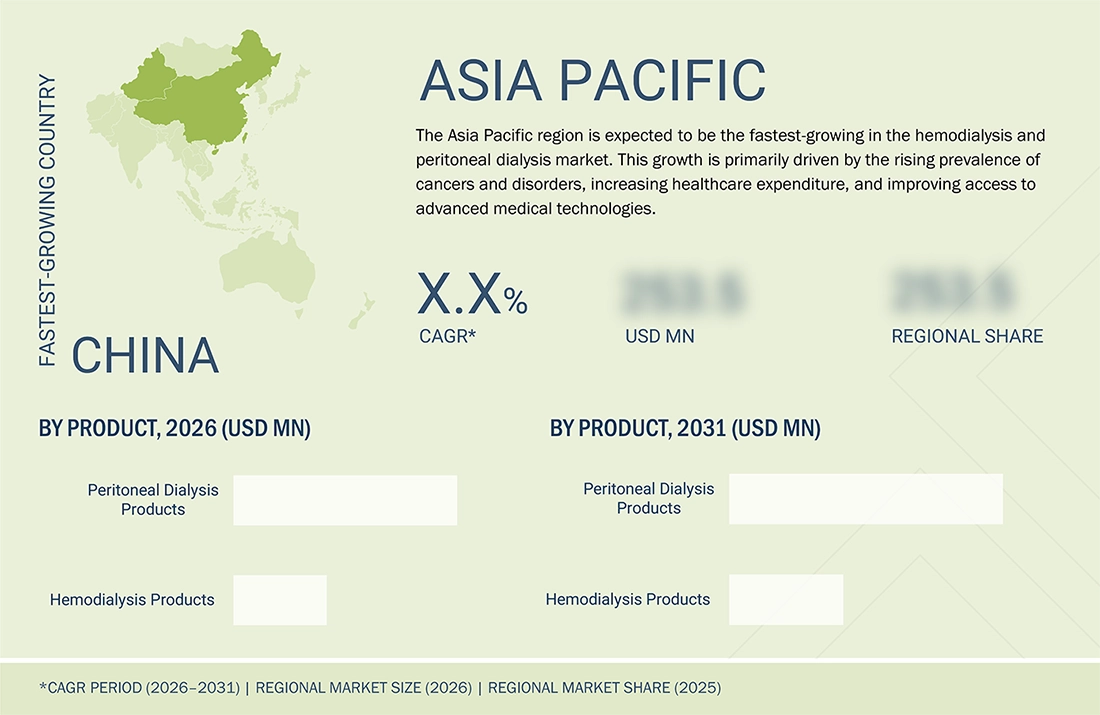
Asia Pacific is the fastest-growing regional market in the hemodialysis and peritoneal dialysis space. China, India, Japan, South Korea, and Australia are the primary contributors to this growth trajectory. China is the fastest-growing country in the region, driven by the government's universal rural ESRD coverage program and the National Medical Products Administration's volume-based procurement policies, which have expanded patient access to dialysis treatment across tier-2 and tier-3 cities. India's Pradhan Mantri National Dialysis Programme (PMNDP) subsidizes dialysis costs for patients below the poverty line, accelerating the enrollment of previously unserved patients into the formal dialysis system. Japan maintains the highest dialysis prevalence globally, with over 95% of patients receiving in-center treatment in certified facilities under the Japanese Society for Dialysis Therapy's standards. Increasing healthcare expenditure, improving access to advanced medical technologies, and a growing private dialysis center sector across Southeast Asia are adding to regional growth. The combination of a structurally large unmet need, government-driven capacity expansion, and the entry of global manufacturers with competitively priced systems for emerging markets positions Asia Pacific as the most commercially dynamic region through 2031.
HEMODIALYSIS AND PERITONEAL DIALYSIS MARKET: GROWTH, SIZE, SHARE, AND TRENDS: COMPANY EVALUATION MATRIX
The hemodialysis and peritoneal dialysis market's competitive landscape is assessed across two dimensions: market share and rank (vertical axis) and product footprint breadth (horizontal axis). Fresenius Medical Care occupies the Stars quadrant, combining the broadest product footprint in the market, spanning HD machines, dialyzers, consumables, water treatment systems, and home dialysis platforms, with the highest market share. The company operates a global clinic network of approximately 3,600 dialysis centers and is executing the rollout of the 5008X CAREsystem across 28 US states in 2026, together with the global launch of the Kinexus digital home dialysis platform. Its R&D infrastructure spans sites in Germany, the US, and China, ensuring continuous pipeline replenishment. Rockwell Medical occupies the Emerging Leaders quadrant, with a focused position in hemodialysis concentrates and dialysate products. The company's specialized product range addresses the recurring consumable demand at dialysis centers and reflects the segment's high CAGR profile as dialysis treatment volumes grow globally. Rockwell Medical's concentrated geographic presence in the US, together with a cost-competitive offering in a recurring-purchase category, positions it as a focused growth player rather than a broad-portfolio incumbent.
Source: Secondary Research, Interviews with Experts, MarketsandMarkets Analysis
KEY MARKET PLAYERS
- Fresenius Medical Care (Germany)
- Vantive (US)
- B. Braun (Germany)
- Nipro Corporation (Japan)
- Nikkiso Co., Ltd. (Japan)
- DaVita Inc. (US)
- Asahi Kasei Medical Co., Ltd. (Japan)
- Toray Medical Co., Ltd. (Japan)
- JMS Co., Ltd. (Japan)
- Outset Medical (US)
- Rockwell Medical (US)
- AWAK Technologies (Singapore)
- Medivators (US)
- Becton, Dickinson and Company (US)
- Medtronic plc (Ireland)
MARKET SCOPE
| REPORT METRIC | DETAILS |
|---|---|
| Market Size in 2025 (Value) | USD 97.2 Billion |
| Market Forecast in 2026 (Value) | USD 102.7 Billion |
| Market Forecast in 2031 (Value) | USD 141.5 Billion |
| CAGR | CAGR of 6.6% from 2026–2031 |
| Years Considered | 2024–2031 |
| Base Year | 2025 |
| Forecast Period | 2026–2031 |
| Units Considered | Value (USD Million/Billion), Volume (Thousand Units) |
| Report Coverage | Revenue Forecast, Company Ranking, Competitive Landscape, Growth Factors, Trends |
| Segments Covered |
|
| Regions Covered | North America, Europe, Asia Pacific, Latin America, Middle East & Africa |
WHAT IS IN IT FOR YOU: HEMODIALYSIS AND PERITONEAL DIALYSIS MARKET: GROWTH, SIZE, SHARE, AND TRENDS REPORT CONTENT GUIDE
DELIVERED CUSTOMIZATIONS
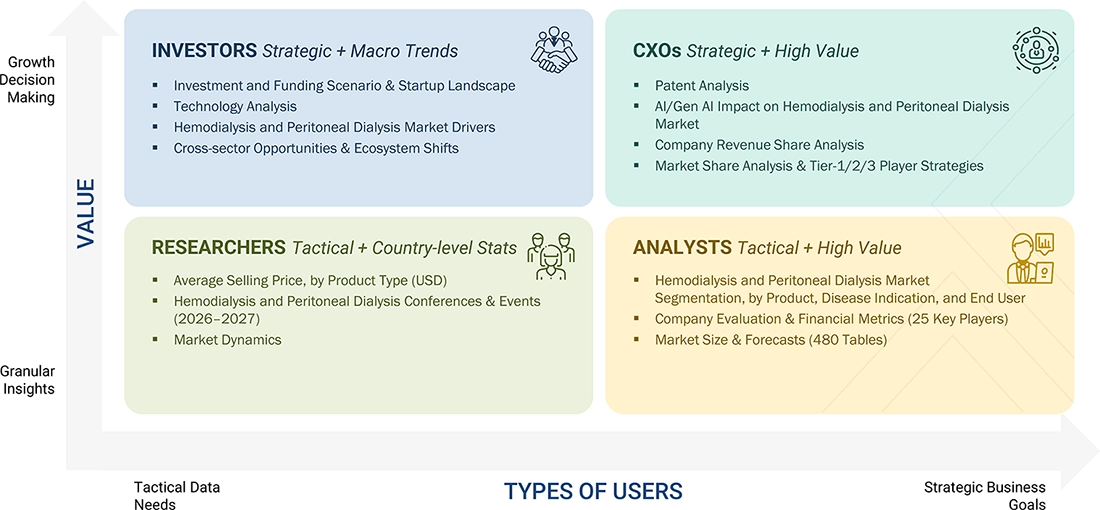
We have successfully delivered the following deep-dive customizations:
| CLIENT REQUEST | CUSTOMIZATION DELIVERED | VALUE ADDS |
|---|---|---|
| Product Analysis |
|
Enabled identification of high-growth consumable segments, technology adoption patterns, and product performance differentiation, supporting decisions on portfolio investment, innovation priorities, and procurement strategy. |
| Company Information |
|
|
| Geographic Analysis |
|
Supported regional market entry and expansion strategies by identifying priority country markets, localization requirements, distribution partnership structures, and pricing dynamics relevant to emerging market dialysis operators. |
RECENT DEVELOPMENTS
- June 2026 : Fresenius Medical Care launched Kinexus globally, a unified digital platform designed to support home dialysis programs. The platform connects patients, care teams, and dialysis devices through a single interface, providing remote monitoring and access to therapy data. The Kinexus launch follows the company's US rollout of the 5008X CAREsystem for high-volume hemodiafiltration and represents the company's digital layer investment for the home dialysis segment.
- March 2026 : Vantive announced an expansion of its US home therapy innovation strategy, adding digitally integrated capabilities to its HomeAdvantage ecosystem. Enhancements rolling out from April 2026 include Vantive CONNECT Success, an end-to-end proactive support model for peritoneal dialysis patients, and expanded remote monitoring and analytics capabilities within the Vantive CONNECT platform. The update builds on the fall 2025 launch of HomeAdvantage and aims to improve patient confidence and adherence in home PD.
- December 2025 : Nikkiso announced the launch of its DBB-06 PRO hemodialysis machine and dedicated bloodline set for the US market, with commercial availability from January 2026. The DBB-06 PRO is the first hemodialysis machine for the US market to incorporate Nikkiso's D-FAS (Dialysis Full Assist System), which automates pre-treatment priming to reduce clinical staff burden. The machine and its Arch Loop bloodline set received FDA clearance in May 2025 and are manufactured at the Kanazawa Plant in Japan.
Table of Contents
 Exclusive indicates content/data unique to MarketsandMarkets and not available with any competitors.
Methodology
This research study extensively utilized both primary and secondary sources. It involved analyzing various factors influencing the industry to identify segmentation types, industry trends, key players, the competitive landscape, key market dynamics, and strategies employed by key players.
Secondary Research
The research methodology for estimating and forecasting the data center cooling CDU pumps market begins with gathering data on key vendors' revenues by doing secondary research. The secondary research process involves consulting a range of secondary sources, including Hoover's, Bloomberg Businessweek, Factiva, the World Bank, and industry-specific journals. These secondary sources encompass annual reports, press releases, investor presentations, white papers, certified publications, articles from recognized authors, regulatory notifications, trade directories, and databases. Also, vendor offerings are taken into consideration to inform market segmentation.
Primary Research
Primary research for this study was conducted with leading participants across the hemodialysis and peritoneal dialysis value chain. On the supply side, discussions were held with project managers, regional sales managers, product directors, vice presidents of marketing, chief executive officers, and chief information officers at hemodialysis machine manufacturers, dialyzer manufacturers, PD cycler suppliers, consumables providers, water treatment system vendors, and dialysis service operators. On the demand side, interviews were conducted with nephrologists, dialysis center directors, renal care procurement managers, hospital administrators, home dialysis program coordinators, and clinical nursing staff responsible for patient training in home hemodialysis and peritoneal dialysis settings. These interviews were used to validate market size estimates, corroborate segmentation assumptions, and capture the latest commercial dynamics across in-center, home, and acute dialysis care settings.
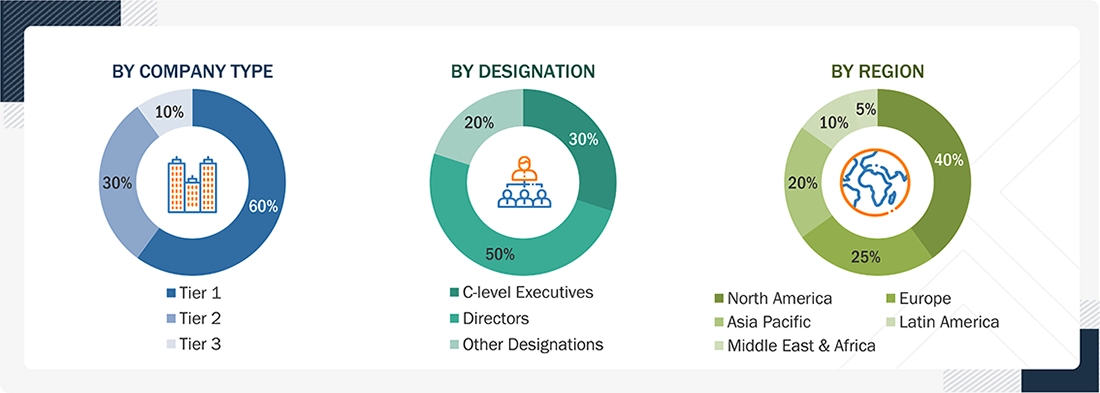
Note 1: C-level executives include CEOs, COOs, CTOs, and VPs.
Note 2: Other designations include sales, marketing, and product managers.
Note 3: Tiers are defined based on a company’s total revenue. As of 2025: Tier 1 = >USD 1 billion, Tier 2 = USD 500 million to USD 1 billion, and Tier 3 = <USD 500 million.
To know about the assumptions considered for the study, download the pdf brochure
Market Size Estimation
The total size of the hemodialysis & peritoneal dialysis market was determined after data triangulation from three approaches, as mentioned below. After each approach, the weighted average of the three approaches was taken based on the level of assumptions used in each approach.
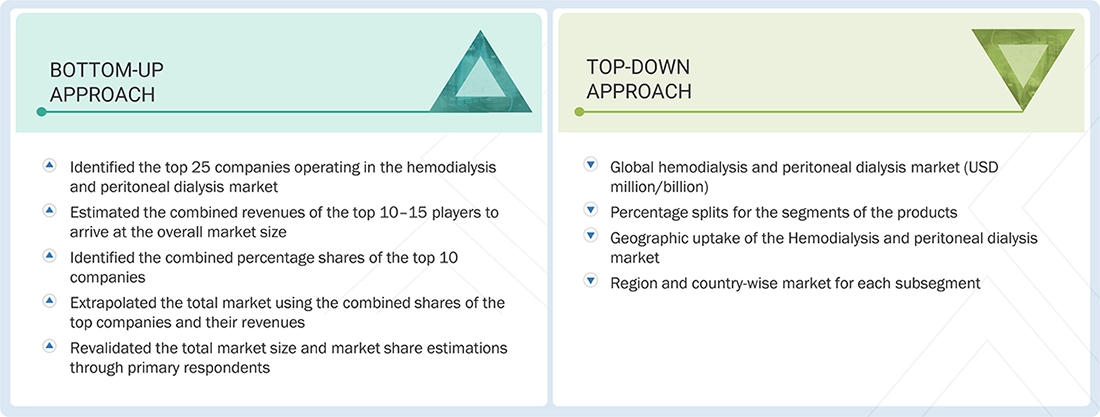
Data Triangulation
After arriving at the overall market size using both the market size estimation processes described above, the total market was split into several segments and subsegments. To complete the overall market estimation process and ascertain exact statistics for all segments and subsegments, data triangulation and market breakdowns were applied wherever applicable. The data was triangulated by examining various factors and trends on both the demand and supply sides of the hemodialysis and peritoneal dialysis markets.
Market Definition
The global hemodialysis and peritoneal dialysis market encompasses the revenues generated from the sale and provision of products, equipment, and services used to deliver renal replacement therapy to patients with chronic kidney disease (CKD) and end-stage renal disease (ESRD), as well as patients with acute kidney injury (AKI) requiring short-term dialysis support. On the hemodialysis side, the market includes center-use and home-use hemodialysis machines, hemodialysis consumables and supplies (dialyzers, bloodlines and tubing sets, concentrates and dialysates, vascular access products, and other consumables), water treatment systems for dialysis centers (central and portable water disinfection systems), and in-center and home hemodialysis services.
Key Stakeholders
- Hemodialysis and peritoneal dialysis machine manufacturers
- Dialyzer and hollow-fiber membrane manufacturers
- HD consumables and PD product suppliers (bloodlines, concentrates, dialysates, catheters, transfer sets)
- Vascular access device manufacturers (AV fistula needles, tunneled catheters, grafts)
- Dialysis water treatment system providers
- In-center dialysis service operators and dialysis chain operators (independent and hospital-affiliated)
- Home dialysis program providers and care management platforms
- Nephrologists, renal care nurses, and clinical dietitians
- Hospital procurement managers and group purchasing organizations (GPOs)
- Government health agencies and reimbursement bodies (CMS, NHS, NHI programs)
- Regulatory authorities (US FDA, EMA, CDSCO, PMDA, TGA)
- Academic and clinical research institutions focused on nephrology and renal replacement therapy
Report Objectives
- To define, describe, segment, and forecast the hemodialysis & peritoneal dialysis market by product & services, disease indication, end user, and region
- To provide detailed information about the factors influencing market growth (such as drivers, restraints, opportunities, and challenges)
- To analyze micromarkets with respect to individual growth trends, prospects, and contributions to the overall hemodialysis & peritoneal dialysis market
- To analyze market opportunities for stakeholders and provide details of the competitive landscape for key players
- To forecast the size of the hemodialysis & peritoneal dialysis market in five main regions (along with their respective key countries): North America, Europe, the Asia Pacific, Latin America, and the Middle East & Africa
- To profile the key players in the hemodialysis & peritoneal dialysis market and comprehensively analyze their core competencies and market shares
- To track and analyze competitive developments such as acquisitions, product launches, expansions, collaborations, agreements, and partnerships
Available customizations:
Available Customizations
With the given market data, MarketsandMarkets offers customizations to meet your company’s specific needs. The following customization options are available for the report:
Company Information- Detailed analysis and profiling of additional market players (up to 5)
-
Further breakdown of the Rest of Europe hemodialysis & peritoneal dialysis market into Austria, Finland, Switzerland, and other countries
Further breakdown of the Rest of Latin America hemodialysis & peritoneal dialysis market into Colombia, Chile, and other countries
- Market share analysis for North America and Europe, which provides market shares of the top 3–5 key players in the Hemodialysis & Peritoneal Dialysis market
- Competitive leadership mapping for established players in the US
Need a Tailored Report?
Customize this report to your needs
Get 10% FREE Customization
Customize This ReportPersonalize This Research
- Triangulate with your Own Data
- Get Data as per your Format and Definition
- Gain a Deeper Dive on a Specific Application, Geography, Customer or Competitor
- Any level of Personalization
Let Us Help You
- What are the Known and Unknown Adjacencies Impacting the Hemodialysis & Peritoneal Dialysis Market
- What will your New Revenue Sources be?
- Who will be your Top Customer; what will make them switch?
- Defend your Market Share or Win Competitors
- Get a Scorecard for Target Partners

Custom Market Research Services
We Will Customise The Research For You, In Case The Report Listed Above Does Not Meet With Your Requirements
Get 10% Free CustomisationTESTIMONIALS

JAYANT RAJPUROHIT
Director of Market Insights, Data and Analytics
SFI Health,
Leading Pharmaceutical Companywww.sfihealth.com/
We at SFI Health approached MarketsandMarkets for an Opportunity Assessment on "Incidence and Prevalence of Focus Indications" as we wanted to know the most attractive HCPs like Physician, Functional MD, Naturopath and Pharmacist. The project was critical for us to ensure our focus on the right target which would enable sustainable growth and profitability for SFI Health. The business insights provided exceeded our expectations and we were extremely impressed. The team at MarketsandMarkets is highly professional and detail oriented and very well understood our business needs. MarketsandMarkets offers a unique combination of expertise and dedicated engagement model. We identified 2 new products to be launched in coming months, based on the research findings provided by MarketsandMarkets. We are happy with the services and would strongly recommend MarketsandMarkets to my peers in the industry.

BEATRIZ DE LA CALLE
Head of Commercial Analytics
Qualicaps,
Leading Pharmaceutical Companywww.qualicaps.com/

We partnered with MarketsandMarkets for an assessment study on hard empty capsules. The team was extremely professional in understanding our business requirements and we received timely responses to all our queries. The market intelligence and the recommendations has met our business requirements. We were extremely impressed to see the final study results; it really exceeded our expectations. The market intelligence offered by MarketsandMarkets, and clarity on next steps will help us achieve our business objective for the Year 2021. We are happy with the services and would strongly recommend MarketsandMarkets to my peers in the industry.

Bob Williams,
Senior Director Business Development & Innovation
Bracco Diagnostics Inc.,
Italian Multinational in life sciences sector and a World Leader in imaging diagnosticsimaging.bracco.com/us-en
We were pleased with targeted insights that MarketsandMarkets identified from a custom study on the 'Radiation Dose Management Solutions Market'. Your team identified and characterized the market participants as well as underlying trends accurately. This study was useful to Bracco in formulating business strategies for our dose monitoring product lines and we thank MarketsandMarkets for the job well done.
Cody Coonradt,
Market Development and Strategy Manager
3M Health Information Systems,
Leader in Health care Coding, Payment & Analytics Solutions.www.3m.com/3M/en_US/health-information-systems-us
The value for our organization comes from three things: depth of research, specificity of segments and being easy to work with. As important as the first two are, the third can't be underestimated. MarketsandMarkets, maybe more than any other research vendor, wants to know what is top of mind for our team and what big questions we are grappling to answer.
Their customer first approach and high value engagement model, have given us great analysis and excellent value for money
Growth opportunities and latent adjacency in Hemodialysis & Peritoneal Dialysis Market






Alejandro
Jul, 2020
I would like to know opportunities for growth and adopción of peritoneal dialysis in Mexico.
Aaron
Mar, 2022
Looking forward to gain more insights on the global Hemodialysis Market.
Jose
Mar, 2022
Can you enlighten us on the end users in Hemodialysis Market?.