Busbar Market

Busbar Market by Material (Copper, Aluminum), Insulation (Laminated, Powder-coated, Bare), Manufacturing Process (Molded, Stamped, Flexible, Hybrid), End-use Application (Utilities, Industrial, Data Centers, and Others), and Region - Global Forecast to 2035




OVERVIEW
Source: Secondary Research, Interviews with Experts, MarketsandMarkets Analysis
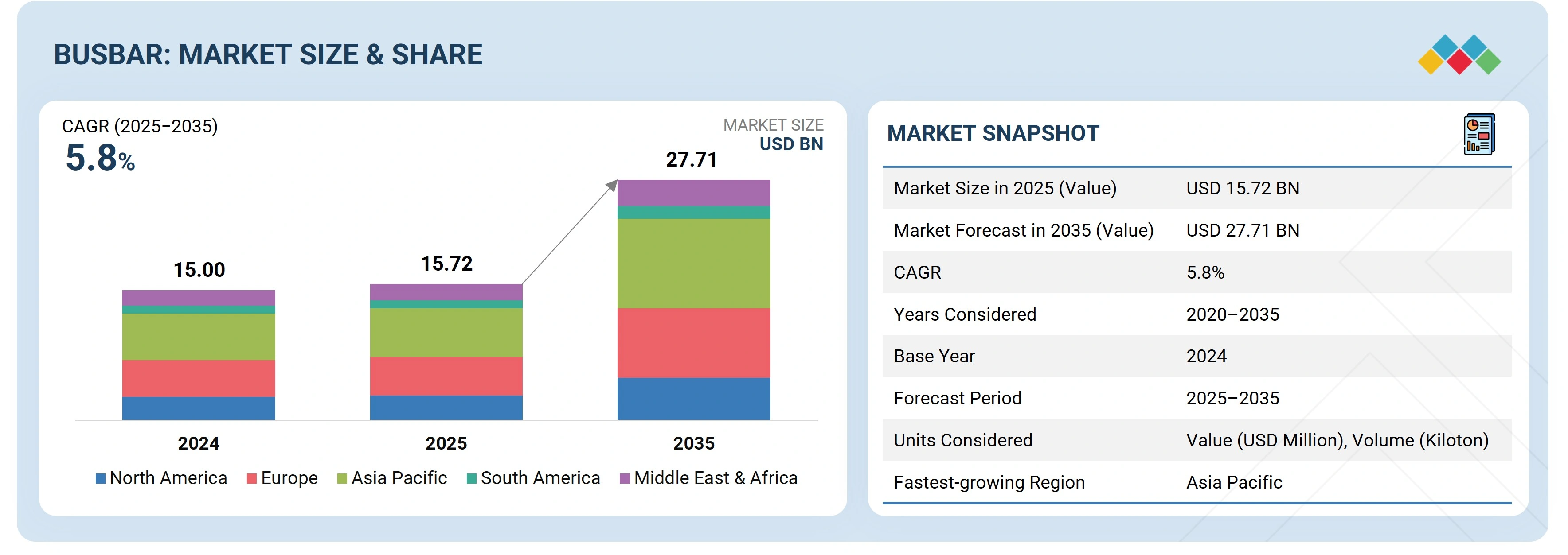
The busbar market is projected to reach USD 27.71 billion by 2035 from USD 15.00 billion in 2024, at a CAGR of 5.8% from 2025 to 2035. There is an increasing need for busbars due to industrialization, strict government policies on energy use, and rising electricity costs. These factors compel industrialists to adopt efficient technologies to reduce operational expenses and mitigate the negative impacts of power inefficiencies. Busbars contribute to minimizing energy loss, enhancing power distribution, and achieving long-term cost savings, which has led to their growing popularity in sectors such as manufacturing, data centers, and utilities. Additionally, advancements in busbar technology and attractive financial options are driving widespread adoption, as companies aim to meet sustainability goals and adapt to changing energy demands.
Busbar Market Size and Forecast:
- 2025 Market Size: USD 15.72 Billion
- 2035 Projected Market Size: USD 27.71 Billion
- Growth Rate (2025-2035): CAGR of 5.8%
- Copper segment is expected to dominate the market throughout the forecast period
- Industrial segment is projected to account for the largest share owing to rising demand for energy-efficient power distribution systems
- Forecast period: 2025–2035
- Asia Pacific is projected to be the fastest-growing regional market
- Medium power rating (125 A to 800 A) segment is witnessing strong adoption across industrial and data center applications
Busbar Key Market Trends and Insights:
- Rising demand for energy-efficient and compact power distribution systems is accelerating busbar adoption
- Rapid expansion of data centers and cloud infrastructure is boosting demand for busbar trunking solutions
- Increasing integration of renewable energy projects is driving the need for reliable power distribution networks
- Growing investments in smart grids and grid modernization initiatives are creating new growth opportunities
- Electrification of transportation, particularly electric vehicles, is expanding busbar applications
- Smart and insulated busbars are gaining traction due to enhanced safety, monitoring, and operational efficiency
- Asia Pacific continues to lead market growth, supported by industrialization, urbanization, and infrastructure development
KEY TAKEAWAYS
-
BY END-USE APPLICATIONThe end-use application segment includes industrial, utilities, commercial & residential, data centers, renewables, automotive, and locomotive. The growth of the industrial end user is driven by the need for energy efficiency, rising electricity costs, and stringent government regulations aimed at reducing carbon emissions.
-
BY POWER RATINGThe power rating segment includes low (up to 125 A), medium (125 A to 800 A), and high (above 800 A). Busbars with medium power ratings have a widespread use in industrial settings such as manufacturing and data centers, where they provide a balance between efficiency and scalability, meeting significant energy demands while ensuring reliable power distribution.
-
BY MATERIALThe material segment includes copper and aluminum. Copper busbars are widely adopted in industrial, datacenter, and utility applications, aligning with sustainability goals and regulatory pressures to reduce carbon footprints due to their superior conductivity and durability.
-
BY INSULATIONThe insulation segment includes powder-coated, laminated, and bare. The laminated insulation segment has a widespread use in industrial and data center applications, where it provides a balance between dielectric strength and thermal stability, meeting significant energy demands while ensuring safe power distribution.
-
BY MANUFACTURING PROCESSThe manufacturing process segment includes molded, stamped, hybrid, and flexible. The hybrid manufacturing process has widespread applications in data centers and renewable energy installations, where it strikes a balance between strength and flexibility, meeting significant power demands while providing effective thermal management.
-
BY REGIONThe regions considered are North America, Europe, Asia Pacific, South America, and the Middle East & Africa. The Asia Pacific region has a widespread presence in industrial and utility applications, where it provides a balance between rapid industrialization and energy efficiency, aligning with sustainability goals and regulatory pressures to reduce carbon footprints.
-
COMPETITIVE LANDSCAPEMajor market players use organic and inorganic strategies such as partnerships and investments to drive growth in busbars. Companies such as ABB, Eaton, Legrand, Siemens and Schneider Electric have entered various agreements, contracts and product launches to meet the increasing demand for busbars in innovative uses.
The projected rising demand for busbars is a direct result of industrial stakeholders and government agencies seeking to achieve considerable energy consumption savings, reduce carbon emissions, and meet increasingly demanding efficiency standards. The increased pace of industrialization, urbanization, and the growth of applications in the manufacturing, HVAC, and transport industries is further catalyzing adoption based on sustainability policies, decarbonization measures, and rapid technological change.
TRENDS & DISRUPTIONS IMPACTING CUSTOMERS' CUSTOMERS
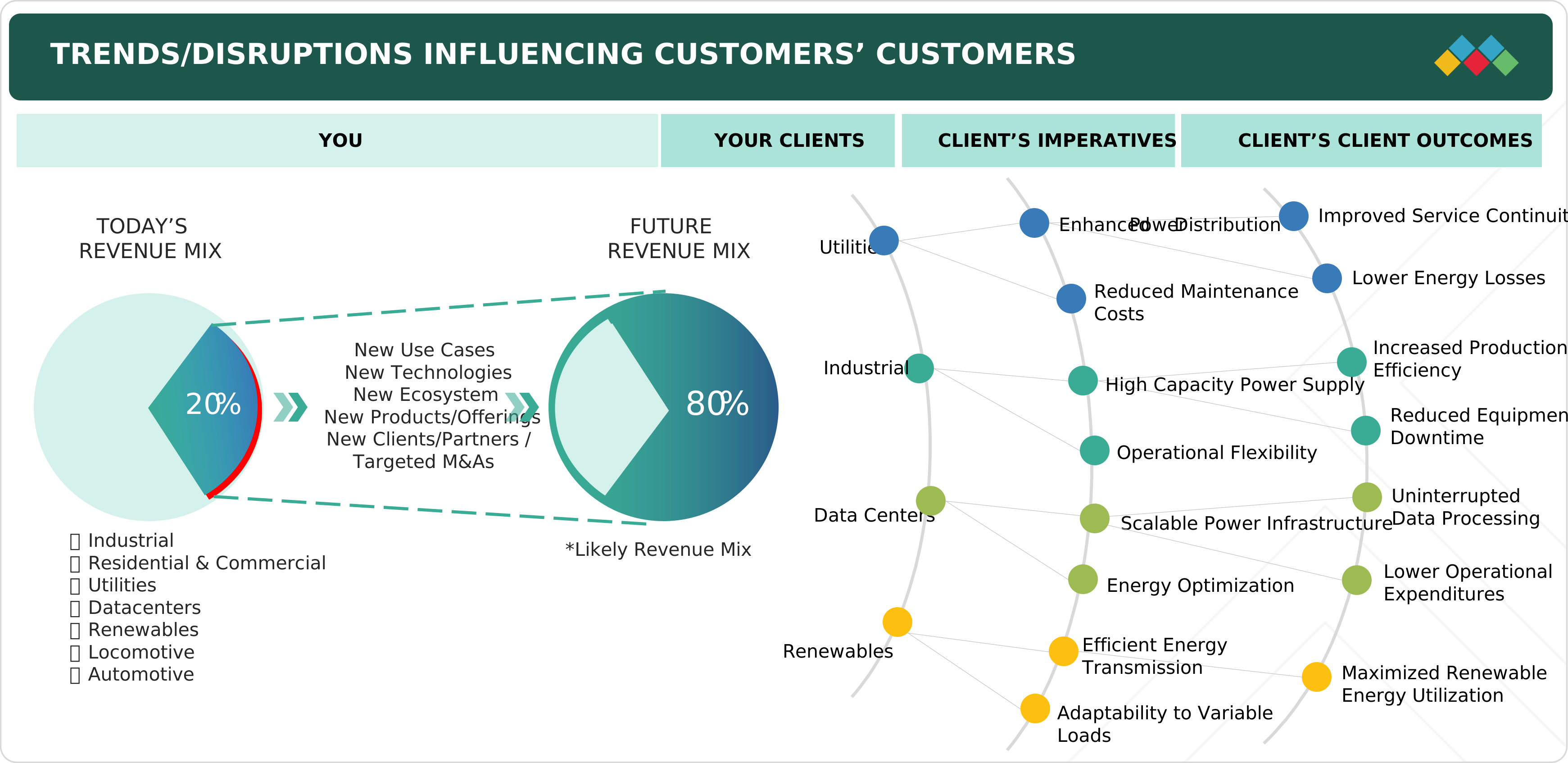
The busbar market, in terms of value, is projected to grow at a CAGR of 5.8% during the forecast period. Rising demand for energy-efficient power distribution systems drives market expansion. Global government initiatives promoting adoption of busbars are expected to offer significant growth opportunities for market players.
Source: Secondary Research, Interviews with Experts, MarketsandMarkets Analysis
MARKET DYNAMICS

Level
-
Rising Demand for energy-efficient power distribution systems

-
Increasing construction of commercial and industrial buildings


Level
-
Volatility in raw material prices


Level
-
Rapid expansion of data centers and cloud infrastructure

-
Rising investment in smart grid technologies


Level
-
Adapting to changing customer preferences

Source: Secondary Research, Interviews with Experts, MarketsandMarkets Analysis
Driver: Rising Demand for energy-efficient power distribution systems
The growing global emphasis on sustainability and reducing carbon footprints is increasing the demand for energy-efficient power distribution solutions, with busbars leading the way. Busbars offer an advantage over traditional wiring methods due to their superior energy efficiency, achieved through low electrical resistance and minimal power losses. Their efficiency makes them the preferred choice across various industries and applications where optimal energy use and sustainability are critical considerations. Several factors contribute to their enhanced energy efficiency. Their high electrical conductivity, particularly when made from copper, enables more effective electricity transmission with fewer losses. According to the US Energy Information Administration (EIA), global electricity demand is projected to increase by approximately 4% in 2025, spurred by economic expansion and the proliferation of energy-intensive technologies. This underscores the need for energy-efficient power distribution systems to manage higher loads effectively. Additionally, busbar systems can be customized to minimize resistance and improve energy performance based on specific usage requirements, optimizing efficiency. Busbars also experience fewer resistive losses than traditional cables, ensuring that a greater portion of the transmitted energy reaches its intended destination. Their design, which typically features a larger surface area relative to their volume, promotes better heat dissipation, allowing for higher current-carrying capacity without a significant temperature rise. Globally, initiatives from leading organizations promote the adoption of energy-efficient power distribution systems. The International Energy Agency’s (IEA) Net Zero by 2050 roadmap underscores the critical role of energy efficiency in meeting climate goals, highlighting technologies, such as busbars, as essential components of this strategy.
Restraint: Volatility in raw material prices
The busbar market faces significant challenges due to the sharp rise in copper prices, a key raw material for busbar manufacturing. Copper, known for its superior electrical conductivity compared with aluminum, has been the preferred material for high-efficiency applications. The recent sharp price increases, particularly in 2024, are largely due to a combination of supply chain disruptions, increasing demand from renewable energy projects, and geopolitical factors. This price hike has directly impacted busbar manufacturing costs, especially since copper is essential for producing busbars capable of handling high current loads in a compact form, making installation more efficient. For example, regions heavily reliant on copper-intensive projects, such as Asia Pacific, have seen rising project costs as copper prices affect procurement budgets. With renewable energy projects on the rise, particularly solar and wind energy installations, the need for busbars that efficiently distribute electricity in power networks is growing. Copper’s price volatility has pushed many manufacturers to explore alternative materials, such as aluminum, which, though less conductive, offers a lighter and more cost-effective solution. However, this transition comes with trade-offs.
Opportunity: Burgeoning demand for electric vehicles
The increasing adoption of electric vehicles (EVs) drives the demand for high-capacity busbars. These components are crucial for efficient battery management systems (BMS) and power distribution, ensuring that electrical systems can handle the high currents and energy demands of electrification. Electric vehicles require robust electrical systems capable of handling high currents. Busbars are designed to efficiently conduct large amounts of electricity, making them ideal for applications where high power is needed, such as EV charging stations and power distribution in electric trains. The low electrical resistance of busbars minimizes energy losses during transmission. This is vital in EVs and rail systems where energy conservation is a priority to improve overall performance and reduce operational costs. Many countries are heavily investing in electrifying their rail networks. For example, the European Union aims to electrify 70% of its rail lines by 2030, requiring substantial investments in electrical infrastructure, including busbars. The global investment in EV charging infrastructure is expected to reach USD 100 billion by 2025. This investment includes the installation of high-capacity busbars in charging stations to support fast charging capabilities. The demand for electric vehicles has grown at an exponential pace over the last decade, as shown by the data. Battery electric vehicles' deamand surged from 2 million units in 2014 to 11 million units in 2024, while plug-in hybrid electric vehicles rose from 130,000 units in 2014 to 6.5 million units in 2024. This rapid adoption highlights the global shift toward cleaner mobility, driven by environmental concerns, supportive government policies, advancements in battery technology, and a strong push for sustainable transportation. The upward trend is expected to continue as countries expand EV infrastructure and enforce stricter emission regulations.
Challenge: Adapting to changing customer preferences
The busbar market is currently facing the challenge of adapting to rapidly evolving customer preferences. As customers have access to a wide range of options, they are becoming more discerning in evaluating product offerings based on their specific requirements and costs. To remain competitive, manufacturers must be responsive to these changing demands and implement strategies to cater to the evolving needs of their customers. Customers, particularly in the industrial and commercial sectors, are becoming more aware of the benefits of efficient power distribution systems. They seek solutions that offer improved performance, reduced energy losses, and lower maintenance costs. The growing focus on sustainability and environmental responsibility is influencing customer preferences. Customers are increasingly looking for busbar solutions that are energy-efficient, environmentally friendly, and contribute to their overall sustainability goals. The rapid pace of technological change is shaping customer preferences. Customers seek innovative solutions incorporating the latest advancements in materials, design, and manufacturing processes, such as modular and insulated busbars. Customers seek busbar solutions tailored to their specific requirements, such as space constraints, power ratings, and installation preferences. They expect manufacturers to provide customized solutions that meet their unique needs.
busbar market: COMMERCIAL USE CASES ACROSS INDUSTRIES
| COMPANY | USE CASE DESCRIPTION | BENEFITS |
|---|---|---|
 |
Deploys Armor Clad Busway systems in industrial plants and commercial facilities to distribute electricity effectively, connecting to transformers, panelboards, and switchgear for high-demand applications | Enhanced safety through protection against physical damage and electrical faults |
 |
Implements busbar systems in power generation and oil & gas facilities to ensure reliable power distribution to equipment and machinery across refineries and production sites | Improved reliability of power supply|Reduced energy losses|Lower operational costs |
 |
Installs busbar systems in compact and vertical substations integrated within high-rise buildings and urban networks to supply electricity efficiently in space-constrained areas | Increased grid resilience |Efficient renewable energy integration|Decreased utility costs |
Logos and trademarks shown above are the property of their respective owners. Their use here is for informational and illustrative purposes only.
MARKET ECOSYSTEM
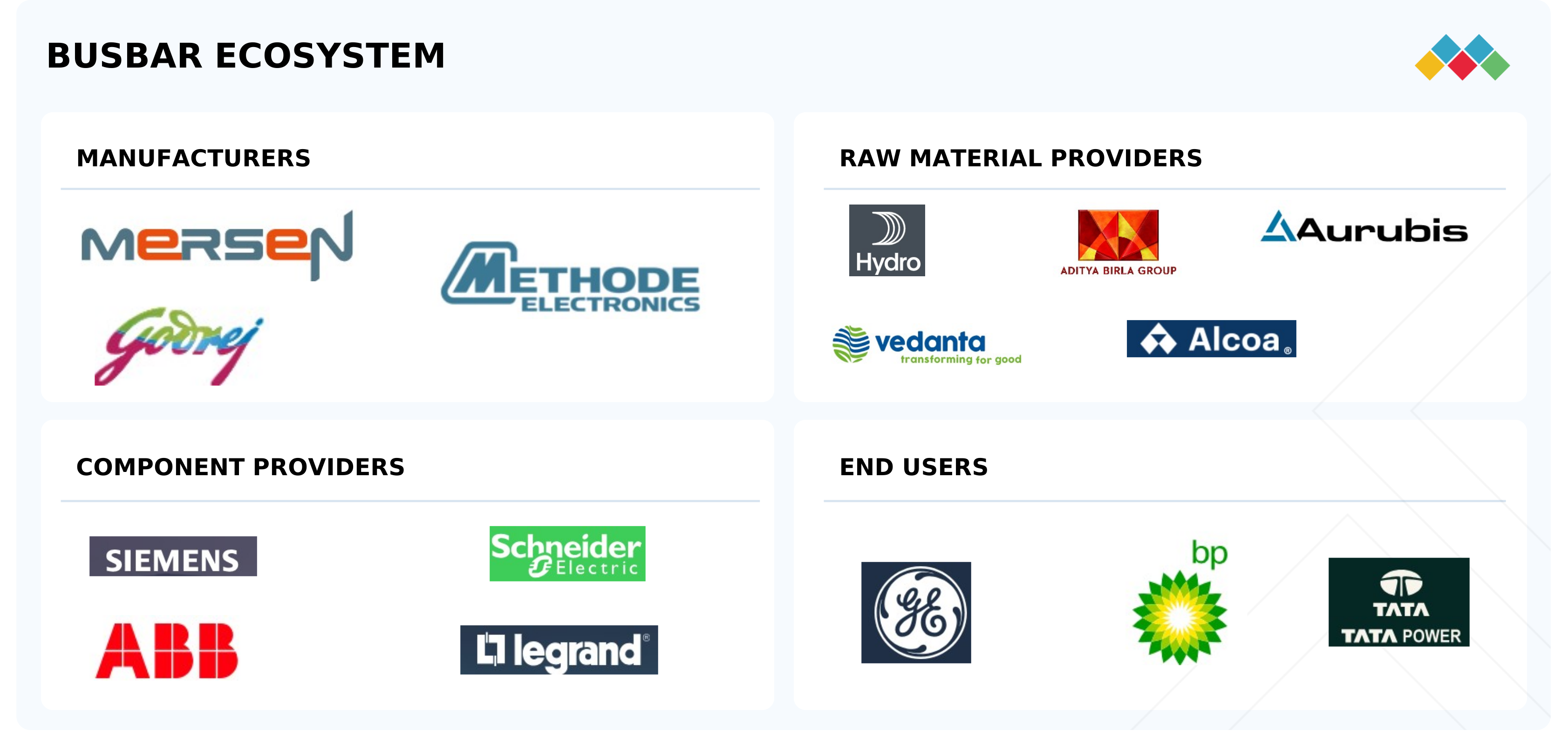
The ecosystem analysis provides a quick snapshot of the key stakeholders involved in the busbar ecosystem, from component providers and end users to regulatory bodies/standards organizations. This list is not exhaustive and is meant to give an idea of major stakeholders.
Logos and trademarks shown above are the property of their respective owners. Their use here is for informational and illustrative purposes only.
MARKET SEGMENTS
Source: Secondary Research, Interviews with Experts, MarketsandMarkets Analysis
Busbar Market, by End-use Application
Burbars are designed for several end-use applications, including industrial, utilities, commercial & residential, data centers, renewables, automotive, and locomotive sectors, each with distinct demands. The industrial segment leads due to its extensive use in manufacturing plants, chemical facilities, and refineries, where busbars provide efficient power distribution and support high-capacity machinery. Utilities rely on busbars for reliable electricity transmission and distribution across grids, enhancing system stability in large-scale operations. The commercial & residential sector utilizes busbars for building management systems and housing complexes, offering compact and cost-effective power solutions. Data centers is a fast-growing segment, driven by the need for high-density power distribution to support servers and cooling systems. The renewables sector employs busbars in solar and wind farms to manage fluctuating energy inputs efficiently. In automotive, busbars are critical for electric vehicles (EVs), ensuring robust power delivery in batteries and charging infrastructure. Lastly, the locomotive sector uses busbars for electrified rail systems, supporting high-power demands in trains and transit networks.
Busbar Market, by Power Rating
The busbar market is segmented by power rating into low, medium, and high categories, each catering to specific applications. Busbars with low power ratings (up to 125 A) are widely used in residential buildings, small commercial establishments, and light industrial settings, providing efficient power distribution for lighting and basic equipment with cost-effective solutions. The medium power rating segment (125 A to 800 A) dominates in industrial facilities, commercial complexes, and data centers, supporting heavy machinery, HVAC systems, and server racks with reliable and scalable power delivery. The high power rating segment (above 800 A) is essential for utilities, large manufacturing plants, and renewable energy installations, such as wind farms and substations, where it ensures robust power transmission and handles significant load demands with enhanced durability and efficiency.
Busbar Market, by Manufacturing Process
The busbar market is segmented by manufacturing process into molded, stamped, hybrid, and flexible, each offering unique advantages for diverse applications. The molded process, using epoxy or resin insulation, is widely adopted in industrial and utility settings due to its high durability, resistance to environmental factors, and ability to handle high voltages safely. The stamped process, involving precision metal forming, is popular in commercial and automotive sectors, providing cost-effective, lightweight busbars with excellent conductivity for power distribution in EVs and building systems. The hybrid process combines molded and stamped techniques, gaining traction in data centers and renewable energy installations, offering a balance of strength, flexibility, and thermal management for complex power needs. The flexible process, utilizing laminated or braided conductors, is ideal for residential and locomotive applications, enabling easy installation and adaptability in tight spaces or vibration-prone environments.
Busbar Market, by Insulation
The busbar market is segmented by insulation into laminated, powder-coated, and bare, each tailored to specific operational requirements. Laminated busbars, featuring layers of insulating materials, such as Mylar or Nomex, are widely used in industrial and data center applications due to their excellent dielectric strength, thermal stability, and ability to handle high current densities safely. Powder-coated busbars, featuring a protective epoxy or polyester coating, are widely used in commercial and residential settings, providing corrosion resistance, enhanced safety, and a cost-effective solution for moderate voltage environments. Bare busbars, lacking additional insulation, are typically employed in utilities and large-scale manufacturing plants where high conductivity is prioritized, and installations are designed with adequate spacing and cooling to mitigate risks, making them suitable for high-power transmission.
Busbar Market, by Material
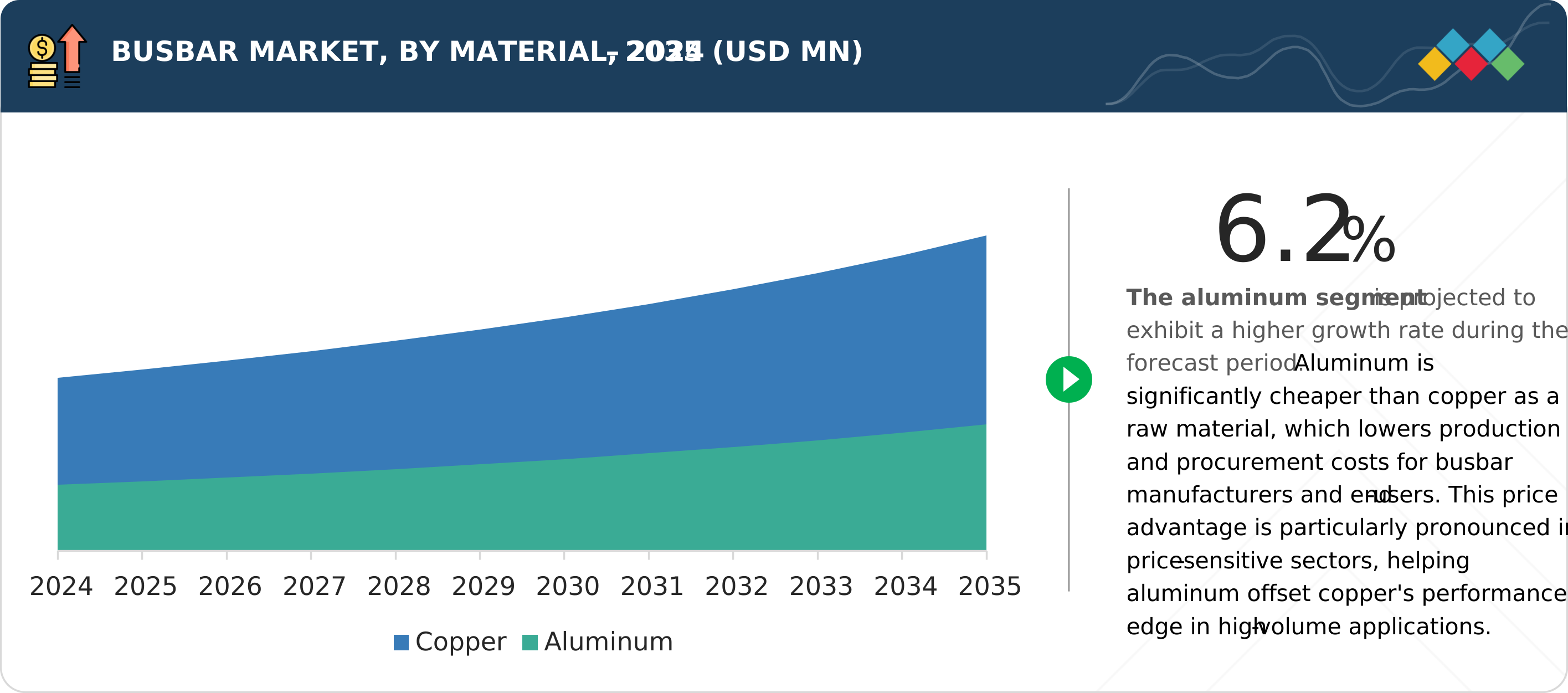
The busbar market is segmented by material into copper and aluminum, each offering distinct advantages for various applications. Copper busbars dominate due to their superior electrical conductivity, high corrosion resistance, and durability, making them ideal for high-performance settings such as industrial plants, data centers, and utilities where reliability and efficiency are critical. Aluminum busbars are increasingly popular due to their lightweight nature, lower cost, and good conductivity-to-weight ratio, finding widespread use in commercial buildings, residential complexes, and automotive applications, particularly in electric vehicles (EVs), where cost efficiency and ease of installation are key considerations.
REGION
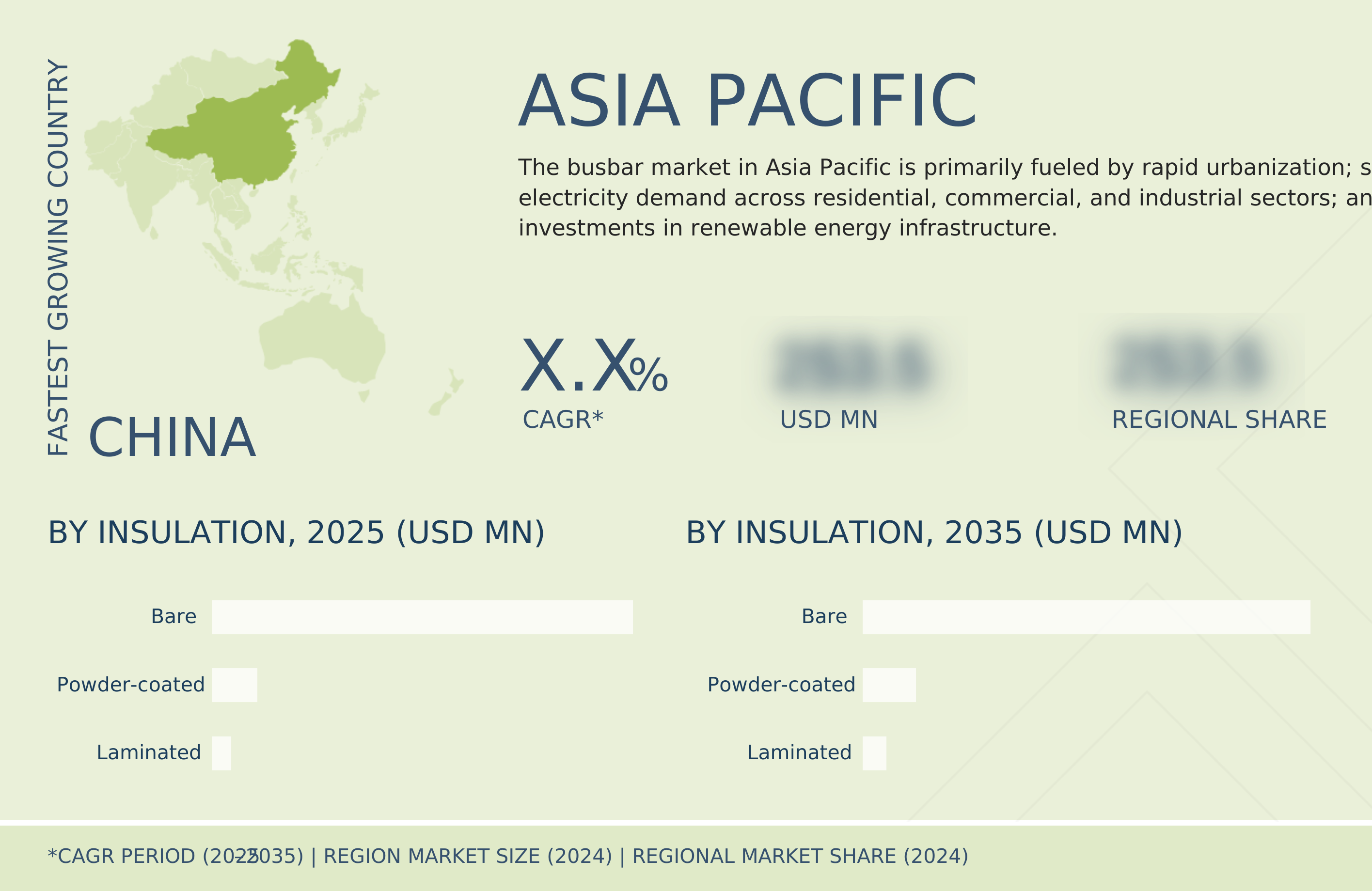
Asia Pacific to be fastest-growing region in global busbar market during forecast period
The Asia Pacific region dominates the global busbar market and their leadership is fueled by the region's status as the world's largest energy consumer, with countries such as China, India, Japan, and South Korea driving demand through rapid industrialization and urbanization. Busbar systems are increasingly integrated into manufacturing hubs, commercial complexes, and residential micro-grids, leveraging aluminum and copper for efficient, on-site power distribution. Key applications span industrial sectors (e.g., chemicals and metals in China), commercial buildings (e.g., hospitals and IT parks in India), and utilities (e.g., district power networks in Japan), supported by technological advancements in stamped and laminated designs.
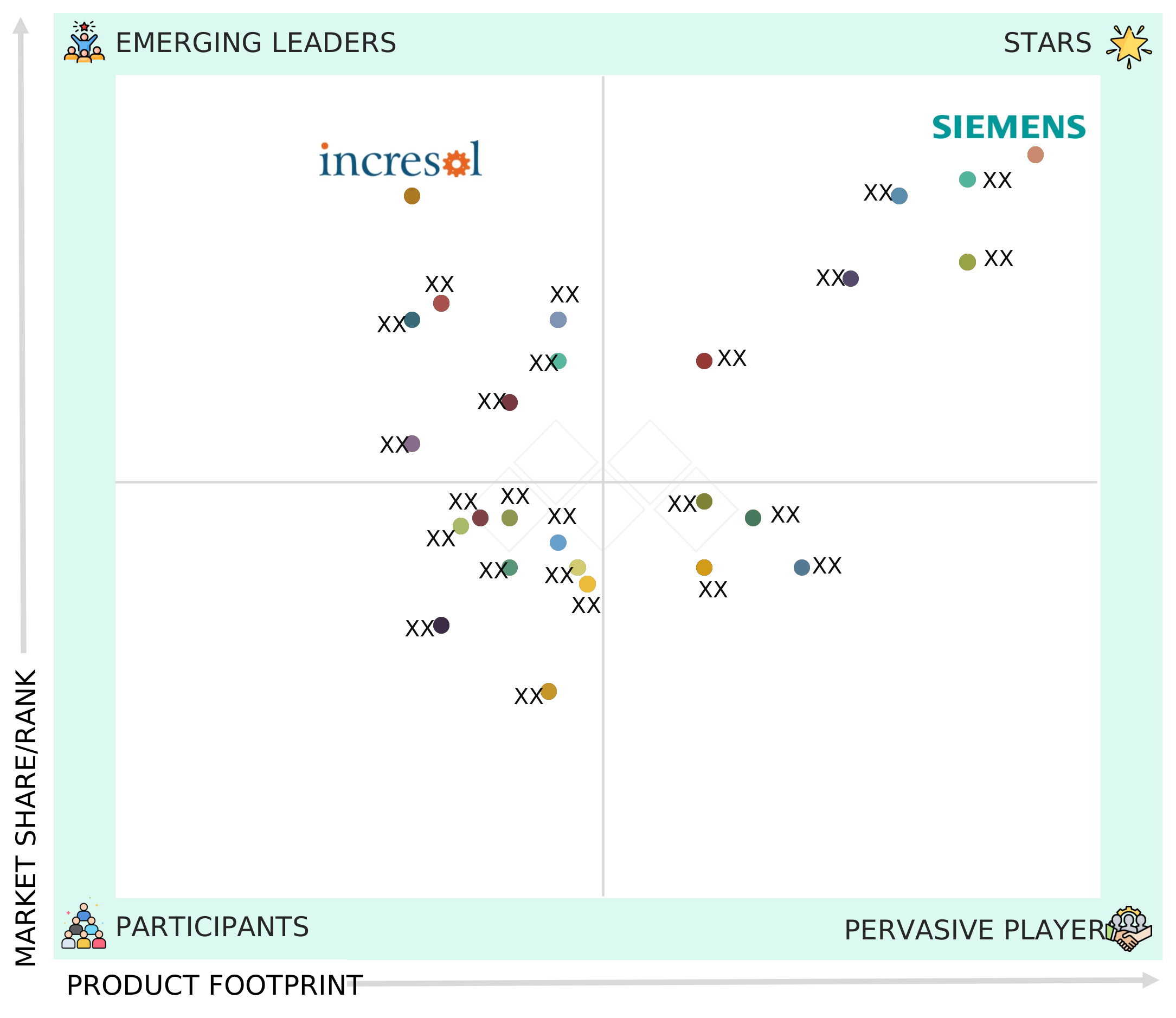
busbar market: COMPANY EVALUATION MATRIX
In the busbar market matrix, Siemens (Star) leads with a strong market presence and a wide product portfolio, driving large-scale adoption across industrial and commercial sectors. Incresol Engineering Solutions Pvt. Ltd. (Emerging Leader) is gaining traction with high-efficiency busbars. While Siemens dominates with scale, Incresol Engineering Solutions Pvt. Ltd. shows strong growth potential to advance toward the leaders' quadrant.
Source: Secondary Research, Interviews with Experts, MarketsandMarkets Analysis
KEY MARKET PLAYERS
MARKET SCOPE
| REPORT METRIC | DETAILS |
|---|---|
| Market Size in 2025 (Value) | USD 15.72 BN |
| Market Forecast in 2035 (Value) | USD 27.71 BN |
| Growth Rate | CAGR 5.8% from 2025-2035 |
| Years Considered | 2020-2035 |
| Base Year | 2024 |
| Forecast Period | 2025-2035 |
| Units Considered | Value (USD Million), Volume (Kiloton) |
| Report Coverage | Revenue Forecast, Company Ranking, Competitive Landscape, Growth Factors, and Trends |
| Segments Covered |
|
| Regional Scope | North America, Europe, Asia Pacific, South America, and Middle East & Africa |
WHAT IS IN IT FOR YOU: busbar market REPORT CONTENT GUIDE
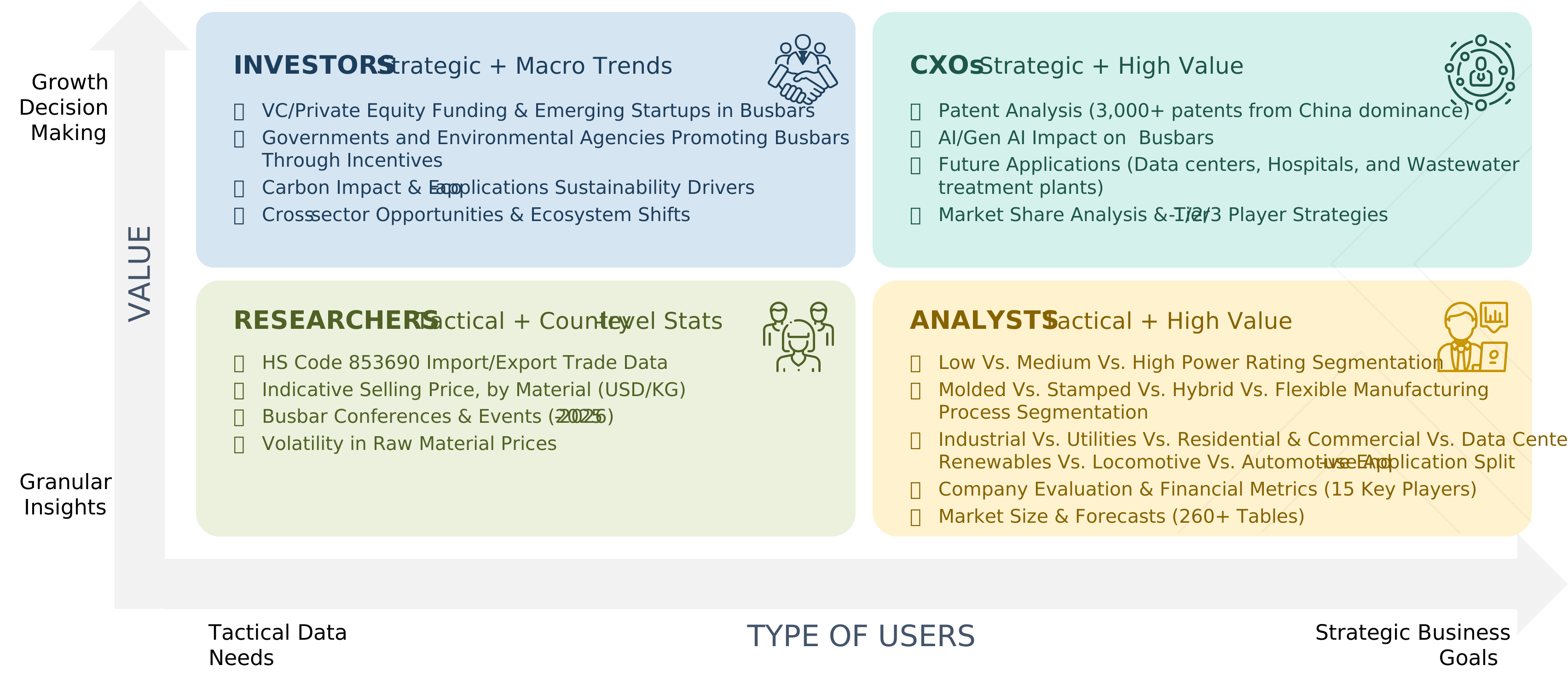
DELIVERED CUSTOMIZATIONS
We have successfully delivered the following deep-dive customizations:
| CLIENT REQUEST | CUSTOMIZATION DELIVERED | VALUE ADDS |
|---|---|---|
| Busbar Manufacturer | Transformative improvements in efficiency and performance, balancing initial cost challenges with long-term operational and system-level economic advantages | Support entry into utilities value chain with tailored opportunity mapping |
| Busbar Customer | Patent landscape & IP strength mapping in Busbar in utilities | Support backward integration into busbars |
RECENT DEVELOPMENTS
- May 2026: TE Connectivity (Ireland) showcased new liquid-cooled vertical busbar technology for next-generation AI data centers at COMPUTEX 2026. The technology uses liquid cooling to enable higher busbar current capacities while maintaining lower operating temperatures, addressing increasing rack-level power-density requirements in AI infrastructure.
- April 2026: Mersen (France) showcased its engineered busbar solutions for EV and PHEV battery systems and power-electronics assemblies at PCIM Europe 2026. The solutions are designed for weight reduction, compact packaging, and integration of advanced signal-monitoring capabilities, while Mersen also highlighted busbar-based power-distribution solutions for high-density data-center infrastructure.
- July 2025: Siemens (Germany) introduced a new busbar trunking system for data-center power distribution, targeting improved energy efficiency and high-density power requirements. The development forms part of Siemens' SIVACON 8PS busbar portfolio, which supports power distribution for data centers and other high-demand infrastructure.
- June 2025: Legrand (France) acquired Linkk Busway Systems, an Asian specialist in power busbar systems for data centers. The Malaysian company employed more than 240 people and generated approximately €45 million in annual revenue, and the acquisition strengthened Legrand's busbar offering for the rapidly expanding data-center market.
- May 2025: Schneider Electric (France) launched Canalis for EV in the UK and Ireland, a modular busbar solution for EV charging infrastructure. The plug-and-play system is designed for outdoor charging stations, supports different charger configurations, and can be dismantled and reused as charging-infrastructure requirements change.
Table of Contents
 Exclusive indicates content/data unique to MarketsandMarkets and not available with any competitors.
Methodology
The study involved major activities in estimating the current size of the busbar market. Exhaustive secondary research was done to collect information on the peer and parent markets. The next step was to validate these findings, assumptions, and sizing with industry experts across the value chain through primary research. Both top-down and bottom-up approaches were employed to estimate the complete market size. Thereafter, market breakdown and data triangulation were used to estimate the market size of the segments and subsegments.
Secondary Research
This research study on the busbar market involved the use of extensive secondary sources, directories, and databases, such as Hoovers, Bloomberg, Businessweek, Factiva, International Energy Agency, and BP Statistical Review of World Energy, to identify and collect valuable information for a technical, market-oriented, and commercial study of the global busbar market. The other secondary sources included annual reports, press releases, and investor presentations of companies, white papers, certified publications, articles by recognized authors, manufacturer associations, trade directories, and databases.
Primary Research
The busbar market comprises stakeholders, including busbar manufacturers, technology providers, and support providers, throughout the supply chain. On the demand side, the market is driven by growing adoption of busbar systems in various sectors, including data centers, renewable energy, industrial, and commercial applications, due to their high energy efficiency, compact design, and superior performance compared to conventional power distribution systems. Rising infrastructure development and urbanization in emerging economies further fuel demand for busbar solutions. On the supply side, manufacturers are witnessing increasing opportunities through contracts from utility and industrial distribution networks, as well as strategic initiatives, such as mergers, acquisitions, and partnerships, by market players to expand their footprint and enhance technological capabilities. Various primary sources from both the supply and demand sides of the market were interviewed to obtain qualitative and quantitative information. The following is the breakdown of primary respondents:
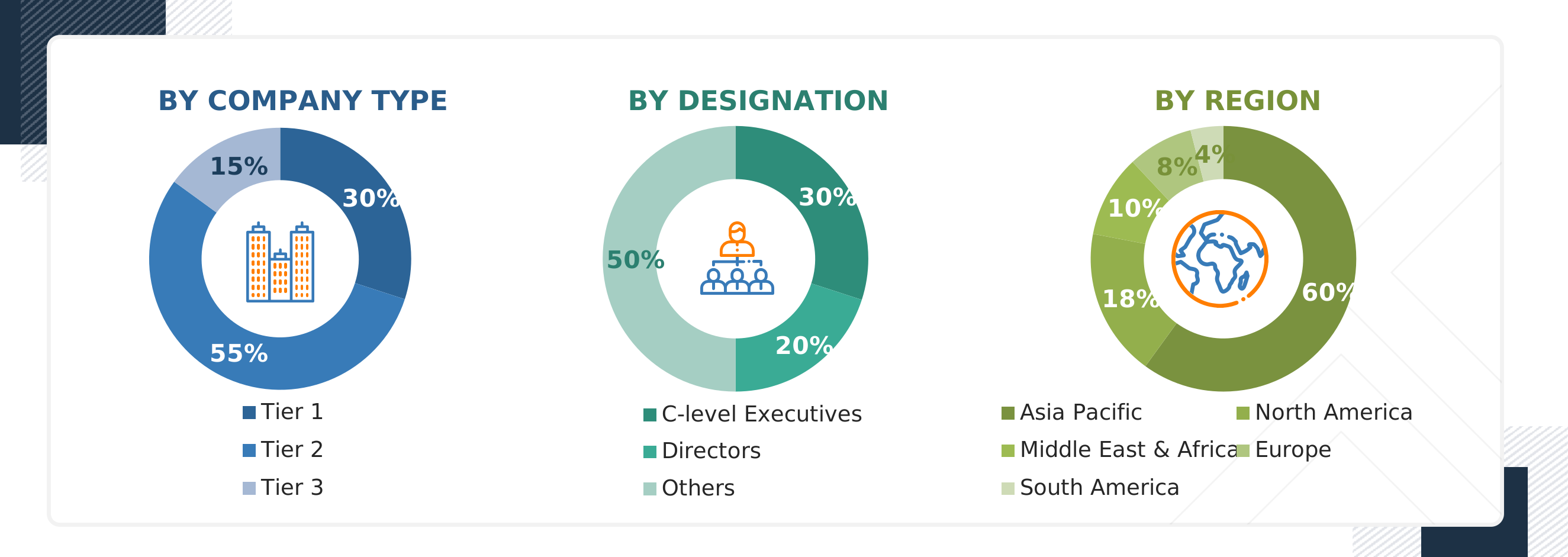
Note: “Others” include sales managers, engineers, and regional managers.
The tiers of the companies are defined based on their total revenue as of 2024: Tier 1: >USD 1 billion, Tier 2: USD 500 million–1 billion,
and Tier 3:
To know about the assumptions considered for the study, download the pdf brochure
Market Size Estimation
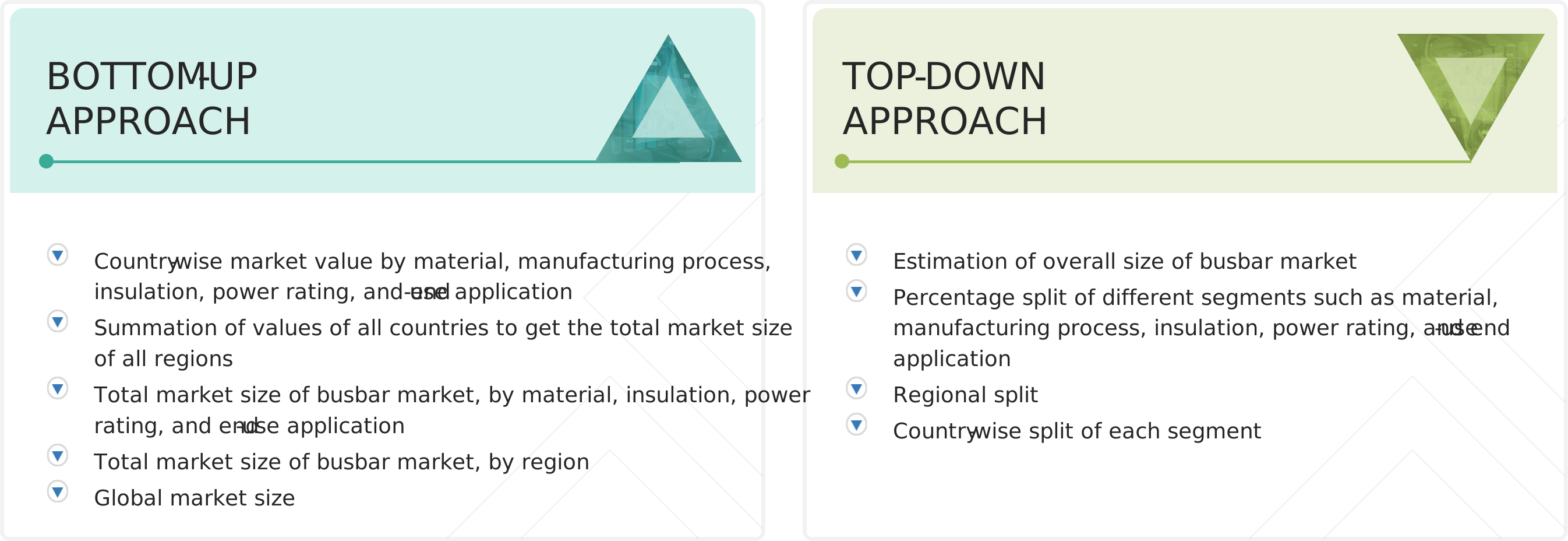
Both the top-down and bottom-up approaches were used to estimate and validate the size of the busbar market and its dependent submarkets. The key players in the market were identified through secondary research, and their market share in the respective regions was determined through a combination of primary and secondary research. The research methodology involves analyzing the annual and financial reports of top market players and conducting interviews with industry experts, including chief executive officers, vice presidents, directors, sales managers, and marketing executives, to gather key quantitative and qualitative insights related to the busbar market.
Busbar Market : Top-Down and Bottom-Up Approach
Data Triangulation
After determining the overall market size through the estimation process explained above, the total market was divided into several segments and subsegments. To complete the overall market engineering process and obtain the exact statistics for all segments and subsegments, the data triangulation and market breakdown processes were employed, as applicable. The data was triangulated by studying various factors and trends from both the demand and supply sides. Additionally, the market size was validated using both top-down and bottom-up approaches.
Market Definition
A busbar is an electrical element that simplifies complex power distributions, making them more affordable and flexible. It is a metallic strip or bar, typically housed inside switchgear, panel boards, and busway enclosures for local high-current power distribution. The bus bar system consists of an isolator and a circuit breaker. It allows new circuits to branch off anywhere along the busway route, rather than branching the main supply at a single location. A busbar is an electrical junction that collects electric power from incoming feeders and distributes it to the outgoing feeders. The primary purpose of a busbar is to carry electricity and distribute it. It is used to make the systems more efficient. They can be an excellent solution for complicated electrical systems.
Stakeholders
- Government & research organizations
- Institutional investors
- Investors/Shareholders
- Environmental research institutes
- Manufacturers’ associations
- Busbar manufacturers, dealers, and suppliers
- Organizations, forums, alliances, and associations
- Renewable power generation and equipment manufacturing companies
- Public & private power generation, transmission & distribution companies (utilities)
- Substation equipment manufacturing companies
- Smart grid project developers
- Switchgear and power cable manufacturing companies
- State and national regulatory authorities
- Venture capital firms
Report Objectives
- To describe and forecast the busbar market, by material, power rating, insulation, manufacturing process, end-use application, and region, in terms of value
- To describe and forecast the busbar market for various segments with respect to five main regions: North America, Europe, Asia Pacific, South America, and the Middle East & Africa, in terms of value
- To describe and forecast the busbar market, by region, in terms of volume
- To provide detailed information regarding drivers, restraints, opportunities, and challenges influencing the growth of the market
- To provide a detailed overview of the busbar supply chain analysis, use case analysis, key stakeholders and buying criteria, patent analysis, trade analysis, tariff analysis, regulations, macroeconomic outlook, pricing analysis, Porter’s five forces analysis, impact of gen AI/AI, and the 2024 US tariff impact
- To strategically analyze micromarkets1 with respect to individual growth trends, prospects, and contributions to the total market
- To analyze opportunities in the market for various stakeholders by identifying high-growth segments
- To strategically profile key players and comprehensively analyze their market position in terms of ranking and core competencies1, along with detailing the market’s competitive landscape.
- To analyze growth strategies, such as acquisitions, investments, expansions, and product launches, adopted by market players in the busbar market
1 Micromarkets are defined as the segments and subsegments of the busbar market included in the report.
2 Core competencies of companies are defined in terms of key developments and strategies adopted to sustain their positions in the busbar market.
Available Customizations
MarketsandMarkets offers customizations tailored to the specific needs of companies, utilizing the provided market data.
The following customization options are available for the report:
Product Analysis
- Product matrix, which gives a detailed comparison of the product portfolio of each company
Geographic Analysis as per Feasibility
- Further breakdown of the busbar market, by country
Company Information
- Detailed analysis and profiling of additional market players (up to five)
Key Questions Addressed by the Report
Which are the major companies in the Busbar market?
Major companies in the Busbar market are ABB (Switzerland), Legrand (France), Siemens (Germany), Eaton (Ireland), Schneider Electric (France) among others.
Which end-use segments are covered in the busbar market?
The market covers industrial, utilities, commercial & residential, data centers, renewables, automotive, and locomotive applications.
What are key drivers for busbar market growth?
Growth is driven by rising demand for energy-efficient power distribution systems and increasing urbanization and electrification across sectors.
Which materials are commonly used in busbars?
Copper and aluminum are the primary materials, with copper preferred for high conductivity and durability.
Which region is expected to grow fastest in the busbar market?
Asia Pacific is projected to grow rapidly due to industrialization, energy demand, and infrastructure development.


Personalize This Research
- Triangulate with your Own Data
- Get Data as per your Format and Definition
- Gain a Deeper Dive on a Specific Application, Geography, Customer or Competitor
- Any level of Personalization
Let Us Help You
- What are the Known and Unknown Adjacencies Impacting the Busbar Market
- What will your New Revenue Sources be?
- Who will be your Top Customer; what will make them switch?
- Defend your Market Share or Win Competitors
- Get a Scorecard for Target Partners

Custom Market Research Services
We Will Customise The Research For You, In Case The Report Listed Above Does Not Meet With Your Requirements
Get 10% Free CustomisationTESTIMONIALS

Kimberly Murphy
GLOBAL MARKETING DIRECTOR
Bently Nevada,
Leading Condition Monitoring & Asset Protectionwww.bakerhughesds.com/bently-nevada

MarketsandMarkets™ showed consistent rigor for success and relentlessly worked with Bently Nevada stakeholders to positively impact go-to-market strategy. Their proactiveness and flexibility has been instrumental in achieving the objectives to grow our sales pipeline in key industrial markets.

DARRICK HUEBER
Business Development Leader
Nexus Controls LLC,
Leading Manufacturer of Automation System & Electrical Panelswww.bakerhughesds.com/nexus-controls

We partnered with MarketsandMarkets to expand our business further by tapping into new industrial segments. It was critical for us to gather crucial business insights about specific markets to achieve this goal. MarketsandMarkets engagement model and client services helped us provide those insights, it was really impressive and valuable for my business. The team was extremely flexible and helpful.

Mike Schoff
Global Industrial Commercial Strategy Leader
Nexus Controls LLC
Leading Manufacturer of Automation System & Electrical Panelswww.bakerhughesds.com/nexus-controls
We consulted MarketsandMarkets for potential Partner Identification. Overall, it was a good experience. The insights provided through interviews conducted by the team helped us put together the questionnaire required for discussion with the selected partners. Their ability to provide insights through interviews with customers in a timely manner was quite impressive.
- Rest Of Europe Busbar Market
- Rest Of Asia Pacific Busbar Market
- GCC Busbar Market
- Rest Of GCC Busbar Market
- China Busbar Market
- India Busbar Market
- Japan Busbar Market
- South Korea Busbar Market
- Germany Busbar Market
- UK Busbar Market
- Italy Busbar Market
- France Busbar Market
- Canada Busbar Market
- Mexico Busbar Market
- US Busbar Market
- Saudi Arabia Busbar Market
- UAE Busbar Market
- Qatar Busbar Market
- South Africa Busbar Market
- Brazil Busbar Market
- Argentina Busbar Market






Growth opportunities and latent adjacency in Busbar Market