Electron Microscopy Market

Electron Microscopy Market by Product (Scanning, transmission, cryo-electron microscope), Application (Pathology & histology, pathogen, drug target analysis), Enduser (Pharma-biopharma, diagnostic lab, academia, nanotechnology labs) - Global Forecast to 2031




ELECTRON MICROSCOPY MARKET SIZE, SHARE & GROWTH SNAPSHOT
Source: Secondary Research, Interviews with Experts, MarketsandMarkets Analysis
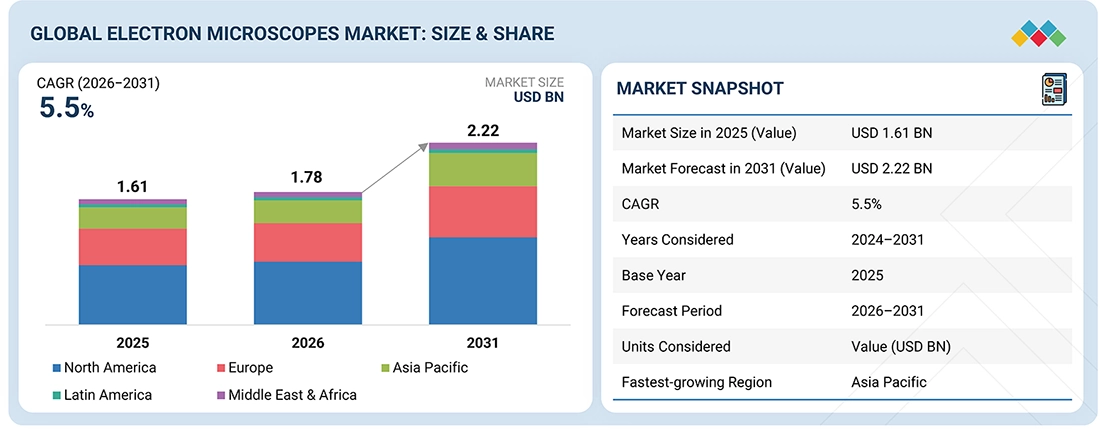
The global electron microscopy market is projected to grow from USD 1.78 billion in 2026 to USD 2.22 billion by 2031, at a CAGR of 5.5% during the forecast period. The market was valued at USD 1.61 billion in 2025. The global electron microscopy market is expected to experience significant growth, driven by an increase in product launches from market players. This growth is fueled by advancements in life sciences, nanotechnology, and material science, where there is an increasing need to visualize structures at the atomic and molecular scale. As industries move towards developing smaller, more complex, and higher-performance products, traditional optical microscopes are no longer sufficient to meet resolution requirements. Electron microscopes offer precise characterization of biological tissues and viruses, making them essential tools for research and failure analysis.
KEY TAKEAWAYS
-
By RegionThe North America electron microscopes market accounted for a 30% revenue share in 2025.
-
By Product TypeBy product type, the scanning electron microscopes is estimated to account for the largest share of 80% in 2026.
-
By Application TypeBy application, the drug target analysis segment is estimated to account for the largest share of 30% in 2026.
-
By End UserBy end user, the pharma & biopharma companies segment is projected to register the highest CAGR of 6.5% during the forecast period.
-
Competitive Landscape - Key PlayersThermo Fisher Scientific (US), JEOL Ltd. (Japan), Hitachi High-Tech Corporation (Japan), BRUKER (US), and CARL ZEISS AG (Germany), among others, were identified as some of the key players in the electron microscopes market (global), given their broad portfolios, sizeable installed bases, and strong application-support networks.
-
Competitive Landscape - Startups/SMEsCarl Zeiss AG (Germany), CIQTEK CO., LTD. (China), and ANGSTROM ADVANCED INC. (US) have established a presence in the high-resolution electron microscopes space by supplying regionally focused solutions for pharma & biopharma companies, diagnostics labs, research & academia, indicating their potential as emerging participants for further competitive assessment.
The global electron microscope market is gradually transitioning from being primarily a specialized research tool to a technology widely adopted for various applications, including analysis and quality control across different sectors such as industry, academia, and healthcare. Super-modern electron microscopes, which provide atomic-scale imaging with the highest resolution, are increasingly in demand from industries like material science and nanotechnology. They are used for tasks like characterization at the nanoscale, defect analysis, and process monitoring, becoming integral to research and development (R&D) and production workflows. This transformation is supported by substantial and ongoing investment in research and development, particularly in life sciences and pharmaceuticals. One of the most advanced techniques in this field is cryo-electron microscopy, which enables deeper insights into the structures of cells and the mechanisms of diseases. Governments are promoting these practices by providing funding, establishing partnerships between instrument manufacturers and research institutions, and integrating AI-based automation with the latest imaging software. These efforts are making procedures more user-friendly and efficient, leading to increased demand for electron microscopy technologies.
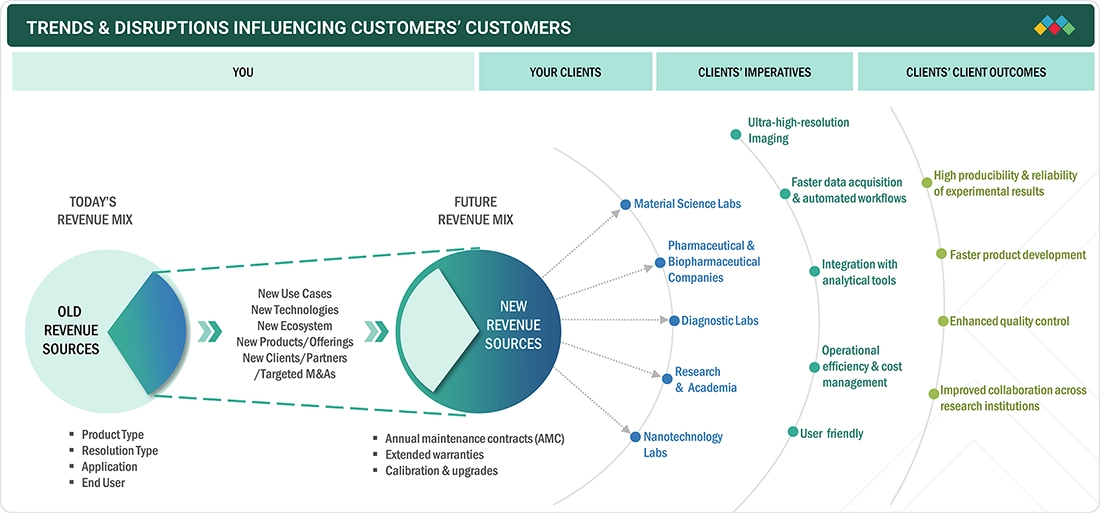
TRENDS & DISRUPTIONS IMPACTING CUSTOMERS' CUSTOMERS
Professionals working in various fields such as research, engineering, pathology, and quality control are increasingly recognizing the potential of electron microscopes to enhance the accuracy of analysis and improve decision-making across the board. Users have concluded that electron microscopy is the only technique capable of providing highly detailed information about structures, morphology, and even the cells of living organisms at the nanoscale. This capability allows for precise identification of failures in electronics, detailed characterization of advanced materials, and visualization of interactions among cells, viruses, and proteins in life science research. The electron microscopes industry is shifting focus from purely exploratory research to include quality assurance, product development, and diagnostics. As a result, more industrial facilities, research institutes, and academic laboratories are incorporating electron microscopes into their routine workflows as essential tools. Additionally, training programs, manufacturer-led workshops, and collaborations between instrument vendors and end-users are enhancing awareness and technical expertise. This collective effort is accelerating the adoption of electron microscopy across established and emerging application areas.
Source: Secondary Research, Interviews with Experts, MarketsandMarkets Analysis
MARKET DYNAMICS

Level
-
Rising demand for nanoscale imaging

-
Increased R&D investments


Level
-
High capital and operating costs

-
Complex operation and skill requirements


Level
-
Digitalization and AI integration

-
Emerging markets and academic expansion


Level
-
Data management and interpretation complexity

-
Long purchase cycles

Source: Secondary Research, Interviews with Experts, MarketsandMarkets Analysis
Driver: Rising demand for nanoscale imaging
A key factor driving the electron microscopes market is the increasing demand for nanoscale imaging. Industries and research institutions are seeking more accurate visualization and analysis of structures at the atomic and molecular levels. The complexity and miniaturization of products and biological systems have rendered conventional optical microscopy insufficient for uncovering critical details, such as surface morphology, internal defects, and molecular arrangements. Electron microscopes provide high-resolution imaging along with elemental analysis, enabling precise characterization, quality control, and performance optimization. This capability is essential for understanding material behavior, identifying failure mechanisms, and advancing scientific discovery. As a result, electron microscopy has become vital for a wide range of applications, including drug discovery and structural biology in the pharmaceutical and biopharmaceutical sectors, disease investigation and pathogen analysis in diagnostics, advanced materials development in materials science, and innovations at the atomic scale in nanotechnology.
Restraint: High capital and operating costs
Significant capital and operational expenses are the main factors hindering the electron microscope market growth. Purchasing these systems requires a substantial investment, which can strain the budgets of academic institutions, small research laboratories, and mid-sized industrial facilities. Additionally, operating these systems necessitates specialized infrastructure, including vibration-free rooms, a stable power supply, temperature control, and electromagnetic shielding. All of these requirements contribute to higher total ownership costs. Moreover, the need for highly skilled personnel to operate, maintain, and interpret results adds another layer of expense for organizations, limiting access for those who lack technical expertise. Overall, these financial and operational challenges can delay purchases, restrict adoption to wealthier organizations, and impede the overall growth of the market.
Opportunity: Digitalization and AI integration
The electron microscope market is poised for significant growth due to the integration of digitalization and artificial intelligence. This advancement will transform the image of traditionally complex systems, making them more efficient, user-friendly, and scalable. With the introduction of advanced software, machine learning algorithms, and AI-based image processing, it is now possible to capture data quickly, automate feature recognition and defect categorization, and even perform quantitative analyses with minimal input from expert operators. Digital workflows enable seamless storage, sharing, and remote access to data, which facilitates collaboration among research teams and across geographically distributed facilities. As a result, laboratories and industrial users are increasingly prioritizing productivity, standardization, and data-driven insights. Consequently, electron microscope manufacturers that offer intelligent automation, cloud connectivity, and integrated analytics are well-positioned to expand their market presence and develop new applications in life sciences, materials research, and industrial quality control.
Challenge: Data management and interpretation complexity
The complexity of data management and interpretation poses a significant challenge in the electron microscopes market. This is largely due to the vast quantities of high-resolution images, spectra, and multidimensional datasets generated during routine assessments. The most advanced electron microscopy methods produce data that requires extensive storage capacities, processing by high-performance computers, and management through efficient and reliable systems to ensure timely archiving. In addition to storage, accurately interpreting the results demands specialized knowledge to draw meaningful conclusions from intricate images and analytical outputs. This is especially true when employing multiple techniques, such as imaging, spectroscopy, and diffraction simultaneously. The lack of standard data formats and analysis protocols complicates and prolongs the process of sharing and collaborating on data across different research centers. As a result, users often spend a considerable amount of time obtaining processed data, and the analysis phase is also drawn out. There is a continuous reliance on highly skilled personnel, whose expertise is costly and difficult to replace. This scenario ultimately leads to decreased productivity and delayed decision-making, even when utilizing modern electron microscopes with impressive capabilities.
ELECTRON MICROSCOPY MARKET: COMMERCIAL USE CASES ACROSS INDUSTRIES
| COMPANY | USE CASE DESCRIPTION | BENEFITS |
|---|---|---|
 |
Provides TEM/SEM systems with AI-enhanced imaging workflows | Supports applications in structural biology and materials characterization | Facilitates analysis of nanoscale materials and semiconductor chip inspection | Delivers ultra-high-resolution imaging capabilities | Automates workflows to accelerate research and discovery | Supports mission-critical applications in pharmaceutical and biotechnology sectors |
 |
Provides high-resolution TEM and SEM systems | Used for materials science analysis and failure investigation | Supports nanostructure imaging and academic research applications | Enhances data acquisition efficiency and speed | Improves reliability and consistency of imaging results | Increases user accessibility with easier system operation |
 |
Provides Crossbeam FIB-SEM and GeminiSEM systems | Designed for advanced materials research and nanofabrication applications | Enables precise surface analysis at micro and nanoscale levels | Enhances analytical capabilities with high-precision imaging | Integrates ion-beam processing for advanced material modification and analysis | Enables high-throughput defect detection and analysis |
Logos and trademarks shown above are the property of their respective owners. Their use here is for informational and illustrative purposes only.
MARKET ECOSYSTEM
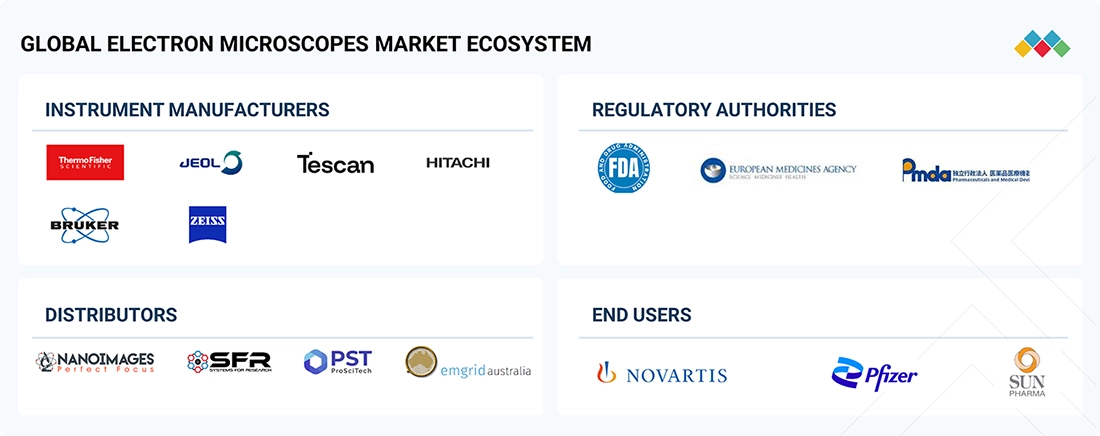
The electron microscopes ecosystem spans instrument manufacturers (Thermo Fisher Scientific, JEOL Ltd., Carl Zeiss AG, Hitachi High-Technologies, Bruker Corporation), distributors, and end users such as academic and research institutions, industrial laboratories, and healthcare and pharmaceutical companies. Manufacturers differentiate through high-resolution TEM, SEM, and cryo-EM systems, AI-assisted imaging and analysis, integrated spectroscopy modules, and automation capabilities that enhance usability and throughput. Distributors and channel partners extend geographic reach, manage installation, regulatory compliance, maintenance, and provide localized training and technical support, particularly in emerging markets across Asia Pacific, Latin America, and Europe. On the demand side, universities, industrial R&D centers, and pharmaceutical and biotechnology companies adopt electron microscopes for applications such as materials characterization, nanoscale defect analysis, structural biology, and quality assurance, as well as for advanced research purposes in nanotechnology and life sciences. Regulatory authorities such as the US Food and Drug Administration, Pharmaceuticals and Medical Devices Agency (PMDA), and the European Medicines Agency play a key role in ensuring that electron microscopy systems used in healthcare and pharmaceutical applications comply with stringent safety, quality, and performance standards.
Logos and trademarks shown above are the property of their respective owners. Their use here is for informational and illustrative purposes only.
MARKET SEGMENTS
Source: Secondary Research, Interviews with Experts, MarketsandMarkets Analysis
Electron Microscopes Market, By Product Type
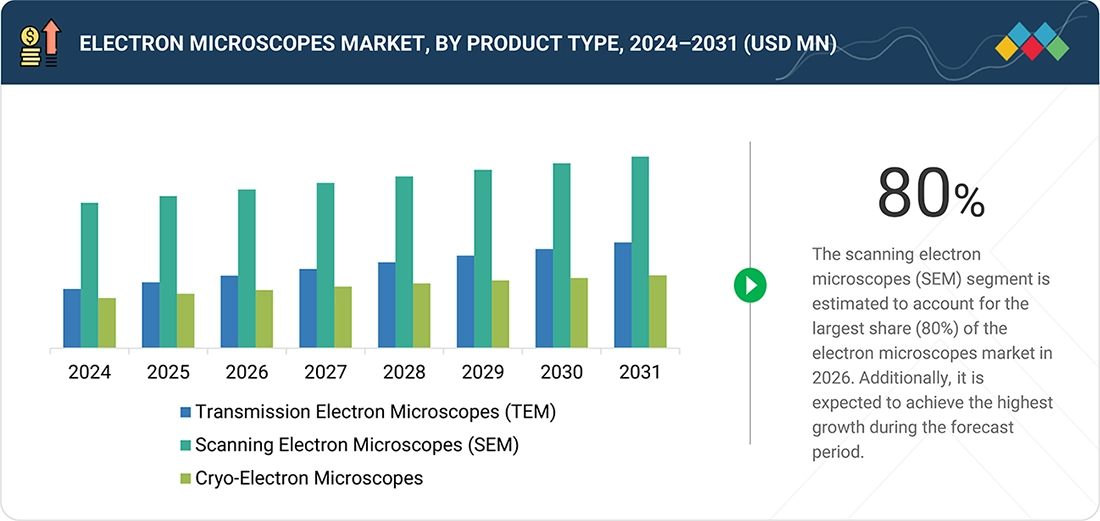
By product type, the electron microscope market is categorized into transmission electron microscopes (TEM), scanning electron microscopes (SEM), and cryo-electron microscopes (Cryo-EM). Among these, the scanning electron microscopes (SEM) segment accounted for the largest market share in 2025 due to their versatility, ease of use, and wide range of applications across various industries and research fields. SEMs provide detailed three-dimensional images of sample surfaces with high resolution, allowing for precise analysis of morphology, topography, and material composition. Additionally, their capability to handle diverse sample types, including metals, ceramics, biological tissues, and polymers, makes them ideal for routine quality control, failure analysis, and research applications.
Electron Microscopes Market, By Resolution Type
By resolution type, the electron microscopes market is categorized into high-resolution and ultra-high-resolution. The ultra-high-resolution segment accounted for the larger share than the high-resolution segment during the forecast period. This is due to a growing emphasis on precision and accuracy. Additionally, companies are increasingly investing in ultra-high resolution systems because these systems are ideal for applications that require detailed structural and compositional analysis. Their ability to gain minute insights quickly has a significant impact on product development, diagnostics, and scientific discovery. Moreover, increasing emphasis on precision, accuracy, and the capability to perform detailed structural and compositional analysis is leading more companies to spend money on ultra-high-resolution systems, which is also driving the growth of the segment.
Electron Microscopes Market, By Application Type
By application, the electron microscopes market is divided into pathology and histology analysis, microbial and pathogen analysis, drug target analysis, virus imaging and vaccine development, as well as other industry applications. The drug target analysis segment is expected to account for the largest share of the electron microscopes market during the forecast period due to the growing importance of electron microscopy in pharmaceutical and biotechnology research. One of the key advantages of high-resolution imaging is that it allows researchers to study the structures of proteins, enzymes, and other biomolecules at the atomic level. This leads to vital insights into how drugs interact with their targets and their mechanisms of action. Consequently, this imaging technique accelerates drug discovery and development by enabling accurate identification of binding sites, conformational changes, and molecular dynamics, all of which are crucial for the effective design of therapeutics.
Electron Microscopes Market, By End User
By end user, the electron microscope market is categorized into pharmaceutical and biopharmaceutical companies, diagnostic laboratories, research and academic institutions, nanotechnology laboratories, material science laboratories, and other end users. Among these, the pharmaceutical and biopharmaceutical companies segment accounted for the largest share in 2024. This is primarily due to their increasing reliance on high-resolution imaging for drug discovery, development, and quality control. Electron microscopes enable these companies to analyze the structure and function of proteins, viruses, and other biomolecules at the atomic level. This level of detail provides a deeper understanding of drug-target interactions and mechanisms of action, which is crucial for the development of biologics, vaccines, and precision therapies. Understanding the molecular architecture is essential for determining the efficacy and safety of these complex therapeutics. Additionally, stringent regulatory requirements for structural characterization and quality assurance in the pharmaceutical sector have made electron microscopy indispensable. The combination of accelerated research and development activities, increased investments in innovative therapies, and the demand for detailed molecular analysis positions pharmaceutical and biopharmaceutical companies as the primary end users of advanced electron microscope systems.
REGION
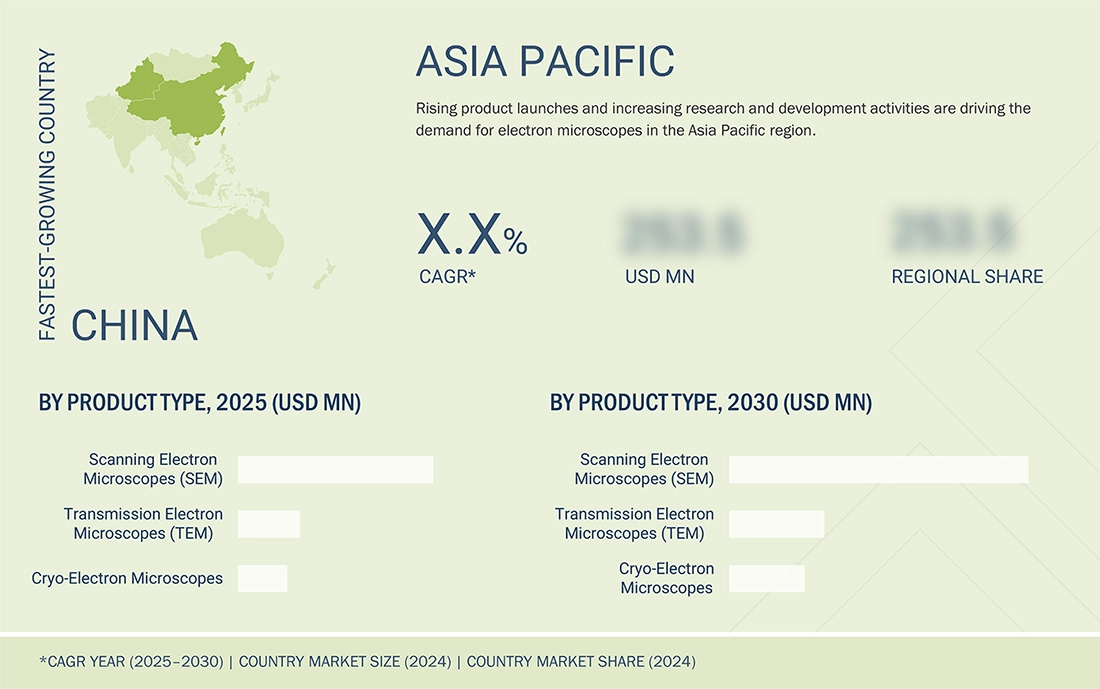
Asia Pacific to be the fastest-growing region during the forecast period
The electron microscopes market is segmented across five prominent regions: North America, Europe, the Asia Pacific, Latin America, and the Middle East & Africa. The Asia Pacific region is experiencing significant growth in the market, driven by rapid industrialization, its expanding research infrastructure, and its increasing investment made in advanced scientific and analytical technologies that are advanced. The region has a total of nearly eight countries, namely China, India, Japan, South Korea, and Australia, which are developing very quickly in the academic as well as in the industry research facilities, including the universities, the pharmaceutical companies, and the nanotechnology labs. Additionally, governments and private organizations are investing considerable amounts of money in R&D initiatives, infrastructure improvements, and technology adoption programs to enhance innovation and maintain competition in materials science and biotechnology. Moreover, the growing interest in pharmaceuticals research, drug discovery, and advanced materials characterization is one of the reasons for the market growth in the region.
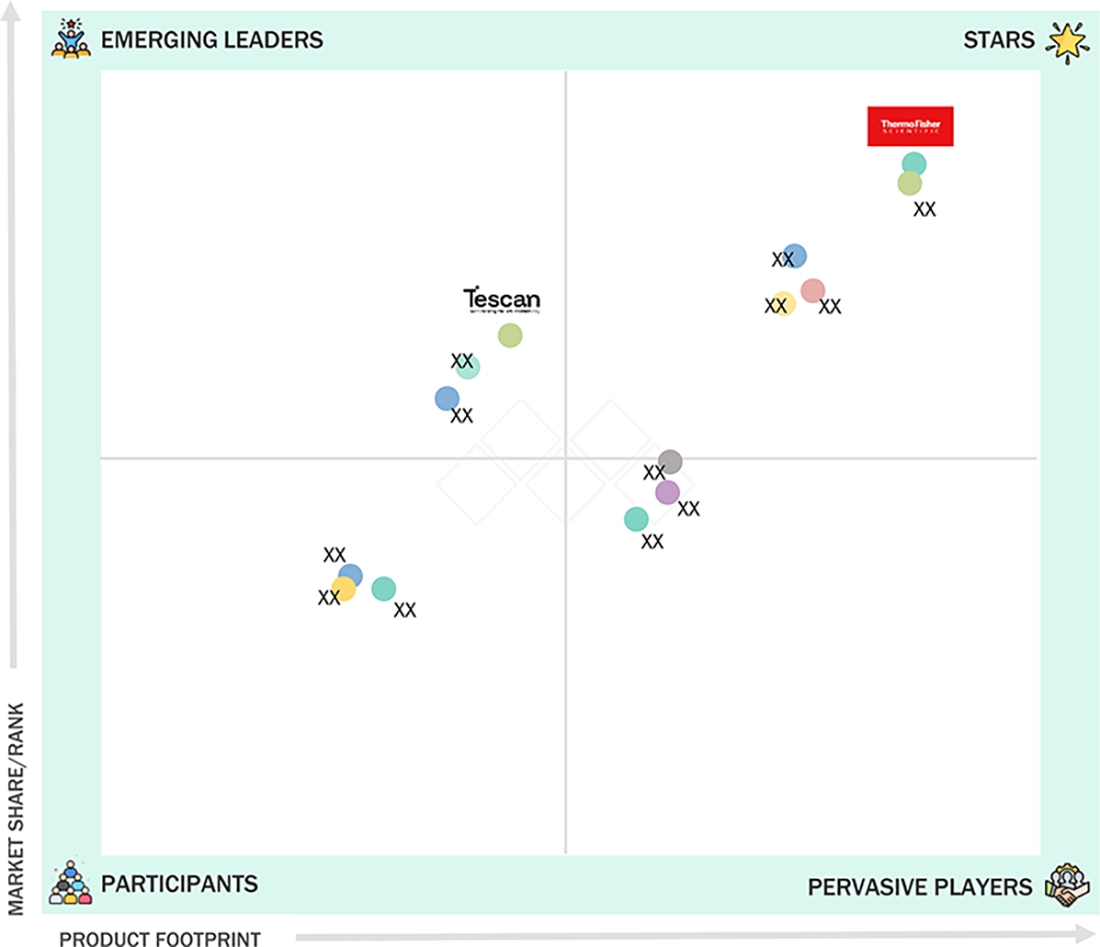
ELECTRON MICROSCOPY MARKET: COMPANY EVALUATION MATRIX
In the electron microscope market, Thermo Fisher Scientific (Star) leads with a broad portfolio of TEM, SEM, and cryo-EM systems, supported by advanced automation, AI-driven imaging, and strong integration across industrial, academic, and pharmaceutical applications. Meanwhile, Tescan Group (Emerging Player) represents a second tier, maintaining a solid installed base across universities, R&D centers, and semiconductor and materials laboratories. The competitive landscape is rapidly evolving as major multinational companies expand long-term service agreements, while entrants focus on cost efficiency and deeper regional penetration to gain market share. Thermo Fisher continues to drive innovation through high-resolution imaging, AI-enabled analytics, and integrated workflows, whereas Tescan emphasizes flexible, high-performance SEM and FIB-SEM solutions tailored for materials science, industrial inspection, and research needs.
Source: Secondary Research, Interviews with Experts, MarketsandMarkets Analysis
KEY MARKET PLAYERS
- ANGSTROM ADVANCED INC. (US)
- BRUKER (US)
- CARL ZEISS AG (Germany)
- DELONG INSTRUMENTS (Czech Republic)
- Hitachi, Ltd. (Japan)
- HIROX (US)
- JEOL LTD. (Japan)
- THERMO FISHER SCIENTIFIC INC. (US)
- TESCAN GROUP A.S. (Czech Republic)
- CIQTEK CO., LTD. (China)
MARKET SCOPE
| REPORT METRIC | DETAILS |
|---|---|
| Market Size in 2025 | USD 1.61 Billion |
| Market Forecast in 2031 | USD 2.22 Billion |
| Growth Rate | CAGR of 5.5% from 2026–2031 |
| Years Considered | 2024–2031 |
| Base Year | 2025 |
| Forecast Period | 2026–2031 |
| Units Considered | Value (USD Billion) |
| Report Coverage | Revenue forecast, company ranking, competitive landscape, growth factors, and trends |
| Segments Covered |
|
| Regions Covered | North America, Asia Pacific, Europe, Middle East & Africa, Latin America |
| Parent & Related Segment Reports |
Microscopy Market Asia-Pacific Microscopy Market United States Microscopy Market Europe Microscopy Market |
WHAT IS IN IT FOR YOU: ELECTRON MICROSCOPY MARKET REPORT CONTENT GUIDE
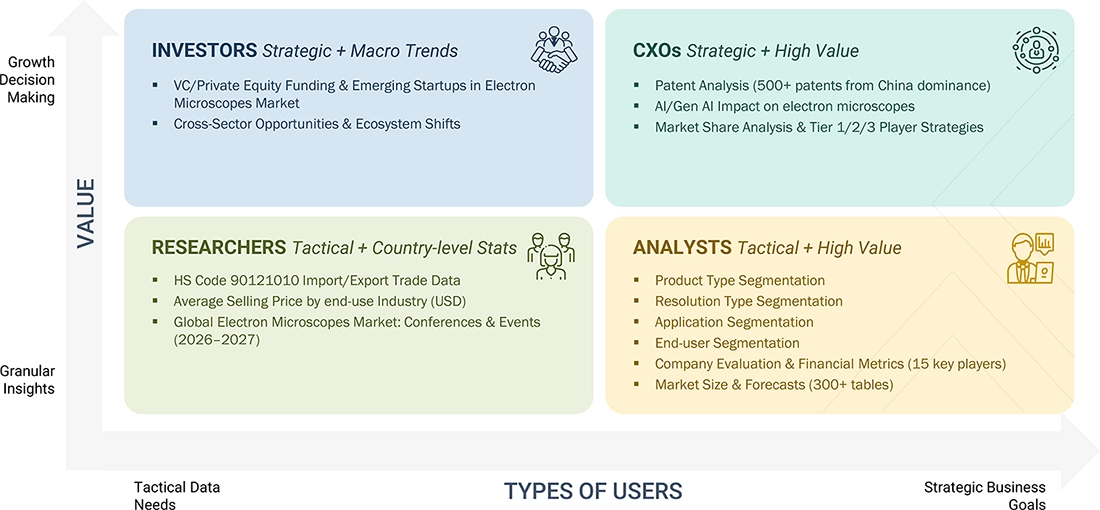
DELIVERED CUSTOMIZATIONS
We have successfully delivered the following deep-dive customizations:
| CLIENT REQUEST | CUSTOMIZATION DELIVERED | VALUE ADDS |
|---|---|---|
| Biopharmaceutical Companies |
|
|
RECENT DEVELOPMENTS
- July 2025 : Thermo Fisher Scientific, Inc. announced the launch of two new electron microscopes. They were unveiled at microscopy & microanalysis (M&M) in salt lake city, Utah.
- March 2025 : Shimadzu Corporation launched two models of the scanning electron microscope, SUPERSCAN SS-4000, within Japan.
- October 2025 : Hitachi High-Tech Corporation launched the ultra-high resolution scanning electron microscope SU9600. This microscope allows for highly accurate and precise observation of substances down to the sub-nano level. It also incorporates efficient and automated functions to provide improved throughput of data acquisition, thereby helping users with highly precise and highly efficient observation.
Table of Contents
 Exclusive indicates content/data unique to MarketsandMarkets and not available with any competitors.
Methodology
The study effectively strikes a balance between primary and secondary research for Electron Microscopy Market. Several market variables for both small and medium-sized businesses and the major players are analyzed as part of the research. The study encompassed the identification of significant market segments, emerging patterns, the competitive environment, and the regulatory framework. The study also looks at several important players strategies. The top-down and bottom-up approaches were used to estimate the market size, resulting in data triangulation at the end to determine the final market size estimate. Throughout the course of the investigation, primary research was conducted to verify and test each of the hypotheses.
Secondary Research
The secondary research process extensively utilizes various secondary sources, including directories, databases like Bloomberg Businessweek, Factiva, and D&B Hoovers, white papers, annual reports, company house documents, investor presentations, and SEC filings. This research approach was employed to gather and compile data essential for a comprehensive, technical, and market-focused study of the Electron Microscopy Market. Additionally, it provided valuable insights into key players, market classification, and segmentation based on industry trends, as well as significant developments related to market and technology perspectives. A database of leading industry figures was also created through secondary research.
Primary Research
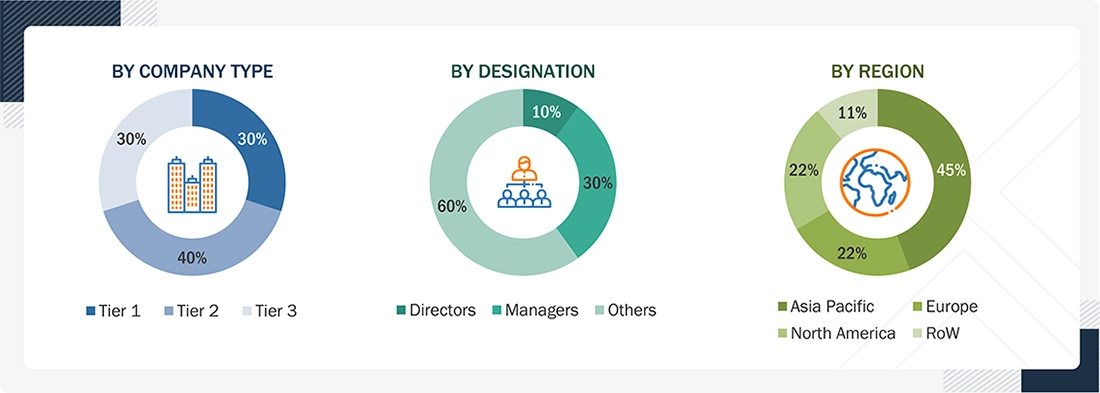
For the part of primary research and to obtain qualitative and quantitative data a range of personalities from the supply and demand sides were questioned during the phase of primary research. Key positions from the industry like CEOs, vice presidents, directors of marketing and sales, directors of technology and innovation, and other important leaders were interviewed from key players. Among the demand-side primary sources were academic institutions, research organizations. In order to validate market segmentation, identify prominent market participants, and gain insights into significant industry trends and market dynamics of the real-world primary study was carried out.
A breakdown of the primary respondents is provided below:
To know about the assumptions considered for the study, download the pdf brochure
Market Estimation Methodology
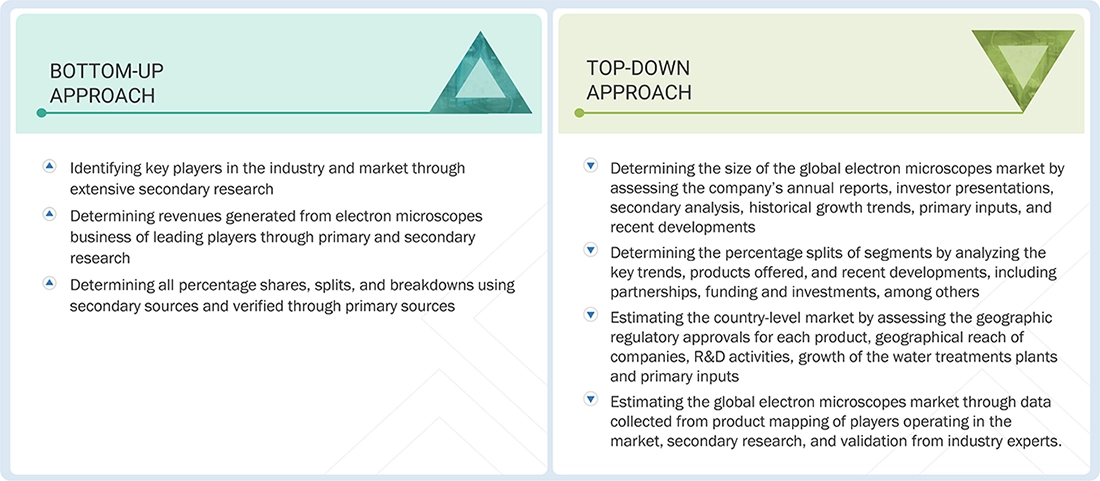
Based on a review of key competitors' revenue shares, the size of the worldwide Electron Microscopy Market was calculated for this report. To achieve this, major market participants were identified, and their microscopy business revenues were calculated using a variety of insights obtained throughout the primary and secondary research stages. Analyzing the annual and financial reports of the leading market participants was one aspect of secondary research. On the other hand, in-depth interviews with important thought leaders, including directors, CEOs, and marketing executives, were a part of the primary study.
Data Triangulation
After arriving at the overall market size from the market size estimation process explained above, the Electron Microscopy Market was split into segments and subsegments. Data triangulation and market breakdown procedures were employed to complete the overall market engineering process and arrive at the exact statistics for all segments and subsegments. The data was triangulated by studying various factors and trends from both the demand and supply sides. Additionally, the microscopymarket was validated using both top-down and bottom-up approaches.
Market Definition
Microscopes are basically optical instruments utilized to visualize objects on a nanoscale that can't be observed by the naked eye. Microscopy is the process of using a microscope to examine small objects. The technique has numerous applications in life science research, healthcare, semiconductors, and electronics.
Key Stakeholders
- Biotech and Pharmaceutical Companies.
- Pharmaceutical and biotechnology companies
- Manufacturers and suppliers of microscopes, accessories, and software
- Product suppliers, distributors, and channel partners
- Semiconductor product manufacturers
- Automotive industry
- Food & beverage industry
- Medical research institutes and independent research labs
- Academic & research institutes
- Community centers and hospitals
- Regulatory authorities and industry associations
- Venture capitalists and investment firms
Objectives of the Study
- To define, describe, and forecast the Electron Microscopy Market based on product, product type, type, application, end-user, and region
- To provide detailed information regarding the major factors influencing the growth potential of the Electron Microscopy Market (drivers, restraints, opportunities, challenges, and trends)
- To analyze the micro markets with respect to individual growth trends, future prospects, and contributions to the Electron Microscopy Market
- To analyze key growth opportunities in the Electron Microscopy Market for key stakeholders and provide details of the competitive landscape for market leaders
- To forecast the size of market segments and/or subsegments with respect to five major regions, namely, North America (US and Canada), Europe (Germany, France, the UK, Italy, Spain, and the RoE), Asia Pacific (Japan, China, India, and the RoAPAC), Latin America (Brazil, Mexico, and RoLATAM), and the Middle East & Africa
- To profile the key players in the global Electron Microscopy Market and comprehensively analyze their market shares and core competencies
- To track and analyze the competitive developments undertaken in the global Electron Microscopy Market, such as product launches; agreements; expansions; and mergers & acquisitions.
Available Customizations
With the given market data, MarketsandMarkets offers customizations per the company’s specific needs. The following customization options are available for the present Electron Microscopy Market report:
Product Analysis
- Product matrix, which gives a detailed comparison of the product portfolios of the top five companies
Company Information
- Detailed analysis and profiling of additional market players (up to five)
Geographic Analysis
- Further breakdown of the Rest of Europe Electron Microscopy Market into Russia, Belgium, Netherlands, Switzerland, Austria, Finland, Sweden, Poland, and Portugal, among others
- Further breakdown of the Rest of Asia Pacific Electron Microscopy Market into Singapore, Taiwan, New Zealand, Philippines, Malaysia, and other APAC countries.


Personalize This Research
- Triangulate with your Own Data
- Get Data as per your Format and Definition
- Gain a Deeper Dive on a Specific Application, Geography, Customer or Competitor
- Any level of Personalization
Let Us Help You
- What are the Known and Unknown Adjacencies Impacting the Electron Microscopy Market
- What will your New Revenue Sources be?
- Who will be your Top Customer; what will make them switch?
- Defend your Market Share or Win Competitors
- Get a Scorecard for Target Partners

Custom Market Research Services
We Will Customise The Research For You, In Case The Report Listed Above Does Not Meet With Your Requirements
Get 10% Free CustomisationTESTIMONIALS

JAYANT RAJPUROHIT
Director of Market Insights, Data and Analytics
SFI Health,
Leading Pharmaceutical Companywww.sfihealth.com/

We at SFI Health approached MarketsandMarkets for an Opportunity Assessment on "Incidence and Prevalence of Focus Indications" as we wanted to know the most attractive HCPs like Physician, Functional MD, Naturopath and Pharmacist. The project was critical for us to ensure our focus on the right target which would enable sustainable growth and profitability for SFI Health. The business insights provided exceeded our expectations and we were extremely impressed. The team at MarketsandMarkets is highly professional and detail oriented and very well understood our business needs. MarketsandMarkets offers a unique combination of expertise and dedicated engagement model. We identified 2 new products to be launched in coming months, based on the research findings provided by MarketsandMarkets. We are happy with the services and would strongly recommend MarketsandMarkets to my peers in the industry.

BEATRIZ DE LA CALLE
Head of Commercial Analytics
Qualicaps,
Leading Pharmaceutical Companywww.qualicaps.com/

We partnered with MarketsandMarkets for an assessment study on hard empty capsules. The team was extremely professional in understanding our business requirements and we received timely responses to all our queries. The market intelligence and the recommendations has met our business requirements. We were extremely impressed to see the final study results; it really exceeded our expectations. The market intelligence offered by MarketsandMarkets, and clarity on next steps will help us achieve our business objective for the Year 2021. We are happy with the services and would strongly recommend MarketsandMarkets to my peers in the industry.

Bob Williams,
Senior Director Business Development & Innovation
Bracco Diagnostics Inc.,
Italian Multinational in life sciences sector and a World Leader in imaging diagnosticsimaging.bracco.com/us-en
We were pleased with targeted insights that MarketsandMarkets identified from a custom study on the 'Radiation Dose Management Solutions Market'. Your team identified and characterized the market participants as well as underlying trends accurately. This study was useful to Bracco in formulating business strategies for our dose monitoring product lines and we thank MarketsandMarkets for the job well done.
Cody Coonradt,
Market Development and Strategy Manager
3M Health Information Systems,
Leader in Health care Coding, Payment & Analytics Solutions.www.3m.com/3M/en_US/health-information-systems-us
The value for our organization comes from three things: depth of research, specificity of segments and being easy to work with. As important as the first two are, the third can't be underestimated. MarketsandMarkets, maybe more than any other research vendor, wants to know what is top of mind for our team and what big questions we are grappling to answer.
Their customer first approach and high value engagement model, have given us great analysis and excellent value for money






Growth opportunities and latent adjacency in Electron Microscopy Market