US Microscopy Market

US Microscopy Market by Product [Optical Microscope: Stereo, Digital; Electron Microscope: SEM, TEM; AFM, STM], Application (Pharma Mfg, Pathology, Drug Discovery, Toxicology), End User (Pharma-Biopharma, F&B, Academia, Semiconductor) - Forecast to 2031




US MICROSCOPY MARKET SIZE, SHARE & GROWTH SNAPSHOT
Source: Secondary Research, Interviews with Experts, MarketsandMarkets Analysis
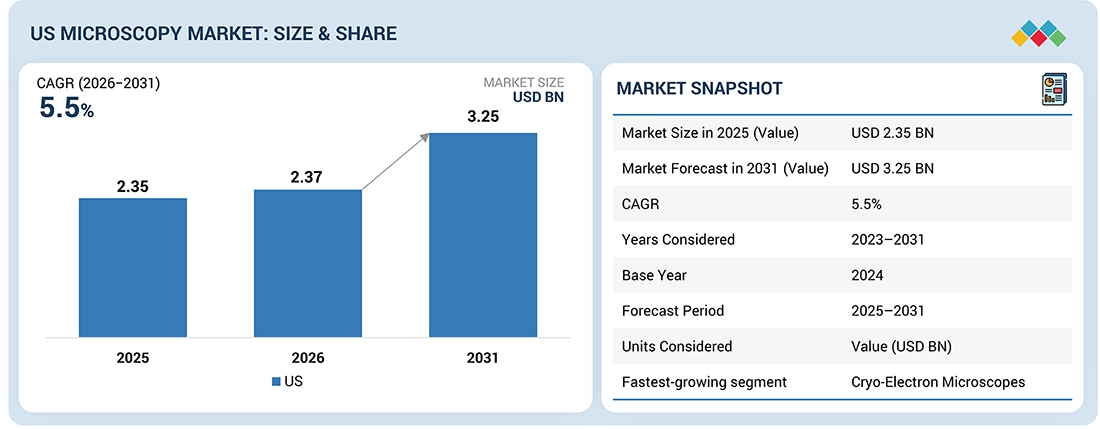
The US microscopy market is projected to grow from USD 2.37 billion in 2026 to USD 3.25 billion by 2031, at a CAGR of 5.5% during the forecast period. The market was valued at USD 2.35 billion in 2025. The driving forces in the U.S. microscopy market include massive investments in federal and privately funded research and development in life sciences, materials research, and advanced manufacturing. There is a massive demand for world-class imaging tools assured by massive funding from the NIH, NSF, and DOE agencies as well as pharmaceutical, biotech, and semiconductor industry R&D budgets. The areas of pharmaceutical development, cellular and gene therapy, and biologics manufacturing have already shifted to high resolution and live-cell microscopes, thereby increasing the dependency on these tools. Technological advancements in the areas of cryo-electron microscopy, super resolution imaging tools, and artificial intelligence-assisted image analyses are increasing gradually to improve automation and speed. Advances by the U.S. government in domestic semiconductor manufacturing and research in advanced materials are increasing demand for electron microscopes. In addition to these driving forces, a robust academic research base, a mounting trend of microscopes in clinical diagnostics and digital pathology labs, and adherence to rigorous quality and regulation norms are continuing to help the market.
KEY TAKEAWAYS
-
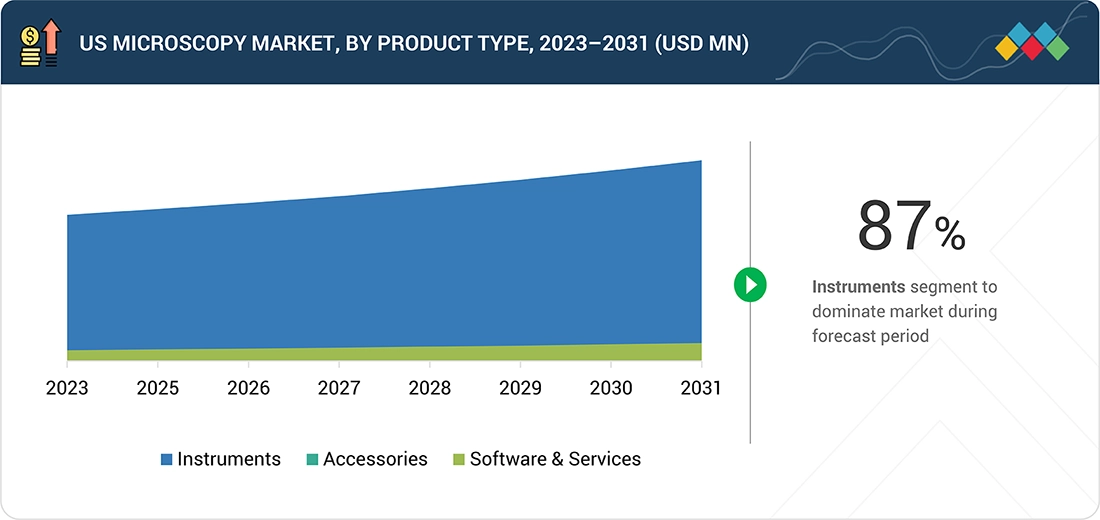
BY TYPEThe instruments segment dominated the market with a share of 87% in 2025.
-
BY APPLICATIONBy Application, the semiconductors & electronics applications segment accounts for 33% market share as of 2025.
-
BY END USERFor 2025, the industrial users segment held the largest share of 35% of the US microscopy market.
-
COMPETITIVE LANDSCAPE- KEY PLAYERSThermo Fisher Scientific Inc. (US), Bruker Corporation (US), Carl Zeiss AG (Germany), and Danaher Corporation (US) maintain a strong position in the U.S. microscopy market due to their comprehensive product portfolios, large installed bases, and well-established application and service networks. Their sustained investments in advanced imaging technologies, combined with deep engagement with academic institutions, healthcare providers, and industrial customers, continue to reinforce their leadership across the U.S. market.
-
COMPETITIVE LANDSCAPE- STARTUPSCompanies such as Etaluma, Inc. (US), Applied Precision (US), Asylum Research (US) and ACCU-SCOPE (US) are gaining traction in the U.S. microscopy market by offering cost-effective and application-specific solutions. These companies primarily address demand for optical, fluorescence, and digital microscopy systems, targeting education, routine clinical use, and budget-conscious research laboratories.
One of the major driving forces for the microscopy market in the U.S. is the strong R&D investment in the fields of life sciences, materials science, and advanced manufacturing technologies. Large-scale investments for R&D from government bodies, such as NIH and NSF, and strong R&D investments from the pharmaceutical, biotechnology, and semiconductors industries ensure a constant demand for advanced imaging technologies. This rise in drug development, cell and gene therapies, and biologic product manufacturing necessitates the need for highresolution microscopy. On the other hand, the advancement in cryoEM, AI-based image analysis, and the rising SEM production are also accelerating the adoption of microscopy.
TRENDS & DISRUPTIONS IMPACTING CUSTOMERS' CUSTOMERS
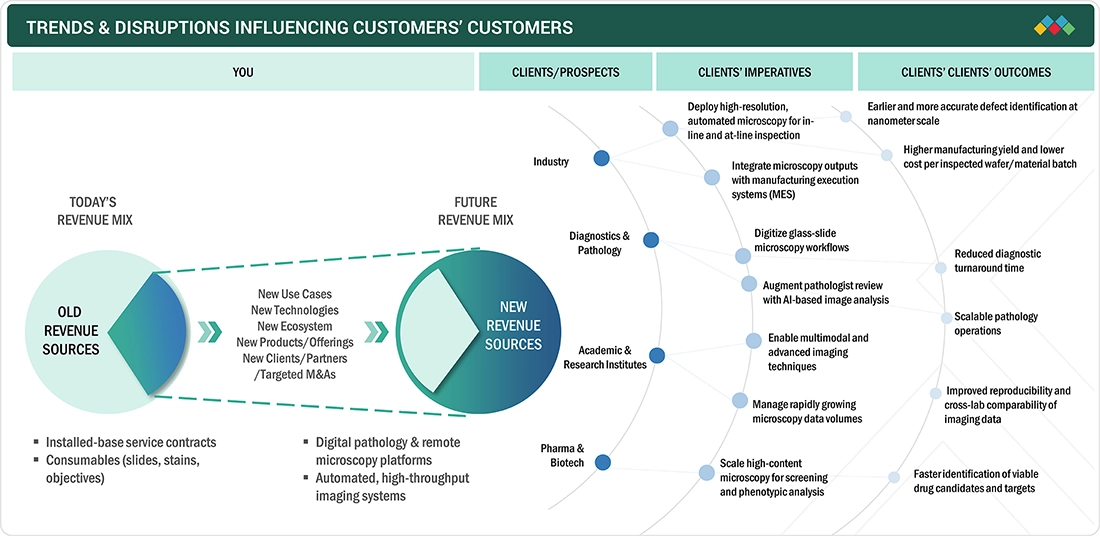
The US microscopy market is experiencing a paradigm shift due to certain technological as well as business model disruptions that are disrupting the order of preference in the priorities of customers and are making and spending in different directions. With the ever-increasing adoption and accepting rates of automated as well as AI-enabled microscopes, there is enhancing improvement in respect to throughput, consistency, and decision-making capabilities in research, healthcare, and industrial applications. With the advent of digital pathology and remote diagnostic capabilities, there is accelerating demand for whole-slide imaging, cloud-based analysis, and software platforms that are compatible and operable. Certain semiconductor manufacturing and research in nanotechnology and advanced material studies are contributing towards making certain high-resolution as well as nanoscale imaging solutions. On the other hand, the pharmaceutical and biotechnology companies are using high-content screening solutions so as to accelerate drug development and cell therapy research. With increased data generation, the workflow is experiencing a shift from making hardware solutions to software-centric and cloud-based solutions, and the customers are also adopting the makinghardware, software, and services solutions that are all integrated and less expensive with more efficient work capabilities.
Source: Secondary Research, Interviews with Experts, MarketsandMarkets Analysis
MARKET DYNAMICS

Level
-
Rising demand for automated and high-throughput microscopy systems

-
Growing adoption of cryo-electron microscopy (cryo-EM)


Level
-
High operational and ownership costs & Complexity in data interpretation and workflow standardization

-
Premium pricing and limited accessibility of next-generation microscopy platforms


Level
-
Growing integration of artificial intelligence (AI) and machine learning

-
Expanding use of microscopy in drug discovery, pharmacokinetics, toxicology studies, and biopharmaceutical quality control in the U.S.


Level
-
Shortage of highly skilled microscopy professionals, Need for continuous training and upskilling to keep pace.

Source: Secondary Research, Interviews with Experts, MarketsandMarkets Analysis
Driver: Advent of cryo-electron microscopy
In the USA, the adoption of cryo-electron microscopy (cryo-EM) and high resolution imaging tools in academic, pharmaceutical, and biotechnology research proceeds so rapidly that these tools are already being used to support research in structural biology, drug development, and materials science.
Restraint:Operational complexity with pre-analytical workflow
Advanced microscopy techniques necessitate complicated sample preparation protocols, strict workflow standardization, and a reliable data management infrastructure which are significant hindrances for small-scale US laboratories and research institutions incapable of providing the necessary resources. All these difficulties usually lead to long periods of training, high rates of errors in imaging workflows, and integration of microscopy data with larger analytical pipelines being even harder, and thus, the market keeps out budget-constrained academic institutions, startups, and regional clinical labs.
Opportunity: Growing in applications in pharmacokinetics, drug development, and quality control
Extravagant applications in pharmacokinetics profiling, high-throughput drug discovery screening, translational research for precision medicine, and rigorous quality control processes in pharmaceutical and biotechnology industries have given the United States microscopy market a very good time. Automated platforms with AI-powered image analysis are speeding up these processes as more rapid insight into molecular interactions, cellular responses, and nanomaterial characterizations is gleaned. The reason behind this, with the backups of large NIH grants and private venture capital investments in American biotech centers such as Boston and San Francisco, just as in the case of the latter.
Challenge: Dearth of skilled and trained professionals
The USA market expansion is hampered by a lack of qualified microscopy experts, who are required for the appropriate handling of highly advanced electron microscopy, confocal microscopy, and super-resolution microscopy instruments, which require knowledge about the calibration of instruments and processing high-volume data from imaging experiments. The absence of qualified experts affects research organizations that require qualified experts to man core facilities as well as industries that require rapid processing for semiconductor metrology analysis to be carried out within a short span of time by OEMs like Thermo Fisher Scientific and ZEISS.
US MICROSCOPY MARKET: COMMERCIAL USE CASES ACROSS INDUSTRIES
| COMPANY | USE CASE DESCRIPTION | BENEFITS |
|---|---|---|
 |
Danaher’s introduction of the Vivent LS2 light-sheet microscope supports high-resolution, low-phototoxicity imaging for developmental biology and life sciences research across U.S. universities, national laboratories, and biotechnology companies. The system is optimized for long-duration live imaging, making it suitable for cell biology, neuroscience, and translational research applications. | Improves long-term sample viability during extended imaging experiments, Reduces phototoxic effects while maintaining high spatial resolution. |
 |
Nikon’s ECLIPSE Ji AI-enabled inverted microscope is widely deployed in U.S. biomedical research laboratories, pharmaceutical R&D centers, and core imaging facilities to support automated and routine cell imaging applications. | Enhances workflow automation and reproducibility through integrated AI capabilities, Reduces manual intervention and user-to-user variability. |
 |
ZEISS’s INSPECT multisensor imaging microscope is utilized in U.S. advanced manufacturing, aerospace, automotive, and semiconductor industries for precision inspection and dimensional metrology of complex components. | Enables high-accuracy inspection of components with diverse geometries and materials, Improves productivity and measurement reliability in industrial inspection processes |
 |
Thermo Fisher Scientific’s advanced transmission electron microscopy (TEM) systems, integrated with electron energy loss spectroscopy (EELS), are extensively used in U.S. materials science, nanotechnology, and semiconductor R&D. | Provides atomic-level structural and chemical analysis capabilities, Delivers high-resolution insights critical for semiconductor and advanced materials development |
Logos and trademarks shown above are the property of their respective owners. Their use here is for informational and illustrative purposes only.
MARKET ECOSYSTEM
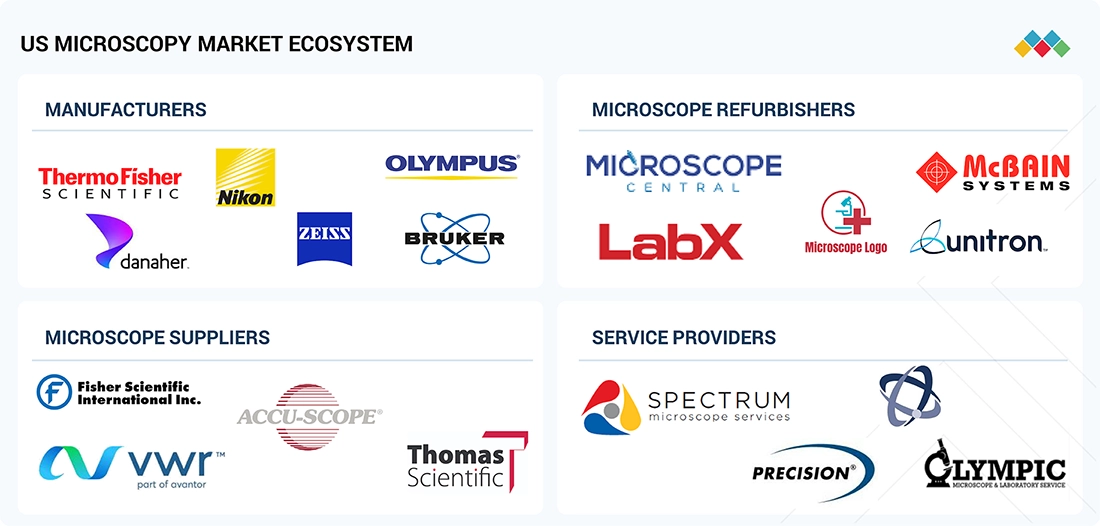
The US microscopy market presents a solid ecosystem consisting of manufacturers, suppliers, refurbishers, and service providers that all together stimulate the technological innovation and growth. The major manufacturers such as Thermo Fisher Scientific, ZEISS, Olympus, Nikon, Bruker, and Danaher are leading the way through research and development of advanced optical, electron, and atomic force microscopy systems, with the main focus on automation and high-resolution imaging for life sciences, materials science, and industrial applications. Important suppliers like Fisher Scientific, VWR, Accu-Scope, and Thomas Scientific support the effective distribution, inventory control, and wide availability of research labs and educational institutions all over the United States. Microscope refurbishers such as Microscope Central, McBain Systems, LabX, Microscope World, and Unitron are giving second lives to microscopes, providing cost-effective, very green solutions for research facilities with tight budgets. Besides that, service providers like Spectrum Microscope Services, Precision Micro, and Olympic Microscope are taking care of the operational reliability of the microscopes by providing maintenance, calibration, and repair services, thus reducing the downtime a customer suffers and helping to establish a long-term partnership. The synergistic arrangement strengthens the resilience of the market and the potential for its expansion.
Logos and trademarks shown above are the property of their respective owners. Their use here is for informational and illustrative purposes only.
MARKET SEGMENTS
Source: Secondary Research, Interviews with Experts, MarketsandMarkets Analysis
Microscopy Market, By Type
The US microscopy market can be segmented into optical microscopes, scanning probe microscopes, electron microscopes, X-ray microscopes, and cryo-electron microscopes. Due to the fact that digital and automatic optical systems continue improving and are massively deployed in material science, semiconductor research, and life sciences applications, the optical microscopes will continue holding the largest share of the market during the forecast period. Their great versatility, combined with ease of operation, has made optical microscopes still the most popular choice in such areas as education, healthcare, academic research, manufacturing, and quality control. Since such systems do not require vacuum environments, complicated cooling, and high-energy electron sources, end-users are increasingly ranking technology sophistication next to cost-efficiency; acquiring and operating costs are the lowest among all microscopy technologies.
Microscopy Market, By Application
The US microscopy industry is segmented on a major basis in relation to applications; these include semiconductors and electronics, healthcare and life sciences, and materials science, among others. It is the semiconductors and electronics applications that form the largest piece of the market in 2025 because it is in this sector and those related to research that microscopy solutions have remained as an important aspect for either quality control, for analyzing materials, and for failure analysis. The new methodologies and approaches make it possible to have more and better product output, and it is because of this impact that it creates its largest and biggest demand within the US market.
Microscopy Market, By End User
The microscopy market in the United States is primarily sustained by industrial users, who are the largest consumers of it. Their application areas are the broadest in the domain of semiconductor manufacturing, materials science, and industrial quality control. Advanced microscopy methods enable defect inspection, failure analysis, and process optimization to be performed at micro and nanoscale levels, particularly in electronics and nanotechnology sectors. The market is heavily supported by significant capital investments from industrial players and the rising demand for high-throughput automated imaging systems. Long-term benefits for the US industrial segments in microscopy investments are likely to proceed with the continuous development of advanced manufacturing and nanofabrication technologies.
US MICROSCOPY MARKET: COMPANY EVALUATION MATRIX
The US microscopy market is highly dominated by the global and local leaders, which include ZEISS, Thermo Fisher Scientific, Nikon Corporation, Bruker, Shimadzu, and JEOL. The market is highly competitive, where the players with the widest product range along with strong regional and local presence are actually the ones that are responsible for moving the technology in the area of microscopy forward. Apart from the global leaders, there are emerging niche players who are focusing or concentrating on particular sectors related to microscopy using their own in-depth related technological knowledge. Companies such as Oxford Instruments and Horiba are among those who have actually concentrated on leveraging their deep related market knowledge along with their world-class facilities in the market. It is seen that the US microscopy market is actually quite supportive for the companies that have world-class technology, extensive market presence, and related capabilities for innovation, where the leaders in the market are actually those that offer products that cater to specific related applications along with distinct product offerings.
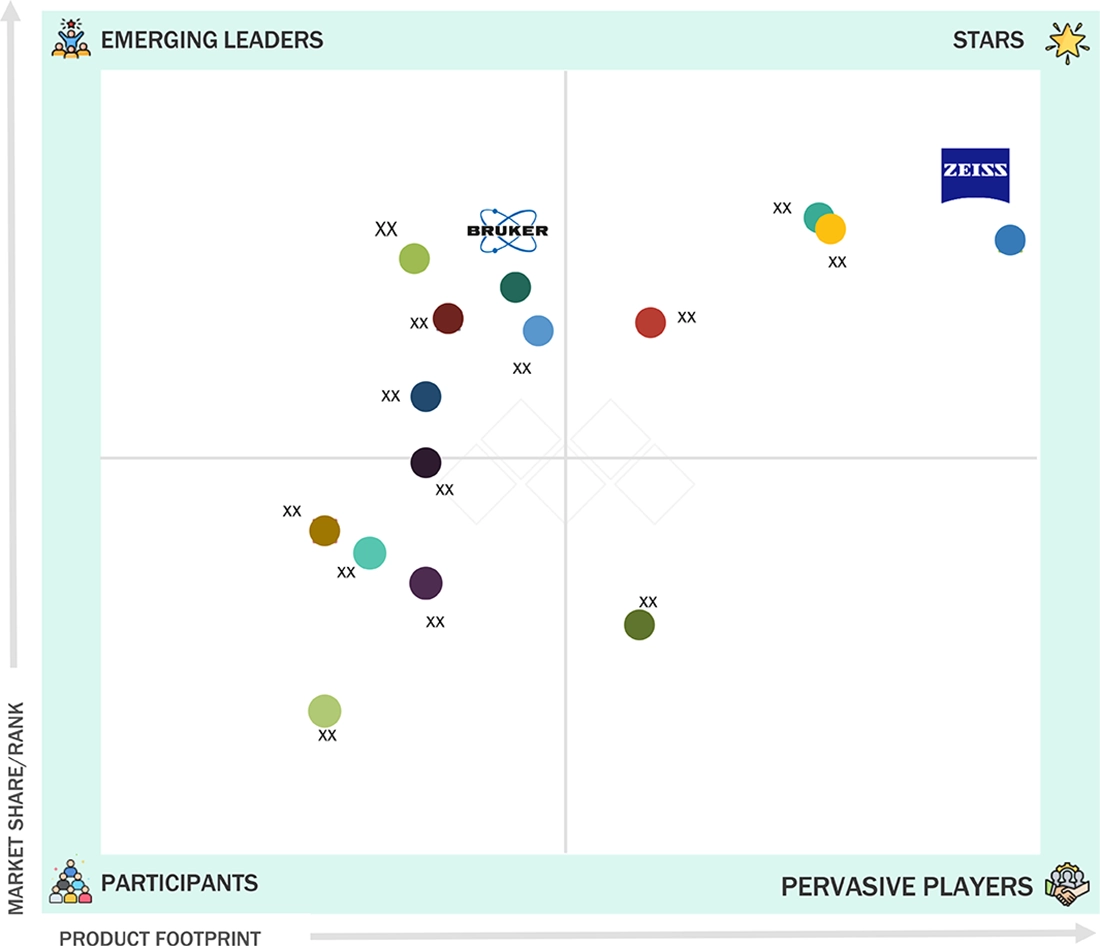
Source: Secondary Research, Interviews with Experts, MarketsandMarkets Analysis
KEY MARKET PLAYERS
- Danaher Corporation (US)
- Thermo Fisher Scientific (US)
- Nikon Corporation (Japan)
- Oxford Instruments plc (UK)
- Keyence Corporation (Japan)
- Euromex Microscope bv (Netherlands)
- Carl Zeiss AG (Germany)
- EVIDENT (Japan)
- JEOL Ltd. (Japan)
- Hitachi High-Tech Corporation (Japan)
- Shimadzu Corporation (Japan)
- Bruker Corporation (US)
- Helmut Hund GmbH (Germany)
MARKET SCOPE
| REPORT METRIC | DETAILS |
|---|---|
| Market Size in 2025 (Value) | USD 2375 Million |
| Market Forecast in 2031 (value) | USD 3254 Million |
| Growth Rate | CAGR of 5.5% from 2026–2031 |
| Years Considered | 2024–2031 |
| Base Year | 2024 |
| Forecast Period | 2026–2031 |
| Units Considered | Value (USD Billion), Volume (Unit Sales) |
| Report Coverage | Revenue forecast, company ranking, competitive landscape, growth factors, and trends |
| Segments Covered |
|
| Country Covered | US |
| Parent & Related Segment Reports |
Microscopy Market Asia-Pacific Microscopy Market Electron Microscopy Market Europe Microscopy Market |
WHAT IS IN IT FOR YOU: US MICROSCOPY MARKET REPORT CONTENT GUIDE
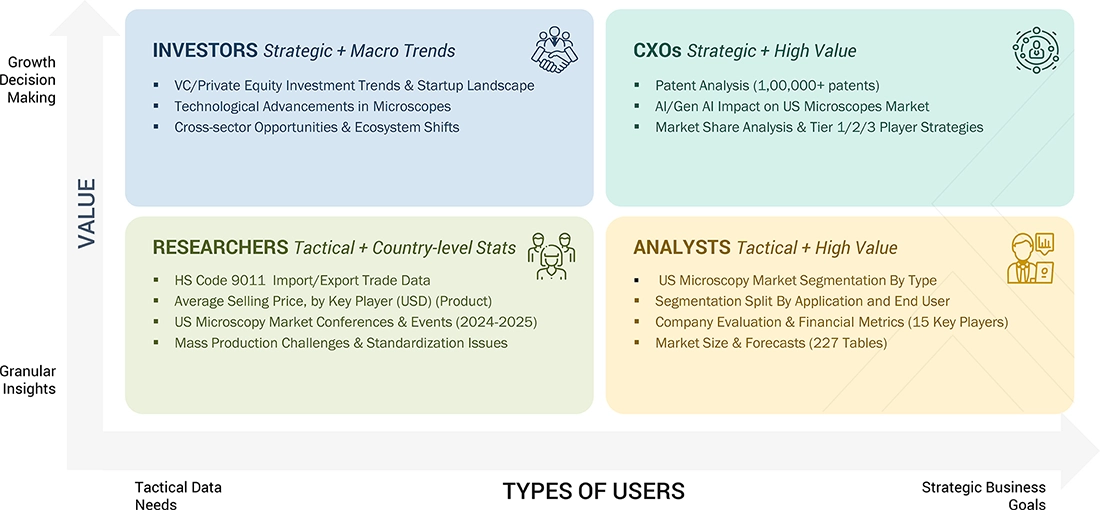
DELIVERED CUSTOMIZATIONS
We have successfully delivered the following deep-dive customizations:
| CLIENT REQUEST | CUSTOMIZATION DELIVERED | VALUE ADDS |
|---|---|---|
| Microscopy Instrument Manufacturers |
|
|
| Pharmaceutical & Biopharmaceutical Companies and CROs |
|
|
| Diagnostic & Pathology Laboratories |
|
|
RECENT DEVELOPMENTS
- November 2024 : Carl Zeiss AG launched ZEISS O-INSPECT which combines optical and tactile measurement technology which helps to measure complex components from large workpieces such as circuit boards and fuel cells to smaller components
- October 2024 : Thermo Fisher Scientific launched Iliad, a transmission electron microscopy (TEM) system with integrated electron energy loss spectroscopy (EELS) for advanced analysis.
- September 2023 : Nikon revealed ECLIPSE Ji, an AI-powered inverted microscope aimed at offering improved stability and enhanced functional flexibility.
Table of Contents
 Exclusive indicates content/data unique to MarketsandMarkets and not available with any competitors.
Methodology
The study effectively strikes a balance between primary and secondary research for US microscopy market. Several market variables for both small and medium-sized businesses and the major players are analyzed as part of the research. The study encompassed the identification of significant market segments, emerging patterns, the competitive environment, and the regulatory framework. The study also looks at several important players strategies. The top-down and bottom-up approaches were used to estimate the market size, resulting in data triangulation at the end to determine the final market size estimate. Throughout the course of the investigation, primary research was conducted to verify and test each of the hypotheses.
Secondary Research
The secondary research process extensively utilizes various secondary sources, including directories, databases like Bloomberg Businessweek, Factiva, and D&B Hoovers, white papers, annual reports, company house documents, investor presentations, and SEC filings. This research approach was employed to gather and compile data essential for a comprehensive, technical, and market-focused study of the US microscopy market. Additionally, it provided valuable insights into key players, market classification, and segmentation based on industry trends, as well as significant developments related to market and technology perspectives. A database of leading industry figures was also created through secondary research.
Primary Research
For the part of primary research and to obtain qualitative and quantitative data a range of personalities from the supply and demand sides were questioned during the phase of primary research. Key positions from the industry like CEOs, vice presidents, directors of marketing and sales, directors of technology and innovation, and other important leaders were interviewed from key players. Among the demand-side primary sources were academic institutions, research organizations. In order to validate market segmentation, identify prominent market participants, and gain insights into significant industry trends and market dynamics of the real-world primary study was carried out.
A breakdown of the primary respondents is provided below:
To know about the assumptions considered for the study, download the pdf brochure
Market Estimation Methodology
Based on a review of key competitors' revenue shares, the size of the worldwide US microscopy market was calculated for this report. To achieve this, major market participants were identified, and their US microscopy business revenues were calculated using a variety of insights obtained throughout the primary and secondary research stages. Analyzing the annual and financial reports of the leading market participants was one aspect of secondary research. On the other hand, in-depth interviews with important thought leaders, including directors, CEOs, and marketing executives, were a part of the primary study.
For calculation of global market value, segmental revenue was calculated in the basis of revenue mapping of service/product providers. Process involved below mentioned steps:
- List of major players that operates in US microscopy market on regional or country level
- Performing product mapping of manufacturers of microscopes and associated product line at country or regional level
- Annual revenue mapping of listed players from the microscopes and associated products/services (or the nearest reported business unit)
- Revenue mapping of major players to cover at least ~70% of the global market share as of 2023.
- Revenue mapping extrapolation for the listed players will drive the global market value for the respective segment.
- Adding market value of all segments and subsegments at last to achieve the actual value of global US microscopy market.
Data Triangulation
After arriving at the overall market size from the market size estimation process explained above, the US microscopy market was split into segments and subsegments. Data triangulation and market breakdown procedures were employed to complete the overall market engineering process and arrive at the exact statistics for all segments and subsegments. The data was triangulated by studying various factors and trends from both the demand and supply sides. Additionally, the US microscopy market was validated using both top-down and bottom-up approaches.
Market Definition
Microscopes are basically optical instruments utilized to visualize objects on a nanoscale that can't be observed by the naked eye. Microscopy is the process of using a microscope to examine small objects. The technique has numerous applications in life science research, healthcare, semiconductors, and electronics.
Key Stakeholders
- Biotech and Pharmaceutical Companies.
- Pharmaceutical and biotechnology companies
- Manufacturers and suppliers of microscopes, accessories, and software
- Product suppliers, distributors, and channel partners
- Semiconductor product manufacturers
- Automotive industry
- Food & beverage industry
- Medical research institutes and independent research labs
- Academic & research institutes
- Community centers and hospitals
- Regulatory authorities and industry associations
- Venture capitalists and investment firms
Objectives of the Study
- To define, describe, and forecast the US microscopy market based on product, product type, type, application, end-user, and region
- To provide detailed information regarding the major factors influencing the growth potential of the US microscopy market (drivers, restraints, opportunities, challenges, and trends)
- To analyze the micro markets with respect to individual growth trends, future prospects, and contributions to the US microscopy market
- To analyze key growth opportunities in the US microscopy market for key stakeholders and provide details of the competitive landscape for market leaders
- To forecast the size of market segments and/or subsegments with respect to five major regions, namely, North America (US and Canada), Europe (Germany, France, the UK, Italy, Spain, and the RoE), Asia Pacific (Japan, China, India, and the RoAPAC), Latin America (Brazil, Mexico, and RoLATAM), and the Middle East & Africa
- To profile the key players in the global US microscopy market and comprehensively analyze their market shares and core competencies
- To track and analyze the competitive developments undertaken in the global US microscopy market, such as product launches; agreements; expansions; and mergers & acquisitions.
Available Customizations
With the given market data, MarketsandMarkets offers customizations per the company’s specific needs. The following customization options are available for the present US microscopy market report:
Product Analysis
- Product matrix, which gives a detailed comparison of the product portfolios of the top five companies
Company Information
- Detailed analysis and profiling of additional market players (up to five)
Geographic Analysis
- Further breakdown of the Rest of Europe US microscopy market into Russia, Belgium, Netherlands, Switzerland, Austria, Finland, Sweden, Poland, and Portugal, among others
- Further breakdown of the Rest of Asia Pacific US microscopy market into Singapore, Taiwan, New Zealand, Philippines, Malaysia, and other APAC countries


Personalize This Research
- Triangulate with your Own Data
- Get Data as per your Format and Definition
- Gain a Deeper Dive on a Specific Application, Geography, Customer or Competitor
- Any level of Personalization
Let Us Help You
- What are the Known and Unknown Adjacencies Impacting the US Microscopy Market
- What will your New Revenue Sources be?
- Who will be your Top Customer; what will make them switch?
- Defend your Market Share or Win Competitors
- Get a Scorecard for Target Partners

Custom Market Research Services
We Will Customise The Research For You, In Case The Report Listed Above Does Not Meet With Your Requirements
Get 10% Free CustomisationTESTIMONIALS

JAYANT RAJPUROHIT
Director of Market Insights, Data and Analytics
SFI Health,
Leading Pharmaceutical Companywww.sfihealth.com/

We at SFI Health approached MarketsandMarkets for an Opportunity Assessment on "Incidence and Prevalence of Focus Indications" as we wanted to know the most attractive HCPs like Physician, Functional MD, Naturopath and Pharmacist. The project was critical for us to ensure our focus on the right target which would enable sustainable growth and profitability for SFI Health. The business insights provided exceeded our expectations and we were extremely impressed. The team at MarketsandMarkets is highly professional and detail oriented and very well understood our business needs. MarketsandMarkets offers a unique combination of expertise and dedicated engagement model. We identified 2 new products to be launched in coming months, based on the research findings provided by MarketsandMarkets. We are happy with the services and would strongly recommend MarketsandMarkets to my peers in the industry.

BEATRIZ DE LA CALLE
Head of Commercial Analytics
Qualicaps,
Leading Pharmaceutical Companywww.qualicaps.com/

We partnered with MarketsandMarkets for an assessment study on hard empty capsules. The team was extremely professional in understanding our business requirements and we received timely responses to all our queries. The market intelligence and the recommendations has met our business requirements. We were extremely impressed to see the final study results; it really exceeded our expectations. The market intelligence offered by MarketsandMarkets, and clarity on next steps will help us achieve our business objective for the Year 2021. We are happy with the services and would strongly recommend MarketsandMarkets to my peers in the industry.

Bob Williams,
Senior Director Business Development & Innovation
Bracco Diagnostics Inc.,
Italian Multinational in life sciences sector and a World Leader in imaging diagnosticsimaging.bracco.com/us-en
We were pleased with targeted insights that MarketsandMarkets identified from a custom study on the 'Radiation Dose Management Solutions Market'. Your team identified and characterized the market participants as well as underlying trends accurately. This study was useful to Bracco in formulating business strategies for our dose monitoring product lines and we thank MarketsandMarkets for the job well done.
Cody Coonradt,
Market Development and Strategy Manager
3M Health Information Systems,
Leader in Health care Coding, Payment & Analytics Solutions.www.3m.com/3M/en_US/health-information-systems-us
The value for our organization comes from three things: depth of research, specificity of segments and being easy to work with. As important as the first two are, the third can't be underestimated. MarketsandMarkets, maybe more than any other research vendor, wants to know what is top of mind for our team and what big questions we are grappling to answer.
Their customer first approach and high value engagement model, have given us great analysis and excellent value for money






Growth opportunities and latent adjacency in US Microscopy Market